
CASE · Orthodontics
More Than a Protruding Mouth: Bimaxillary Protrusion with a Deep Bite and a Bite That Didn’t Meet on One Side (Case Study)
This man in his 20s came in to fix his protruding mouth. On examination we found much more: no contact on the right side, an over-erupted upper molar, a deep bite, severe decay and an already missing tooth. Simply pulling the front teeth back would not be enough, so we combined extraction braces and mini-screws to fix the bite and the profile together.
Case at a glance
- Concern: A protruding mouth (man in his 20s)
- Diagnosis: Bimaxillary protrusion (upper and lower incisors tipped forward, a small lower jaw exaggerating it); the upper right first molar over-erupted so the right side did not meet and he shifted his jaw to the left; deep bite; severe decay on the lower right first molar; lower left second premolar already missing
- Extractions: both upper first premolars and the badly decayed lower right first molar (instead of a premolar); no extraction on the lower left, which was already missing a tooth
- Treatment: mini-screws to intrude the over-erupted molar, then retraction of the front teeth into the extraction spaces
- Planned treatment time at the start: about 20–24 months (planned)
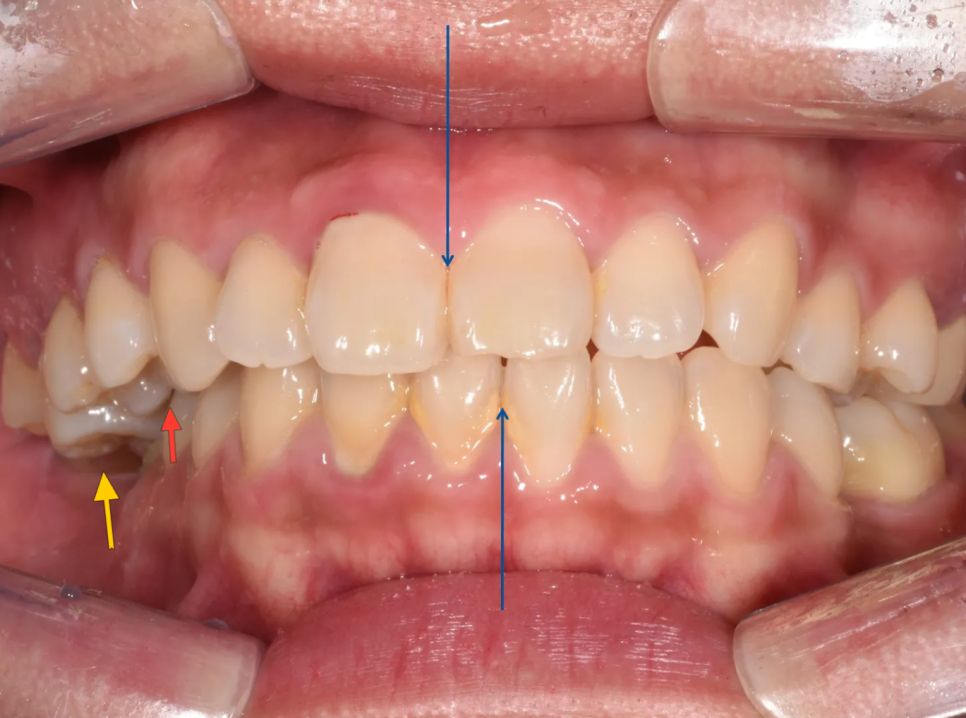
Why does an over-erupted molar throw off the bite?
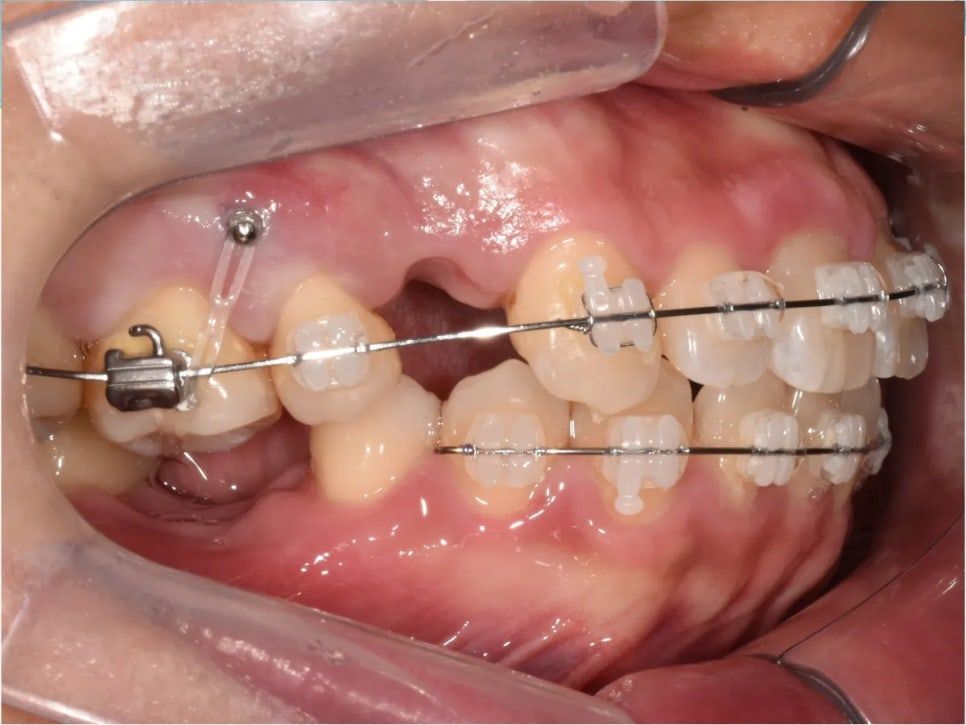
When a tooth has no proper partner to bite against, it drifts toward the opposite jaw. This is called over-eruption. His lower right molar had broken down from decay, so the upper right first molar drifted down quickly.
That molar hit first when he closed, so he had learned to shift his lower jaw to the left to bite. His jaw joint showed no major problem yet, but if this continues long term it can lead to jaw joint disorders.
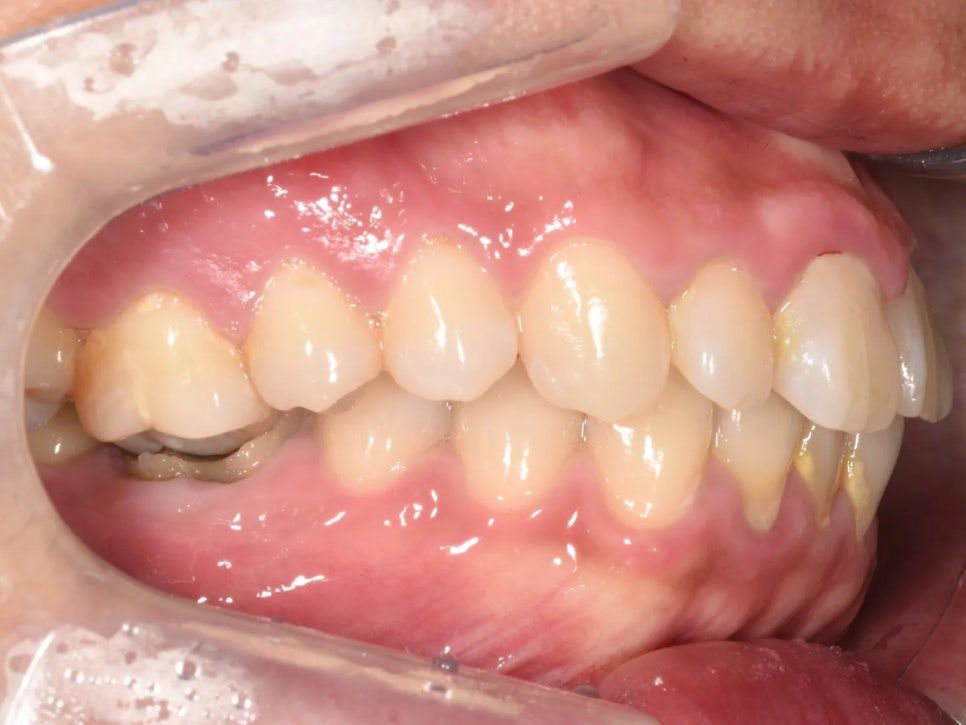
What about the protrusion and deep bite?
From the side, his upper and lower incisors were tipped forward. Cephalometric analysis confirmed protrusion, but also showed that his small lower jaw made the protrusion look stronger than it was, important information you only get from a detailed exam.
He also had a deep bite. It is easy to overlook next to bigger problems, but it needs treating at the same time.
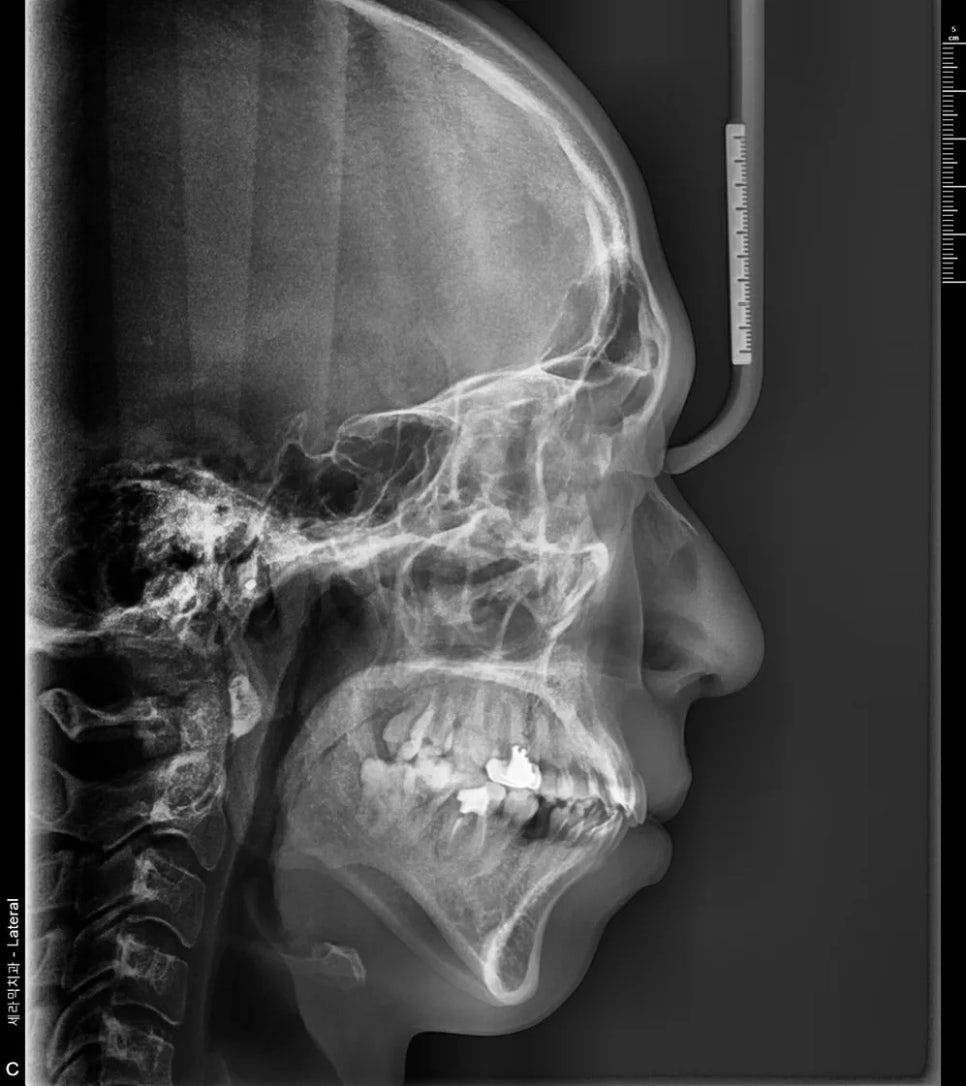
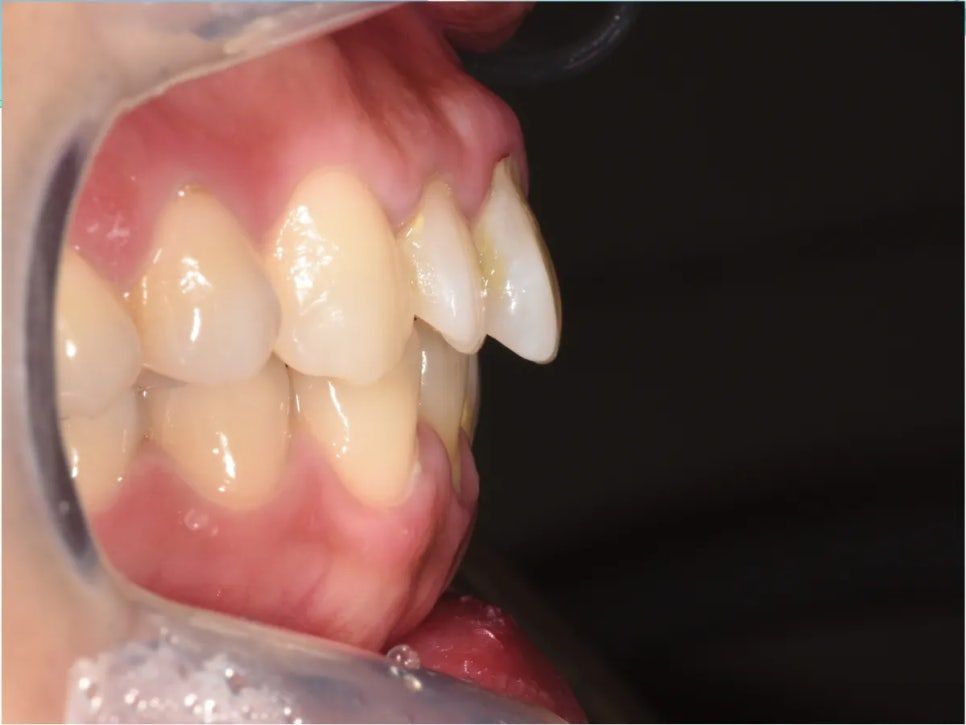
What was the treatment plan?
- Extract both upper first premolars to make room to retract the front teeth
- Extract the lower right first molar, which could not be saved, instead of a premolar
- No extraction on the lower left, where a premolar was already missing (two upper and one lower extraction plus one existing gap: four spaces in total)
- Two mini-screws (outer and inner) to push the over-erupted molar back into the bone
- A temporary bite plane on the other side so the molar would not collide with the lower teeth while moving
How did treatment progress?
The first task was intruding the upper right molar. As long as it stayed down, the right side could never bite properly. Intrusion is one of the hardest tooth movements in orthodontics; without mini-screws, this much movement would have been very difficult.
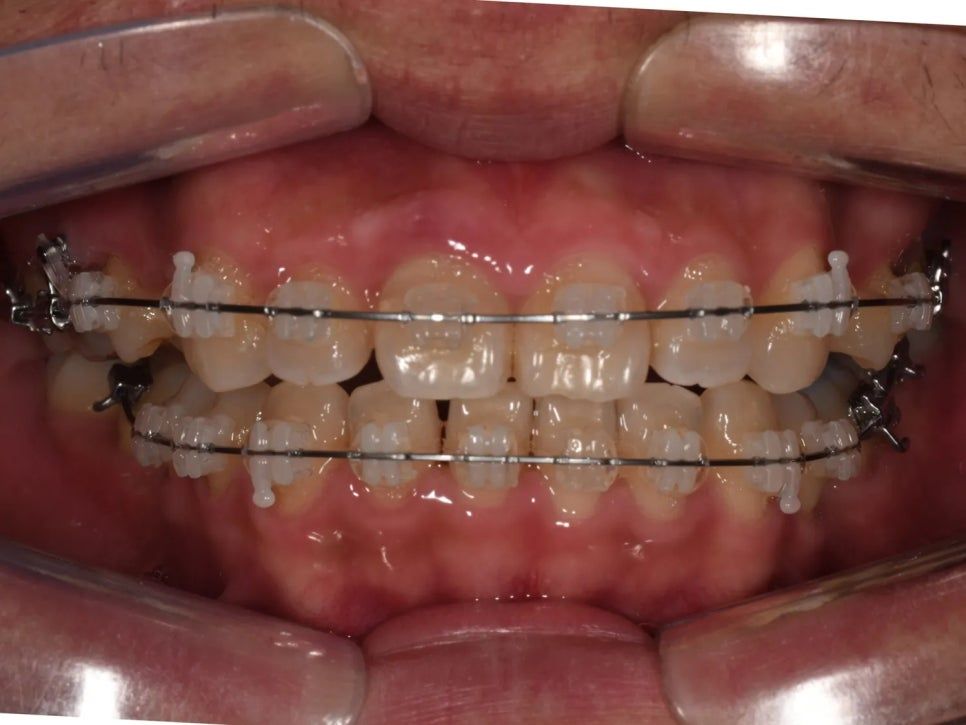
At the same time we uprighted the lower left teeth that had tipped into the gap. Once the bite plane was nearly level, we retracted the flared upper front teeth into the extraction spaces and moved the outward-tipped molar back in.
What did the result look like?
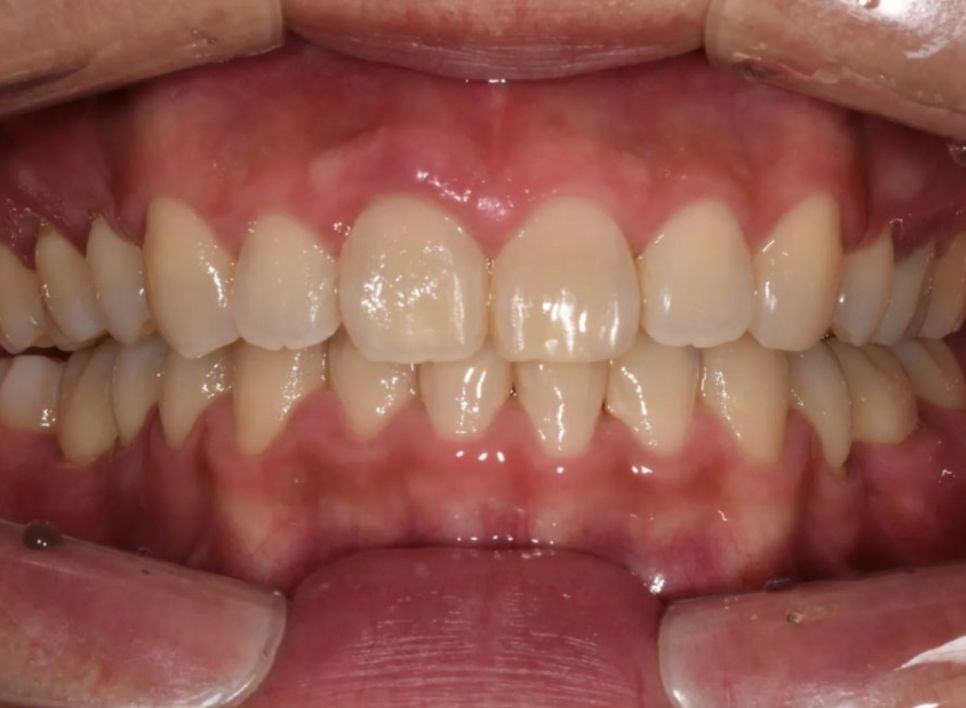
The teeth are aligned and the protrusion he cared about most is clearly better, with a big change in his profile. Most importantly, his right side now bites properly. He no longer needs to shift his jaw, and the deep bite is back in the normal range.
Looking back, the problems a patient notices are not always the whole story, and the real goal of orthodontics is the bite. If we had only pulled the front teeth back, his right side would still not meet and his jaw would still shift. Fees depend on the appliance and time and are quoted after an examination.
Frequently asked questions
Can I tell if a molar is over-erupting?
Often not. If one side is hard to bite on or you feel your jaw shifting, have it checked.
Are premolars always the teeth extracted?
Usually, but if another tooth is badly decayed, like here, that tooth may be chosen instead.
Can a shifted bite affect the jaw joint?
Long-term bite shifts can contribute to jaw joint problems. He had no major issue.
What matters after treatment?
Wear retainers as instructed and keep up dental treatment and check-ups.
About the reviewer
Dr. Sunmin Kim is the lead dentist at Ceramic Dental Clinic in Gangnam, Seoul, a board-certified orthodontist (Ministry of Health and Welfare, Korea) with a PhD from Tokyo Medical and Dental University. Our clinic is registered with the Ministry of Health and Welfare to treat international patients.
Important information
This is a real case. Results, treatment time and the number of visits vary from person to person.
During orthodontic treatment, temporary pain or discomfort, gum recession and root resorption can occur. Teeth can shift back if retainers are not worn after treatment. Mini-screws (TADs) can cause local inflammation or come loose.
Photos show teeth and X-rays only and are published with the patient’s consent.
Questions about your own teeth?
Send us photos of your teeth for a preliminary opinion. A final plan and quote are given after an in-person examination.
Ask on WhatsApp