
CASE · Orthodontics
Severe Deep Bite and Buck Teeth Corrected Without Jaw Surgery (Case Study)
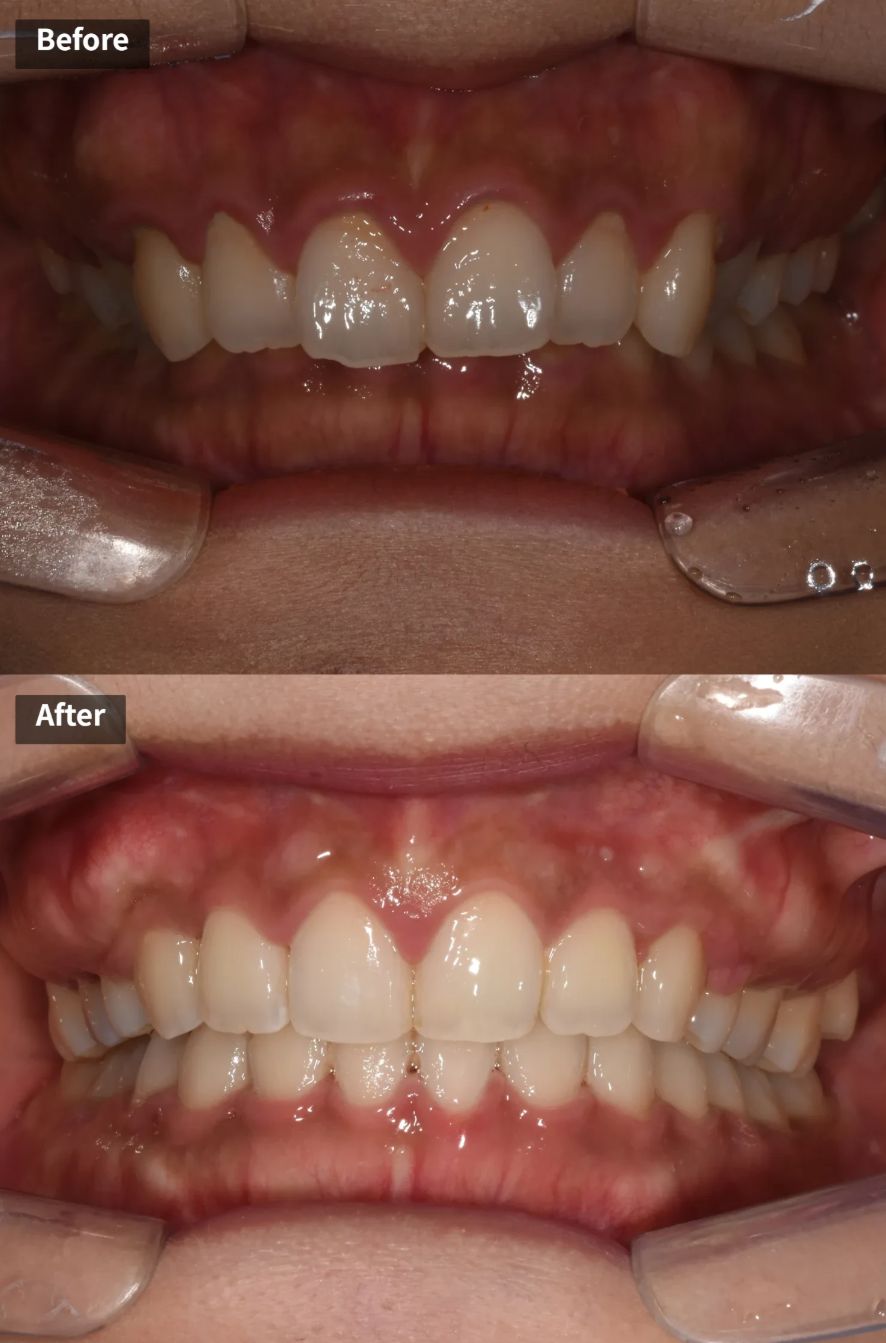
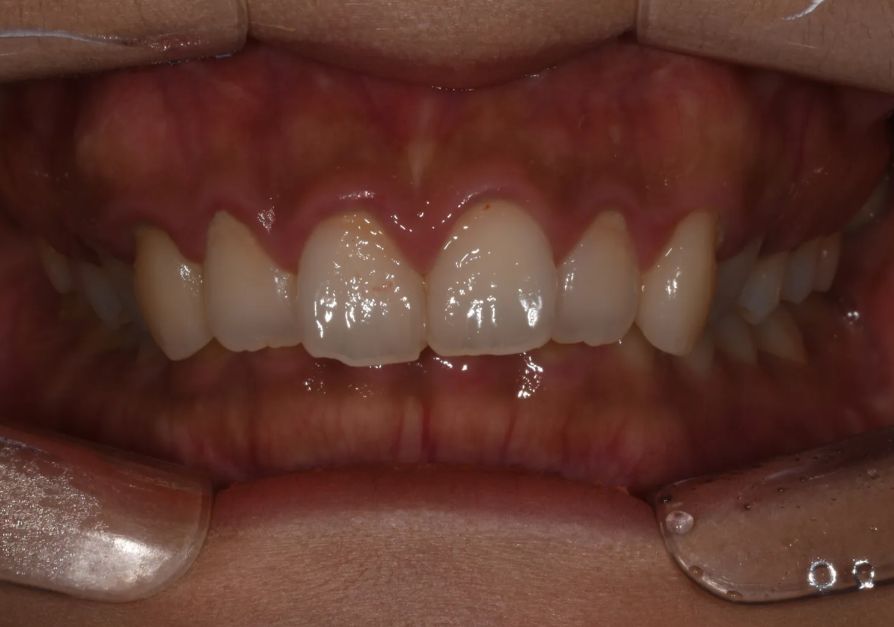
Many people still believe a severe deep bite can only be fixed with jaw surgery. This woman in her 20s had been advised to have surgery and had decided she would rather do nothing. When I examined her, the amount was large, but the mechanics were the same as a mild deep bite. We treated her without surgery, using mini-screws to move the upper front teeth up.
Case at a glance
- Concern: Buck teeth and a gummy smile (woman in her 20s)
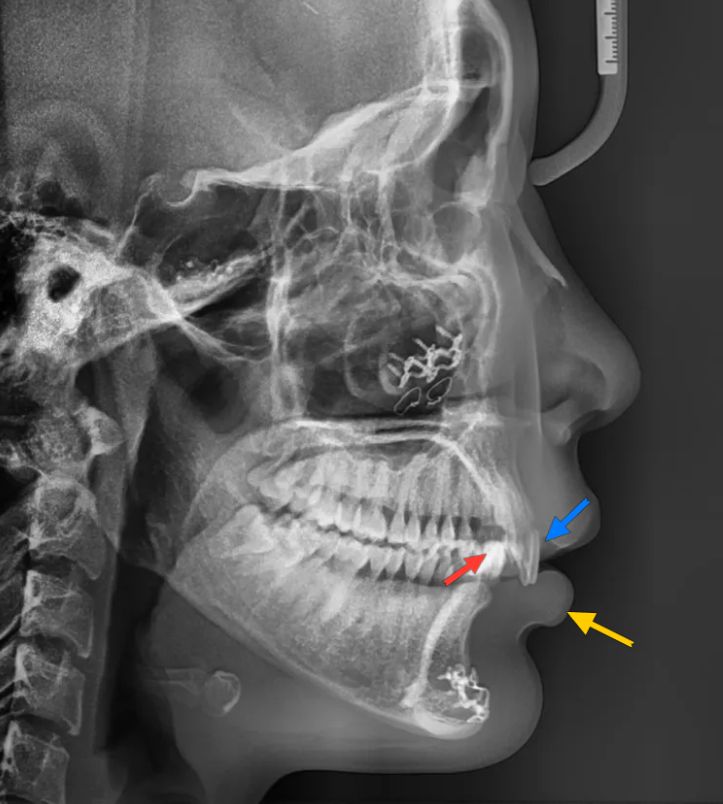
- Diagnosis: Severe deep bite with the upper incisors almost completely covering the lower incisors, protruding front teeth, crowding, a narrow upper arch; a large overjet expected once the deep bite was corrected
- Treatment: Upper and lower braces, upper mini-screws to intrude the front teeth, upper premolar extractions to retract them, removal of the upper wisdom teeth
- Planned time about 20–24 months; finished in about 2 years
- Versus surgery: surgery could also shorten the face slightly; bite and lip improvement were achieved without it
Can a severe deep bite be fixed without surgery?
In the past, moving the upper front teeth upward (intrusion) required headgear, which is not realistic for adults, so severe deep bite meant surgery.
Today, mini-screws (TADs) placed in the bone give a fixed anchor to pull the front teeth up efficiently. In her case the amount was large, but the mechanics were the same as a mild deep bite, so I judged that treatment without surgery would work.
What was the treatment plan?
- Step 1: braces top and bottom
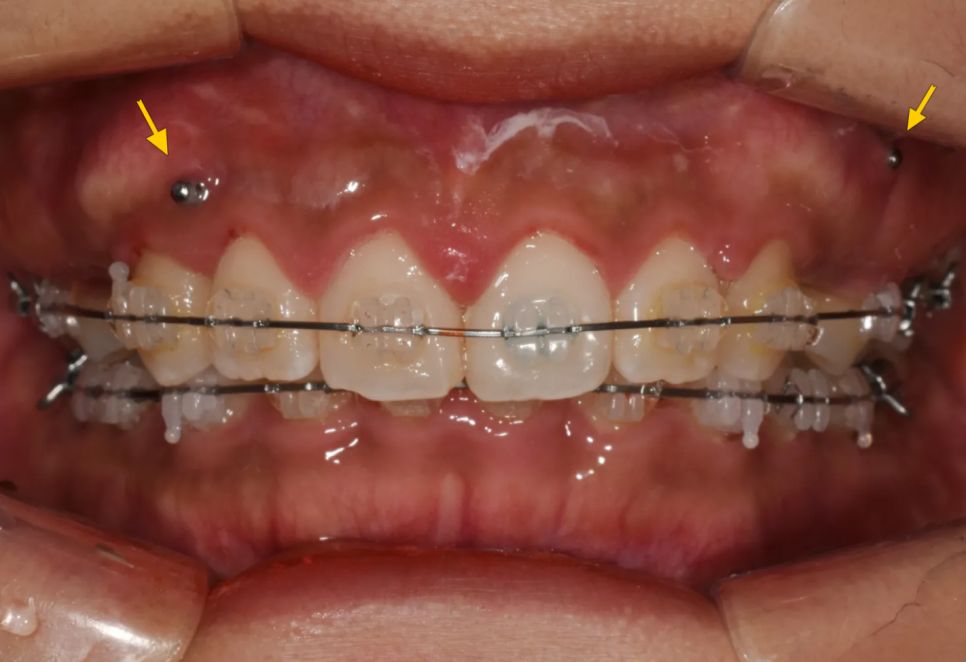
- Step 2: upper mini-screws to start intruding the front teeth
- Step 3: extract upper premolars and retract the front teeth
- Step 4: remove the upper wisdom teeth (lower ones only if bothersome)
- Step 5: after alignment, light enamel reduction (IPR) to close black-triangle spaces
Once the deep bite opened, a large overjet was expected to appear, so extractions were part of the plan from the start. The planned treatment time was about 20–24 months.
How did things change during treatment?
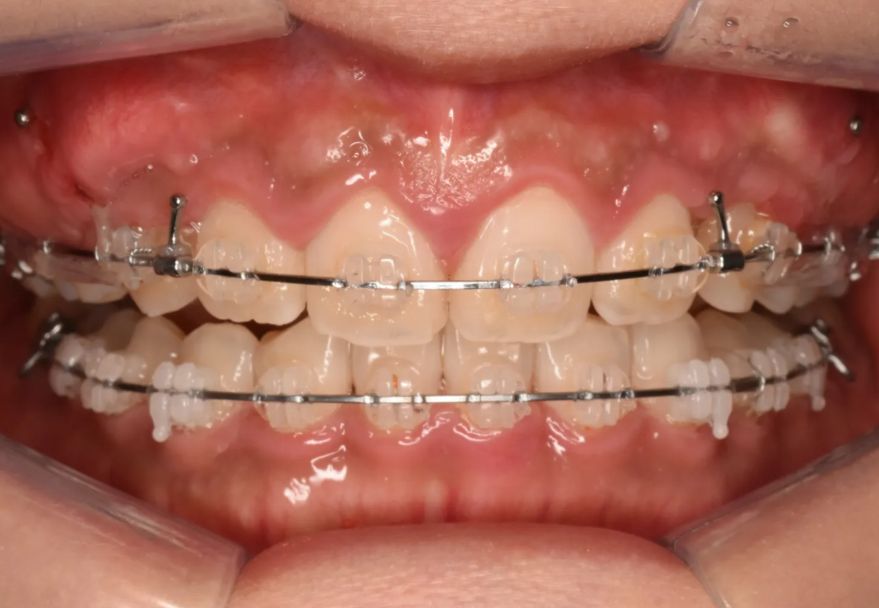
As the mini-screws intruded the front teeth, the deep bite opened gradually and the hidden lower front teeth became visible. Braces take a long time, so sharing these milestones with the patient matters.
What did the result look like?
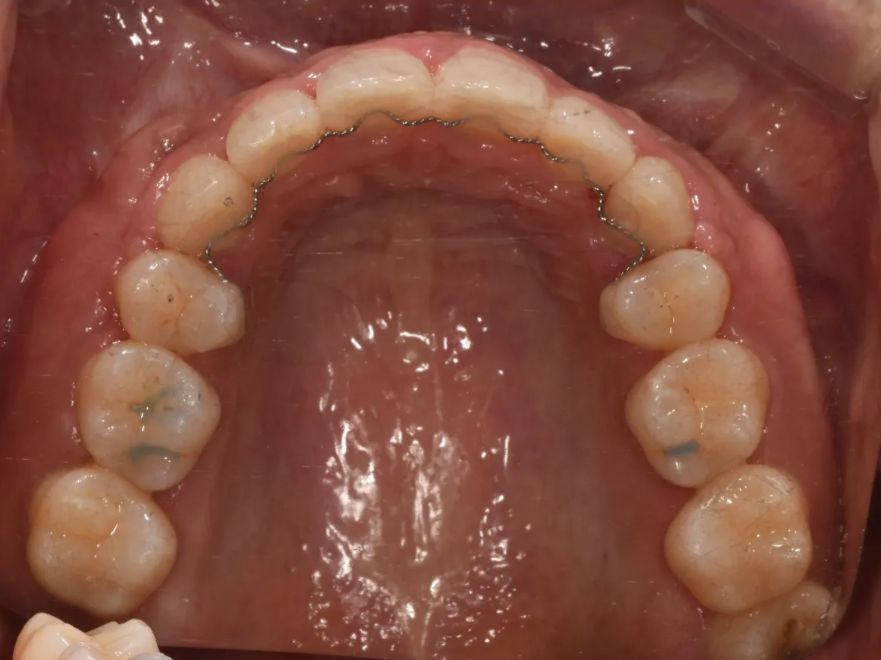
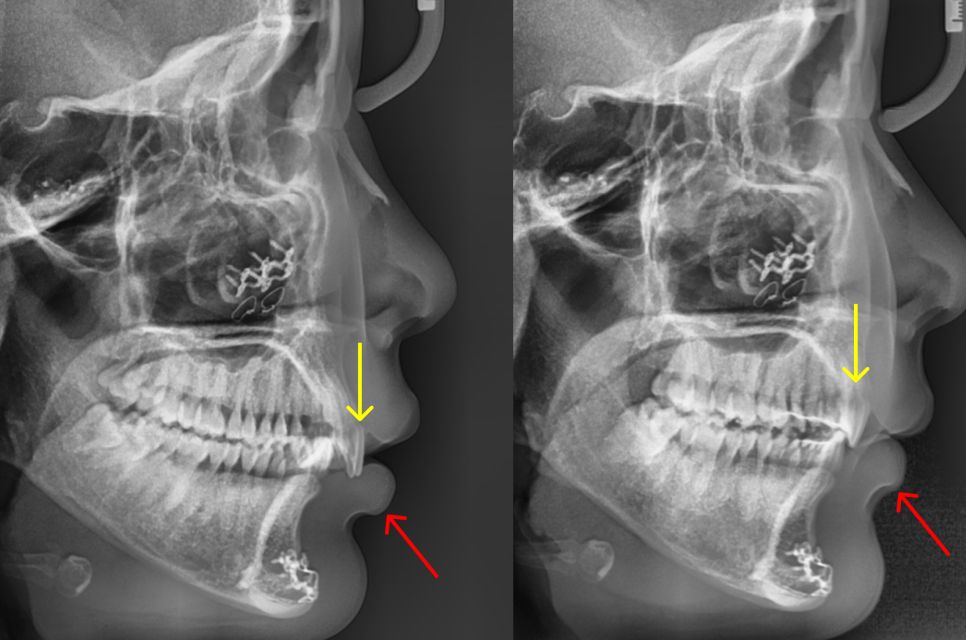
Treatment finished in about 2 years. The bite is now within a normal range and both arches are well aligned. On the side X-ray, the front teeth moved back and up, so they no longer press on the lower lip, and her lips now close naturally when relaxed.
To be honest, surgery could have shortened her face slightly as the front teeth were raised. Whether that difference is worth a major operation is, in my view, up to each patient’s goals and preferences.
Surgery or no surgery: how do you choose?
- Correcting the deep bite: possible either way
- Reducing front-tooth protrusion: possible either way
- Shortening the face: limited without surgery, possible with surgery
- General anesthesia and hospital stay: not needed without surgery, needed with surgery
For dental function there is little difference. The choice depends on how much facial change you want.
Frequently asked questions
Do mini-screws hurt?
They are placed under local anesthesia. You may feel discomfort for a while, and local inflammation or loosening can occur.
Are extractions always needed?
Here, a large overjet was expected, so upper premolars were extracted. Whether you need extractions depends on the diagnosis.
Can a gummy smile improve too?
Raising the front teeth can reduce how much gum shows. How much depends on the skeleton.
Will it relapse?
Wearing retainers as instructed is essential.
About the reviewer
Dr. Sunmin Kim is the lead dentist at Ceramic Dental Clinic in Gangnam, Seoul, a board-certified orthodontist (Ministry of Health and Welfare, Korea) with a PhD from Tokyo Medical and Dental University. Our clinic is registered with the Ministry of Health and Welfare to treat international patients.
Important information
This is a real case. Results, treatment time and the number of visits vary from person to person.
During orthodontic treatment, temporary pain or discomfort, gum recession and root resorption can occur. Teeth can shift back if retainers are not worn after treatment. Mini-screws (TADs) can cause local inflammation or come loose.
Photos show teeth and X-rays only and are published with the patient’s consent.
Questions about your own teeth?
Send us photos of your teeth for a preliminary opinion. A final plan and quote are given after an in-person examination.
Ask on WhatsApp