
CASE · Porcelain veneers
Gap Between Front Teeth? How We Closed It with Veneers, No Braces (Case Study)
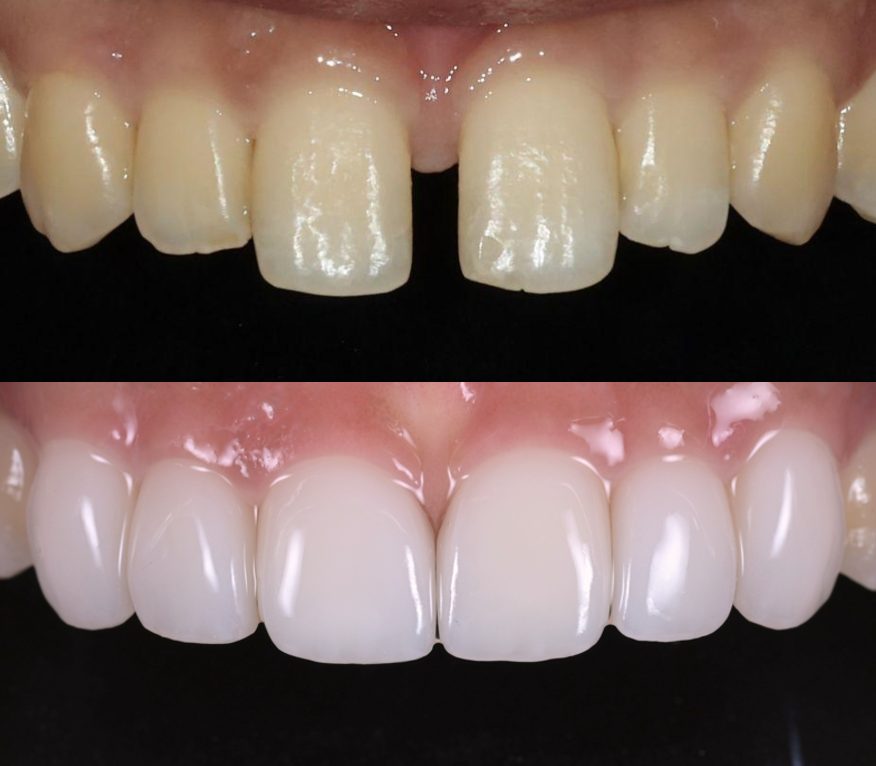
A gap between the front teeth can often be closed with porcelain veneers, without braces. In this case, we closed a 2.7 mm gap (a midline diastema) between the upper front teeth with CERANATE porcelain veneers. We spread the gap across several teeth instead of filling it with just two, and we corrected the length and shade of the front teeth at the same time. That said, if the gap comes from tooth position or gum disease, braces or gum treatment may need to come first.
Case at a glance
- Concern: A long-standing gap between the front teeth; did not want to wear braces for a year or more (woman in her 20s)
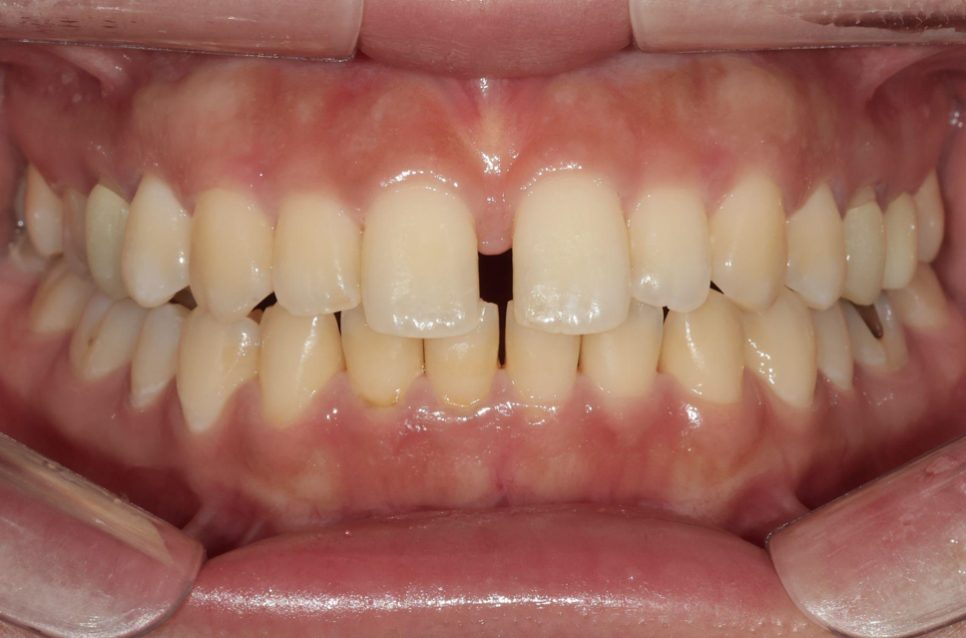
- Diagnosis: About 2.7 mm gap between the upper central incisors. Both front teeth slightly too long. Upper and lower midlines not aligned. Small gaps between the lower front teeth. No other major bite or alignment problems
- Treatment: CERANATE porcelain veneers, upper and lower front teeth, with gap redistribution, length correction and shade matching
- Tooth reduction: No-prep or minimal-prep (case by case, decided after diagnosis).
- Treatment time: typically about 1 week from preparation to bonding
- Number of visits: Usually 2 (visit 1: preparation and impressions; visit 2: try-in to check the shade, then bonding)
- Time in Korea: About 1 week for the two visits, plus 1–2 spare days before your flight. A one-day schedule (2 visits over 1–2 days) may be possible depending on your teeth
Can veneers close a gap without braces?
Often, yes. There are four common ways to close a gap between the front teeth:
- Braces or clear aligners: The teeth themselves move together. This treats the cause, but usually takes 1–2 years.
- Composite bonding: Tooth-colored resin is added to the teeth. It is quick and costs less, but it is harder to match the shape and shade, and it tends to stain over time.
- Porcelain veneers: Thin ceramic shells are bonded to the front of the teeth. They can close the gap and change shape, length and color at the same time.
- Crowns: They can change the shape a lot, but they require much more tooth reduction, which is usually too much if the gap is your only concern.
At our clinic, even when a patient asks for veneers, our lead dentist, a board-certified orthodontist, first checks whether braces would suit them better. In this case, the rest of the teeth and the bite were in good shape, and the patient also wanted shorter, brighter front teeth. Braces alone would not have changed the length or color, so veneers were the better fit.
How do you close a 2.7 mm gap so it looks natural?
The key is redistributing the space. If you fill a 2.7 mm gap with just the two front teeth, they end up looking too wide. Instead, we shared the space across several teeth on each side, so every tooth keeps a natural width-to-length ratio.
We also adjusted three other things:
- Length: The two upper front teeth were longer than their neighbors, so we brought the edges into proportion.
- Midline: The upper and lower midlines did not quite line up, so we shaped the veneers to make the shift less noticeable.
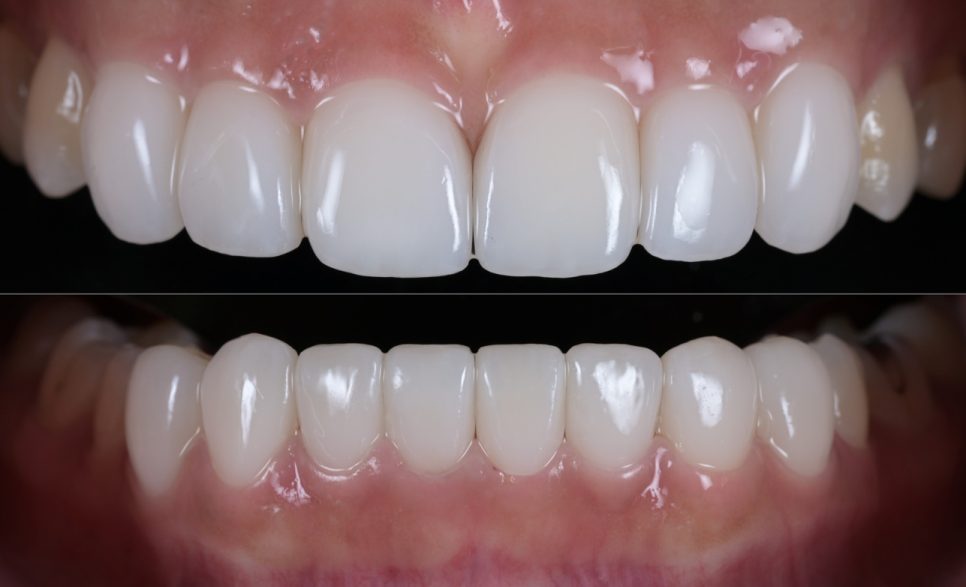
- Shade: We matched the color of the upper and lower front teeth.
How much of the tooth was removed?
At our clinic, CERANATE veneers start from a no-prep or minimal-prep approach. Whether any reduction is needed, and how much, depends on the shape, position and color of each tooth. When front teeth need to be shortened, as in this case, the edges may need some reshaping.
For more detail, see No-Prep or Minimal-Prep Veneers? (/en/column/no-prep-vs-minimal-prep-veneers/).
What did the result look like?
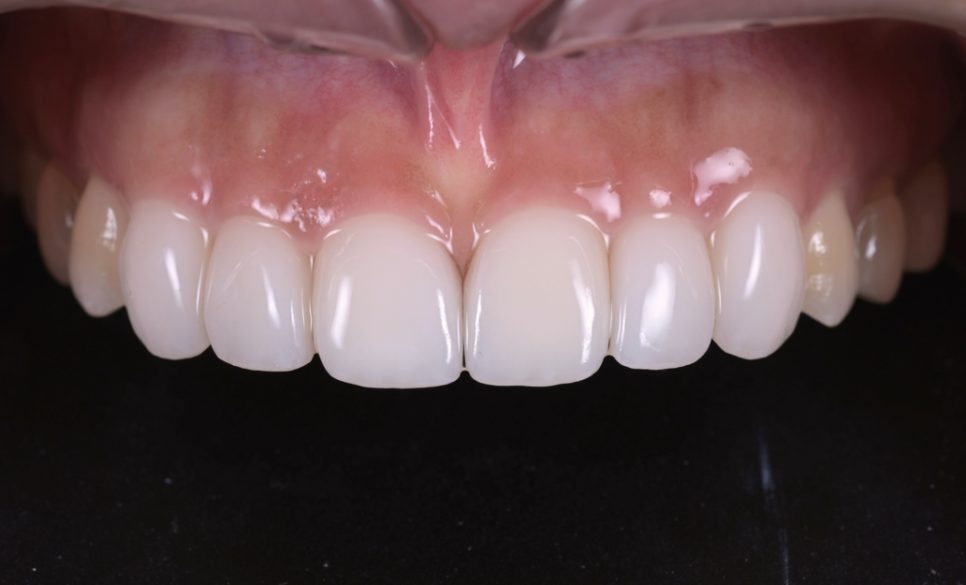
The 2.7 mm gap between the upper front teeth is closed, and the two long front teeth now sit in proportion with the teeth beside them. The small gaps between the lower front teeth are also closed, and the upper and lower shades match. Because the space was shared across several teeth, no single tooth stands out as too wide.
How long do I need to stay in Korea, and what does it cost?
- Visits: Standard CERANATE veneers take 2 visits over about a week. At the first visit we prepare the teeth if needed and take impressions. At the second, we try the veneers in to check the shade before bonding them.
- Stay: We recommend 1–2 spare days between your final appointment and your flight home. The schedule can change with the number of teeth and the amount of reduction.
- Cost: CERANATE is KRW 550,000–770,000 per tooth including VAT, depending on the material and fabrication method. That is about USD 415–580 per tooth.
- Exchange rate: USD 1 ≈ KRW 1,325 as of Oct 23, 2026. The actual amount depends on the exchange rate.
- Other costs: Flights and accommodation are not included.
For planning your trip, see How Many Days in Korea for Veneers, Crowns or Implants? (/en/column/how-many-days-dental-treatment-korea/). For prices, see Veneers in Korea Cost (/en/column/veneers-in-korea-cost/).
When are veneers not the right choice for a gap?
If the gap comes from the position of the teeth, or if gum inflammation has made the teeth drift apart, braces or gum treatment may be a better first step than covering the gap. If you grind or clench your teeth heavily, we may address that first. We look at X-rays and photos to find the cause before recommending anything.
Frequently asked questions
Is there a gap that is too big for veneers alone?
The size alone does not decide it. This gap was 2.7 mm, but the rest of the bite was healthy, so we could share the space across several teeth. If the teeth would end up too wide, combining veneers with braces often looks more natural.
Can the lower front teeth be treated at the same time?
Yes. Treating the upper and lower teeth on the same schedule also makes it easier to match their shades.
How long do porcelain veneers last?
It depends a lot on how you care for them and on your bite habits. Veneers that chip, come off or change color may need to be remade. If you grind your teeth, we recommend wearing a night guard.
What if a veneer comes off after I fly home?
Keep the veneer, take a photo and send it to us on WhatsApp. We will tell you whether it can be rebonded or needs to be remade. Either way, you will need to visit the clinic.
Can you tell me if veneers will work for my gap before I travel?
Yes. Send photos of your teeth on WhatsApp before you book. A final diagnosis is made after we examine your teeth and bite in person.
About the reviewer
Dr. Sunmin Kim, Representative Director, Ceramic Dental Clinic
Board-certified Orthodontist (Korea), PhD, Tokyo Medical and Dental University. Ceramic Dental Clinic is a registered medical institution for international patients with the Ministry of Health and Welfare.
Important information
※ This is a real treatment case. Results, treatment time and the number of visits vary from person to person.
※ Some veneer cases require tooth reduction. Sensitivity, chipping, debonding or gum changes may occur, and regular check-ups are needed.
※ Prices are as of October 2026.
Questions or booking
Message us on WhatsApp with photos of your teeth. We reply in English.
Questions about your own teeth?
Send us photos of your teeth for a preliminary opinion. A final plan and quote are given after an in-person examination.
Ask on WhatsApp