
CASE · Orthodontics
Congenitally Missing Teeth Closed with Braces Instead of Implants (Case Study)
When adult teeth never develop, people often assume implants are the only option. In this case, a man in his 20s was missing three lower teeth, and we closed the spaces with braces alone, without implants. At the same time we corrected his protruding mouth, crowding and deep bite.
Case at a glance
- Concern: A protruding mouth and crooked teeth; wanted to avoid implant surgery (man in his 20s)
- Diagnosis: Three congenitally missing teeth (both lower lateral incisors and the lower left second premolar), crowding, off-center midline, mild protrusion, deep bite
- Treatment: Extraction of both upper first premolars, fixed braces to retract the front teeth, closing the lower spaces; an anterior bite plate for the deep bite and mini-screws if needed
- Planned treatment time at the start: about 2–2.5 years (planned)
- Wisdom teeth: the upper and lower left wisdom teeth already met, so they were kept and aligned
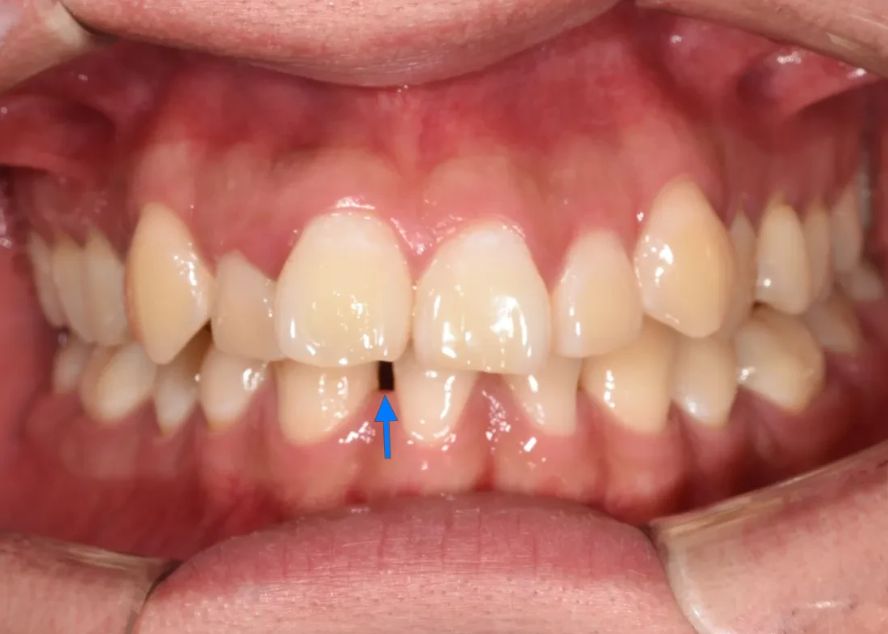
Do congenitally missing teeth always need implants?
No. If the remaining teeth and bone allow it, closing the space with braces is an option. Lower lateral incisors and second premolars are among the teeth most often missing from birth.
He was very anxious about implant surgery, and his protrusion and crowding also needed treatment. I judged that closing the spaces with braces would let him function with his own teeth alone, without implants or bridges.
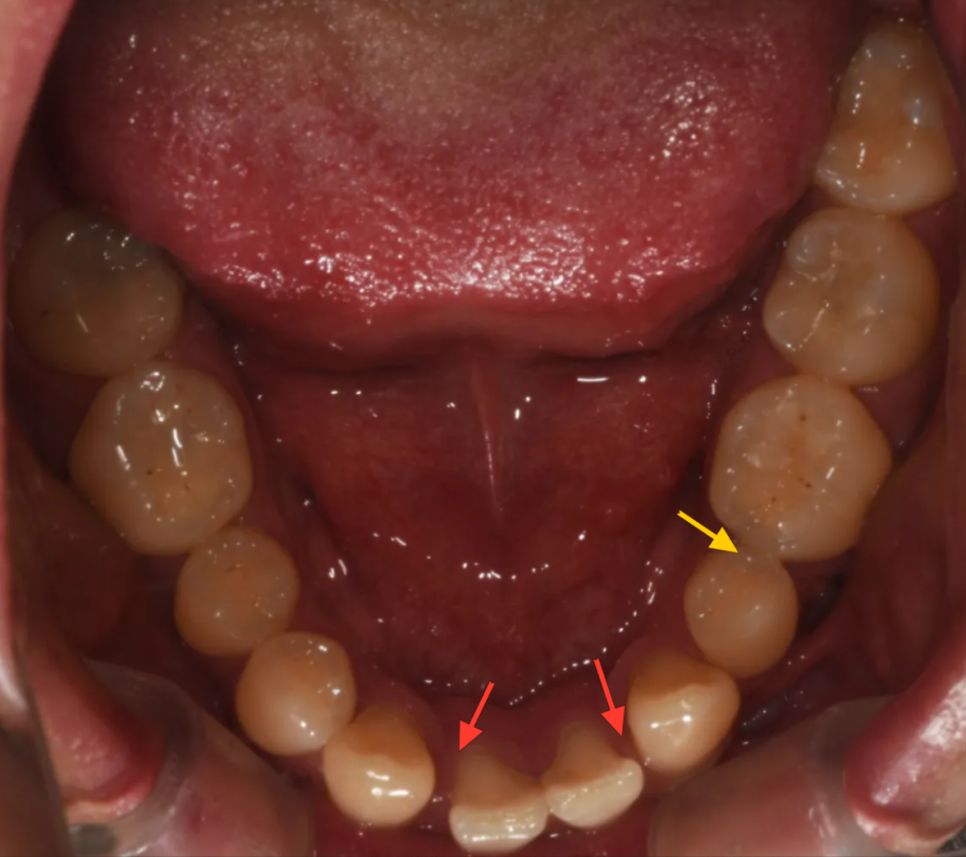
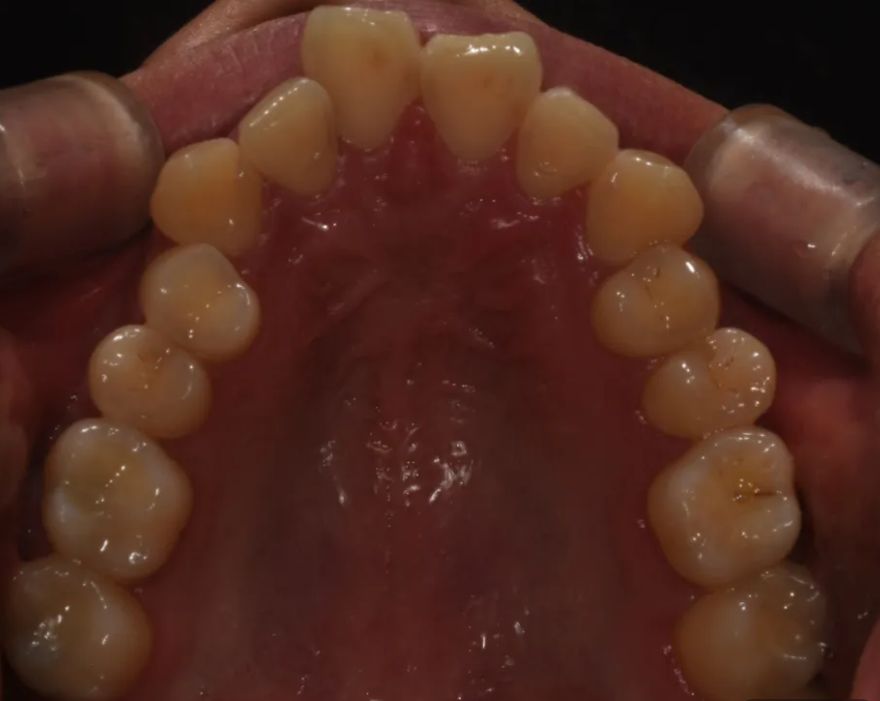
What was the treatment plan?
- Extract both upper first premolars and use the space to move the front teeth back
- Close the lower spaces and align the upper and lower midlines (not perfect symmetry, because two teeth were missing on the left and one on the right)
- Use a plastic anterior bite plate for the deep bite
- Use mini-screws (TADs) to fine-tune the midline if needed
- Keep and align the left wisdom teeth, which already met top and bottom
With different numbers of missing teeth on each side, we prioritized a good bite and a balanced appearance over perfect symmetry.
What happened during treatment?
Braces were placed top and bottom together with the bite plate. While aligning the teeth into the extraction spaces, we gradually retracted the upper front teeth and slowly closed the lower spaces.
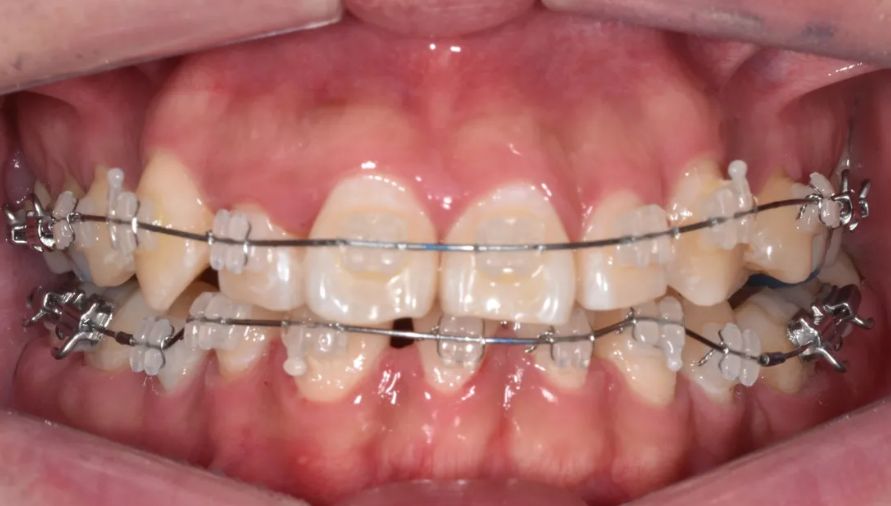
What did the result look like?
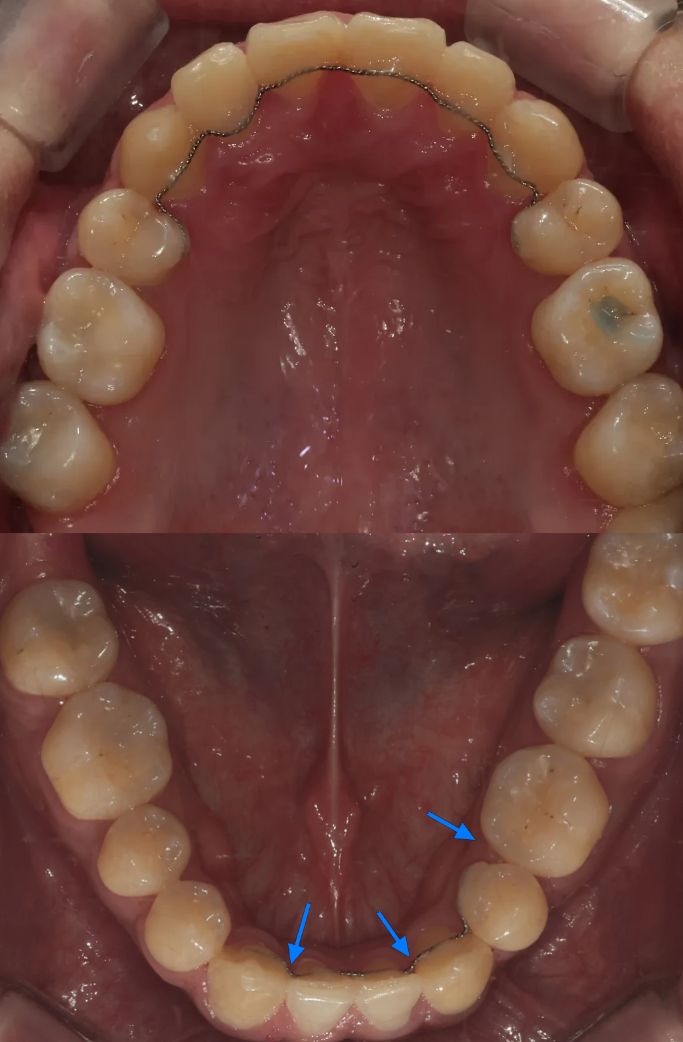
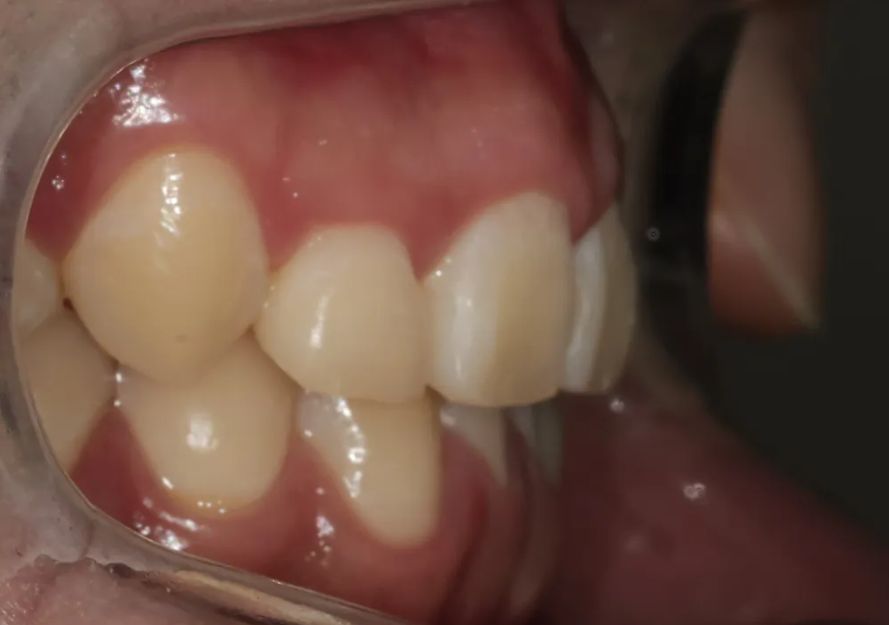
All upper extraction spaces and lower missing-tooth spaces are closed. The flared upper front teeth moved back and the protrusion improved. The deep bite is now within a normal range and the midlines match. Most importantly, the arch was completed with his own teeth, without implants.
Can international patients do orthodontic treatment?
Braces take time and require regular adjustment visits. If you live abroad, please discuss visit frequency and duration with us before starting. Fees depend on the appliance and treatment time and are quoted after an examination.
Frequently asked questions
Can every missing-tooth space be closed with braces?
It depends on tooth position, bone and bite. If not, implants or bridges can be combined with orthodontics.
Will extraction braces make my mouth less protrusive?
Moving the front teeth back into the extraction spaces often reduces protrusion. How much depends on your skeleton and tooth angles.
Did the wisdom teeth have to come out?
Not here. His left wisdom teeth already met, so we kept and aligned them. It depends on each case.
What should I do after treatment?
Teeth tend to move back, so wear your retainers as instructed.
About the reviewer
Dr. Sunmin Kim is the lead dentist at Ceramic Dental Clinic in Gangnam, Seoul, a board-certified orthodontist (Ministry of Health and Welfare, Korea) with a PhD from Tokyo Medical and Dental University. Our clinic is registered with the Ministry of Health and Welfare to treat international patients.
Important information
This is a real case. Results, treatment time and the number of visits vary from person to person.
During orthodontic treatment, temporary pain or discomfort, gum recession and root resorption can occur. Teeth can shift back if retainers are not worn after treatment. Mini-screws (TADs) can cause local inflammation or come loose.
Photos show teeth and X-rays only and are published with the patient’s consent.
Questions about your own teeth?
Send us photos of your teeth for a preliminary opinion. A final plan and quote are given after an in-person examination.
Ask on WhatsApp