
CASE · Orthodontics
Underbite Corrected with Braces, No Jaw Surgery: Upper Expansion and Mini-Screws (Case Study)
Many people believe an underbite can only be fixed with jaw surgery, but a careful diagnosis finds cases that can be treated without it. This woman in her early 30s had previously been told she needed surgery. We expanded the upper arch to bring the front teeth forward and used mini-screws to move the lower arch back, correcting her crossbite in about 1.5 years.
Case at a glance
- Concern: Underbite and reversed front bite (woman in her early 30s)
- Diagnosis: Skeletal Class III underbite, anterior crossbite with a deep overlap, an underdeveloped upper jaw, lateral incisors blocked in for lack of space
- Treatment: (1) upper expansion appliance (PBP, which also raises the bite to unlock the front teeth), (2) lower mini-screws to move the whole lower arch back
- Treatment time: about 1.5 years
- Result: normal overbite and overjet, with a less prominent lower jaw in profile
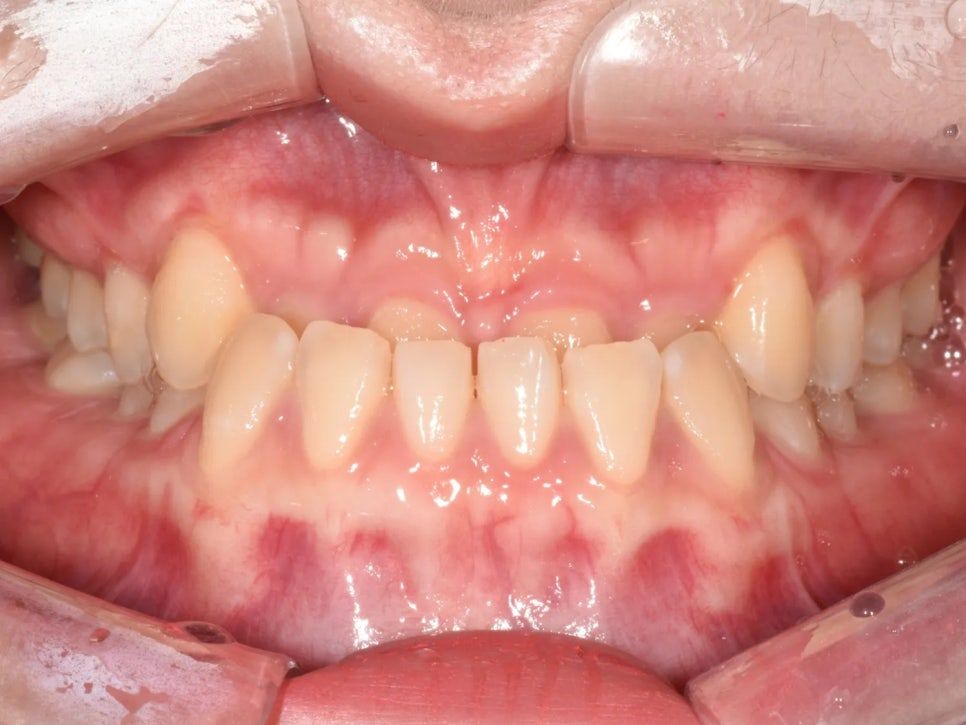
What is an underbite?
An underbite (mandibular prognathism, Class III) means the lower jaw sits ahead of the upper jaw. The front teeth often bite the wrong way round (anterior crossbite). Beyond appearance, it can affect chewing and speech and cause real stress.
Severe underbites are usually said to need double-jaw surgery, but a detailed diagnosis can identify cases that improve well without it.
What did her underbite look like?
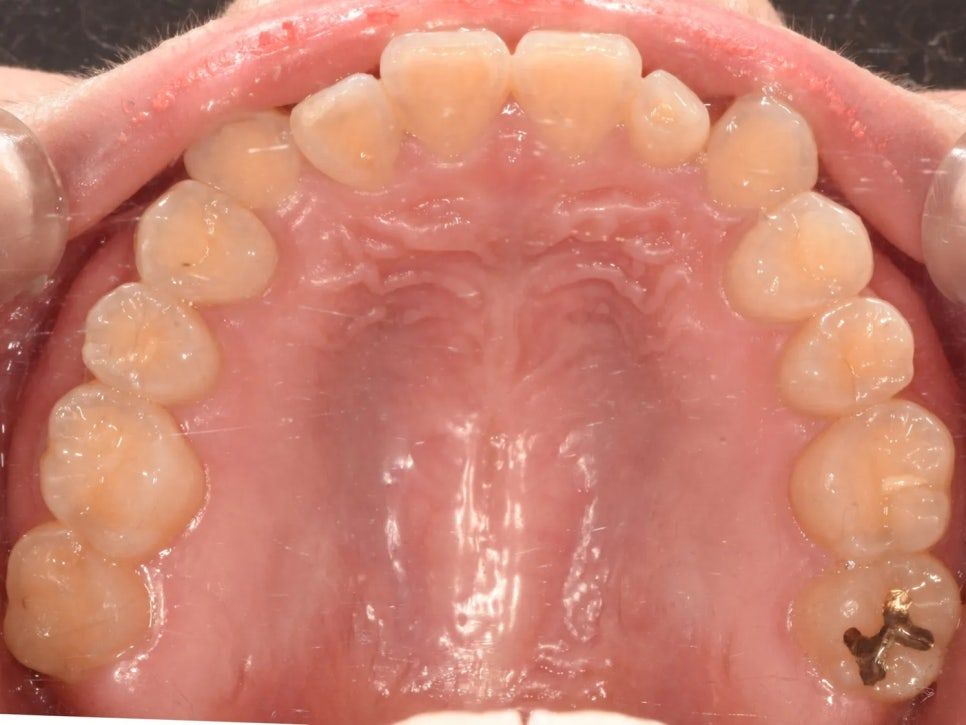
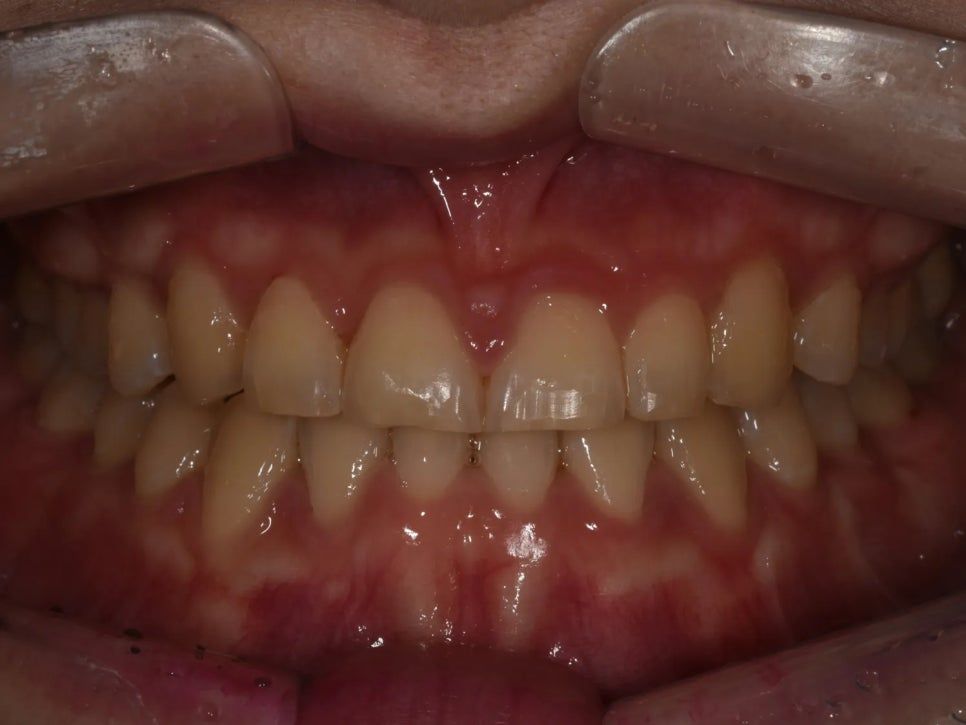
Her front teeth were in crossbite with a deep overlap, and her profile showed a prominent lower jaw. In the upper arch, the lateral incisors were blocked in and the canines stood out, showing the upper jaw was too small to fit all the teeth.
So she had a skeletal underbite plus an underdeveloped upper jaw and a lack of space. She had been told surgery was necessary, but I judged that braces alone could give a good result.
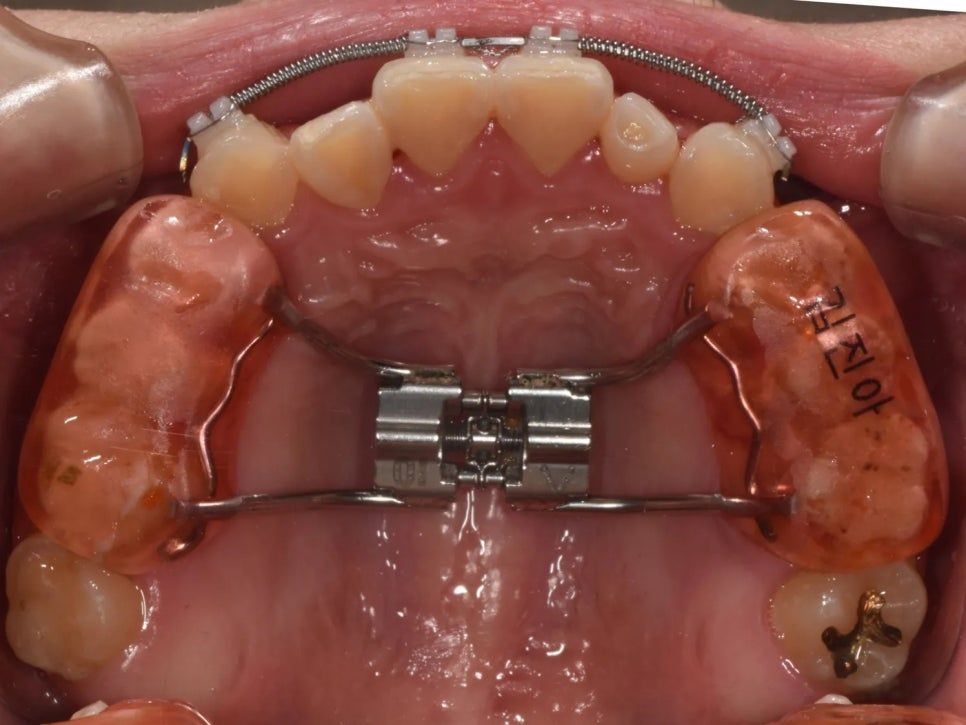
How was it corrected without surgery?
- Step 1: an expansion appliance (PBP) to widen the upper arch while raising the bite to unlock the reversed front teeth
- Open space between the incisors and canines for the blocked-in laterals; with the heavy back teeth as an anchor, the front teeth naturally move toward the lips
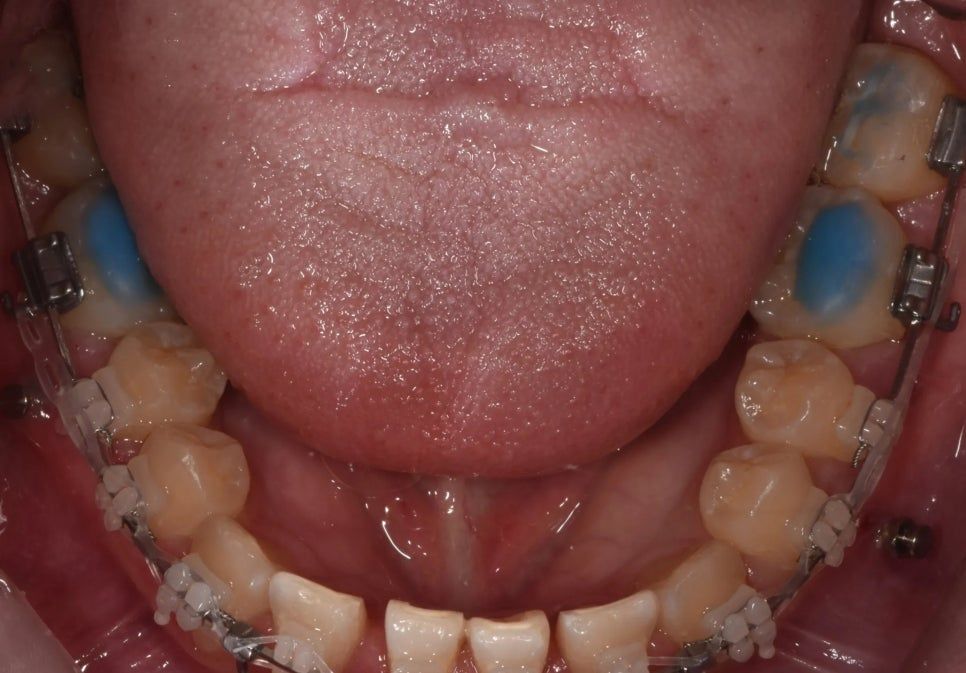
- Step 2: mini-screws in the lower jaw, with springs or chains pulling the whole lower arch back gradually
Upper front teeth forward, lower arch back: working on both jaws improves the relationship far more than moving one side alone.
What did the result look like?
The crossbite is corrected and the upper incisors now slightly overlap the lower incisors. The blocked-in laterals are aligned and the lower spaces are closed. In profile, the lower jaw looks less prominent. The change is not as large as surgery that moves bone, but the key point is that some cases improve to a satisfying degree with braces alone.
Early on, while we were expanding the upper jaw, she wasn’t sure it would really work. I remember how happy she was the day her front teeth crossed over and we removed the bite-raising material from her molars.
When is surgery still needed?
Not every underbite can be fixed without surgery. With a large skeletal discrepancy, or if you want a major change in facial shape, surgery may be needed. Surgery can change jaw size, but involves general anesthesia and a hospital stay. We recommend deciding based on your own records. Fees depend on the appliance and time and are quoted after an examination.
Frequently asked questions
Can adults fix an underbite with braces?
Yes, she was treated in her 30s. Whether surgery is avoidable depends on the skeletal severity.
How much does the face change without surgery?
The profile changes as the bite is corrected, but less than with surgery that changes bone size.
How long does it take?
This case took about 1.5 years. It varies.
I was told I need surgery. Can I get a second opinion?
Yes. We will review your records and explain how much can be achieved without surgery.
About the reviewer
Dr. Sunmin Kim is the lead dentist at Ceramic Dental Clinic in Gangnam, Seoul, a board-certified orthodontist (Ministry of Health and Welfare, Korea) with a PhD from Tokyo Medical and Dental University. Our clinic is registered with the Ministry of Health and Welfare to treat international patients.
Important information
This is a real case. Results, treatment time and the number of visits vary from person to person.
During orthodontic treatment, temporary pain or discomfort, gum recession and root resorption can occur. Teeth can shift back if retainers are not worn after treatment. Mini-screws (TADs) can cause local inflammation or come loose.
Photos show teeth and X-rays only and are published with the patient’s consent.
Questions about your own teeth?
Send us photos of your teeth for a preliminary opinion. A final plan and quote are given after an in-person examination.
Ask on WhatsApp