
COLUMN · Tooth enamel
Can Tooth Enamel Grow Back?
What Wears Enamel Away (Acid, Grinding, Brushing) and What "Staying in Enamel" Means for Veneers
No. Once tooth enamel is worn away, it does not grow back, because the cells that build enamel are no longer present after a tooth erupts. An early, slightly demineralized surface can harden again with saliva and fluoride, but lost thickness does not return. So the first step is to reduce what wears enamel down (acid erosion, grinding and hard brushing), and when veneers are placed, keeping the preparation within the enamel layer is one of the conditions for them to last.
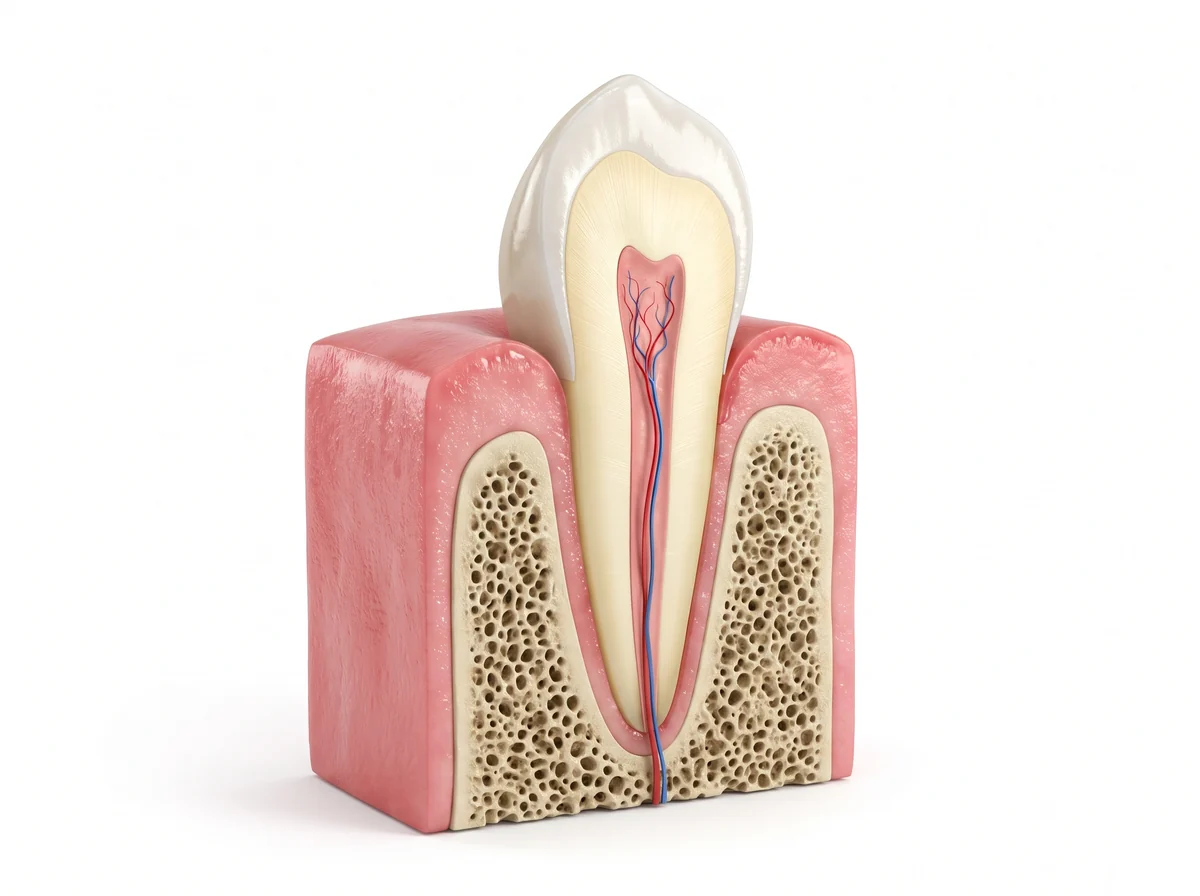
EnamelThe outer layer of the crown; thickest at the edge, thinnest near the gum
DentinThe yellow layer under the enamel; softer and sensitive when exposed
Pulp (nerve)The nerve and blood vessel space in the center
What is tooth enamel, and how thick is it?
Enamel is the outer layer covering the crown, the part of the tooth you see above the gum, and it is the hardest tissue in the body. Under it is the yellowish dentin, and in the center is the pulp with nerves and blood vessels. The root has no enamel; it is covered by thin cementum.
Enamel is thinner than most people expect. In a study that measured upper central incisors on 800 cone-beam CT scans, the enamel on the front surface in people aged 18–40 averaged 0.48 mm at 1 mm from the gum-side end of the enamel (the cementoenamel junction, CEJ) toward the biting edge, and 0.82 mm at 3 mm toward the biting edge. In people over 40 (the study included ages up to 60) the values were 0.45 mm and 0.75 mm, so enamel got thinner with age (Jánosi et al., Diagnostics, 2024). It is thinnest near the gum, which is one reason the neck of a tooth wears more easily.
Can enamel grow back? What about "enamel repair" toothpaste?
Worn enamel does not regrow on its own. Unlike bone or skin, the cells that form enamel (ameloblasts) only work before the tooth erupts. Labs are developing materials to rebuild enamel, but reproducing the structure and hardness of natural enamel remains difficult (Sedek and Holiel, Tissue Engineering and Regenerative Medicine, 2025).
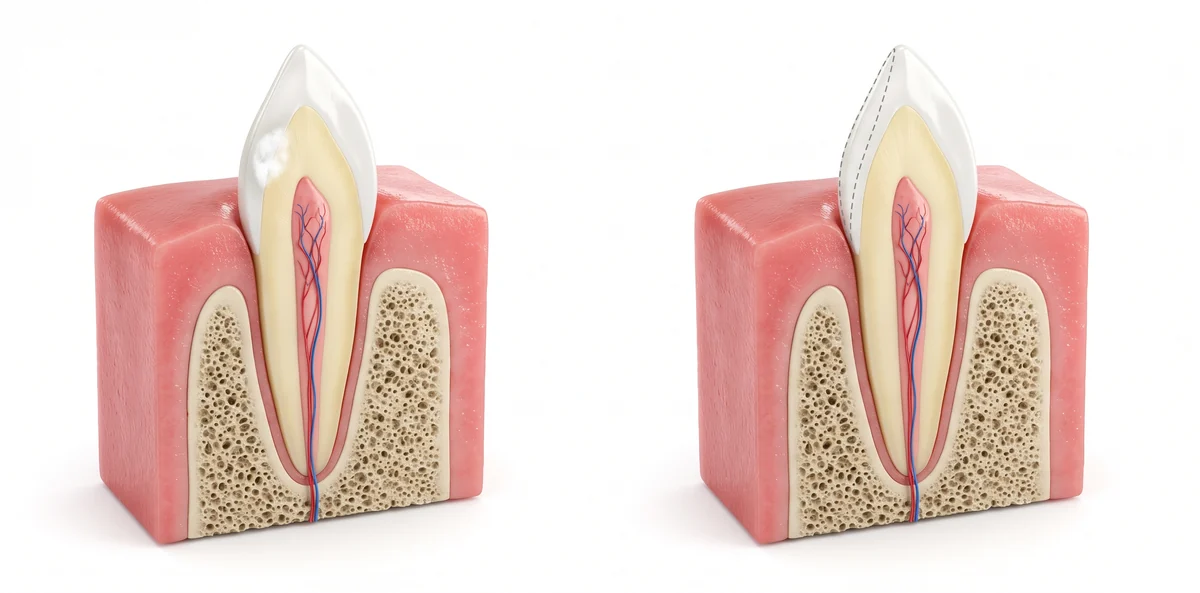
Early demineralizationThe outline is intact; minerals are lost under the surface (white area). It can harden again with fluoride and saliva
Enamel lost by wearThe thickness itself is gone (dotted line = original outline). Lost thickness does not come back
Toothpastes and gels sold for "enamel repair" mainly help remineralization: at an early stage, when minerals have been lost just under the surface, fluoride or calcium-phosphate ingredients help harden the surface again. They cannot refill thickness that has worn away, a shortened front-tooth edge or a notch at the gum line. That is why we focus less on "will it come back" and more on "what needs to change so it stops wearing".
What causes enamel erosion and wear?
There are three main routes, and in practice two or three often overlap.
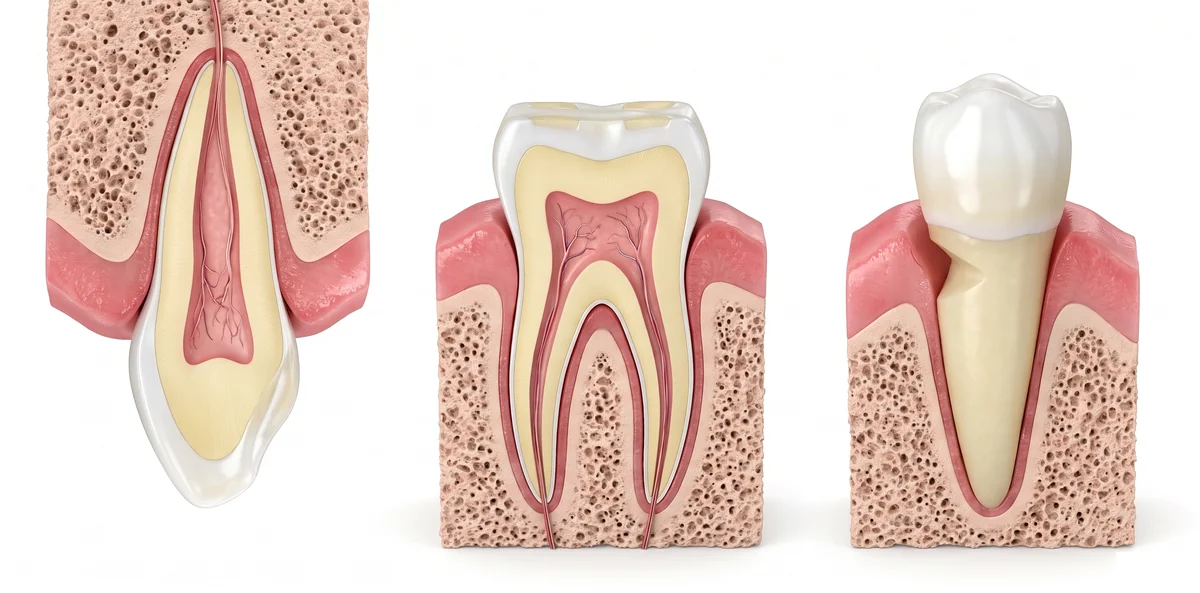
Acid (erosion)Tongue-side enamel of an upper front tooth thinned broadly and shallowly
Grinding (attrition)Molar cusps worn flat, exposing dentin
Brushing (abrasion)A wedge-shaped notch at the neck where the gum has receded
- Acid (erosion): soft drinks, vinegar, citrus and acid reflux dissolve minerals from the enamel surface. Eroded enamel becomes rough and softer, so it wears more easily under brushing or chewing (Ganss et al., Monographs in Oral Science, 2025). A systematic review of 22 studies found dental erosion was more common in adults with gastroesophageal or laryngopharyngeal reflux (Wang et al., Digestive Diseases and Sciences, 2025).
- Grinding and clenching (attrition): when upper and lower teeth grind directly against each other, the cusps and front-tooth edges wear flat. Once the enamel is gone, the yellow dentin shows, and dentin wears more easily than enamel.
- Brushing (abrasion): hard side-to-side scrubbing, stiff bristles and highly abrasive toothpaste can wear a wedge or dish-shaped notch at the neck of the tooth, where enamel is thinnest. Exposed roots have no enamel at all and wear even faster.
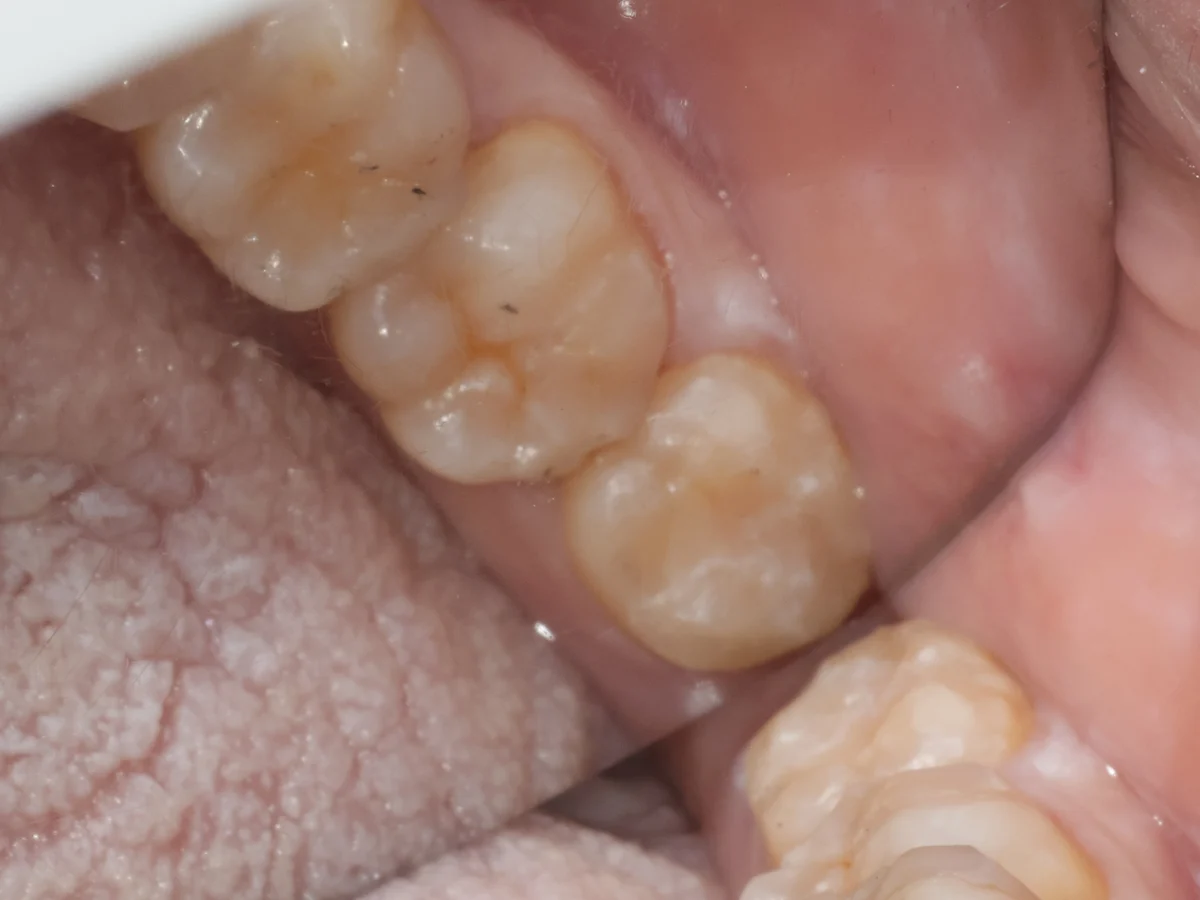
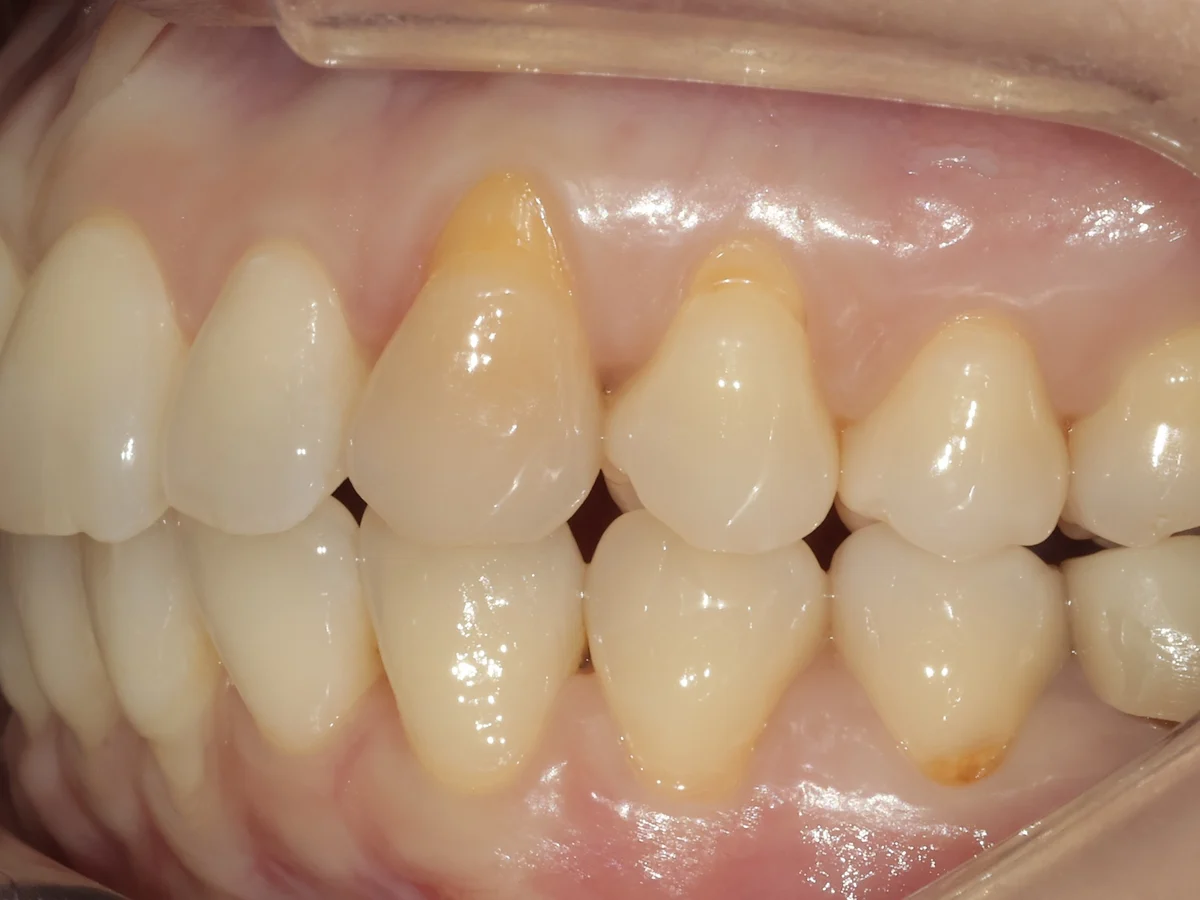
The shape and location give clues: smooth wear on one side points to brushing, a deep wedge on a tooth with worn chewing surfaces points to force, and a broad rounded dish shape points to acid. See our worn tooth necks (abfraction) page for cases and treatment steps.
What are the signs of enamel loss?
Sensitivity can accompany tooth wear: when enamel thins and dentin is exposed, cold water or air can sting. A systematic review of 21 studies found sensitivity in an average of 42.1% of people with tooth wear versus 18.7% of people without it (Denucci et al., Periodontology 2000, 2026). Other signs are front teeth that look shorter or see-through at the edges, a yellower front surface (dentin showing through thin enamel) and notches at the gum line that trap food. These changes happen slowly, so comparing photos taken from the same angle at check-ups can help document whether wear is progressing.
How can you stop enamel from wearing further?
- After acidic food or drinks: rinse with water first and brush a little later; scrubbing softened enamel right away wears it faster. Do not hold soda or vinegar drinks in your mouth.
- Brushing: use a soft brush with light pressure and short circles from the gum toward the tooth, not long side-to-side strokes.
- Grinding and clenching: a night splint reduces the force on your teeth. It does not stop the habit, but protects enamel and existing restorations (teeth grinding).
- Acid reflux: if you often taste acid or have heartburn, we recommend seeing a physician as well; dental treatment alone cannot stop erosion if the cause remains.
How is worn enamel treated?
It depends on how deep the wear is and what caused it. Shallow, non-sensitive wear is monitored with photos after the cause is addressed. Deep notches or ones that trap food are filled with tooth-colored composite; if clenching is part of the cause, a splint is made as well.
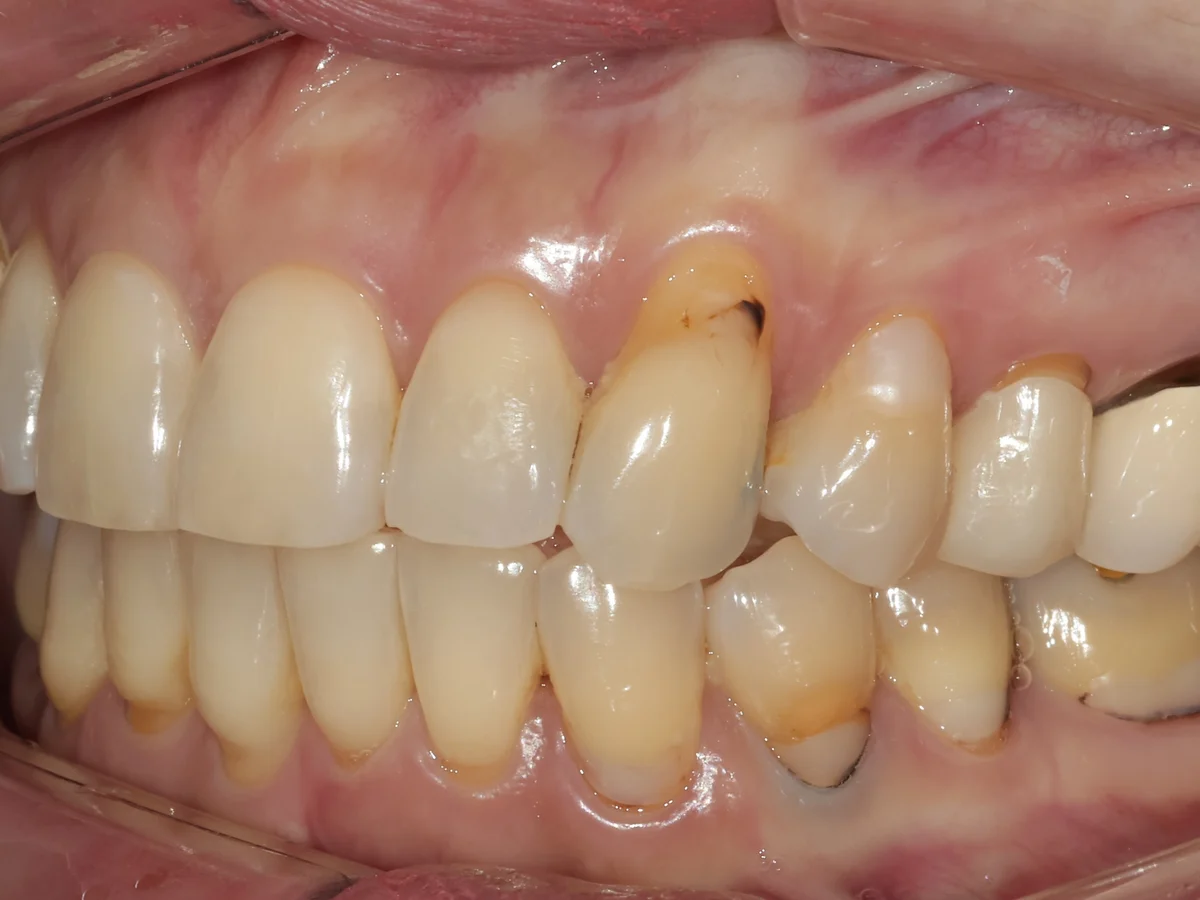
Before · March 2026
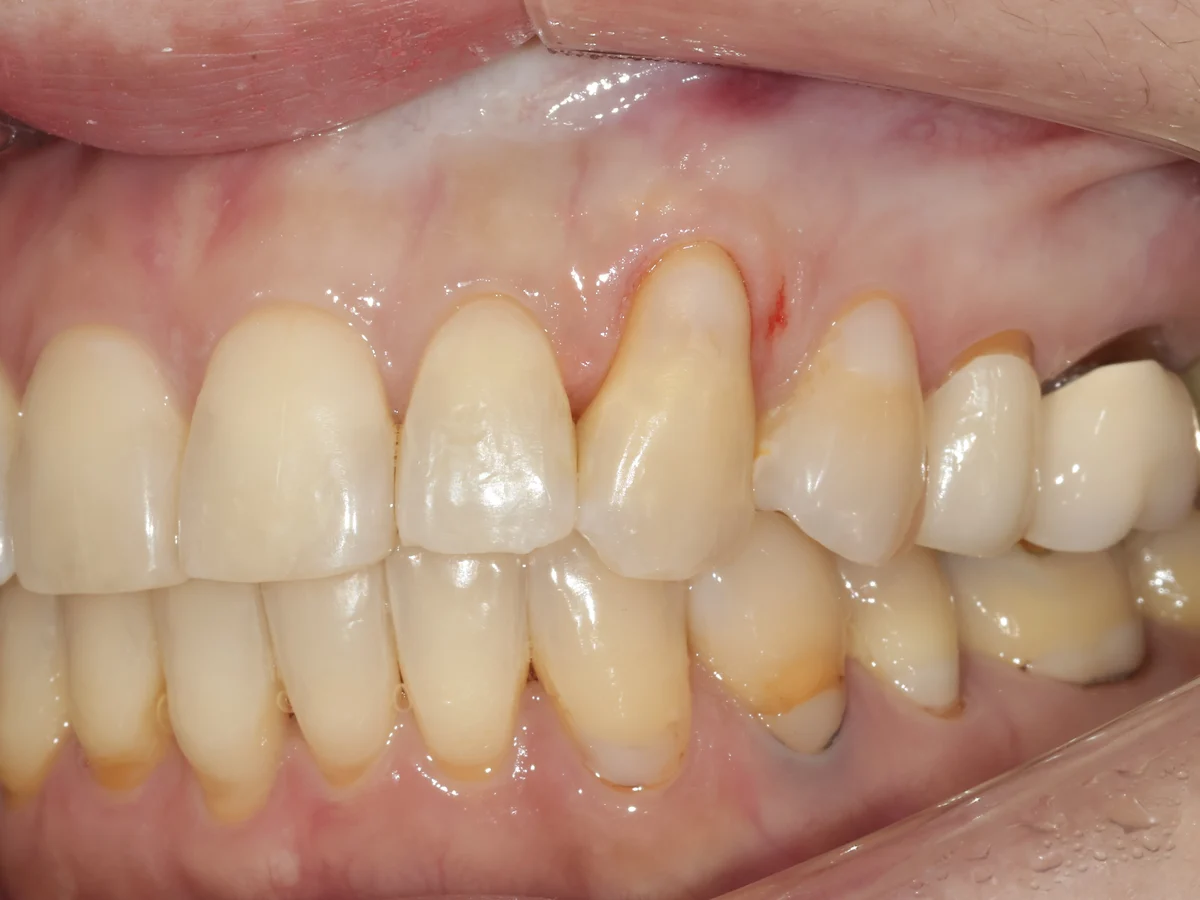
After · Mar 2026
A clenching habit combined with brushing had left a deep notch at the neck of the upper canine. We filled it with resin and also made a night splint so less force falls on the filled area. No crown (only the worn area needed filling). 2 visits (resin on the same day, splint fitted 1–2 weeks later).Possible side effects · resin wear or debonding, lasting sensitivity, margin showing again. Published with the patient's consent; photos taken of the same area from the same direction. Results and side effects vary from person to person.
If the edges of your front teeth have worn shorter, or the front surface has thinned and you also want to change color and shape, porcelain veneers (CERANATE) can add back what was lost. The worn space becomes room for ceramic, so no-prep or minimal-prep veneers may be possible (case by case, decided after diagnosis). Molars that have lost a lot of height may need crowns or a review of the whole bite.
What does "keeping veneer preparation in enamel" mean?
A veneer is a thin ceramic shell bonded to the front of a tooth, and how long it lasts depends on whether it is bonded to enamel or to dentin. "Staying in enamel" means that even if the front surface is shaped, the amount removed is planned so a layer of enamel remains under the veneer.
Where the tooth has room for an addition, no-prep or minimal-prep veneers may be an option. Whether preparation would expose dentin depends on tooth position and the enamel that remains.
In a study of 580 veneers followed for up to 12 years, survival was 99% when the preparation stayed within enamel and 94% when enamel remained only at the margins. Veneers bonded to dentin, or with margins in dentin, were about 10 times more likely to fail than those bonded to enamel (Gurel et al., International Journal of Periodontics & Restorative Dentistry, 2013). A lab study also found bond strength was highest on enamel and lowest on dentin (Öztürk et al., Journal of Dentistry, 2013).
Because front-tooth enamel is only about 0.5 mm thick near the gum and thins with age, removing a fixed depth from every tooth can expose dentin at the gum side. So we work backward from the final shape and set the amount for each tooth. Teeth whose final shape sits outside their current surface are not shaped, and teeth that need shaping are kept within enamel wherever possible. If front teeth stick out and would need a lot of shaping, we check whether partial braces could move them first.
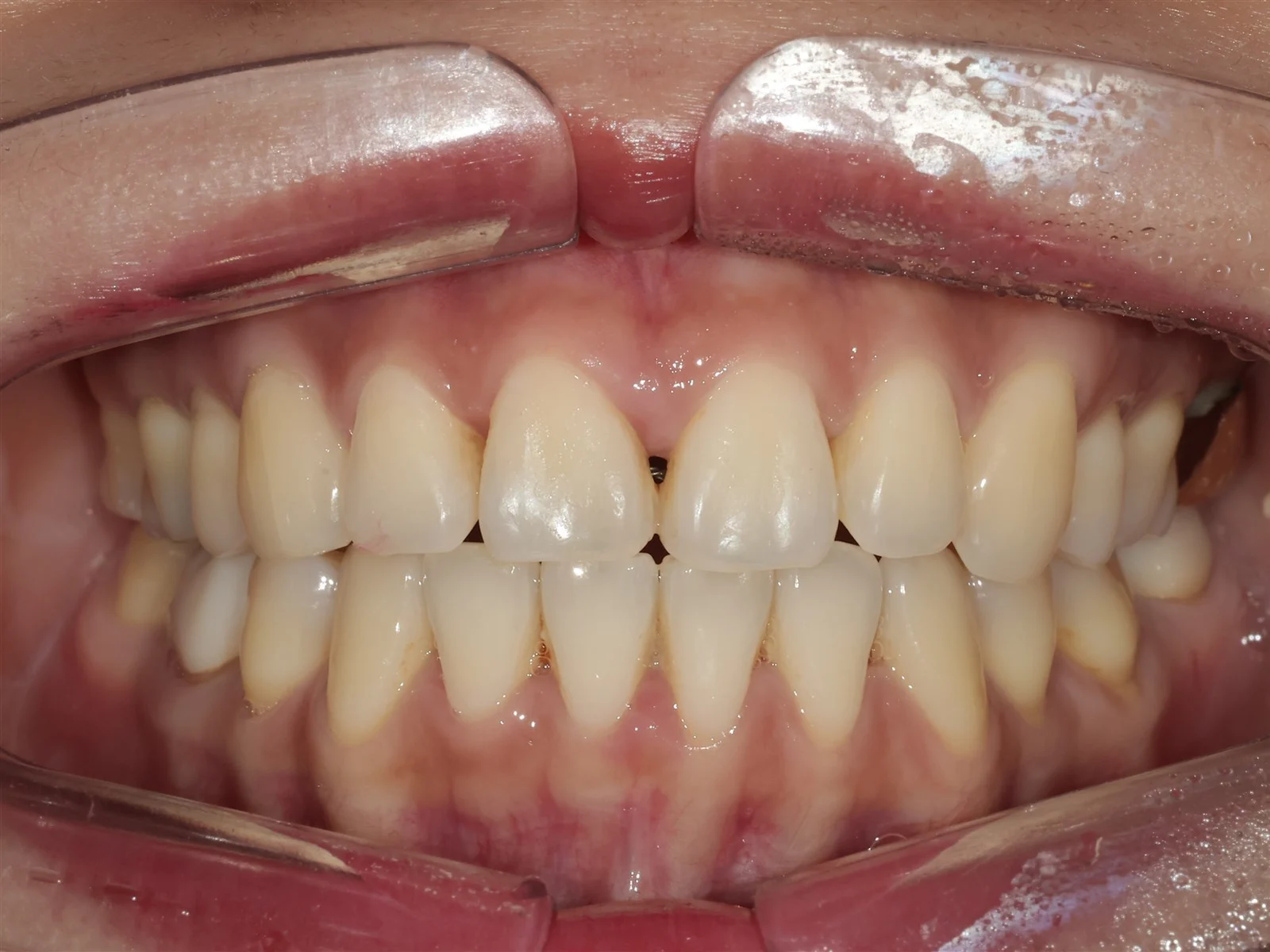
Before · May 2026
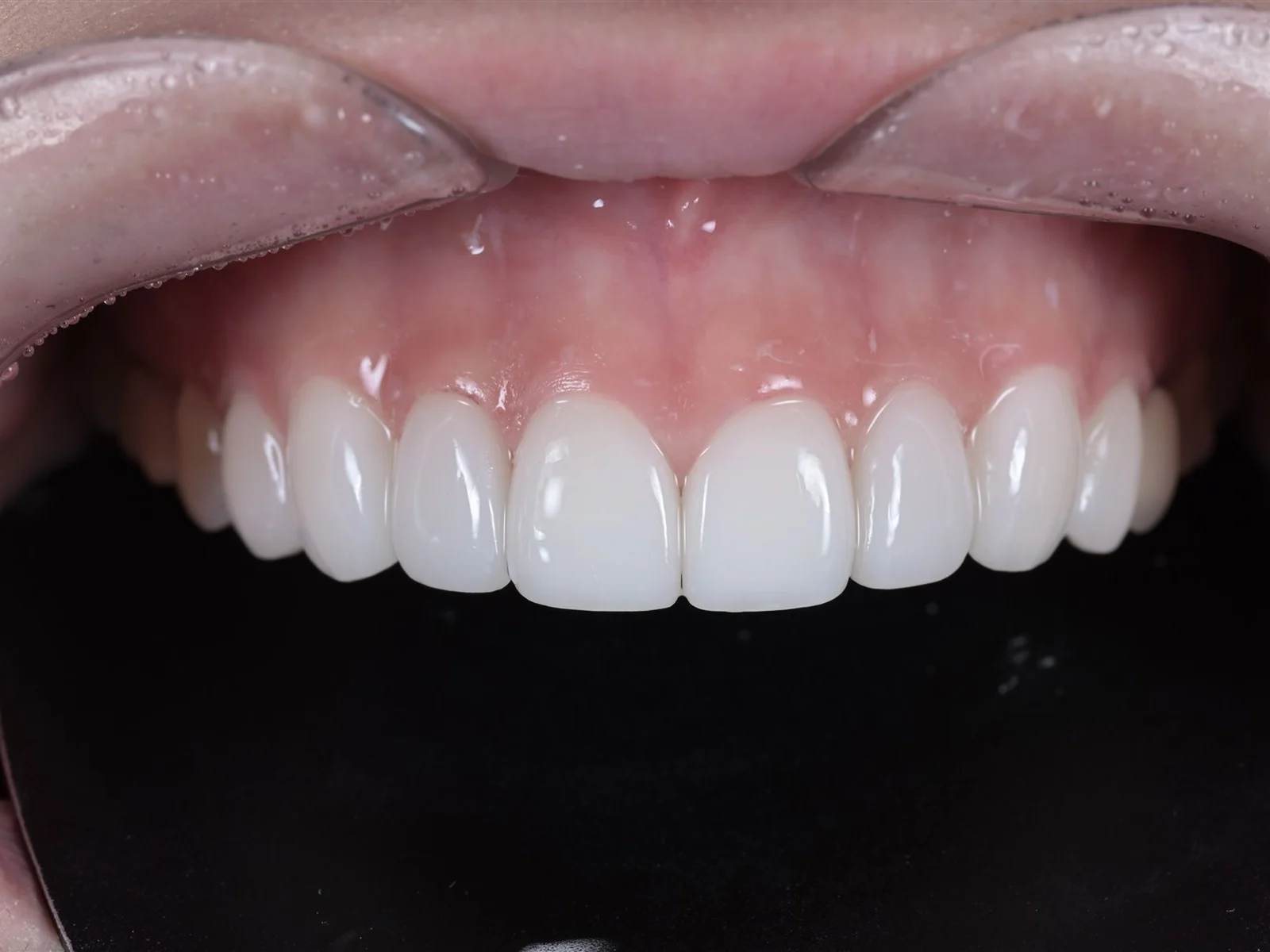
2-week check-up after treatment · May 2026
8 upper CERANATE veneers: 5 teeth that needed added length were shaped 0.2 mm or less without anesthesia, and only the left canine, which sat outside the planned shape, was shaped about 0.7 mm under local anesthesia. Prepared on the day of consultation, bonded the next day (2 visits over 2 days).Possible side effects · shaped tooth structure cannot be restored, bulky feel, chipping or debonding, sensitivity, margin staining and gum inflammation, original tooth color showing through. Published with the patient's consent; photos taken of the same area from the same direction. Results and side effects vary from person to person. No-prep veneers page
No-prep is not for every tooth: if front teeth stick out or are very dark, no-prep veneers can look bulky or fail to hide the color. See no-prep vs minimal-prep veneers for which teeth suit each.
Coming from abroad: how many days, and what about aftercare?
- Filling worn areas: composite is done on the same day.
- Night splint: fitted 1–2 weeks after the impression, so plan two visits.
- Veneers: in the case above, preparation and bonding took 2 days; the schedule depends on whether each tooth is no-prep, minimal-prep or needs braces first.
- After you fly home: photos taken from the same angle help us follow wear; send them on WhatsApp. Pain, chipping or a loose veneer needs to be checked in person, locally or at your next visit.
For planning your stay, see how many days you need in Korea and visiting from abroad.
Cost: fees depend on how many teeth and surfaces are filled, whether a splint is needed, and for veneers the number of teeth and the material. Filling worn areas with composite is not covered by Korean National Health Insurance. Fees are on our cavity and wear treatment costs and veneer costs lists, and we give you the total before treatment starts. International and Korean patients pay the same fees.
Frequently asked questions
Can tooth enamel grow back?
Does enamel repair toothpaste rebuild worn enamel?
Should I brush right after drinking something acidic?
Do veneers remove enamel?
Is enamel erosion treatment covered by insurance in Korea?
References
- Jánosi KM, et al. Quantitative Evaluation of Enamel Thickness in Maxillary Central Incisors in Different Age Groups Utilizing Cone Beam Computed Tomography a Retrospective Analysis. Diagnostics (Basel). 2024;14(22):2518. PubMed 39594184
- Sedek EM, Holiel AA. Next-Generation Strategies for Enamel Repair and Regeneration: Advances in Biomaterials and Translational Challenges. Tissue Eng Regen Med. 2025;22(6):771-789. PubMed 40347432
- Ganss C, Lussi A, Schlueter N. The Histological Features and Physical Properties of Eroded Dental Hard Tissues. Monogr Oral Sci. 2025;33:72-80. PubMed 40435958
- Wang J, Zhou Y, Lei D. Relationship Between Laryngopharyngeal Reflux, Gastroesophageal Reflux Disease, and Dental Erosion in Adult Populations: A Systematic Review. Dig Dis Sci. 2025;70(3):1078-1090. PubMed 39826062
- Denucci GC, et al. Association of tooth wear with dentin hypersensitivity: A systematic review. Periodontol 2000. 2026 (online ahead of print). PubMed 42670751
- Gurel G, et al. Influence of enamel preservation on failure rates of porcelain laminate veneers. Int J Periodontics Restorative Dent. 2013;33(1):31-9. PubMed 23342345
- Öztürk E, et al. Shear bond strength of porcelain laminate veneers to enamel, dentine and enamel-dentine complex bonded with different adhesive luting systems. J Dent. 2013;41(2):97-105. PubMed 22521701
Worried your enamel is wearing down?
Send us photos of the sensitive or worn teeth for a rough direction. The cause and treatment are confirmed after an examination in person.
Ask on WhatsAppThis article is for general information and does not promise any particular result. Suitability, treatment plan, results and schedules differ from person to person. Please have a consultation and examination with a dentist before treatment. For current prices, see our price list.