
COLUMN · Orthodontics
How Much Does Invisalign Cost in Korea?
Starting in Seoul and Continuing Treatment Back Home
At Ceramic Dental Clinic (Hakdong Station, Gangnam, Seoul), comprehensive Invisalign treatment costs KRW 6,000,000 in total (about USD 4,500), the same fee Korean patients pay. The fee includes the orthodontic exam when you start, extractions (except wisdom teeth), mini-screws, mid-course rescans and additional aligners, basic retainers, and retainer check-ups for 2 years after treatment. Treatment takes from a few months (front teeth only) to about 2 years or more (extraction cases), with a visit usually once every 2–3 months. You can start in Seoul and keep going while living abroad: either you come back every 2–3 months with several stages of aligners in hand, or, if you are moving for good, an Invisalign case can be transferred to another Invisalign provider through Align Technology. I consult with you in English myself, from the first visit to the end of treatment.
I am Dr. Sunmin Kim, head dentist at Ceramic Dental Clinic and a board-certified orthodontist with 16 years in practice. People who write to me from abroad usually ask three things in the same message: what Invisalign costs here, how many trips it takes, and what happens when they go home in the middle of treatment. This article answers those three questions with our actual fee schedule and the way we run treatment for patients who live outside Korea. Who aligners suit and how they work is covered on our Invisalign page; visit intervals for all appliances are in braces in Seoul while living abroad.
How much does Invisalign cost in Korea at our clinic?
Our fees are published on our dental costs page. Invisalign is KRW 6,000,000 for comprehensive treatment. Here is what that total covers and what it does not.
| Item | Invisalign at Ceramic Dental Clinic |
|---|---|
| Invisalign (comprehensive) | KRW 6,000,000 (about USD 4,500) |
| Orthodontic exam | KRW 50,000 (about USD 37), or KRW 100,000 in total with a CT scan. Included in the orthodontic fee if you start treatment |
| Included | Extractions (except wisdom teeth), mini-screws, mid-course rescans and additional aligners, basic retainers, retainer check-ups and adjustments for 2 years after treatment |
| Extra, only if needed | Special appliances such as an arch expander or a deep-bite appliance (KRW 300,000); remaking a broken or lost retainer; retainer re-bonding or remaking after the 2-year period |
| Korean National Health Insurance | Not covered |
Two things can change the figure. Aligner treatment can cost less when fewer stages are needed, and adding brackets for fine adjustments can add cost. If only the front teeth need aligning, we often use Seraphin clear aligners instead, which are priced differently; we explain that at the consultation. Whatever the plan, I tell you the total before treatment starts. For comparison within our own fee schedule, fixed braces start at KRW 4,500,000 (Clippy-C) and clear ceramic braces (S-Line) are KRW 5,000,000.
Will an English-speaking orthodontist treat me?
Yes. If you are looking for an English-speaking orthodontist in Gangnam, I am the one who consults with you, explains the diagnosis and the treatment plan, and sees you at check-ups. You do not need an interpreter, and your orthodontist does not change partway through treatment. Before your trip you can send photos of your teeth on WhatsApp, and I will give you a rough direction. The diagnosis and total cost are given after an examination in person. More about language support is in English-speaking dentist in Gangnam.
How long does Invisalign take, and how many trips to Seoul?
Treatment time depends on how far the teeth need to move and how consistently you wear the aligners, not on the brand. In the cases published on our Invisalign page, aligning relapsed upper front teeth took about 6 months, a snaggletooth with rotated front teeth about 14 months, and an extraction case about 2.5 years. Visits are usually once every 2–3 months.
- Trip 1 · Exam and 3D scanWe take face and teeth photos, a side-view X-ray (cephalogram) and a panoramic X-ray, plus a 3D CT if needed, and scan your teeth with an iTero intraoral scanner instead of impressions. I sort out which movement each tooth needs and explain whether aligners suit you.
- Between trips · The treatment planI check and correct the tooth-movement plan (ClinCheck) myself and go through it with you. The aligners are manufactured after the plan is approved, so the first aligners cannot be fitted on the day of the scan.
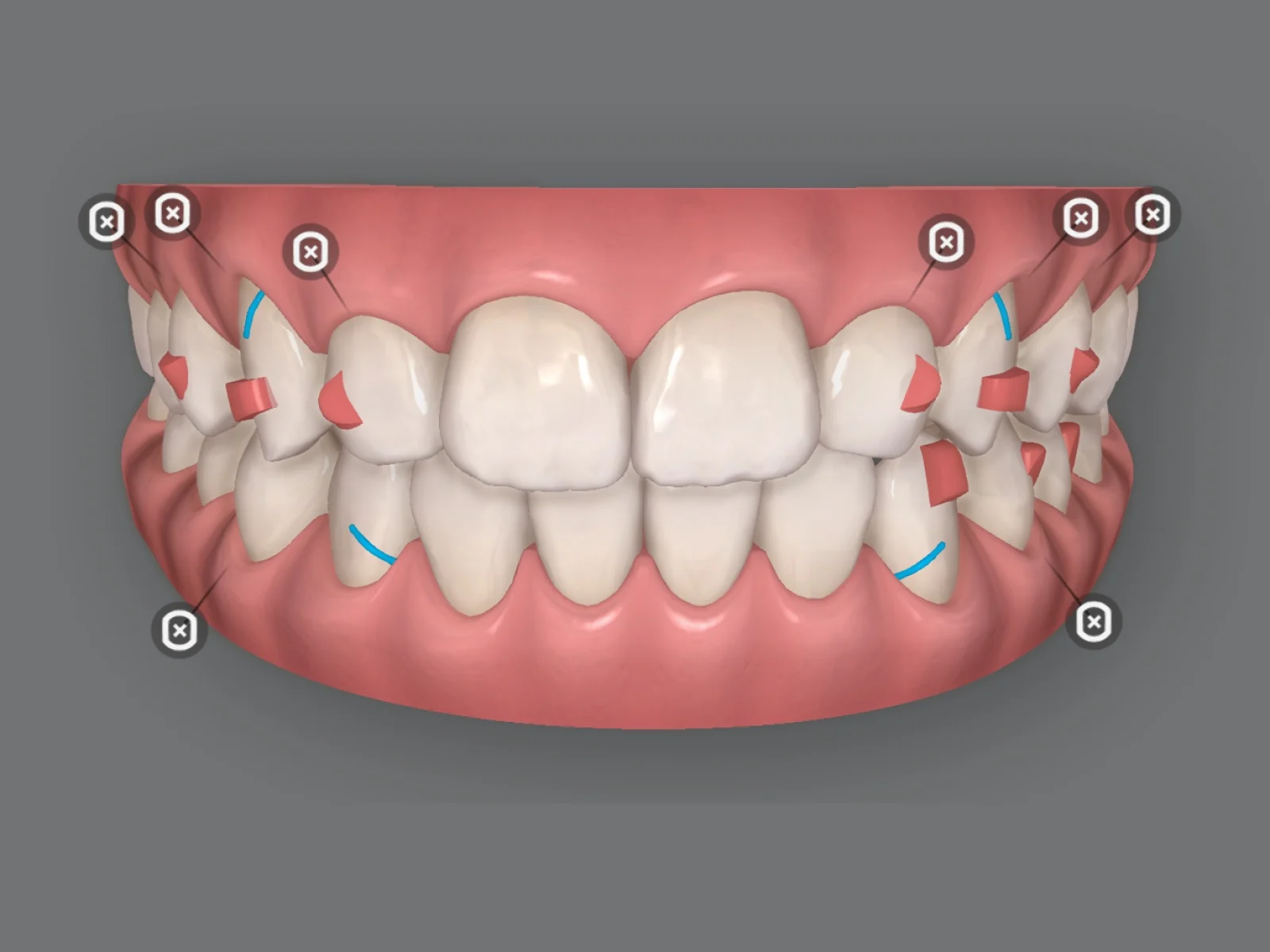
- Trip 2 · Attachments and first alignersWe bond small tooth-colored attachments, fit your first aligners and show you how to wear and clean them. You switch to the next aligner usually every 1–2 weeks, and we give you several stages in advance.
- Every 2–3 months · Check-upsWe check that the aligners fit snugly and that the teeth are following the plan. If they are not, we rescan and make additional aligners (included in the fee).
- Final visit · RetainersWe remove the attachments, polish the teeth and give you retainers. A clear retainer made from a scan can be sent to you abroad.
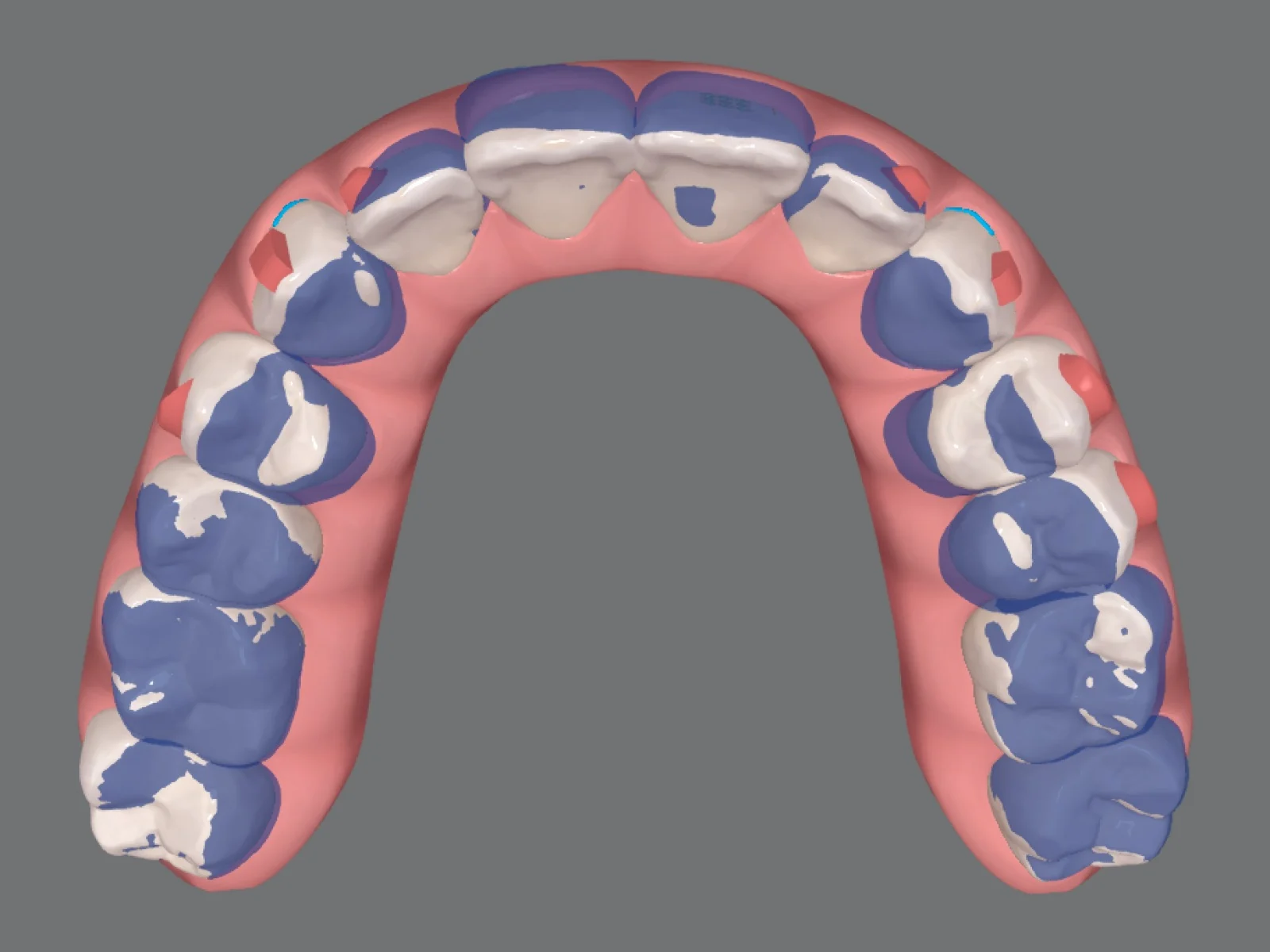
How many days you need for each trip, and how long the gap is between the scan and the first aligners, depends on your schedule and the plan. Tell us your travel dates when you first write, and we plan around them.
Can I start Invisalign in Seoul and continue treatment back home?
Yes. There are two ways to do it, and it helps to decide which one fits you before you start.
1. Keep your treatment with us and visit every 2–3 months
This is the usual route for people who live in Japan, other parts of Asia, or who visit Seoul regularly. You wear several stages of aligners at home, come back for a check-up about every 2–3 months, and send us a photo on WhatsApp if something comes up in between, such as a lost or cracked aligner or an attachment that has come off. We tell you what to do, and some problems need a visit. The rescans and additional aligners that are often needed partway through are part of the fee.
2. Transfer to an Invisalign provider where you live
If you are moving and cannot come back to Seoul, an Invisalign case can be transferred to another Invisalign provider. Align Technology uses a patient transfer form signed by both doctors; once it is processed, the new doctor can see your treatment plan and order aligners. The receiving doctor decides whether to take on the case, often takes a new scan, and sets their own fees, so check with them early. If there is any chance you will move during treatment, tell me at the consultation so we can plan for it before you start.
When this is harder
Plans with many difficult movements need more frequent checks, and fixed braces need a visit about once a month. If you can only come to Seoul every 6 months or less often, tell us at the first consultation; whether that is realistic depends on the movements your teeth need.
Is Invisalign right for my teeth?
Clear aligners move teeth by wrapping around them and pushing from the outside. They are good at tipping front teeth into line, closing gaps and fixing mild crowding or minor relapse after earlier braces. Pulling a short tooth further out of the gum, rotating round teeth a lot and moving teeth bodily while closing extraction spaces are harder and may need attachments, elastics or mini-screws. Research shows the same pattern. A systematic review of clear aligner studies found extrusion was the hardest movement to control (about 30% accuracy), followed by rotation (Rossini et al., 2015). A prospective Invisalign study found that on average about 50% of the planned movement was achieved, with rotation among the lowest at about 46% (Haouili et al., 2020). That is why rescans and additional aligners are common, and why we include them in the fee.
If what bothers you is mainly the color or shape of the front teeth rather than their position, porcelain veneers are a different treatment. They change the surface of the teeth but do not move them, so crooked teeth or a bite problem are usually corrected with orthodontics first.
Side effects and limits
- If you wear the aligners less than 20–22 hours a day, the teeth will not move as planned, and you will need more aligners and more time.
- For the first few days and for 1–2 days after each aligner change, you may feel pressure and notice changes in your speech.
- Drinking sugary drinks with the aligners in raises the risk of cavities. Take them out for anything other than water.
- Attachments may come off or become discolored.
- Shortening of tooth roots or gum recession can occur with orthodontic treatment regardless of the appliance.
- Teeth tend to move back after treatment, so retainers are needed.
Frequently asked questions
How much does Invisalign cost in Korea?
Can I start Invisalign in Seoul and continue treatment back home?
How many times do I need to come to Seoul for Invisalign?
Is there an English-speaking orthodontist in Gangnam who does Invisalign?
Are refinements and extra aligners included?
References
- Rossini G, Parrini S, Castroflorio T, Deregibus A, Debernardi CL. Efficacy of clear aligners in controlling orthodontic tooth movement: a systematic review. Angle Orthodontist. 2015;85(5):881-889. doi:10.2319/061614-436.1
- Haouili N, Kravitz ND, Vaid NR, Ferguson DJ, Makki L. Has Invisalign improved? A prospective follow-up study on the efficacy of tooth movement with Invisalign. American Journal of Orthodontics and Dentofacial Orthopedics. 2020;158(3):420-425. doi:10.1016/j.ajodo.2019.12.015
- Align Technology. Invisalign Patient Transfer Form (release of patient by the current treating provider and acceptance by the new treating provider).
Planning Invisalign around a trip to Seoul?
Send us photos of your teeth and your travel dates on WhatsApp for a rough direction. The diagnosis and total cost are given after an examination in person.
Ask on WhatsAppThis article is for general information and does not promise any particular result. Suitability, treatment plan, results, schedules and the number of visits differ from person to person. Prices are as of November 2026; for current prices, see our price list. Please have a consultation and examination with a dentist before treatment.