
COLUMN · Gums · Periodontal treatment
Gum Disease Treatment Cost:
From Deep Cleaning to Gum Surgery
The cost of gum disease treatment depends on three things: how many areas of your mouth need deep cleaning (scaling and root planing), whether any spots still need gum surgery after a re-check, and whether special regeneration materials are used. Mild gum inflammation (gingivitis) is usually handled with a regular cleaning; periodontitis needs treatment below the gum line, planned area by area. That is why a clinic can give you an accurate quote only after measuring your gums.
At Ceramic Dental Clinic (Hakdong Station, Gangnam, Seoul), people often ask "How much will my gum treatment cost?" before we have seen their gums. The honest answer is a structure rather than a single number. This article explains the treatment steps, what moves the cost up or down, how Korean insurance works, and how to plan treatment if you are visiting Korea. For how often to get a routine cleaning, see How often should you get a dental cleaning?
What are the stages of gum disease, and how is each treated?
Gingivitis means the gums are red, swollen and bleed, but the bone is still intact. It can be reversed with a cleaning and better brushing. Periodontitis means the inflammation has moved below the gum and the bone that holds the teeth has started to break down. At that point a routine cleaning cannot reach the tartar on the roots.
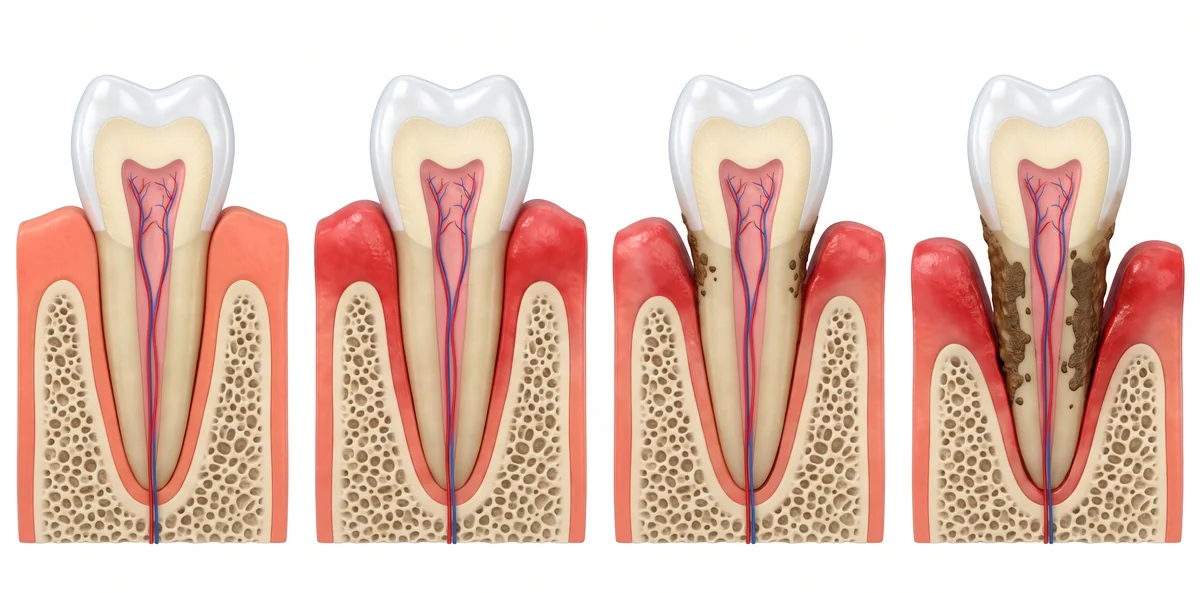
1. HealthyGum fits snugly; bone is high
2. GingivitisSwollen gum, bone intact → cleaning
3. Early periodontitisTartar under the gum, some bone loss → deep cleaning
4. Advanced periodontitisDeep pocket, much bone loss → surgery considered after re-check
- Scaling (cleaning) removes tartar from the tooth surface and just under the gum line.
- Root planing (deep cleaning) cleans and smooths the root surface below the gum under local anesthesia.
- Curettage also removes inflamed tissue lining a deep pocket.
- Flap surgery opens the gum so the root and bone can be cleaned under direct view.
- Bone grafting or guided tissue regeneration may help rebuild lost support where the bone shape allows it.
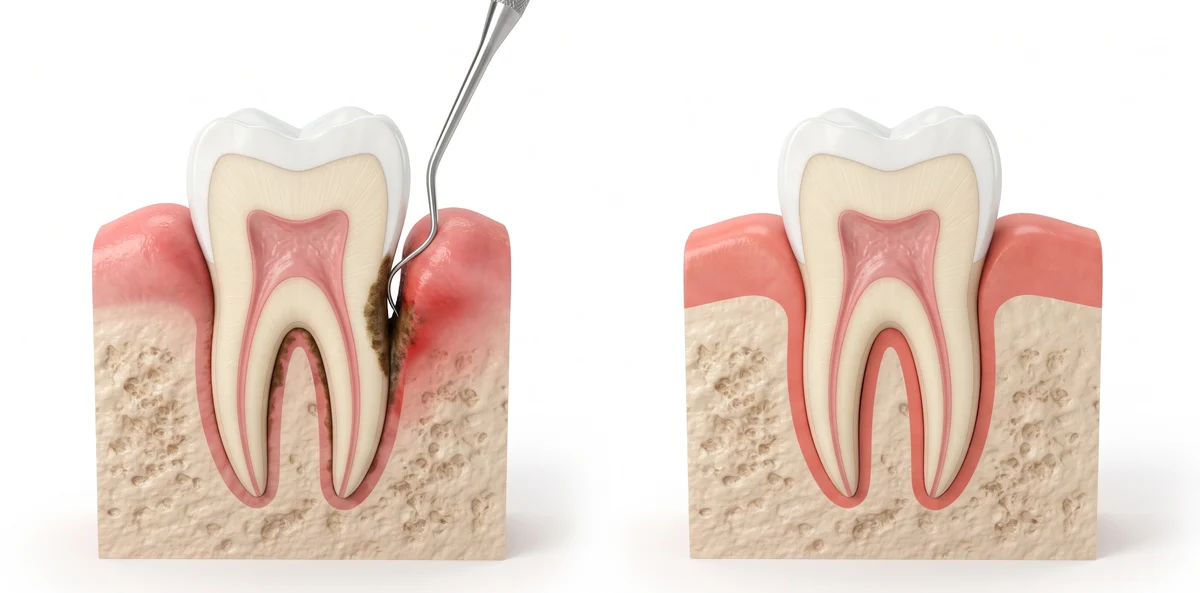
Left · during root planingA thin curette removes dark tartar and bacterial film from the root
Right · afterwardsThe root surface is smoother, and the pocket may become shallower as inflammation and swelling subside
Treatment goes step by step. Korea's Health Insurance Review and Assessment Service (Notice 2023-33) sets the same principle: gum treatment normally proceeds in stages, after initial treatment such as scaling and root planing or after acute symptoms such as pain, swelling or bleeding have been relieved. If one of three surgeries (flap surgery, bone grafting of a bony defect, or guided tissue regeneration) is claimed without that prior treatment, it is recognized only as curettage. Many pockets become shallow after the first step alone, so measuring again after 4–8 weeks often reduces the number of spots that need surgery.
What makes gum disease treatment cost more or less?
The number of areas. Gum treatment is planned and priced area by area. In Korea each jaw is divided into three areas (two back-teeth areas and the front six teeth), six in total. One deep area costs much less than all six.
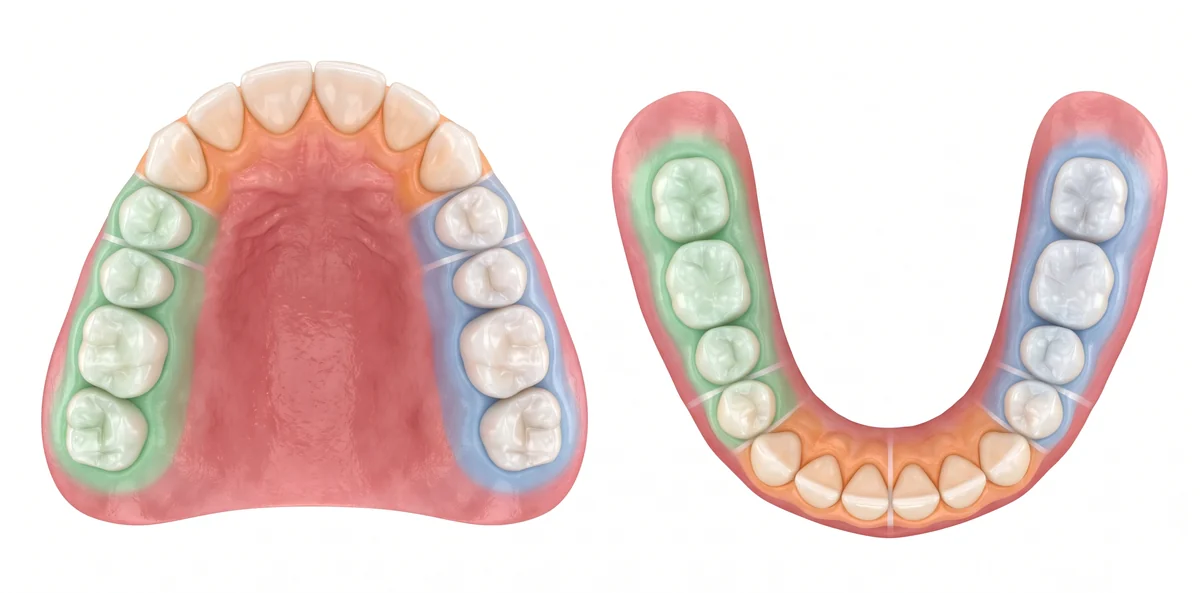
Back-teeth areas2 premolars and 2 molars on each side
Front areaThe 6 teeth from canine to canine
How far treatment goes. Some people finish after root planing; others need surgery at a few spots that stay deep after the re-check. Surgery costs more than deep cleaning.
Materials and tests. Gum measurements and X-rays are part of the first exam. If bone regeneration materials are used during surgery, some of them add an extra cost, and we tell you before surgery.
Insurance. In Korea, most gum treatments, from scaling and root planing to flap surgery and bone grafting, are on the National Health Insurance list. The standard outpatient copayment at a dental clinic is 30% of covered charges. It is 10% for pregnant patients, and a separate rule applies to patients 65 and over when the covered charges are within a set threshold. Short-term visitors without Korean National Health Insurance pay the full cost. Our price list shows the uninsured cleaning fee and the bone graft range; deep cleaning and surgery are quoted per area after the exam.
How long does gum disease treatment take, and how many visits?
On the first visit we measure every tooth at several points and take X-rays. That decides which areas need treatment and how far it should go, and we explain the fee then. Treatment below the gum is usually split into 2–4 sessions, and we re-measure 4–8 weeks later using the same method. Details are on our gum disease treatment page.
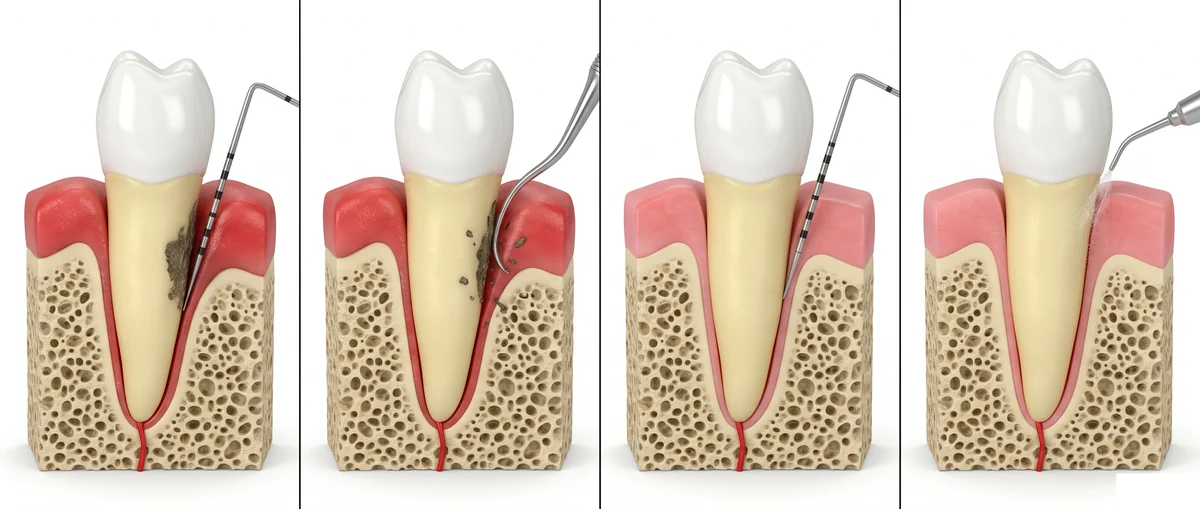
1. MeasureA graduated probe measures pocket depth
2. Deep cleaningRoot surfaces cleaned under local anesthesia
3. Re-check (4–8 weeks)Measured again the same way
4. MaintenanceUsually every 3–6 months
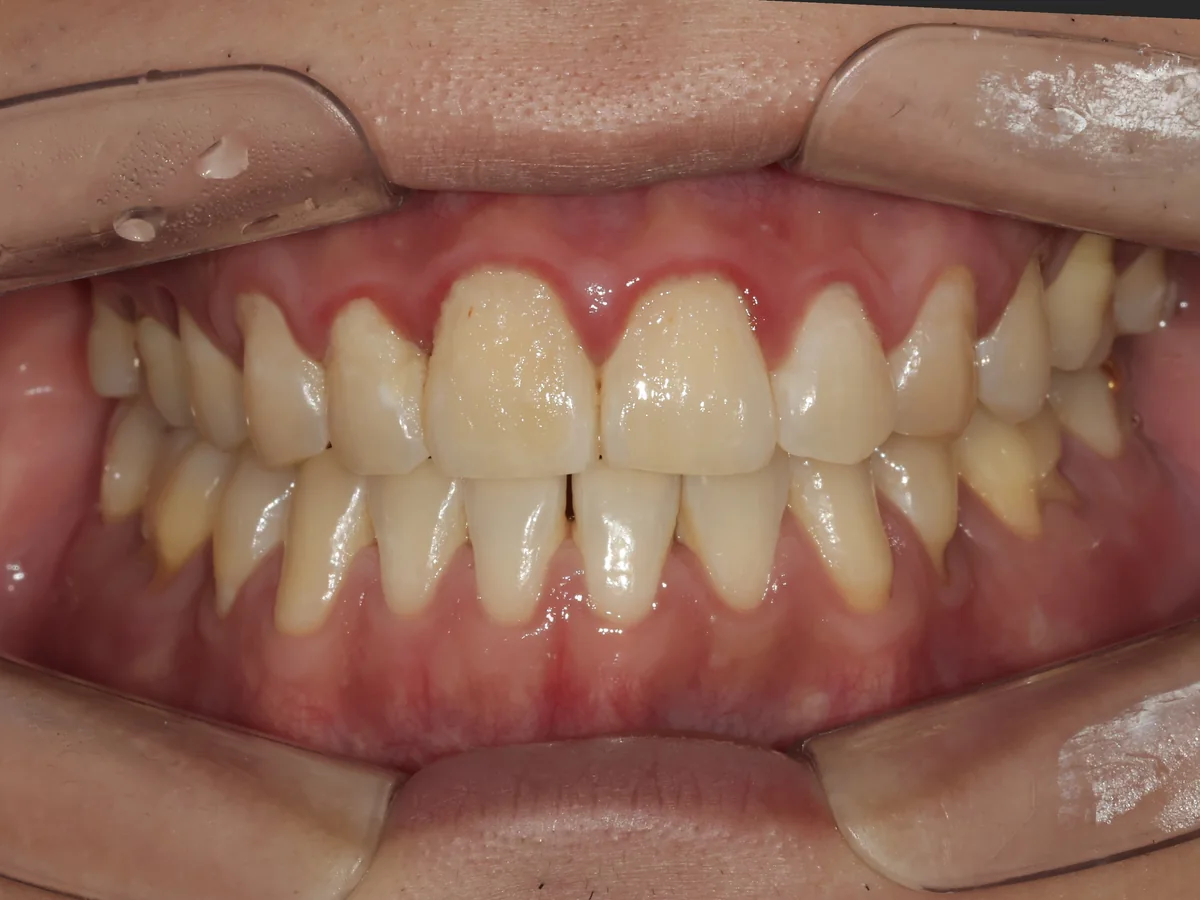
Before treatment · August 2026
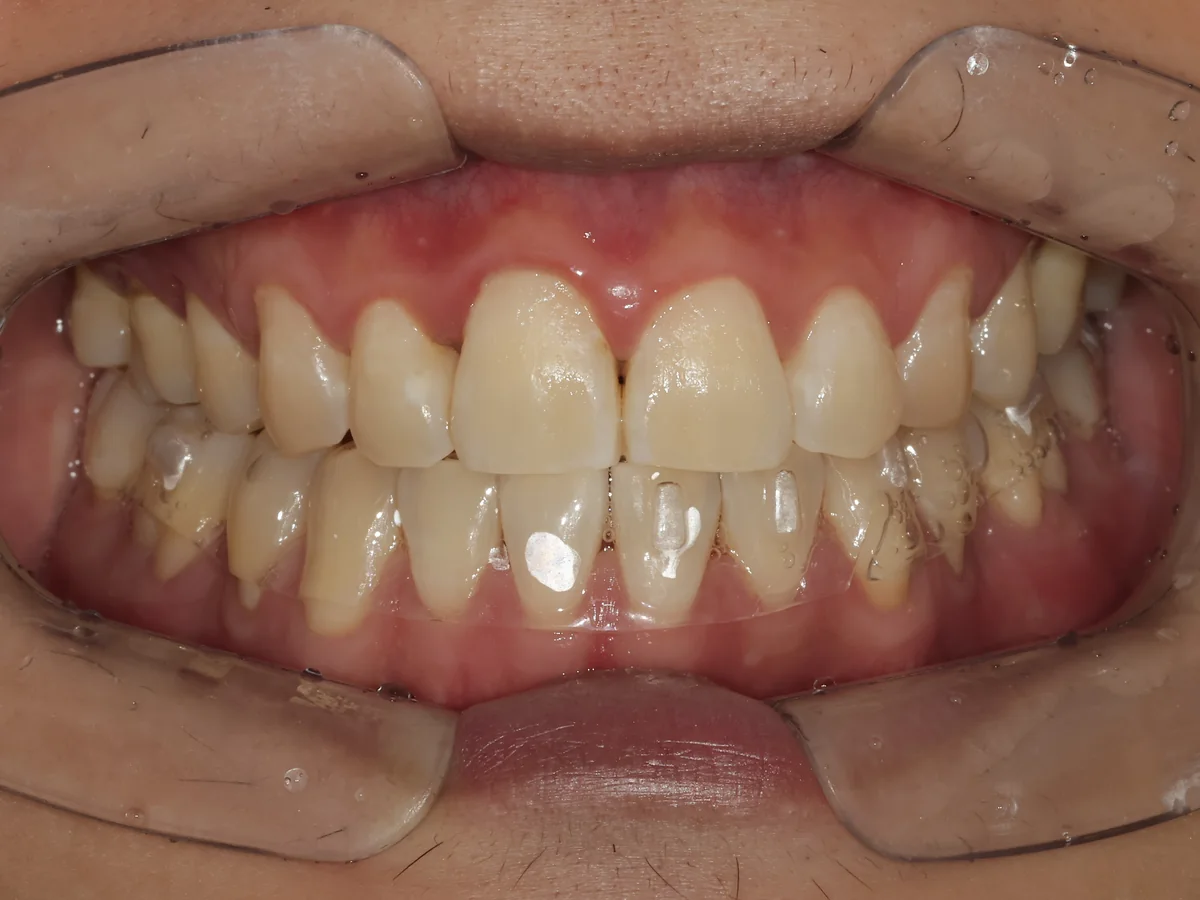
1 month after treatment · September 2026
The gums were red and swollen throughout and bled at every brushing. The gums were re-evaluated after treatment below the gumline under local anesthesia. One month after treatment, the red, swollen gums had settled and the gumline at the necks of the teeth was clearly defined again. The 1-month photo was taken with a clear aligner on the lower teeth, started after the gum inflammation had settled. Deep spots of 5mm or more went from 5 to 1, so the patient moved to regular maintenance without surgery.Possible side effects · gum recession and sensitivity, black triangles, soreness after treatment, recurrence if care stops. Published with the patient's consent; before-and-after photos were taken of the same area from the same direction. Treatment results and side effects may vary from person to person.
When is gum surgery needed?
At the re-check, we consider pocket depth, bleeding, and the shape of the roots and bone. For stage III periodontitis, the European Federation of Periodontology guideline suggests repeating non-surgical cleaning for remaining 4–5 mm pockets and considering flap surgery for pockets of 6 mm or deeper after initial treatment. Depending on the bone shape, regeneration treatment may be possible. Lost bone does not all grow back; the goal is to turn deep pockets into ones you can keep clean at home.
Planning gum disease treatment in Korea
Because of the re-check 4–8 weeks after deep cleaning, gum disease treatment does not finish in one short stay. A common plan is:
| Step | Where | What happens |
|---|---|---|
| Trip 1 | Seoul (our clinic) | Gum measurements, X-rays, quote by area, deep cleaning sessions planned around your stay |
| 4–8 weeks later | Seoul, or a dentist near you | Re-check of pocket depth and bleeding; surgery only for spots that stay deep |
| Afterwards | A dentist near you, or us | Maintenance usually every 3–6 months |
If you already have recent X-rays or a periodontal chart from home, send them on WhatsApp before you travel so we can tell you roughly how many areas may need treatment. Healthy gums also come first if you plan porcelain veneers or crowns, because inflamed gums change where the veneer edge should sit. For trip length, see How many days in Korea for dental treatment? and our visiting from abroad Q&A.
Frequently asked questions
How much does deep cleaning cost?
Does Korean health insurance cover gum disease treatment for visitors?
Does deep cleaning hurt?
How many visits does gum disease treatment take?
Is deep cleaning worth it, or can I wait?
References
- Health Insurance Review and Assessment Service (Korea). Criteria for periodontal surgery claimed without initial treatment (Notice 2023-33, effective 2023-03-01). hira.or.kr (in Korean, checked 2026-11-28)
- National Health Insurance Service (Korea). Outpatient co-payment rates by type of medical institution. nhis.or.kr (in Korean, checked 2026-11-28)
- Sanz M, et al. Treatment of stage I–III periodontitis: the EFP S3 level clinical practice guideline. Journal of Clinical Periodontology. 2020;47(Suppl 22):4–60. Guideline
Want to know how many areas need treatment?
Send your X-rays or gum photos on WhatsApp for a rough direction. The exact plan and fee are given after we measure your gums in person.
Ask on WhatsAppThis article is for general information and does not promise any particular result. Suitability, treatment plan, results and schedules differ from person to person. Please have a consultation and examination with a dentist before treatment. For current prices, see our price list.