
COLUMN · Gums · Dental cleaning
How Often Should You Get a Dental Cleaning?
And Getting Your Teeth Cleaned in Korea
Most adults with healthy gums do well with a professional dental cleaning about once a year; if tartar builds up quickly or the gums bleed or are inflamed, every 6 months. If you have had gum disease, have dental implants, or wear braces, we usually start at every 3 to 6 months and adjust it to bleeding, pocket depth and risk factors. In a Cochrane review, adults without severe gum disease who cleaned every 6 months and every 12 months had almost the same gum health after two to three years, so the right interval depends on your gums rather than a fixed calendar. A routine cleaning takes about 30 minutes, so it fits easily into a trip to Seoul.
At Ceramic Dental Clinic (Hakdong Station, Gangnam, Seoul), patients from abroad often ask two things: "Is twice a year really necessary?" and "Can I get my teeth cleaned while I'm in Korea, maybe before whitening or veneers?" This article answers both, along with the questions people search right after a cleaning: does it damage enamel, and why do my teeth feel sensitive or gappy? In Korea a cleaning is called scaling, and you'll see that word on our teeth cleaning page.
How often should you get a dental cleaning?
There is no single number that fits everyone. A 2018 Cochrane review pooled two trials with 1,711 adults in UK general practices who had no severe gum disease and saw a dentist regularly. Over two to three years, cleanings every 6 months and every 12 months made little or no difference to gum inflammation or pocket depth. Six-monthly cleanings left slightly less tartar, but the review called the clinical importance of that small difference unclear (Lamont et al., 2018). Korea's Disease Control and Prevention Agency also advises scaling once a year even without gum disease (KDCA, accessed 2026-11-21).
So if your gums are healthy and you brush and clean between your teeth well, once a year may be enough. Things change if you have had gum disease, have implants, wear braces, smoke or have diabetes: plaque builds up faster or the gums are less able to cope. We start from the intervals below and adjust them after measuring your gum depth and bleeding.
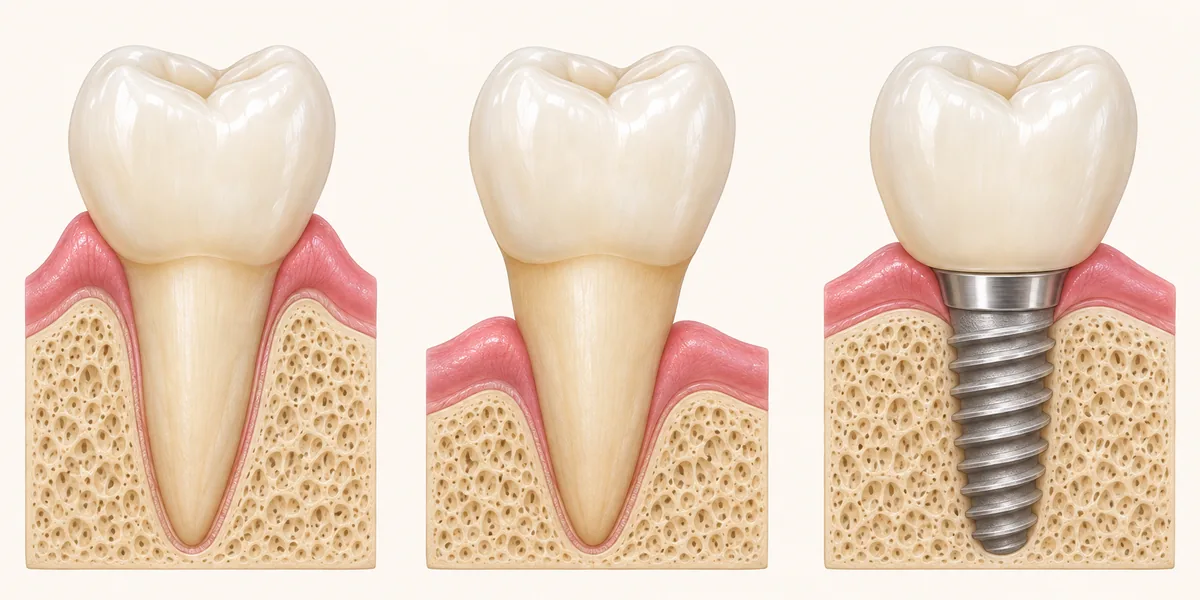
Healthy gumsUsually once a year; every 6 months if tartar builds up fast or the gums are inflamed
After gum disease treatmentUsually every 3–6 months, with gum depth re-measured
Dental implantsEvery 6 months after the crown; every 3 months with past gum disease, smoking or diabetes
During bracesUsually every 3 months or sooner
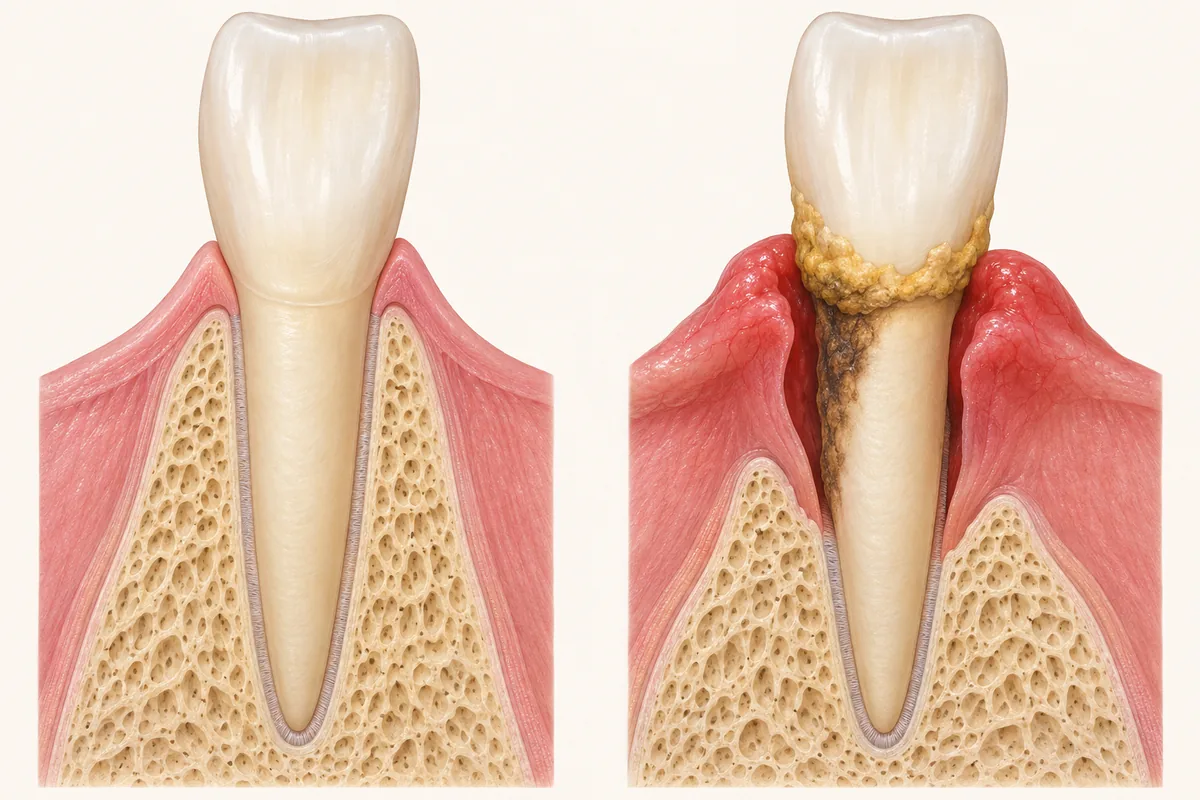
Left · healthyGum fits snugly around the tooth neck
Right · tartar and a pocketYellow tartar above the gum, dark tartar below, a deeper gap and lower bone
Does teeth cleaning damage enamel?
A cleaning is not designed to grind down or reshape your teeth. An ultrasonic scaler tip vibrates with a fine water spray and works at the edge where tartar meets the tooth, cracking the tartar off. Where the gums have receded, the exposed root surface is softer than enamel, so we turn the power down there and treat only where needed.
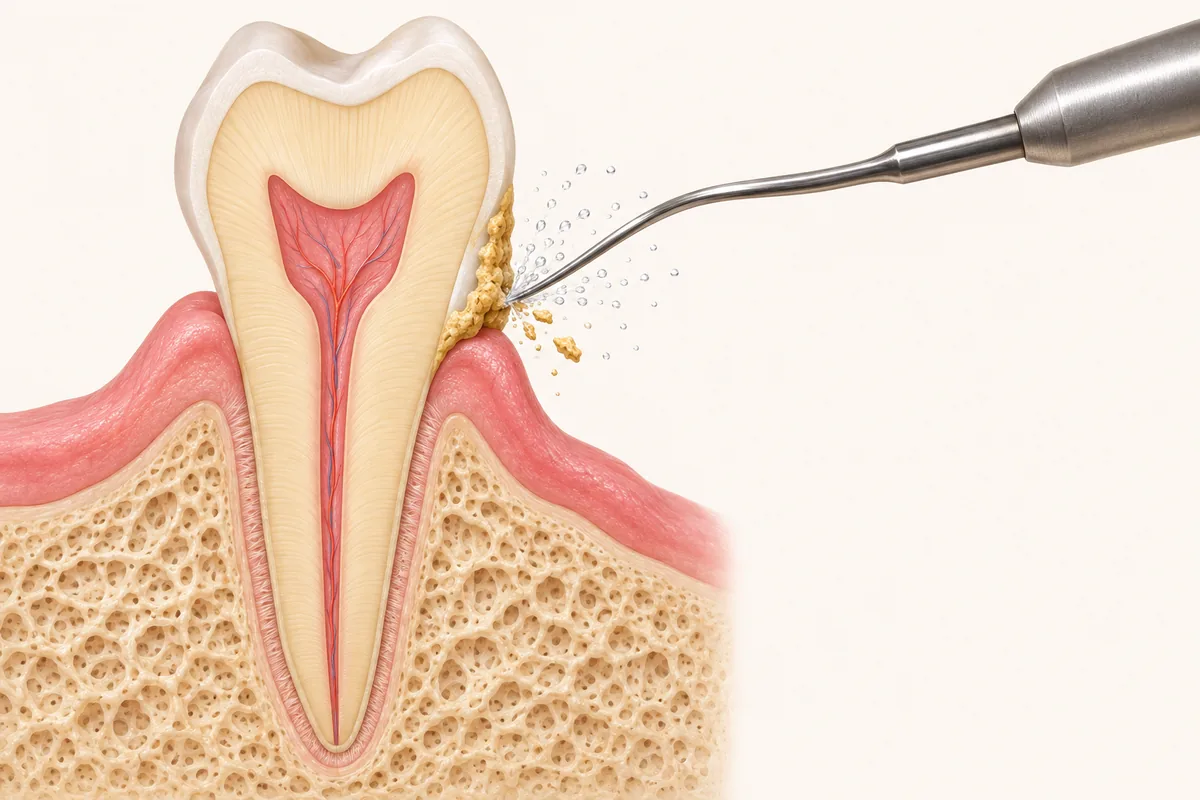
Scaler tipFine vibration and water at the tartar–tooth border
EnamelThe right instrument and pressure remove tartar while limiting damage to the tooth surface
Many people still feel their teeth were "shaved" afterwards. Tartar had been filling the gaps between the teeth, so once it is gone the gaps show and the surfaces feel suddenly smooth to the tongue. You can see this in the first case below.
Why do my teeth feel sensitive after a cleaning?
Tartar can cover the neck of the tooth and part of the root. When it comes off and the swollen gum settles, that root surface meets cold air and drinks. A systematic review of sensitivity after gum treatment found that 62.5–90% of patients felt it one day after non-surgical treatment and 52.6–55% after one week, and that it was mostly mild to moderate and short-lived (Lin and Gillam, 2012). Those studies included deep cleaning below the gum, so they are not figures for routine cleanings alone. Sensitivity usually eases within a few days to a few weeks; if it lasts, we treat it.
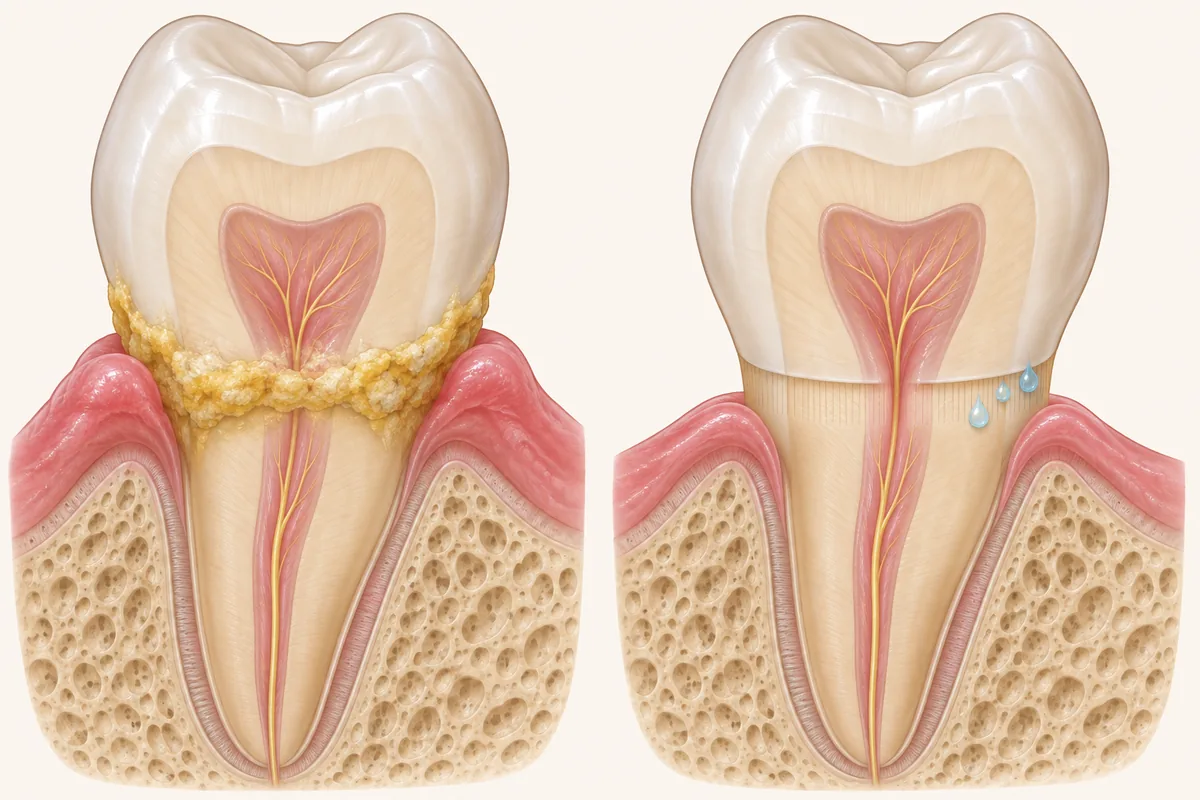
Left · beforeTartar covers the tooth neck; gum is swollen
Right · afterSwelling settles and the exposed root feels cold
When is a regular cleaning not enough?
A routine cleaning reaches the tooth surface and just under the gum line. Deep pockets are hard to manage with a routine cleaning alone, so when needed we remove tartar below the gum under local anesthesia and treat the root surfaces. Before cleaning we measure gum depth, and where it is deeper than 5 mm we plan gum treatment below the gum line (often called deep cleaning, or scaling and root planing) instead of stopping at a routine cleaning. This usually takes 2–4 sessions, with a re-check 4–8 weeks later. Details are on our gum disease treatment page.
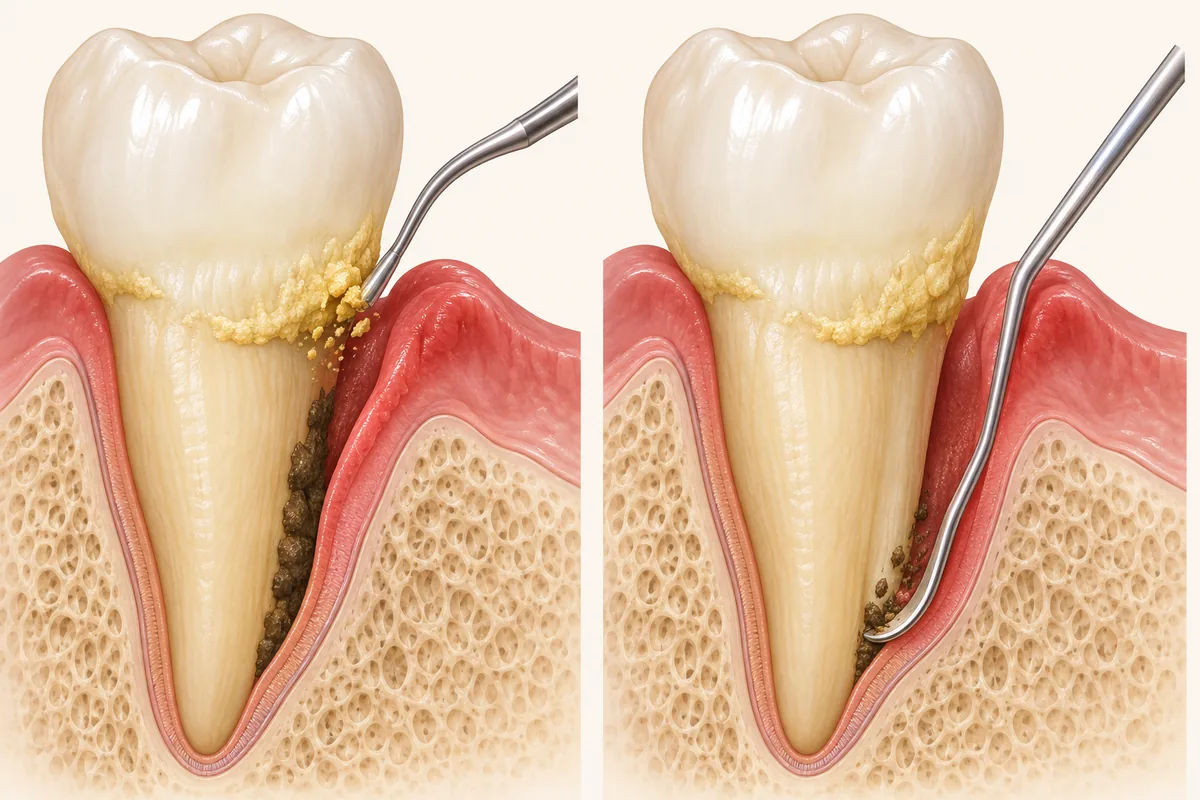
Left · routine cleaningTartar above and just under the gum; deep pockets need more than a routine cleaning
Right · deep cleaningUnder local anesthesia, a thin instrument cleans the root to the pocket floor
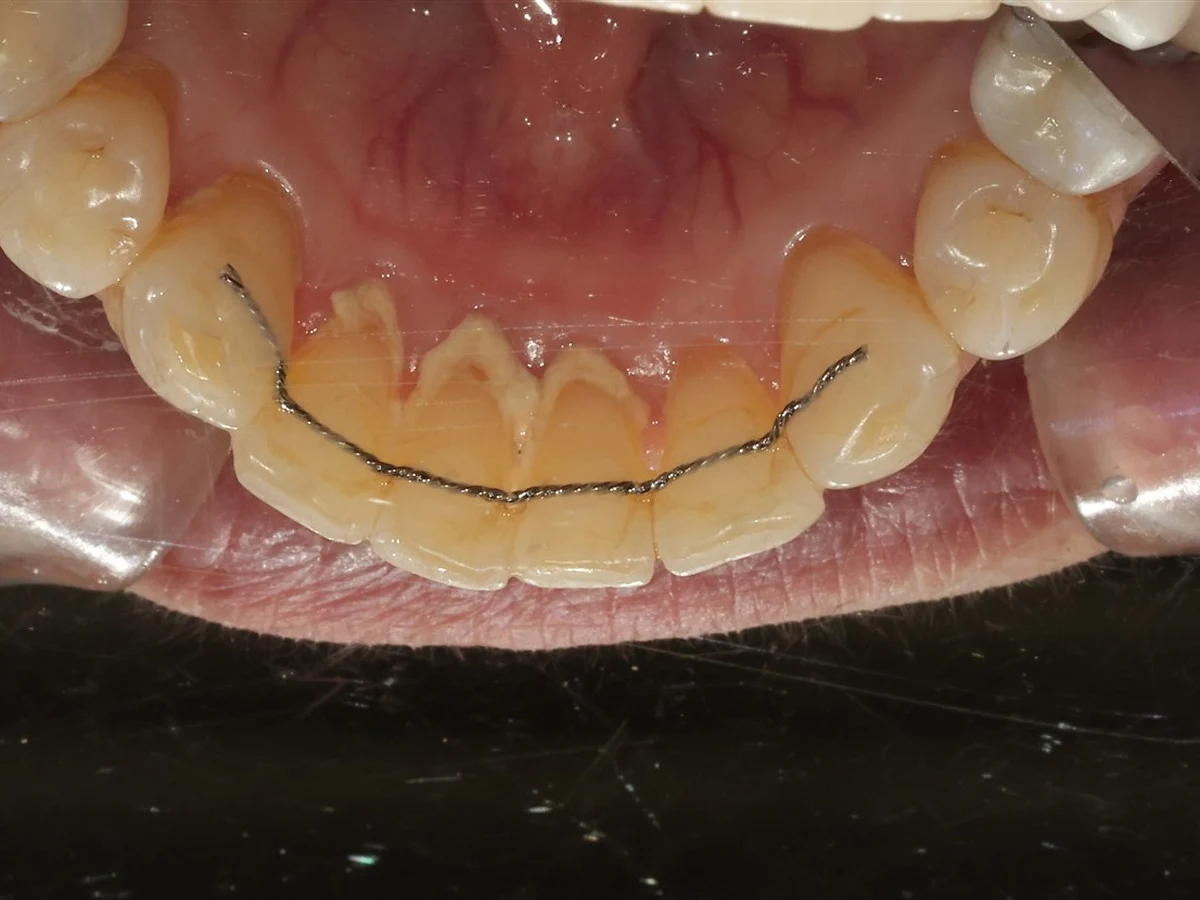
Before scaling · April 2026
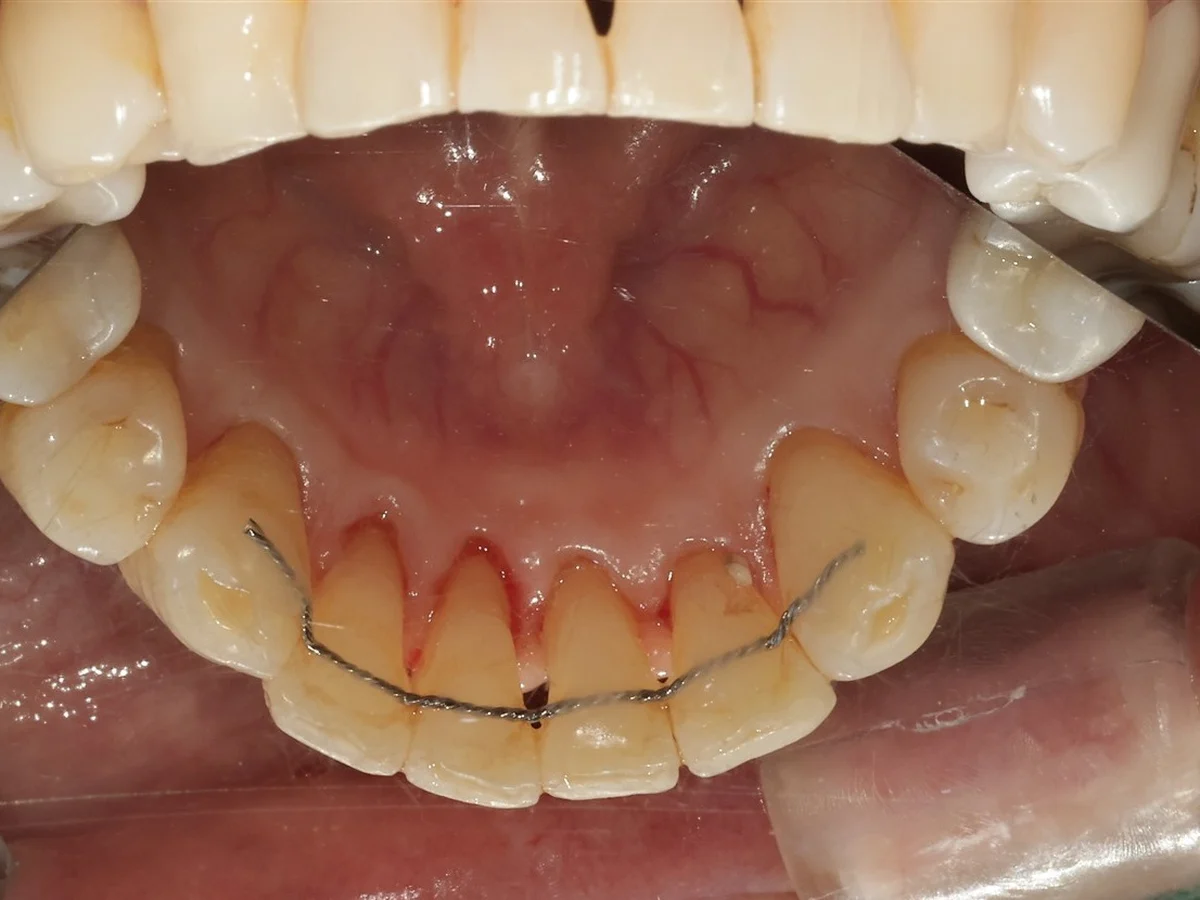
Right after scaling · Same day
Thick yellow tartar had built up on the inner side of the lower front teeth, near the salivary glands. The thin wire behind the front teeth is a retainer bonded after orthodontic treatment. Removing the tartar revealed the gaps between the teeth; the redness at the gum line is bleeding right after tartar removal. The pockets were shallow, so a routine cleaning and brushing advice were enough.Possible side effects · temporary sensitivity or bleeding, gaps between teeth becoming visible, deep tartar may remain. Published with the patient's consent; before-and-after photos were taken of the same area from the same direction. Treatment results and side effects may vary from person to person.
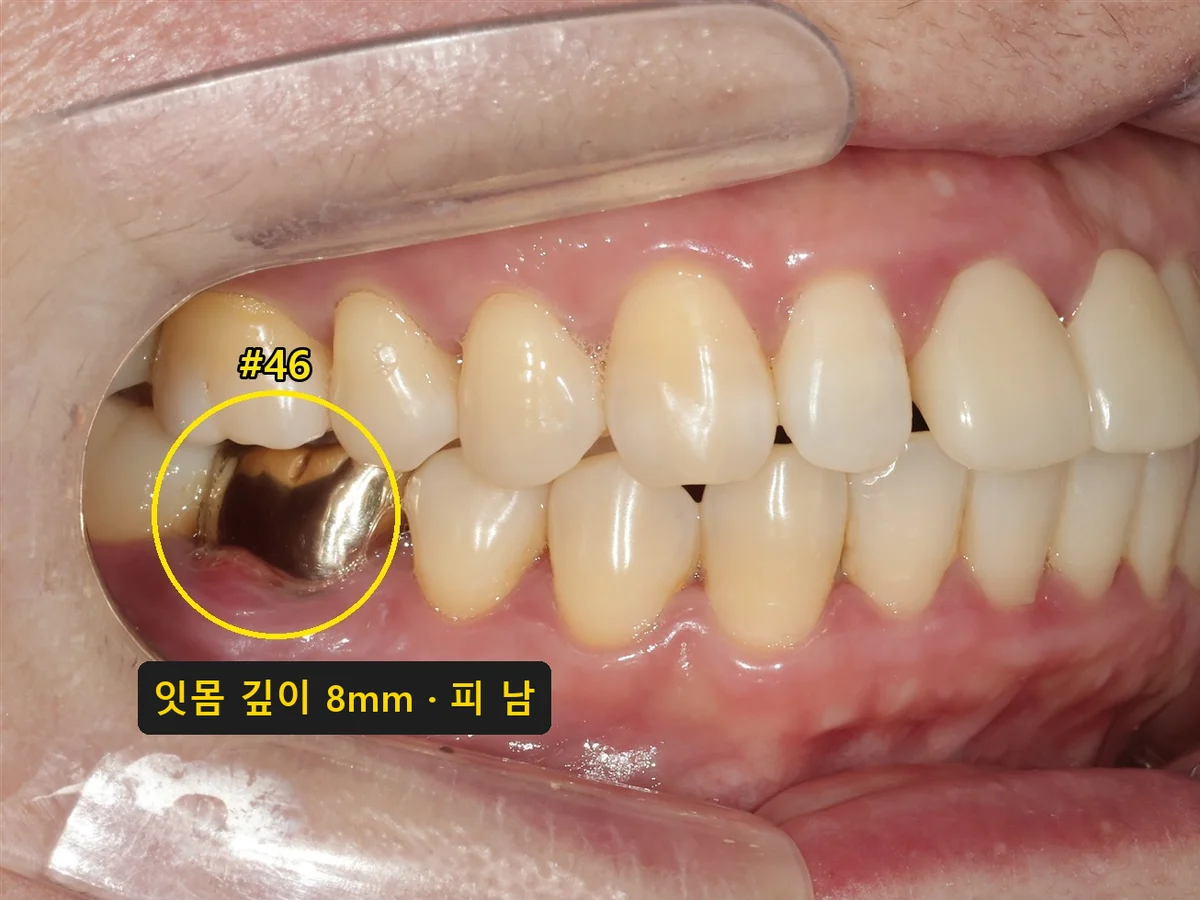
Gum depth measurement · July 2026
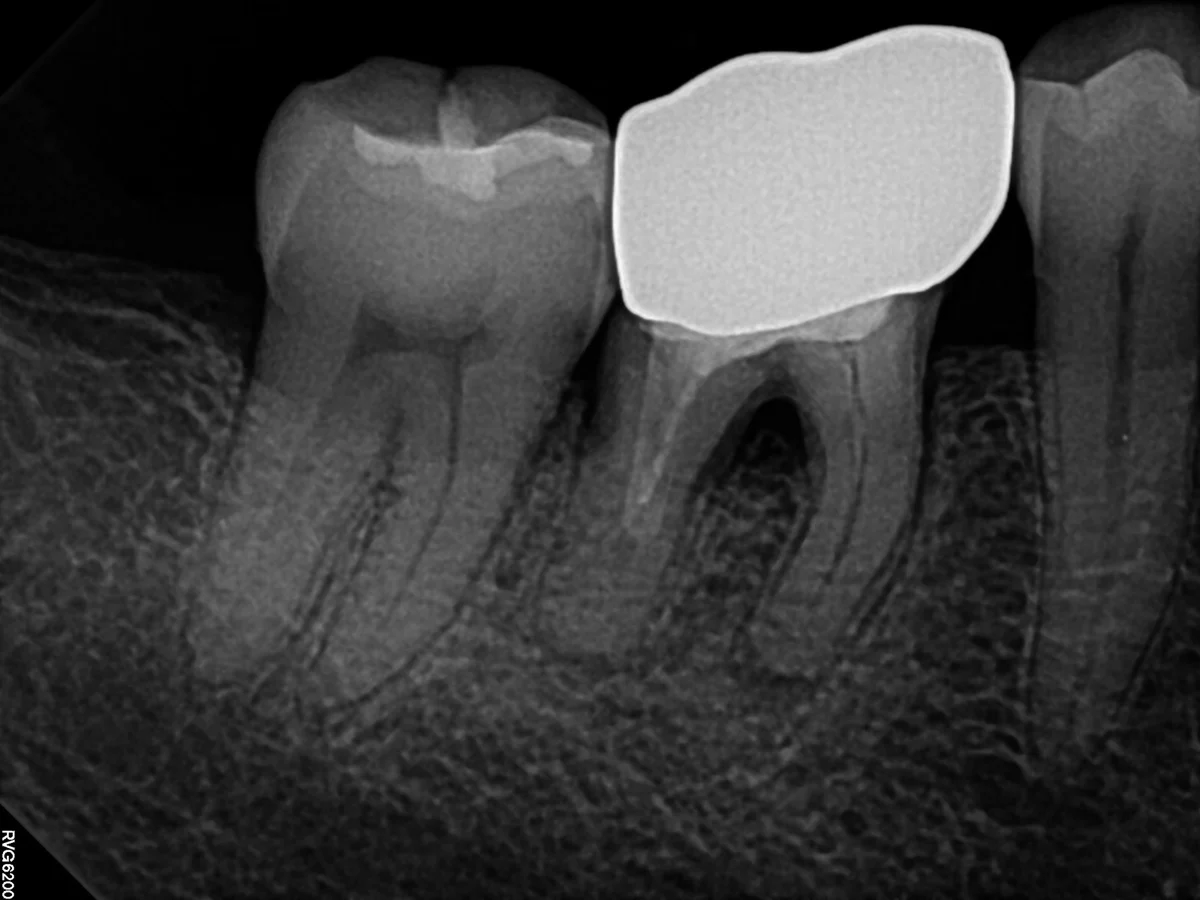
X-ray · Same day
The gum depth between the two roots of the lower molar (#46) was 8 mm and bled during measurement. The X-ray showed bone loss between the roots, so the cleaning was followed by treatment below the gum line and a re-evaluation.Possible side effects · temporary sensitivity or bleeding, gaps between teeth becoming visible, deep tartar may remain. Published with the patient's consent; the X-ray is included to explain the diagnosis. Treatment results and side effects may vary from person to person.
Can you get your teeth cleaned in Korea, and is it covered?
Yes. A routine cleaning is one visit of about 30 minutes, and we check your gums first. If we find deep pockets, we tell you on the day and plan the deep cleaning around your stay, since it needs several sessions and a re-check weeks later.
Korea's National Health Insurance covers one full-mouth cleaning per calendar year (January 1 to December 31) for enrolled people aged 19 or older, according to the National Health Insurance Service (checked 2026-11-21). That applies to residents and others enrolled in the Korean system; most short-term visitors are not, so they pay the uninsured fee. The insurance covers a full-mouth cleaning that meets its criteria; cleanings for cosmetic reasons or before prosthetic work, and any additional gum treatment, are judged separately. Our current fee is on the price list, and it is the same regardless of nationality.
If you are coming for teeth whitening, the treatment starts with scaling and stain removal so the whitening gel reaches the tooth evenly. If you are planning porcelain veneers or crowns, healthy gums come first, because the edge of a veneer sits right at the gum line, and regular cleanings afterwards keep that edge clean. For trip planning, see How many days in Korea for dental treatment?, our dental trip checklist and the visiting from abroad Q&A.
Frequently asked questions
How often should I get my teeth cleaned if my gums are healthy?
Does a dental cleaning damage enamel?
Why do my teeth feel sensitive after a cleaning?
Can I get a teeth cleaning in Korea as a tourist?
Should I get a cleaning before teeth whitening or veneers?
References
- Korea Disease Control and Prevention Agency (KDCA), National Health Information Portal. Systemic disease and periodontal treatment [in Korean]: "Even without gum disease, scaling once a year is recommended." health.kdca.go.kr (accessed 2026-11-21)
- Lamont T, Worthington HV, Clarkson JE, Beirne PV. Routine scale and polish for periodontal health in adults. Cochrane Database of Systematic Reviews. 2018;12:CD004625. PubMed 30590875
- Lin YH, Gillam DG. The prevalence of root sensitivity following periodontal therapy: a systematic review. International Journal of Dentistry. 2012;2012:407023. PubMed 23193405
- National Health Insurance Service (Korea). Scaling (치석제거) coverage guide. nhis.or.kr (in Korean, checked 2026-11-21)
Want a cleaning during your stay in Seoul?
Tell us your travel dates on WhatsApp. If your gums bleed or it has been a long time since your last cleaning, mention it so we can leave room for a gum check.
Ask on WhatsAppThis article is for general information and does not promise any particular result. Suitability, treatment plan, results and schedules differ from person to person. Please have a consultation and examination with a dentist before treatment. For current prices, see our price list.