
COLUMN · Orthodontics
Can Braces Fix a Weak Chin?
What Orthodontics Can Change Without Surgery, and When Jaw Surgery Is Worth Considering
Braces do not make the lower jawbone longer. But a weak or receding chin can look further forward after orthodontic treatment without surgery, in two ways. First, moving protruding upper front teeth back lets the lips close without straining the chin muscle, so the chin and jawline show more clearly. Second, in people with a long lower face, pushing the upper molars up into the bone with mini-screws lets the lower jaw swing slightly up and forward, which, when it suits the case, can make the chin look slightly further forward; how much varies from person to person. If the lower jawbone itself is small and the gap between the upper and lower jaws is large, braces alone barely change an adult's chin position, and jaw surgery may be worth considering.
I am Dr. Sunmin Kim, head dentist at Ceramic Dental Clinic in Gangnam, Seoul, and a board-certified orthodontist with 16 years in practice. Patients with a recessed chin often ask me, "I don't want surgery. Will braces alone give me a chin?" I don't answer yes or no straight away, because a chin can sit back for different reasons, and what braces can change depends on the reason. This article explains what can change without surgery, what cannot, and when I bring up surgery.
When people say braces "fixed" a weak chin, what actually changed?
Some patients hear "you have a chin now" after braces. Yet when we superimpose their before and after X-rays, the length of the lower jawbone is usually the same. What makes the chin look further forward is mostly the setting around it. I sort the causes of a weak-looking chin into three groups:
- Protruding upper front teeth and lips. The lower jaw is in a normal position, but the upper teeth push the lips forward, so the chin looks set back by comparison. Many people also get a dimpled, "golf-ball" chin when they close their lips.
- A long face with the lower jaw rotated down and back. The back teeth are tall, so the lower jaw has swung down and back around the jaw joint (textbooks call this clockwise rotation). The chin sits lower and further back, and the lower face looks long.
- A short lower jawbone (skeletal retrognathia). The bone itself is the cause, so moving teeth barely changes where the chin bone sits.
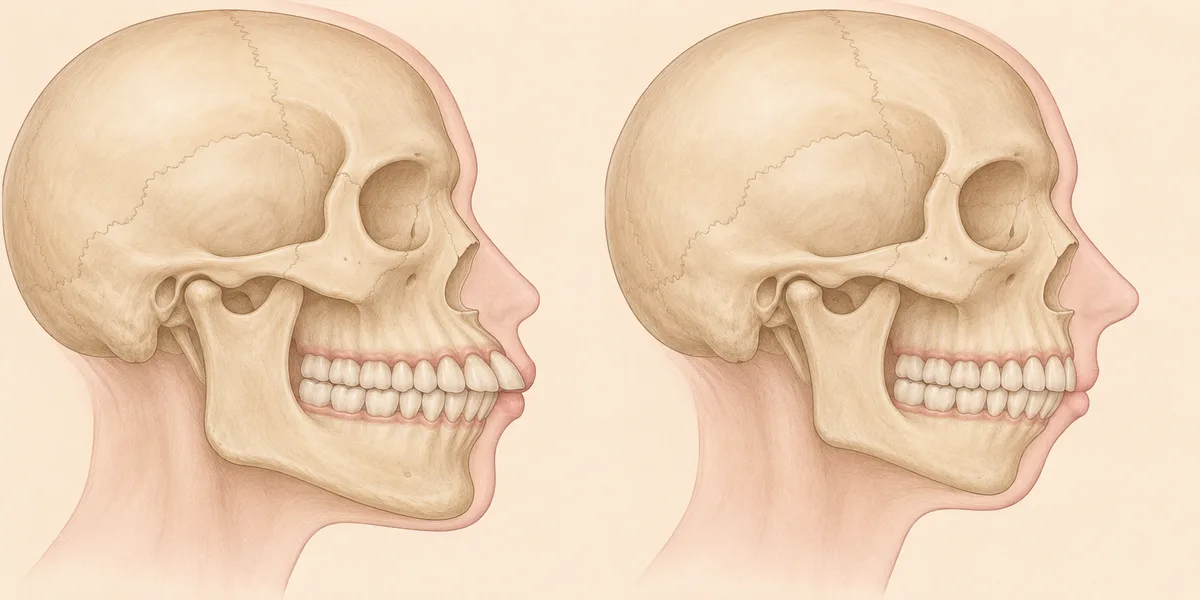
Most people have a mix of these. That is why the honest answer to "how much will braces help?" comes only after measuring how much each one contributes.
How do you measure which cause is mine?
With a side-view skull X-ray (lateral cephalogram). I measure how far the lower jaw sits behind the upper jaw, how steep the lower border of the jaw is, the length of the lower jaw relative to skull size, the angles of the upper and lower front teeth, and where the lips sit against the line from nose tip to chin (the E-line). Braces move teeth, so the share that comes from bone length cannot be changed by braces. Knowing that share first lets me tell you before treatment how far the result may differ from what you hope for.
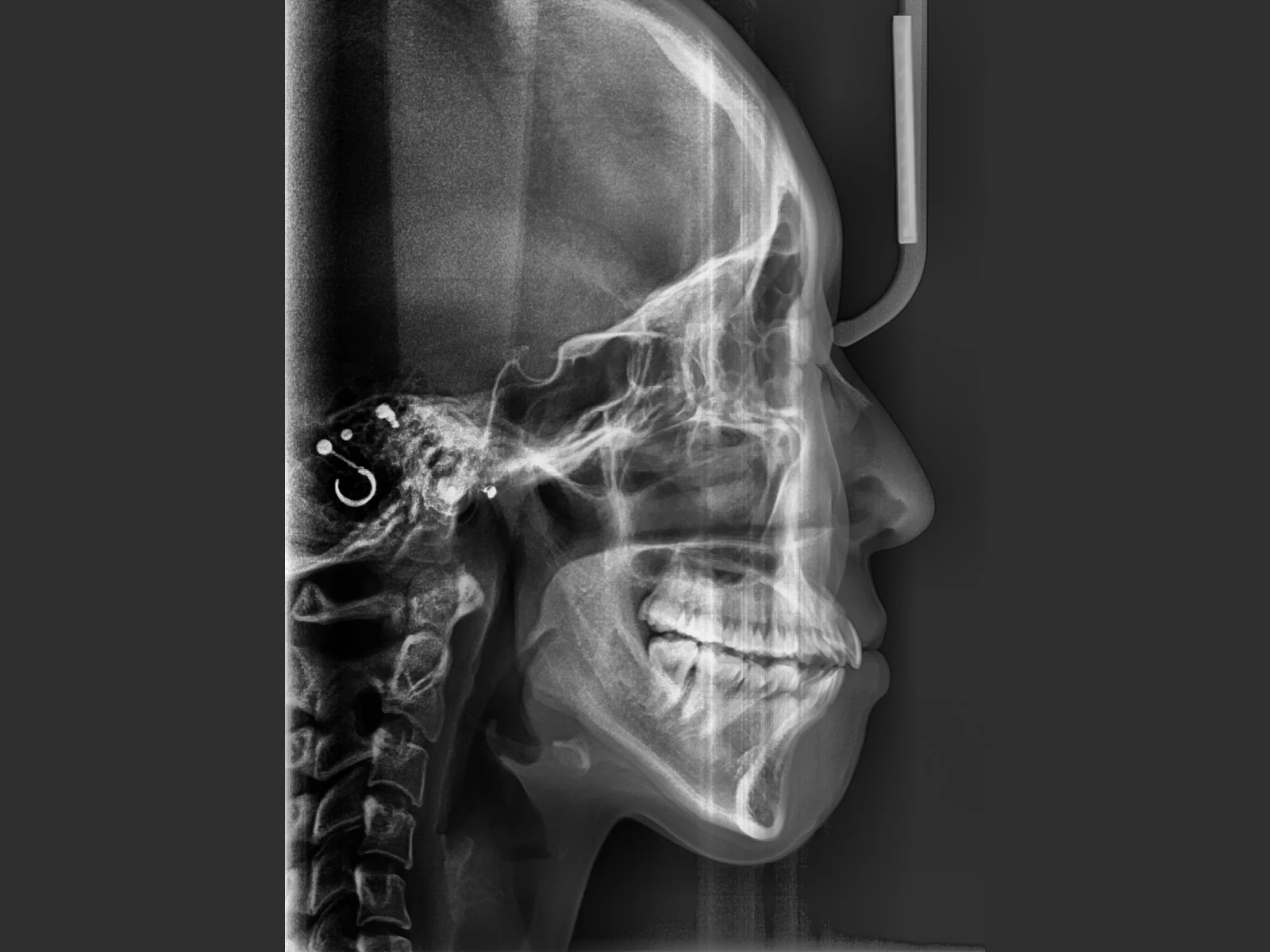
Why does pushing the upper molars up bring the chin forward?
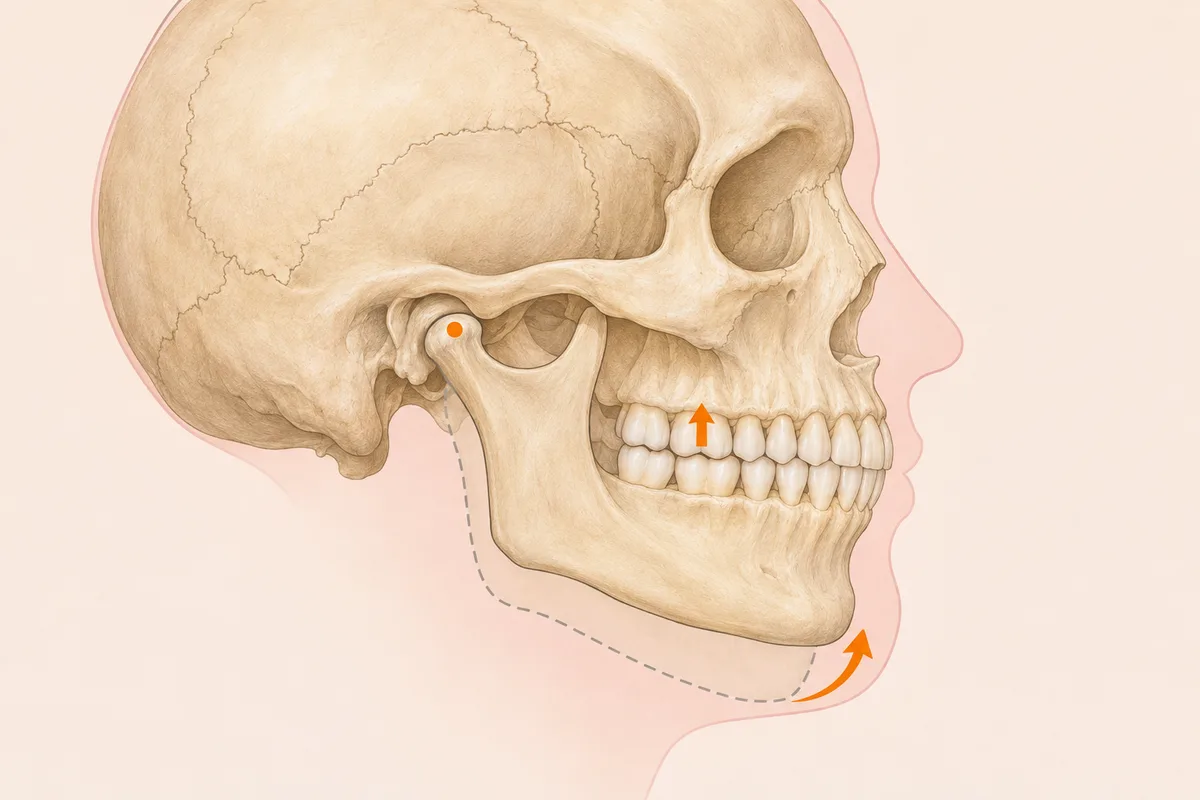
For a recessed chin with a long lower face, moving the upper molars up into the bone (molar intrusion) is one of the options we consider, in adults who have finished growing, to rotate the lower jaw without surgery. The idea is simple. The lower jaw opens and closes like a door hinged at the jaw joint. When the upper molars move up, the jaw can close a little further, and it rotates up and forward (counterclockwise rotation). The chin moves slightly up and forward with it.
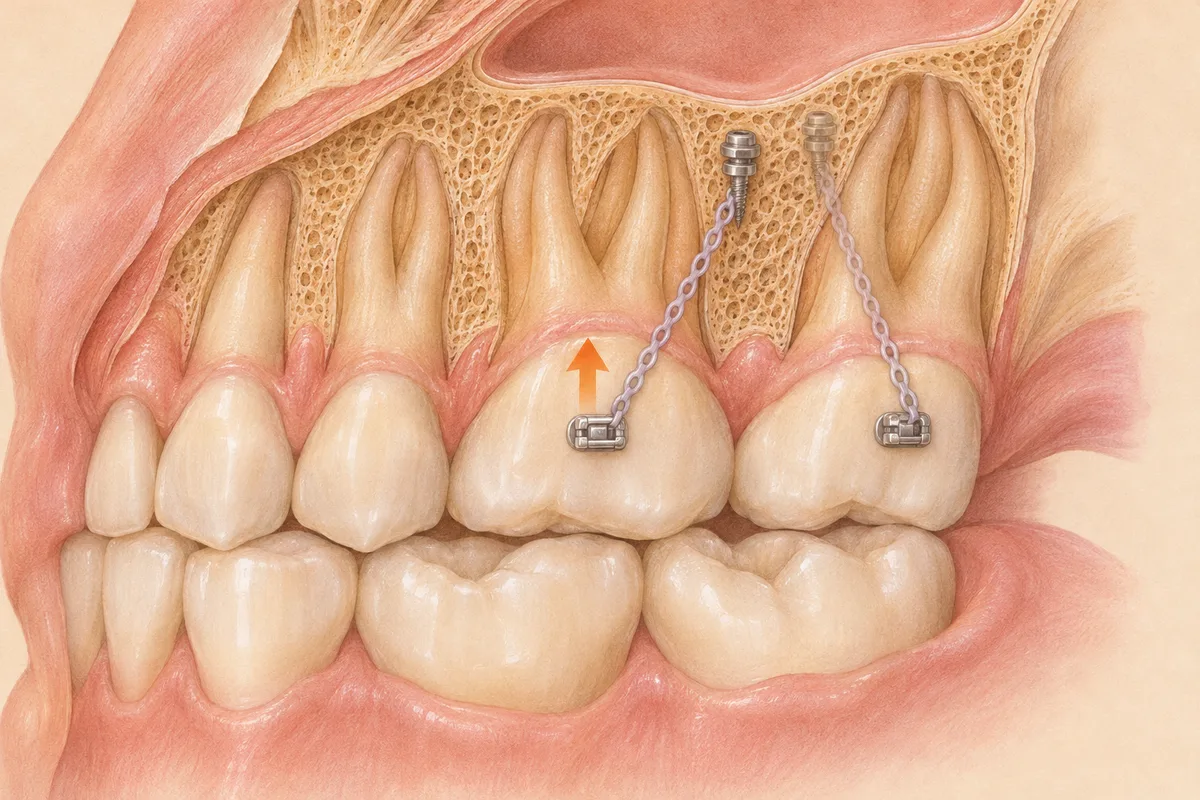
Molars have thick, multiple roots, so they need a firm anchor to move up. We place small titanium mini-screws (temporary anchorage devices) in the bone between the roots of the upper molars and attach elastic chains to pull the molars up. The position and number of screws depend on the space between the roots and the bone thickness.
The change is modest. A systematic review of 12 studies on molar intrusion with mini-screws or miniplates found counterclockwise rotation of the lower jaw of 2.3–3.9° in six studies and under 2° in the rest, and the authors rated the evidence as weak (Alsafadi et al., Progress in Orthodontics, 2016). A 2026 study of 18 patients treated with mini-screw molar intrusion found that the molars moved up by an average of 1.45 mm and the chin point (pogonion) moved forward by an average of 1.58 mm. The forward movement of the chin, however, was not proportional to the amount of intrusion (Phopthoncharoensak et al., BMC Oral Health, 2026). Both studies looked at patients with an open bite, where the front teeth do not meet.
So when I discuss molar intrusion, I say the chin "may look slightly further forward when it suits the case, and how much varies from person to person." The opposite matters too: if the molars drift down during treatment, the lower jaw swings further back and the chin can look weaker. I set the direction of force from the start so the molars do not get taller.
Why can moving only the front teeth back make the chin look different?
When the upper front teeth push on the lips, the chin muscle has to work every time you close your mouth. That strain wrinkles the chin and blurs the jawline, so the chin looks short. After premolar extraction, moving the upper front teeth back lets the lips close comfortably. The chin muscle relaxes and the jawline shows. The bone has not changed, but the profile looks different.
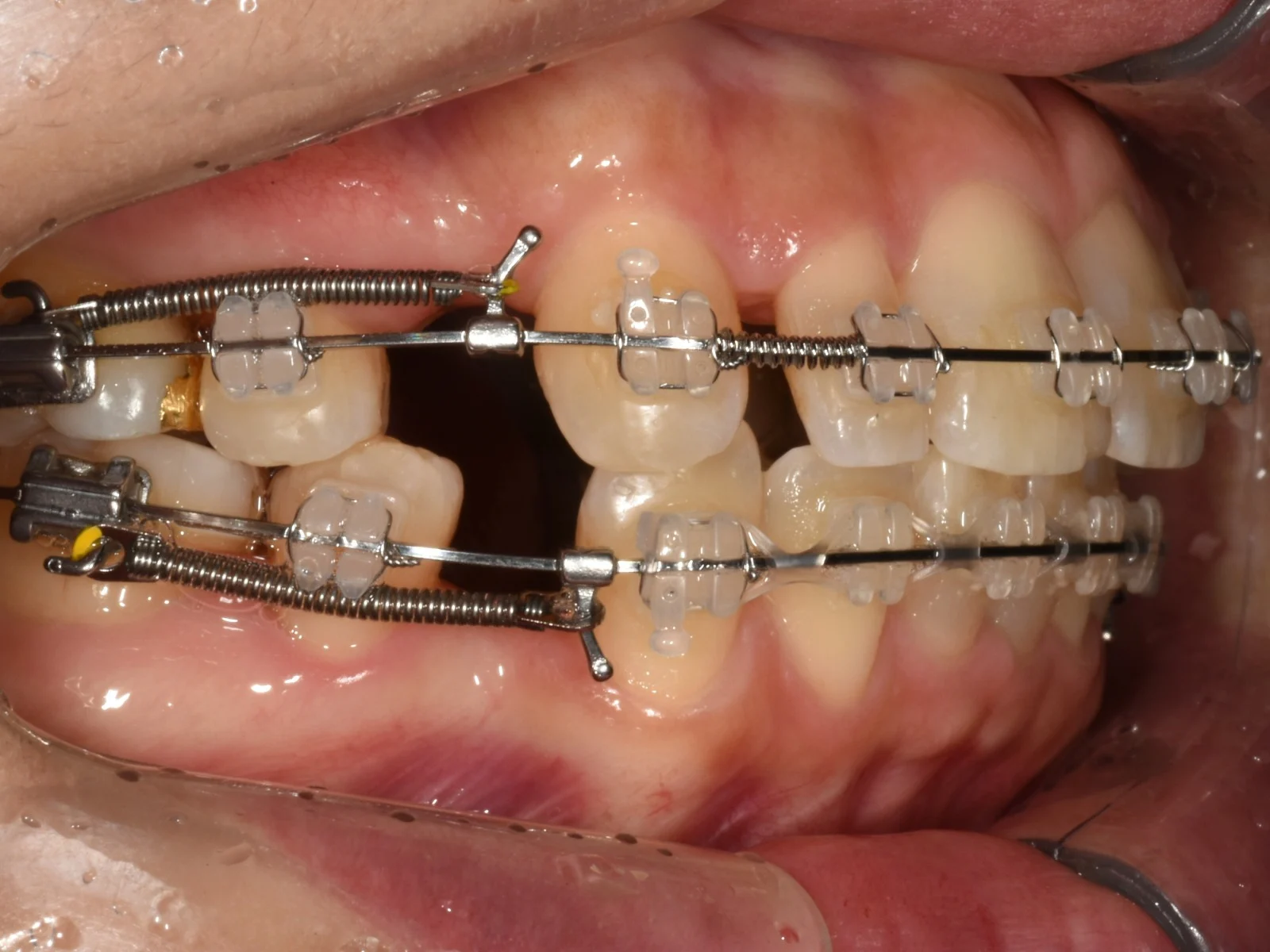
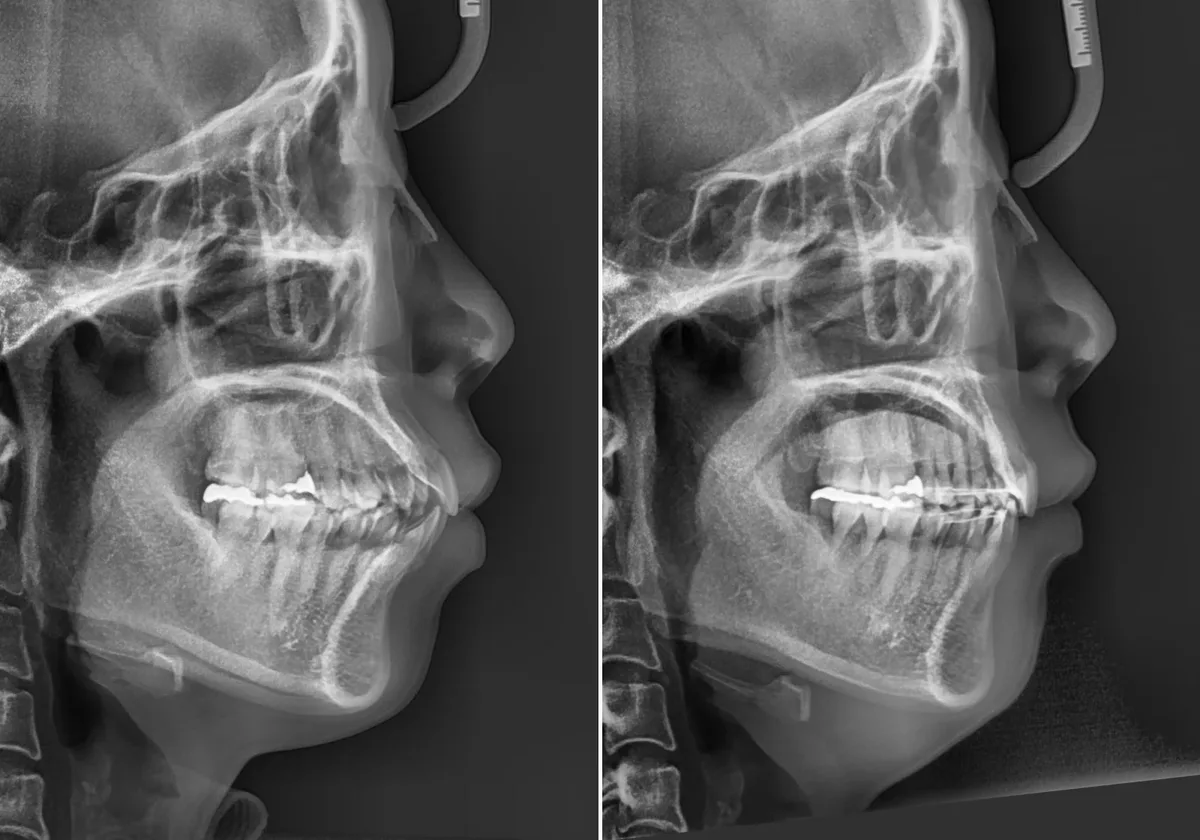
Pulling the front teeth back too far can make the area around the mouth look sunken, and then the chin looks even smaller. For this reason I take another side-view X-ray midway, compare it with the first, and decide the remaining amount then.
When can braces alone not fix a recessed chin, and when is surgery worth considering?
In an adult whose lower jawbone is small, braces can correct the bite but barely move the chin. The case below is one of these. The patient did not want surgery, so we corrected only how the front teeth and molars meet, and we explained before starting that the chin position would stay the same.
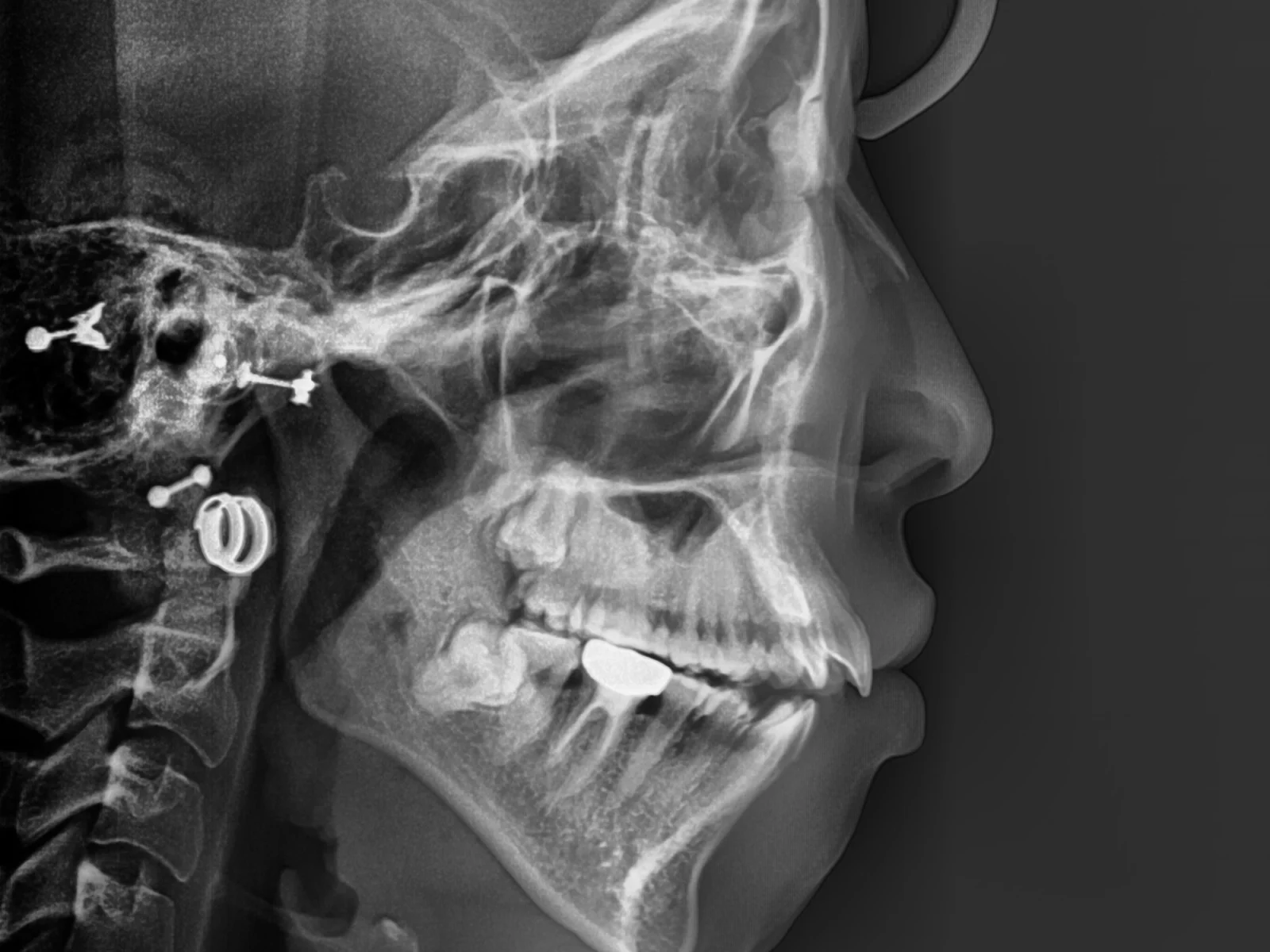
Before treatment · June 2021
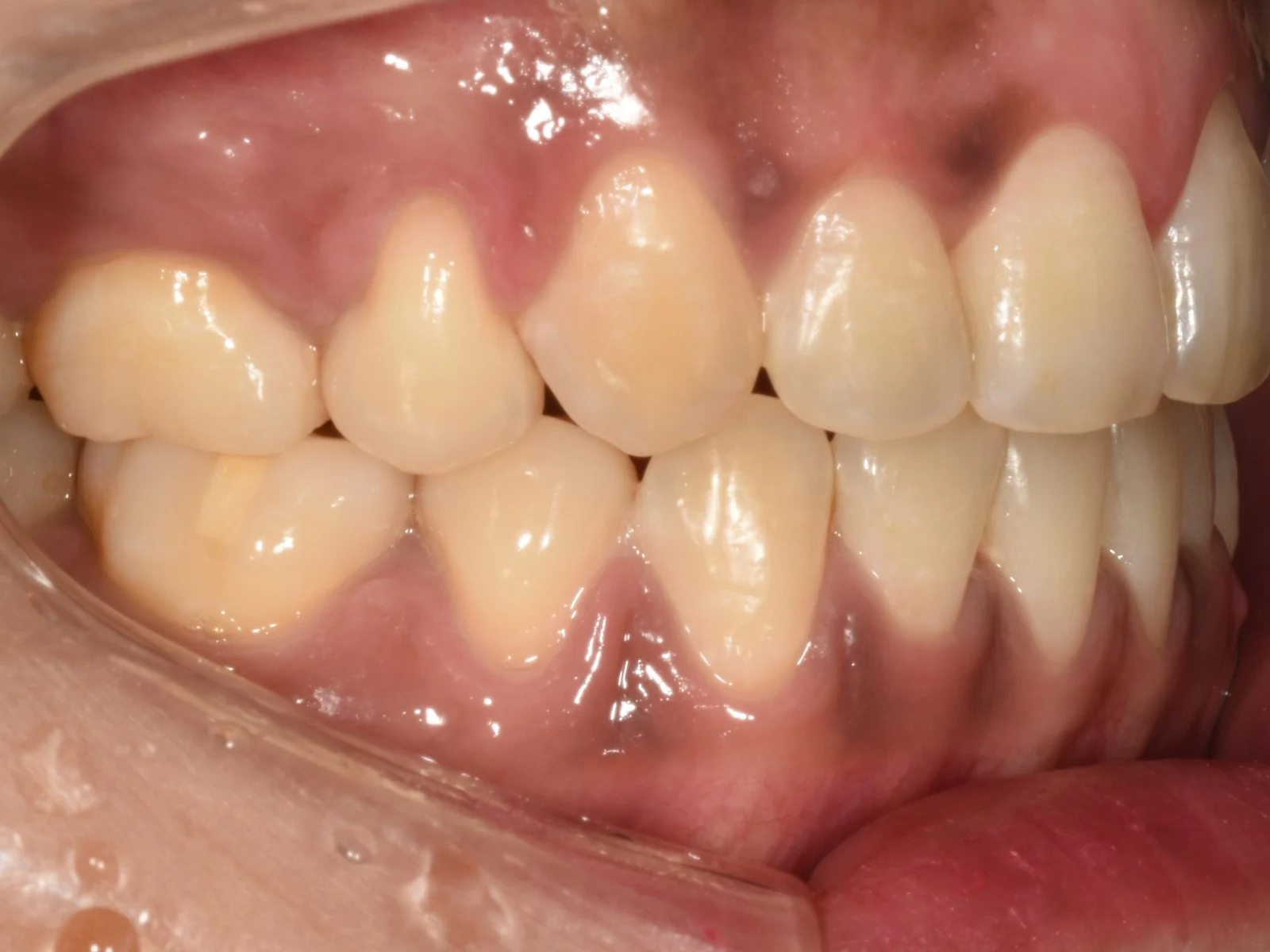
After treatment · July 2024
Before treatment, the X-ray shows a short lower jaw with the chin set back and a large front-to-back gap between the upper and lower front teeth. After treatment, the front teeth and molars meet, but the chin position is unchanged. Treatment took about 2 years (excluding time the patient could not visit). No jaw surgery or chin surgery was done.Possible side effects: a sunken look around the mouth, mini-screw loosening, root resorption, gum recession, relapse. Published with the patient's consent. Results and treatment time vary. Recessed chin orthodontics
A meta-analysis compared adults with skeletal Class II and a retruded lower jaw who had braces only (orthodontic camouflage) with those who had braces plus jaw surgery. Surgery changed the jaw relationship (ANB), lower-jaw position (SNB), the steepness of the lower jaw and the soft-tissue profile including the nose more. There was no statistically significant difference in lower-lip position against the E-line or in the soft-tissue profile excluding the nose. The authors advised caution because the studies were few and not randomized (Raposo et al., International Journal of Oral and Maxillofacial Surgery, 2018). In plain terms: braces can change the mouth area quite a lot, while surgery changes chin position and facial outline more.
I suggest considering surgery alongside braces when:
- the X-ray shows that lower-jaw length is a large part of the cause, and growth has finished;
- the front-to-back gap between the upper and lower front teeth is so large that braces alone would have to tip the teeth to an unhealthy angle;
- what you want to change is the chin position and facial outline itself, more than the mouth area;
- you snore or stop breathing in your sleep (in that case, please have this checked before we plan orthodontics).
Surgery is not the default answer. Some people with the same findings are happy with what braces alone can change, as long as they know that range before starting. Jaw surgery and chin surgery are done at a surgical hospital, and we provide the orthodontics before and after surgery. For reference, porcelain veneers change the color and shape of teeth; they do not treat the skeletal causes of a weak chin.
If I live abroad, how many trips does this take, and what does it cost?
At the first visit we take face and teeth photos, an intraoral scan, a panoramic X-ray and a side-view X-ray, plus a CT scan if needed. The exam fee is included in the orthodontic fee if you start treatment. At the diagnosis I explain how much each cause contributes, what braces can change for you, the treatment time and the total cost.
| Item | Typical for a recessed chin |
|---|---|
| Orthodontic fee | Depends on the appliance (ceramic braces, Invisalign, combination or lingual). See our dental costs page |
| Included | Extractions (except wisdom teeth), mini-screws, basic retainers, retainer check-ups and adjustments for 2 years after treatment |
| Treatment time | Usually 2 to 2.5 years when mini-screws are used to move the molars up |
| Visits with fixed braces | First two visits 2 weeks apart, then usually once a month |
| After the braces come off | Fixed retainer bonded the same day; the clear retainer can be sent to you abroad |
For molar intrusion with mini-screws we mainly use fixed braces (decided after diagnosis), and it needs regular adjustments, so it suits people who can come to Seoul about once a month. If you can only visit every few months, tell us at the consultation; the cause of your weak chin decides whether a plan with fewer visits is realistic. See braces in Seoul while living abroad and our FAQ for international patients for visit intervals, retainers and what to do if something comes off after you go home. If anything comes up between visits, send us a photo on WhatsApp.
Frequently asked questions
Can braces fix a receding chin in adults?
Will the chin move back again after molar intrusion?
Why do some people regret recessed chin braces?
Can I just get a chin implant instead of braces?
Can Invisalign treat a weak chin?
References
- Alsafadi AS, Alabdullah MM, Saltaji H, Abdo A, Youssef M. Effect of molar intrusion with temporary anchorage devices in patients with anterior open bite: a systematic review. Progress in Orthodontics. 2016;17:9. PubMed 26980200
- Phopthoncharoensak W, Charoenrat T, Jaruprakorn T, Thongchotchat V, Porntaveetus T. The true dentoskeletal changes following miniscrew-assisted molar intrusion in anterior open bite: a superimposition study on mandibular autorotation. BMC Oral Health. 2026;26(1):763. PubMed 41862872
- Raposo R, Peleteiro B, Paço M, Pinho T. Orthodontic camouflage versus orthodontic-orthognathic surgical treatment in class II malocclusion: a systematic review and meta-analysis. International Journal of Oral and Maxillofacial Surgery. 2018;47(4):445-455. PubMed 28966066
Not sure which kind of weak chin you have?
Send us two side-profile photos, one relaxed and one with your lips closed, for a rough direction. The diagnosis and total cost are given after an examination in person.
Ask on WhatsAppThis article is for general information and does not promise any particular result. Suitability, treatment plan, results and schedules differ from person to person. Please have a consultation and examination with a dentist before treatment. For current prices, see our price list.