Last reviewed October 29, 2026 · Dr. Ilseop Ahn (board-certified periodontist and specialist in integrated dentistry), with assessment input from Dr. Sunmin Kim (board-certified orthodontist)
At a glance
Good for
Teeth in a good position, with concerns about color, shape, size or small gaps
Treatment flow
Check tooth position and gums → decide no-prep or minimal-prep → 3D design → bonding
Duration and limits
Usually 2 visits over about 1 week (1–2 days for One-Day). If the front teeth stick out, orthodontics may come first
Details
If your teeth are in a good position but you are concerned about their color, shape, size or small gaps, porcelain veneers may suit you. Veneers are thin pieces of ceramic, around 0.3–0.7mm, bonded to the outer surface of the front teeth, and CERANATE at Ceramic Dental Clinic is usually completed in 2 visits over about 1 week (1–2 days for One-Day). If your front teeth stick out or overlap, covering them with veneers means reducing the teeth as much as they need to be hidden, so orthodontic treatment may need to come first. That is why, before any tooth is reshaped, a board-certified orthodontist checks the tooth positions and a board-certified periodontist checks the gum line together, and we first judge whether no-prep or minimal-prep is possible.
01°
Even with the same veneers, how many teeth and how much reshaping differed from person to person
The number of veneers, the amount of reshaping and the treatments done alongside depend on the cause of the concern. Here are three typical situations shown with real cases, with links to detailed pages for each concern.
CASE01
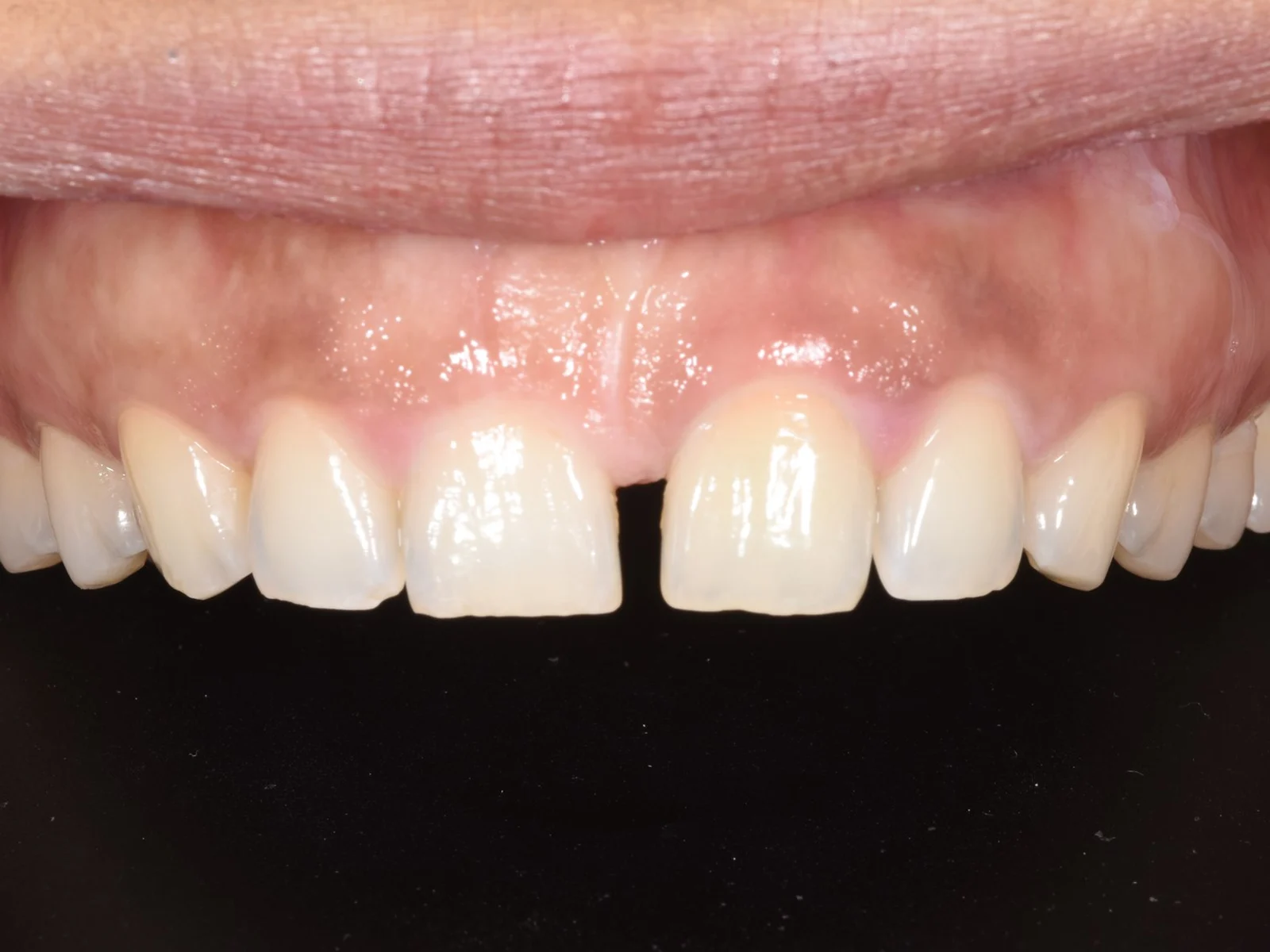
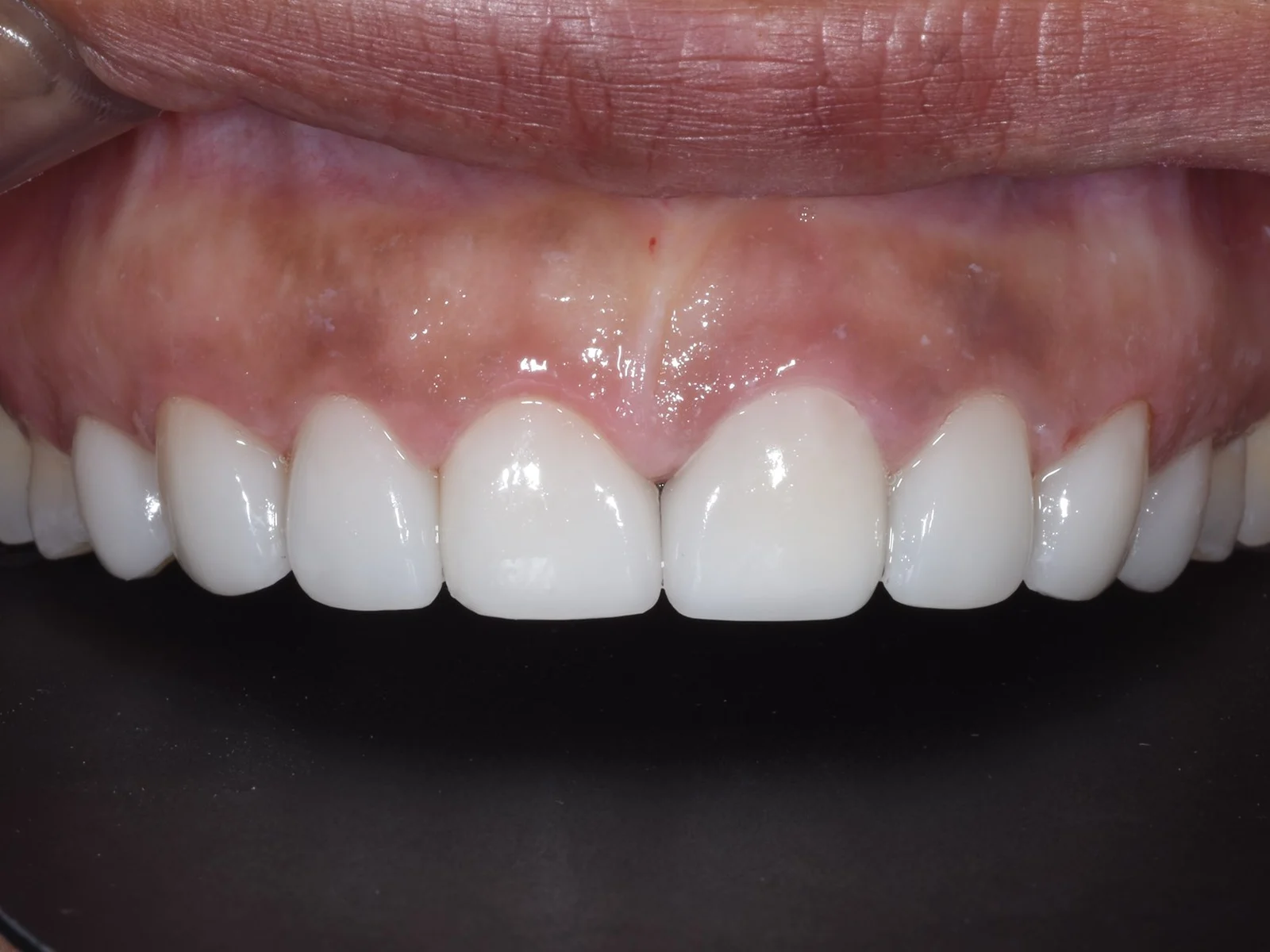
A 2.7mm gap between the front teeth
14 CERANATE veneers · the gap shared among several teeth, no-prep or minimal-prep
Before · Nov 2025
Front view before treatment. There was a gap of about 2.7mm between the upper central incisors, the two front teeth were a little long, and there were also small gaps between the lower front teeth.
After · Nov 2025
Front view after treatment. Rather than closing the gap with the two central teeth alone, we shared it among the neighboring teeth so the front teeth would not look too wide.
Condition
About 2.7mm gap between the upper central incisors, slightly long front teeth, small gaps between the lower front teeth; did not want orthodontics lasting more than a year (woman in her 20s)
Chosen
CERANATE on 6 upper and 8 lower teeth, gap shared among teeth, length adjustment, color matching
Not done
Orthodontics (there was no major problem with the bite or alignment)
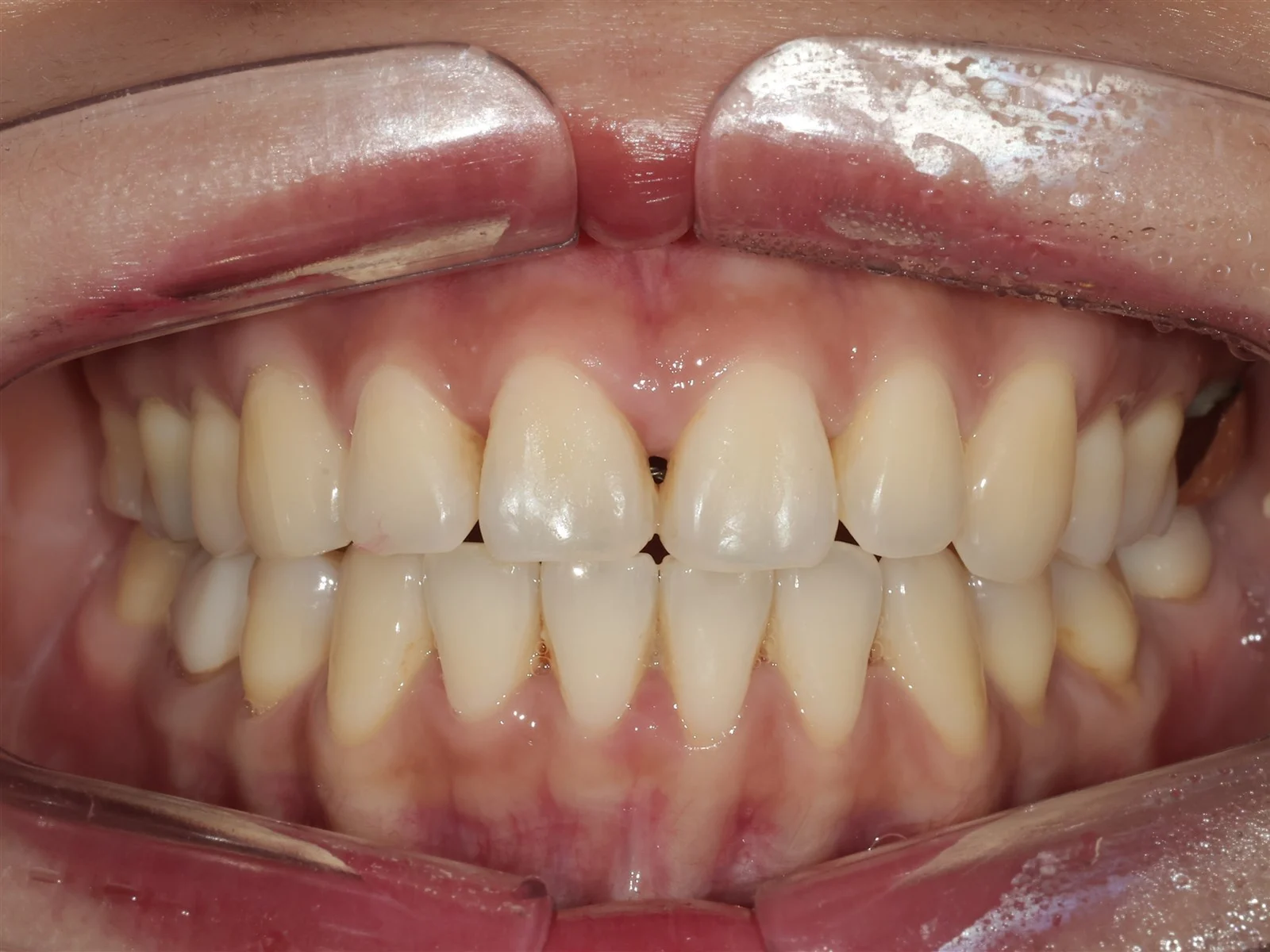
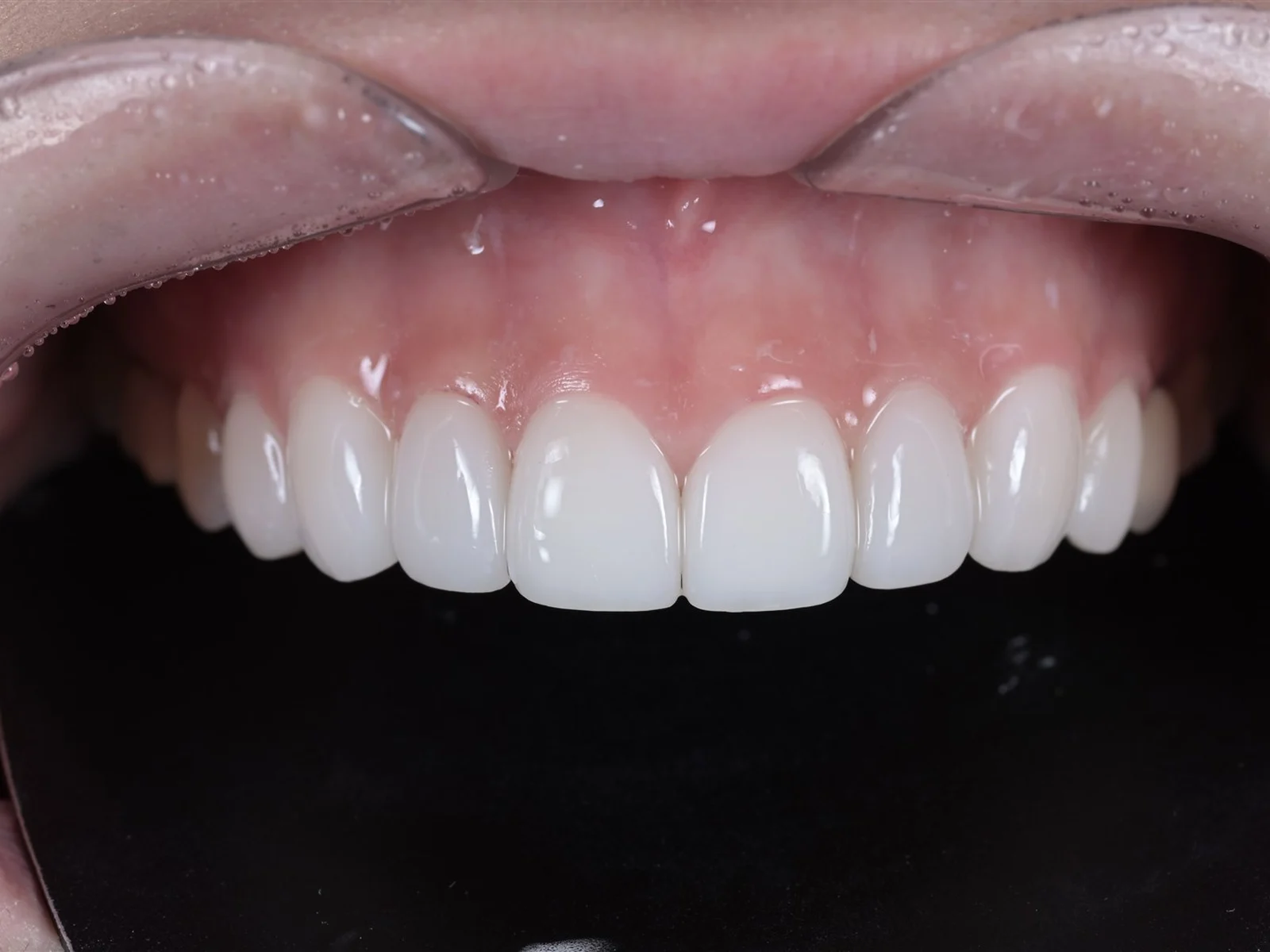
Black triangles remaining after two rounds of orthodontics
8 upper CERANATE veneers instead of a third round of orthodontics · 5 teeth reshaped by 0.2mm or less
Before · May 2026
Before treatment. There was a dark triangular gap below the gum between the upper central incisors, and the retainer wire showed through it. The front teeth looked short and wide.
2-week check-up after treatment · May 2026
2-week check-up after treatment. We bonded 8 veneers from the upper first premolar on one side to the first premolar on the other, moved the contact points down toward the gums, and changed the length-to-width ratio.
Condition
Black triangles remaining after two rounds of orthodontics, short and wide front teeth, front teeth not meeting in the bite, worn right canine (woman in her 30s)
Chosen
8 upper CERANATE veneers (#14–#24, e.max), changes to length, width ratio and color, bite adjustment
Not done
A third round of orthodontics
Duration
Preparation on the day of consultation, bonding the next day (2 visits over 2 days)
Yellow teeth with large fillings, where whitening was not enough
16 upper and lower CERANATE veneers · gum height evened out · no reshaping where it was not needed
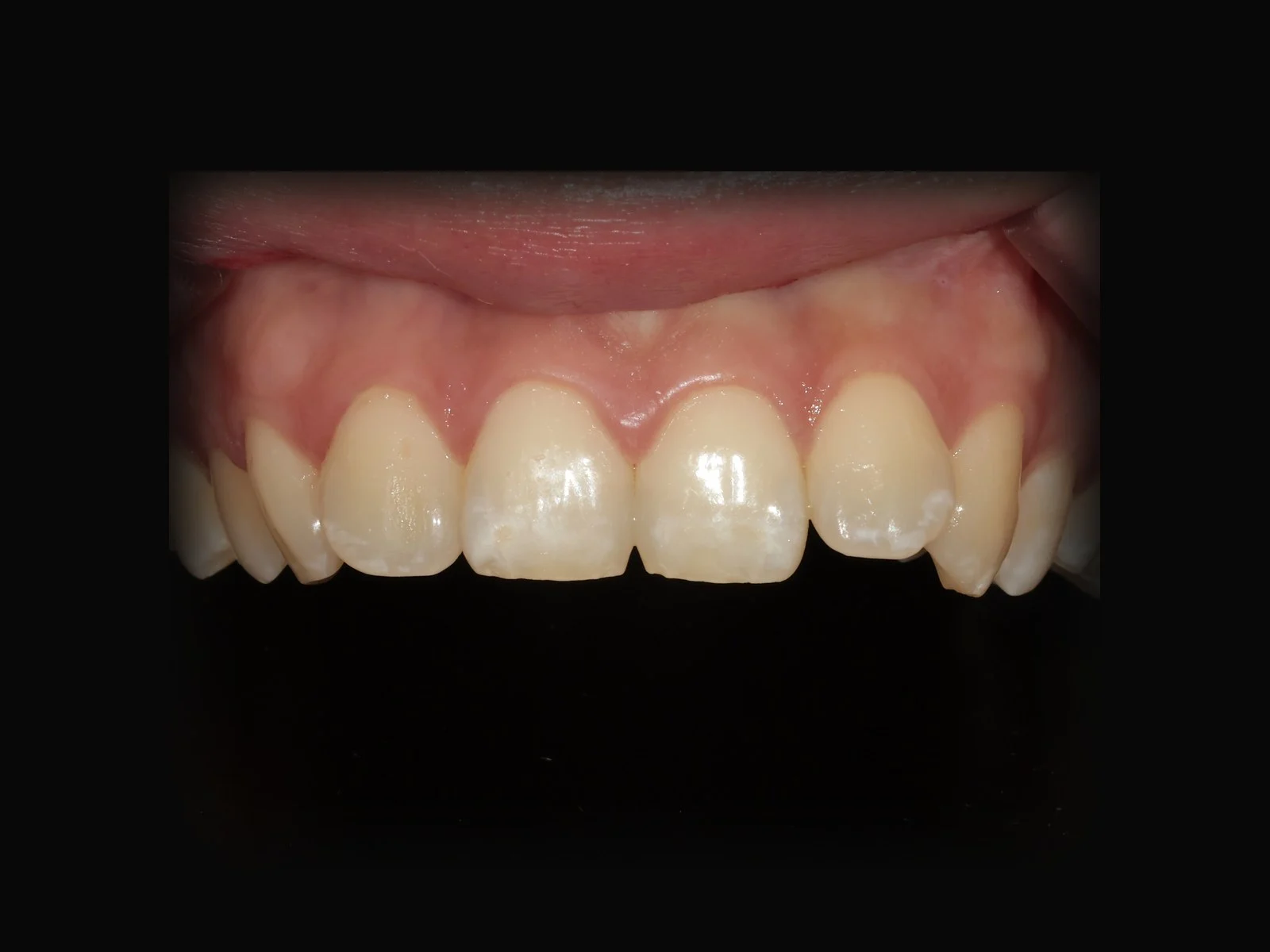
Before · Sep 2026
Front view before treatment. The teeth were yellowish overall, there were large resin fillings on the front surfaces of the front teeth, and the central incisors were spaced and sticking forward.
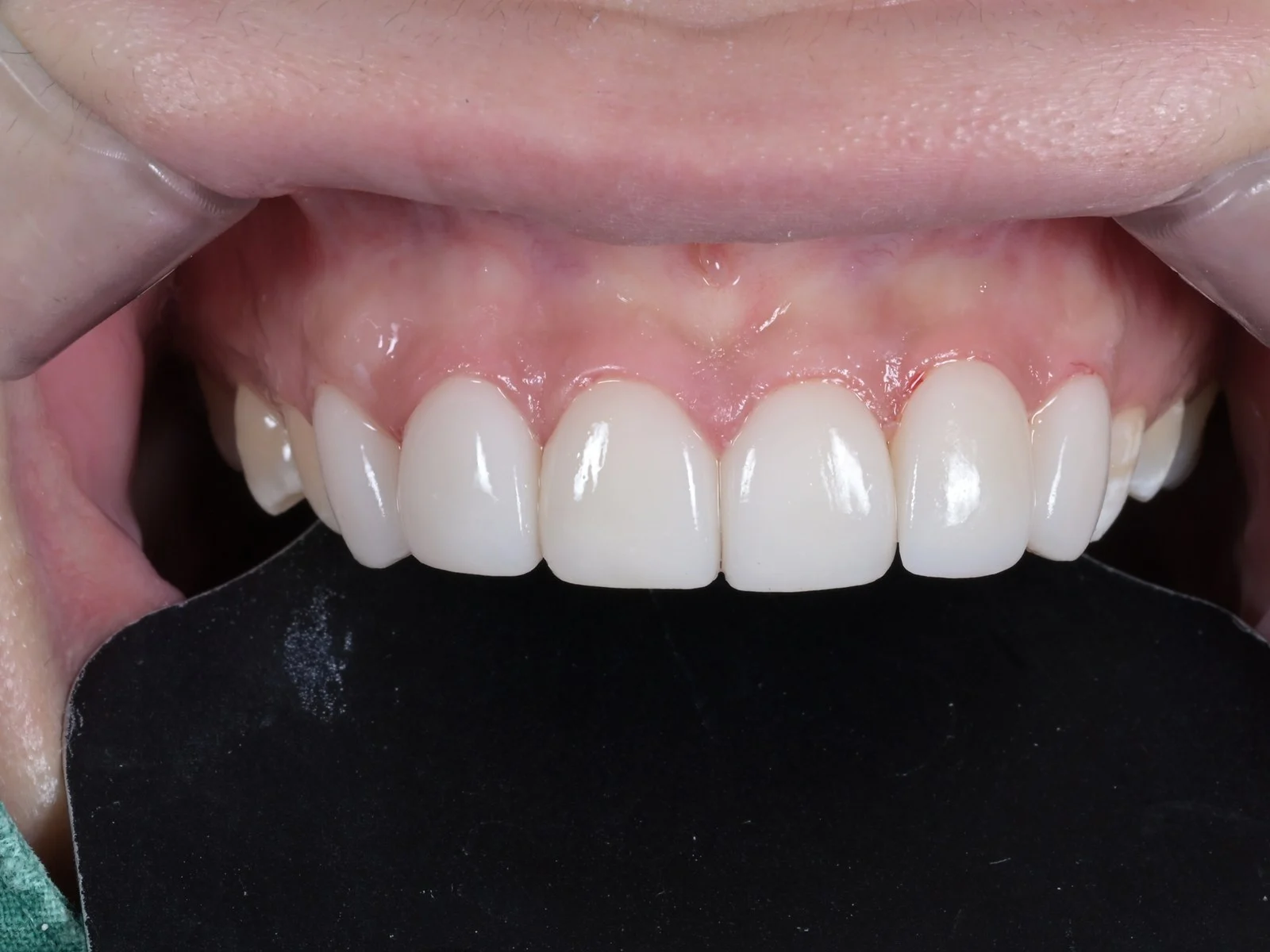
After · Sep 2026
Front view after treatment (on the day of bonding). We adapted the reference photo the patient brought to suit her face and changed both the color and shape of the upper front teeth.
Condition
Overall yellow color, large resin fillings on the front surfaces, spaced central incisors, black triangles, uneven gums (woman in her 30s)
Chosen
CERANATE on 8 upper (#14–#24) and 8 lower teeth, gum height evened out
Not done
Reshaping where it was not needed, such as teeth with worn inner surfaces
Duration
3 visits over 9 days for the main treatment (about 5 visits over 6 weeks, including 2 lower veneers added a month later)
* Photos were taken under the same conditions and published with the patients' consent. Treatment results and side effects may vary from person to person.
TREATMENT PROCESS
Watch the treatment process on video first
These are real treatment scenes. Tap a step to see that scene.
Veneer materials are not very different from those at other clinics. What is different is the assessment before any tooth is reshaped.
ONE
Dr. Sunmin Kim: board-certified orthodontist · Certified Orthodontist of the Korean Association of Orthodontists · orthodontic training and PhD in dentistry at Tokyo Medical and Dental University. He first checks whether moving the teeth slightly would allow less reshaping or none at all.
TWO
Dr. Ilseop Ahn: board-certified periodontist · specialist in integrated dentistry. He checks the gum line where the veneer edges sit and the health of the gums.
THREE
The actual procedure: a 3D model is made with the iTero intraoral scanner and designed by the doctor, the color is matched with a 6-shade try-in before bonding, and the result is checked with photos after bonding (including for patients from abroad).
Key Point. 1
We first see whether veneers alone will do, or whether brief orthodontics of only the front teeth should come first
If veneers alone will do, we go ahead with veneers. We recommend partial orthodontics of the front teeth only when veneers alone would require a lot of reshaping, and we tell you on the spot how long moving just the front teeth would take. Partial orthodontics of the front teeth usually takes 4–6 months.
BasisAssessment input from an orthodontist; front-tooth angle checked with a digital cephalogram
Key Point. 2
We look at the gum line first
The gum line decides the length of the veneers. If the gum heights on the left and right differ, or the gums are inflamed, even the same ceramic will look uneven, so we correct the gums first.
BasisTreatment by a periodontist; examination of gum depth and height
Key Point. 3
We design for less reshaping
The amount of reshaping is decided backward from the color and shape you want. If there is room to add to a tooth, we do not reshape it; if reshaping is needed, we keep it within the enamel wherever possible.
BasisThe thickness needed is calculated first on a 3D model
Key Point. 4
We choose the right one of three types of CERANATE
We choose together from One-Day, The Art and The Petit, according to your teeth and schedule.
We try them in before bonding and check after bonding
Before bonding, we try 6 shades in your mouth to match the color, and after bonding we adjust the bite and check the result with photos.
Basis6-shade try-in, photo check after bonding
04°
What veneers can change and what they cannot
What they can change
The color of the front teeth (including colors whitening cannot change)
Length and edge shape, including worn or chipped edges
The size and width-to-length ratio of small front teeth
Small gaps and some black triangles
What they cannot change
How far the teeth stick out (protrusion)
The upper and lower bite and the jaw position
How much gum shows when you smile
The position and direction of the tooth roots
To make teeth that stick out look set back with veneers, they must be reduced by as much as they stick out. In such cases, we suggest orthodontics first.
05°
How veneer treatment works
There are six steps, from consultation to the check-up after bonding. For each step, we explain who checks what and why, with real clinical photos.
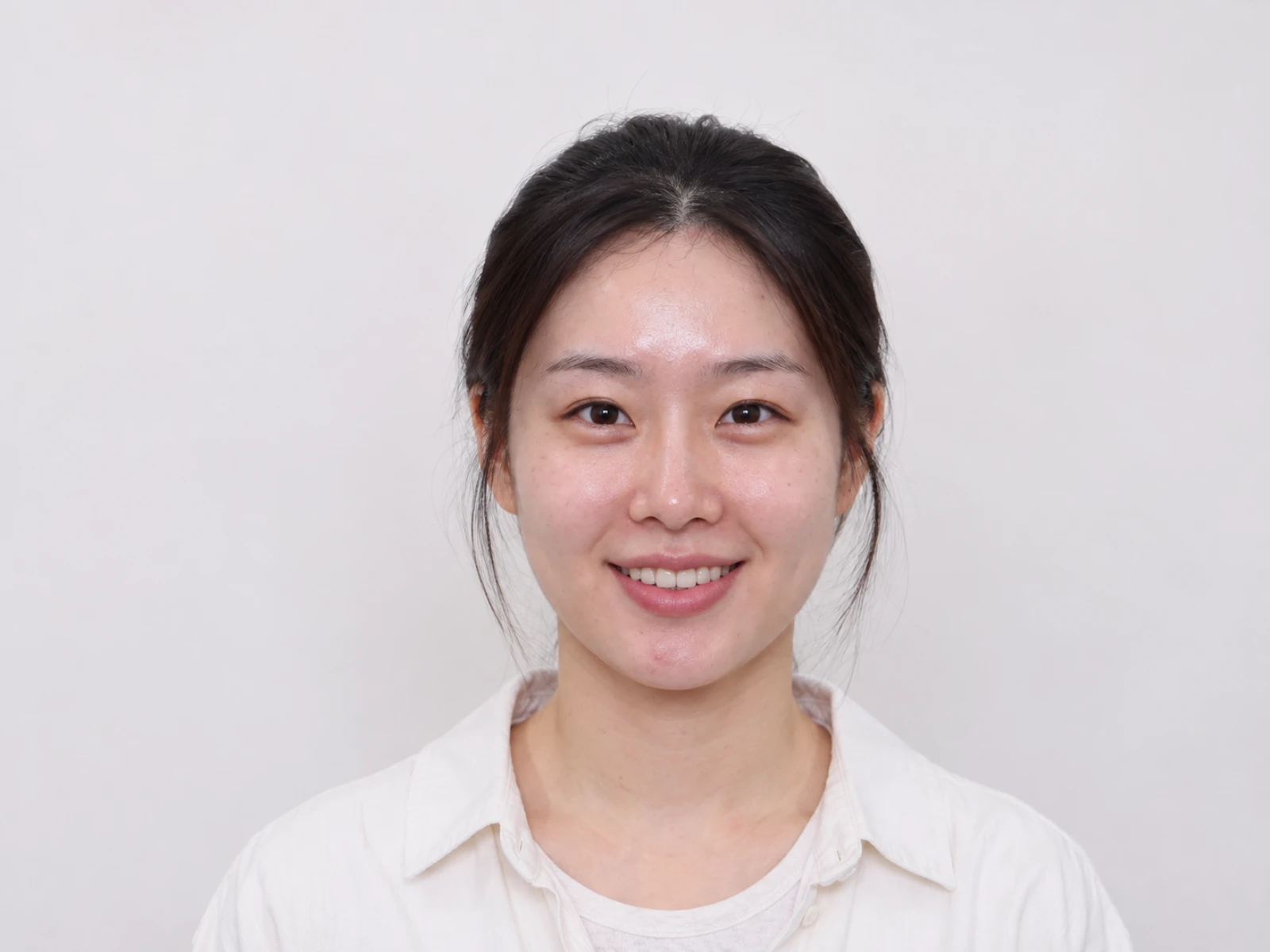
Smiling face · AI image
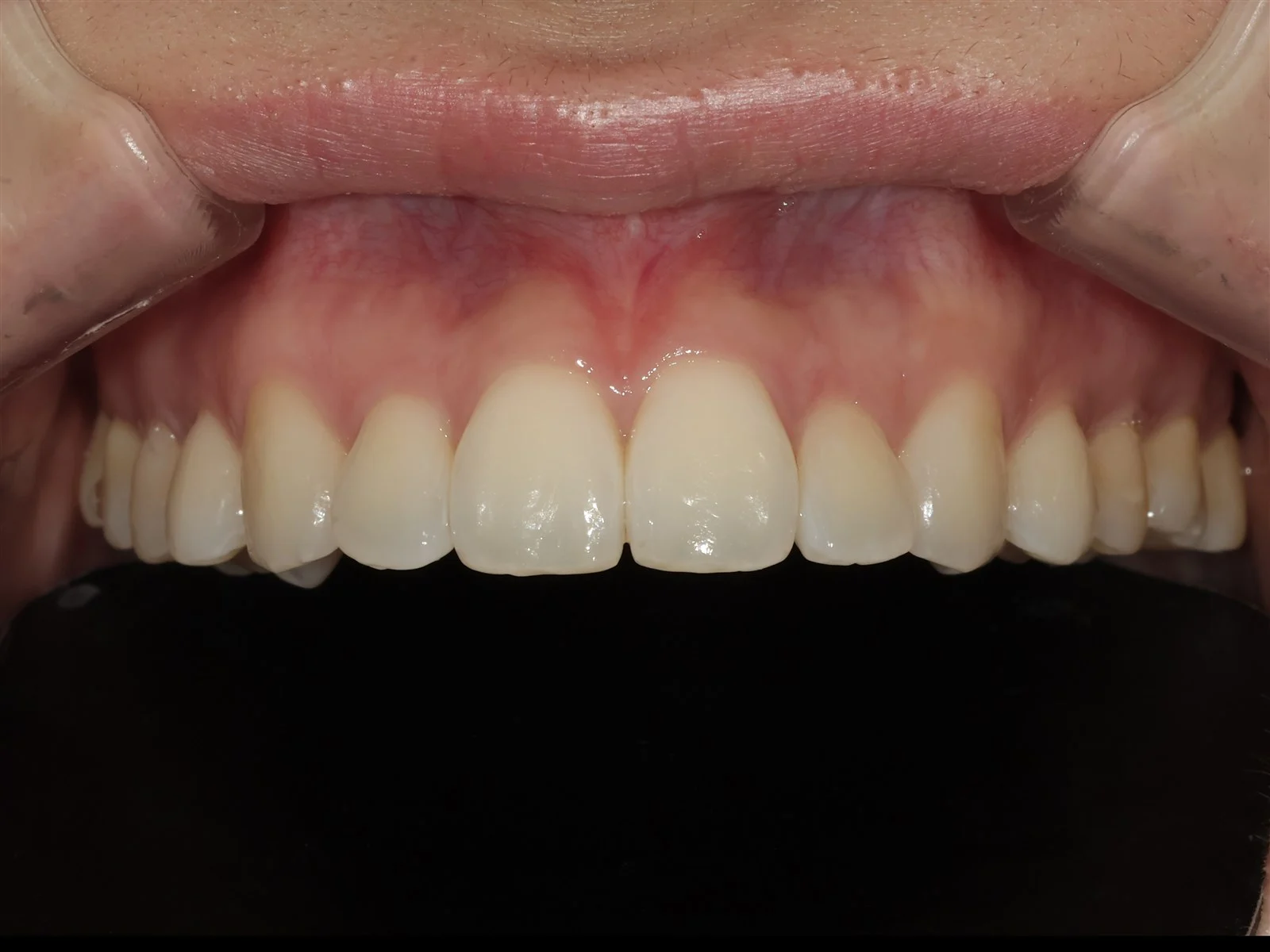
Front intraoral view
Smile and intraoral photos taken at the consultation. We record the facial midline, the number of teeth showing when you smile, and how much gum shows. The face photo is an AI-generated example image to aid understanding.
STEP 01
We photograph your smile first and ask what you want and what you want to avoid
We take front and side photos of your smile and intraoral photos. We record how many upper teeth show when you smile, whether the facial midline and the front-tooth midline match, and how much gum shows.
If you have photos of teeth you like, you can bring them. We also ask what you want to avoid, such as teeth that look too white or too thick.
Why we do thisThe number of veneers is decided by how many teeth show when you smile. Treating only the teeth that show leaves a color difference with the neighboring teeth, and treating teeth that do not show means reshaping them for no reason.
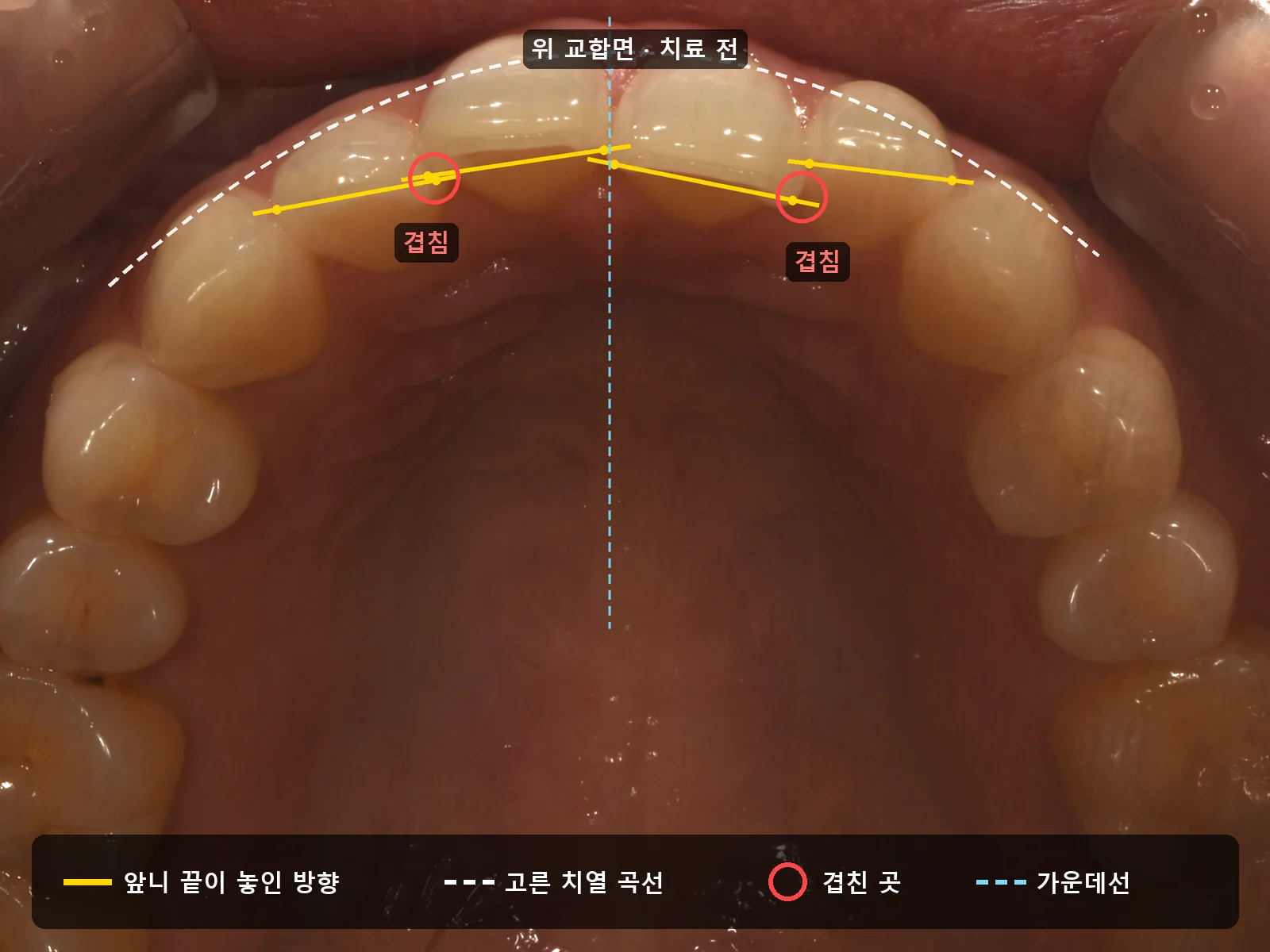
Occlusal analysis
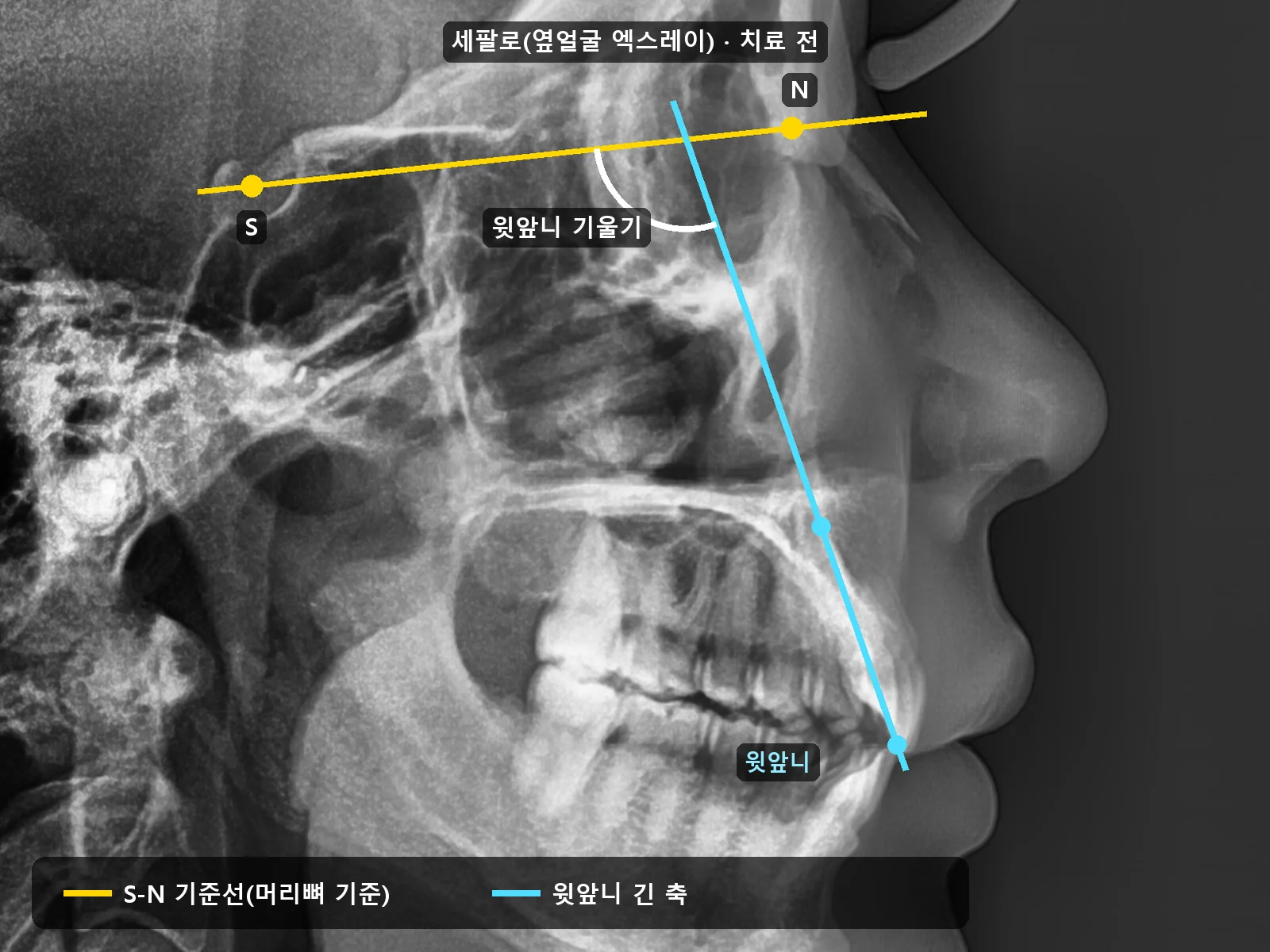
Front-tooth angle
Screens the orthodontist reviews. On the upper occlusal photo, we check how much the front teeth are rotated and overlapping, and on the cephalogram (side-view X-ray), the angle at which the upper front teeth are tipped.
STEP 02
An orthodontist checks the tooth positions first
Dr. Sunmin Kim (board-certified orthodontist) checks how far the front teeth are tipped with a digital cephalogram, how many mm the gaps and overlaps between teeth are with an iTero scan, and whether the facial midline and front-tooth midline match.
The answer here is one of three: veneers alone will do; moving just the front teeth for a few months first means less reshaping; or orthodontics alone is enough.
Why we do thisCovering teeth that stick out with veneers means reducing them by as much as they stick out, which can bring the reshaping closer to the nerve. Whether it is a position problem or a shape problem can only be decided before the teeth are reshaped.
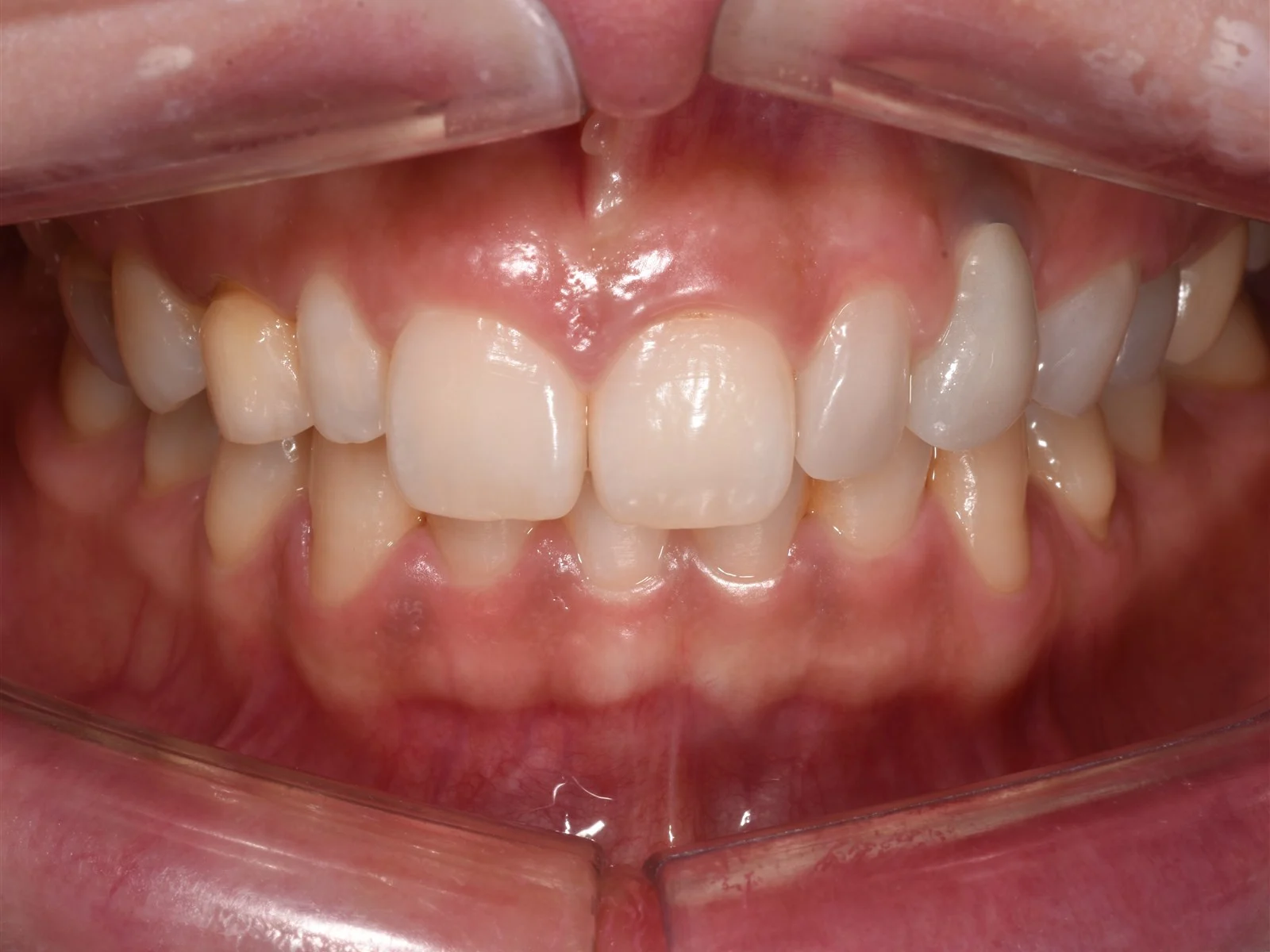
Difference in gum height
An example of an uneven gum line. The gum line of the central incisors sits lower than that of the lateral incisors, so the front teeth look short and square, and the gum heights of the left and right canines also differ. Bonding veneers as is would make the teeth look different lengths, so we decide together whether to correct the gum line first.
STEP 03
A periodontist checks the gum line and gum health
Dr. Ilseop Ahn (board-certified periodontist and specialist in integrated dentistry) checks gum inflammation and depth, differences in gum height between left and right, gum thickness, and the gum between teeth (the possibility of black triangles). If the gum heights differ a lot, we decide together whether to correct the gum line before veneers.
Why we do thisThe edge of a veneer sits right next to the gum. Bonding on inflamed gums can make the margin red or cause the gums to recede, and if the gum heights differ, the teeth look different lengths, so even well-made ceramics look uneven.
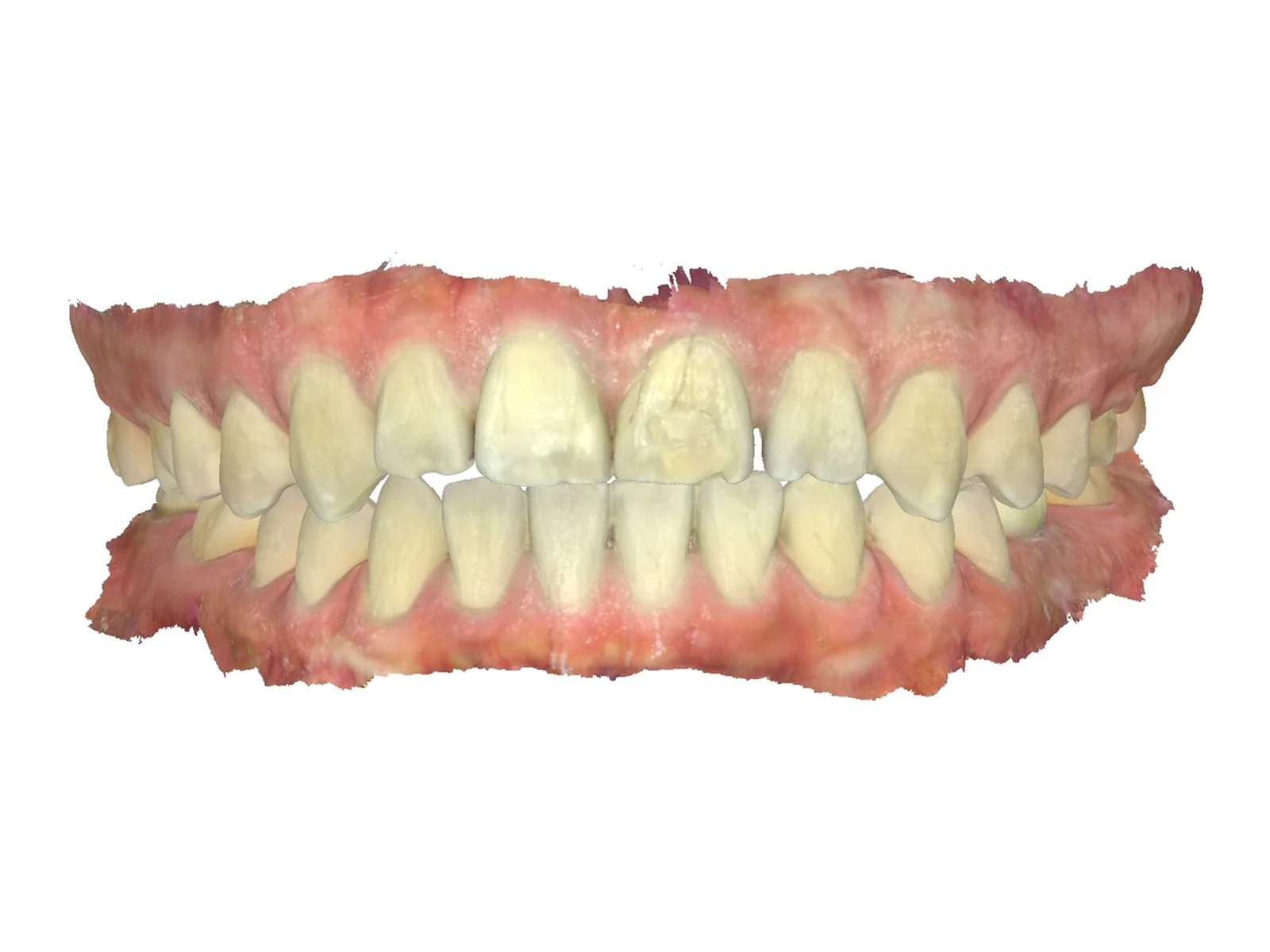
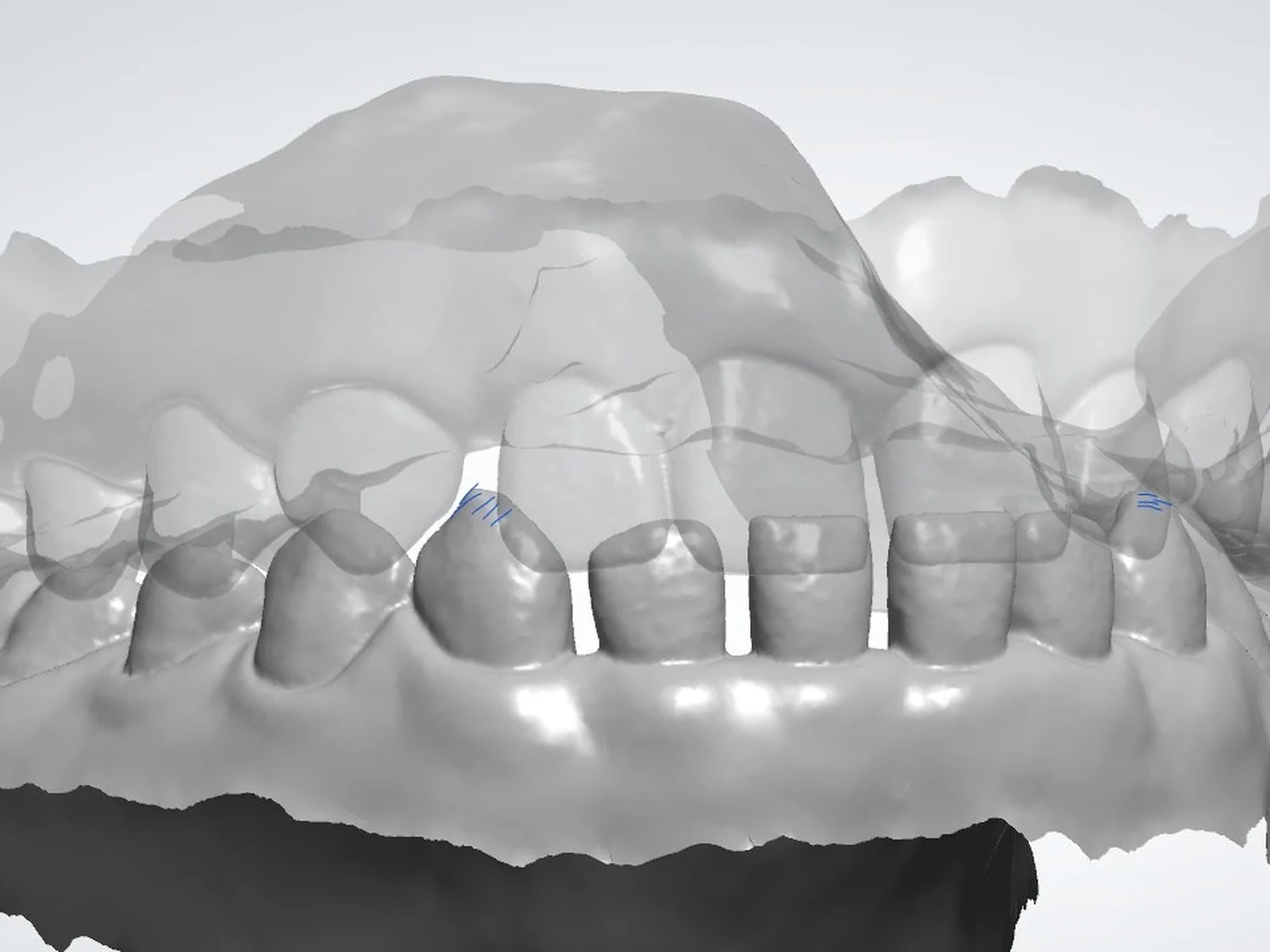
① Digital model
② 3D overlay
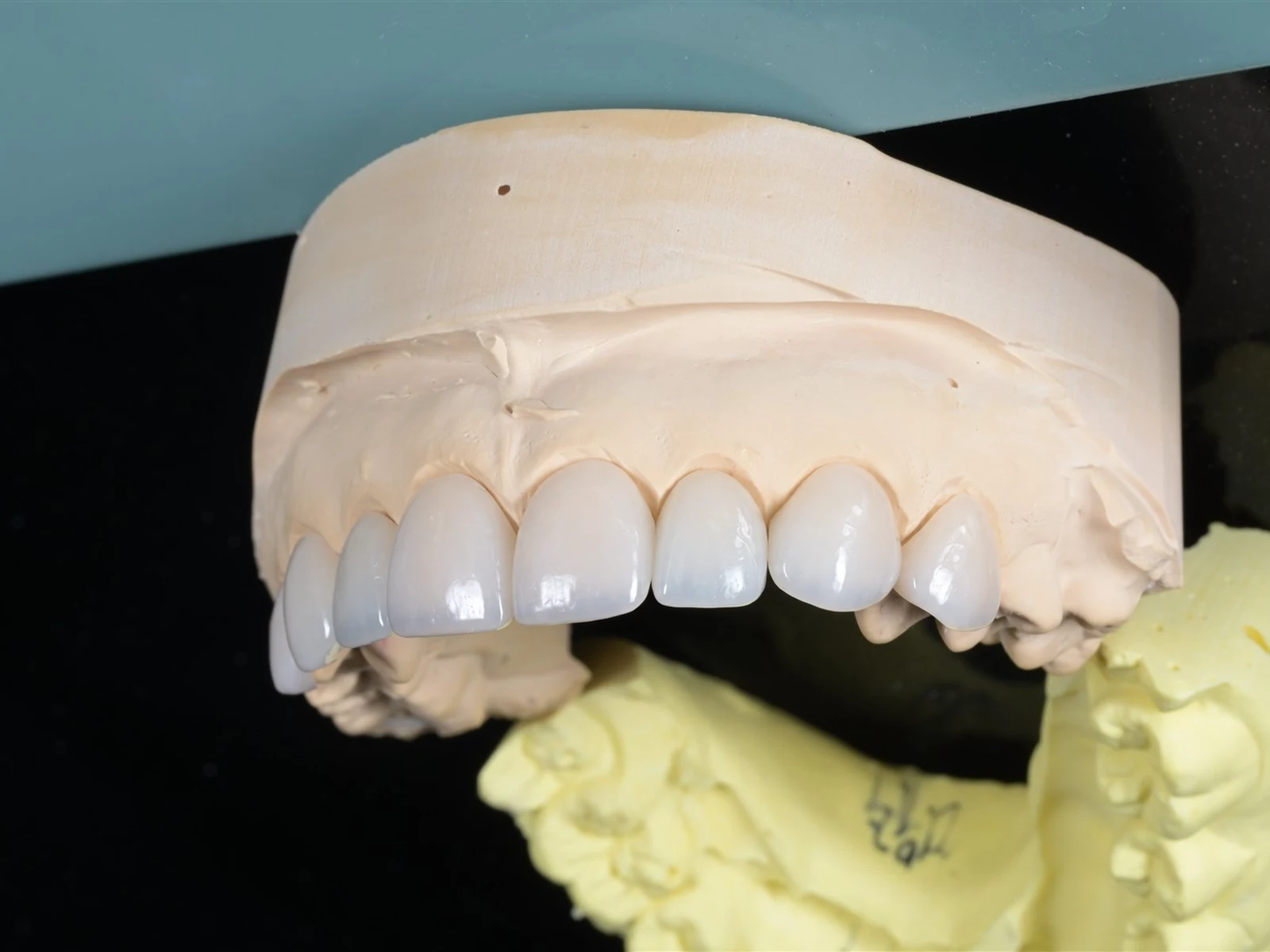
③ Checking the finished veneers
① A digital model made from a scan, ② a screen overlaying the design on the reshaped teeth to check thickness, ③ the finished CERANATE veneers fitted onto a model. We design the length, width and edge shape to suit the face and calculate the bonding thickness in advance. ① and ②/③ are different patients.
STEP 04
We design in 3D and calculate the amount of reshaping backward
After taking a precise silicone impression, the dental laboratory scans it to make a digital model. On that model, we design the length, width and edge shape of the front teeth and calculate how many mm of ceramic must be added to reach the desired shape.
Why we do thisThe amount of reshaping is not decided from the current teeth but backward from the finished shape. Teeth whose finished shape lies outside the current surface do not need reshaping; only the parts that move inward need to be reshaped.
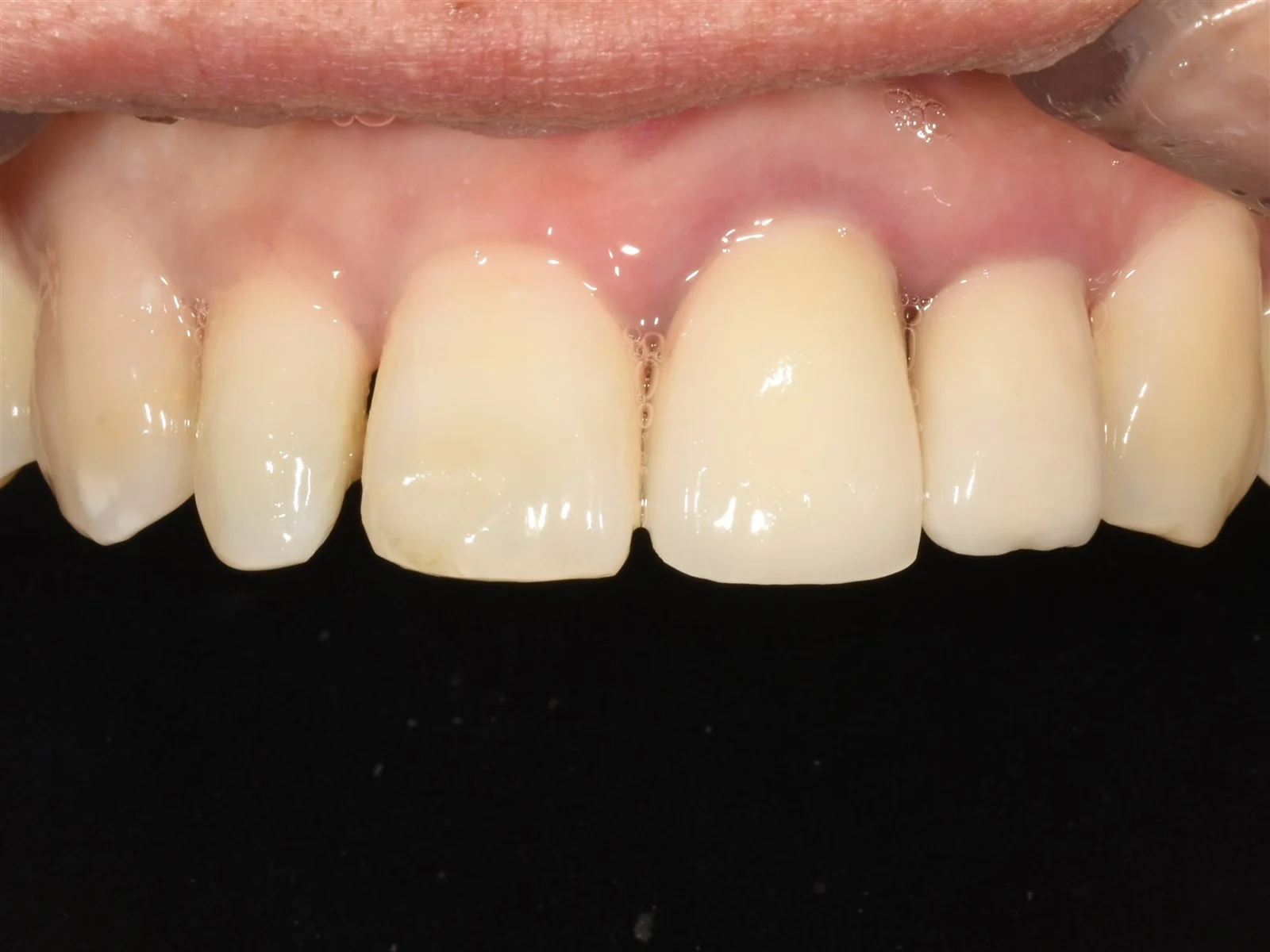
Before reshaping
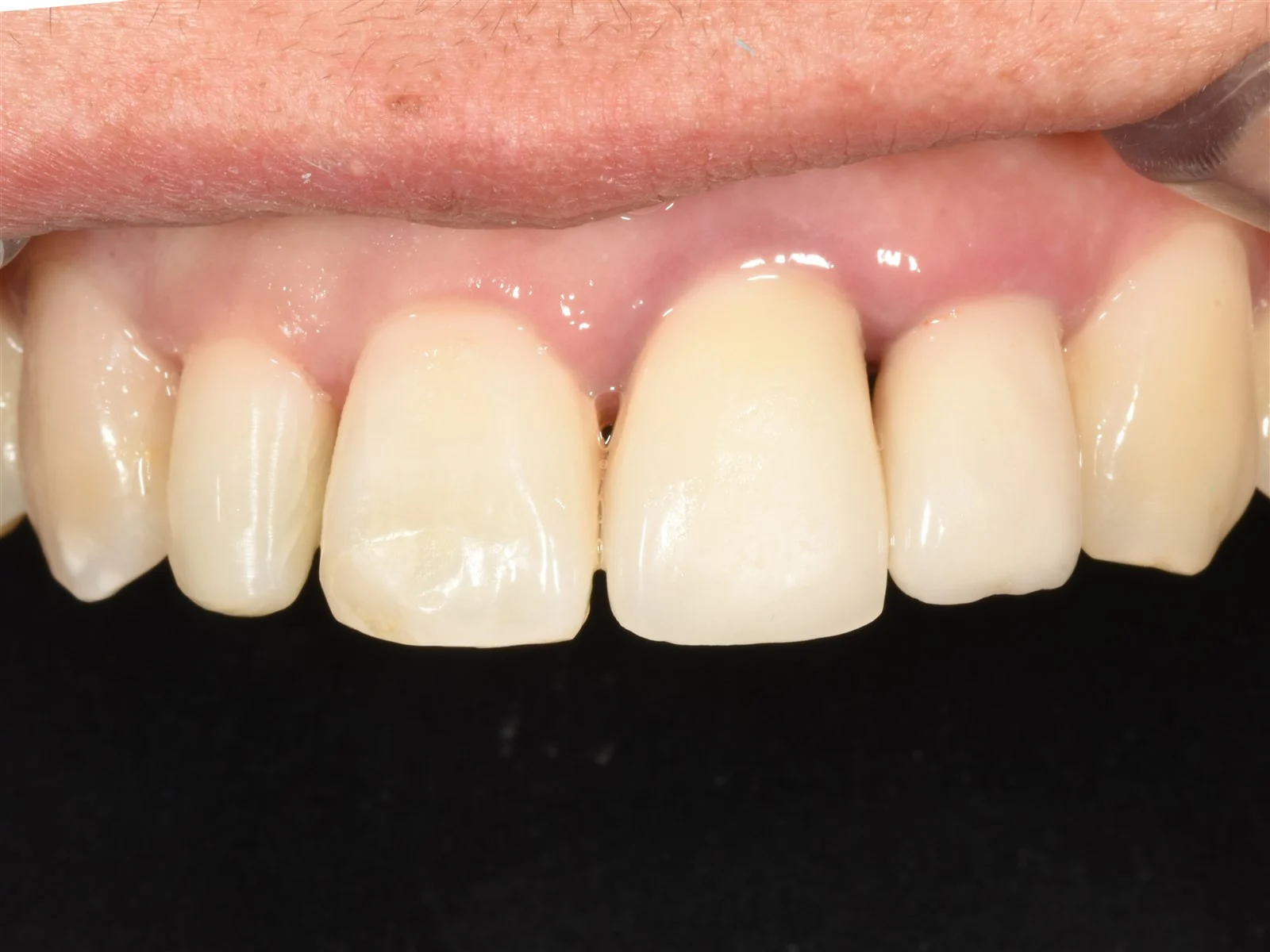
After reshaping
The same teeth before and after reshaping. Only the necessary areas are reshaped thinly within the enamel, and teeth with room to add material are not reshaped.
STEP 05
Only the teeth that need it are reshaped, within the enamel wherever possible
Enamel is the hardest outer layer of the tooth, roughly 0.3–1mm thick on the front surface of the front teeth. Veneers bond most strongly to enamel, so even teeth that must be reshaped are kept within this layer wherever possible. Teeth reshaped only very slightly, by 0.2mm or less, are sometimes done without anesthesia.
Teeth that can be left unprepared are not reshaped. Even within one person, unprepared teeth and minimally prepared teeth are often mixed.
Why we do thisIf reshaping goes past the enamel and exposes the dentin, the bond weakens and sensitivity is more likely. Reshaped teeth cannot be restored to how they were, so the amount is decided separately for each tooth.
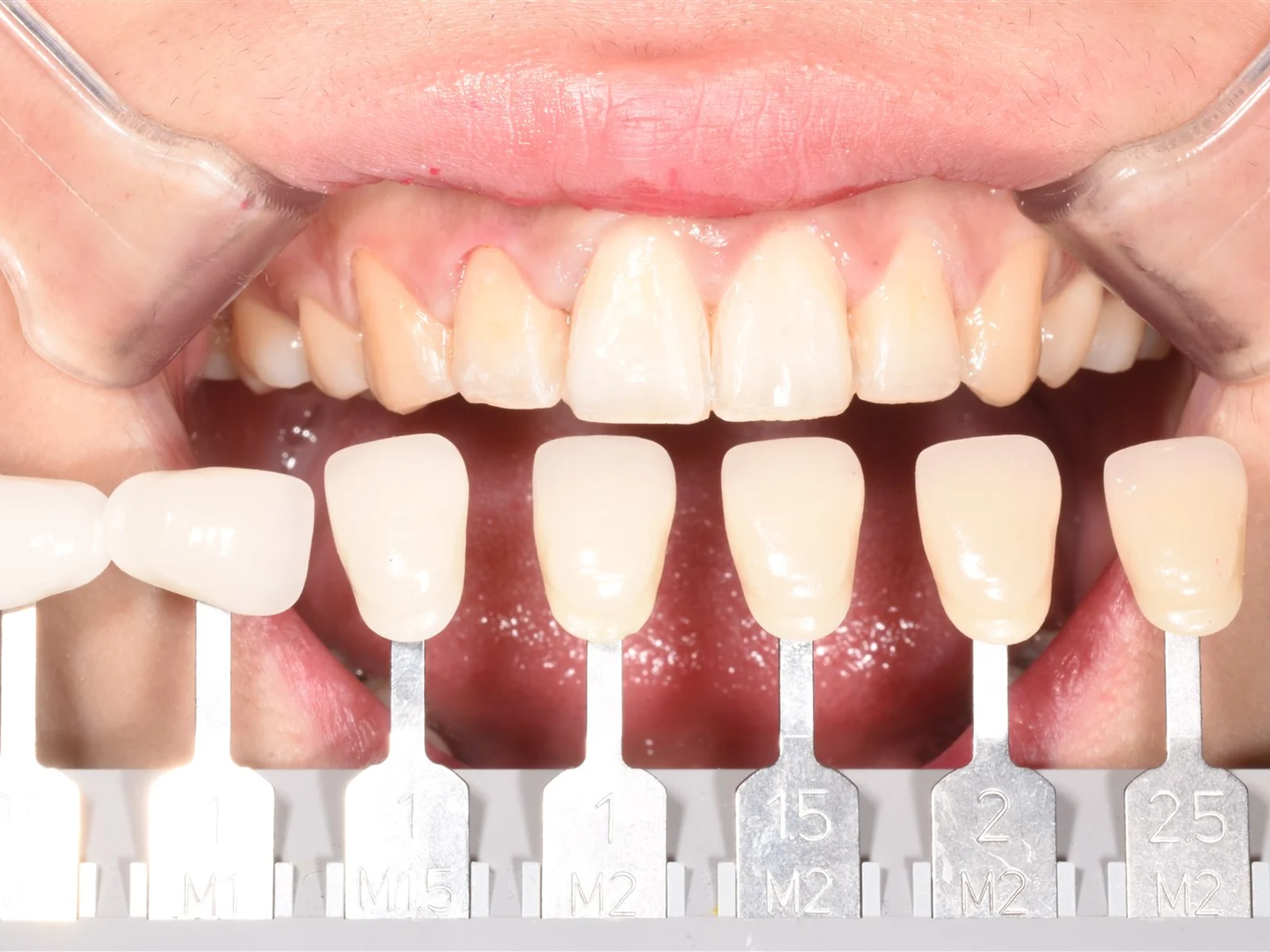
Color matching
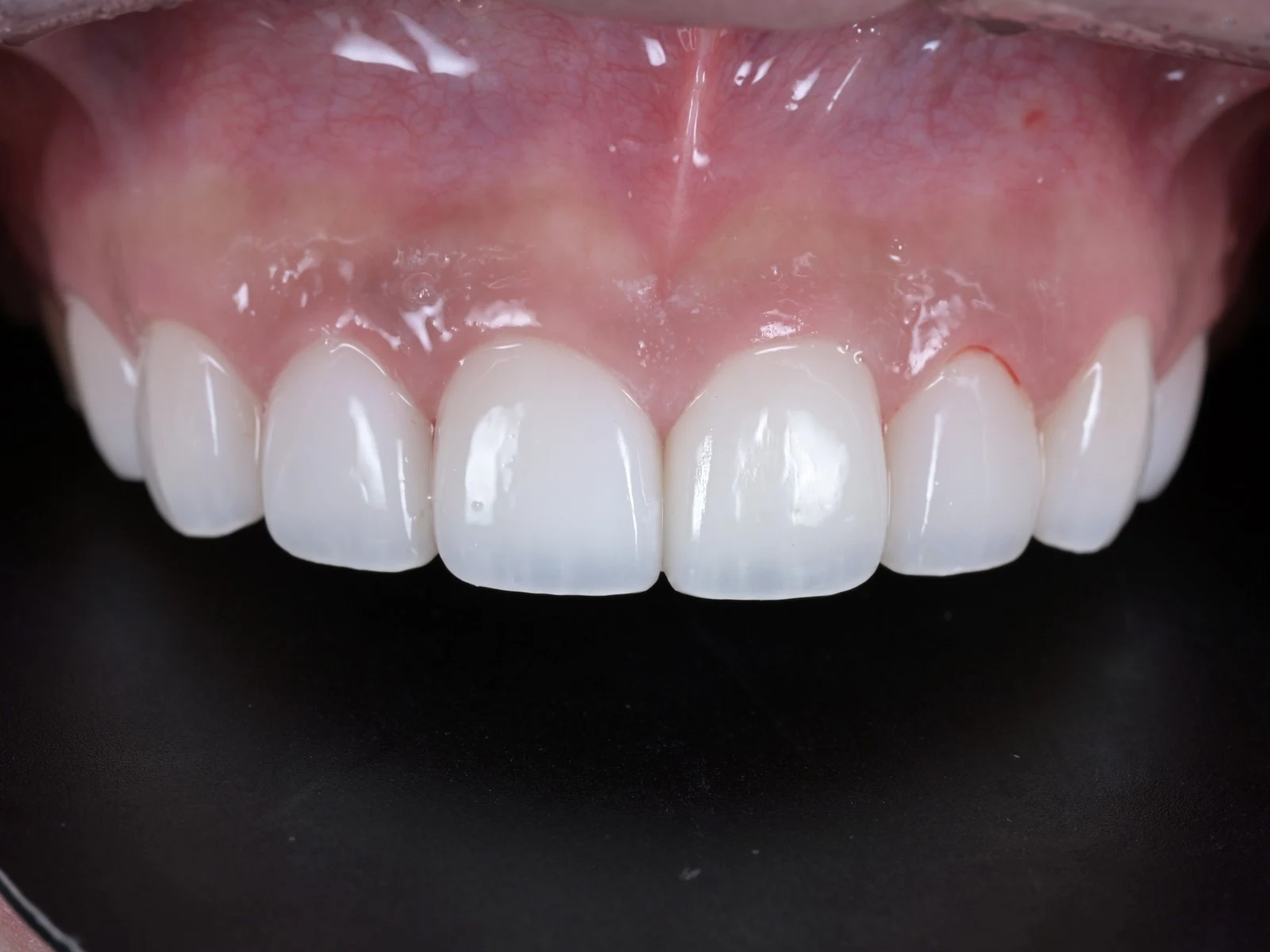
Bonding
Color matching before bonding, and right after bonding. We compare 6 shades in the mouth and adjust the bite after bonding. The two photos are different patients.
STEP 06
We try 6 shades, bond the veneers and adjust the bite
Before bonding, we try 6 shades in your mouth, including the color of the bonding material under the ceramic, and choose one. We check under both indoor lighting and natural light. After bonding, we adjust how the front teeth meet, take photos and give you a check-up schedule.
Why we do thisThin ceramic lets the color of the tooth and bonding material underneath show through. Even with the same ceramic, brightness changes with the bonding material, so we compare directly in the mouth before bonding.
* Clinical photos were published with the patients' consent. Side effects such as temporary pain or discomfort may occur depending on the person.
One-Day takes 2 visits over 1–2 days, and The Art and The Petit take 2 visits over about 1 week. If orthodontics or gum contouring is done first, that time is added.
06°
Comparing the three types of CERANATE
CERANATE One-Day
The Art
The Petit
Who it suits
People with a short schedule (such as patients coming from abroad)
People who want thinner veneers with natural translucency
People who want a bigger change in color and shape
Material
Ceramic of the same family
IPS e.max ceramic
Rosetta ceramic
How it is made
Rapid fabrication, then translucent layers created by hand
Made entirely by hand, with translucent layers also built up by hand
A base shape made to match the scanned form, then finished by hand
Visits and duration
2 visits over 1–2 days
2 visits over about 1 week (a 7–10 day stay is recommended)
2 visits over about 1 week
Thickness and reshaping
For all three, we first consider no-prep or minimal-prep for each tooth, and the thickness is the same. The Art can be made thinner, so we recommend it more for no-prep cases, to keep the teeth from looking bulky.
For all three, the assessment by an orthodontist and a periodontist before bonding is the same.
07°
In these cases, other treatment comes first, or you may not need treatment
Good for you if
Your teeth are in a good position, and your concern is color, shape or size
Your front teeth are small or have small gaps
Whitening does not give you the color you want
You want to replace old fillings or veneers
Other treatment comes first
Front teeth that stick out, overlap or are rotated: orthodontic assessment first
Gum inflammation: gum treatment first
A lot of gum showing when you smile: diagnosing the cause first
Severe grinding or clenching: checking the bite and a protective appliance first
Teeth with large cavities or cracks: considering front-tooth crowns
You may not need it now
If color is your only concern and whitening gives the brightness you want
If the gaps are small and filling them with resin would stay stable
08°
Three questions patients from abroad often ask
01Will a lot of tooth be removed?
The amount of reshaping is decided together with the orthodontist. We first look for cases where moving the teeth slightly would mean less reshaping or none at all, and we decide no-prep or minimal-prep tooth by tooth.
02Won't they look fake?
Teeth that are too white and too thick look unnatural. We design in 3D based on your face, skin tone and gum line, and match 6 shades before bonding. If you want a very bright shade, we first explain how it will differ.
03What about after I go home?
We record the name of the doctor in charge in your treatment record, and after you go home we continue to check your condition by photo. If a veneer breaks or comes off, we follow the aftercare terms agreed at the time of treatment. Aftercare terms and costs differ by product and are not the same for all, so we explain them before treatment.
09°
Side effects and limits
Please read
· Reshaped teeth cannot be restored to how they were. That is why we take time over the assessment before reshaping.
· Veneers can chip or come off. The risk is higher if you bite hard things with your front teeth or grind your teeth.
· Your teeth may be sensitive for a while after bonding.
· Staining or gum inflammation can occur at the gum margin, so regular check-ups and brushing are needed.
· Whitening does not change the color of veneers. Whitening of neighboring teeth is done before bonding.
· After long use, veneers may need to be replaced, and replacement may require more reshaping than the first time.
10°
Care after bonding
At the first check-up after bonding, we check the bite and gum margins again. After that, we regularly check for staining at the margins and the condition of the gums, together with scaling. We usually recommend a check-up 2 weeks after bonding, then every 6 months to 1 year.
Do not bite hard things (ice, crab shells, nut shells, etc.) with your front teeth.
Always floss along the gum margins. It reduces staining at the margins and gum inflammation.
Veneers often break because of the bite. If you grind or clench your teeth, we recommend wearing a clear protective appliance while you sleep.
FAQ
FAQ
How much tooth is removed for porcelain veneers?
Typical porcelain veneers involve reshaping the front surface of the teeth by around 0.3–0.7mm, but at Ceramic Dental Clinic we calculate backward from the finished shape and decide separately for each tooth. Teeth with room to add material are not reshaped, and teeth that must be reshaped are kept within the enamel wherever possible.
How long does veneer treatment take, and how many visits are needed?
CERANATE One-Day takes 2 visits over 1–2 days, and The Art and The Petit take 2 visits over about 1 week. If orthodontics, whitening or gum contouring is done first, that time is added.
How long do porcelain veneers last?
A study that followed porcelain veneers for up to 20 years reported that about 94% were still in place at 10 years and about 83% at 20 years. However, this varies greatly with teeth grinding, bite and care habits, so we cannot promise how long they will last (Beier et al., International Journal of Prosthodontics, 2012).urnal of Prosthodontics, 2012).
The three types of CERANATE use ceramics of the same family but differ in how they are made and how long they take. One-Day uses rapid fabrication and is finished within 1–2 days, while The Art and The Petit take about 1 week. We choose together based on your teeth and your schedule.
How many veneers do I need?
The number of veneers depends on how many teeth show when you smile and the color of the neighboring teeth. Even if many teeth show, not all of them need veneers; the rest can be matched in color with whitening. Often 4–6 upper front teeth that show when smiling are treated, and often an even number for left-right balance. When only one tooth is treated, matching its color to the neighboring teeth is difficult, so a consultation is needed first.
Can I replace veneers I had done before?
We remove the old veneers, look at the remaining tooth, and design again. More reshaping than the first time may be needed, and if the gums have receded and the margins show, we look at the gum line first.
What is the difference between veneers and front-tooth crowns?
Veneers cover only the outer surface of the front tooth, while a crown wraps around the whole tooth. For front teeth weakened by a large cavity or filling, a crack, or root canal treatment, we consider a crown.
If your concern is the shape and color of your teeth, veneers can do it. If your teeth stick out or overlap, covering them with veneers means reducing them as much as they need to be hidden, so an orthodontist first checks whether partial orthodontics of the front teeth could reduce the amount of reshaping.
Will my gums turn dark after veneers?
Staining can form at the veneer margin, or the gums can recede so the margin shows. That is why we check gum inflammation and thickness before bonding, and we also check the margins at regular check-ups after bonding.
Evidence and references
Beier US, Kapferer I, Burtscher D, Dumfahrt H. Clinical performance of porcelain laminate veneers for up to 20 years. International Journal of Prosthodontics, 2012. (Study of the long-term survival of porcelain veneers)
Questions from patients who travel to Seoul for treatment.
01Before you travel
Send photos of your teeth on WhatsApp or by email for preliminary advice. An accurate diagnosis is only possible after we examine your teeth and bite in person.
02Your first visit
We take X-rays and photos of your teeth, and your doctor explains the options. Allow about 30–40 minutes. You do not have to decide on treatment that day.
03Payment
You can pay by credit card or in cash.
How much does CERANATE cost?
CERANATE is KRW 550,000–770,000 per tooth including VAT, depending on the material and fabrication method. International and Korean patients pay the same fees. During promotional events, the same discounted price applies to everyone; ask us on WhatsApp about current events. The tax refund for foreign medical tourists has ended in Korea, so no refund applies. The number of teeth is decided at diagnosis, so we tell you the total after the examination. See our fee schedule.
How many visits do I need, and how long should I stay in Korea?
CERANATE One-Day takes 2 visits over 1–2 days. The Art and The Petit take 2 visits over about 1 week. If orthodontics, whitening or gum treatment comes first, that time is added. We suggest leaving 1–2 spare days after the final bonding before your flight. The check-up about 2 weeks after bonding can be done by photo on WhatsApp, and we see you in person on your next visit to Korea.
Can I have my consultation in English?
Yes. The doctor in charge of your treatment consults with you directly in English. Before you travel, you can send photos of your teeth on WhatsApp or by email. An accurate diagnosis is made after we examine you in person.
Results, the number of visits and schedules vary from person to person. More questions: Visiting from abroad.


 Before · Nov 2025
 After · Nov 2025
 Before · May 2026
 2-week check-up after treatment · May 2026
 Before · Sep 2026
 After · Sep 2026
 Smiling face · AI image
 Front intraoral view
 Occlusal analysis
 Front-tooth angle
 Difference in gum height
 ① Digital model
 ② 3D overlay
 ③ Checking the finished veneers
 Before reshaping
 After reshaping
 Color matching
 Bonding