Last reviewed Oct 29, 2026 · Dr. Sunmin Kim (board-certified orthodontist, certified by the Korean Association of Orthodontists)
At a glance
Who it suits
Dental protrusion, where the front teeth tip forward and the mouth looks like it sticks out
Treatment flow
Diagnose the cause → decide on extractions → move the front teeth back → retainers
Duration and limits
Usually 2–2.5 years. If the jawbone itself sits forward, braces alone change it only a little, so we also consider surgical orthodontics
Details
How much braces can change a protruding mouth depends on where the cause lies. With dental protrusion, where the front teeth tip forward, extraction treatment that removes premolars and moves the front teeth back can noticeably change the look of the mouth. Treatment usually takes 2 to 2.5 years. With skeletal protrusion, where the jawbone itself sits forward, braces alone change it only a little, so we also consider surgical orthodontics. At Ceramic Dental Clinic, we do not use all of the extraction space to move the front teeth back. While looking at your profile, we plan how much of the space goes to moving the front teeth back and how much goes to bringing the molars forward.
01°
The same protruding mouth, but a different treatment for each person
Depending on the cause, lip thickness and how much gum shows when smiling, we decided differently whether to extract and how far to move the front teeth back. Here are three typical real cases.
CASE01
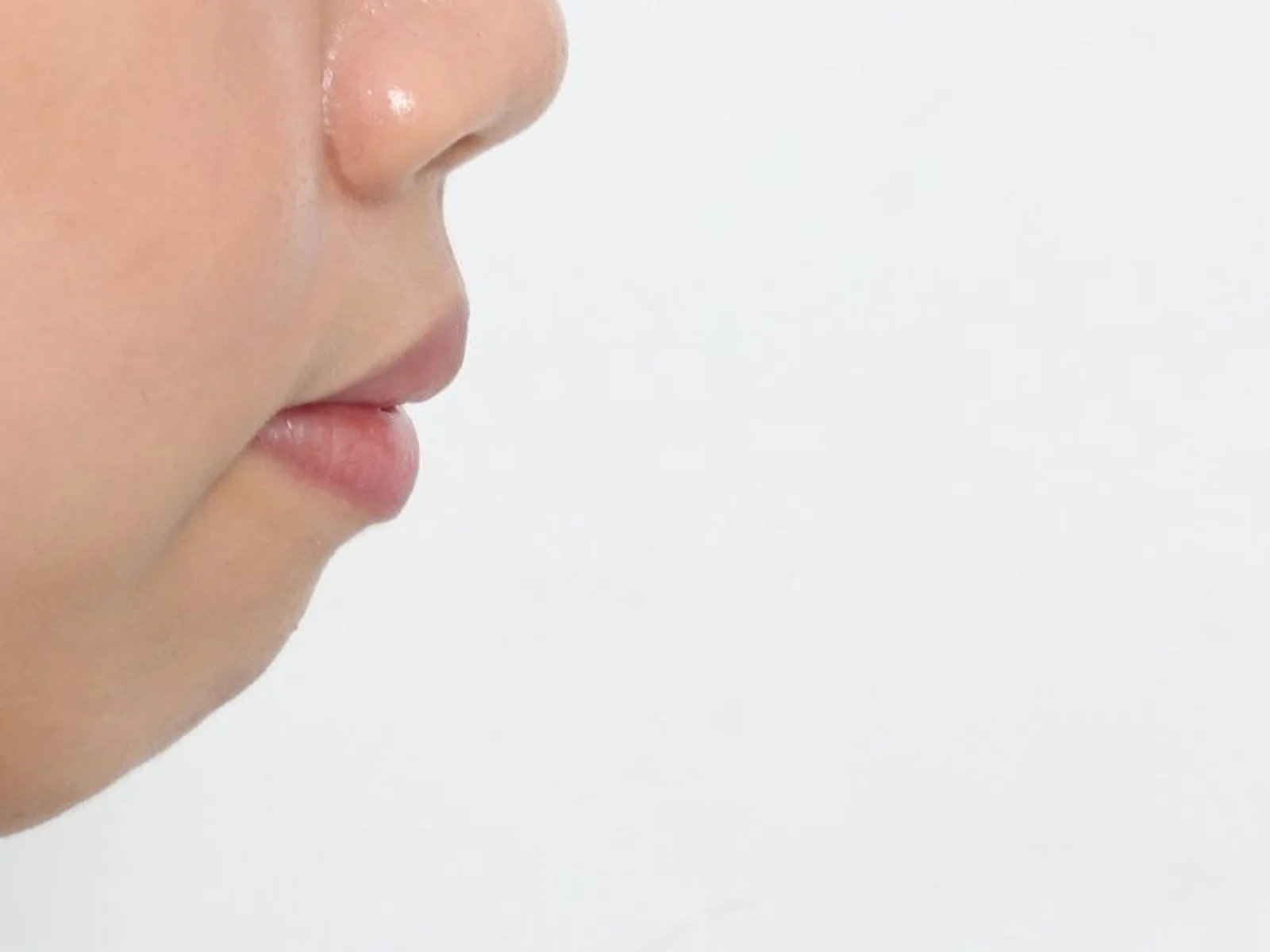
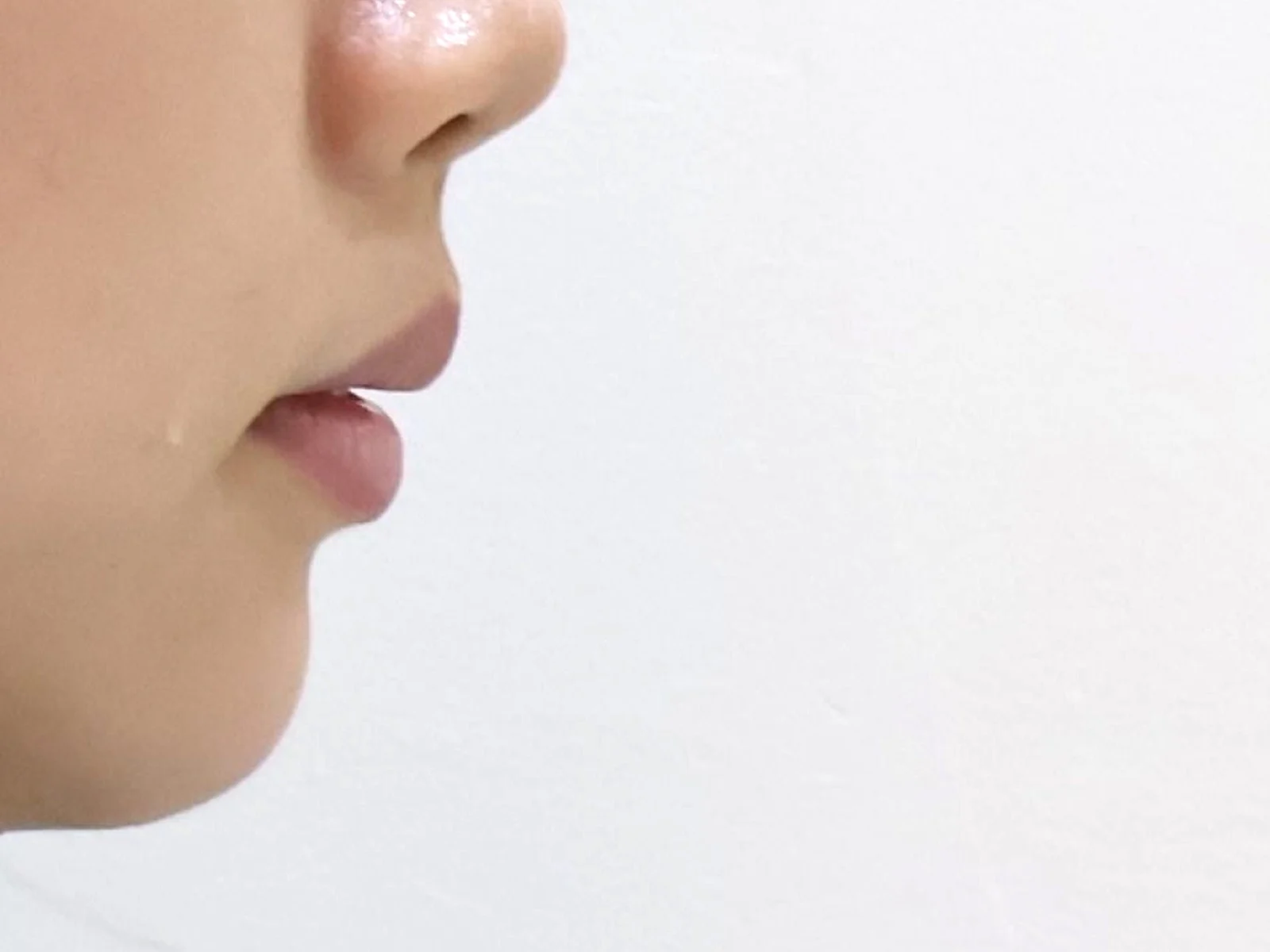
Protruding mouth with front teeth extending far forward
Extraction treatment · held the molars with mini-screws and moved the front teeth back as far as planned
Before treatment · April 2024
Side view of the face before treatment. The upper front teeth tip forward and push the lips out, and the chin strains when the mouth closes.
After treatment · September 2026
Side view of the face after treatment. As the front teeth moved back, the lip protrusion decreased and the chin wrinkles on closing decreased.
Condition
Dental protrusion with steeply tipped upper front teeth and fairly thick lips
Choice
Extraction of 4 upper and lower premolars, mini-screws in the upper molar area
What we did not do
Surgical orthodontics (the difference in jawbone position was not large)
Duration
About 2 years and 5 months (April 2024 → September 2026)
Note
The actual position of the chin bone is the same as before braces. Instead, we shape the chin's appearance by adjusting the shape of the lips.
CASE02
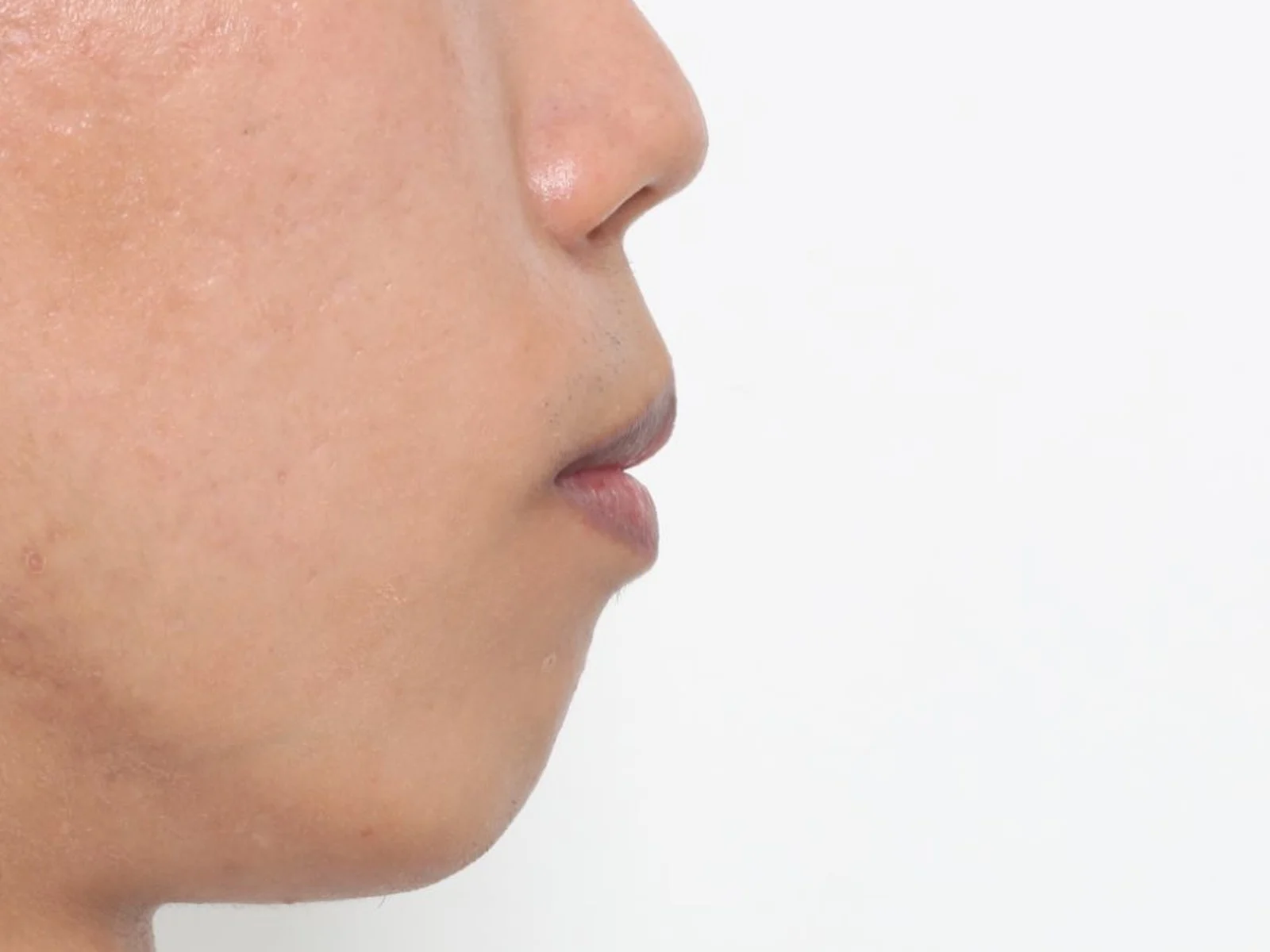
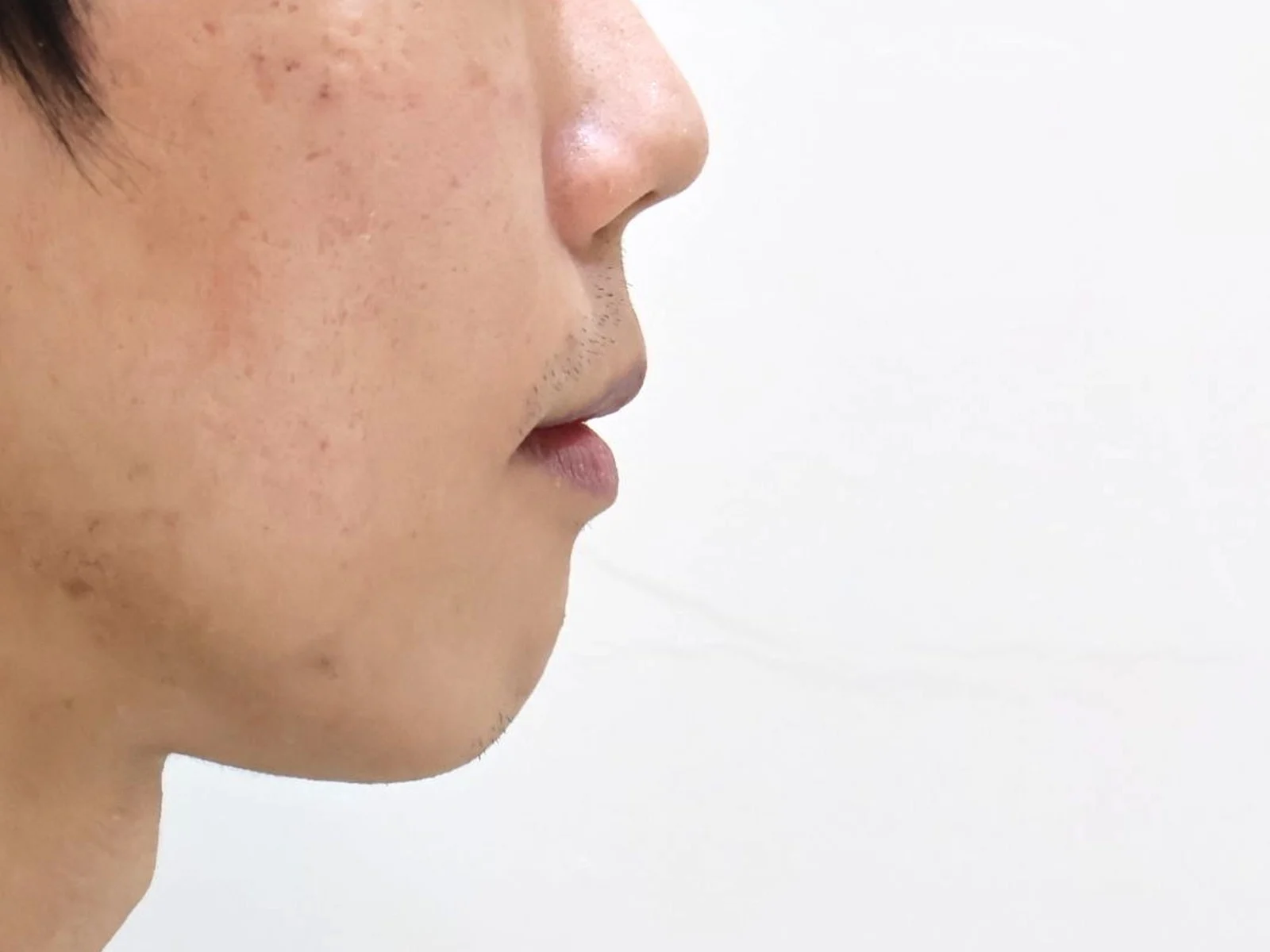
The mouth looked like it stuck out, but the lips were fairly thin
Extraction treatment · split the space so the front teeth moved back only as much as needed, and the molars came forward to fill the rest
Before treatment · June 2023
Side view of the face before treatment. The front teeth tipped forward, but the lips were fairly thin, so moving the front teeth back as far as possible could have made the area around the mouth look sunken.
After treatment · April 2026
Side view of the face after treatment. We used only part of the extraction space to move the front teeth back and closed the rest by pulling the molars forward, so the mouth did not go back too far.
Condition
Dental protrusion with steeply tipped front teeth but fairly thin lips
Choice
Premolar extraction; extraction space split into a front-teeth share and a molar share
What we did not do
Mini-screws (the plan allowed the molars to come forward)
Duration
About 2 years and 10 months (June 2023 → April 2026)
Space allocation
Front teeth 4 mm : molars 4 mm
CASE03
Protruding mouth with a lot of gum showing when smiling
Extraction treatment · used mini-screws to move the front teeth back and up at the same time
Before treatment · February 2022
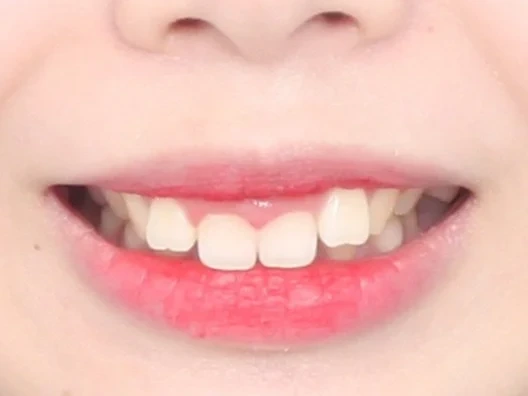
Smile before treatment. The upper front teeth stuck forward and the front teeth were uneven.
After treatment · June 2024
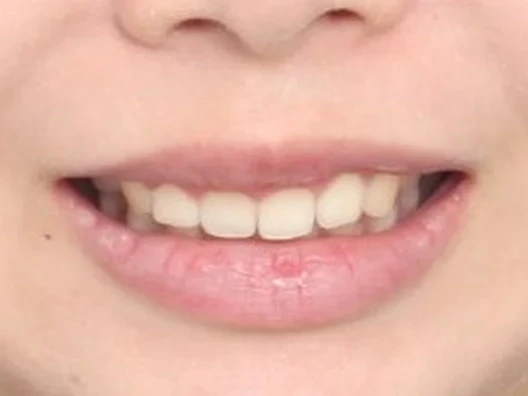
Smile after treatment. The front teeth were moved back and evenly aligned, so they stick out less when smiling.
Condition
Protruding upper front teeth that also extend too far downward, with a lot of gum showing
Choice
Premolar extraction; moved the front teeth up and back with mini-screws near the front teeth
What we did not do
Gum removal (gum covering the teeth was not the cause)
Duration
About 2 years and 4 months (February 2022 → June 2024)
Note
We do not make the gum disappear completely when smiling. We always leave as much gum showing as suits the patient's current age.
* Photos were taken under the same conditions and published with the patients' consent. Treatment results and side effects can vary from person to person.
02°
Will braces bring my mouth back too? We start by sorting the cause
There are four main reasons a mouth looks like it sticks out, and most people have two or three mixed together. What braces can change depends on which one plays the bigger role.
01Dental protrusion
The jawbone position is fine, but the front teeth tip forward and push the lips out. When the front teeth move back, the lips follow, so braces can make the biggest difference here.
02Skeletal protrusion
The upper or lower jawbone itself sits forward. Even if the front teeth move back, the bone outline stays, so the change is small. If you also want to change your facial outline, we consider surgical orthodontics.
03Lips (soft tissue)
The lips are thick or strain when you close your mouth. The lips do not follow the front teeth by the full distance they move back, and how much they follow varies greatly from person to person.
04Gum protrusion
As the upper front teeth come forward, they also come down, so a lot of gum shows when smiling. We also plan to move the front teeth up. See gummy smile →
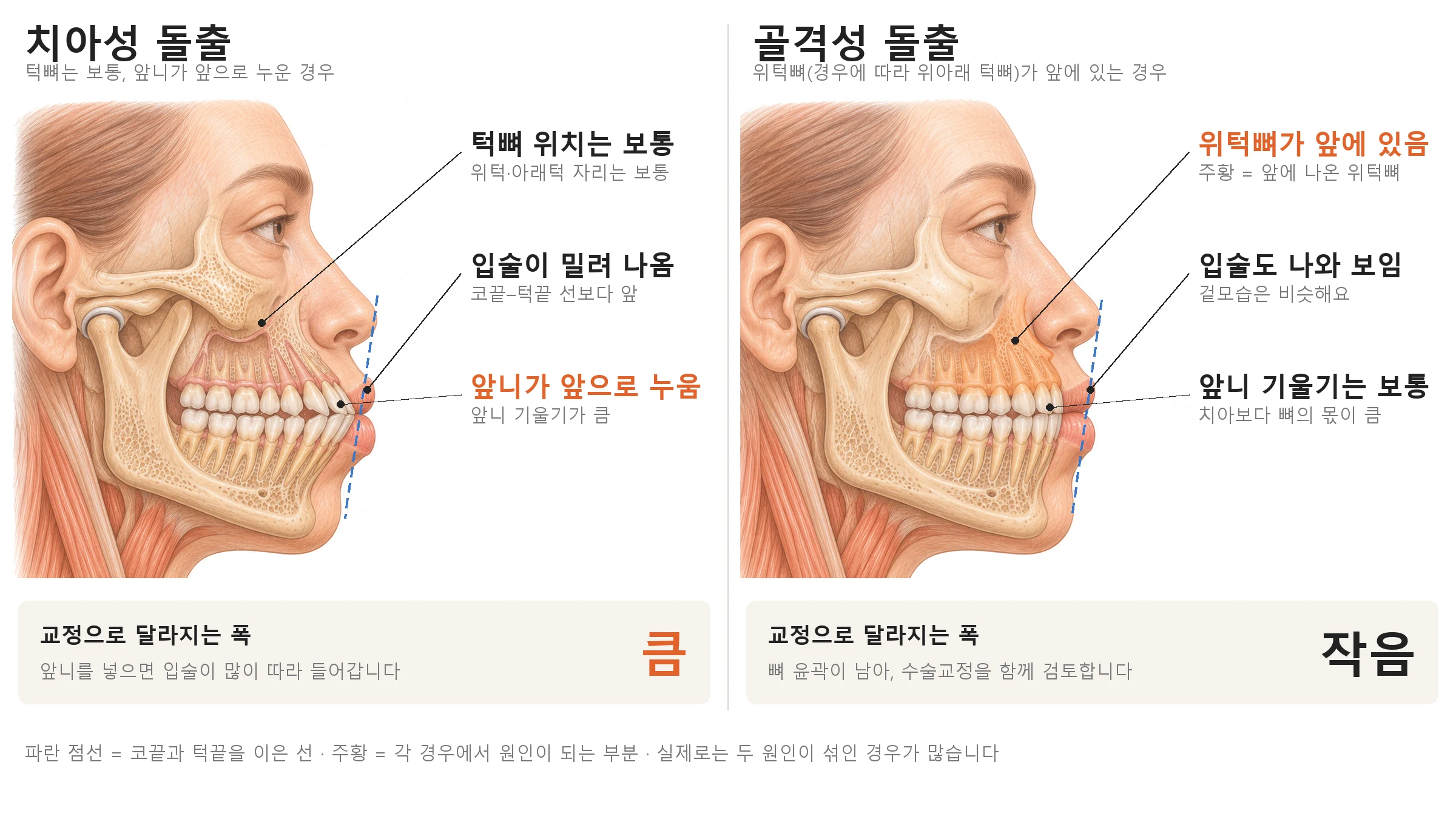
Comparison of dental and skeletal protrusion. Drawn at the same size and on the same reference lines, it separates front teeth that are tipped from a jawbone that sits forward.
The larger the dental share, the more braces can change; the larger the skeletal share, the less. Our exam shows you this ratio in numbers.
03°
How orthodontic treatment for a protruding mouth works
There are six steps, from the exam to the retainers. For each step, we explain what we look at and why, with real clinical photos.
Exam
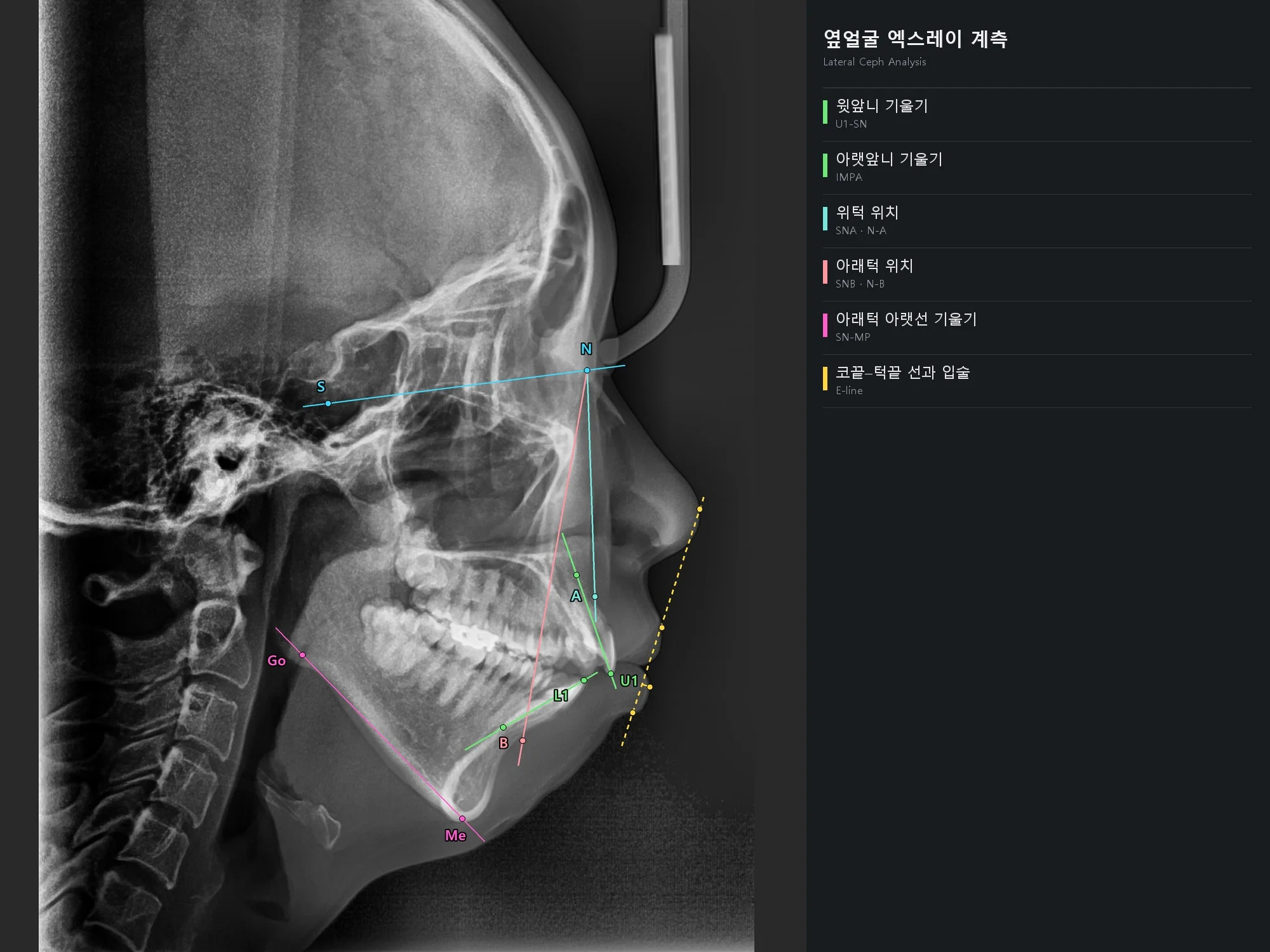
Side-view X-ray (cephalogram) measurement screen. We draw lines to see the tilt of the upper and lower front teeth, the position of the upper and lower jawbones, and the position of the lips relative to the line from the tip of the nose to the chin.
STEP 01
We look at the cause in numbers on a side-view X-ray
With a side-view X-ray (cephalogram), we measure how far the upper front teeth are tipped, where the upper and lower jawbones are, how far the lips stick out past the line from the tip of the nose to the chin, and the angle between the nose and upper lip (nasolabial angle). We also take smile and profile photos to see how much gum shows and whether the chin strains when you close your mouth.
If the bone around the front-teeth roots looks thin, we check the bone thickness with a 3D CT scan.
Why we do thisHow far the front teeth can move back is set by the thickness of the bone around their roots. Forcing them back when the bone is thin can push the roots outside the bone or make the gums recede. So before deciding how far to move them, we first check how far they can go.
Planning
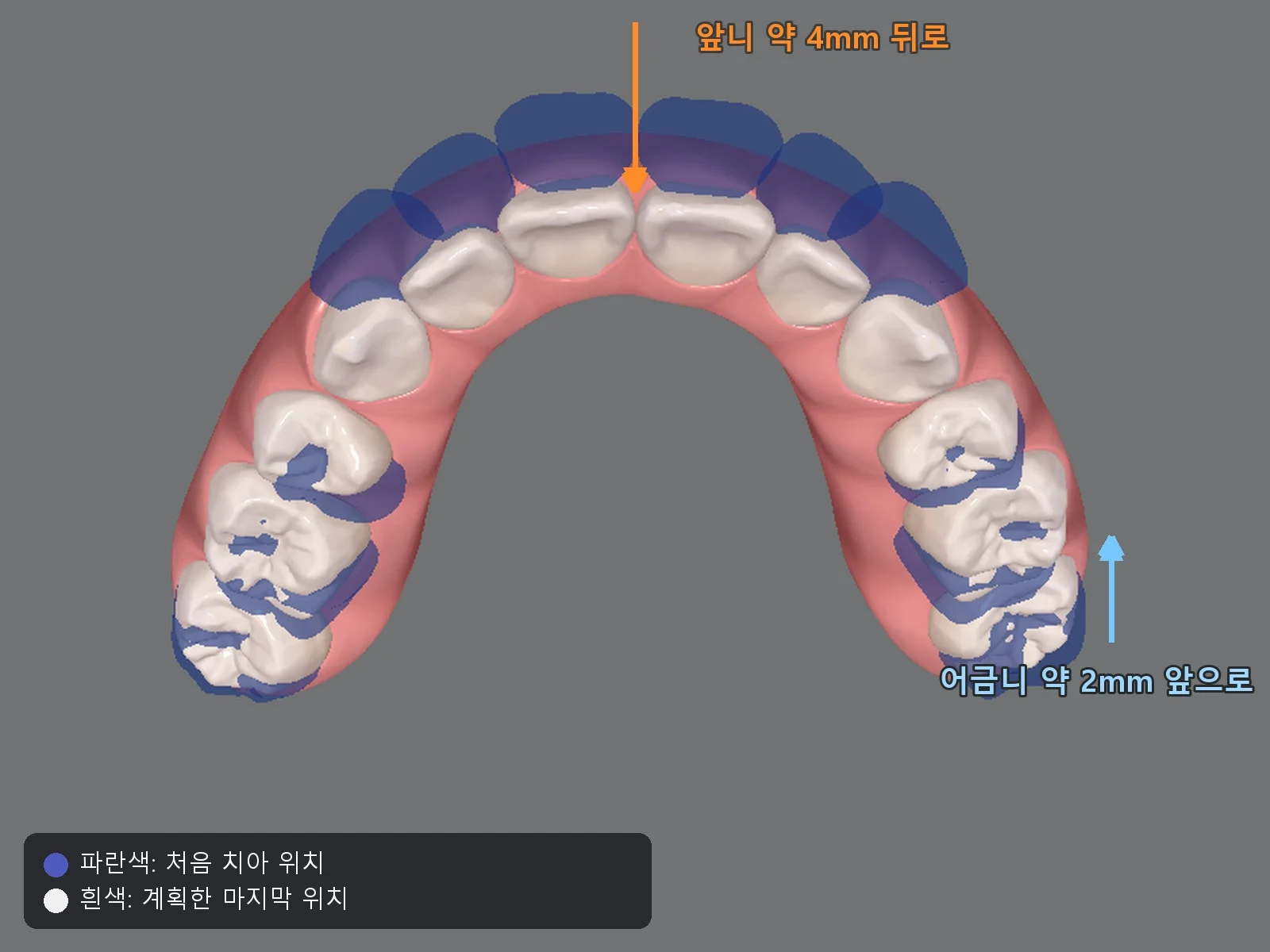
Treatment planning screen (clear aligner ClinCheck). Overlaying the starting position (blue) and the planned final position (white), this plan splits the premolar extraction space so the front teeth use about 4 mm and the molars about 2 mm.
STEP 02
We split the extraction space into a front-teeth share and a molar share
Removing one premolar creates about 7 mm of space on that side. If the front teeth use all of it, the mouth goes back the most. If the molars come forward and fill some of it, the front teeth go back that much less.
I first set the target profile and then work backward to calculate how far the front teeth should move back. The remaining space is closed by pulling the molars forward. We show you this allocation in a drawing when we explain your exam results.
Why we do thisMoving the teeth back more is not always better. If someone with thin lips or a low nose has the front teeth moved back as far as possible, it may look neat at first, but the area around the mouth can look sunken with age. Lips get thinner as we age, so we also think about how your face will look 10 years from now.
Mini-screws
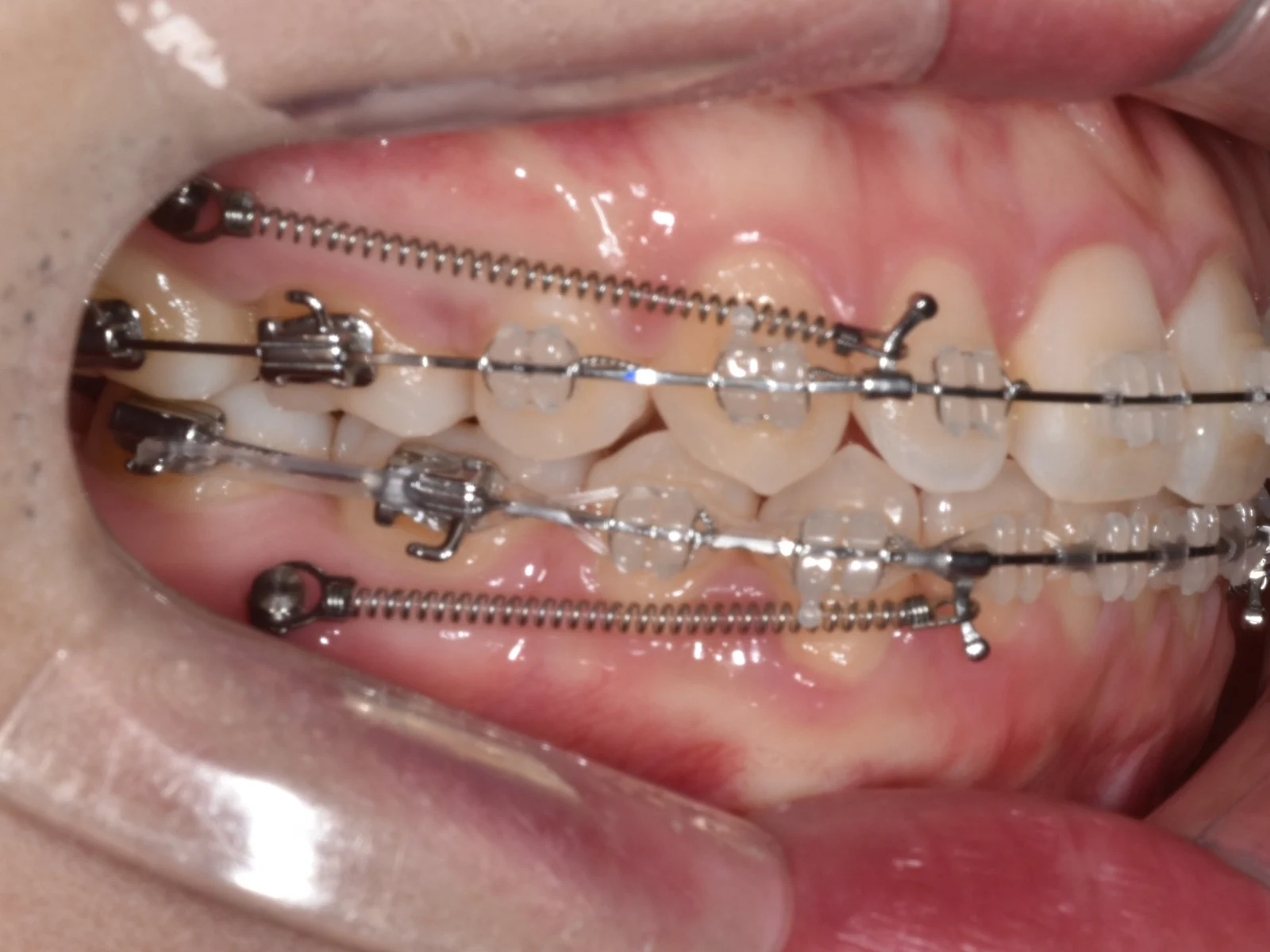
A mini-screw placed in the gum bone between the molars. It acts as an anchor that keeps the molars from being pulled forward when the front teeth are pulled back.
STEP 03
After extractions and attaching the braces, we place mini-screws if needed
We remove the planned teeth and attach the braces. For people whose front teeth need to move back a lot, we place a small screw less than 2 mm in diameter (a mini-screw) in the gum bone between the molars and use it as an anchor. It takes a few minutes under local anesthesia, and it is removed when treatment is finished.
Why we do thisWhen the front teeth are pulled back, the same force pulls the molars forward in the opposite direction. The mini-screw takes this opposite force instead, so the extraction space is used in the planned ratio. My own research, in which I measured the forces and rotational forces acting on teeth, also dealt with this kind of force balance.
Closing the space
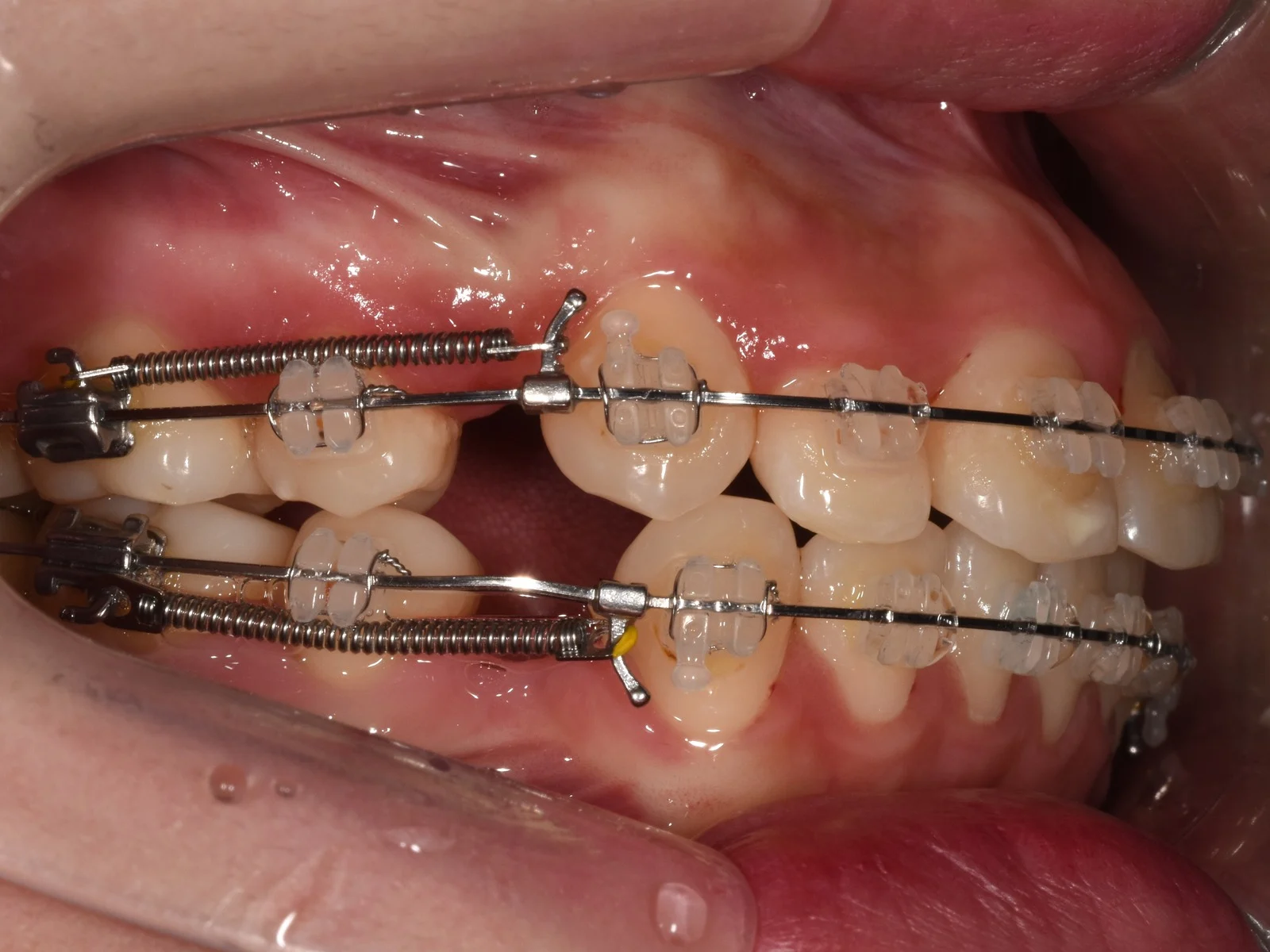
Side view inside the mouth while the extraction space is closing. A spring pulls the front teeth back, closing the extraction gap over several months.
STEP 04
After lining up the teeth evenly, we move the front teeth back, roots and all
First we line up the teeth evenly for a few months, and then we move the front teeth back while closing the extraction space. The space closes at roughly 1 mm a month, and this stage is the longest part of treatment.
When moving the front teeth, we also control the root angle with the wire so that only the crowns do not tip over.
Why we do thisIf the front teeth are simply pulled back, only the crowns tip inward, the front teeth lie back and the bite deepens. Even if the mouth looks set back from the outside, the front teeth can look short and bent inward when you smile, so we keep adjusting the angle to move them roots and all.
Compared with the start
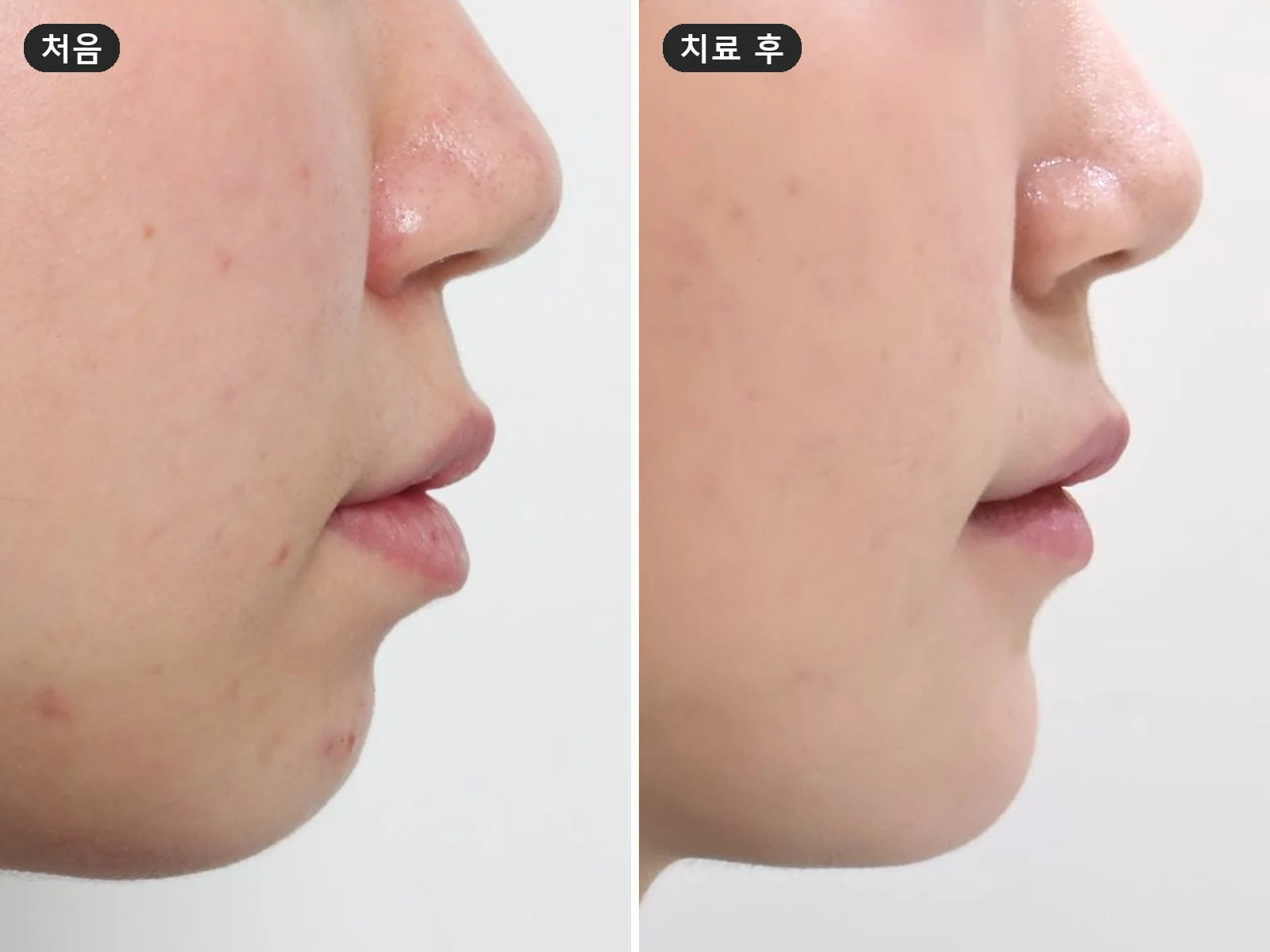
The profile at the start and after treatment, placed side by side at the same size. Partway through treatment, we also retake the profile like this, compare it with the start and decide whether to move the front teeth back further.
STEP 05
We look at your profile again partway through and decide together whether to go further
When the front teeth have moved about halfway as planned, we retake profile photos and an X-ray and overlay them on the first ones. At this point, you and we decide together whether to keep going as planned or move them back less. Because the remaining space can be closed by pulling the molars forward, there is room to change direction.
Why we do thisHow far the lips follow the front teeth varies from person to person. We do not push through to the end based only on the first calculation. We decide the final amount by looking at how your face has actually changed.
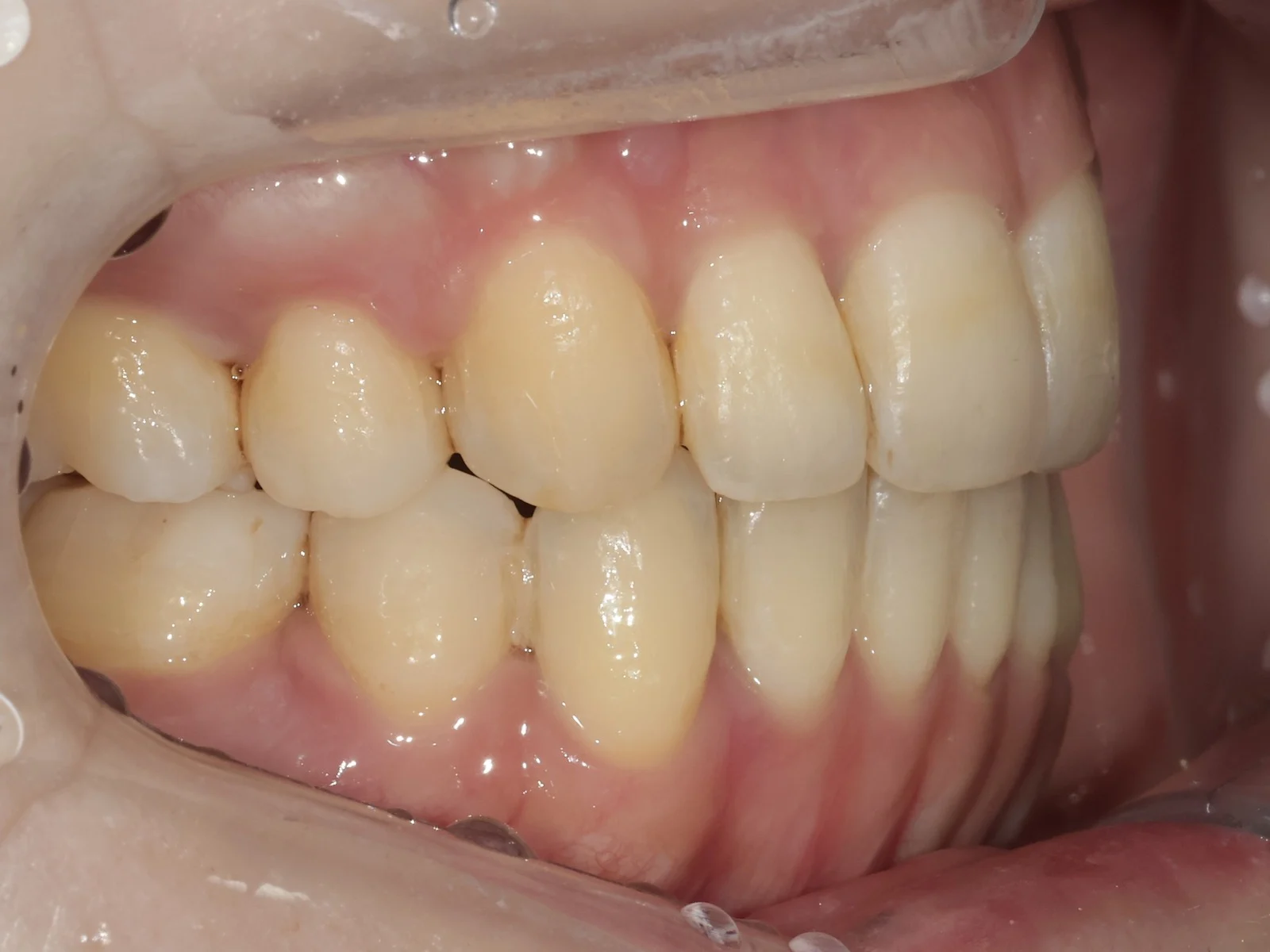
Bite after treatment · May 2026
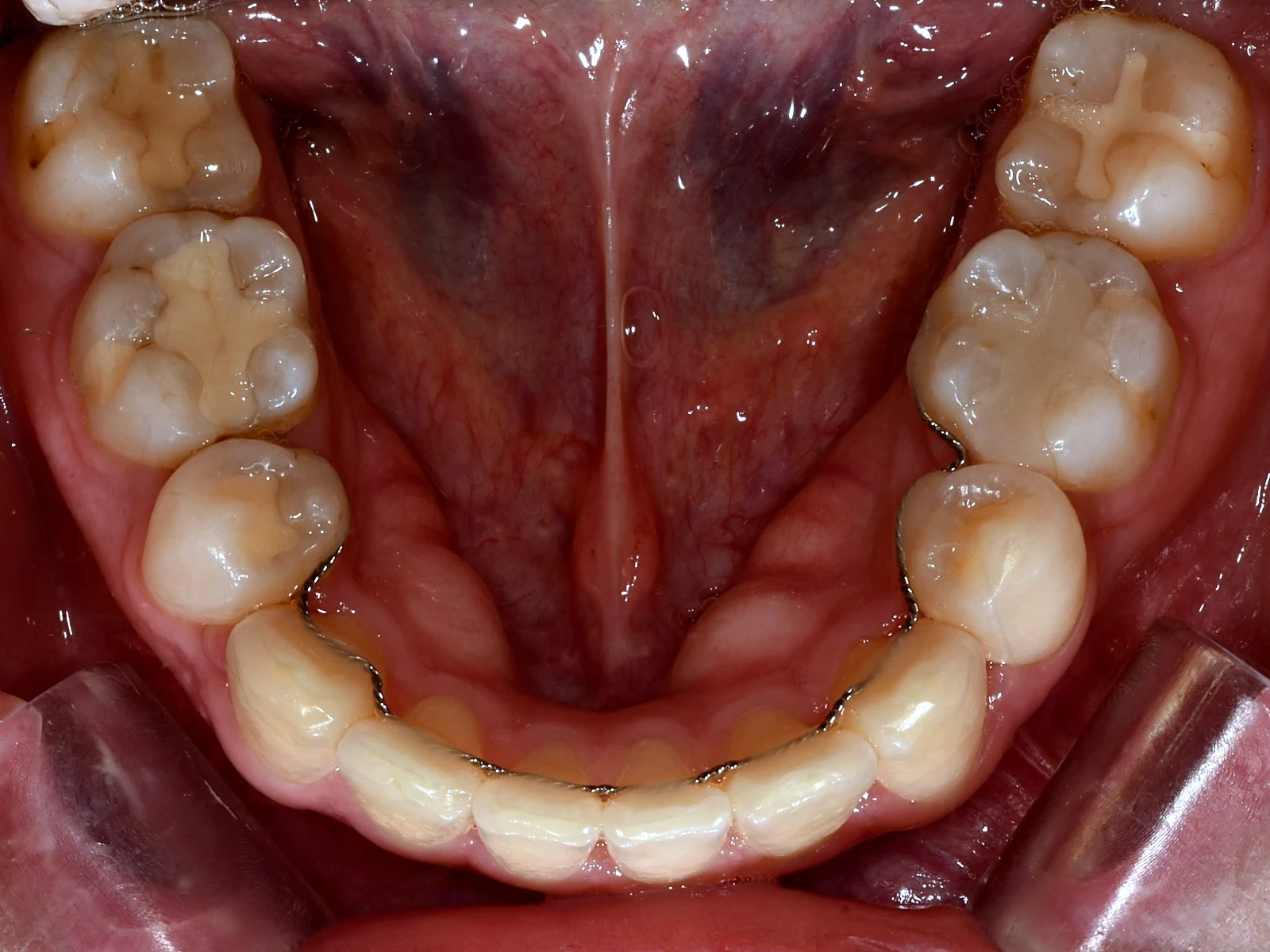
Fixed retainer
The bite and retainers after treatment. We finish so the canines and molars fit together evenly and bond a thin-wire retainer to the inside of the lower front teeth. You also wear a clear retainer at night.
STEP 06
We finish the bite and keep it with retainers
We finish the upper and lower bite and the front-teeth angles, then remove the braces. We bond a thin-wire retainer to the inside of the front teeth and also give you a clear retainer.
For 2 years after treatment, retainer check-ups and adjustments are covered by the orthodontic fee.
Why we do thisThe places where the extraction spaces were tend to open again, or the front teeth tend to come forward slightly. The first year after treatment is the most important, so we schedule check-ups closer together during this period.
* Clinical photos are published with the patients' consent. Side effects such as temporary pain or discomfort may occur, depending on the person.
For a few days after mini-screws are placed, they may feel strange and a little sore. During treatment, you usually visit once a month.
04°
Extraction or no extraction
Neither avoiding extractions nor having them is the goal. We decide by looking at the five points below together and explain the expected profile with each approach.
How much space is lacking · If the teeth lack a lot of room, it is hard to line them all up without extractions.
Front-teeth tilt · If the front teeth already tip far forward, creating space without extractions can push them out even more.
Lip thickness and profile line · Even with the same amount of movement, the mouth looks more set back if the lips are thin and the nose is low.
Thickness of the bone supporting the front teeth · If the bone is thin, there is a limit to how far the front teeth can move.
Age · Lips get thinner with age, so the mouth will look less protruding 10 years from now than it does today.
Non-extraction treatment usually creates only a few millimeters of space (by slimming between teeth, widening the arch or moving the molars back), so extraction is often the right choice for a protruding mouth that needs the front teeth to move back a lot.
05°
Comparison of treatment options
Non-extraction treatment
Extraction treatment (larger front-teeth share)
Extraction treatment (shared space)
Surgical orthodontics
Who it suits
People with little lack of space and front teeth that are not tipped much
People whose front teeth extend far forward and whose lips are fairly thick
People whose front teeth are tipped but whose lips are thin or nose is low
People whose jawbone itself sits forward and who want to change their facial outline
How space is made
Slimming between teeth, widening the arch, moving the molars back
Premolar extraction, molars held with mini-screws
Premolar extraction, molars come partly forward
Orthodontic treatment before and after surgery, and jawbone surgery
Change in profile
Small
Largest
Medium
Even the bone outline changes
Limits
Hard to move the teeth far back, and the front teeth may even come further forward
If the lips are thin, the mouth may look sunken
May not be enough for people who want a large change
Surgery requires general anesthesia and a hospital stay
Mini-screws
Used when moving the molars back
Used in most cases
Often not used
Used in some cases
Duration
Usually 1.5–2 years
About 2–2.5 years
About 2–2.5 years
Usually 2–2.5 years, including orthodontic treatment before and after surgery
Surgery is done by an oral and maxillofacial surgery department (we can recommend a partner hospital, but you may choose a different hospital)
06°
For some people, another treatment comes first, or no treatment is needed
This suits you if you have
Dental protrusion, where the front teeth tip forward and the mouth looks like it sticks out
Strain and wrinkles on the chin when closing the mouth
A lot of gum showing when smiling, with the front teeth also sticking out
Another treatment comes first
Gum inflammation: we treat the gums first
Jaw joint pain: we address the pain first
Large skeletal protrusion and a wish to change your facial outline: consultation on surgical orthodontics
No treatment needed for now
Lips that are already thin and front teeth at a normal angle, but a wish to move them back further: we will tell you honestly that moving them back further could make you look older.
07°
Self-check
If any of these apply, start by checking the balance of causes with an exam. You are welcome to send us a side-view photo first.
08°
Side effects and limits
Please read
· The mouth may look set back too far. That is why we split the space and look at your profile again partway through.
· The front-teeth roots may become shorter (root resorption). The more the front teeth move, the higher the chance, so we check with X-rays during treatment and pause the movement if needed.
· Dark triangles (black triangles) may appear in the gums between the teeth.
· The extraction spaces may open again. You need to wear your retainers consistently.
· A mini-screw may loosen and come out. In that case, we place it again in a different spot.
· Some people feel their smile lines (nasolabial folds) look more noticeable. The lines themselves are largely due to age and skin, but they can look that way when the mouth goes back a lot, so we decide the amount carefully.
· Braces change skeletal protrusion only a little. Braces do not change the chin position.
FAQ
FAQ
Won't extractions make my mouth sink in too much?
We do not use all of the extraction space to move the front teeth back. We plan a share for the front teeth and a share for the molars. Partway through treatment, we look at your profile again and decide together whether to move the teeth back further, which helps avoid moving them back more than planned.
Can my mouth go back without extractions?
If the front teeth are not tipped much and the lack of space is small, the mouth can go back to some extent without extractions. But non-extraction treatment usually creates only a few millimeters of space, so if the front teeth need to move back a lot, extraction is often the right choice. After the exam, we compare the expected profile with each approach.
How long does orthodontic treatment for a protruding mouth take?
Extraction treatment usually takes 2 to 2.5 years, and non-extraction treatment about 1.5 to 2 years. During treatment you visit once a month, and after treatment you wear retainers.
Do mini-screws hurt?
They are placed under local anesthesia, so the pain during placement is not severe. For a few days afterward, they may feel strange and a little sore. When treatment is finished, removing them is simple.
Can clear aligners bring a protruding mouth back?
Mild protrusion can be treated with clear aligners. When the front teeth need to move back a lot after extractions, controlling the root angle of the front teeth is harder than with fixed braces, so we compare the pros and cons of both appliances at the exam.
Will my lips get thinner too?
The lip tissue itself does not get thinner. But when the front teeth move back, less force pushes on the lips, so they stick out less and need less effort to close, which can make them look thinner. How much depends on lip thickness and strain, and varies from person to person.
If the gum shows because the upper front teeth have come down, we can reduce it by moving the front teeth up with mini-screws while moving them back. If the upper lip is short or the gums cover a lot of the teeth, we also consider gum contouring.
Will a recessed chin improve too?
Braces do not change the position of the chin bone. When the mouth goes back, the chin looks less hidden, but a recessed chin with a small lower jaw needs a separate diagnosis.
Will the extraction spaces be visible?
Early in treatment the gaps may be visible, and they shrink over several months as the spaces close. If they bother you, a temporary tooth-shaped piece can be attached in the gap. However, the extraction sites are usually toward the back, and braces are also attached, so few people actually have a temporary tooth attached.
Evidence and references
Kim S, et al. Influence of different ligation methods on force and moment generation in a simulated condition of the maxillary crowded anterior dentition with linguo-version and rotation. Bio-Medical Materials and Engineering, 2022. doi:10.3233/BME-211288 (Measurement of orthodontic forces and rotational forces on teeth)
Questions from patients who travel to Seoul for treatment.
How much does orthodontic treatment cost?
The fee depends on the appliance. For example, metal braces are KRW 4,800,000, ceramic braces KRW 6,000,000, Invisalign KRW 8,500,000 and lingual braces KRW 8,600,000. The orthodontic fee includes the orthodontic diagnosis, extraction (except wisdom teeth), mini-screws, basic retainers and retention care for 2 years. If you have only the diagnosis and do not start treatment, it is KRW 50,000 (KRW 100,000 if a CT scan is needed). If a retainer breaks or is lost later, remaking it costs extra. International and Korean patients pay the same fees. We explain the total before treatment starts. See our fee schedule.
Can I continue treatment after I go home?
Yes, but it needs a plan. Fixed braces need regular adjustment visits: the first two visits are 2 weeks apart, then usually once a month. Clear aligners are easier from abroad: after you receive your aligners, you visit once every 2–3 months, and between visits we check by photo only if something comes up. Your doctor tells you at diagnosis which method fits your case.
Can I have my consultation in English?
Yes. The doctor in charge of each field consults with you directly in English. For orthodontics, this is Dr. Sunmin Kim, a board-certified orthodontist. Before you travel, you can send photos of your teeth on WhatsApp or by email. An accurate diagnosis is made after we examine you in person.
What happens after treatment, and what if something comes off?
You need retainers after treatment, because teeth tend to move back. Retention care for 2 years is included in the orthodontic fee. If a bracket comes off or a wire hurts after you go home, send us a photo on WhatsApp. We check it and tell you what to do. Some repairs need a visit.
Results, the number of visits and schedules vary from person to person. More questions: Visiting from abroad.


 Before treatment · April 2024
 After treatment · September 2026
 Before treatment · June 2023
 After treatment · April 2026
 Before treatment · February 2022
 After treatment · June 2024
 Exam
 Planning
 Mini-screws
 Closing the space
 Compared with the start
 Bite after treatment · May 2026
 Fixed retainer