
COLUMN · Orthodontics
Can Braces Fix an Underbite Without Surgery?
Dental vs. Skeletal Underbite, and How an Orthodontist Decides
Whether braces alone can fix an underbite depends less on how far the jaw sticks out and more on two things: how much the front teeth have already tilted to hide the jaw difference, and how much bone is left around the lower front teeth to move them further. A dental underbite, caused mainly by tooth angles, can often be corrected with braces. With a skeletal underbite, when the jaw difference is small and there is room to move the teeth, braces alone can often improve the bite while the jaw difference itself remains, so the profile changes little; when the difference is large, or when you want to change the profile itself, jaw surgery may be worth considering.
I am Dr. Sunmin Kim, head dentist at Ceramic Dental Clinic in Gangnam, Seoul, and a board-certified orthodontist with 16 years in practice. The first question I hear about an underbite is almost always, "Can you fix mine with braces, or do I need surgery?" This article explains what I look at to answer that, what you can check yourself before a consultation, and how the answer changes with age. The four causes of underbite and our treatment steps are covered on our underbite treatment page.
What is the difference between a dental and a skeletal underbite?
An underbite (anterior crossbite, or Class III bite) means the lower front teeth bite in front of the upper front teeth. Two underbites can look alike from the outside and still have different causes.
- Dental underbite. The jaws are close to normal in size and position, but the upper front teeth tilt inward and the lower front teeth tilt outward, so only the front teeth bite the wrong way round. A functional underbite, where the front teeth hit first and the lower jaw slides forward to close, is close to this group.
- Skeletal underbite. The lower jaw is large or set forward, or the upper jaw is small or set back, so the jaws themselves are out of line. The chin often looks prominent and the lower lip sits ahead of the upper lip.
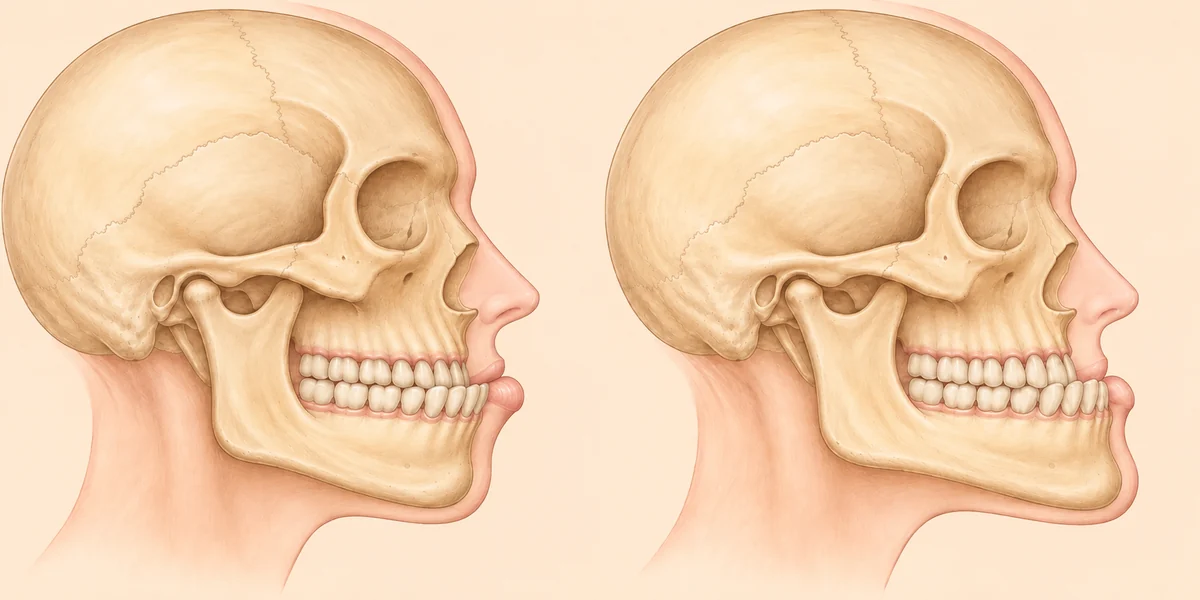
Most people have some of both. That is why I don't simply say "dental means braces, skeletal means surgery." Some skeletal underbites can be corrected with braces alone, and some cannot because the front teeth are already tilted as far as they safely can be. The reason is something called dental compensation.
Why does a skeletal underbite sometimes look milder than it is?
When the jaws are out of line, the teeth tend to tilt as they grow in, in the direction that hides the difference: the upper front teeth lean toward the lip and the lower front teeth lean toward the tongue. Orthodontists call this dentoalveolar compensation. Because of it, the front-teeth bite looks less reversed than the jaw difference would suggest.
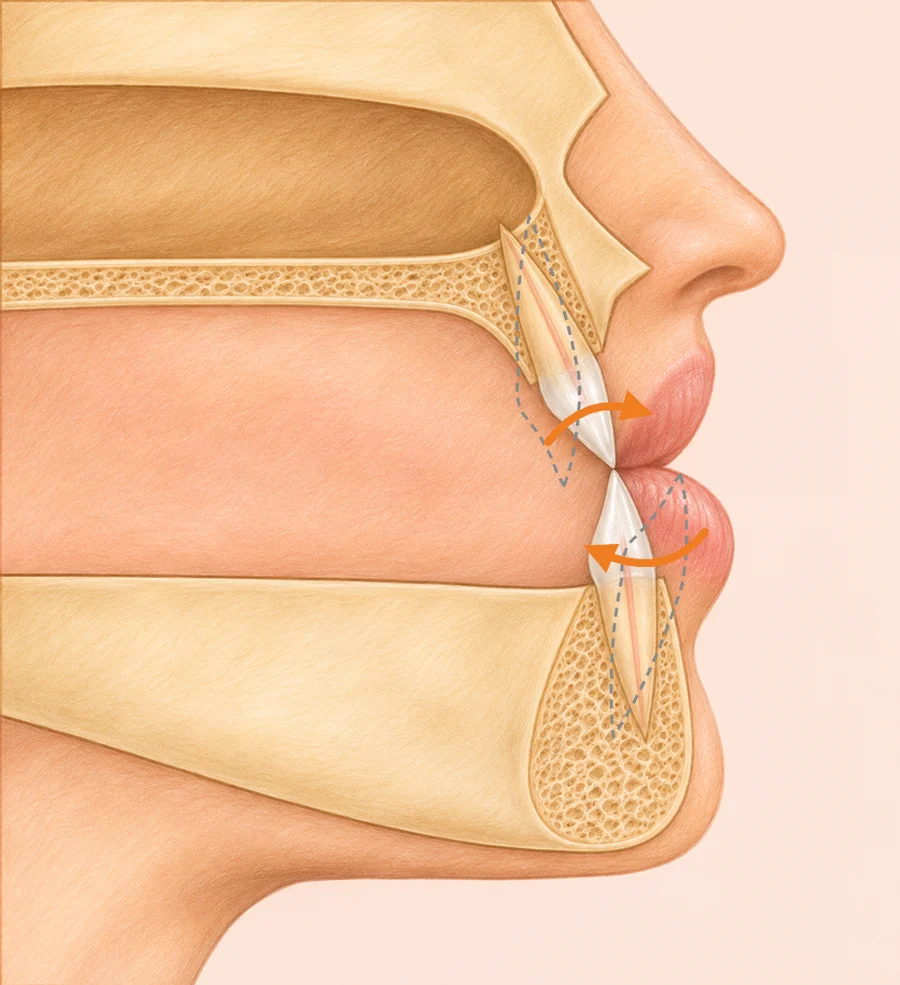
In a study of side-view X-rays from 57 people with a skeletal Class III bite, every 1° the jaw relationship (the ANB angle) dropped below normal came with the lower incisors tilted 0.79° further toward the tongue (IMPA). The upper incisors contributed more to the compensation, and the lower incisors' share grew as the underbite became more severe (Chunduru et al., Journal of the Korean Association of Oral and Maxillofacial Surgeons, 2024).
This matters because fixing a skeletal underbite with braces alone, often called orthodontic camouflage, works by adding a little more of this same compensation: the upper front teeth are tipped further forward and the lower front teeth further back. If they are already tilted a lot, there is less room left.
Why do the front teeth move in opposite directions with braces alone and with surgery?
With surgical orthodontics, braces come first, and they do the reverse: they undo the compensation and stand the front teeth upright in the middle of the bone, so the teeth meet at a healthy angle once the jaws are moved in surgery. During this pre-surgical phase the bite can look more reversed for a while.
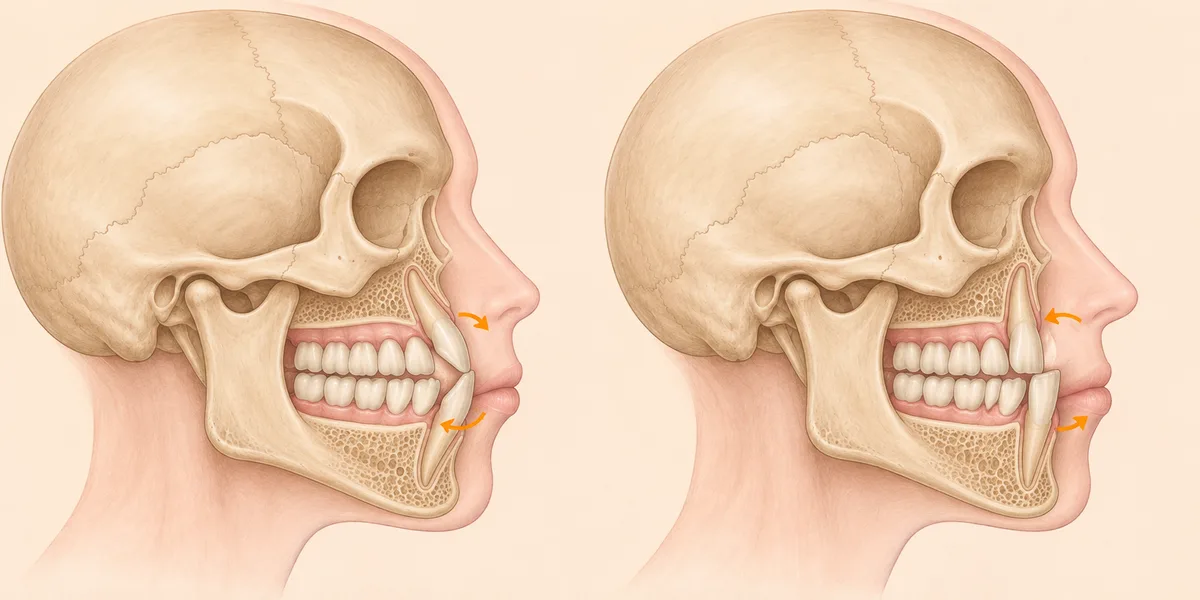
Because the two plans move the teeth in opposite directions, it helps to choose before you start. If you finish camouflage and later decide you want surgery, the tilted teeth may first have to be straightened back up. That is why I ask patients to compare what each plan changes, and what it leaves the same, at the start.
How does an orthodontist decide if braces alone are enough?
I use a side-view X-ray (cephalogram), an intraoral scan and photos, plus a CT scan when needed, and weigh four things together:
- The front-to-back jaw difference, measured with the ANB angle and the Wits appraisal. A German study of 175 adults with Class III bites separated those treated with orthodontics alone from those who had surgery using four measurements (Wits appraisal, anterior cranial base length, upper-to-lower jaw length ratio and lower gonial angle) and classified 92% correctly; the Wits appraisal weighed the most (Stellzig-Eisenhauer et al., American Journal of Orthodontics and Dentofacial Orthopedics, 2002). I don't decide from one number, though.
- How tilted the front teeth already are. The more compensation there is, the less room braces have.
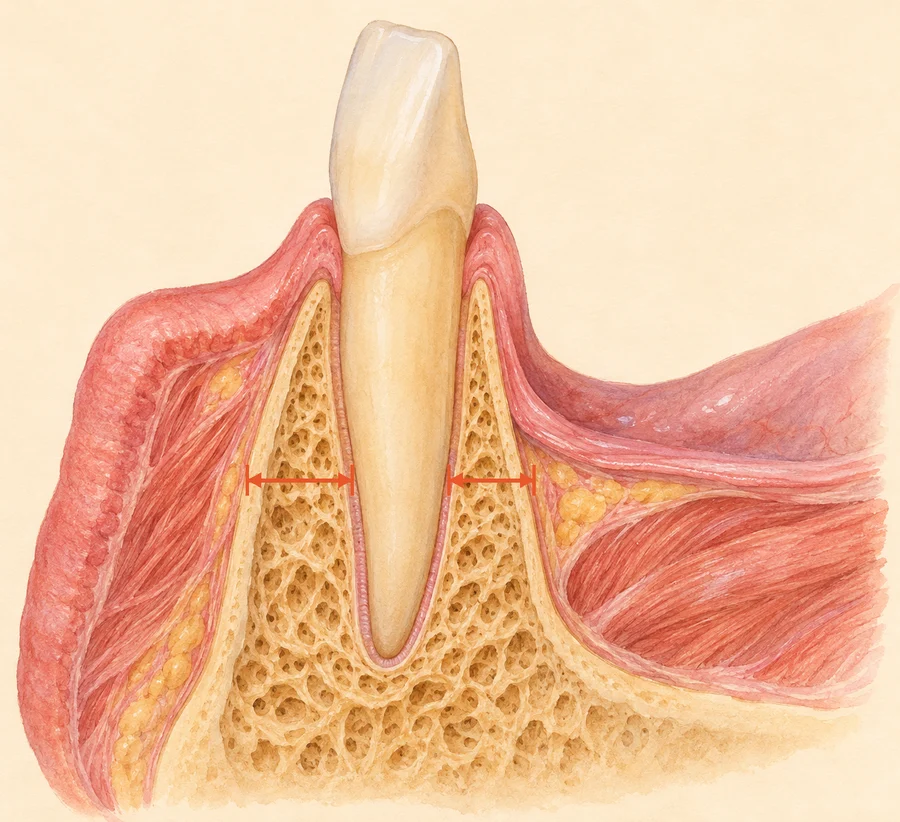
- How thick the bone is around the lower front teeth. The front of the lower jaw is tall and thin. Moving the lower incisors far back can push the roots against the bone wall and cause gum recession, so we check this on CT.
- What you want to change. Biting into food with your front teeth and changing your chin and profile are different goals, and the same X-ray can lead to different recommendations.
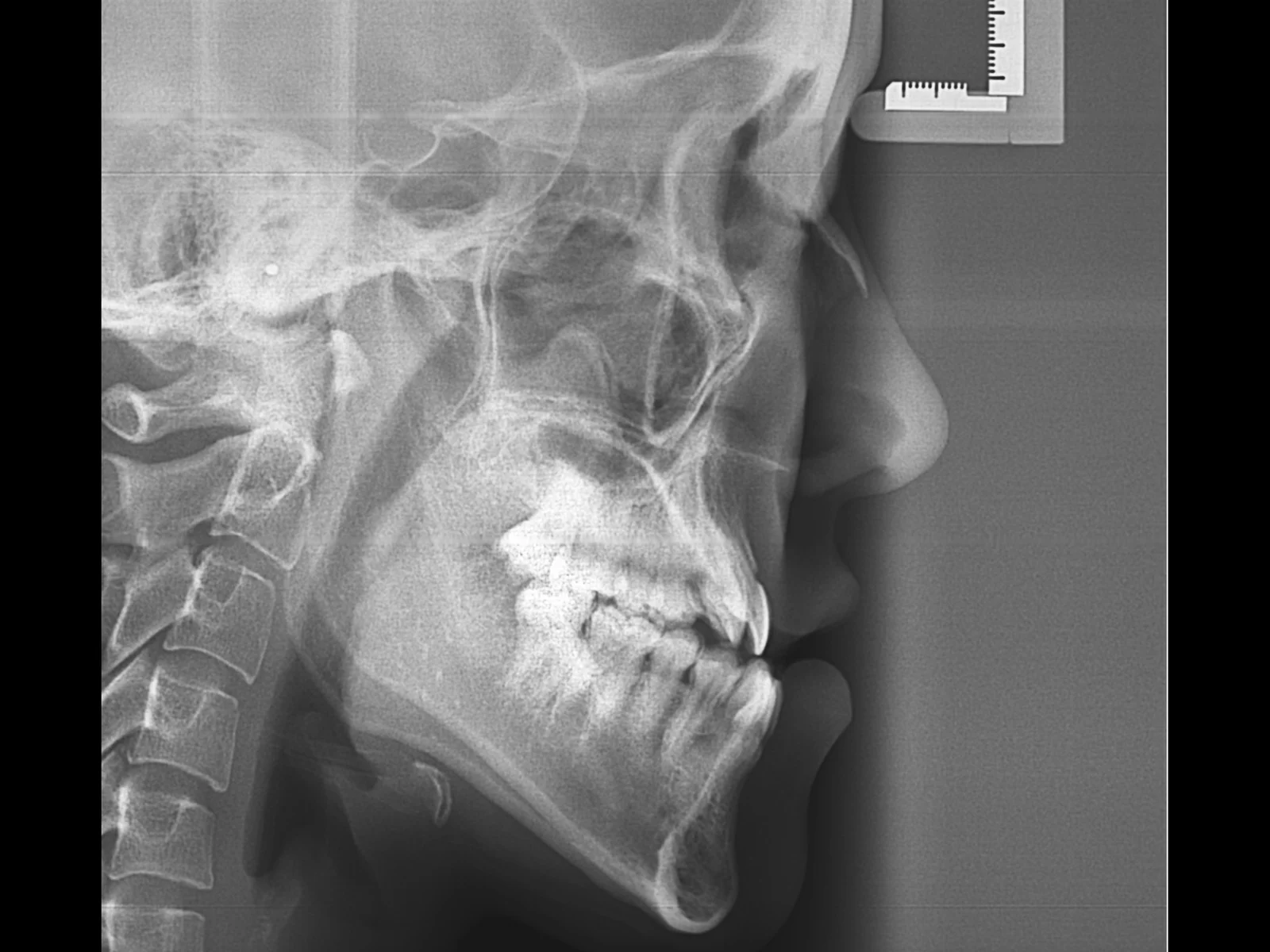
The bone margin is smaller than many people expect. A 2026 CT study of 80 untreated patients with skeletal Class III (320 lower incisors) found the bone on the lip side of the lower incisor roots averaged 0.36 mm at the neck of the tooth and 0.49 mm at mid-root, and 80.3% of the neck-level measurements were under 0.5 mm (Nguyen et al., PLoS One, 2026). The authors cautioned that these numbers are not a treatment limit, but they do show how little room the lower incisors have.
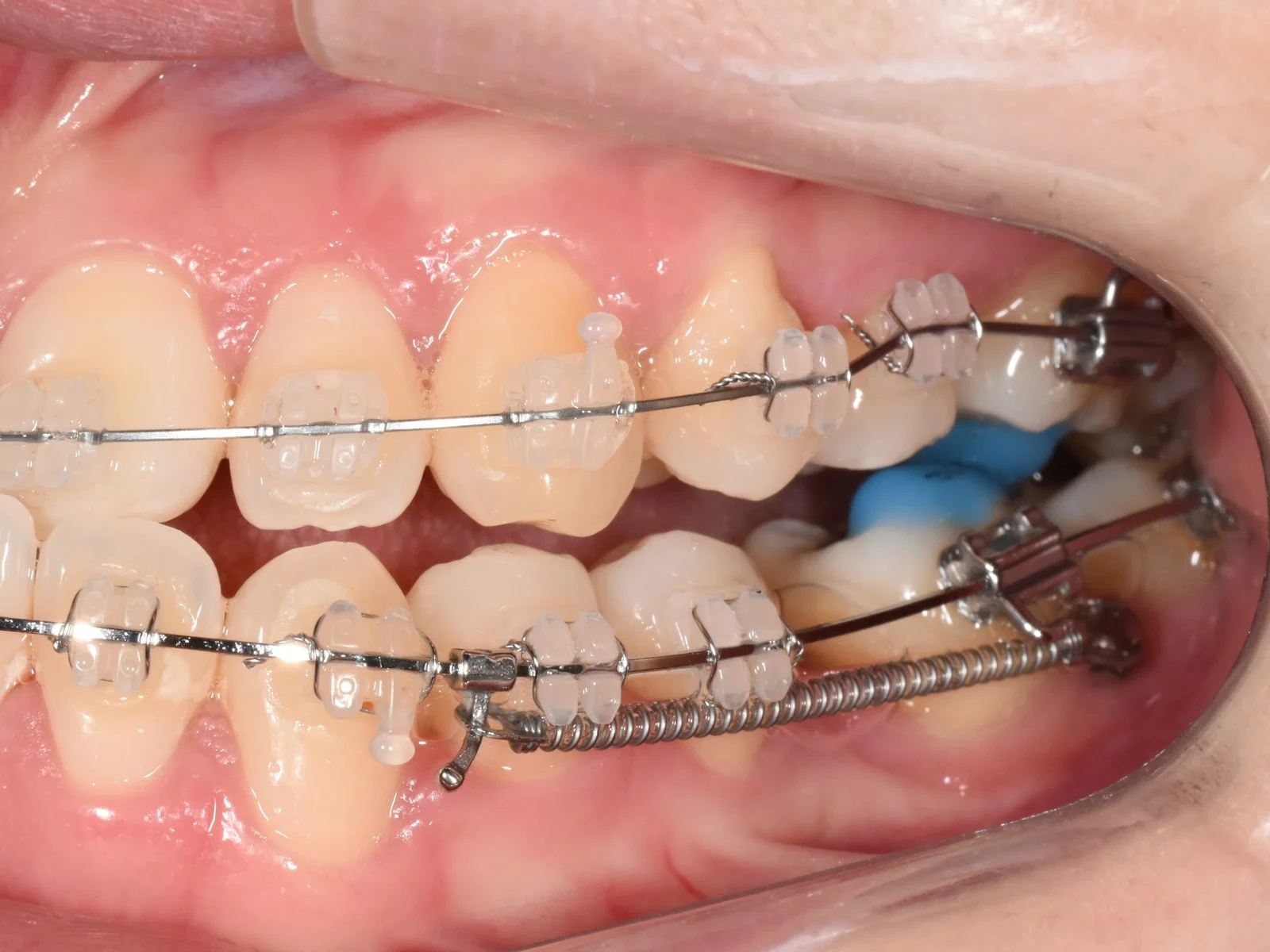
So when the lower teeth need to go further back, I don't just tip the lower incisors. I place a mini-screw in the bone behind the lower molars and move the whole lower arch back together, which creates a bite with less incisor tipping.
What can I check myself before a consultation?
A self-check cannot replace a diagnosis, but it helps you know what to ask.
- Pull your jaw back. Relax, gently draw your lower jaw back and close slowly. If your front teeth can meet edge to edge, the underbite may be functional (the front teeth hit first and the jaw slides forward). Braces can usually change more in that case.
- Count the teeth in reverse. Check in a mirror whether only two to four front teeth bite the wrong way, or whether the canines and back teeth are also off to the outside. If the back teeth are involved too, a narrow upper jaw may be part of the problem.
- Take two profile photos. One with your lips relaxed and one with your teeth together. Note whether the lower lip or the chin sticks out more, and bring the photos to the consultation.
- Look back a few years. If older photos suggest your jaw has kept coming forward, you may still be growing. A family history of underbite is also worth mentioning.
- Look at the gums below your lower front teeth. If they are thin enough that the root shape shows, or have already receded, tell us.
The case below is one where the front teeth met edge to edge when the jaw was pulled back. The jaw difference was small, so we corrected the tooth angles without jaw surgery.
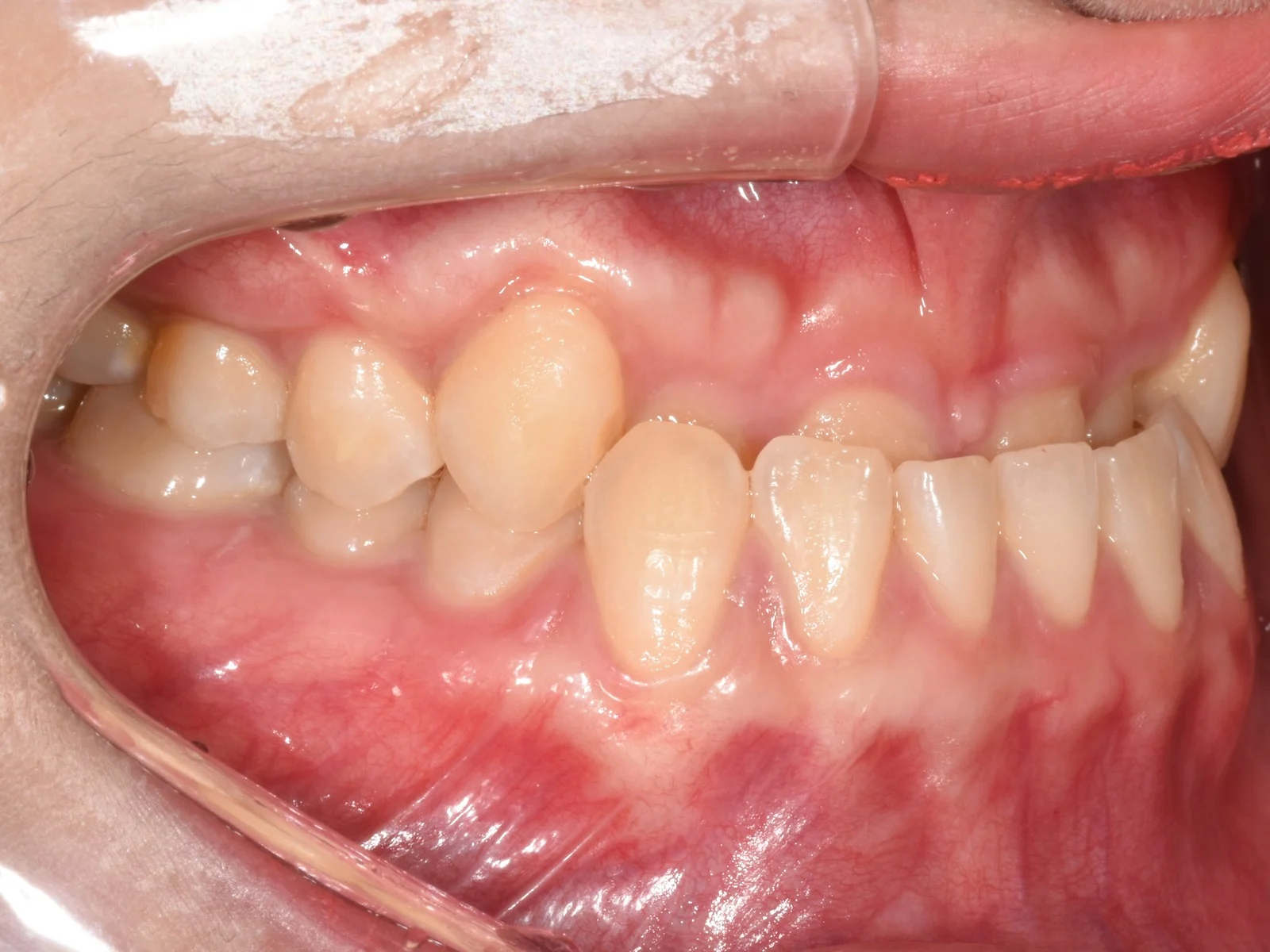
Before · photo Sep 2021
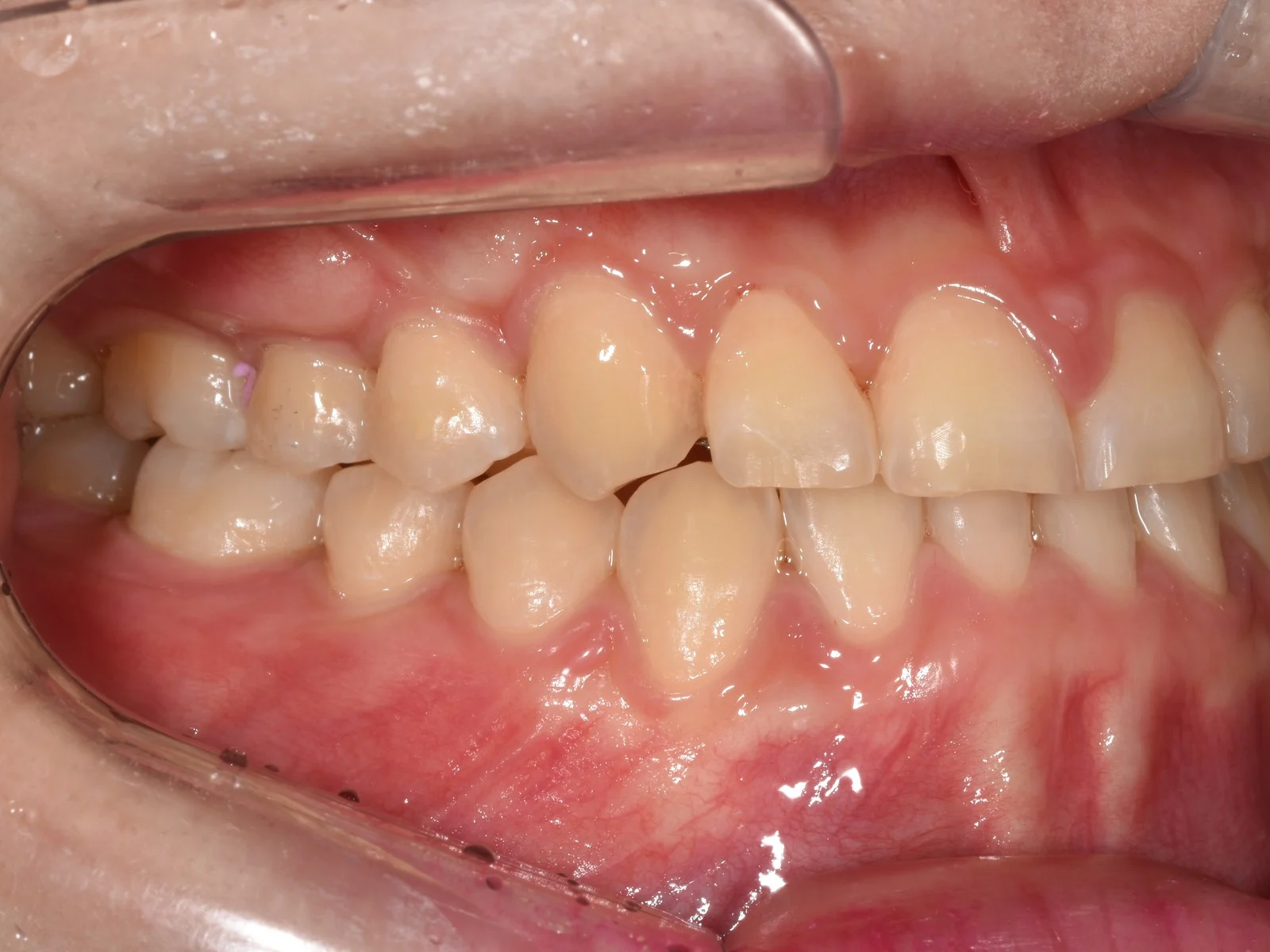
After · photo Nov 2024
Before treatment, the upper front teeth tilted inward and the lower front teeth tilted outward, so the lower front teeth bit in front of the upper ones. The patient was an adult with a dental and functional reverse bite. Braces corrected the tilt of the front teeth so the upper front teeth now bite in front of the lower ones. Active treatment with braces took about 2 years 10 months (the after photo was taken some time after treatment ended, so the gap between the photo dates is longer than the active treatment time), and surgical orthodontics was not done because the jaw difference was small. The length of the lower jaw is unchanged, but as the bite changed, the actual jaw position moved back.Possible side effects: relapse with growth, gum recession, root resorption, mini-screw loosening. Published with the patient's consent; before and after photos were taken of the same area from the same direction. Results and side effects vary from person to person.
Does the answer change with age?
- Young children (around elementary school age). If the upper jaw is small or set back, an appliance that encourages upper-jaw growth may come first. If the front teeth simply hit first and the jaw slides forward, correcting it early can help.
- Teenagers. How much lower-jaw growth is left matters most. If braces finish while the jaw is still growing, the underbite can come back, so we time the start and finish using neck-vertebra and hand-wrist X-rays.
- Early twenties. The lower jaw can keep growing for a while after you stop getting taller. If surgery is on the table, we confirm growth has finished first.
- Adults. Once growth has finished, we compare camouflage and surgery using the four points above. Gum inflammation is treated first. We have corrected an underbite without surgery in a patient in her early 30s; see this case.
When is jaw surgery worth considering?
I suggest considering surgery together with braces when:
- the jaw difference is so large that braces alone would have to tip the front teeth to an unhealthy angle;
- the bone around the lower front teeth is too thin to move them much further back;
- what you want to change is your chin position and profile, more than the bite.
It is not the default answer. Some people with the same findings are happy with what braces alone can change. In an adult whose growth has finished, camouflage treatment of a skeletal underbite does not shorten the jaw. Lower-lip protrusion can lessen a little as the lower teeth move back, and if the lower jaw was also being pushed forward to bite (a functional reverse bite), the jaw position can change as the bite is corrected. Jaw surgery is done at a surgical hospital, and we provide the orthodontics before and after it.
People also ask whether porcelain veneers can hide an underbite. Veneers change the color and shape of the front teeth; they cannot correct a reversed bite or a jaw difference. They are sometimes considered after braces, to reshape worn front-tooth edges.
If I live abroad, how many trips does this take, and what does it cost?
At the first visit we take face and teeth photos, an intraoral scan, a panoramic X-ray and a side-view X-ray, plus a CT scan if needed. The exam fee is included in the orthodontic fee if you start treatment. At the diagnosis I explain how much of your underbite is dental and how much is skeletal, how much room the front teeth have, what braces alone and surgery would each change, the treatment time and the total cost.
| Item | Typical for an underbite |
|---|---|
| Orthodontic fee | Depends on the appliance (ceramic braces, Invisalign, combination or lingual). See our dental costs page |
| Included | Extractions (except wisdom teeth), mini-screws, basic retainers, retainer check-ups and adjustments for 2 years after treatment |
| Treatment time | Braces alone: usually 1.5 to 2.5 years. Surgical orthodontics: usually 2 to 2.5 years including braces before and after surgery |
| Visits with fixed braces | Usually once a month |
| After the braces come off | Fixed retainer plus clear retainer; check-ups are closer together in the first year |
Moving the lower arch back with mini-screws needs regular adjustments, so fixed braces suit people who can come to Seoul about once a month. If you can only visit every few months, tell us at the consultation; whether a plan with fewer visits is realistic depends on the cause of your underbite. See braces in Seoul while living abroad, how many days dental treatment in Korea takes and our FAQ for international patients. If anything comes up between visits, send us a photo on WhatsApp.
Frequently asked questions
Can braces fix an underbite in adults?
Can I fix an underbite without surgery or braces, with jaw exercises or an over-the-counter device?
Can Invisalign fix an underbite?
What if I choose braces alone and later want surgery?
Will fixing my underbite with braces change my face?
References
- Chunduru R, Kailasam V, Ananthanarayanan V. Quantum of incisal compensation in skeletal class III malocclusion: a cross-sectional study. Journal of the Korean Association of Oral and Maxillofacial Surgeons. 2024;50(5):265-272. PubMed 39482102
- Stellzig-Eisenhauer A, Lux CJ, Schuster G. Treatment decision in adult patients with Class III malocclusion: orthodontic therapy or orthognathic surgery? American Journal of Orthodontics and Dentofacial Orthopedics. 2002;122(1):27-37. PubMed 12142894
- Nguyen TH, Nguyen HL, Dao TD, Vu TTT. Mandibular incisor alveolar housing and incisor-alveolar axis relationship in untreated skeletal Class III malocclusion: A cross-sectional CBCT study. PLoS One. 2026;21(9):e0358261. PubMed 42743204
Not sure which kind of underbite you have?
Send us a relaxed side profile, a side profile with your teeth together and a front photo of your teeth closed for a rough direction. The diagnosis and total cost are given after an examination in person.
Ask on WhatsAppThis article is for general information and does not promise any particular result. Suitability, treatment plan, results and schedules differ from person to person. Please have a consultation and examination with a dentist before treatment. For current prices, see our price list.