UNDERBITE

Underbite: My Lower Jaw Sticks Out

Dr. Sunmin Kim, Head DentistTreated by Dr. Sunmin Kim (board-certified orthodontist) · Reviewed by Dr. Sunmin KimAbout the doctor →

Last reviewed Oct 29, 2026 · Dr. Sunmin Kim (board-certified orthodontist, certified by the Korean Association of Orthodontists)

At a glance

Who it suits
Underbite (reverse bite): the lower front teeth bite in front of the upper front teeth
Treatment flow
Check the front-to-back jaw difference and growth stage → decide between braces alone and surgical orthodontics
Duration and limits
If it is skeletal, braces alone change the side profile only a little. The lower jaw can keep growing after height growth ends
Read more

An underbite (reverse bite), where the lower front teeth bite in front of the upper ones, can be corrected with braces when it is caused by tilted teeth. When it is skeletal, with a large lower jaw or a small upper jaw, braces alone change the side profile only a little. For adults, we measure the front-to-back difference between the upper and lower jaws to decide whether braces alone can correct the bite or whether surgical orthodontics is needed. During growth, how much lower-jaw growth remains decides the timing of treatment, and the lower jaw can keep growing for a while even after a child stops getting taller. Dr. Sunmin Kim of Ceramic Dental Clinic wrote a research paper (2024) on when facial bone growth ends, and he checks the growth stage on X-rays to decide when to start and finish treatment.

01°

Even among underbites, some were corrected with braces alone and some needed surgery

Here are real cases: one where only the front teeth bit in reverse, one where the lower jaw was slightly large, and one where the jaw difference was large enough for surgical orthodontics.

CASE01

A reverse bite where the front teeth touched first and the jaw was pushed forward to bite

Braces · The upper front teeth were brought forward and the lower front teeth moved back to correct the front-teeth bite
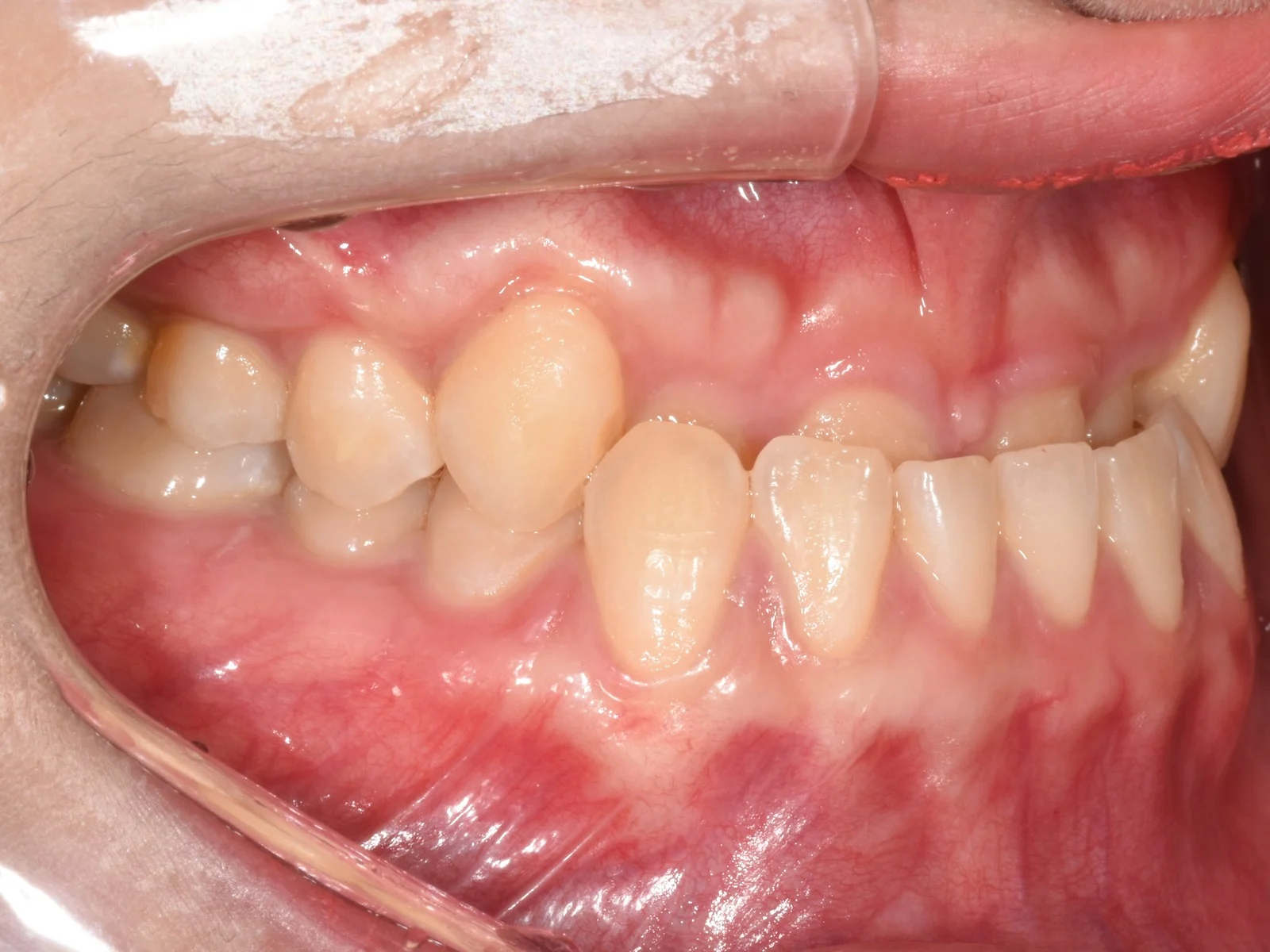
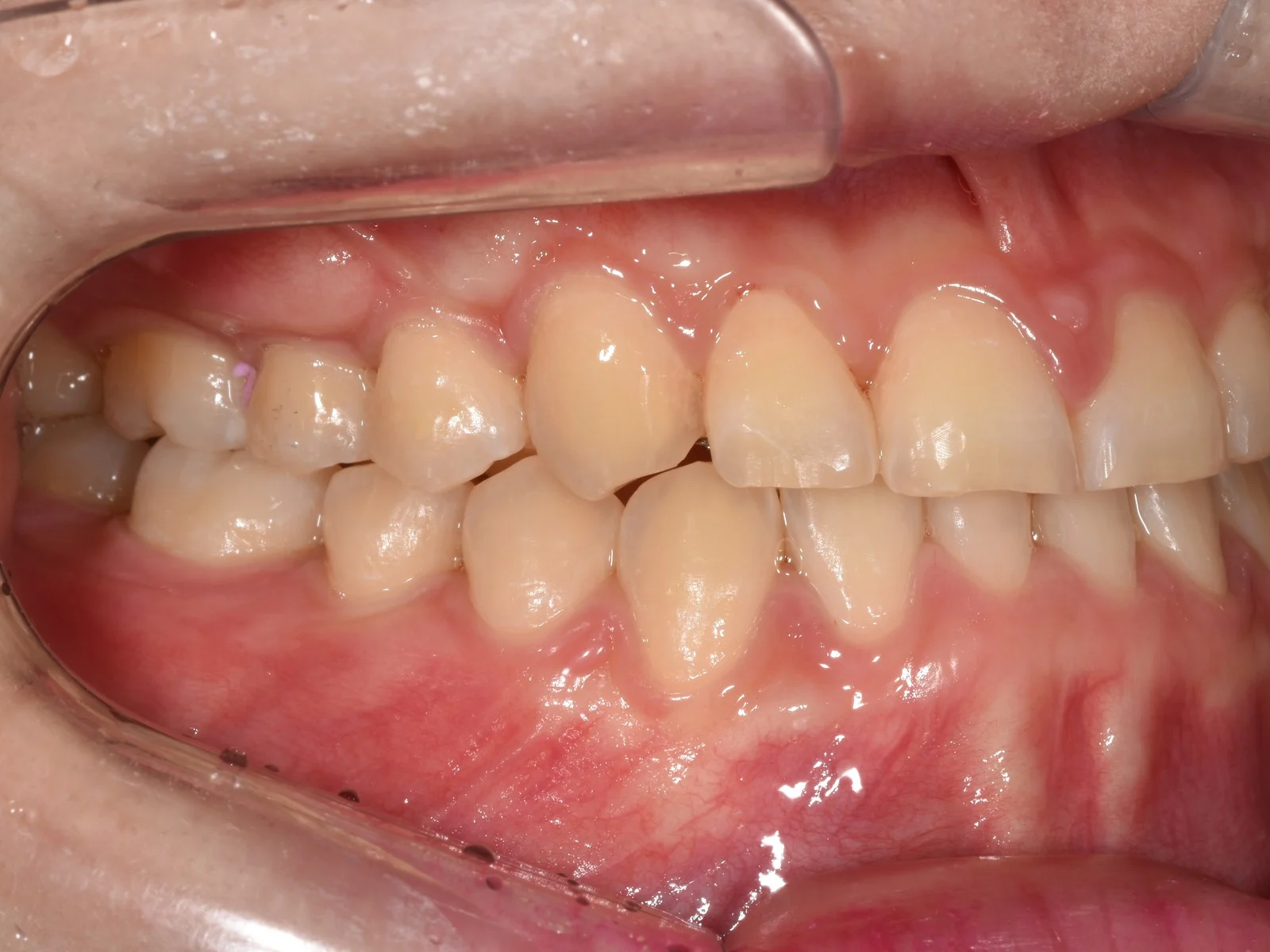
Side view inside the mouth before treatment, with the lower front teeth biting in front of the upper front teethBefore · Sep 2021
Side view inside the mouth before treatment. The upper front teeth tilt inward and the lower front teeth tilt outward, so the lower front teeth bite in front of the upper ones.
Side view inside the mouth after treatment, with the upper front teeth now biting in front of the lower front teethAfter · Nov 2024
Side view inside the mouth after treatment. Correcting the tilt of the front teeth brought the upper front teeth in front of the lower ones.
Condition
Dental and functional reverse bite; front teeth meet edge to edge when the jaw is moved back; adult
Choice
Adjusting the tilt of the front teeth with braces
Not done
Surgical orthodontics (the jaw difference was small)
Duration
About 2 years 10 months
Note
The length of the lower jaw is unchanged. However, as the bite changed, the actual jaw position moved back.
CASE02

An adult with a slightly large lower jaw, bite corrected with braces alone

Camouflage treatment · Mini-screws were used to move the whole lower dentition back and create a front-teeth bite

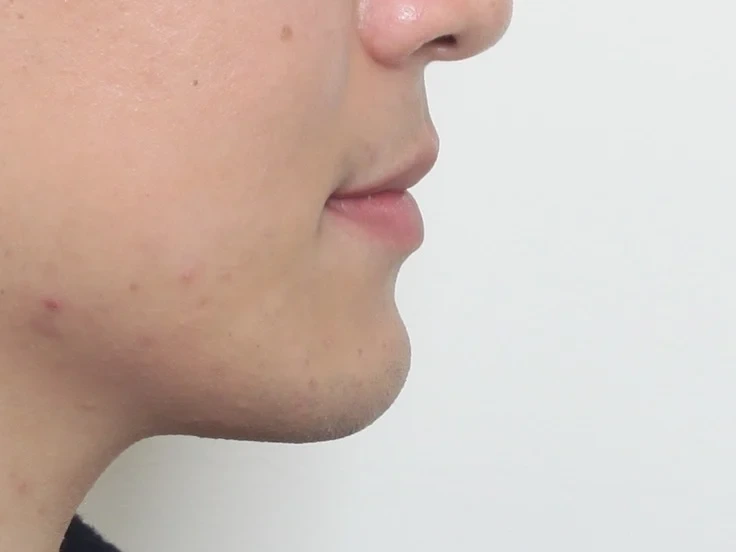
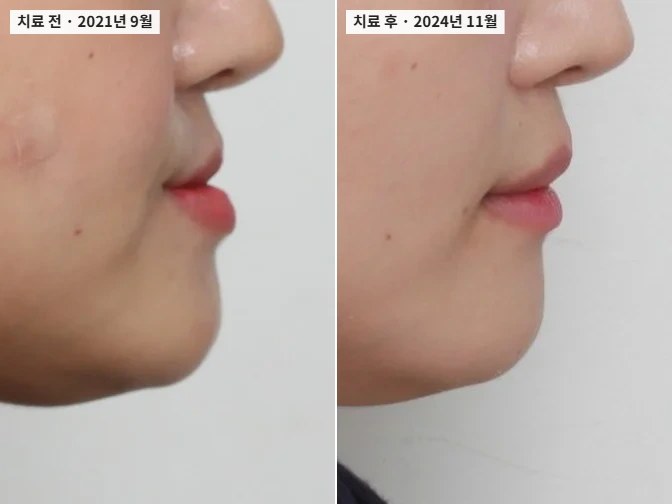
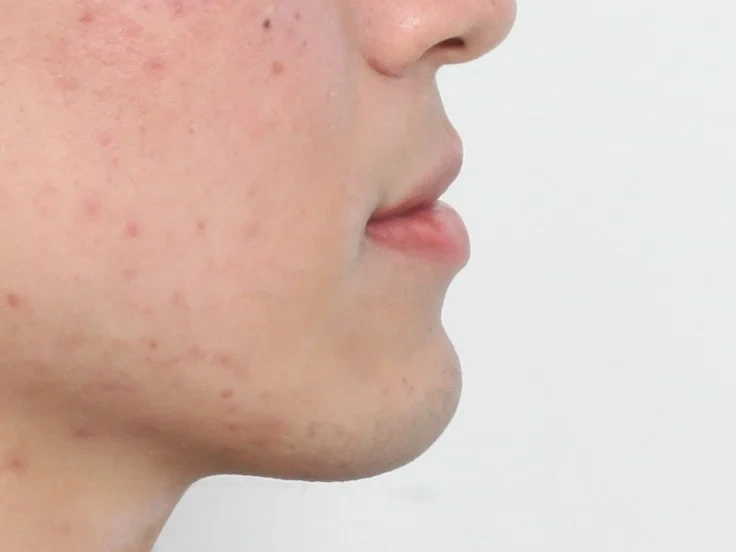
Side profile before treatment (below the nose only), with the lower jaw and lower lip slightly forwardBefore · May 2022
Side profile before treatment. The lower jaw is slightly forward and the lower lip sits in front of the upper lip.
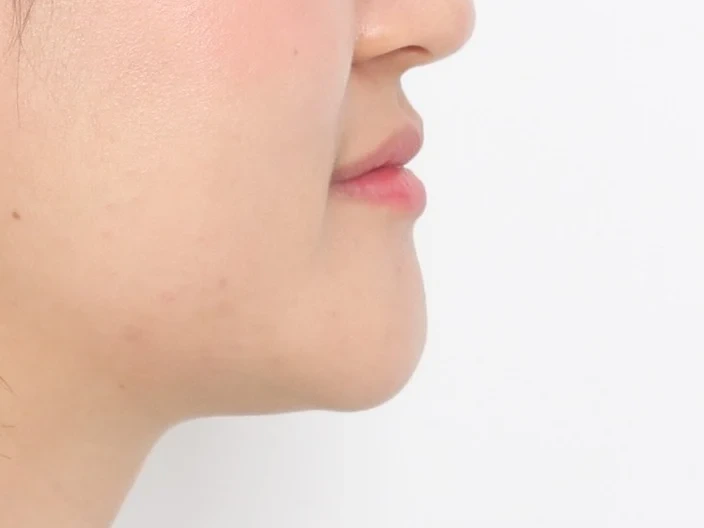
Side profile after treatment (below the nose only), with less lower-lip protrusionAfter · Nov 2025
Side profile after treatment. Moving the lower teeth back corrected the front-teeth bite and reduced the lower-lip protrusion. The length of the lower jawbone is unchanged.
Condition
Skeletal reverse bite with a slightly large lower jaw (adult)
Choice
Lower wisdom teeth removed, mini-screws placed in the gum bone behind the lower molars, whole lower dentition moved back
Not done
Jaw surgery (the difference was within what braces can correct)
Duration
About 3 years
Note
The length of the lower jaw and the position of the chin did not change. The front teeth were aligned with a slight tilt.

CASE03

An underbite with a large jaw difference, treated with surgical orthodontics

Surgical orthodontics · Pre-surgical braces undid the tooth tilt, and the bite was finished after jaw surgery

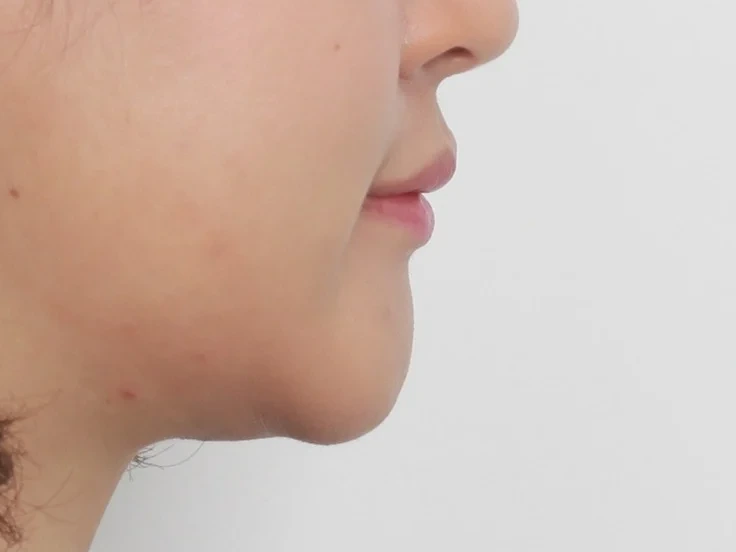
Side profile before surgical orthodontics (below the nose only), with the lower jaw far forwardBefore · Apr 2017
Side profile before treatment. The lower jaw was far forward, a difference too large to create a front-teeth bite with braces alone.
Side profile after surgical orthodontics (below the nose only), with the jaw position changedAfter · Mar 2018
Side profile after surgical orthodontics. The jaw position changed, so both the profile and the front-teeth bite changed.
Condition
Skeletal reverse bite with a large front-to-back difference between the upper and lower jaws
Choice
Pre-surgical orthodontics, jaw surgery, post-surgical orthodontics
Not done
Camouflage treatment with braces alone (it would have required tilting the front teeth too much)
Duration
About 1 year 4 months
Note
After surgery, muscle forces can make the bite slip back a little, so the bite is set firmly during post-surgical orthodontics.

* Photos were taken under the same conditions and published with the patient's consent. Treatment results and side effects can vary from person to person.

02°

An underbite (reverse bite) has four causes

Tooth tilt and jaw-position habits can be changed a lot with braces, while differences in jaw size need different approaches depending on the growth stage and how large the difference is.

01Dental

The upper front teeth tilt inward and the lower front teeth tilt outward, so the teeth bite in reverse. Correcting the tilt of the front teeth changes the bite.

02Functional

The front teeth touch first, so you push the lower jaw forward to bite. A key sign is that the front teeth meet edge to edge when you move your jaw back.

03Skeletal: large lower jaw

The lower jawbone is large or sits forward. If the difference is small, we correct the bite with braces; if it is large, we consider surgical orthodontics.

04Skeletal: small or set-back upper jaw

The upper jawbone is small or sits back, so the lower jaw looks forward by comparison. The area beside the nose and around the upper lip may also look sunken.

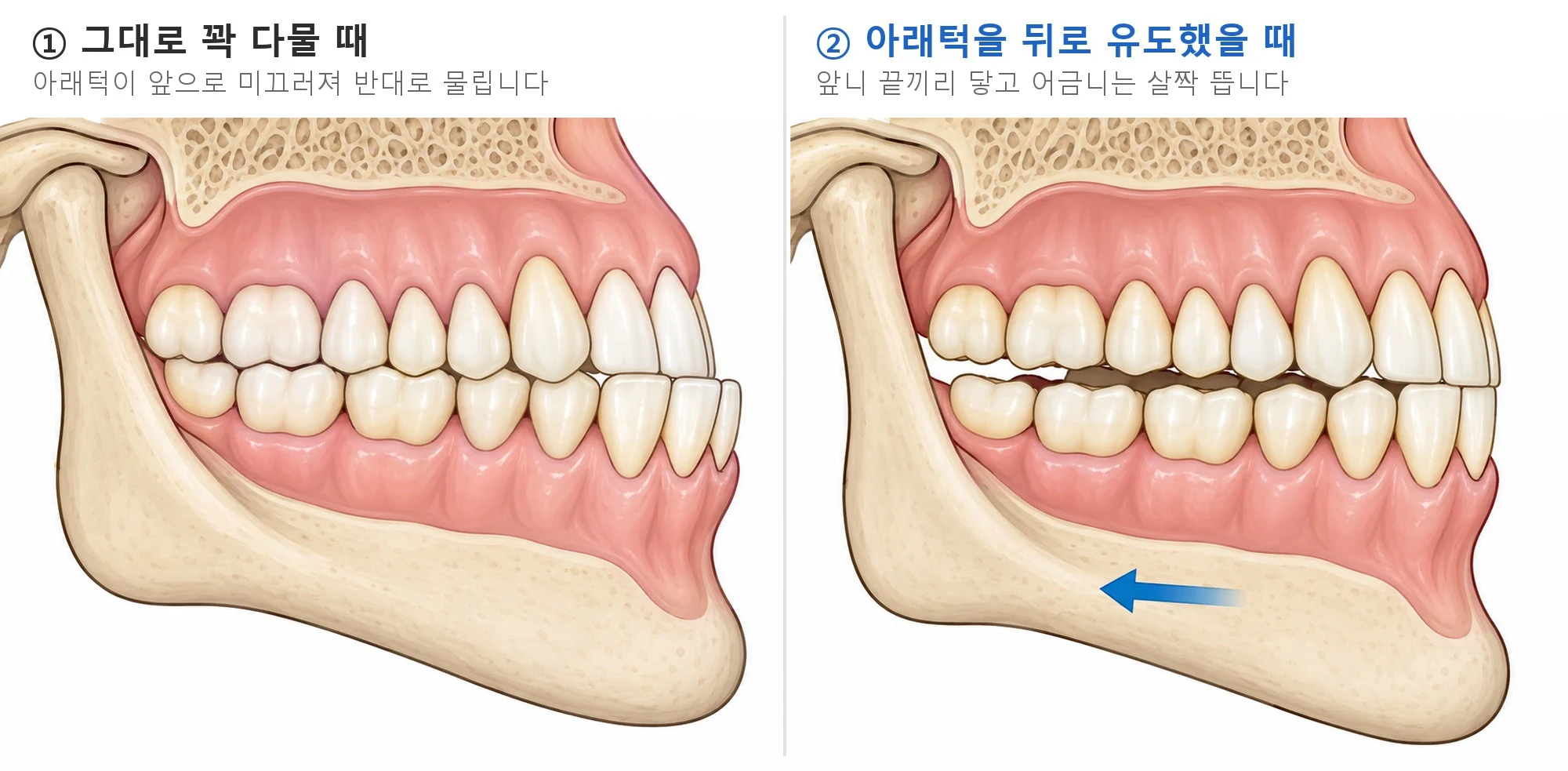
Illustration showing side by side how the lower jaw slides forward into a reverse bite when you clench, and how the front teeth meet edge to edge when the lower jaw is guided backTelling functional cases apart · Illustration
Telling a functional reverse bite apart. If you simply clench, the front teeth hit first and the lower jaw slides forward into a reverse bite (①). If the lower jaw is gently guided back, the front teeth meet edge to edge, and the back teeth separate slightly (②).
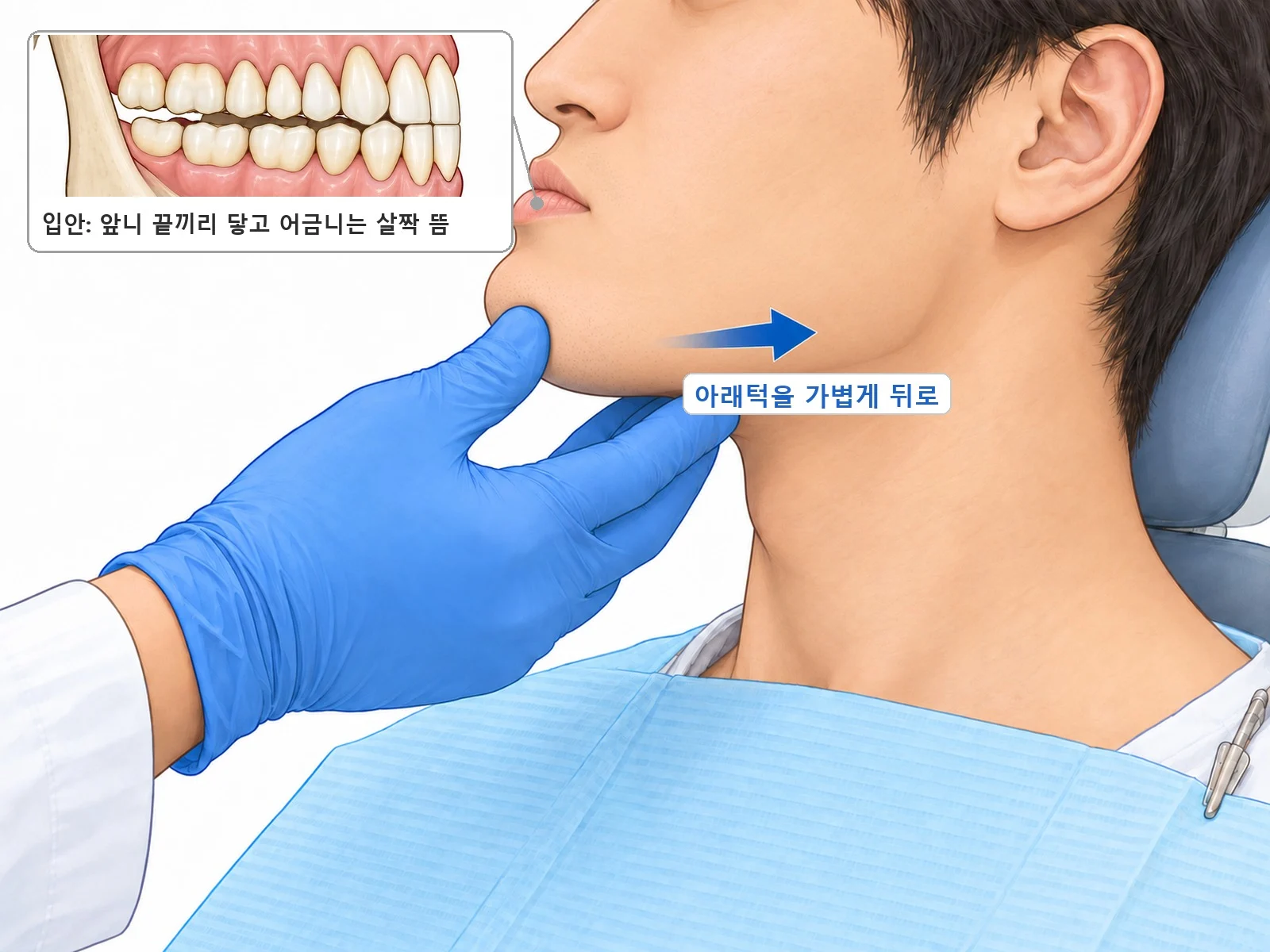
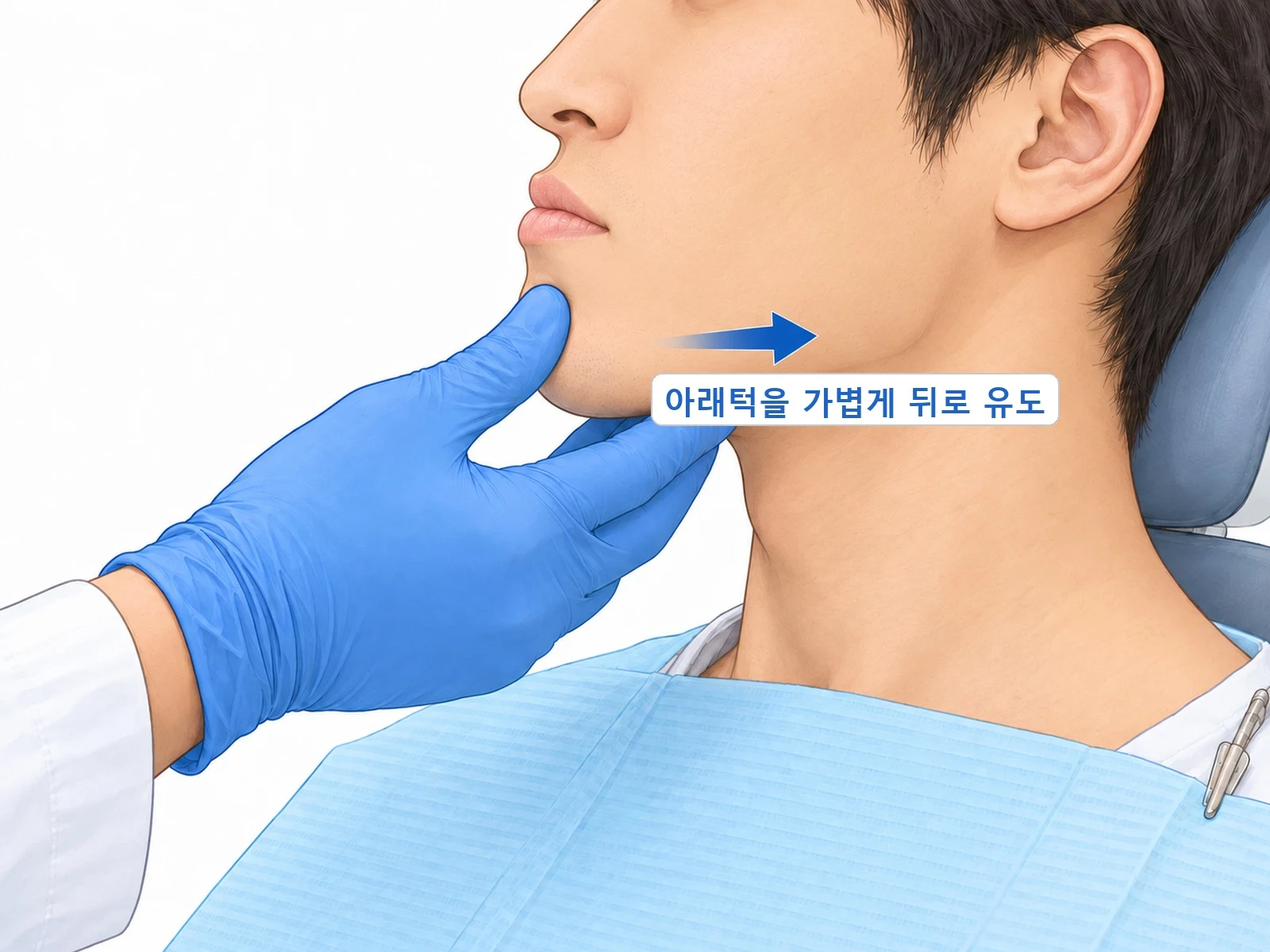
Illustration of a clinician's gloved hand gently guiding the lower jaw backHow we tell functional cases apart
How we tell functional cases apart (illustration). With your jaw relaxed, we gently guide the lower jaw back to see whether the front teeth meet edge to edge.
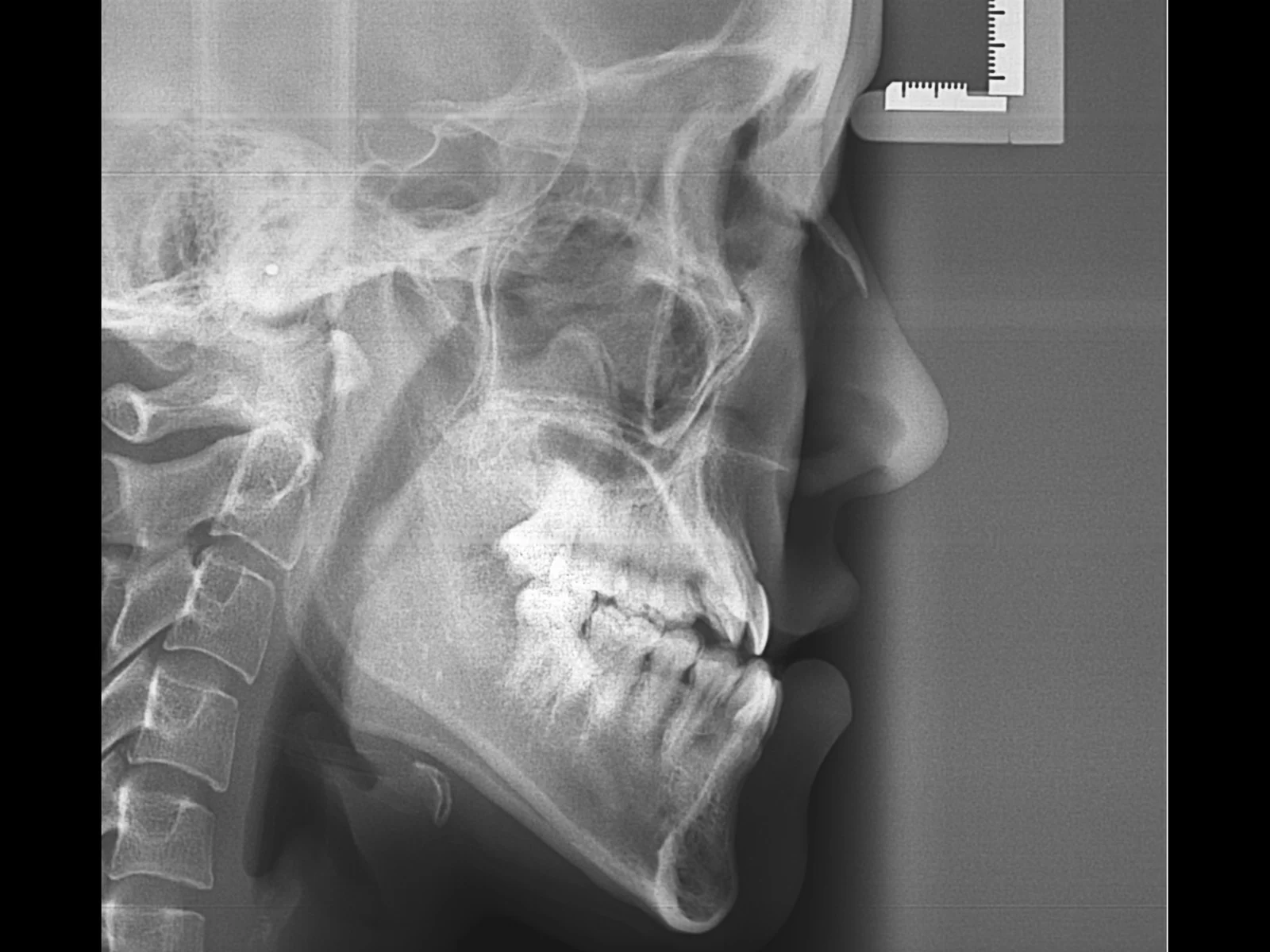
Side-view X-ray of a skeletal reverse bite, with the lower jaw far in front of the upper jawSkeletal
Side-view X-ray of a skeletal reverse bite. The front-to-back difference between the upper and lower jaws is larger than the tilt of the front teeth.

If your front teeth meet edge to edge when you move your jaw back, it may be functional. In that case, braces can change a lot.

03°

We first judge whether growth has finished

The lower jaw can keep growing for a while after height growth ends. If treatment ends while growth remains, the underbite can return, so when to start and when to finish matters.

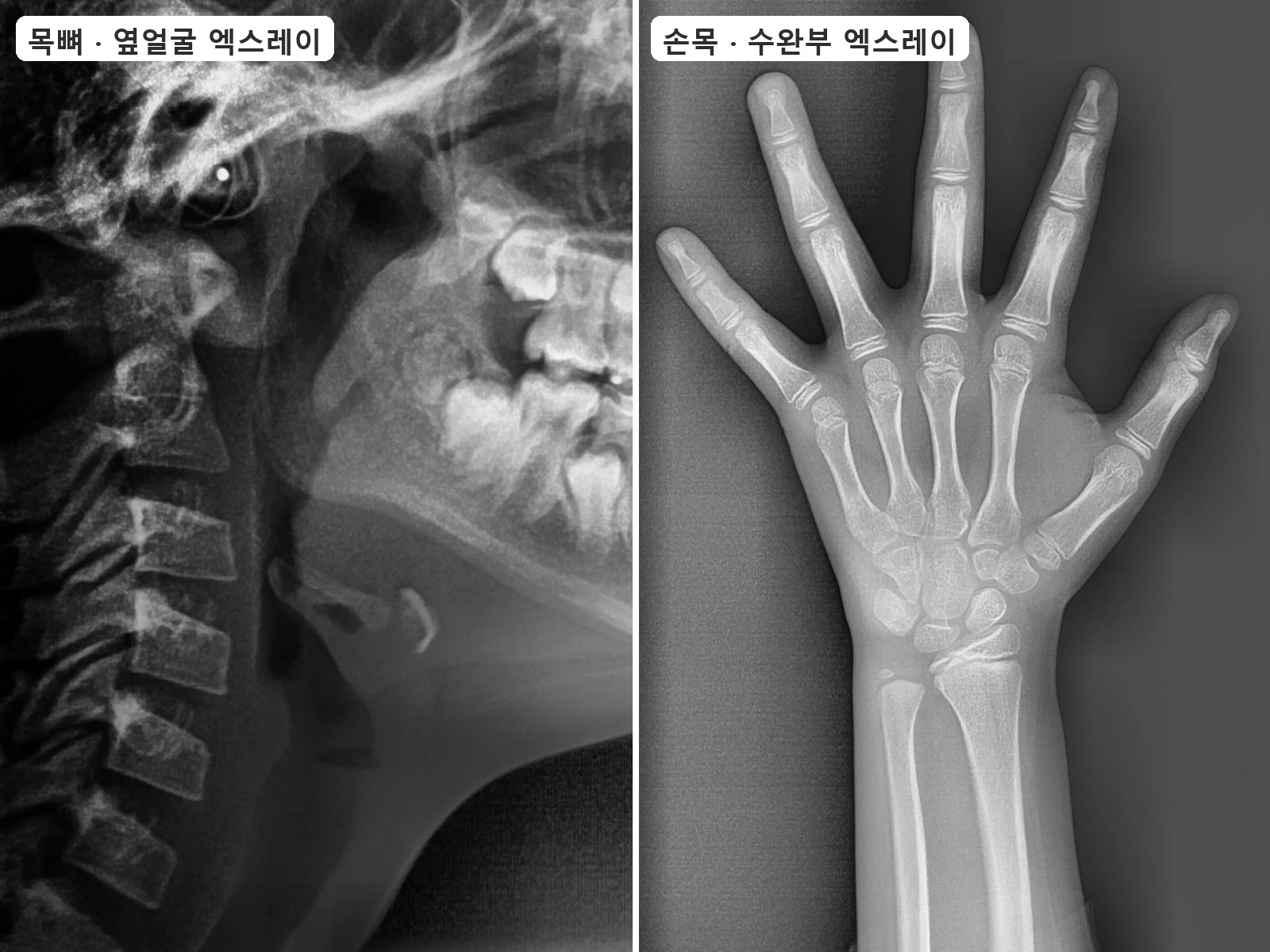
I carried out research analyzing, by age and cervical vertebrae maturation stage, when one of the growth centers of the facial bones fuses, from before puberty to young adulthood. At the consultation, I check where growth stands from the shape of the neck bones on the side-view X-ray and from a hand-wrist X-ray, and if a lot of growth remains, we take X-rays again regularly to follow the changes.

04°

How underbite treatment works

There are six steps, from tests that sort out the cause to retainers. For each step, we explain what we look at and why, with real clinical photos.

Illustration of a clinician gently guiding the lower jaw back so that the front teeth meet edge to edgeIllustration
Telling functional cases apart (illustration). We check whether the front teeth meet edge to edge when the lower jaw is gently guided back. When the front teeth meet edge to edge, the back teeth separate slightly.

STEP 01

We check whether the front teeth meet edge to edge when the jaw moves back

With your jaw relaxed, we gently guide the lower jaw back and check whether the front teeth meet edge to edge. If they do, it is likely a functional reverse bite, where the front teeth hit first and you push your jaw forward to bite.

Why we do thisWhen you clench, a functional reverse bite looks like a skeletal one. This one check is the first fork: whether braces alone are enough or whether we need to look at the jawbones in more detail.
Side-view X-ray showing the front-to-back position of the upper and lower jaws and the tilt of the front teethSide-view X-ray
Side-view X-ray measurement. We measure the front-to-back difference between the upper and lower jaws and how much the upper and lower front teeth are already tilted.

STEP 02

We measure the jaw difference and front-teeth tilt on a side-view X-ray

On a side-view X-ray (cephalogram), we measure the front-to-back difference between the upper and lower jaws and see how much the upper and lower front teeth are already tilted. A front-view X-ray also shows whether facial asymmetry is present.

Why we do thisTo correct a reverse bite with braces alone, the upper front teeth must tilt forward and the lower front teeth must tilt back. If they are already very tilted, there is no room to tilt them further, so this number is the standard for choosing between braces alone and surgical orthodontics.
Side-view X-ray showing a child's neck bones, and a hand-wrist X-rayGrowth stage
Reading the growth stage. We judge how much lower-jaw growth remains from the shape of the neck bones on the side-view X-ray and the bone maturity on the hand-wrist X-ray.

STEP 03

During growth, we set the start and finish of treatment by growth stage

For teenagers and young adults, we check where growth stands using the cervical vertebrae maturation stage and a hand-wrist X-ray. If a lot of growth remains, we adjust the timing of treatment, or correct only the front-teeth bite for now and check regularly.

Why we do thisIf treatment ends while lower-jaw growth remains, the lower jaw can grow more afterward and the teeth can bite in reverse again. Knowing the growth stage lets us decide whether to start now or wait until growth ends.
Side profiles before and after treatment (below the nose only) of a reverse-bite patient treated with braces aloneTreated with braces alone
Side profile of a case treated with braces alone (left: before, right: after). We look at real cases together to see how much the profile changes without surgery before deciding.

STEP 04

We compare the expected profiles to choose between braces alone and surgical orthodontics

If the jaw difference is small and there is room to tilt the front teeth, we recommend camouflage treatment, which corrects the bite with braces alone. If the difference is large, or you also want to change your profile, we explain surgical orthodontics as well. You can decide after comparing what each method changes and what stays the same.

Why we do thisCamouflage treatment can correct the bite without surgery, but the length of the lower jaw and the profile stay almost the same. You need to know this difference before choosing, so that the result matches your expectations at the end.
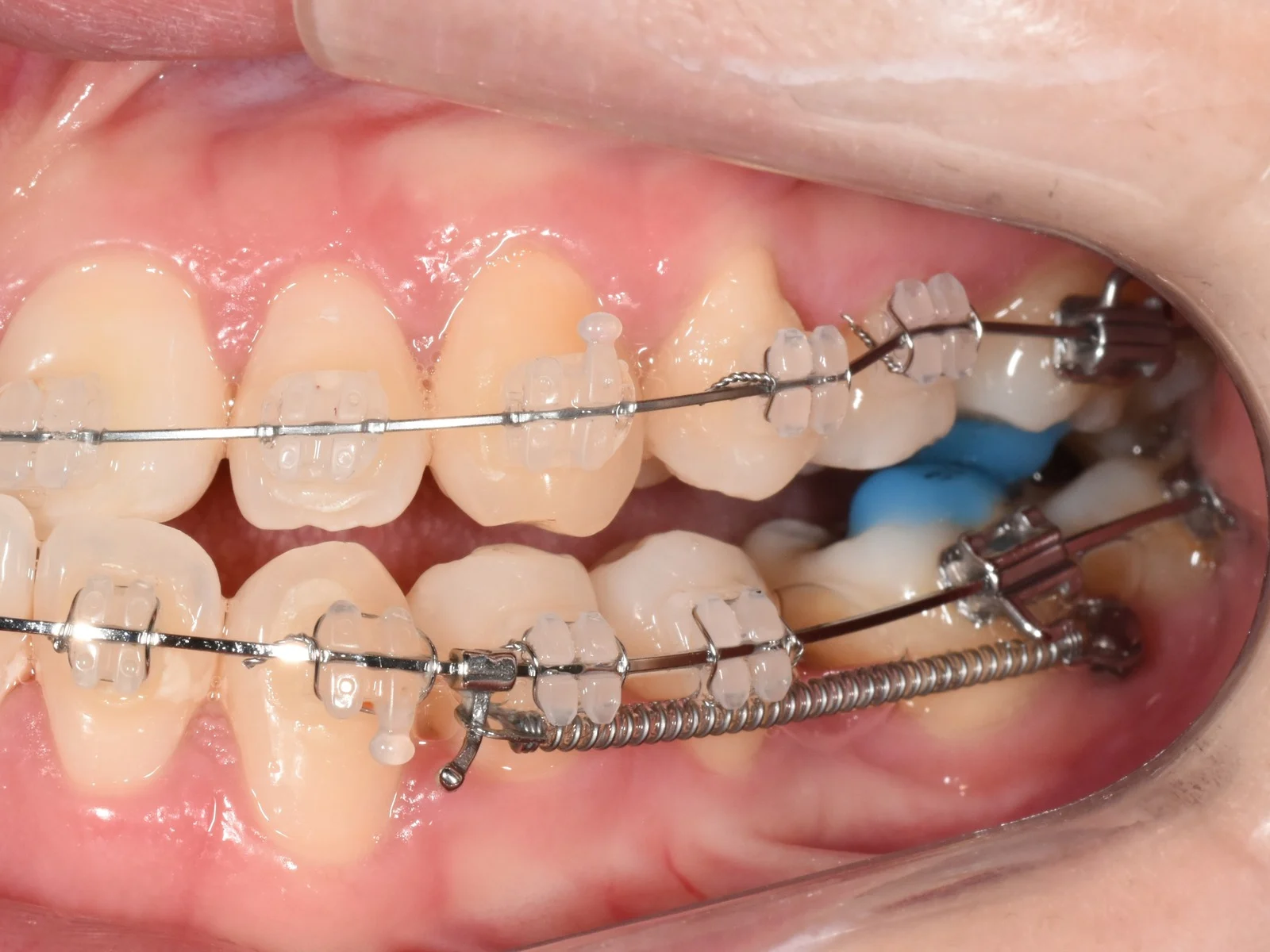
Side view inside the mouth with a spring hooked to a mini-screw behind the lower molars, pulling the lower dentition backMoving the lower teeth back
A mini-screw placed behind the lower molars. It moves the whole lower dentition back to make room for a front-teeth bite.

STEP 05

Camouflage treatment moves the lower teeth back and the upper front teeth forward

With braces alone, we bring the upper front teeth forward and move the lower front teeth back. If the lower teeth need to go further back, we place mini-screws in the gum bone behind the lower molars to move the whole dentition back. If needed, we remove lower wisdom teeth or premolars to make room.

Why we do thisIf only the lower front teeth are tilted back, their roots can reach the inner wall of the lower jawbone and the gums can recede. Moving the whole dentition back together creates the bite with less tilting of the front teeth.
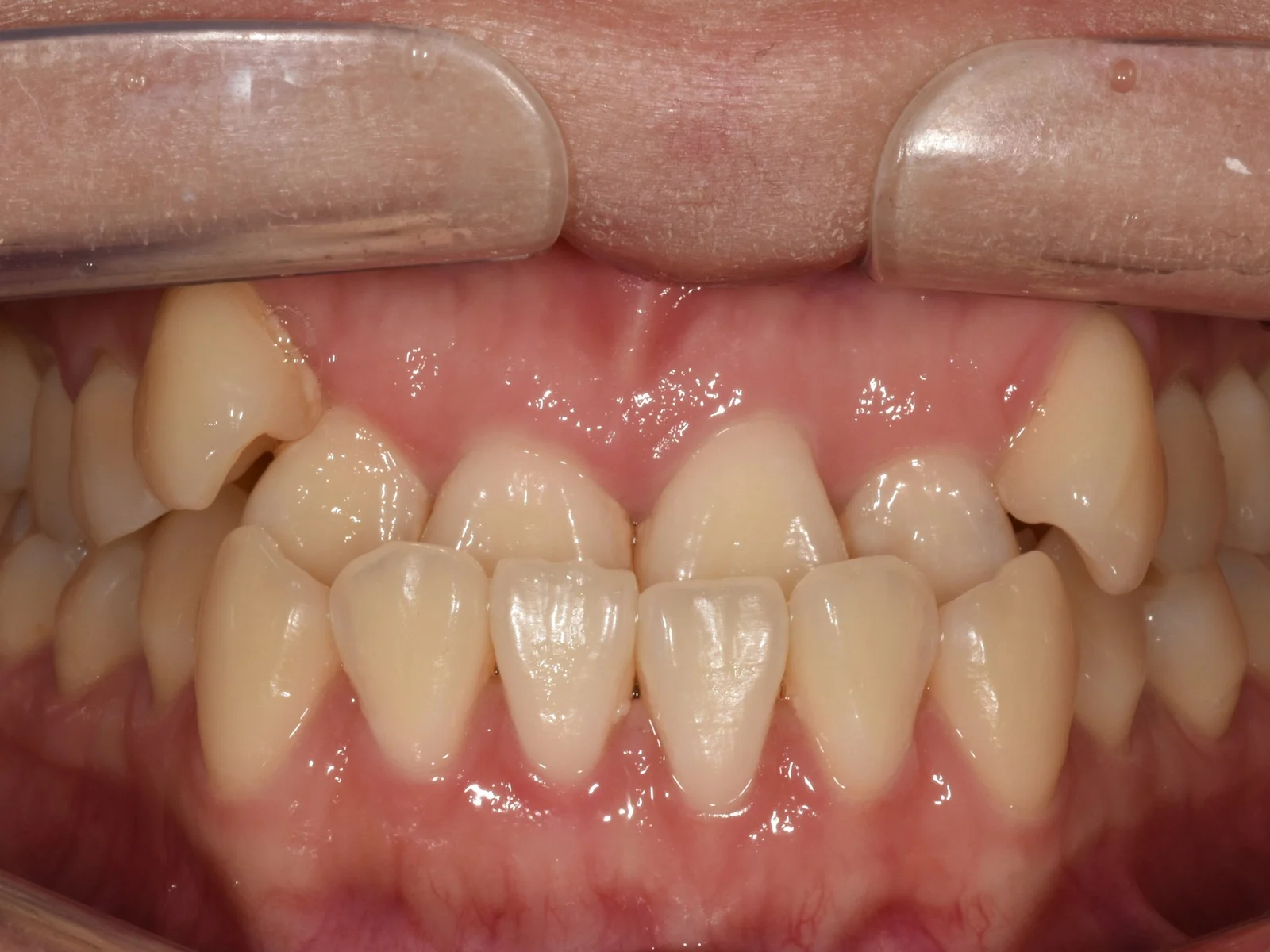
Front view inside the mouth before treatment, with the lower front teeth biting in front of the upper ones and a crooked toothBefore · Apr 2022
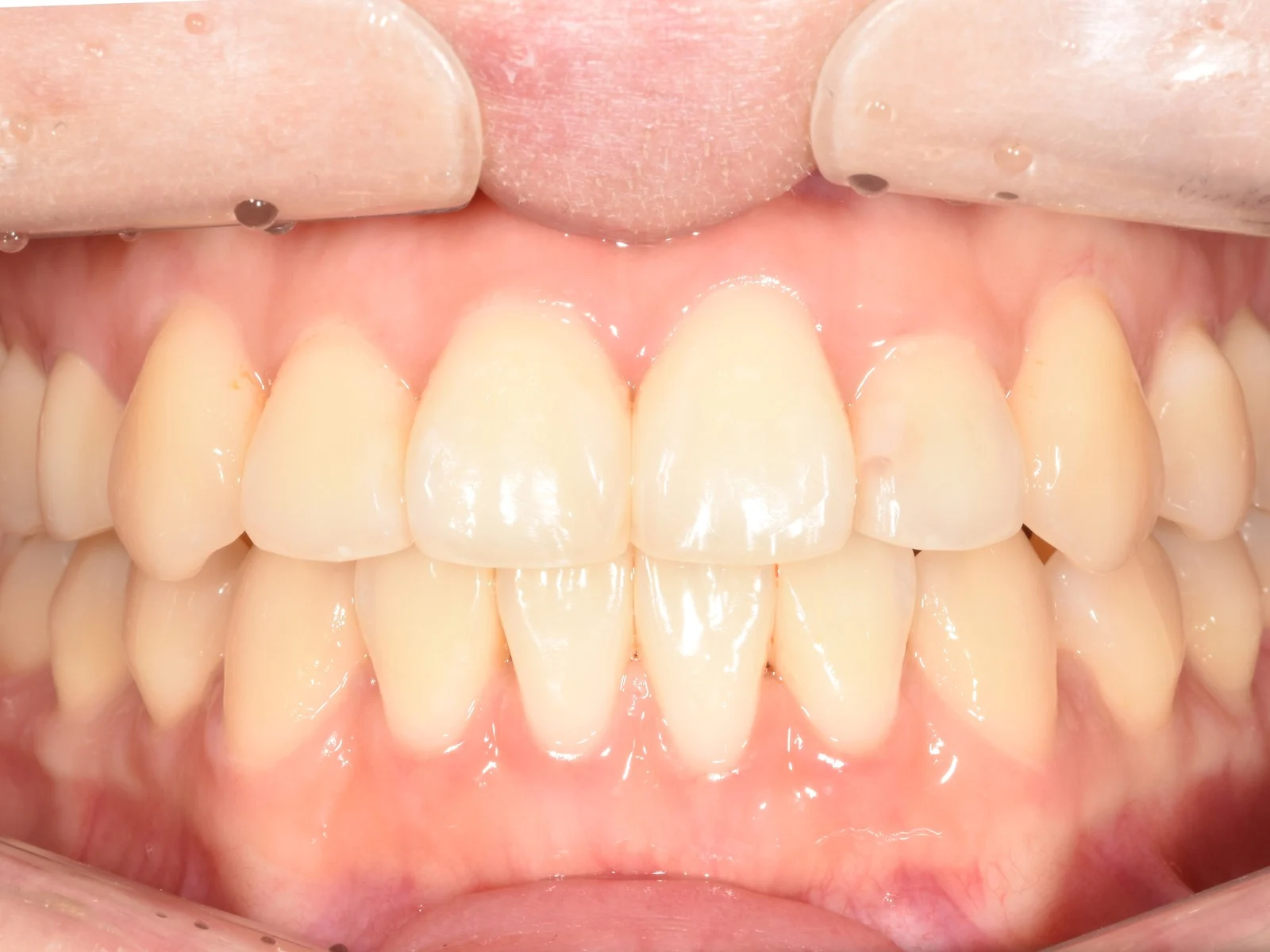
Front view inside the mouth after treatment, with the upper front teeth now biting in front of the lower onesAfter · Apr 2024
Front views inside the mouth before and after treatment. The front teeth, where the lower teeth used to bite in front of the upper ones, now bite correctly. After treatment, we keep them in place with a fixed retainer and a clear retainer.

STEP 06

We finish the bite and keep watching if growth remains

We finish the front and back teeth bite and remove the braces. You use a fixed retainer and a clear retainer together, and retainer check-ups and adjustments for 2 years after treatment are included in the orthodontic fee. If any growth remained, we also check for bite changes at these check-ups.

Why we do thisAfter an underbite is corrected, the bite can become shallower if the lower jaw grows a little more or the front teeth try to return to their original tilt. We schedule check-ups closer together in the first year after treatment.

* Clinical photos are published with the patient's consent. Some people may have side effects such as temporary pain or discomfort.

During treatment, you usually visit once a month. Mini-screws are placed under local anesthesia, and they may feel strange in your mouth for the first few days.

05°

Comparing treatment options

Guiding upper-jaw growth during growth (face mask, etc.)Braces alone (camouflage treatment)Surgical orthodontics
ForGrowing children with a small or set-back upper jaw (usually before age 10)Dental or functional cases, and skeletal cases with a small jaw differenceSkeletal cases with a large jaw difference, and people who want a change in profile
How it worksAn appliance pulls the upper jaw forward to help the direction of growthMoves the upper front teeth forward and the lower teeth back to correct the bitePre-surgical braces undo the front-teeth tilt, and the bite is finished after jaw surgery
What changesUpper-jaw position and front-teeth bite during growthFront-teeth bite, part of the lower-lip protrusionJaw position, profile, front-teeth bite
What does not changeLower-jaw growth itselfLower-jaw length, chin positionSome differences in soft tissue and muscle may remain
LimitsResults vary widely with the amount of growth, and treatment may be needed again laterThe front teeth end up tilted, and the reverse bite can return if growth remainsSurgery requiring general anesthesia and a hospital stay
DurationUsually 1 yearUsually 1.5–2.5 yearsUsually 2–2.5 years including pre- and post-surgical braces
CostSee the fee schedule →See the fee schedule →We can refer you to a partner hospital for surgery, but you are free to choose another hospital

06°

For these people, another treatment comes first, or waiting is fine

This suits you if you have

  • A dental or functional reverse bite
  • A skeletal reverse bite with a small jaw difference
  • Finished growing and only want to correct the bite (adults)

Another treatment comes first

  • Skeletal reverse bite with a large jaw difference: consultation for surgical orthodontics
  • Jaw joint pain: we treat the pain first
  • Gum inflammation: gum treatment first

Waiting is fine for now

  • Children with a lot of growth left that could change the result: we look at the front-teeth bite first and decide the timing while checking the growth stage regularly.

07°

Self-check

If your front teeth meet edge to edge when you move your jaw back, it may be functional. You are welcome to send us photos of your side profile and the inside of your mouth with your teeth closed first.

08°

Side effects and limits

Please read

· If growth remains, the reverse bite can return after treatment.

· With camouflage treatment, the front teeth end up tilted, and the length of the lower jaw and the position of the chin do not change.

· Moving the lower front teeth back a lot can cause the gums to recede or the roots to shorten.

· If the skeletal difference is large, braces alone change the profile only a little.

· If a mini-screw loosens and comes out, we place it again in a different spot.

· If you do not wear your retainer, the front-teeth bite can become shallow again.

FAQ

FAQ

Can an underbite be corrected with braces alone, without surgery?
In some cases, braces alone can correct the bite: a dental underbite caused by tilted teeth, a functional underbite where you push your jaw forward to bite, or a skeletal underbite with a small jaw difference. If the front-to-back jaw difference is large, or you also want to change your side profile, we discuss surgical orthodontics as well.
Read more about this question →
At what age should underbite treatment start?
For children, around ages 6–9, when the first big molars come in, is usually seen as a good time to start. However, how much lower-jaw growth remains decides the start more than age does. We check the growth stage on X-rays of the neck bones and the hand and wrist, and then tell you whether to start now or to correct only the front-teeth bite first and keep watching.
If I have stopped getting taller, has my jaw stopped growing too?
Not necessarily. The lower jaw can keep growing for a while after height growth ends, so we check the growth stage separately on X-rays of the neck bones and the hand and wrist to judge where growth stands.
If my child has an underbite, should it be treated right away?
If only the front teeth hit first and the child pushes the jaw forward to bite, it may be better to correct it early. If it is skeletal with a lot of lower-jaw growth still to come, it may be better to adjust the timing or keep checking regularly, so we decide after looking at both the cause and the growth stage.
Can the underbite come back after treatment?
If treatment ends while growth remains, the lower jaw can grow further and the underbite can return. So we set the start and finish of treatment by growth stage, and after treatment we also check for bite changes at retainer check-ups.
Will camouflage treatment improve my side profile too?
Moving the lower teeth back can reduce the protrusion of the lower lip a little, but the length of the lower jaw and the position of the chin do not change. If changing your profile is the goal, we explain it in comparison with surgical orthodontics.
Will an underbite correction improve my "s" sounds?
When the front-teeth bite is corrected, the tongue touches a different spot, and some people's "s" sounds improve. However, speech is also strongly affected by tongue habits and muscles, so braces alone sometimes do not change it.
Where is underbite jaw surgery done?
The jaw surgery is done at a hospital that performs it, and the orthodontic treatment before and after surgery is done at Ceramic Dental Clinic. Pre-surgical orthodontics must first undo the tilt of the front teeth so that the bite fits properly after surgery. We can refer you to a partner hospital for surgery, but you are free to choose another hospital.

Evidence and references

  • Kim S, et al. Characterization of Spheno-occipital Synchondrosis Fusion From Preadolescents to Young Adults Using Age and Cervical Vertebrae Maturation Index. Journal of Craniofacial Surgery 35(2), 2024. (Analysis of when facial bone growth ends)
  • Ceramic Dental Clinic's 12-step orthodontic examination and diagnosis: Orthodontics main page
COSTAll costs are gathered in one place on our treatment cost pageSee orthodontic costs →

ABROAD

Visiting from abroad

Questions from patients who travel to Seoul for treatment.

How much does orthodontic treatment cost?
The fee depends on the appliance. For example, metal braces are KRW 4,800,000, ceramic braces KRW 6,000,000, Invisalign KRW 8,500,000 and lingual braces KRW 8,600,000. The orthodontic fee includes the orthodontic diagnosis, extraction (except wisdom teeth), mini-screws, basic retainers and retention care for 2 years. If you have only the diagnosis and do not start treatment, it is KRW 50,000 (KRW 100,000 if a CT scan is needed). If a retainer breaks or is lost later, remaking it costs extra. International and Korean patients pay the same fees. We explain the total before treatment starts. See our fee schedule.
Can I continue treatment after I go home?
Yes, but it needs a plan. Fixed braces need regular adjustment visits: the first two visits are 2 weeks apart, then usually once a month. Clear aligners are easier from abroad: after you receive your aligners, you visit once every 2–3 months, and between visits we check by photo only if something comes up. Your doctor tells you at diagnosis which method fits your case.
Can I have my consultation in English?
Yes. The doctor in charge of each field consults with you directly in English. For orthodontics, this is Dr. Sunmin Kim, a board-certified orthodontist. Before you travel, you can send photos of your teeth on WhatsApp or by email. An accurate diagnosis is made after we examine you in person.
What happens after treatment, and what if something comes off?
You need retainers after treatment, because teeth tend to move back. Retention care for 2 years is included in the orthodontic fee. If a bracket comes off or a wire hurts after you go home, send us a photo on WhatsApp. We check it and tell you what to do. Some repairs need a visit.

Results, the number of visits and schedules vary from person to person. More questions: Visiting from abroad.

MORE

Related pages

Treatment results and side effects can vary from person to person.

You can ask us first with a photo of your side profile

TOP
Request a ConsultationView