
COLUMN · Inlays
Ceramic, Gold or Composite Inlay?
Which One Fits Your Tooth, and When You Need an Onlay or Crown
There are three main types of dental inlay: ceramic (porcelain) inlays, composite (hybrid resin) inlays and gold inlays. Before choosing a material, the dentist checks whether the tooth walls left after removing the decay are thick enough to support an inlay. If they are, the material is chosen by tooth position, bite force, grinding and how much the color matters to you. If a wall is thin or cracked, an onlay or crown is the safer choice. At Ceramic Dental Clinic we currently place ceramic and hybrid inlays; we do not offer gold inlays.
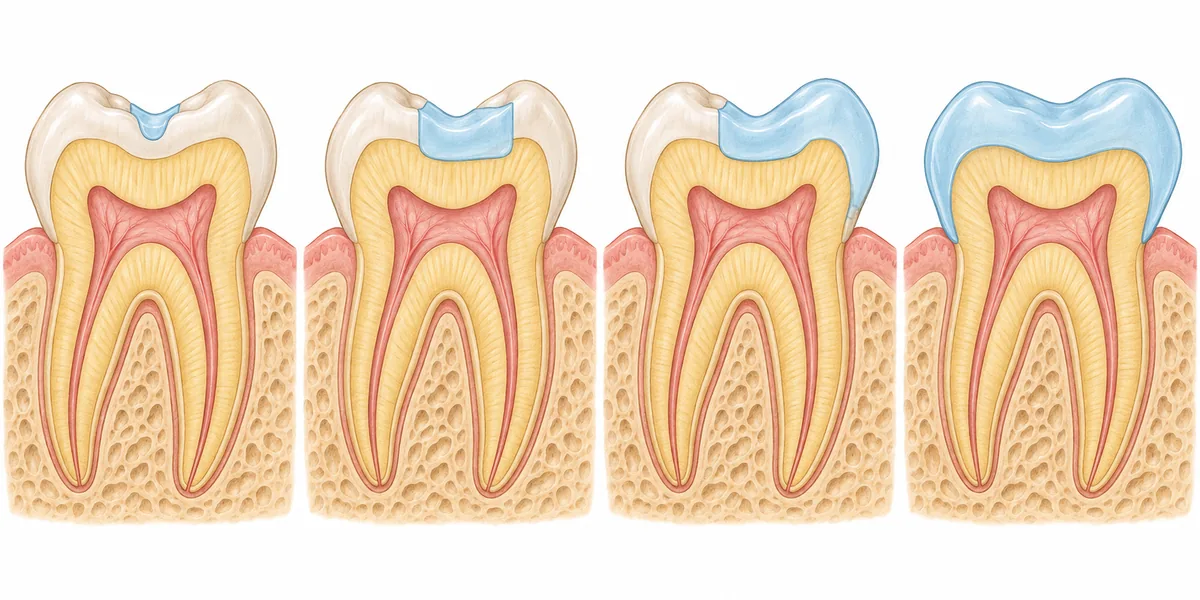
1. FillingA small cavity filled directly with composite
2. InlayA larger cavity inside the cusps, filled with a lab-made piece
3. OnlayAlso covers one or more cusps
4. CrownCovers the whole top of the tooth
Inlay vs filling vs crown: what is the difference?
All four restore a tooth after decay is removed; the difference is how much tooth is left. A small cavity is usually filled directly with tooth-colored composite, which removes the least tooth. When decay has spread widely across the biting surface or between the back teeth but the outer and inner walls are still thick, an inlay is used: the prepared space is scanned or an impression is taken, and a hard piece is made outside the mouth and bonded in.
If a cusp has become weak, an onlay covers that cusp too. If the walls are thin or cracked, or the tooth has had a root canal, a crown that covers the whole tooth is usually considered. Our inlay vs filling page covers that choice with cases; this article answers the next question: if you need an inlay, which material?
Types of dental inlays: ceramic, composite and gold
Inlays of the same shape behave differently depending on the material: the color, how they wear or break, and their effect on the opposing tooth. The illustration shows the same inlay outline in each material.
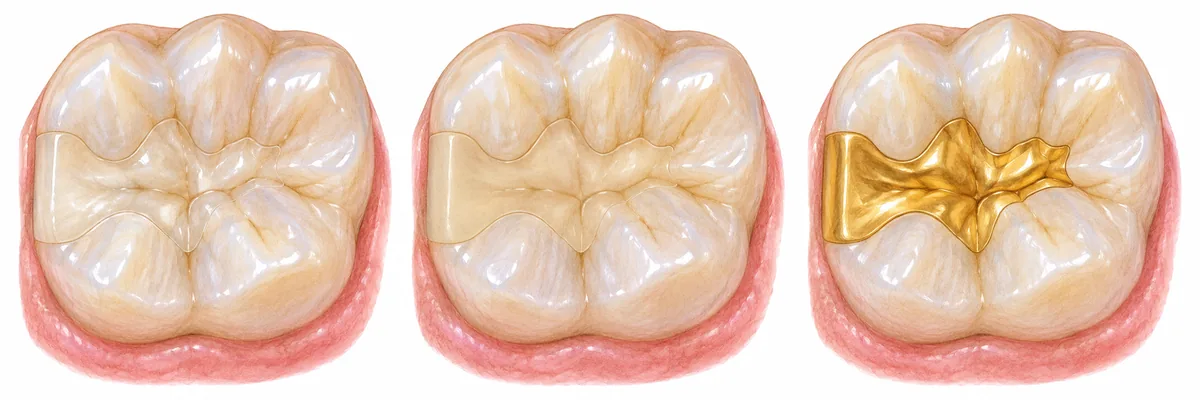
Ceramic (porcelain) inlayTooth-colored and keeps its gloss
Composite (hybrid) inlayTooth-colored; may wear or stain over time
Gold inlayHolds up even when thin, but the gold color shows
| Ceramic inlay | Composite (hybrid) inlay | Gold inlay | |
|---|---|---|---|
| Material | Hard porcelain-type ceramic | Resin mixed with ceramic particles | Gold alloy |
| Color | Tooth-colored, little staining | Tooth-colored, may stain with time | Gold, easy to see |
| Under heavy force | Can break if hit hard | Surface can wear | Holds up well even when thin |
| Opposing tooth | A rough surface can wear the opposing tooth | Little wear | Little wear |
| At our clinic | Available | Available | Not currently offered |
A "composite inlay" is not the same as a composite filling. It is made outside the mouth from resin mixed with ceramic particles, so its shape and its contact with the neighboring tooth can be adjusted outside the mouth; how well it actually fits depends on the cavity, the fabrication and the bonding. We call it a hybrid inlay.
Ceramic inlay vs composite inlay: how do you choose?
There is no single right answer. We look at four things together:
- Position: for premolars that show when you smile, ceramic, which keeps its color and gloss, is usually the first option. For the back molars, bite force matters more than appearance.
- Bite force and grinding: if you grind or clench, any inlay and the remaining walls are more likely to break, so we also recommend a night guard (splint).
- Opposing tooth: whether the tooth you bite against is natural or already crowned changes how we judge wear. A ceramic surface must be polished smooth so it wears the opposing tooth less.
- Maintenance and retreatment: a hybrid inlay may wear or stain after years of use. Ceramic stains less but can break under a hard impact.
So the same person may end up with different materials on different teeth. At the consultation we explain how each material wears and breaks, and what retreatment would look like later.
Is a gold inlay better? Should old gold fillings be replaced?
Gold inlays hold up well even when thin and fit closely at the edges. In a study of 303 cast gold inlays and onlays followed for an average of 18.7 years, survival was 96.1% at 10 years, 87.0% at 20 years and 73.5% at 30 years. Of the 42 failures, 17 (40%) were new decay at the edge and 13 (31%) were loss of retention (Studer et al., Journal of Oral Rehabilitation, 2000). That study looked at gold restorations fixed with conventional cement (luting), not resin bonding.
The drawback is color: if the gold showing when you laugh bothers you, a tooth-colored material fits better. Our clinic does not currently place gold inlays, and we tell you this at the start if you ask for one.
Many people ask whether existing gold inlays or gold crowns should be replaced. If there is no gap and no new decay underneath, they can stay. In the case below, only the failing old filling was replaced and the healthy gold crown on the next tooth was left as it was.
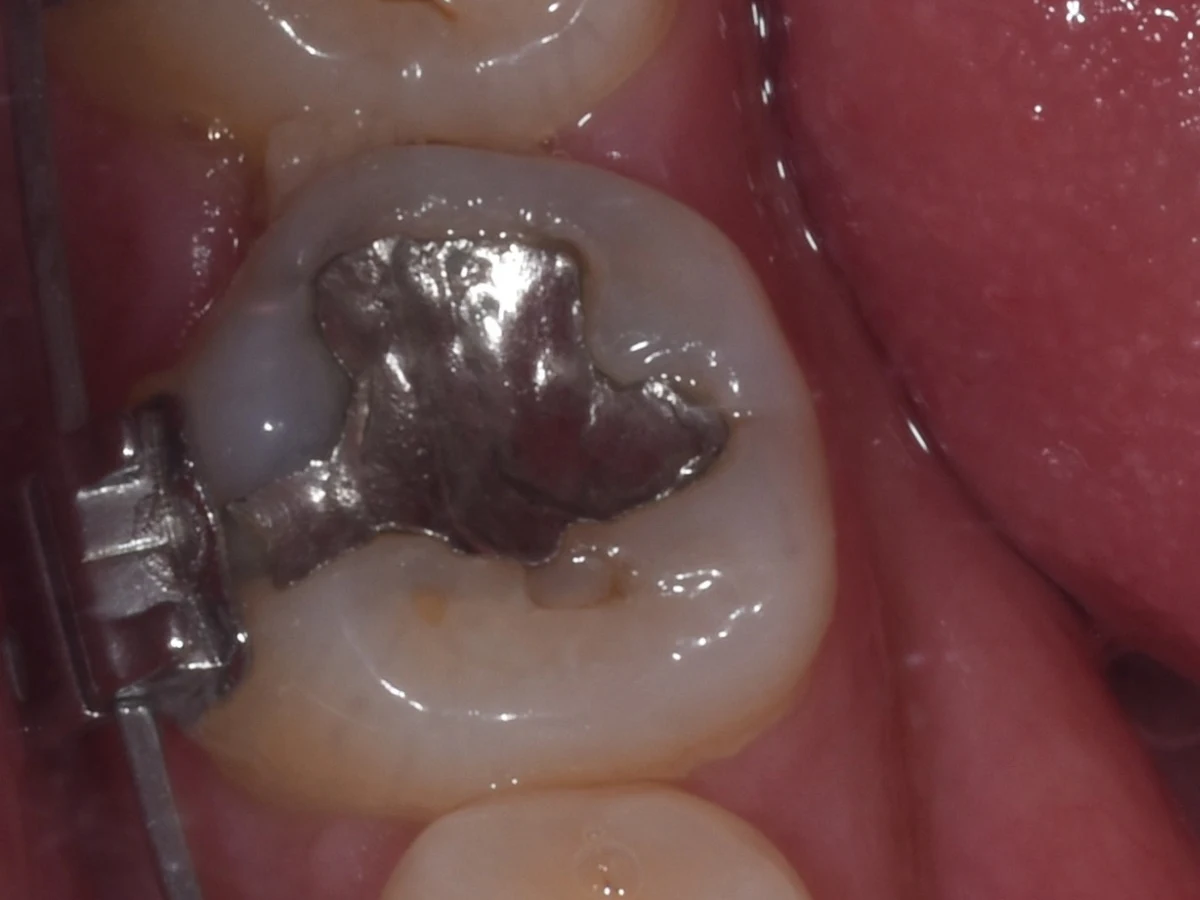
Before treatment · photo February 2025
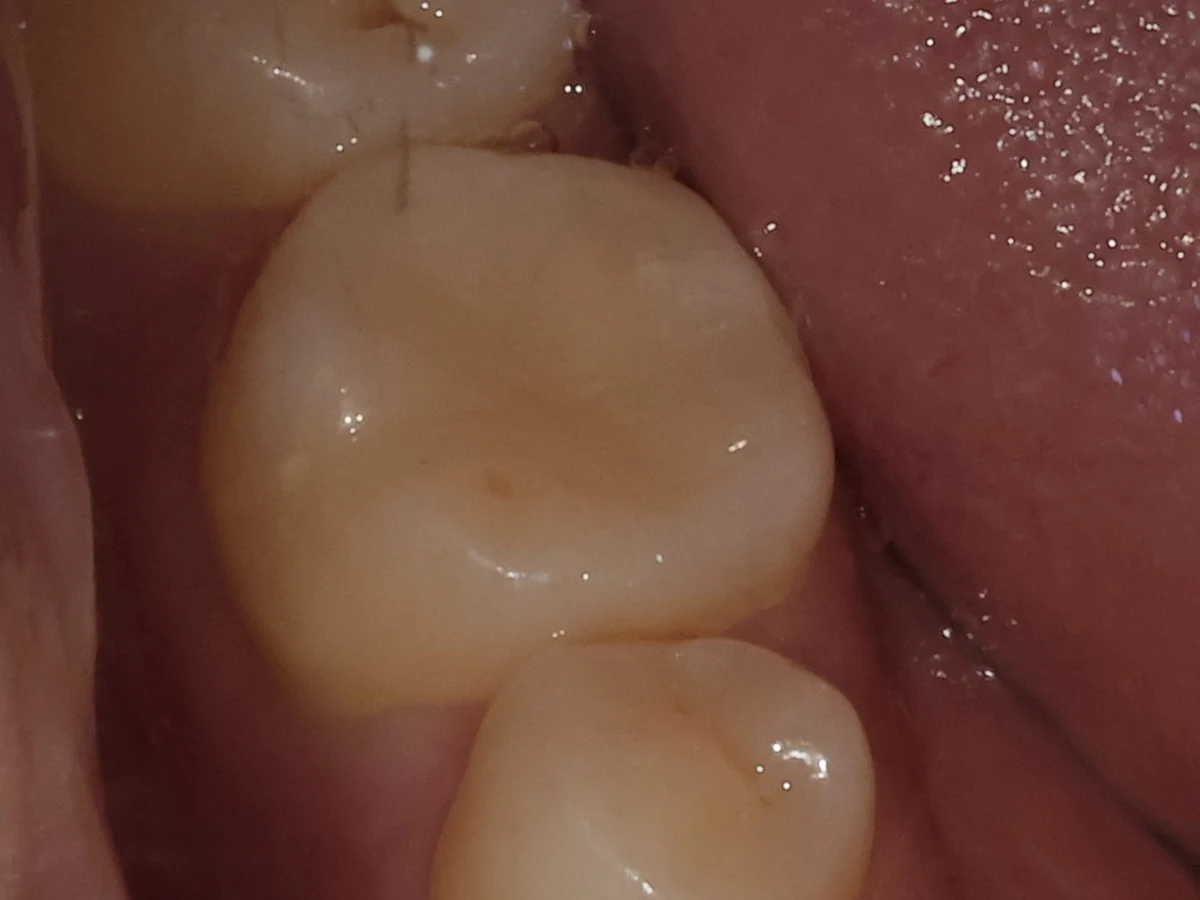
After treatment · photo March 2026
The edges of the old filling had turned dark and opened up, and decay had started again underneath. We removed the old filling and only the decay underneath, and bonded an inlay so the edges join smoothly. The gold crown on the neighboring tooth had no gaps or decay, so it was left as is. 2 visits, 1–2 weeks apart. The after photo was taken some time after treatment ended, so the gap between the photo dates is longer than the treatment itself.Possible side effects: sensitivity, secondary decay at margins, need for root canal, inlay or tooth fracture. Published with the patient's consent; photos taken of the same area from the same direction. Results and side effects vary from person to person. Inlay treatment page
How long do ceramic inlays last compared with composite and gold?
There is no fixed number of years, but research gives a range. A review of studies on back-tooth restorations published mainly since 1990 found average yearly failure rates of 1.4% for cast gold inlays and onlays, 1.9% for ceramic restorations, 2.9% for composite inlays and 2.2% for direct composite fillings; indirect restorations such as inlays had a lower failure rate than direct ones (Manhart et al., Operative Dentistry, 2004).
A meta-analysis of ceramic inlays, onlays and overlays found survival of 92–95% at 5 years and 91% at 10 years. The most common failure was fracture or chipping (4%), followed by root canal problems (3%), new decay (1%) and debonding (1%) (Morimoto et al., Journal of Dental Research, 2016).
These are averages from study patients. How long an inlay lasts depends not only on the material but also on flossing, grinding, the condition of the remaining tooth and how the treatment is done. With ceramic, breakage is the main thing to watch; with hybrid, wear and staining.
Inlay vs onlay vs crown: when is an inlay not enough?
This question comes before the material. An X-ray gives a first idea, but the final decision is made after the decay is removed and the remaining walls can be seen directly.
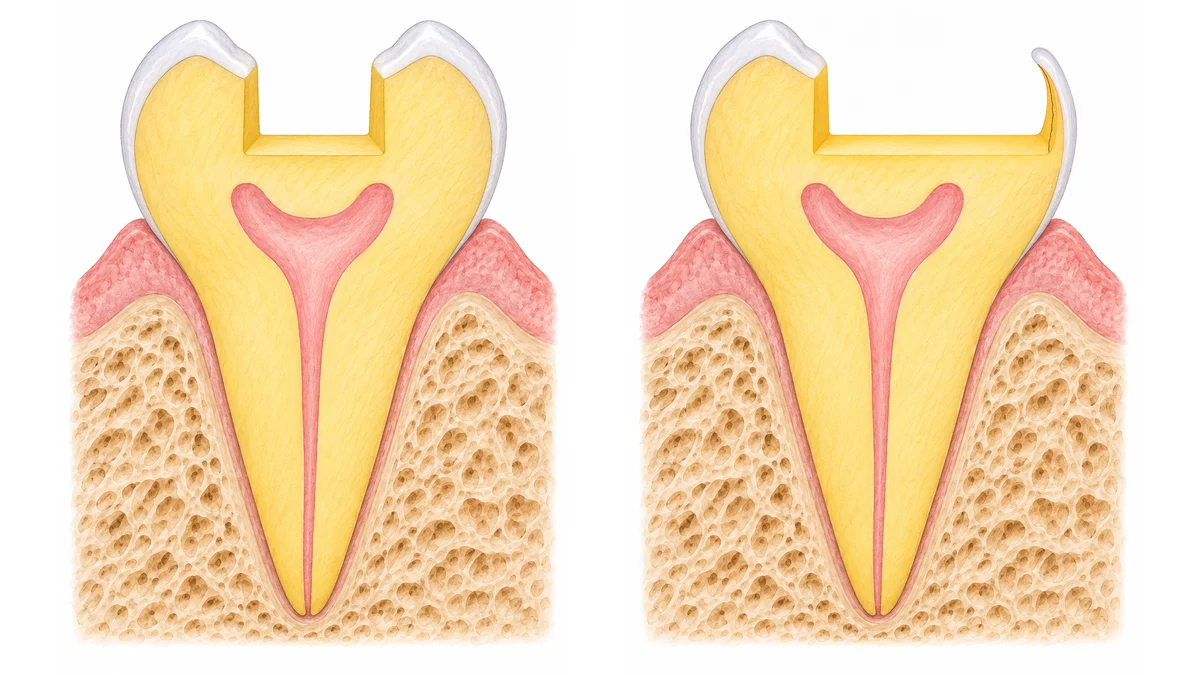
Thick walls remainThe outer and inner walls and cusps can support an inlay
Thin, cracked wallThe wall may split under bite force, so an onlay or crown is considered
It depends on the surrounding walls, but in general, if any remaining wall is 2 mm thick or less, we consider the risk of breakage high. An inlay on such a wall can let it split under chewing force, sometimes leading to a crown or even extraction. So if a wall turns out thin or cracked once the decay is out, we show you on the spot and suggest changing the plan. Teeth that have had a root canal are weaker, and a crown is usually recommended (crowns).
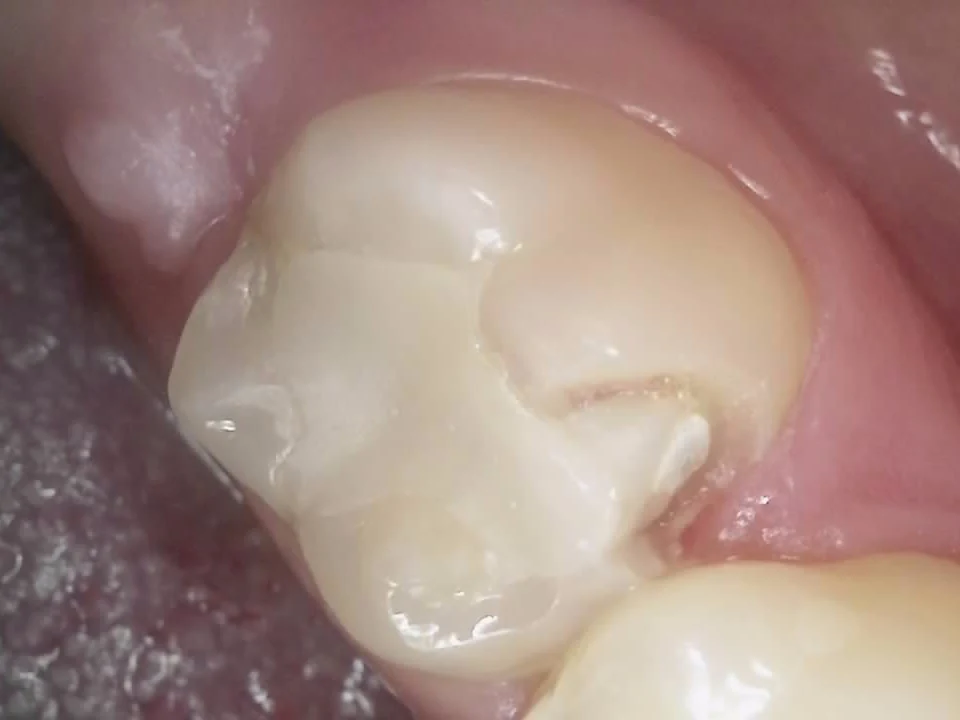
Before treatment · photo May 2026
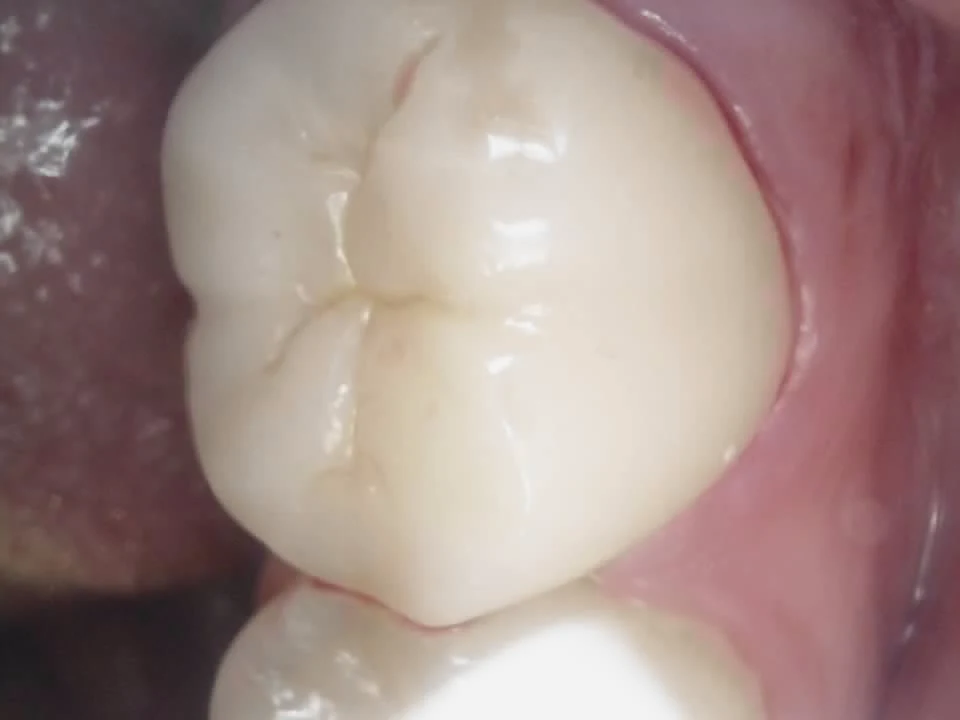
After treatment · photo May 2026
A line was visible along the edge of an inlay placed in 2025, and the remaining walls were too thin. Redoing the inlay carried a high risk that the walls would break, so we removed it and covered the remaining walls in one piece with a zirconia crown. 2 visits (bonding 1 week after preparation).Possible side effects: sensitivity, secondary decay at margins, need for root canal, inlay or tooth fracture. Published with the patient's consent; photos taken of the same area from the same direction. Results and side effects vary from person to person.
On the other hand, choosing a crown when the walls are still sound removes much more healthy tooth, because the whole top of the tooth must be reduced evenly. When only one cusp is weak, a ceramic onlay, the step in between, is also available at our clinic.
Do you need an inlay for a small cavity or a front tooth?
Usually not. Inlays suit large cavities in molars that take heavy bite force. For a small cavity, shaping the tooth so an inlay can seat removes more tooth, so a composite filling is better.
Front-tooth cavities are usually filled with composite. If a front tooth is broken over a wide area, or has several old fillings and you also want to change its color and shape, porcelain veneers (CERANATE) or a front-tooth crown may be considered. Whether no-prep or minimal-prep veneers are possible is decided case by case after diagnosis.
What does getting an inlay involve?
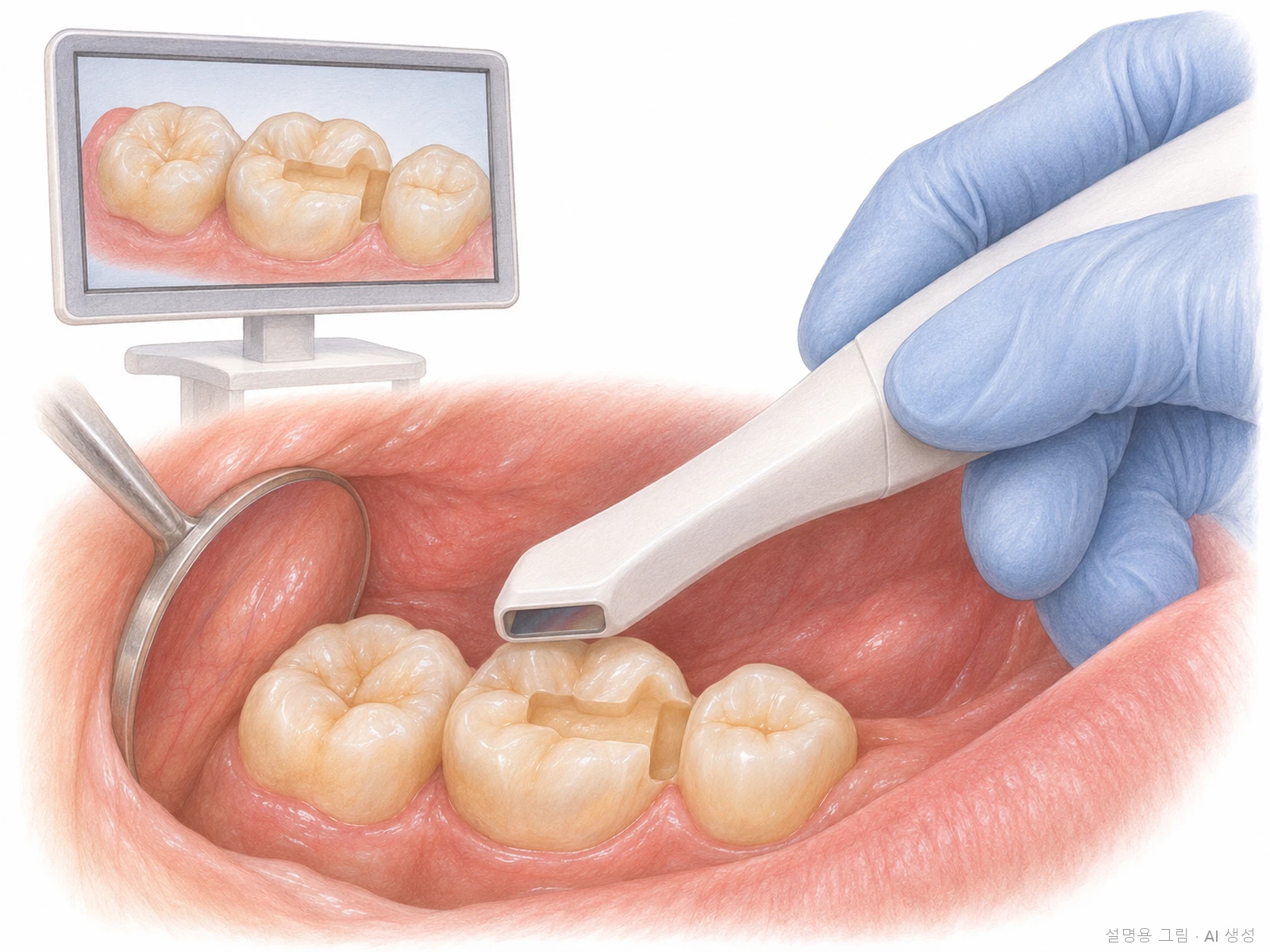
Usually two visits. On the first day the decay is removed, the remaining walls are checked, the space is shaped and scanned; on the second visit the inlay is tried in and bonded.
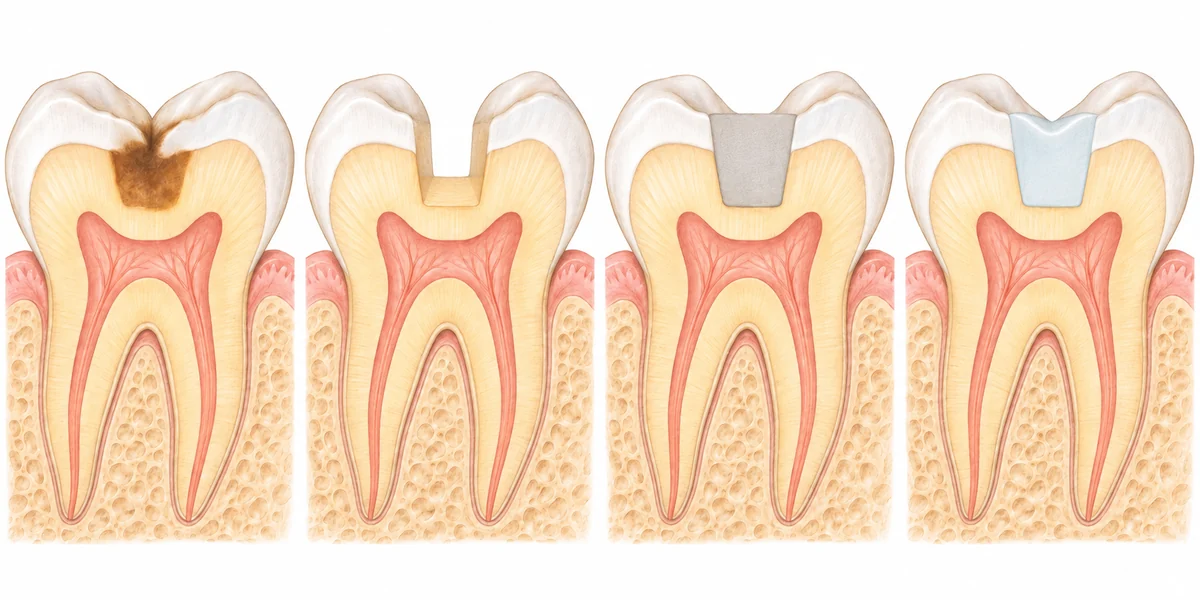
1. CavityDecay spreading from the groove into the dentin
2. Decay removedSoft decay removed and wall thickness checked
3. Scan and temporaryA temporary filling seals it while the inlay is made
4. Inlay bondedEdges, contacts and height checked, then bonded
The prepared space is recorded with an iTero intraoral scan or an impression. A temporary filling seals it while the inlay is made, and you usually come back about a week later for bonding. Without the temporary, the tooth can become sensitive and the neighboring tooth can shift slightly so the inlay no longer fits. Avoid sticky food during this time.
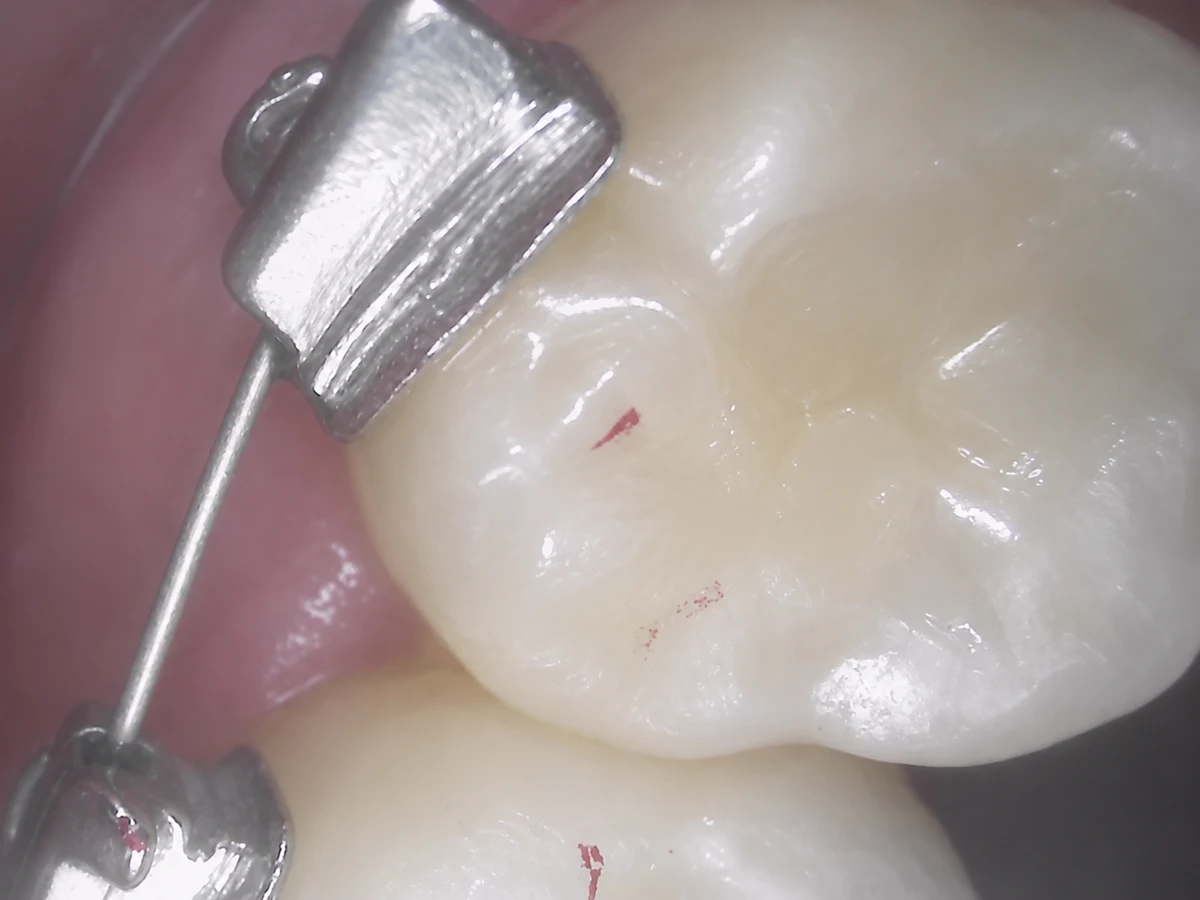
On bonding day we check that the edges have no gap, that the contact with the next tooth is neither loose nor too tight, and that the inlay does not hit high when you bite. Even if it feels fine that day, if it feels high after a few days of chewing, we adjust it again. Sensitivity for a few days to a few weeks after bonding is possible and usually fades.
Coming from abroad: how many days, and what about aftercare?
- Inlay: usually 2 visits, 1–2 weeks apart; bonding is usually about a week after preparation. On a single trip, plan on staying at least about a week.
- If the decay is deep: it may turn into a root canal during treatment, which adds visits; a crown is then usually recommended.
- After you fly home: if the inlay feels high or the tooth stays sensitive, send us a message on WhatsApp. A photo helps us give a first direction, but bite problems, pain or a loose inlay need to be checked in person, locally or at your next visit.
For planning your stay, see how many days you need in Korea and visiting from abroad. If several molars need crowns rather than inlays, zirconia vs porcelain crowns may also help.
Cost: the fee depends on whether you need composite, a ceramic inlay, a ceramic onlay or a crown, and whether a core or post is added. Inlays are not covered by Korean National Health Insurance. Fees are listed on our cavity and root canal costs page, and we give you the total before treatment starts. International and Korean patients pay the same fees.
Frequently asked questions
Do ceramic inlays break easily?
What is the difference between a composite inlay and a ceramic inlay?
Should I replace my old gold inlays with ceramic?
How long does a ceramic inlay last?
How many visits does an inlay take?
References
- Manhart J, Chen H, Hamm G, Hickel R. Buonocore Memorial Lecture. Review of the clinical survival of direct and indirect restorations in posterior teeth of the permanent dentition. Oper Dent. 2004;29(5):481-508. PubMed 15470871
- Morimoto S, et al. Survival Rate of Resin and Ceramic Inlays, Onlays, and Overlays: A Systematic Review and Meta-analysis. J Dent Res. 2016;95(9):985-94. PubMed 27287305
- Studer SP, et al. Long-term survival estimates of cast gold inlays and onlays with their analysis of failures. J Oral Rehabil. 2000;27(6):461-72. PubMed 10888273
Not sure whether your tooth needs an inlay or a crown?
Send us a photo or your recent X-ray for a rough direction. The final choice is made after an examination in person.
Ask on WhatsAppThis article is for general information and does not promise any particular result. Suitability, treatment plan, results and schedules differ from person to person. Please have a consultation and examination with a dentist before treatment. For current prices, see our price list.