Last reviewed October 29, 2026 · Dr. Ilseop Ahn (board-certified periodontist and board-certified specialist in advanced general dentistry)
At a glance
Good for
Teeth that are badly broken, cracked, or have had a root canal treatment
Treatment flow
Shaping the tooth and taking an impression → making the crown → fitting and bonding
Duration and limits
Usually two or more visits. We do not recommend it for teeth where an inlay is enough
Details
A crown covers a whole tooth that is badly broken, cracked, or has had a root canal treatment, to protect it from breaking. A gold crown fits well at the border and wears the opposing tooth less, but its color stands out. Tooth-colored crowns such as zirconia look natural, but each material differs in how it chips and wears. It usually takes two or more visits, and more if a root canal treatment is needed first. At Ceramic Dental Clinic, we do not recommend a crown for a tooth where an inlay is enough, and when a crown is needed, we choose the material with you based on its position, chewing force, and the condition of the gums.
01°
We show whether a crown was really needed and which material was used
A molar with a root canal treatment, a cracked molar, and an old crown with an open border each need a crown for different reasons. The preparation and material also differed depending on the reason.
CASE01
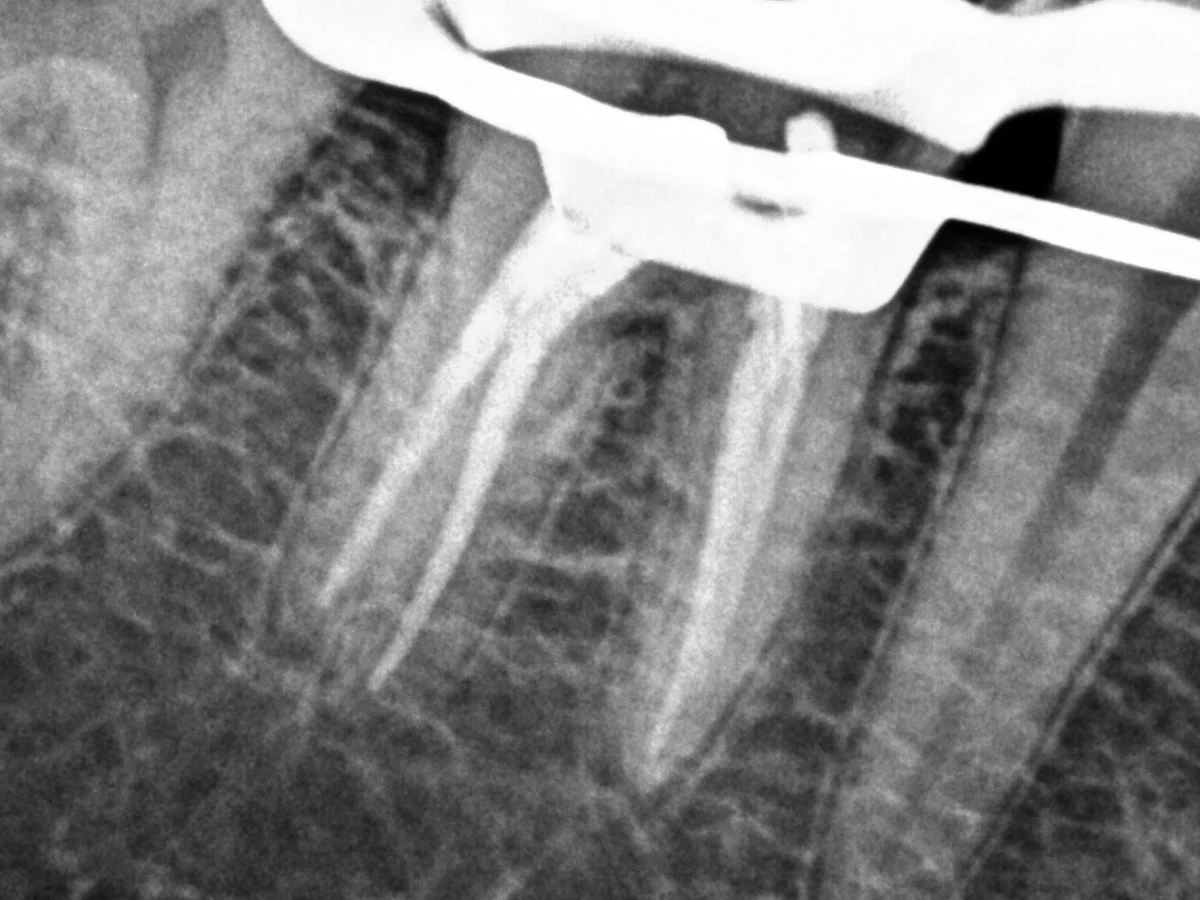
A molar after root canal treatment
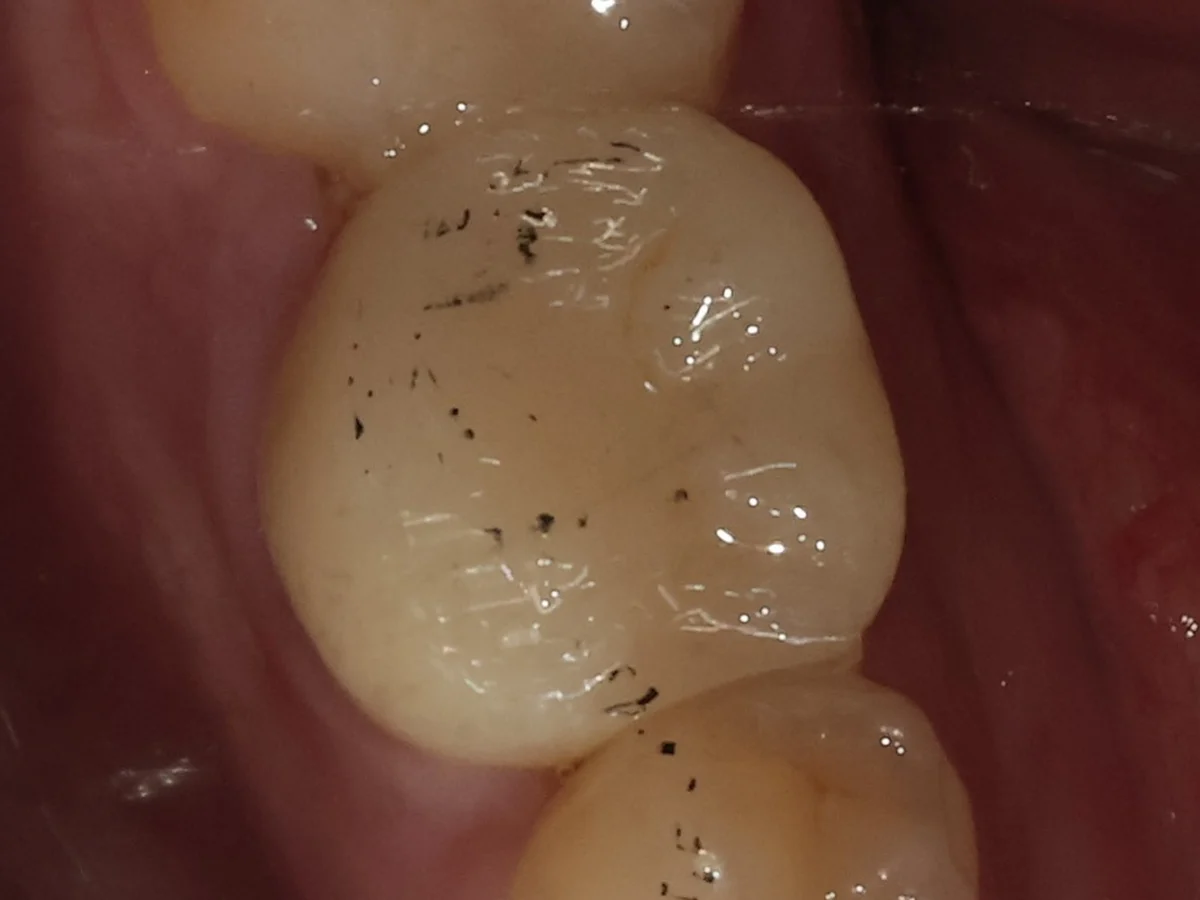
Core build-up + zirconia crown · covering the weakened tooth so it does not split under chewing force
After root canal treatment · July 2026
X-ray of the molar after root canal treatment. Decay had destroyed much of the upper part of the tooth, so if left as it was, there was a high risk of it splitting under chewing force.
After crown · August 2026
After the zirconia crown was placed. The gum border flows smoothly, and the bite height was adjusted.
Condition
Root canal treatment completed because of a deep cavity, with more than half of the upper part of the tooth lost
Chosen
Zirconia crown after a core build-up
Not done
Filling with resin only (the remaining walls were thin, with a high risk of breaking)
Duration
About 1 month, 3–4 visits
Note
The crown border and the root tip are checked with X-rays at regular checkups.
CASE02
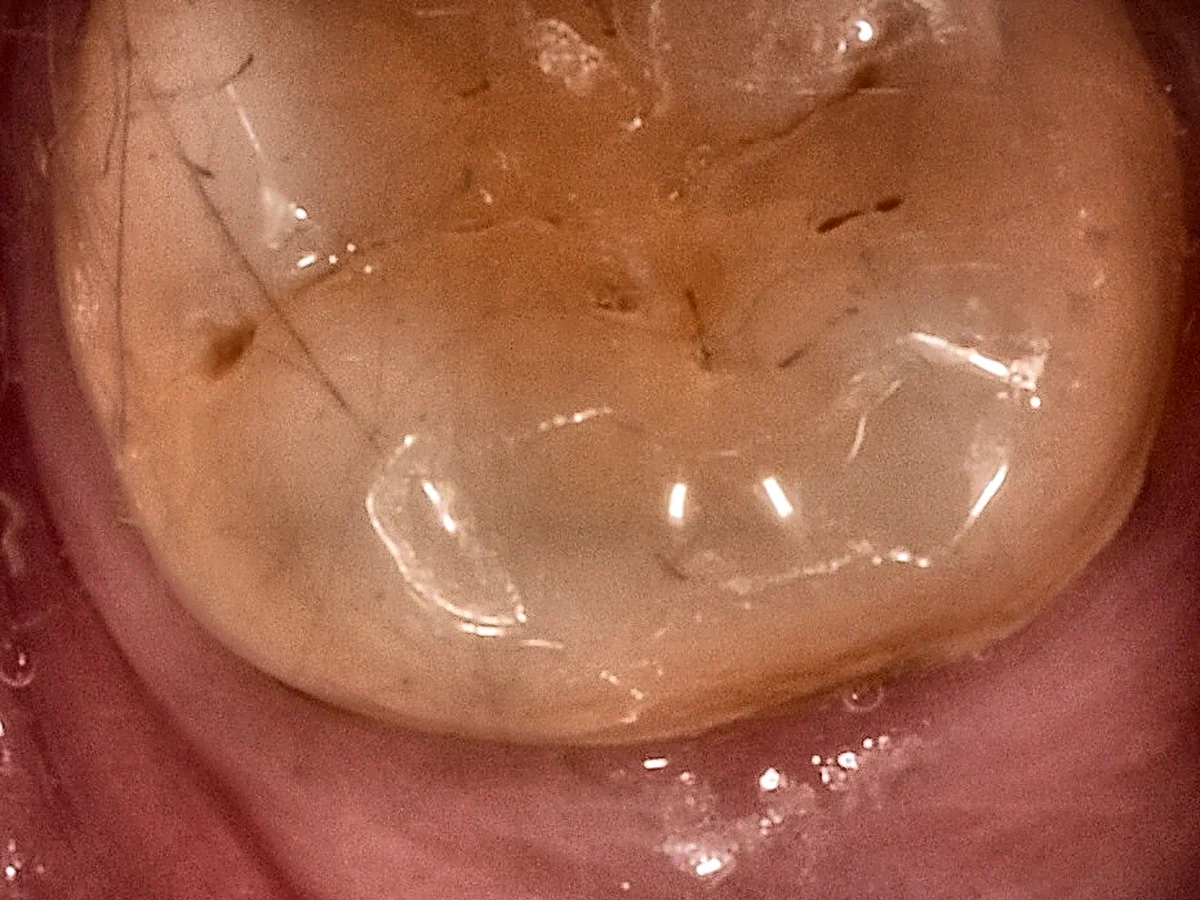
A cracked molar that twinged when chewing
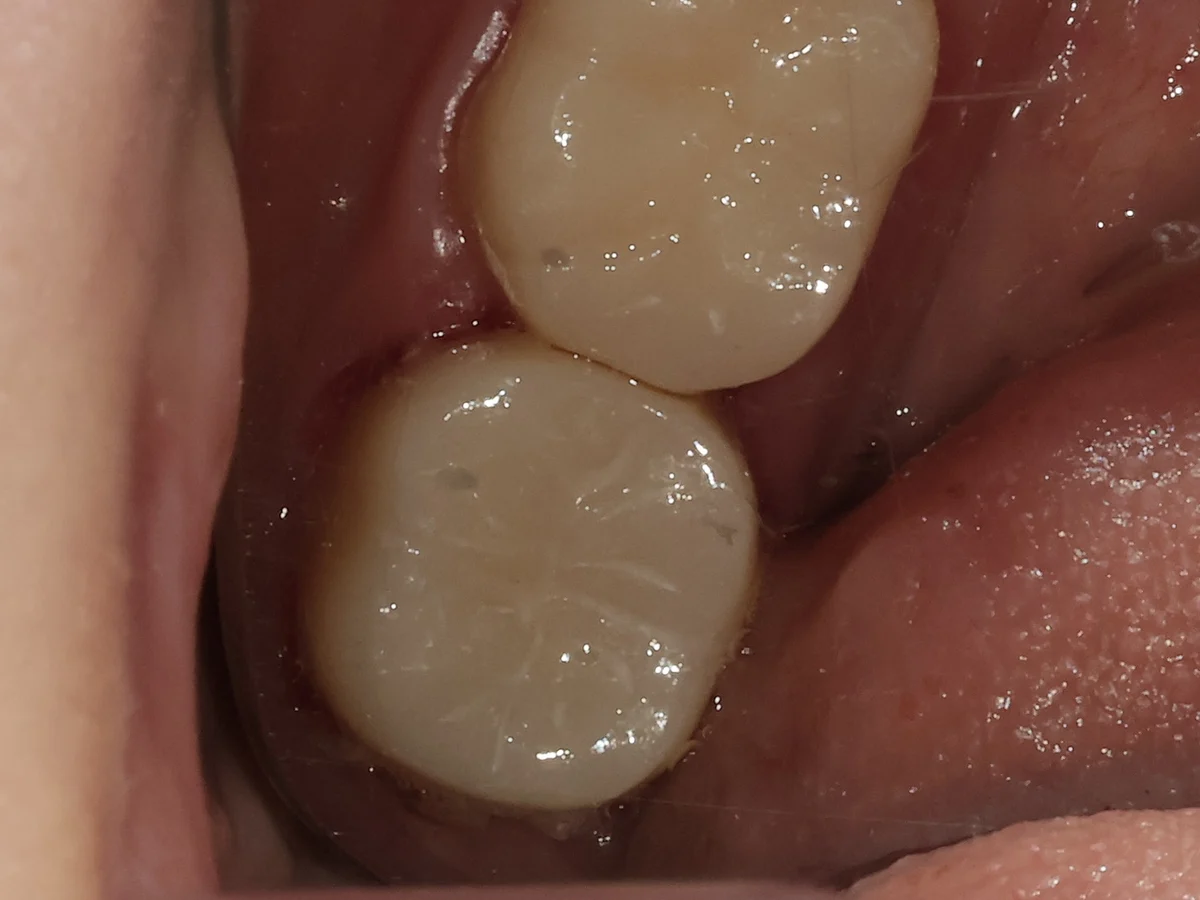
Crown · covering the whole tooth to spread chewing force evenly so the crack does not open further
Before treatment · June 2025
The molar before treatment. Thin cracks were visible across the chewing surface, and there was a sharp twinge when biting something hard.
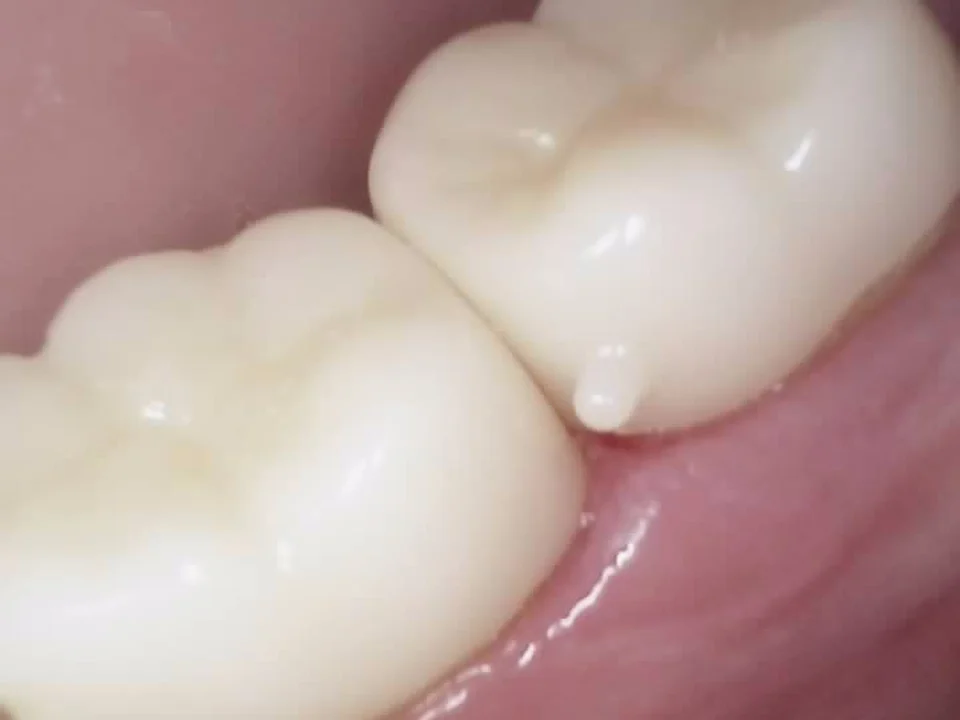
Example after crown · a different patient
A placed crown (same position, photo of a different patient). It covers both cracked walls at once so the walls do not separate when chewing.
Condition
Crack in the chewing surface with a momentary twinge when biting; nerve response within the normal range
Chosen
Crown with the nerve kept alive
Not done
Preventive root canal treatment (because the nerve response was normal)
Duration
About 2 weeks, 2–3 visits
Note
Putting long-term use of the tooth first, we placed the crown without root canal treatment. If the tooth later becomes sensitive, root canal treatment may be needed, and if the crack has extended toward the root, the tooth may be hard to keep, so we monitor its progress.
CASE03
Old crowns with open borders
Crown replacement · two old crowns were replaced after removing secondary decay, and the neighboring front tooth was matched with a no-prep porcelain veneer
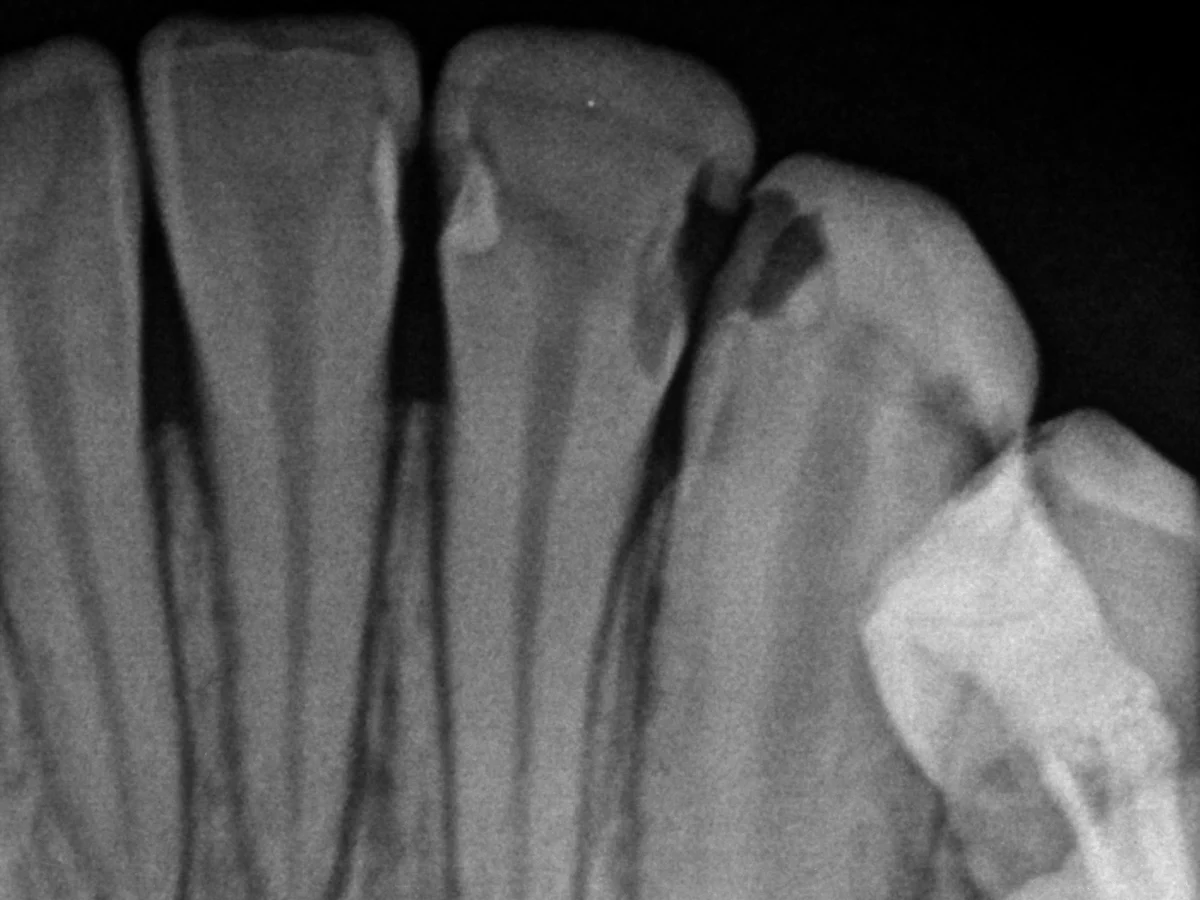
X-ray before treatment · December 2025
X-ray before treatment (upper left lateral incisor). A dark shadow was visible next to the border of the old crown, and the gum in that spot often swelled.
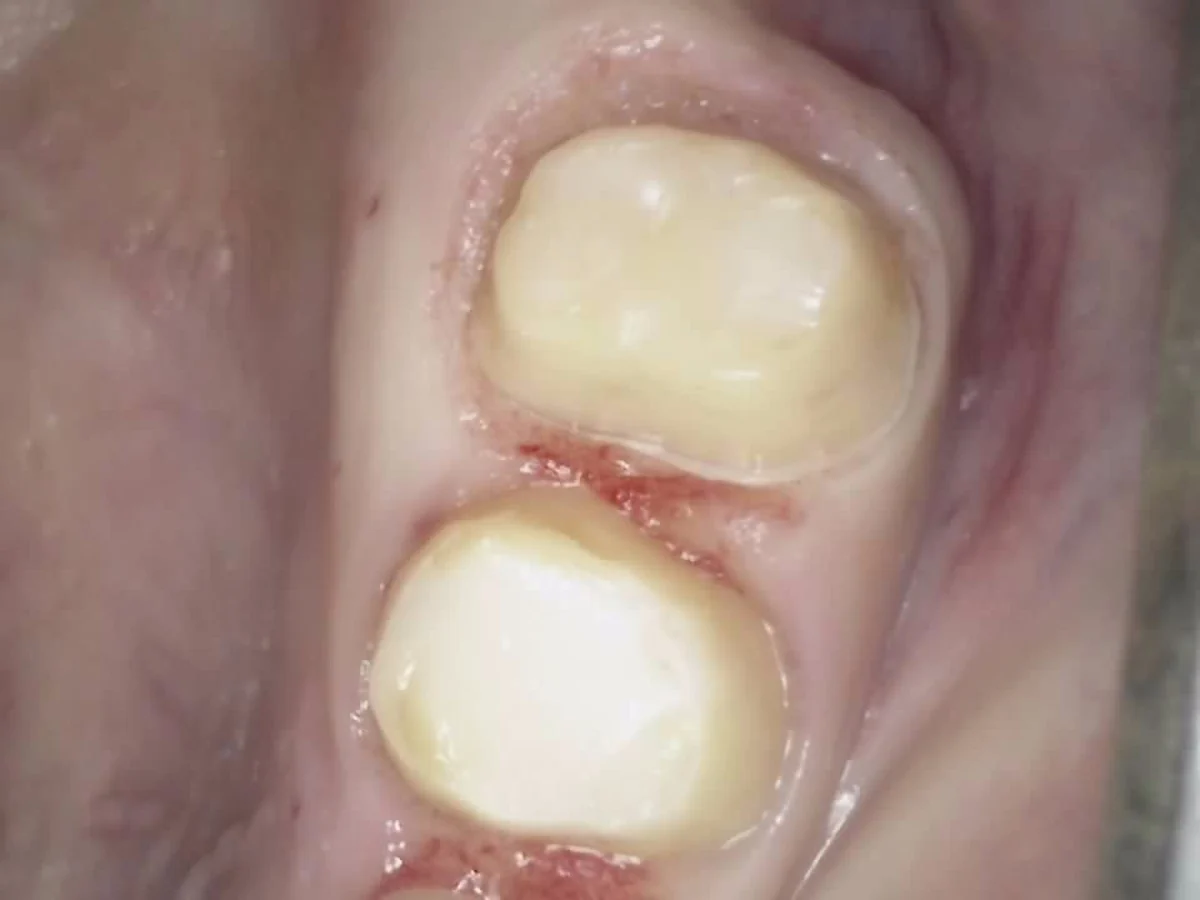
After crown removal · December 2025
After the old crowns were removed. The tooth under the crowns had turned brown, and the discolored part is being removed.
After treatment · January 2026
After the new crowns were placed. After removing the decay, we fitted them so the border flows smoothly near the gum.
Condition
Open border of an old crown with secondary decay underneath
Chosen
Crown removal, decay removal, post reinforcement if needed, then a new crown
Not done
Changing the neighboring tooth to a crown as well (the neighboring tooth was matched with a no-prep porcelain veneer, and only the two teeth that had old crowns received new crowns)
Duration
About 2 weeks, 2–3 visits
Note
Both teeth had already had root canal treatment in the past, so the crown borders and root tips are checked with X-rays at regular checkups.
* Photos were taken under the same conditions and published with the patients' consent. Treatment results and side effects may vary from person to person.
02°
Teeth that need a crown and teeth that do not
A crown requires trimming the outside of the tooth evenly before it is placed, so we use it only for teeth that really need it.
01When much of the tooth is lost
When decay or breakage has destroyed a wide area of the upper part of the tooth, and the remaining walls are unlikely to hold up with resin or an inlay.
02Cracked teeth
When biting causes a momentary twinge and a crack is visible on the chewing surface. Without covering, the crack can spread toward the root.
03Molars with root canal treatment
A molar with root canal treatment has a wide empty space inside from decay and treatment, so it splits easily under chewing force. That is why it is usually covered with a crown.
04When a crown is not needed
If the side walls remain thick, an inlay is enough. Concerns about the shape and color of front teeth are explained separately on the porcelain veneer and front-tooth crown pages.
03°
How crown treatment proceeds
There are six steps, from checking whether the tooth can be kept to regular checkups.
X-ray
Examination before a crown. On X-rays we check how widely decay has spread inside the tooth and the condition of the roots and bone height, and with a gum exam we check gum depth and bleeding.
STEP 01
We check whether the roots and gums are strong enough for a crown
With periapical X-rays we check root length and the surrounding bone height, and a board-certified periodontist checks gum depth and looseness. If inflammation at the root tip is suspected, we look with a Vatech 3D CT.
Why we do thisA crown sits on top of the tooth, so if the roots and jawbone are weak, it is hard to use for long no matter how good the crown is. If a tooth is hard to keep, we explain why before you spend money on a crown.
Nerve condition
Checking the nerve condition. We check the response to cold and the X-rays to see whether a root canal treatment is needed first.
STEP 02
We check whether a root canal treatment is needed first
We look at the response to cold, whether it hurts when tapped, and whether the decay has reached the nerve on X-rays. If the nerve is healthy, we place the crown with the nerve kept alive. If the inflammation is at an irreversible stage, we do the root canal treatment first.
Why we do thisIf nerve inflammation develops after a crown is placed, a hole has to be drilled through the crown for root canal treatment. We check the nerve before starting so you do not go through treatment twice.
Core build-up and shaping
A tooth with a post (core) built up and evenly shaped. The outside is trimmed by the thickness the crown needs.
STEP 03
We rebuild the missing part with a core and evenly shape the outside
If much of the tooth is lost, we first fill it with a core build-up to create a shape that can support the crown. Then we evenly shape the outside of the tooth by the thickness the crown material needs. The amount trimmed depends on the material: relatively thin for gold, and a little thicker for ceramic-type materials.
Why we do thisIf too little is trimmed, the crown becomes thin and breaks; if too much is trimmed, the tooth becomes weak. The material has to be chosen first so we trim only as much as needed.
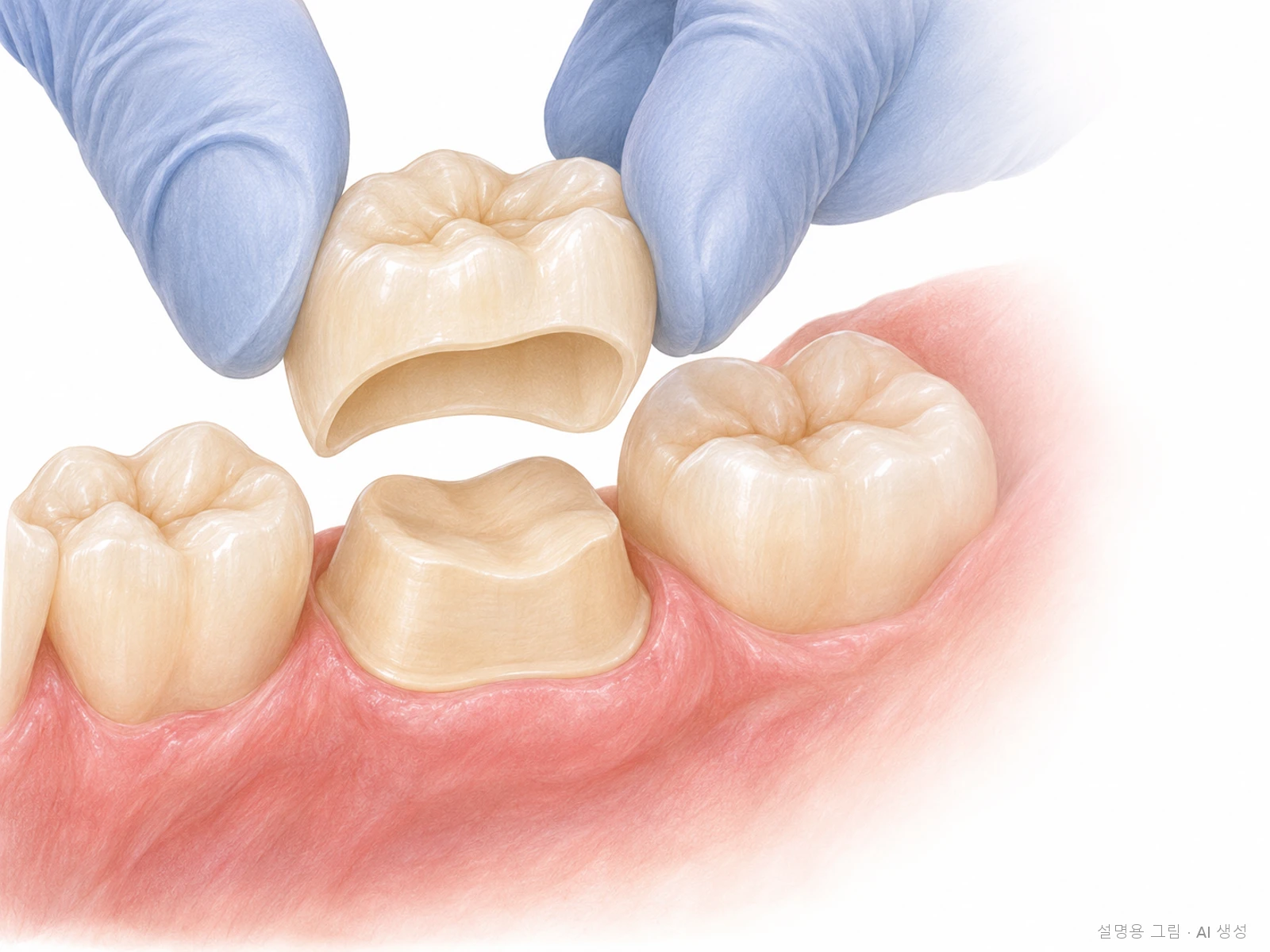
Scan and temporary crown
Placing a temporary crown (explanatory illustration). While the crown is being designed from the scan, it covers the shaped tooth to prevent sensitivity and keeps the neighboring teeth from moving.
STEP 04
We design the crown from a scan or impression and place a temporary crown
With an iTero intraoral scan or an impression, we record the shaped tooth, the gum border, and the opposing teeth. While the crown is being made, a temporary crown is placed.
Why we do thisThe temporary crown prevents sensitivity in the shaped tooth and keeps the neighboring and opposing teeth from moving into that space. Please avoid sticky foods during the temporary period.
Fit check
Check before bonding. We check that there is no gap at the gum border and that the contact between teeth and the bite height are right.
STEP 05
We check the border, contact, color, and height before bonding
We first try in the finished crown to check that there is no gap at the gum-side border, and to check the contact with neighboring teeth, the color, and the bite height. If everything fits, we bond it and adjust the height again with articulating paper.
Why we do thisThe crown border is usually near the gum, so even a small gap can lead to gum inflammation and secondary decay. That is why a board-certified periodontist checks the border and gums together.
Regular checkup
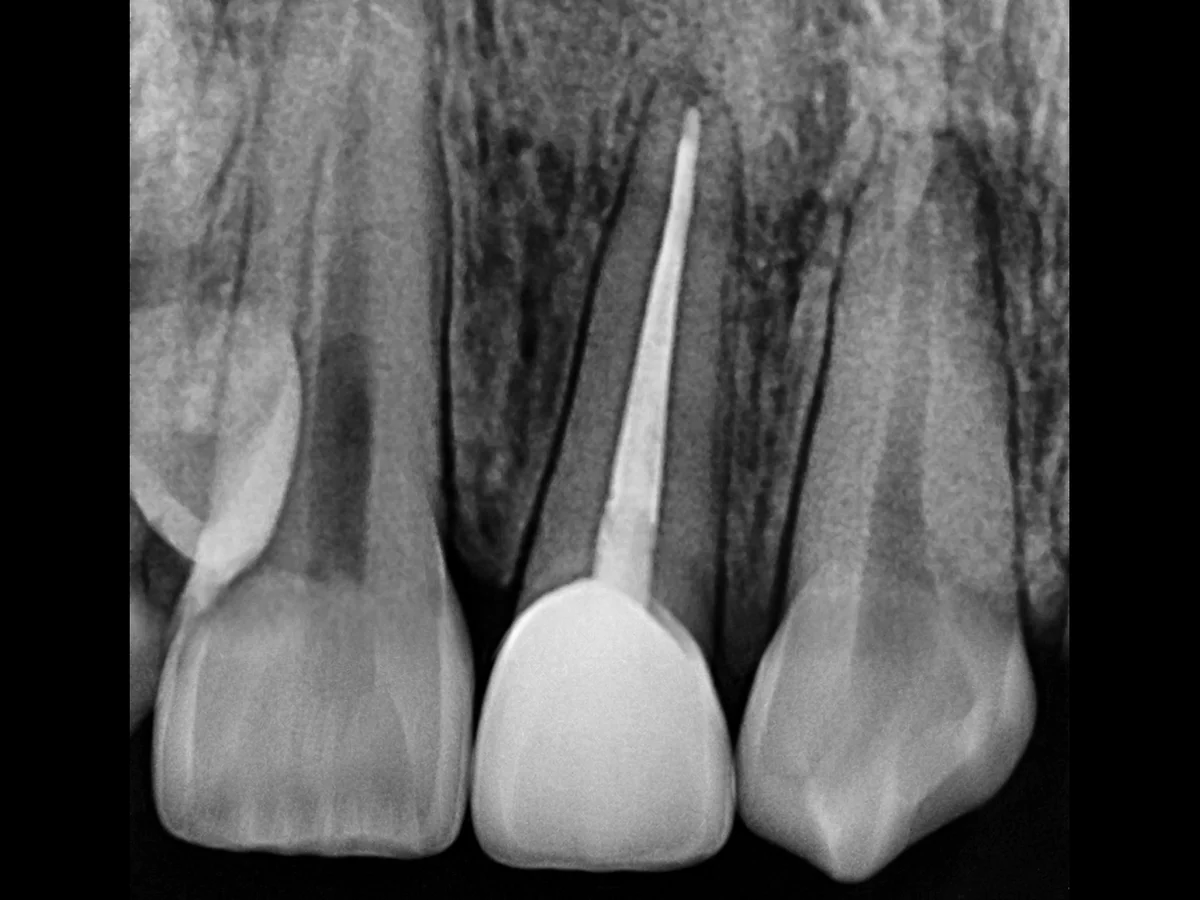
Regular checkup X-ray. We check for gaps or decay at the crown border and whether the root tip is healthy.
STEP 06
We check the borders and gums at regular checkups
Even after a crown is placed, the border area needs to be cleaned with floss and interdental brushes. At checkups we look at the border and gums and take X-rays if needed. For people who grind their teeth, we also recommend a splint.
Why we do thisThe crown itself does not decay, but the tooth underneath can. Border decay has to be found while small to avoid redoing the crown.
* Clinical photos were published with the patients' consent. Side effects such as temporary pain or discomfort may occur depending on the person.
04°
Comparing crown materials
Rather than one material being the best, some materials suit the position, chewing force, grinding, and gums better, so we use different ones depending on the situation.
Zirconia
Glass ceramic (such as IPS e.max)
Porcelain fused to metal (PFM)
Porcelain fused to zirconia (PFZ)
Color
Tooth-colored
Tooth-colored, with natural translucency
Tooth-colored, but a metal shadow may show near the gum
Tooth-colored, no metal shadow, with the color matched naturally by the outer porcelain layer
Breakage
Relatively strong, but no material is unbreakable
Weaker than zirconia, so it can break under strong force
The outer porcelain layer can chip off
The core is strong, but the outer porcelain layer can chip off
Wear on opposing teeth
Low if the surface is polished smooth
Moderate
A rough porcelain surface can wear it down
A rough porcelain surface can wear it down
Amount of shaping
Moderate
Relatively large
Relatively large
Relatively large
Suitable positions
Molars, people with strong chewing force
Front teeth, premolars
Molars, bridges connecting several teeth
Where color matters, such as front teeth and premolars
Crowns are not covered by Korea's National Health Insurance (NHI). Front-tooth crowns are explained separately on the front-tooth crown page.
05°
When should an old crown be replaced?
We replace a crown only when one of the four issues below is present. We do not replace it just because it is old.
Open gap at the border · Floss catches or food keeps getting stuck.
New decay underneath · It shows on X-rays as a shadow under the border.
Gum inflammation at the border · The same spot often swells and bleeds.
Crown broken or worn through · The chewing surface has thinned and the inside is exposed.
If the crown border is visible because the gum has receded, we check the gum cause before the crown.
06°
Who it suits, and who is better served by other treatment
Good for you if
A molar after root canal treatment
Cracked teeth that twinge when biting
Teeth largely lost to decay or breakage
Other treatment comes first
Teeth with nerve inflammation: root canal treatment comes first
People with severe gum inflammation at the crown border: gum treatment comes first
People planning orthodontic treatment: we discuss with Dr. Sunmin Kim whether to place the final crown after orthodontics
You may not need it now
A cavity with thick side walls remaining can be treated with an inlay
Old gold crowns with no problems do not need to be replaced
07°
Side effects and limits
Please read
· It is the treatment that trims the most tooth. That is why we use it only for teeth that really need it.
· A tooth with a living nerve may be sensitive for a while after shaping, and rarely a root canal treatment may become necessary later.
· Secondary decay or gum inflammation can develop at the border, so flossing and regular checkups are needed.
· Ceramic-type crowns can break. If you grind your teeth, we recommend a splint.
· A tooth with a crack extending toward the root may be hard to keep even with a crown.
FAQ
FAQ
Are gold crowns better?
Gold crowns have the advantages of fitting well at the border, wearing the opposing tooth less, and needing relatively thin trimming. However, their color stands out, so for a visible spot we compare them with tooth-colored crowns before choosing.
Don't zirconia crowns break?
Zirconia is relatively strong, but no material is unbreakable. It can break if you grind your teeth heavily or often bite hard things, so if you grind your teeth we also recommend a splint.
After a root canal treatment, do I have to get a crown?
A molar with a root canal treatment has a wide empty space inside and splits easily under chewing force, so we usually recommend a crown. For front teeth, if much of the tooth remains, we sometimes fill it with resin and monitor it, so we decide based on how much is left.
Can cavities form under a crown?
The crown itself does not decay, but decay can form in the tooth underneath, at the border where the crown and tooth meet. The border area needs to be cleaned with floss and interdental brushes and checked at regular checkups.
The gum around my crown looks dark. Why?
It may be the metal of a metal-based crown showing through, or the gum may have receded and exposed the crown border or root. Depending on the cause, the solution is either replacing the crown or treating the gums, so we check the cause first.
How many visits does a crown take?
Usually two or more. On the first day, we shape the tooth, take an impression, and place a temporary crown, and at the next visit we fit and bond the crown. If a root canal treatment or a post is needed first, more visits are needed.
I want to replace my old gold crown with a tooth-colored one.
A gold crown with no problems does not need to be replaced. Replacing it means trimming the tooth again, which can irritate the nerve. If you still want to replace it for the color, we explain the pros, cons, and risks and decide together.
Are crowns covered by health insurance?
Crowns are not covered by Korea's National Health Insurance (NHI). For people enrolled in NHI, the root canal treatment done before a crown is covered. Costs by material are listed in the treatment cost guide.
Evidence and references
Ceramic Dental Clinic's cavity examination and treatment process: Main cavities page
Questions from international patients who live in Korea or travel to Seoul for treatment.
How much does a crown cost?
Ceramic crowns and zirconia crowns are KRW 600,000 per tooth. A core (KRW 100,000) or post (KRW 150,000) costs extra if needed. International and Korean patients pay the same fees. The number of teeth and the method are decided at diagnosis, so we tell you the total after the examination. See our fee schedule.
How many visits do I need, and how long should I stay in Korea?
Usually 2–3 visits. At the first visit, we prepare the tooth, scan it with an intraoral scanner (iTero) and place a temporary crown. At a later visit, we check the color and bite, then bond the crown. All-ceramic crowns take 7 to 10 days and zirconia crowns 1 to 2 weeks. If root canal treatment is needed, the schedule can be longer.
What if a crown comes off after I go home?
Keep the crown and send us a photo on WhatsApp. We check it and decide whether it can be bonded again or needs to be remade. Bonding again or remaking needs a visit.
Can I use Korean National Health Insurance?
If you are enrolled in Korea's National Health Insurance, insured treatments are billed under the same insurance rules as for other enrollees. Whether a treatment is covered depends on the treatment and the insurance rules, and we tell you before treatment starts. If you are not enrolled, you pay the full fee.
Can I be seen in English?
Yes. The doctor in charge of each field consults with you directly in English, so you do not need an interpreter.


 After root canal treatment · July 2026
 After crown · August 2026
 Before treatment · June 2025
 Example after crown · a different patient
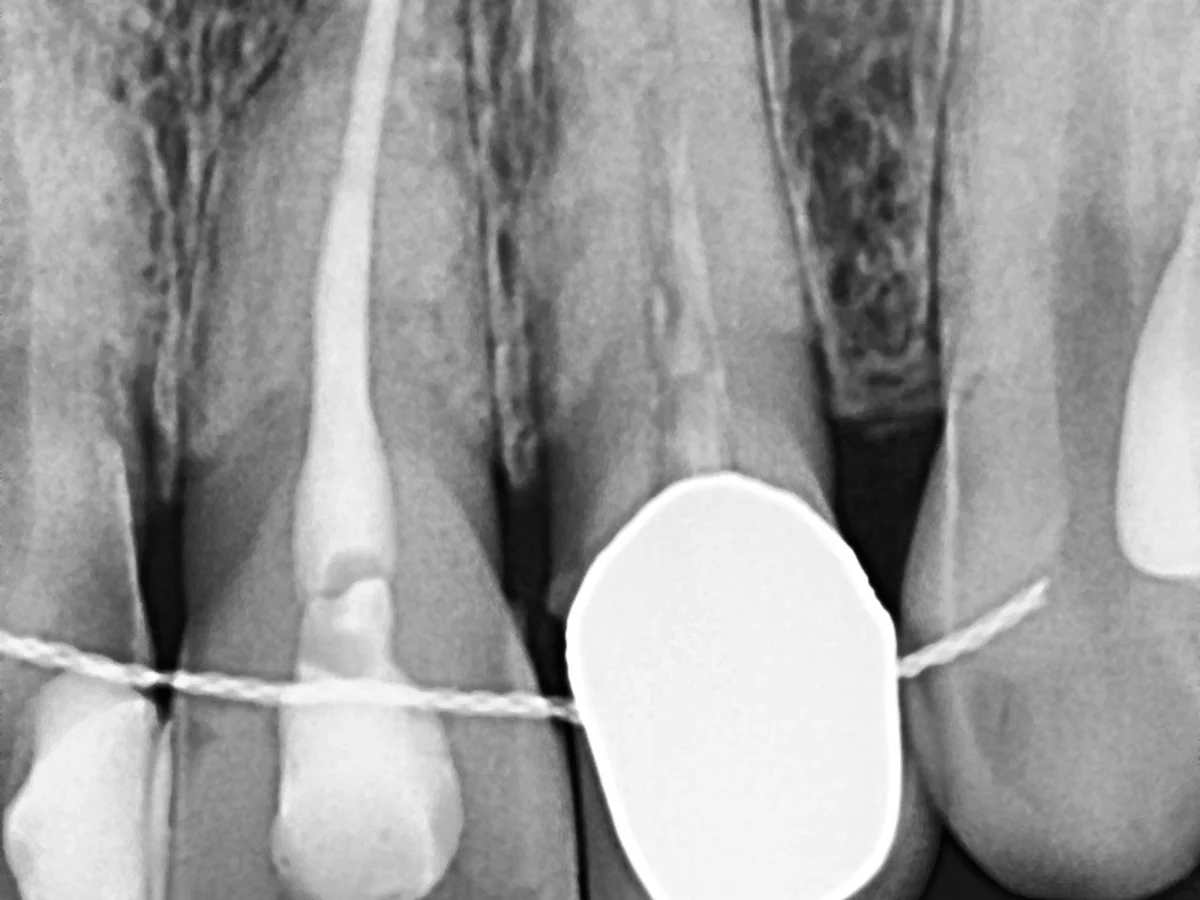 X-ray before treatment · December 2025
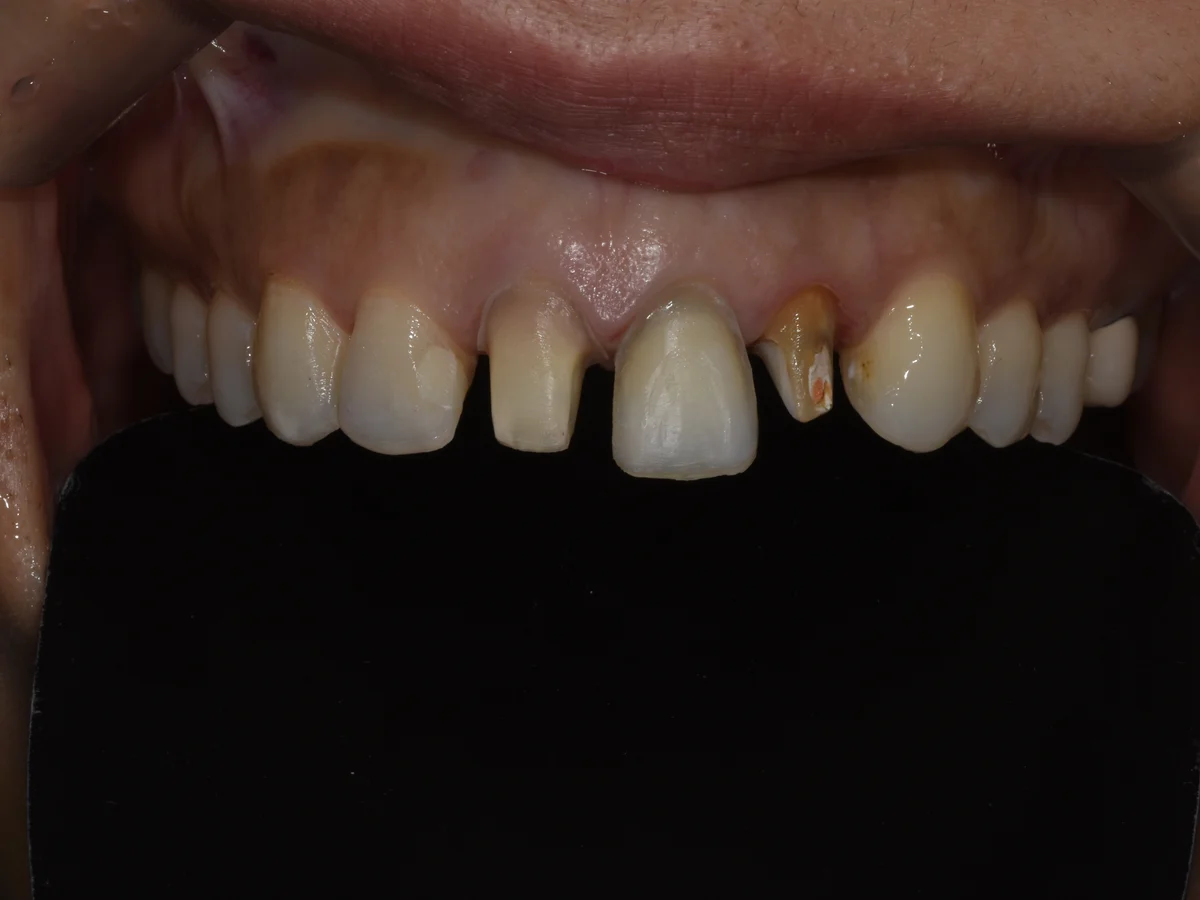 After crown removal · December 2025
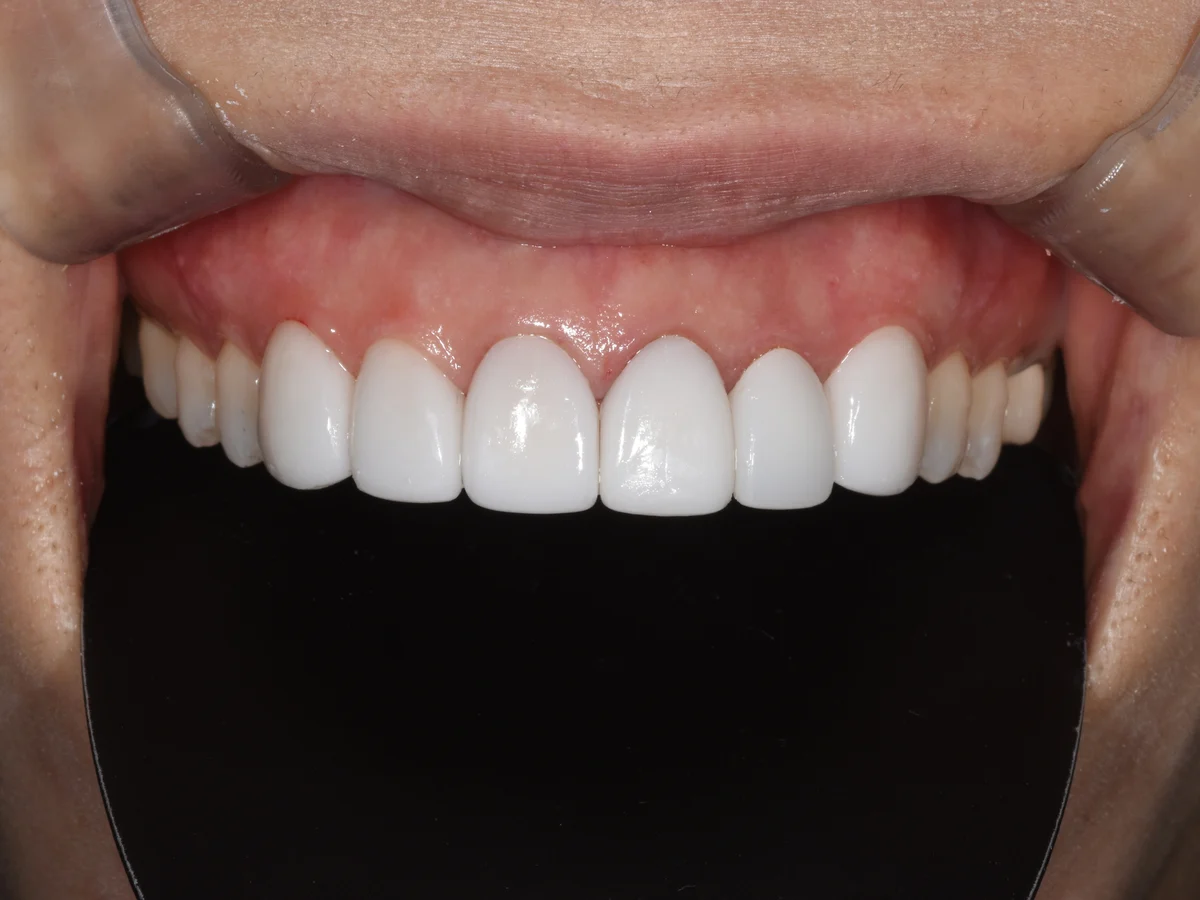 After treatment · January 2026
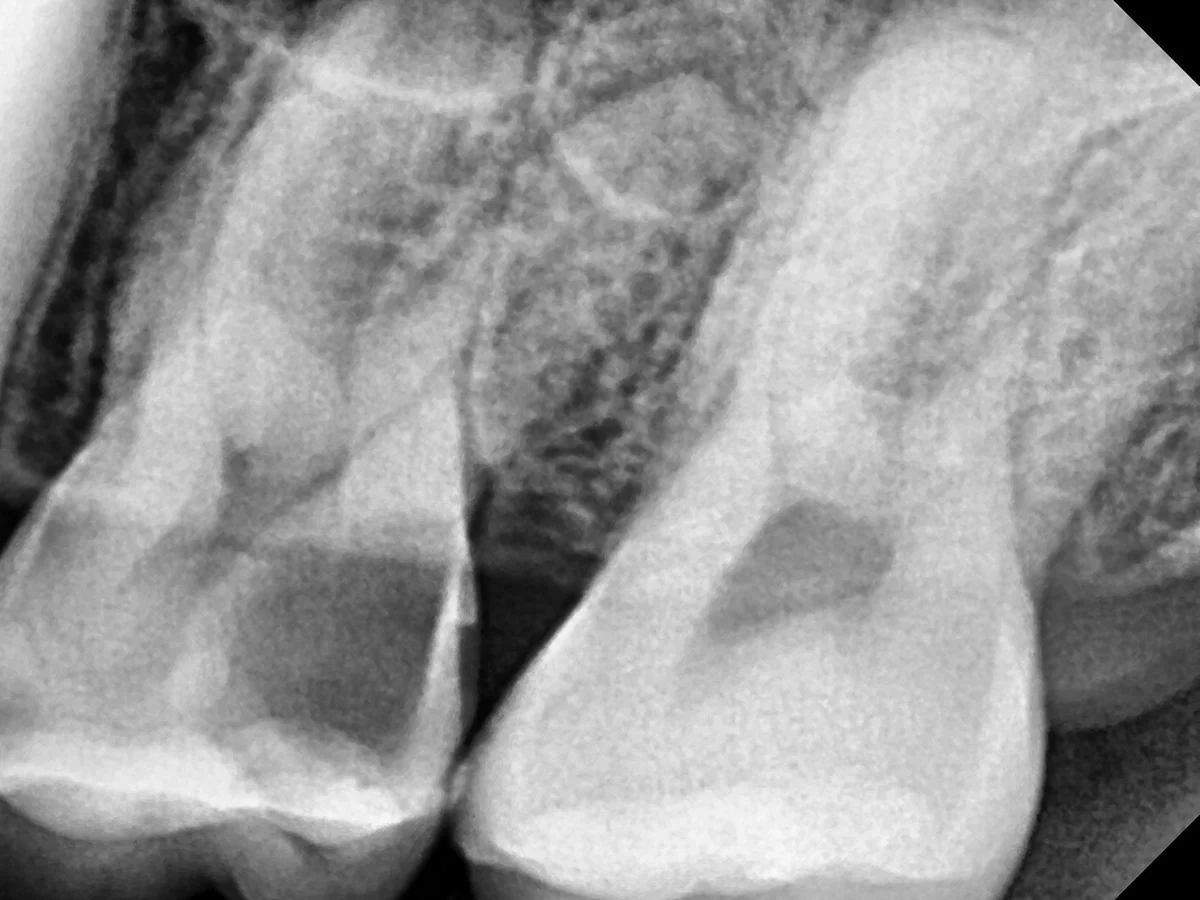 X-ray
 Nerve condition
 Core build-up and shaping
 Scan and temporary crown
 Fit check
 Regular checkup