Last reviewed Oct 29, 2026 · Dr. Ilseop Ahn (board-certified periodontist, specialist in integrated dentistry) · Scaling is done by a dental hygienist, and a board-certified periodontist checks your gum condition
At a glance
Good for
Anyone who needs tartar care (NHI covers once a year for ages 19 and over)
Treatment flow
Gum check → Tartar removal → Advice on areas that need gum treatment
Duration and limits
Usually about 30 minutes. Tartar deep under the gums needs separate gum treatment
Details
For healthy gums, we usually recommend scaling once every 6–12 months. If you have had gum disease or have implants, we recommend it every 3–6 months. For adults aged 19 and over enrolled in Korea's National Health Insurance (NHI), one scaling per calendar year (January–December) is covered, with a 30% out-of-pocket share. Scaling removes tartar from the tooth surface and just above and below the gum line. Tartar deep under the gums needs separate gum treatment. At Ceramic Dental Clinic, we also check your gum depth during scaling and tell you if any area needs gum treatment.
01°
We did not stop at removing tartar
Even with the same scaling, measuring gum depth can change what comes next. Here are two cases with real photos.
CASE01
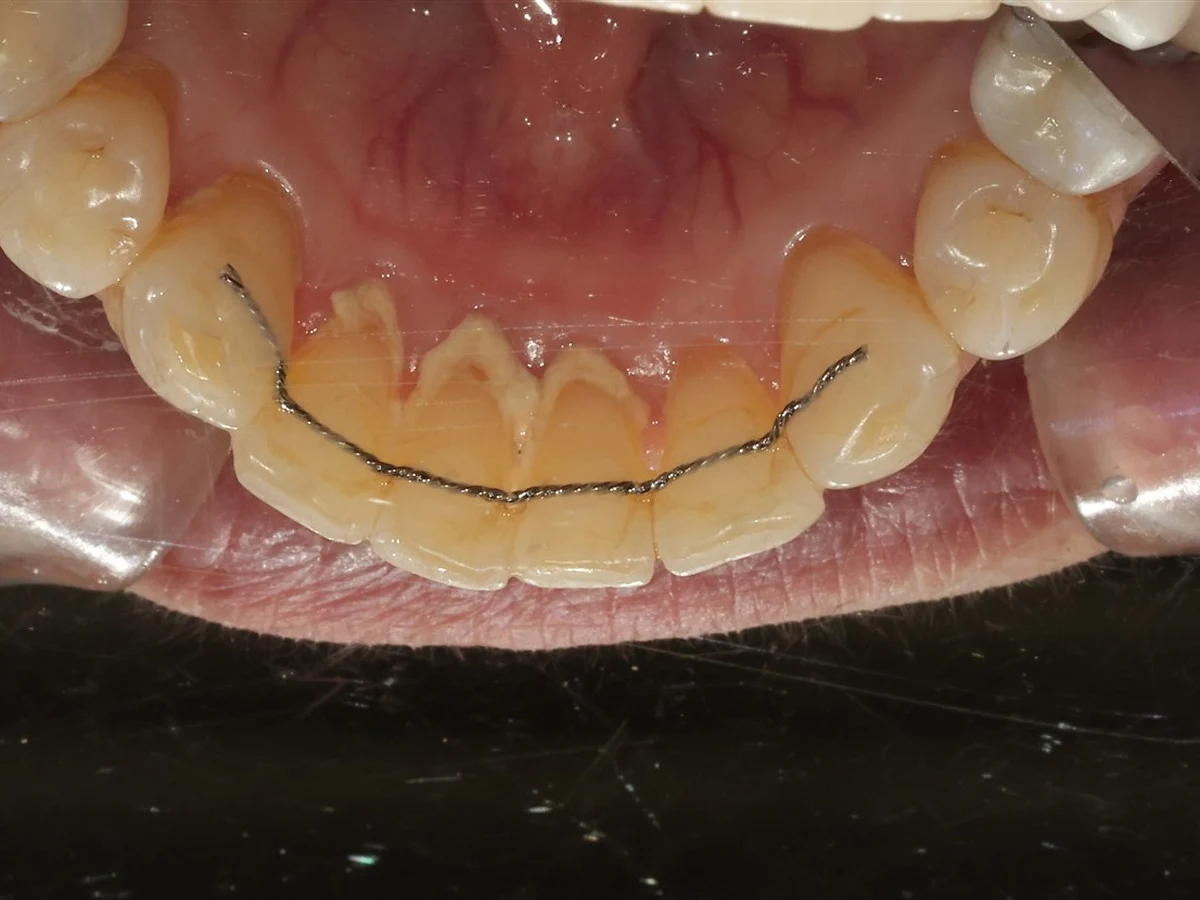
Thick tartar on the inner side of the lower front teeth
Scaling and surface polishing · Shallow gum depth, so a 1-year care cycle
Before scaling · April 2026
Before scaling. Thick yellow tartar had built up on the inner side of the lower front teeth, near the salivary glands. The thin wire behind the front teeth is a retainer bonded after orthodontic treatment.
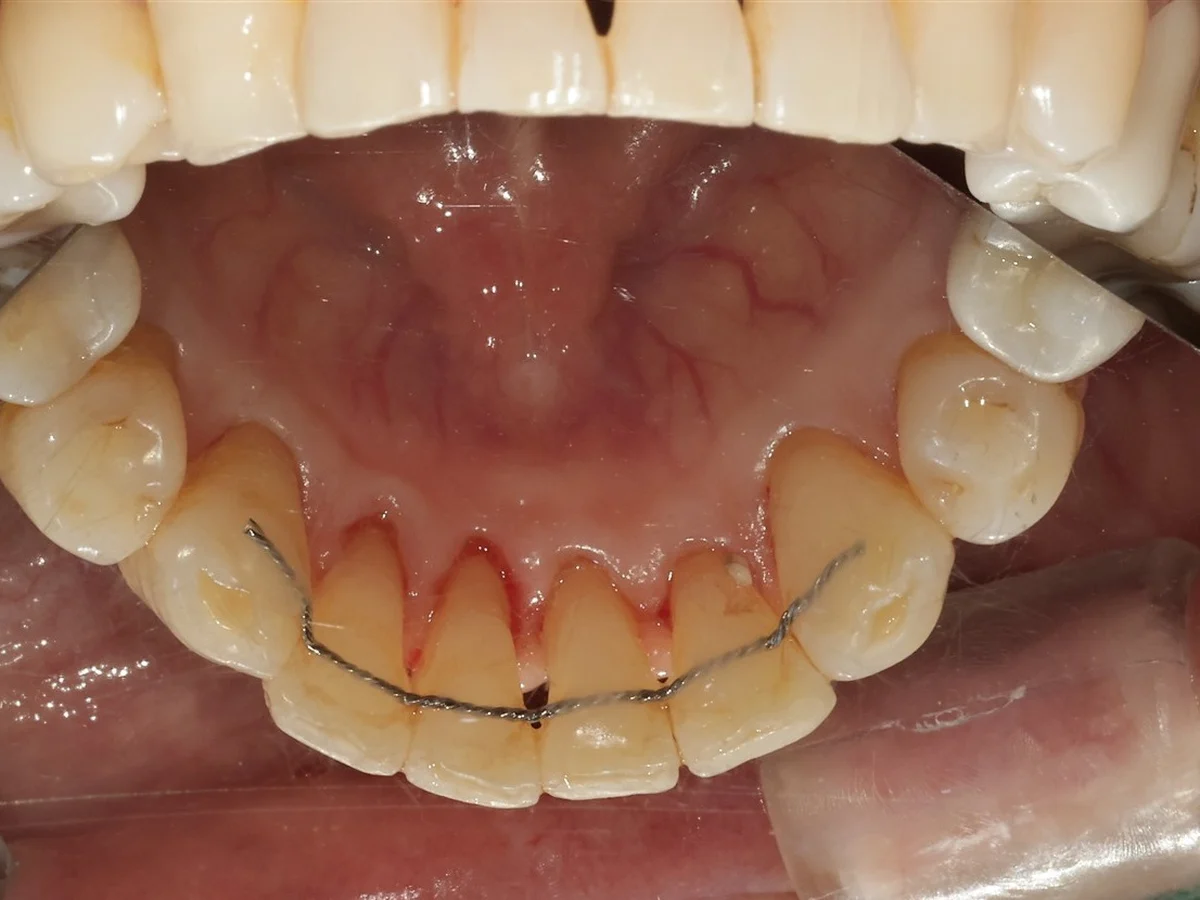
Right after scaling · Same day
Right after scaling. Removing the tartar revealed the gaps between the teeth. The redness at the gum line is bleeding right after tartar removal. It fades within a few days as the inflammation settles.
Condition
Mostly tartar above the gum line; no areas deep enough to need treatment under the gums
Chosen
Scaling and surface polishing, advice on brushing and interdental brushes
Not done
Treatment under the gums (no deep areas)
Next visit
In 6 months
CASE02
Periodontitis found while measuring gum depth during scaling
Scaling followed by gum treatment · Deep areas treated under the gums after local anesthesia
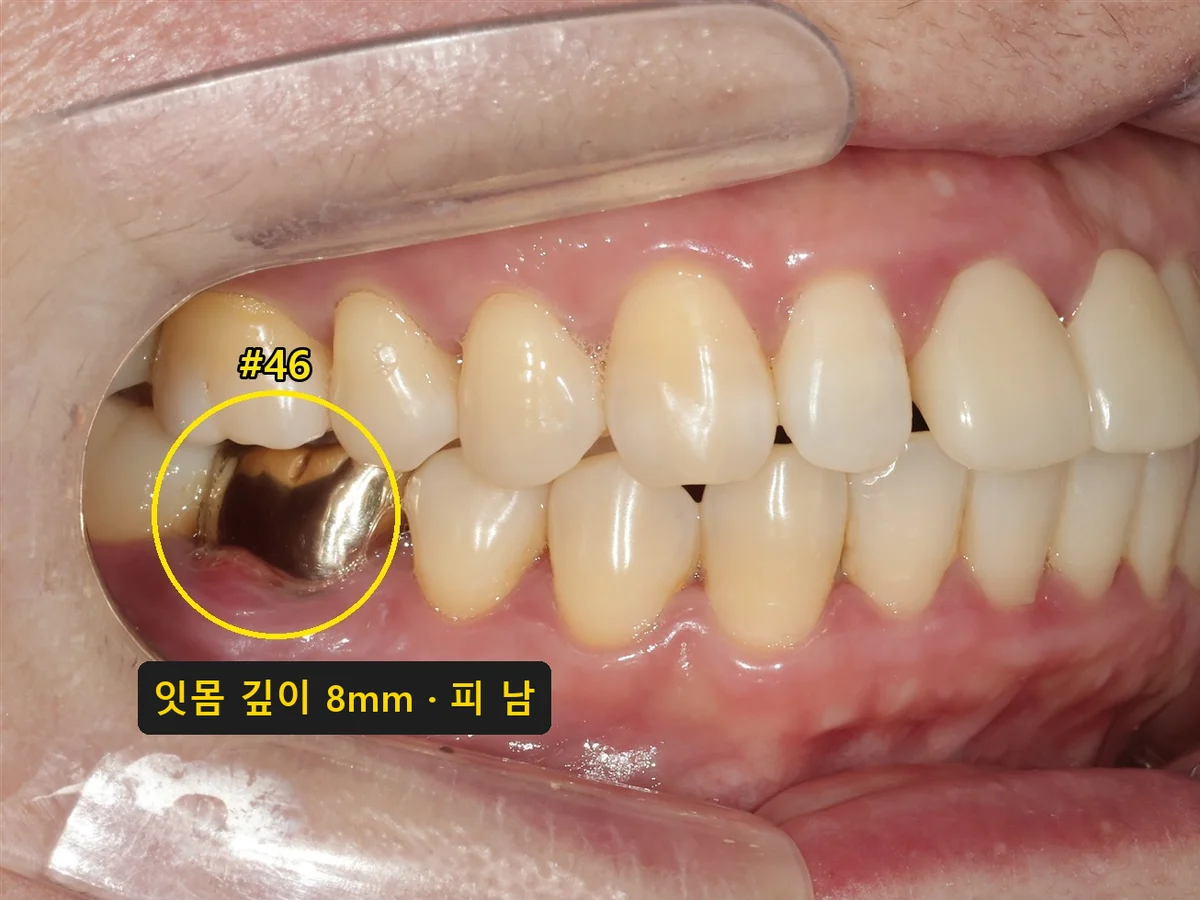
Gum depth measurement · July 2026
Gum depth measurement. The gums already looked badly inflamed. When measured, the gum depth between the two roots of the lower molar (#46) was 8mm, and it bled during measurement.
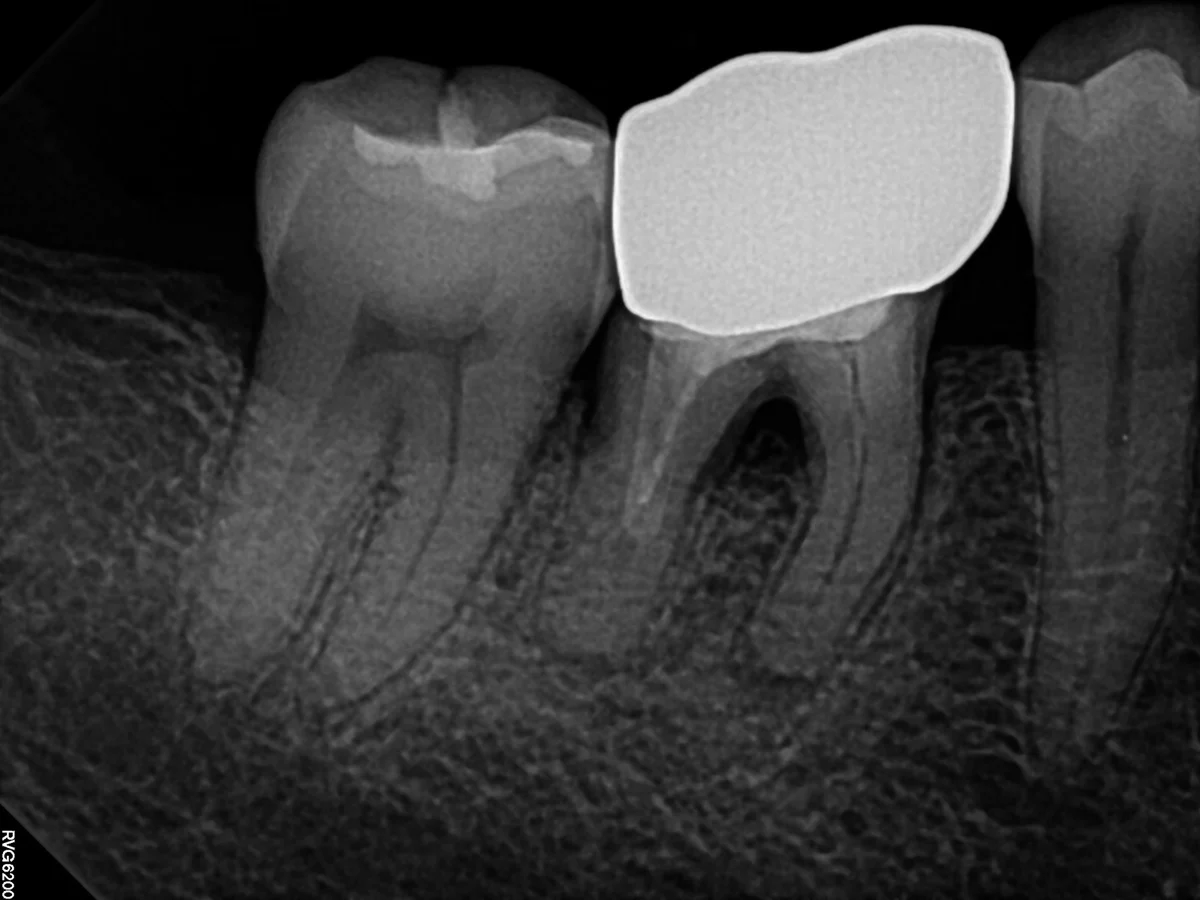
X-ray · Same day
X-ray check. The gum bone between the two roots of the deeply measured molar had been lost and looked dark and empty. We judged it as periodontitis and continued with gum treatment.
Condition
Bleeding when brushing, 8mm gum depth at a lower molar, tooth mobility
Chosen
Treatment under the gums after scaling, then re-evaluation
* Photos were taken under the same conditions and published with the patients' consent. Treatment results and side effects may vary from person to person.
02°
How many times a year does health insurance cover scaling?
Age 19 and overAge for NHI coverage
Once a yearOnce per calendar year (January–December)
30%Out-of-pocket share
A second scaling in the same year, or scaling under age 19, is not covered.
You can check whether you used it this year at a dental clinic or on the NHIS website or app.
Tartar removal done as part of gum disease treatment may be covered separately from this once-a-year limit.
03°
How often should you get it? It depends on your gums
01Healthy gums
If your gum depth is shallow and there is no bleeding, we usually recommend once every 6–12 months. If tartar builds up quickly for you, we lean toward 6 months.
02After gum disease treatment
After periodontitis treatment, we usually re-measure gum depth and do maintenance every 3–6 months.
03If you have implants
We check every 6 months after the final crown, or every 3 months if you have had gum disease, smoke, have diabetes, or have several implants, and clean them at the same time.
04During orthodontic treatment
Tartar and plaque build up easily around braces, so we check more often than usual during treatment, usually at intervals of 3 months or less.
We set the interval by gum depth and bleeding, not a fixed number. We will tell you your next interval at your scaling visit.
04°
How scaling works
Five steps, from the gum check to advice on your next visit. Each step is shown with real treatment photos.
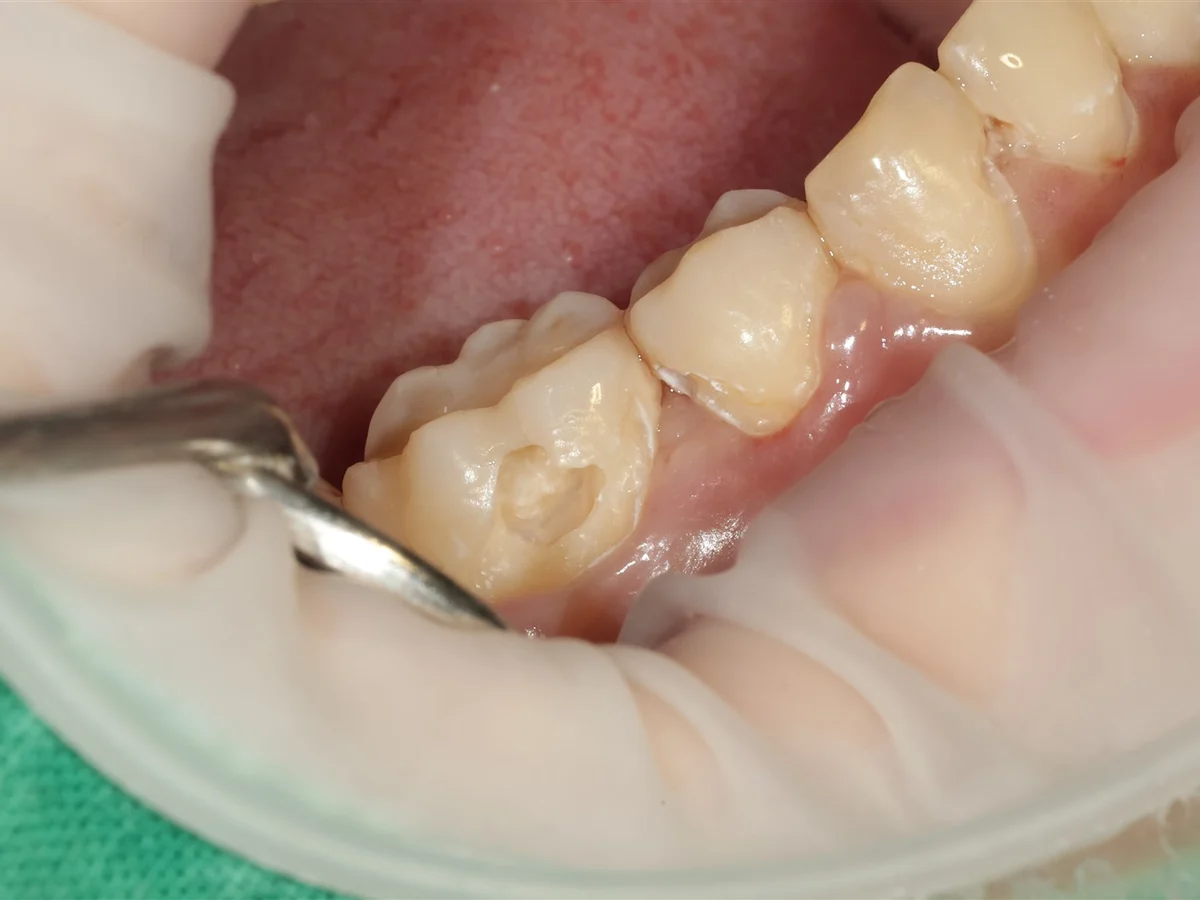
Gum check
Checking gum condition. Before removing tartar, we first look at gum depth and where the gums bleed.
STEP 01
We check your gums before removing tartar
We check where and how much tartar has built up, whether any areas have deep gum pockets, and where the gums bleed. If you have sensitive teeth, please tell us in advance.
Why we do thisWhere gum depth is over 5mm, scaling alone cannot reach all the tartar. Knowing this in advance lets us decide whether scaling is enough or gum treatment should follow.
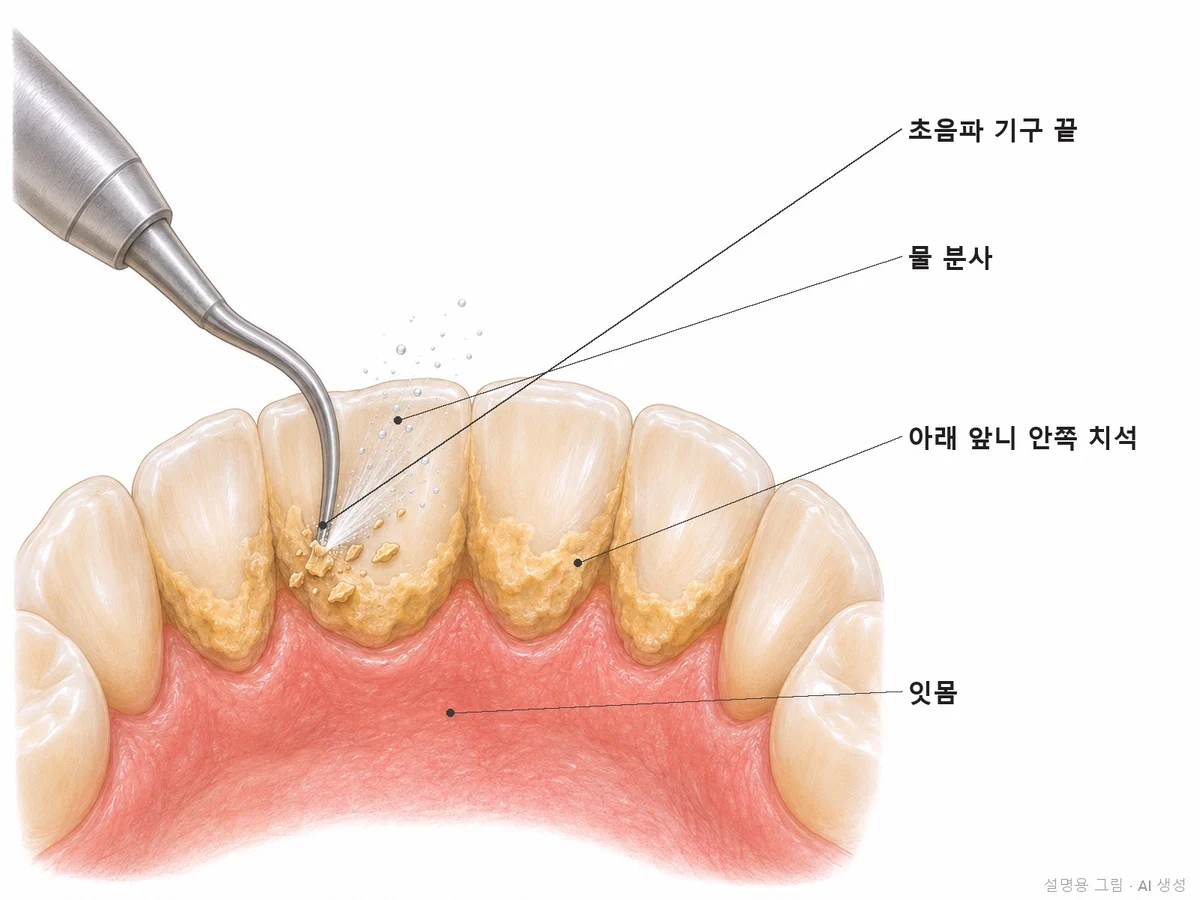
Tartar removal
Ultrasonic tartar removal. Fine vibration and water break up and remove tartar stuck to the teeth.
STEP 02
We remove tartar with an ultrasonic instrument
A finely vibrating ultrasonic instrument and water break up and remove tartar from the tooth surface and just under the gum line. The vibration noise and water may make your teeth feel sensitive.
Why we do thisTartar is a hard, stone-like deposit that a toothbrush cannot remove, so it must be taken off with instruments. Its rough surface lets plaque stick easily, so if it is left, gum inflammation continues.
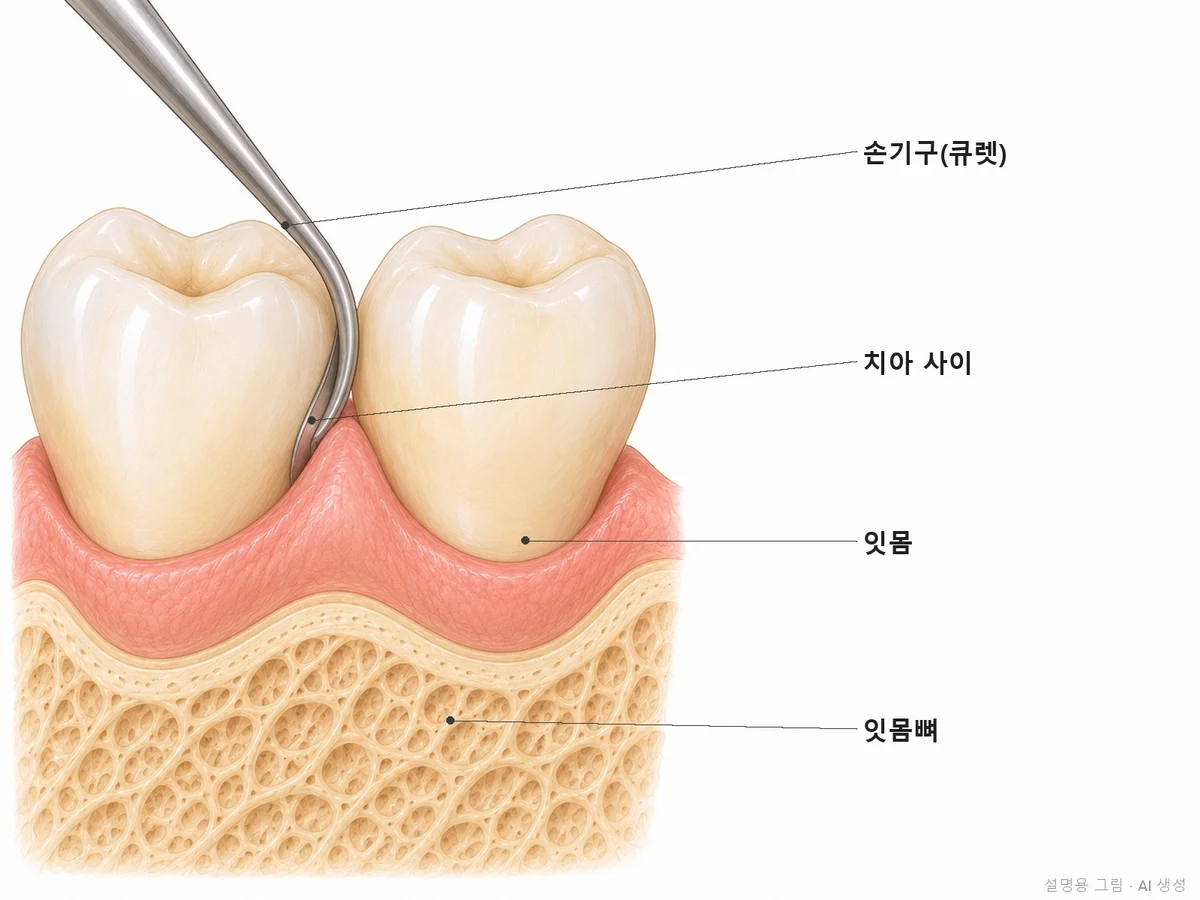
Checking for remaining tartar
Checking for remaining tartar. We recheck hard-to-see areas, such as between teeth and at the back, with a hand instrument.
STEP 03
We recheck between and behind the teeth
With a hand instrument, we go over areas where tartar tends to remain, such as between teeth, behind the molars, and the inner side of the lower front teeth, to make sure none is left.
Why we do thisTartar grows back from even one remaining piece. The harder an area is to see, the more carefully we check it again.
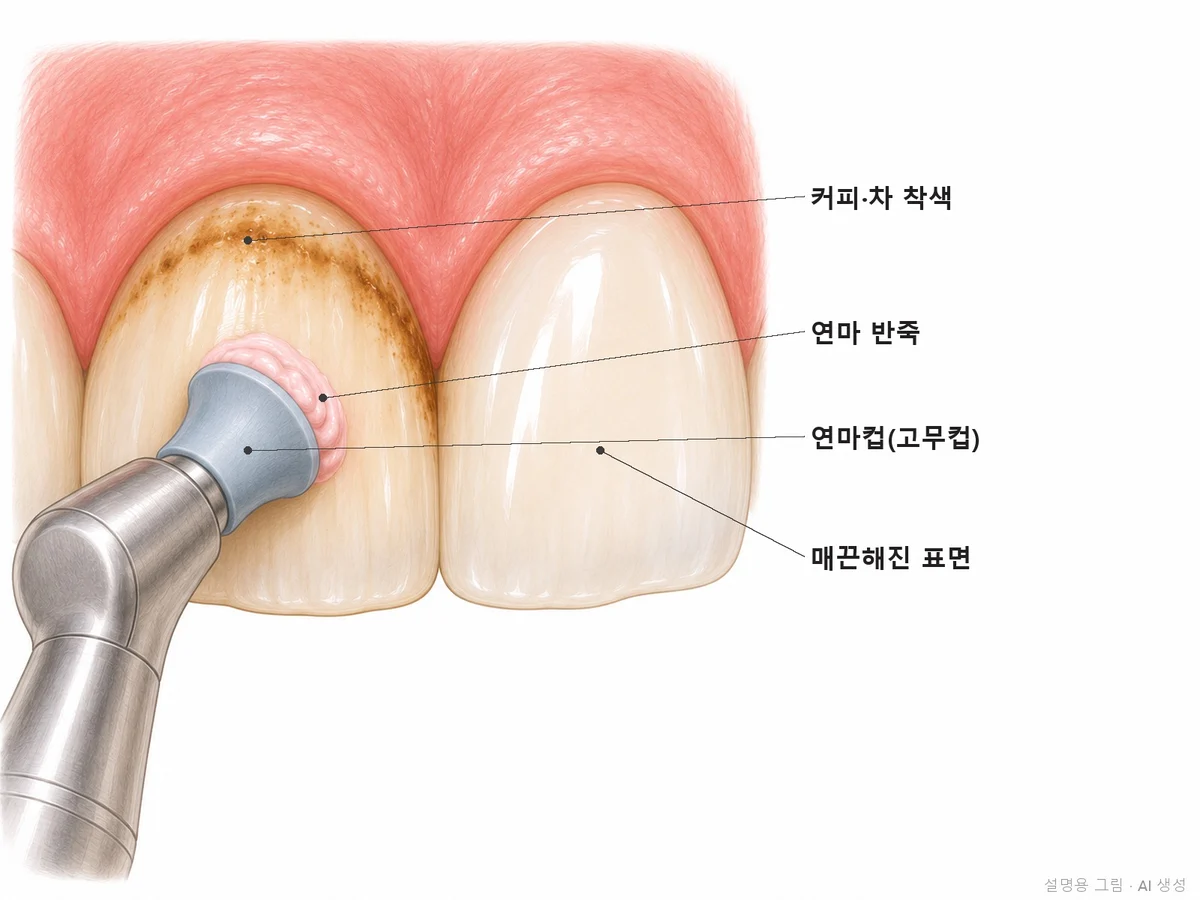
Surface polishing
Surface polishing. We reduce coffee and tea stains and smooth the tooth surface so plaque sticks less.
STEP 04
We polish the surface smooth
We polish only where stains remain or the surface is rough. Stains are reduced in part, but the natural color of the teeth does not change.
Why we do thisA rough surface lets plaque stick again quickly. A smooth surface can slow the buildup of new tartar.
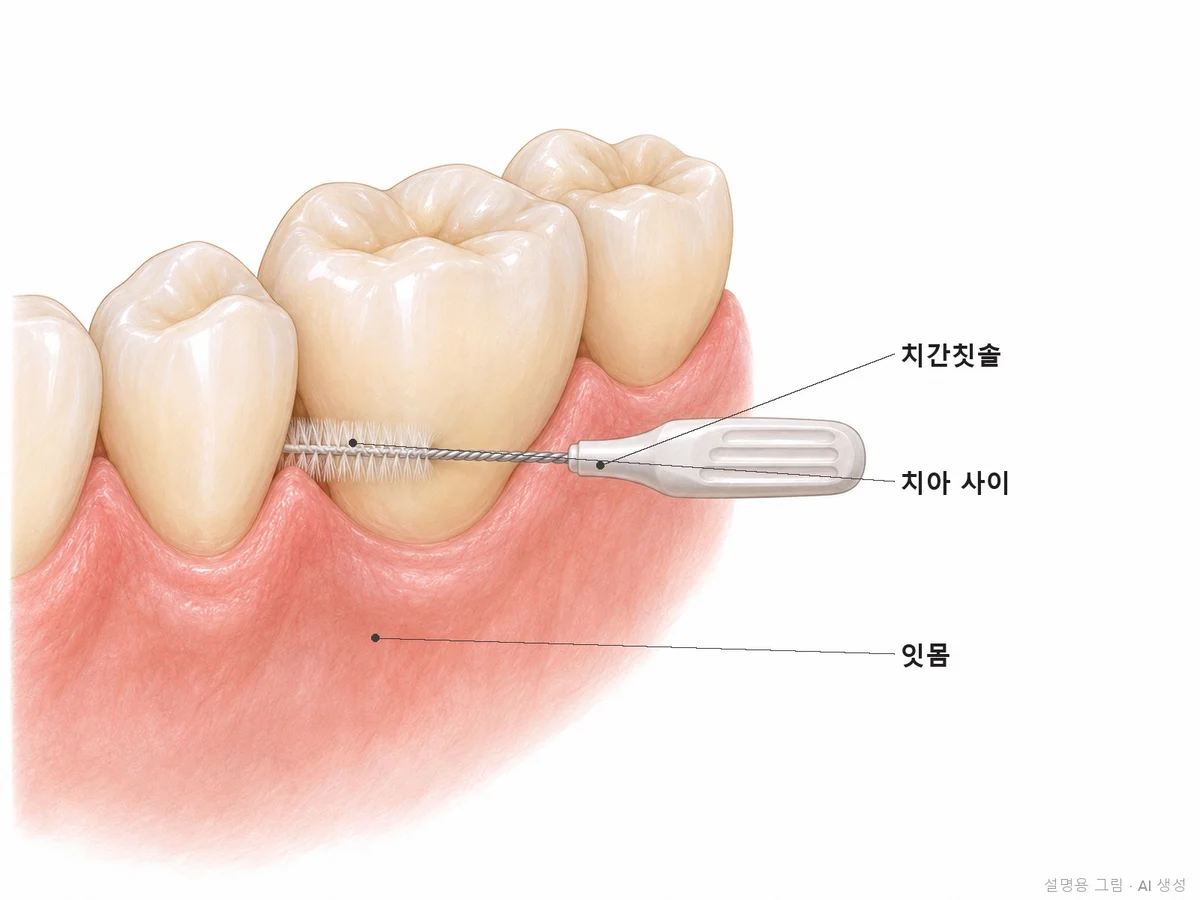
Interdental brush
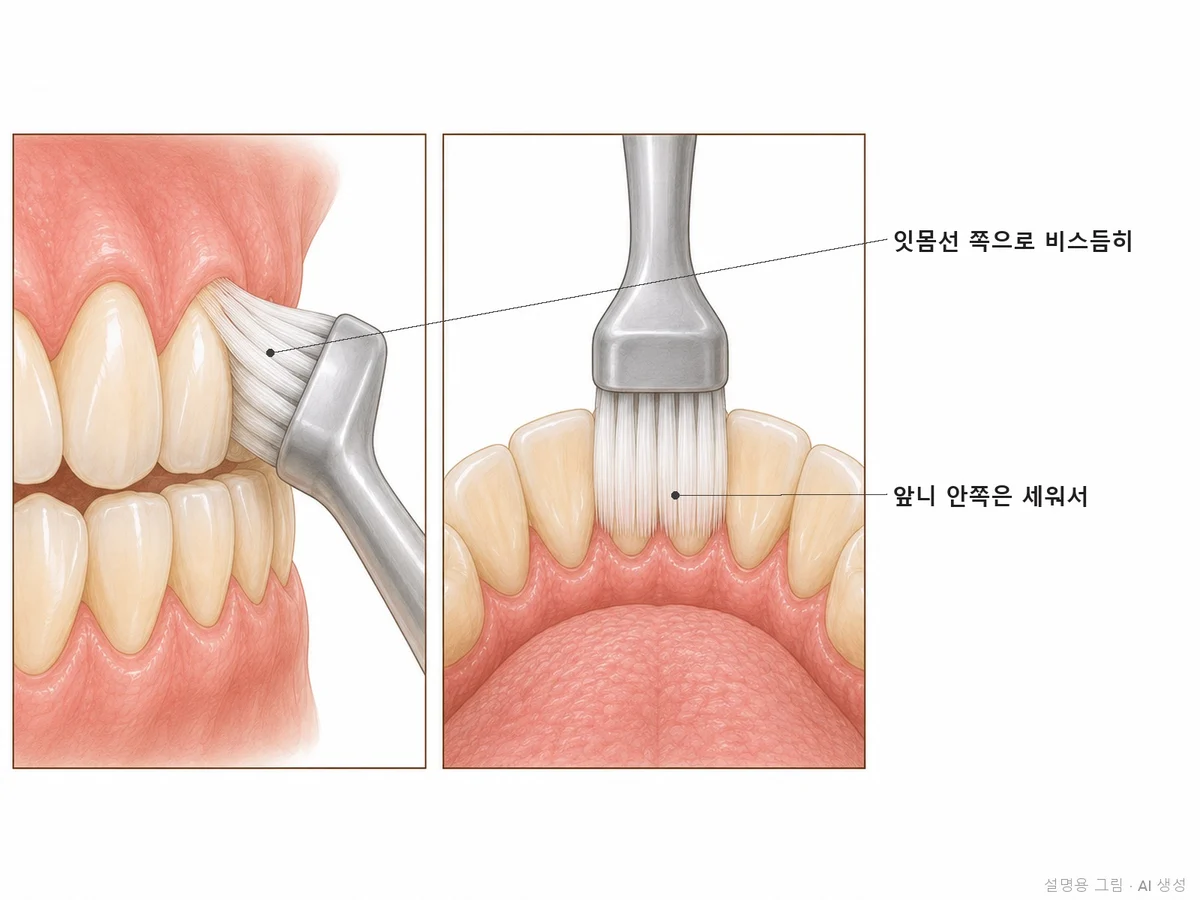
Brushing
Explanation. We show you where tartar built up most and teach you the brushing and interdental brush technique that suits those spots.
STEP 05
We explain your gum condition and your next interval
We explain today's gum depth, where tartar built up most, and the right brushing method, then set your next scaling or check-up based on your gum condition.
Why we do thisTartar builds up again in the same spots. Knowing which spots you miss helps you keep your gums healthy until your next scaling.
* Clinical photos were published with the patients' consent. Side effects such as temporary pain or discomfort may occur depending on the person.
Time needed: usually about 30 minutes
05°
How is scaling different from gum treatment?
Scaling
Gum treatment (treatment under the gums)
Depth reached
Tooth surface and just above and below the gum line
For these people, other treatment comes first or is also needed
Scaling suits you
You have not had scaling for more than a year
You can see tartar, or your gums bleed when you brush
You have implants and need regular check-ups
Other treatment is also needed
You have tartar deep under the gums: gum treatment is also needed.
Tooth color concerns you: scaling does not change the natural color of teeth, so we will tell you about teeth whitening.
You do not need it right now
You had scaling recently and have no tartar or bleeding: keep up brushing and interdental brushing until your set interval.
07°
Common misconceptions about scaling
Scaling wears down your teeth · It removes tartar and does not grind the teeth.
After scaling, my teeth became sensitive and gaps appeared · This is because the gums and roots that tartar was covering are now exposed. Sensitivity usually eases within a few days to a few weeks.
If your gums bleed, you should not get scaling · Bleeding is a sign of gum inflammation, and it decreases only when the tartar is removed.
08°
Self-check
If any of these apply, we will also check your gum depth during scaling.
09°
Side effects and limits
Please read
· Your teeth may feel sensitive or your gums may bleed for a while.
· Gaps between teeth that tartar was hiding may become visible.
· Tartar deep under the gums cannot be fully removed by scaling alone.
· Stains are only partly reduced. This is different from whitening, which changes the natural color of teeth.
FAQ
FAQ
Does scaling wear down or weaken my teeth?
Scaling removes tartar stuck to your teeth. It does not grind the teeth. Once the tartar is gone, roots or gaps that were hidden can show, so your teeth may feel worn.
How many times a year does Korean health insurance cover scaling?
For people aged 19 and over enrolled in Korea's National Health Insurance, scaling is covered once per calendar year (January–December), with a 30% out-of-pocket share. A second scaling in the same year is not covered.
We can look it up for you at the clinic. You can also check on the National Health Insurance Service (NHIS) website or app.
Does scaling hurt?
Scaling is usually done without anesthesia. Areas with gum inflammation or exposed roots may sting or feel sensitive. If the sensitivity is strong, we discuss options such as topical anesthesia.
My gums bled a lot during scaling. Is that okay?
Heavy bleeding during scaling can be a sign of gum inflammation. We measure your gum depth to see whether you need gum treatment.
Can I get scaling while pregnant?
Yes, you can get scaling during pregnancy. We usually recommend the second trimester (months 4–6), when you tend to feel more comfortable. Hormonal changes during pregnancy make the gums swell and bleed more easily, so care matters even more.
Will scaling make my teeth whiter?
Scaling can reduce some surface stains, but it does not change the natural color of your teeth. If tooth color concerns you, we will tell you about teeth whitening.
How long does sensitivity last after scaling?
Sensitivity after scaling happens because the root area that tartar was covering is now exposed. It usually eases within a few days to a few weeks. If it lasts longer, we treat the sensitivity.
Evidence and references
National Health Insurance Service (NHIS) coverage criteria for tartar removal (scaling): once a year for ages 19 and over, 30% out-of-pocket share. As of October 2026; to be rechecked against the latest notice before publication
FDI World Dental Federation consensus (2019): recommends implant check-up intervals of 6 months or less
Questions from international patients who live in Korea.
Can I use Korean National Health Insurance?
If you are enrolled in Korea's National Health Insurance, insured treatments are billed under the same insurance rules as for other enrollees. Whether a treatment is covered depends on the treatment and the insurance rules, and we tell you before treatment starts. If you are not enrolled, you pay the full fee.
Can I be seen in English?
Yes. The doctor in charge of each field consults with you directly in English, so you do not need an interpreter.
I am in Korea only for a short trip. Can I have this treatment?
It depends on how many visits the treatment needs. Tell us your travel dates when you contact us, and we will tell you after the examination whether the schedule is realistic.
Results, the number of visits and schedules vary from person to person. More questions: Visiting from abroad.


 Before scaling · April 2026
 Right after scaling · Same day
 Gum depth measurement · July 2026
 X-ray · Same day
 Gum check
 Tartar removal
 Checking for remaining tartar
 Surface polishing
 Interdental brush
 Brushing