
COLUMN · Orthodontics
Is a Snaggletooth Bad?
When You Can Leave It, and When Braces Are Worth It
Not every snaggletooth needs to be fixed. If you can brush around it easily, your gums are healthy and the canine is not stuck in the bone, it is reasonable to leave it and keep an eye on it. Braces are worth considering when plaque keeps building up where the teeth overlap, or when an X-ray shows the canine lying in the bone against the root of a neighboring tooth. If chewing sideways feels uncomfortable or certain teeth are wearing down, it is worth having your bite checked.
I am Dr. Sunmin Kim, a board-certified orthodontist at Ceramic Dental Clinic in Gangnam, Seoul. Before patients ask "Do I need an extraction?", most of them ask something simpler: "Do I actually need to fix this?" Many people like their snaggletooth, and it rarely hurts. This article answers that first question. How we treat a snaggletooth step by step, with our own cases, is on our snaggletooth braces page.
What is a snaggletooth, and why is it usually the canine?
A snaggletooth is usually an upper canine (eye tooth) that has come in higher than the other teeth and further toward the lip. The upper canine is the last of the front teeth to come in, usually at around 11 to 13 years of age. By then the front teeth and the premolars have already taken their places. If the teeth are large for the jaw, or a baby tooth was lost early and the back teeth drifted forward, the gap left for the canine is too narrow. When there is not enough room for the canine, or its path of eruption is off, it can come in outside the row, toward the lip.
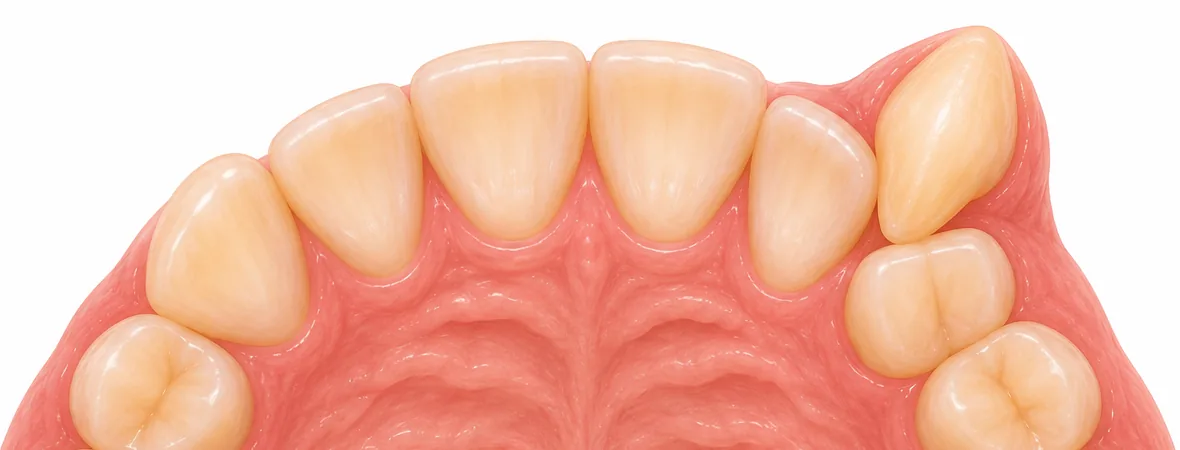
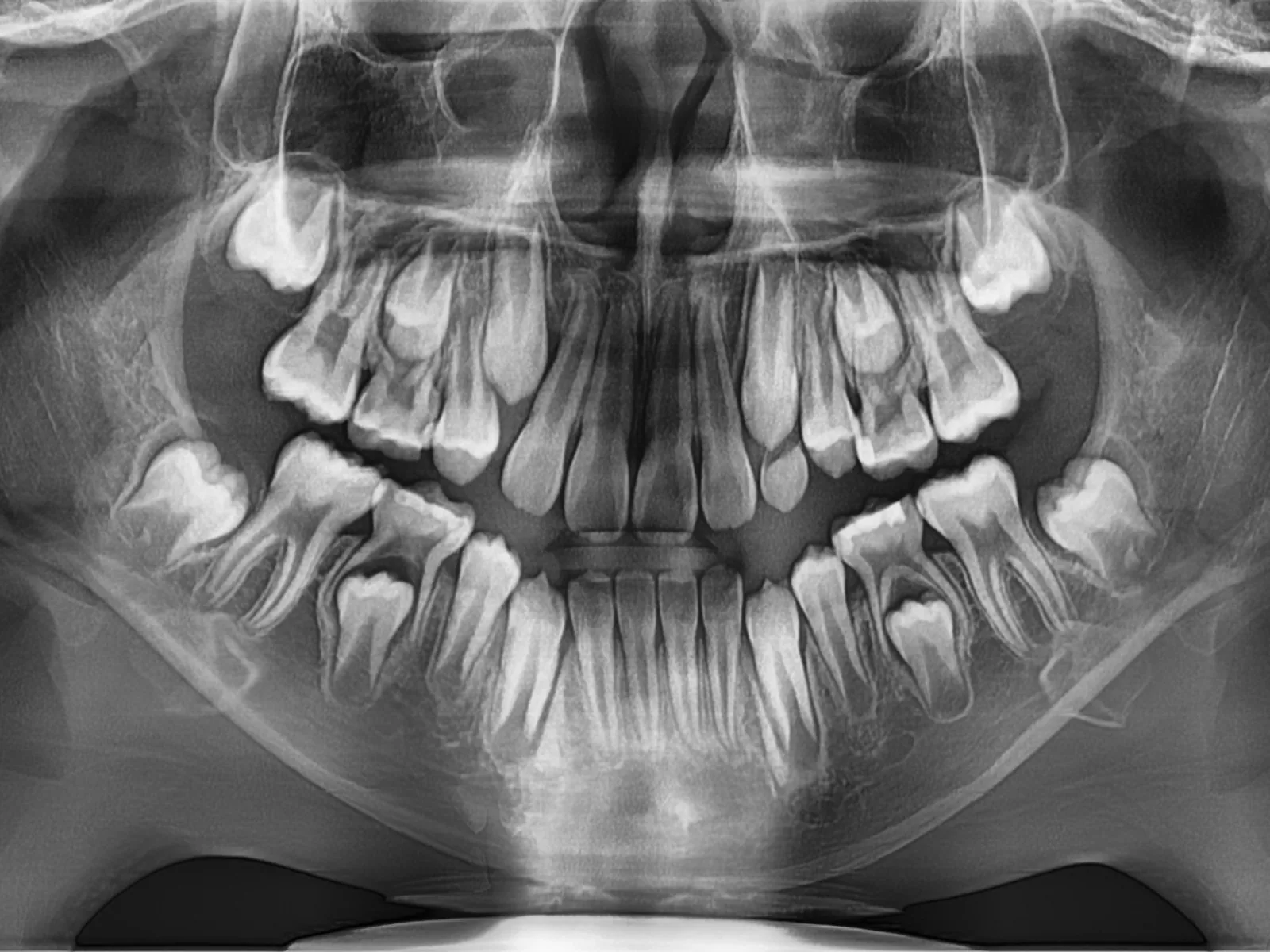
So a snaggletooth is mostly a space problem rather than a canine problem. Even when only one tooth stands out, the front teeth are often slightly crowded and a few millimeters short of space.
Is a snaggletooth bad for your teeth if you leave it?
The canine may stop guiding your bite
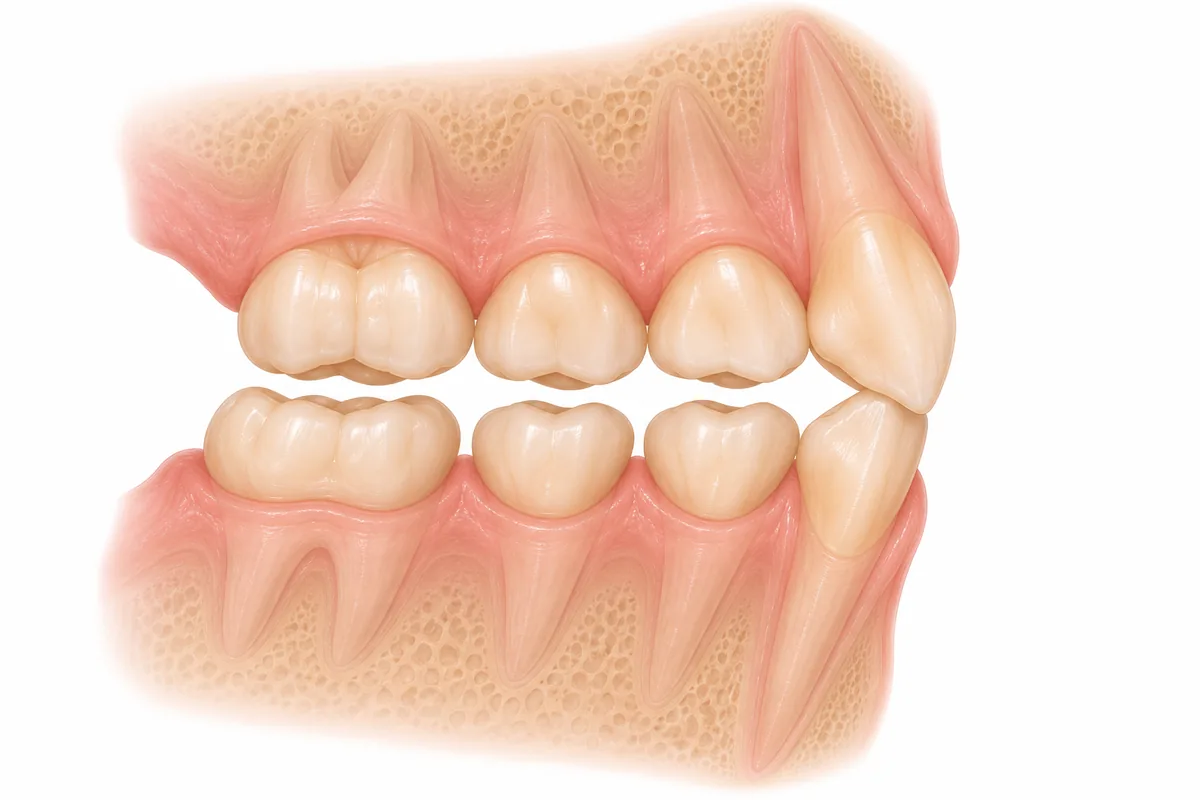
A canine in the right place does a specific job. When you slide your jaw to the side, the upper and lower canines touch first and glide against each other, lifting the back teeth slightly apart. The canine has the longest root in the mouth, so it can take that load. When a snaggletooth sits high or toward the lip, that contact is missing, and premolars or front teeth take the sideways load instead. How much this matters differs from person to person. If chewing sideways feels uncomfortable or certain teeth are wearing down, it is worth having your bite checked. We do not recommend braces just because the canine is not guiding the bite.
Overlapping teeth are harder to clean
The surfaces hidden behind a snaggletooth and where it overlaps the lateral incisor are hard for toothbrush bristles to reach, so plaque tends to stay there. If the gum in that spot keeps getting puffy or bleeding, brushing alone may not be enough. The research needs careful reading, though. A systematic review found that people with more severe malocclusion tended to have more severe gum disease, but the studies were weak, an association is not proof of cause, and the author concluded the evidence does not support orthodontic treatment just to prevent future gum problems, except for specific unusual malocclusions (Bollen, 2008). A 2026 meta-analysis in people under 18 found that crowding or lack of space may be linked to higher odds of gingivitis, with the certainty of evidence rated very low (Szyszka-Sommerfeld et al., 2026).
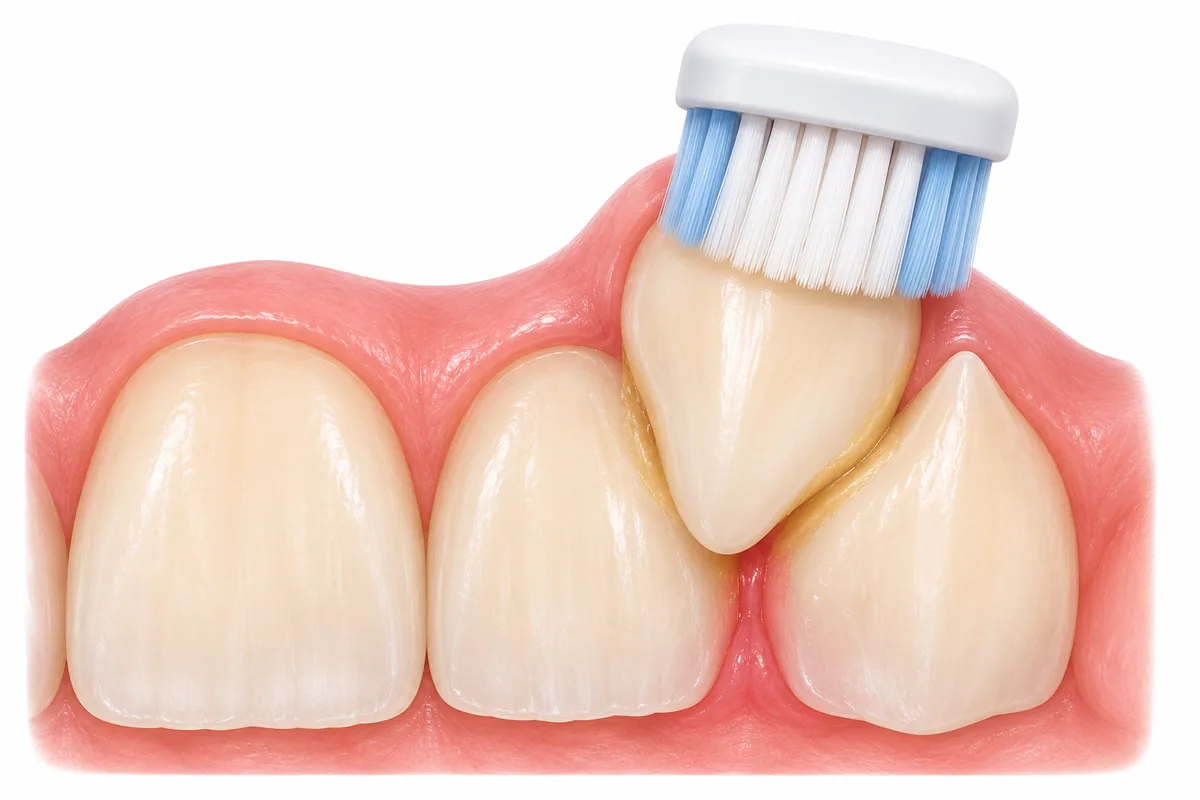
My own view: a snaggletooth does not automatically lead to gum disease. But if the gum around it keeps getting inflamed, straightening the teeth so a brush can reach every surface makes long-term care easier.
A canine stuck in the bone can affect the next tooth's root
If no snaggletooth is visible but a baby canine is still in place in adulthood, the adult canine may be stuck in the bone (impacted). An impacted canine lying toward the root of the lateral incisor can press on that root, so we check its position with a 3D CT scan first. In this situation I recommend getting a diagnosis soon rather than waiting.
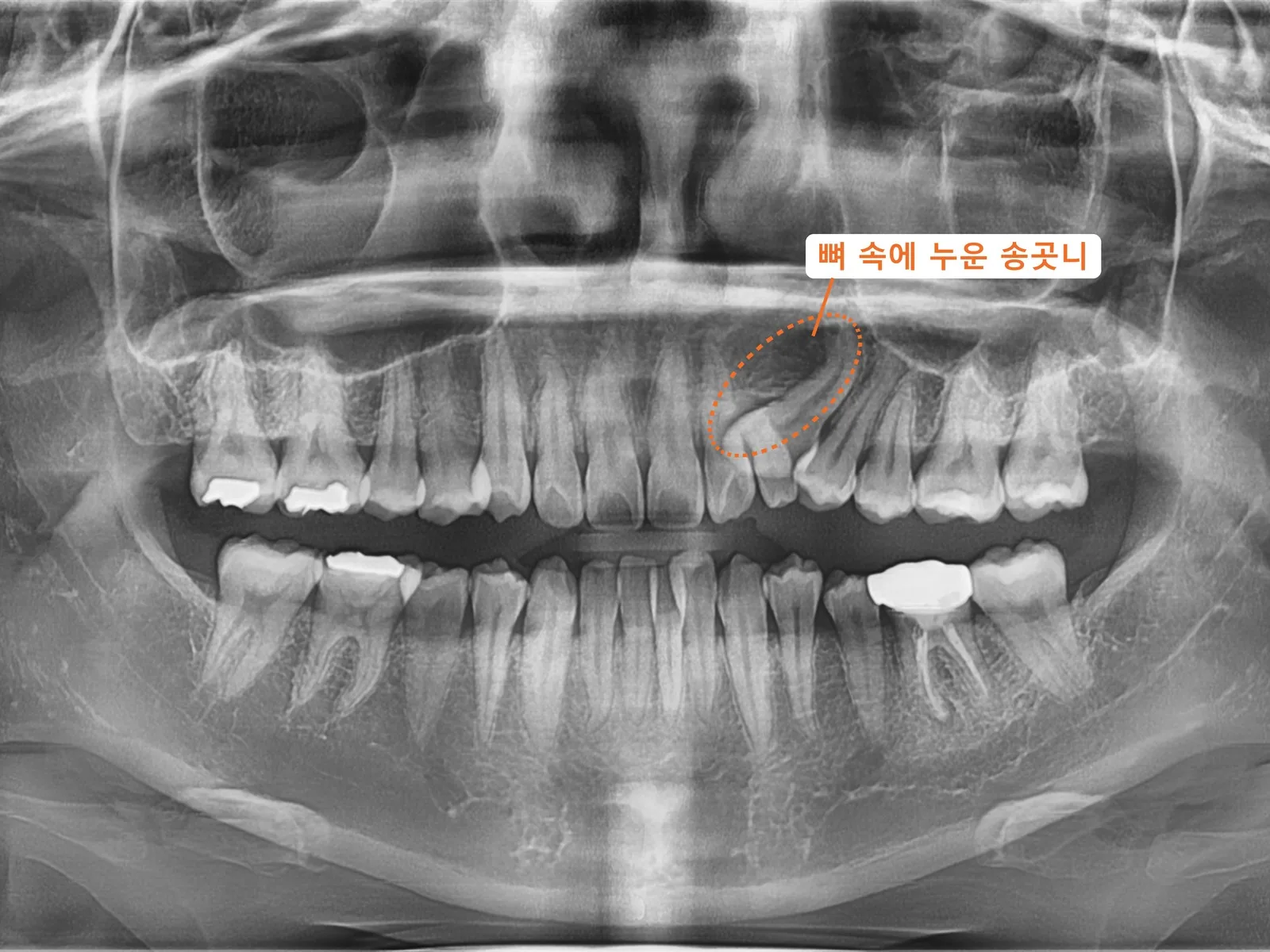
Before · Jun 2021
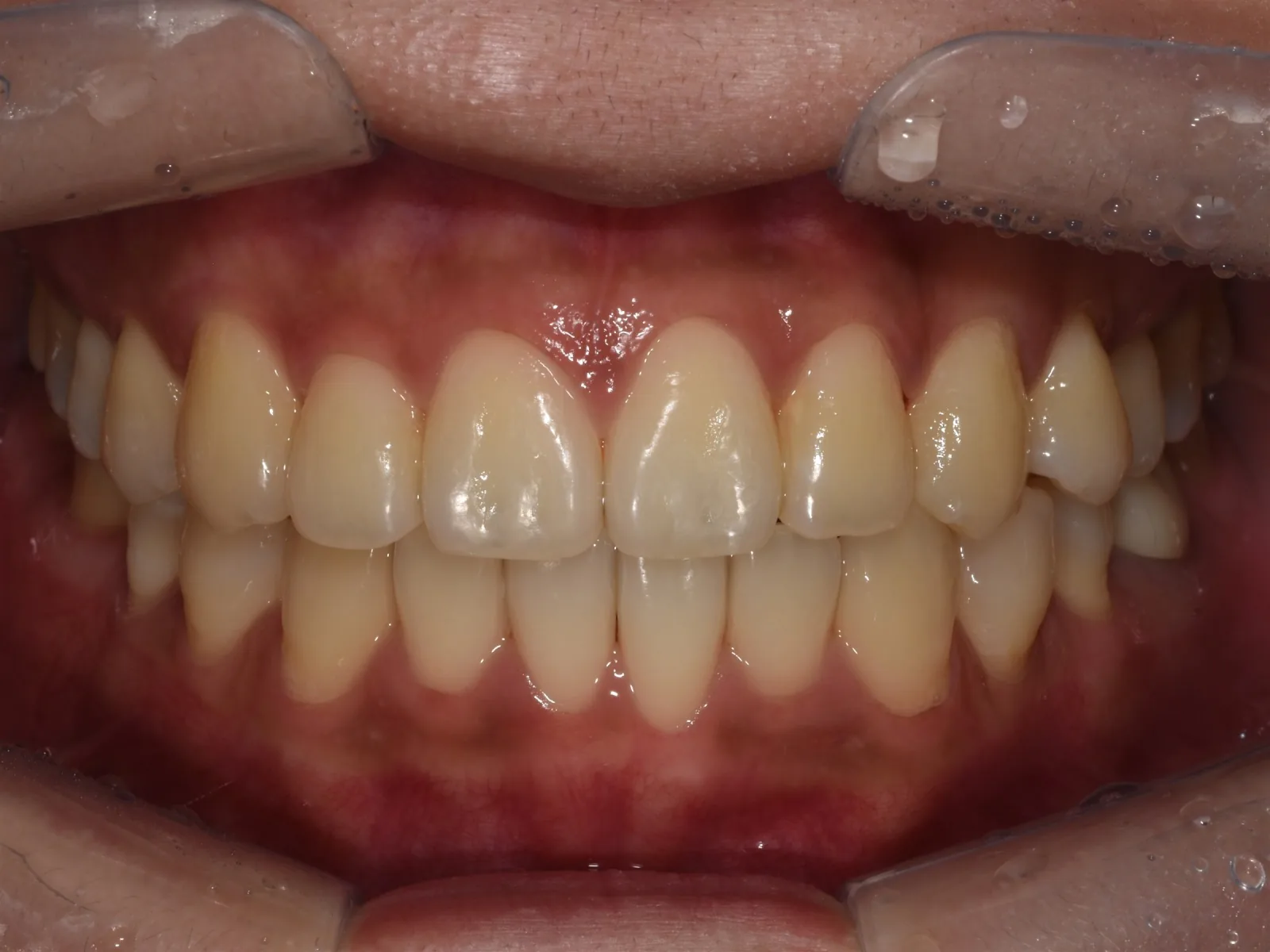
After · Oct 2024
The canine was lying at an angle in the bone and the baby canine was still in place. We exposed the canine, bonded a small hook to it and brought it down with braces over several months. The whole treatment took about 3 years and 4 months. The X-ray is included to explain the diagnosis.Possible side effects · gum recession, relapse, sensitivity after interproximal reduction, black triangles, root resorption. Published with the patient's consent; results and treatment time vary from person to person. Snaggletooth braces
Should I fix my snaggletooth? A simple guide
This is roughly how I divide cases when I tell a patient "you can leave it for now" or "I would recommend braces". The final decision always depends on the exam.
| Usually fine to leave and monitor | Braces are worth considering |
|---|---|
| Mild snaggletooth that is easy to brush | The gum where teeth overlap often swells or bleeds |
| Healthy gums, no recession over the canine | The gum over the canine is thin or receding |
| No discomfort when chewing sideways, no tooth wear | Grinding, with worn or sensitive premolars or front teeth |
| You like it or are not bothered by it | The canine is stuck in the bone, or a baby canine is still there |
| Its position has not changed for years | Your mouth also looks protruded and you want that changed |
If you decide to leave it, a check-up about once a year with a photo of the area is enough to see whether it is moving or the gum is receding. Children are different: before the canine comes in, removing a baby tooth at the right time can sometimes reduce the problem, so timing matters.
Can braces fix a snaggletooth, and will my face change?
Yes, braces or clear aligners can bring a snaggletooth down into line once there is room for it. What changes on the face is mainly the corner of the smile: if your upper lip used to catch on the canine and lift on one side, that evens out. How much the whole mouth area changes depends on where the space comes from.
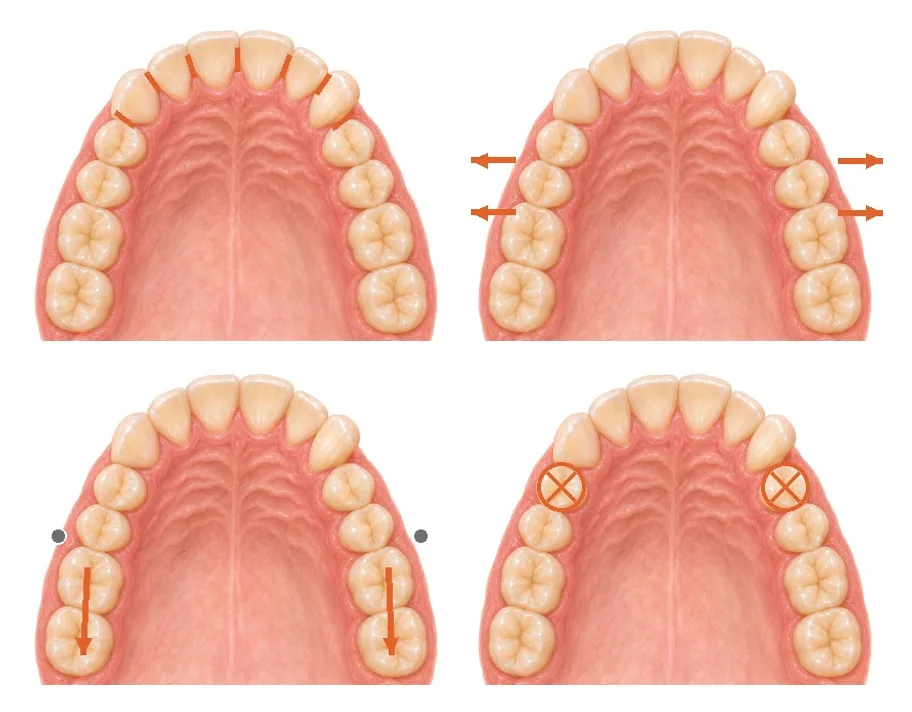
- Without extraction (reshaping between teeth or widening the arch): the lips change little, or the front teeth may come forward slightly.
- With premolar extraction, using the leftover space to move the front teeth back: if your mouth looked protruded, it can move back as well.
Which one fits depends on how many millimeters of space are missing and how far forward the front teeth already are. We almost always keep the canine itself, because it has the longest root and guides your bite; when an extraction is needed, it is usually a premolar behind it.
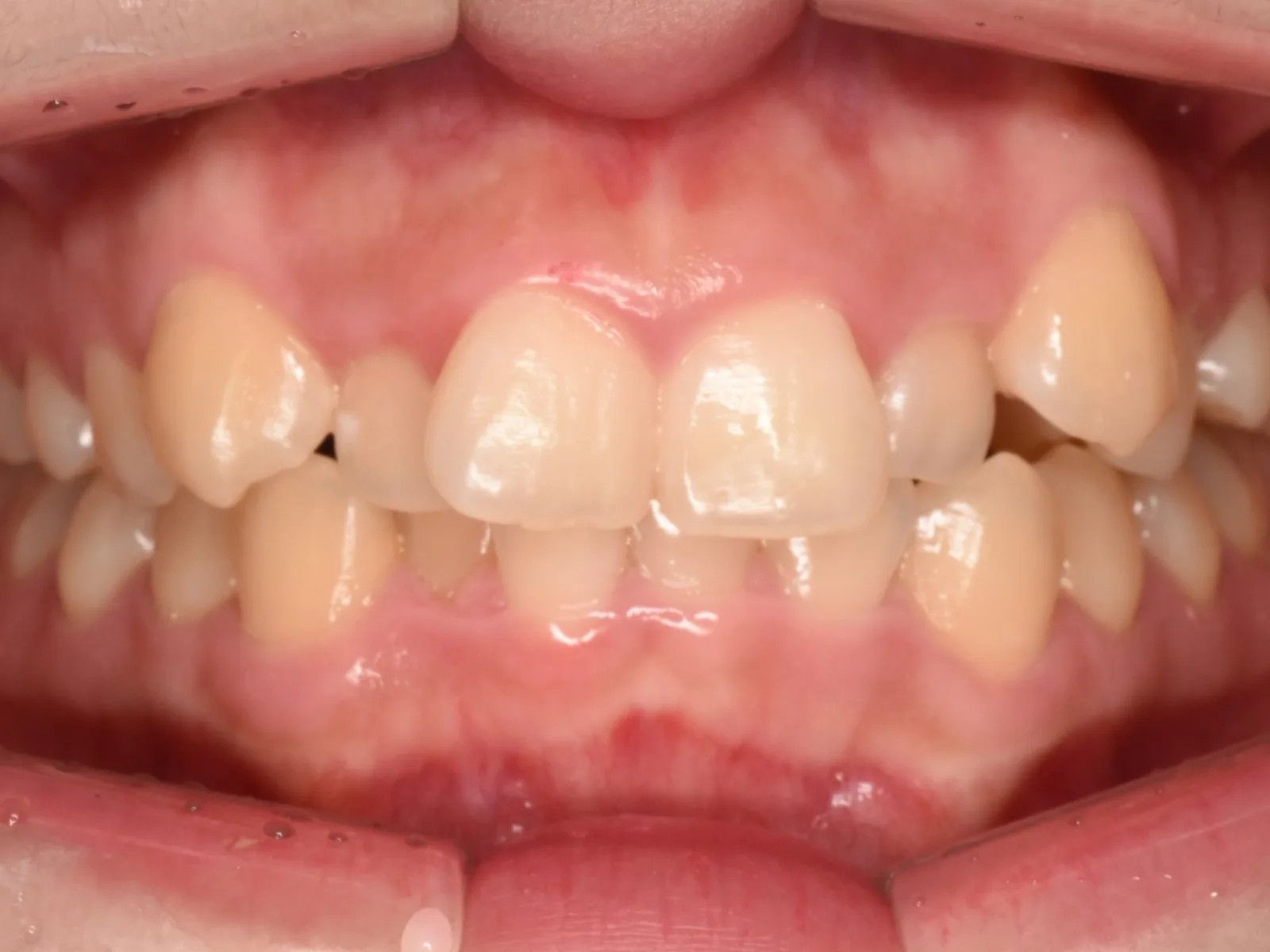
Before · Mar 2023
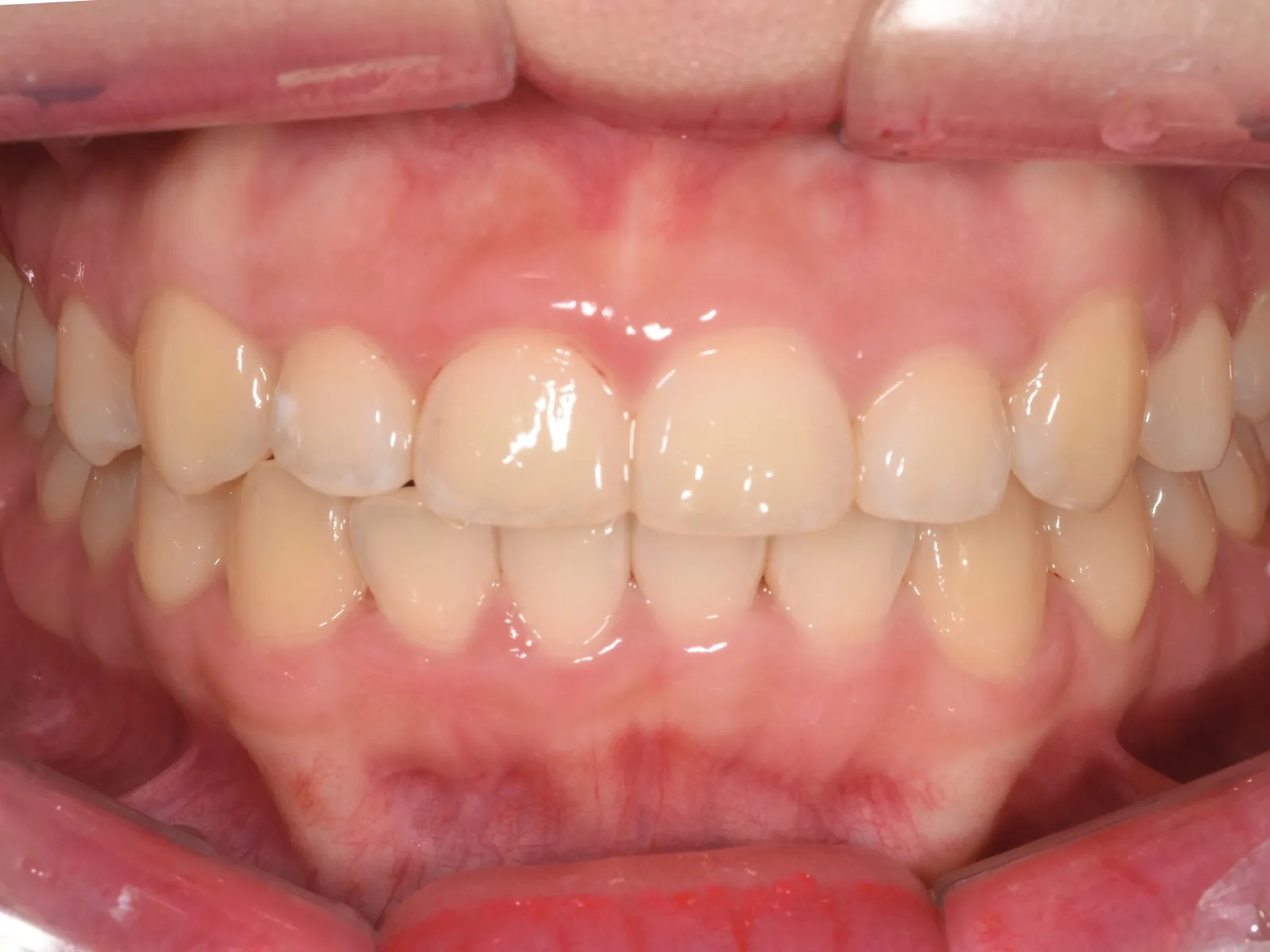
After · Oct 2024
About 9 mm of space was missing, but the lips were already set back, so instead of extraction we made space by reshaping a little enamel between teeth. Treatment took about 1 year and 7 months.Possible side effects · gum recession, relapse, sensitivity after interproximal reduction, black triangles, root resorption. Published with the patient's consent; results and treatment time vary from person to person. Snaggletooth braces
What do people regret after snaggletooth braces?
Regret usually comes from a change nobody mentioned beforehand. These are the four things I explain at the consultation.
- The look the snaggletooth gave you will be gone. If you see it as part of your charm, think about that first.
- If your lips are already set back, extraction can make the mouth area look flat. That is why we decide on extraction from both the space and the lip profile.
- If the gum over the canine is thin, it can recede a little as the tooth comes down, and small dark triangles can appear between front teeth that used to overlap.
- Without retainers, rotated teeth move back. The first year after braces matters most.
We open the space first and only then pull the canine down. Pulling a snaggletooth hard before there is room pushes the neighboring teeth and tips the front teeth forward. At Tokyo Medical and Dental University I measured how different ways of tying the wire change the force and rotation on crowded, rotated upper front teeth (Kim et al., 2022), which is why I start with light forces and move the teeth in order.
How long does it take, and can I do it while living abroad?
Snaggletooth braces without extraction usually take 1½ to 2 years, and with extraction 2 to 2½ years. Bringing down an impacted canine takes longer. Mild crowding limited to the front teeth can sometimes be finished with partial braces in 4 to 6 months.
- Fixed braces: the first two adjustment visits are 2 weeks apart, then usually once a month.
- Invisalign: usually one visit every 2 to 3 months, and we give you several stages of aligners in advance.
- The fixed retainer is bonded on the day the braces come off; the clear retainer is made from a scan taken that day and can be sent to you abroad.
- If a bracket comes off or a retainer breaks after you fly home, send us a photo on WhatsApp first. Some repairs need a visit.
More on planning visits from overseas is in Can I get braces in Seoul if I live abroad? and our FAQ for international patients.
The orthodontic fee depends on the appliance (ceramic braces, Invisalign, combination, lingual or partial braces). The diagnosis fee is included once you start, and extractions (except wisdom teeth), mini-screws, basic retainers and retainer check-ups for 2 years are included. International and Korean patients pay the same fees. See our dental costs page for the fee for each appliance and what is charged separately. We tell you the total before treatment starts.
Frequently asked questions
Is a snaggletooth bad for your teeth?
Can braces fix a snaggletooth?
Can I just have the snaggletooth pulled?
Can veneers cover a snaggletooth instead of braces?
Can my snaggletooth come back after braces?
References
- Bollen AM. Effects of malocclusions and orthodontics on periodontal health: evidence from a systematic review. Journal of Dental Education. 2008;72(8):912-918. PubMed 18676800
- Szyszka-Sommerfeld L, Machoy-Rakoczy M, Belova A, et al. The Relationship Between Malocclusion and Periodontal Health in Children and Adolescents: A Systematic Review and Meta-Analysis. Journal of Clinical Medicine. 2026;15(3):1155. PubMed 41682835
- Kim S, Yonemitsu I, Takemura H, et al. Influence of different ligation methods on force and moment generation in a simulated condition of the maxillary crowded anterior dentition with linguo-version and rotation. Bio-Medical Materials and Engineering. 2022;33(6):453-463. PubMed 35662100
Not sure whether to fix your snaggletooth?
Send us photos of your teeth for a rough direction. The diagnosis and total cost are given after an examination in person.
Ask on WhatsAppThis article is for general information and does not promise any particular result. Suitability, treatment plan, results and schedules differ from person to person. Please have a consultation and examination with a dentist before treatment. For current prices, see our price list.