Last reviewed Oct 29, 2026 · Dr. Sunmin Kim (board-certified orthodontist, certified by the Korean Association of Orthodontists)
At a glance
Who it suits
You have finished braces, or your straightened teeth have shifted a little
Treatment flow
Use fixed and clear retainers → regular check-ups → adjust only as much as needed if teeth shift
Duration and limits
Teeth try to move the most in the first year after the braces come off. Check-ups and adjustments for 2 years after treatment are included in the orthodontic fee
Read more
After braces, gum fibers pull the teeth back toward their old positions, and teeth also move little by little with age, so you need retainers to keep them in place. We usually combine a thin wire bonded behind the front teeth (fixed retainer) with a clear retainer worn at night, and teeth try to move the most in the first year after the braces come off. At Ceramic Dental Clinic, retainer check-ups and adjustments for 2 years after treatment are included in the orthodontic fee. If your teeth have already shifted, we look at which teeth moved and by how much, and recommend only as much as is needed: adjusting the retainer, partial re-treatment, or full re-treatment.
01°
The day the braces came off and years later: the difference retainers made
Here are real cases: one where retainers were worn consistently, and others where teeth moved again because a retainer came off or was not worn enough. We also explain how we moved them back.
CASE01
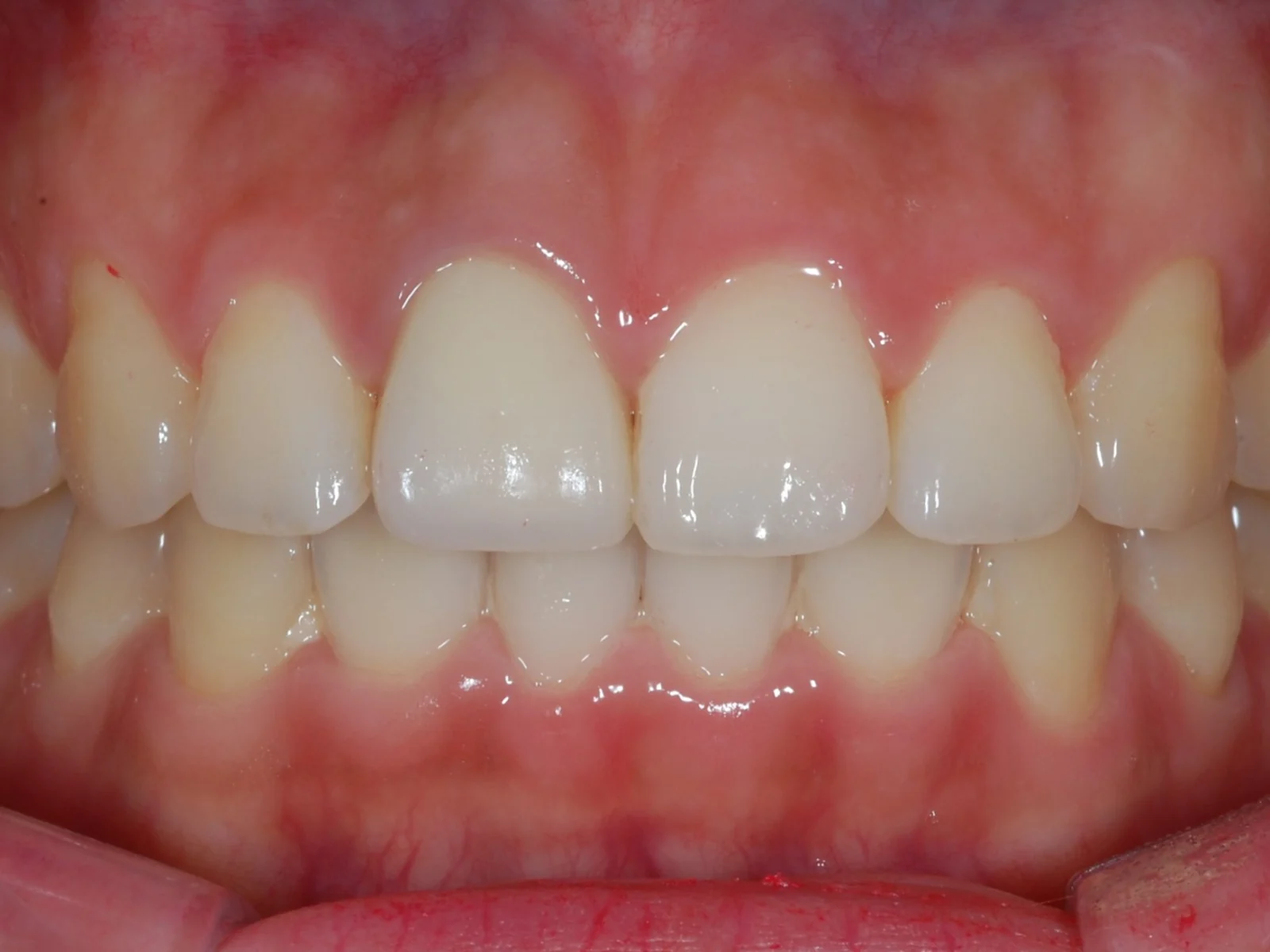
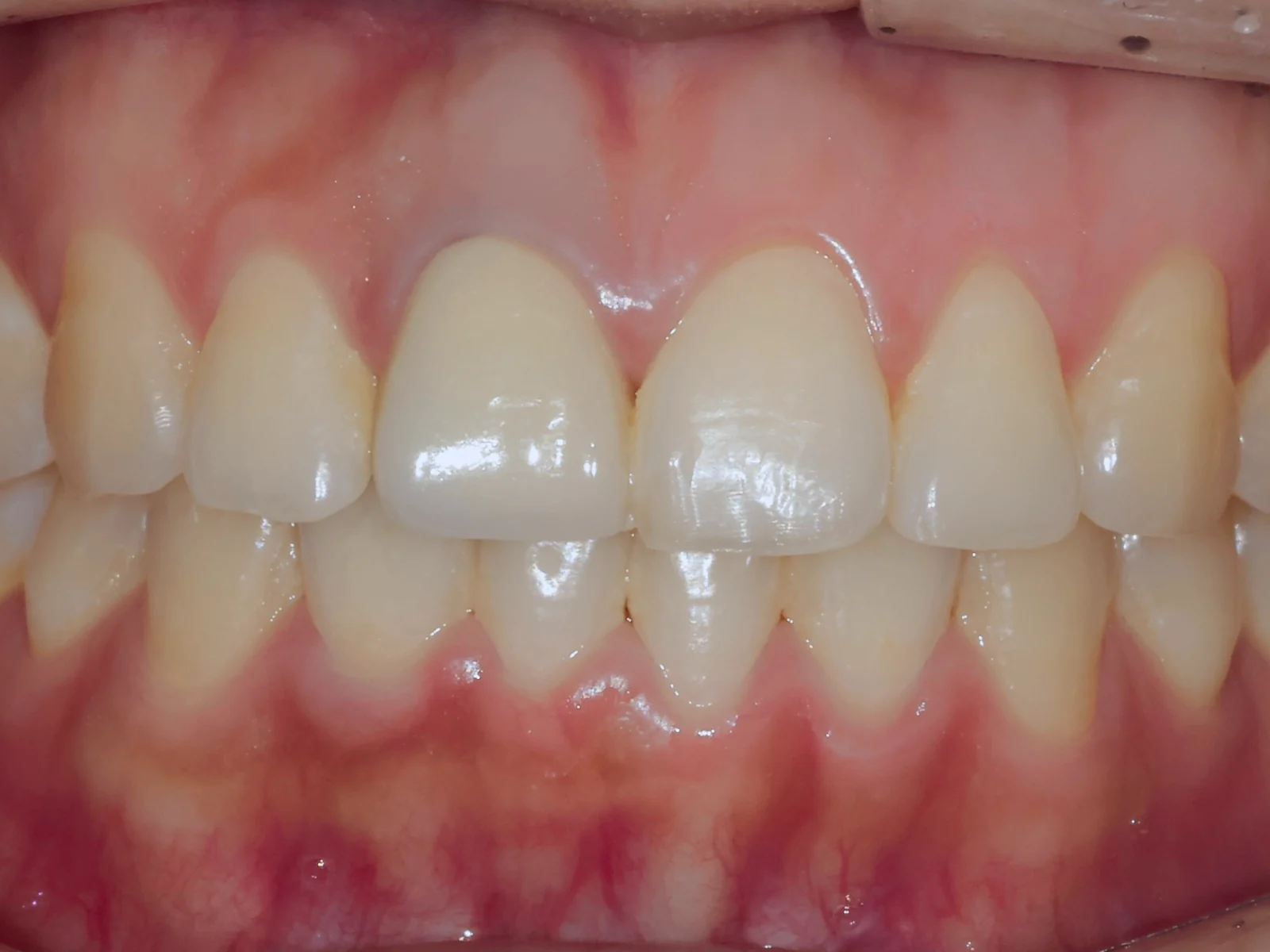
Retainers worn consistently, with teeth unchanged years later
Fixed + clear night retainer · Kept in place with no loose spots, thanks to regular check-ups
Braces removed · Oct 2018
Front view inside the mouth on the day the braces came off.
7 years later · Jun 2026
Check-up photo of the same patient 7 years later. With consistent use of fixed and clear retainers, the alignment stayed almost the same.
Retainers
Fixed retainers behind the upper and lower front teeth + clear night retainer
Check-ups
Once a year
Time elapsed
About 7 years 7 months (Oct 2018 → Jun 2026)
Additional treatment
None
Note
Even with retainers, very small changes can occur with age.
CASE02
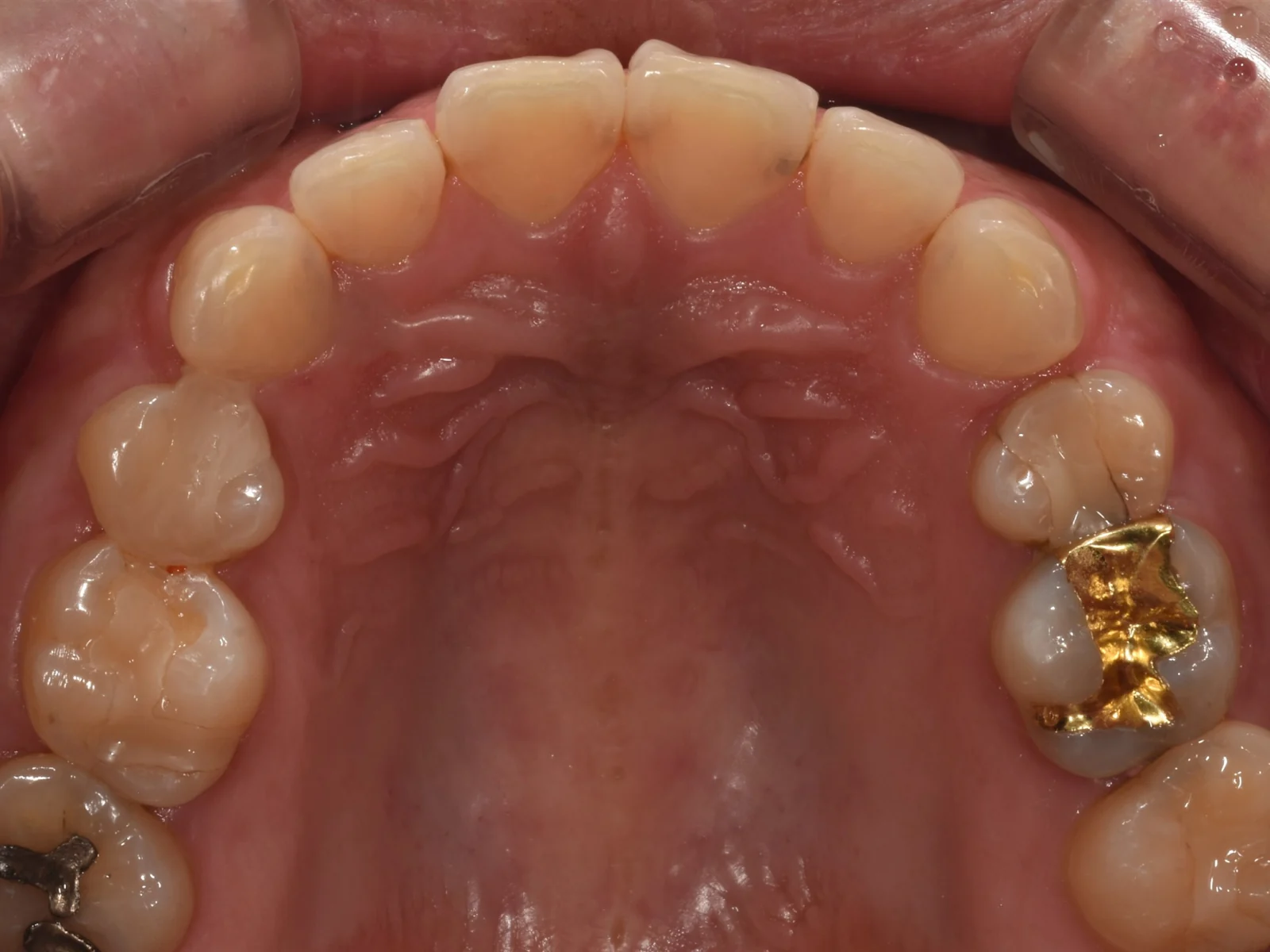
One front tooth rotated and a gap opened behind a canine
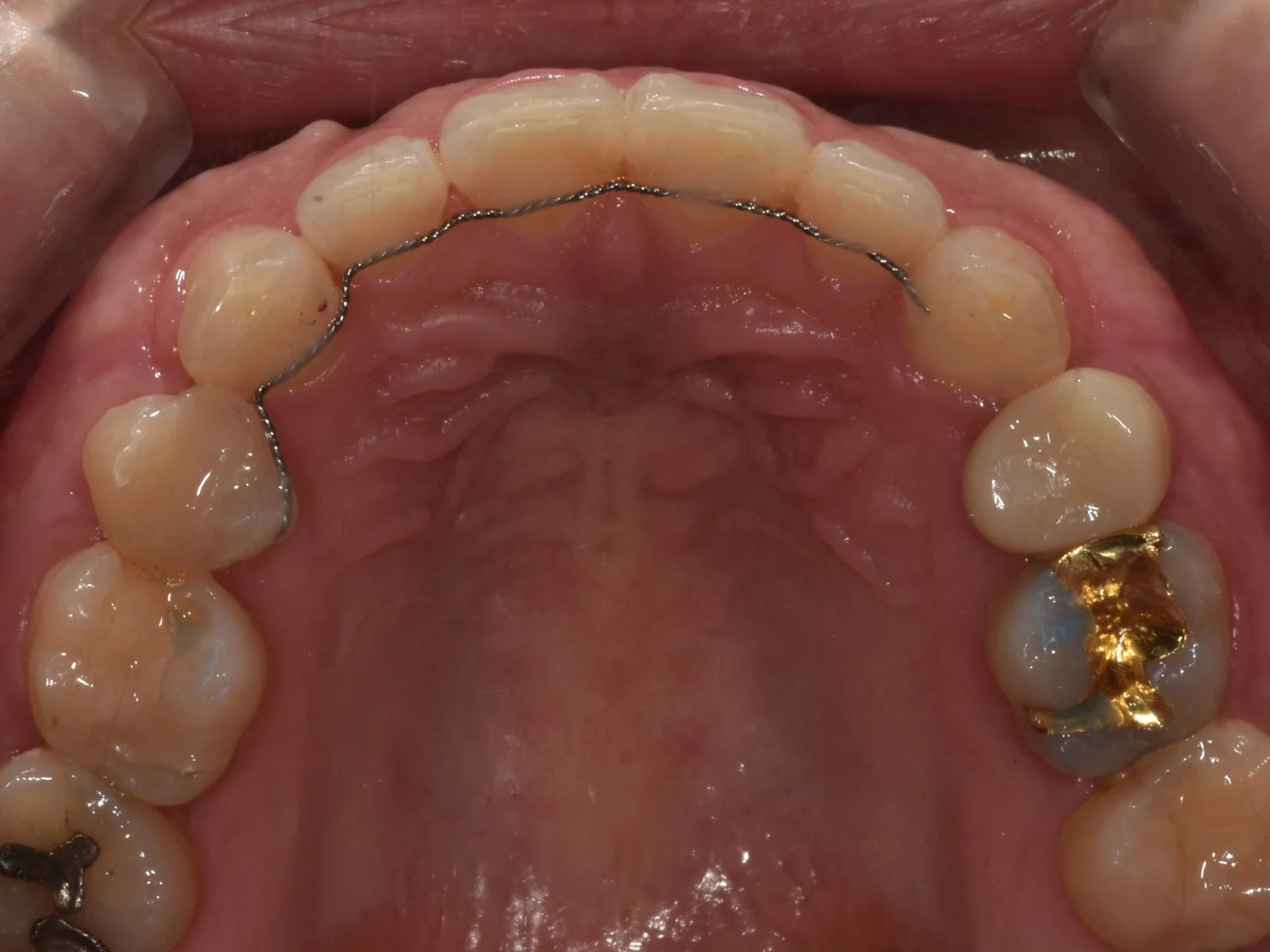
After moving them back with re-treatment · A fixed retainer was bonded behind the front teeth
When found · Oct 2024
Biting-surface view of the upper teeth. One central front tooth rotated and a gap opened behind the left canine.
After treatment · May 2025
After treatment. The rotated front tooth and the gap behind the canine were corrected, and a fixed retainer was bonded behind the front teeth.
Causes
Part of the fixed retainer came off without the patient noticing
Choice
Partial re-treatment of only the rotated front tooth and the gap, then a fixed retainer
Not done
Full re-treatment (the back-teeth bite was unchanged)
Duration
About 7 months (Oct 2024 → May 2025)
Lesson
If something feels loose when you touch it with your tongue, contact us right away so that a small fix is enough.
CASE03
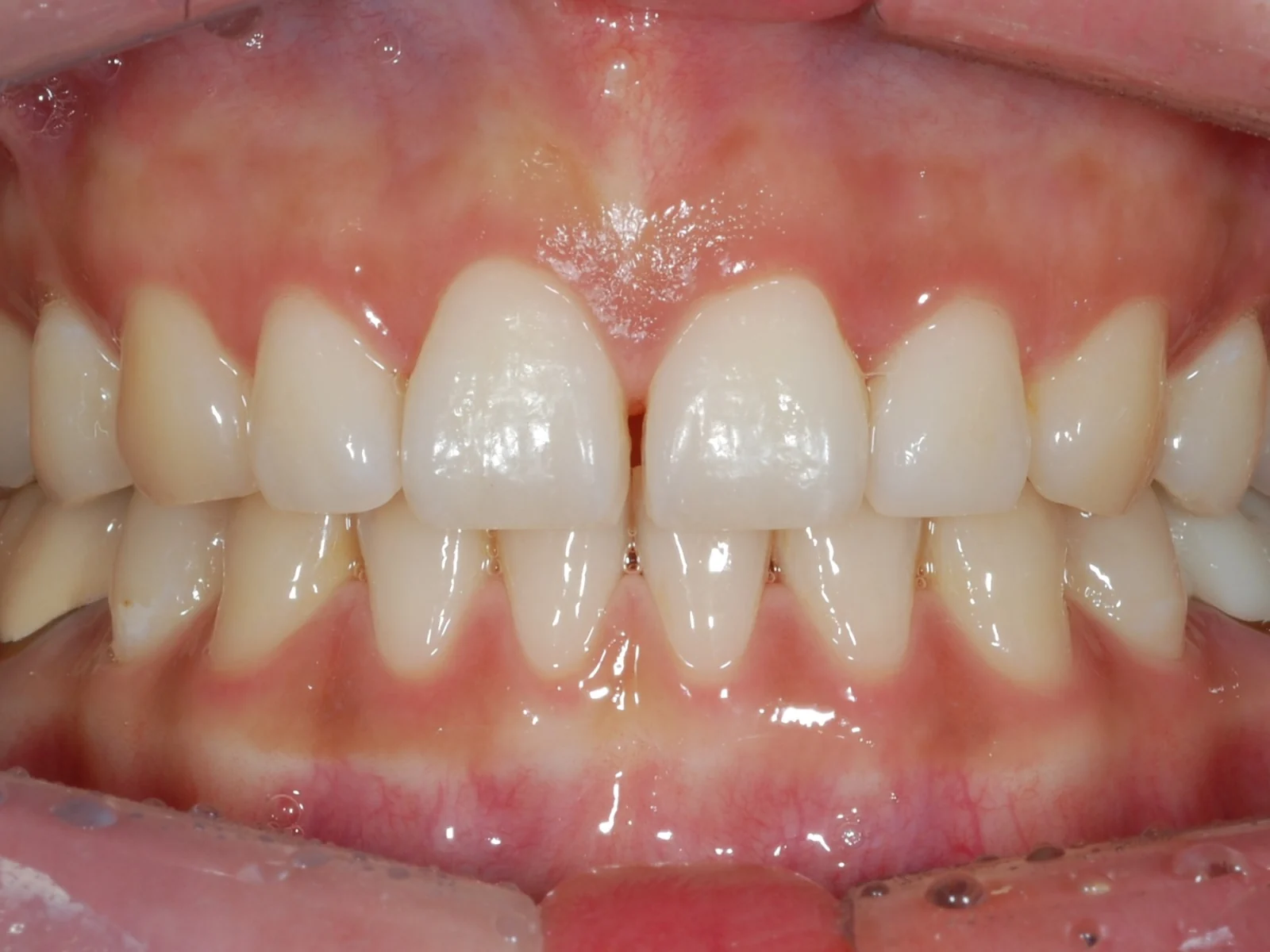
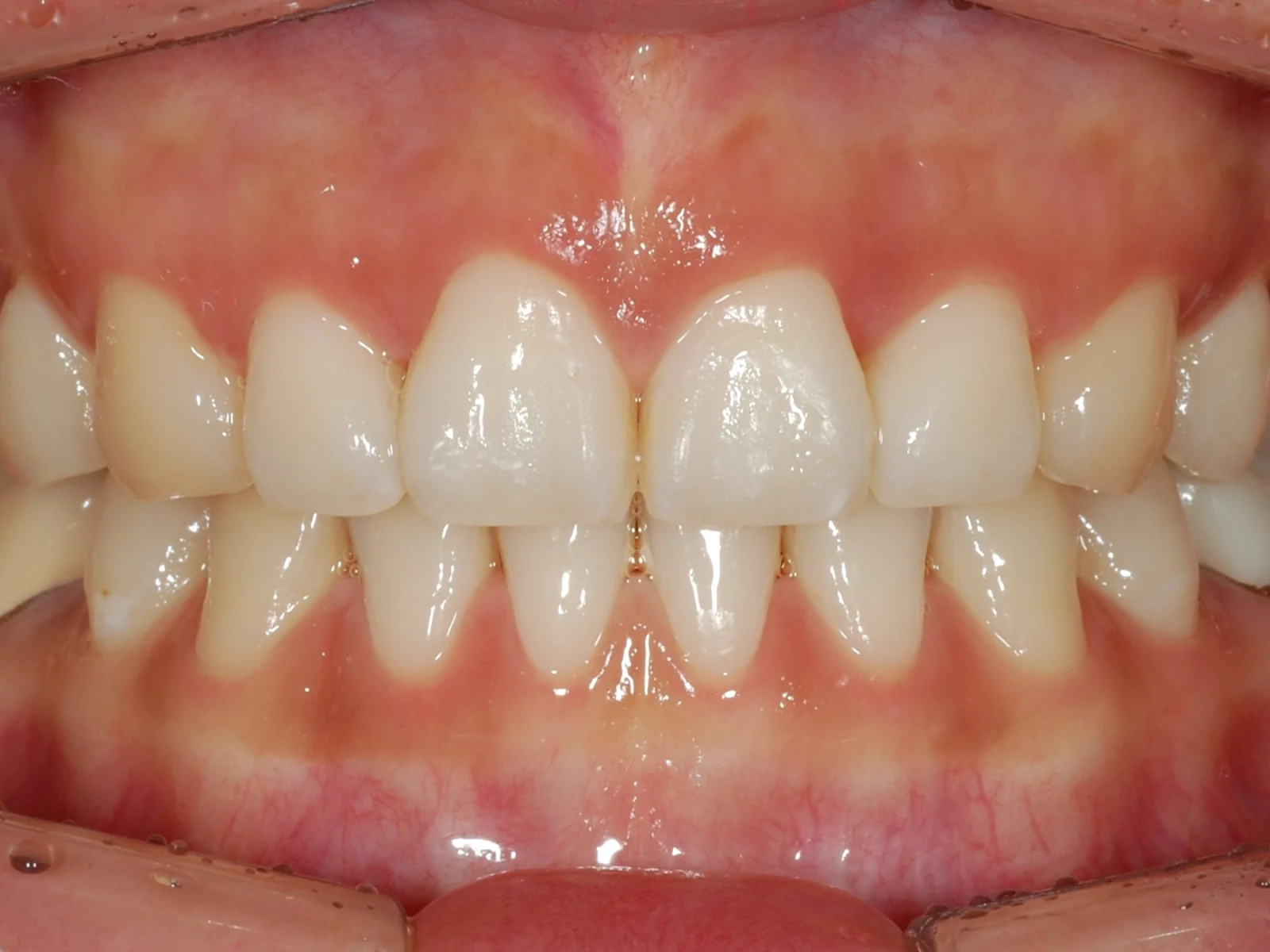
A gap between the front teeth reopened after the clear retainer was not worn for a few months
Partial re-treatment of the front teeth · A fixed retainer was added afterward
At the return visit · Jan 2016
A gap reopened between the upper front teeth after the clear retainer was not worn for a few months.
After re-treatment · May 2016
After partial re-treatment. The gap between the front teeth was closed again.
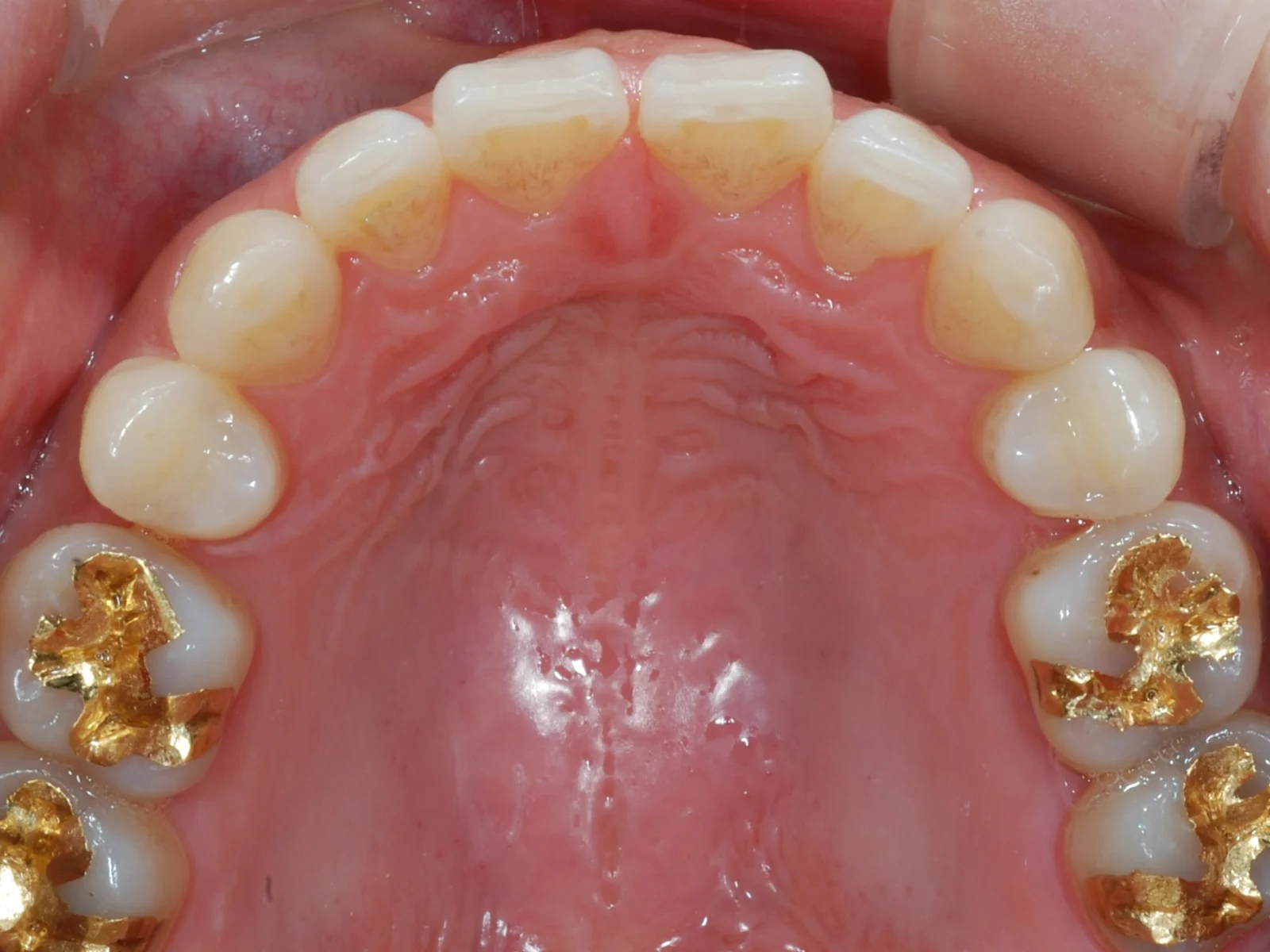
At the return visit · Biting surface
Biting-surface view of the upper teeth on the same day. There is a gap between the central front teeth.
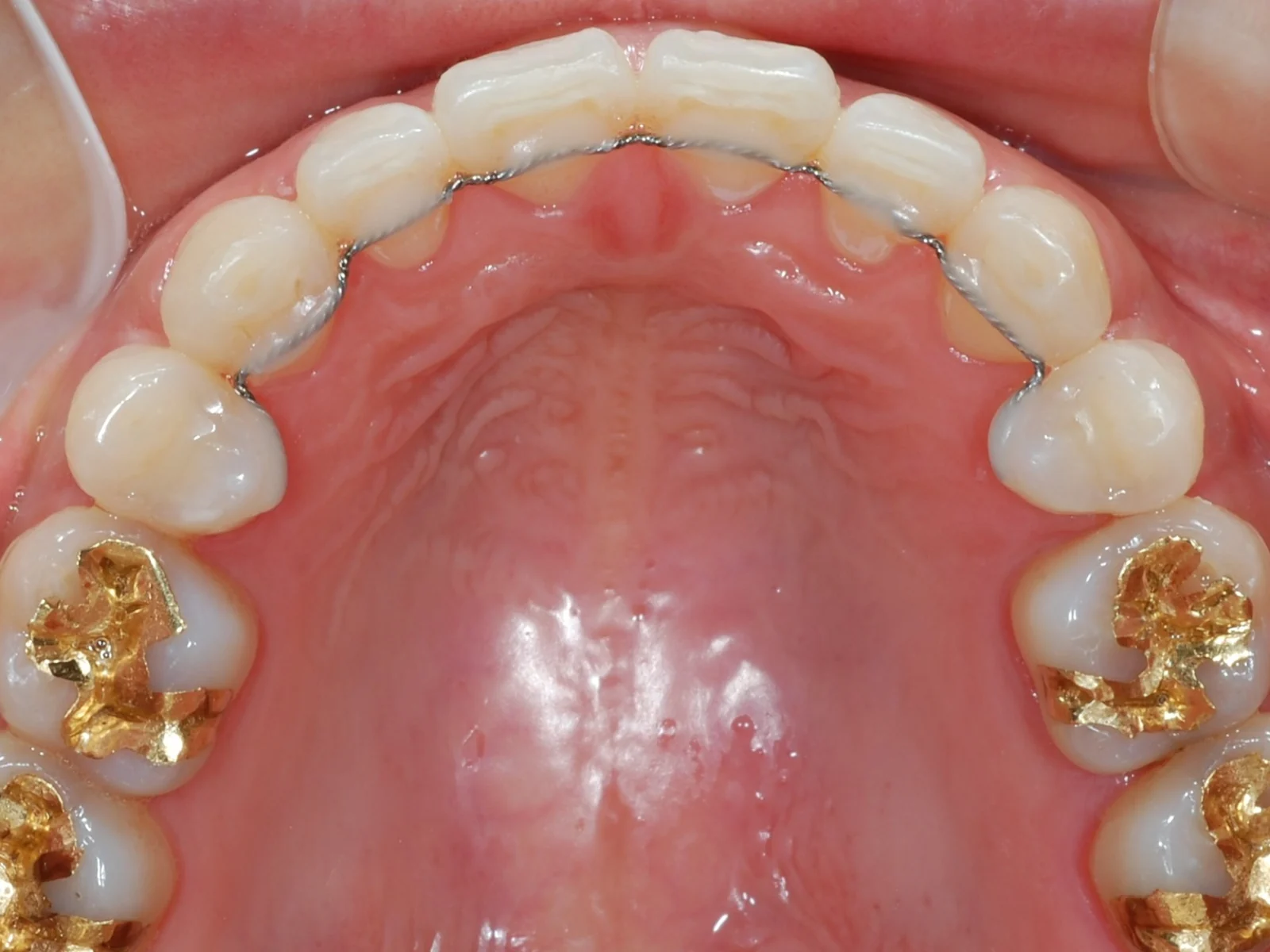
After re-treatment · Biting surface
Biting surface after re-treatment. This time, a fixed retainer was added behind the front teeth.
Causes
Clear retainer not worn for a few months
Choice
Partial re-treatment of the front teeth, then a fixed retainer added
Not done
Full re-treatment (the back-teeth bite was unchanged)
Duration
About 4 months (Jan → May 2016)
Note
If the fixed retainer comes off, the gap can reopen, so regular check-ups are needed.
* Photos were taken under the same conditions and published with the patient's consent. Treatment results and side effects can vary from person to person.
02°
Why do straightened teeth try to shift again?
Shifting again is less a failure than a property of teeth. That is why we see retainers as the last stage of the orthodontic plan.
01Gum fibers pull
The gum fibers around each tooth keep pulling it toward its old position for a while after it has moved. This is especially strong for teeth that were rotated, and it takes several months for the bone to settle in the new position.
02Not wearing retainers enough
If you do not wear it as long as instructed, the teeth move little by little, and if you go a long time without it, the retainer stops fitting and is hard to put back in.
03Fixed retainer coming off
If the wire behind the front teeth comes off at even one tooth, the teeth start moving from that spot. It does not hurt, so many people do not notice.
04Growth
If treatment ends while the jaw is still growing, later growth can change the bite.
05Tongue and lip habits
A habit of pushing the front teeth with the tongue when swallowing can reopen a closed gap.
06Changes with age
Teeth move a little throughout life whether or not you had braces, and the lower front teeth in particular tend to overlap with age. Gum health also plays a role.
The first few months right after the braces come off are when teeth try to move the most, and changes continue slowly after that.
03°
What kinds of retainers do you use?
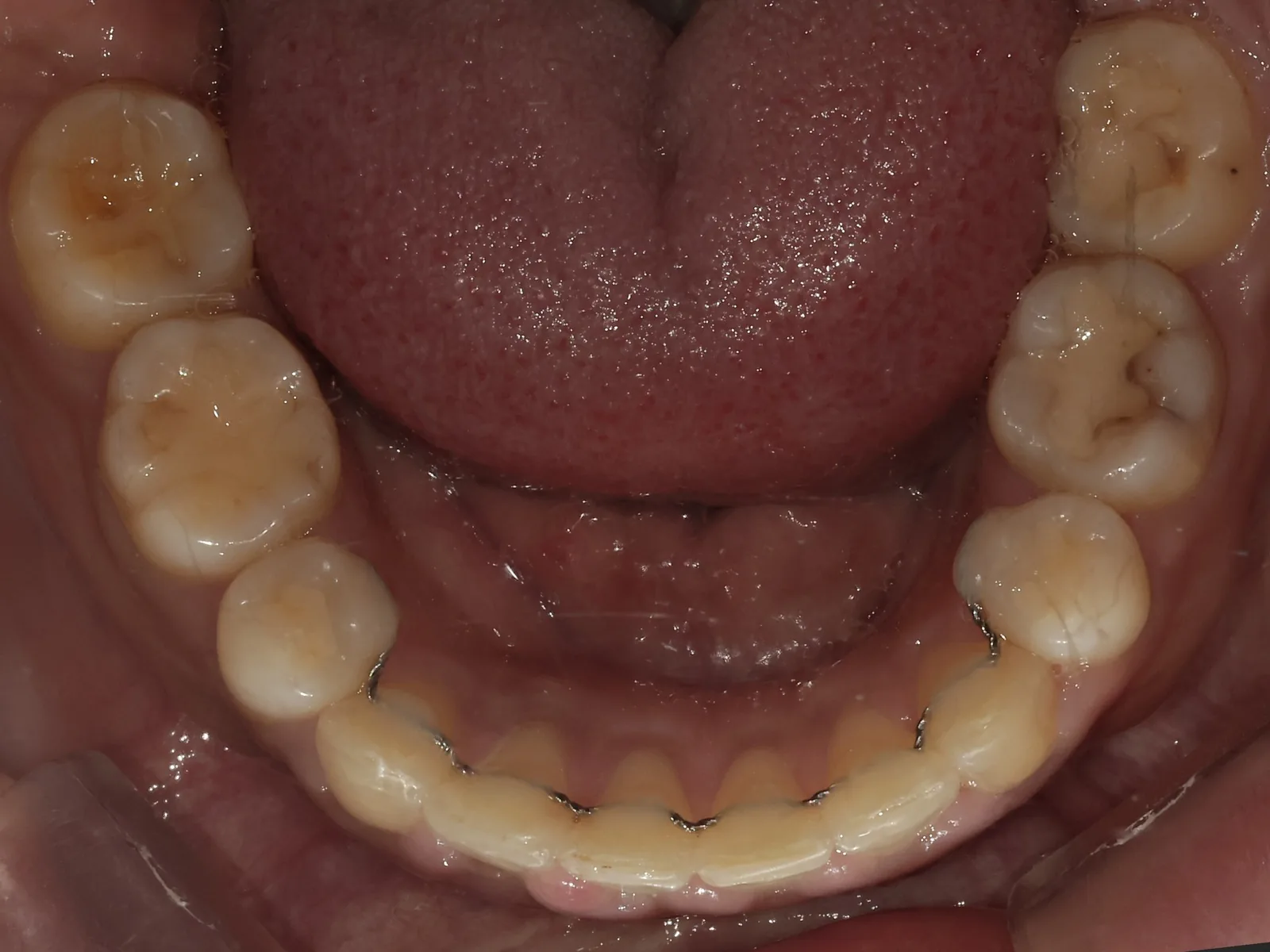
Fixed retainer
Fixed retainer. A thin wire is bonded to each tooth behind the front teeth, so it cannot be seen from the outside.
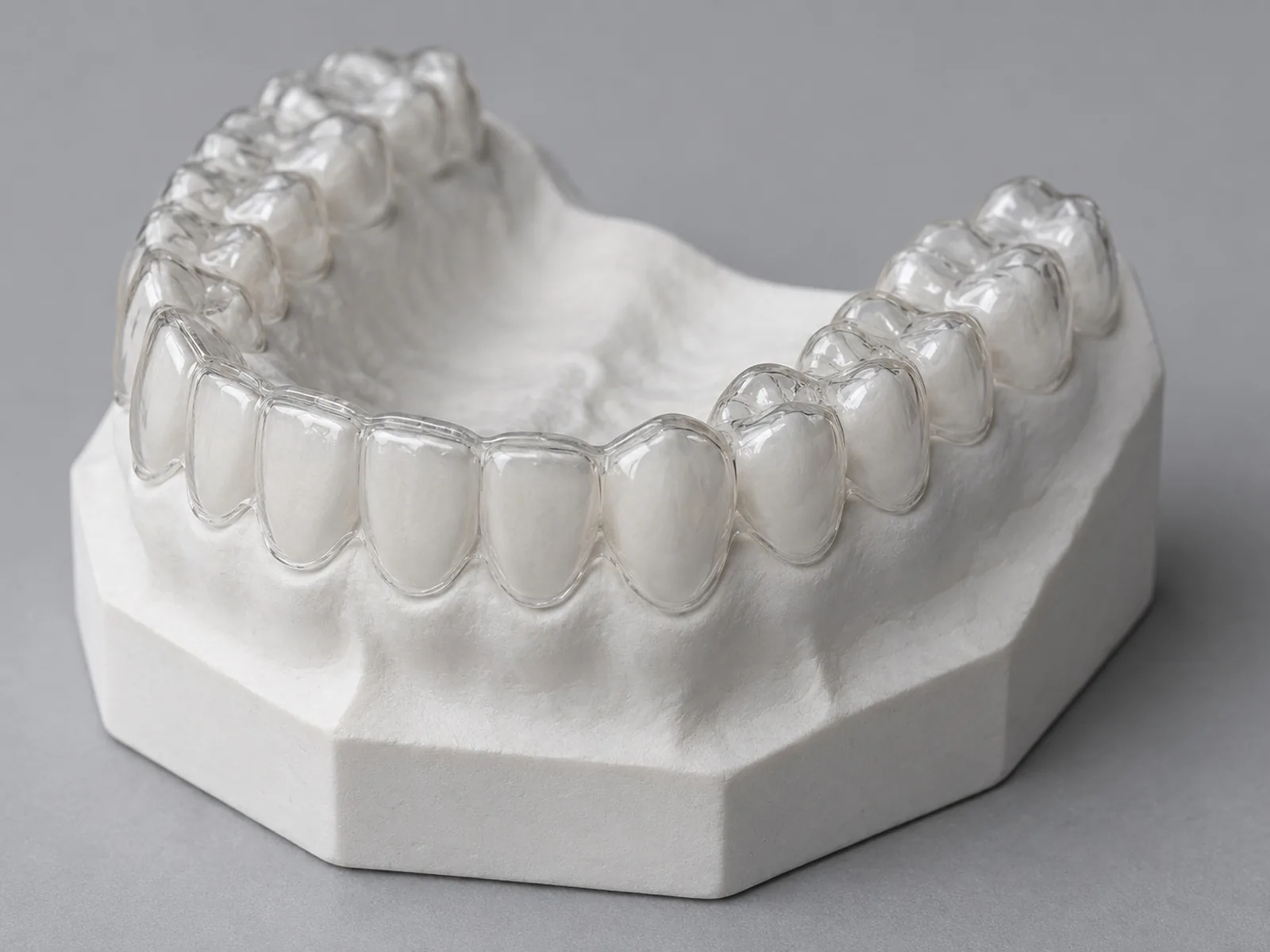
Clear retainer
Clear retainer. A thin, clear tray shaped to your teeth, worn mainly while you sleep.
Fixed retainer (thin wire behind the front teeth)
Clear retainer
Position
Bonded behind the upper and lower front teeth
A tray covering all the teeth that you put in and take out
Visibility
Not visible from the outside
Slightly visible up close
Wear time
Bonded in place, so nothing to put in
Every night while you sleep, especially in the first year; mainly while you sleep after that
Advantages
You can't forget to wear it; it holds the front teeth continuously
Holds the whole arch including the back teeth; can be taken out and cleaned
Note
You may not notice if part of it comes off; tartar builds up easily around the wire
Stops fitting if not worn enough; warps in hot water
Lifespan
Lasts a long time if it stays on; rebonded if it comes off
Wears and warps with use, so it is usually remade every few years
We usually use both together. The fixed retainer holds the front teeth, and the clear night retainer protects the whole arch and the bite. We sometimes use a wraparound retainer with a wire, which is sturdier than a clear retainer.
04°
How we care for your teeth after the braces come off
There are five steps, from the day the braces come off to after the 2-year check-up period ends. For each step, we explain what we look at and why, with real clinical photos.
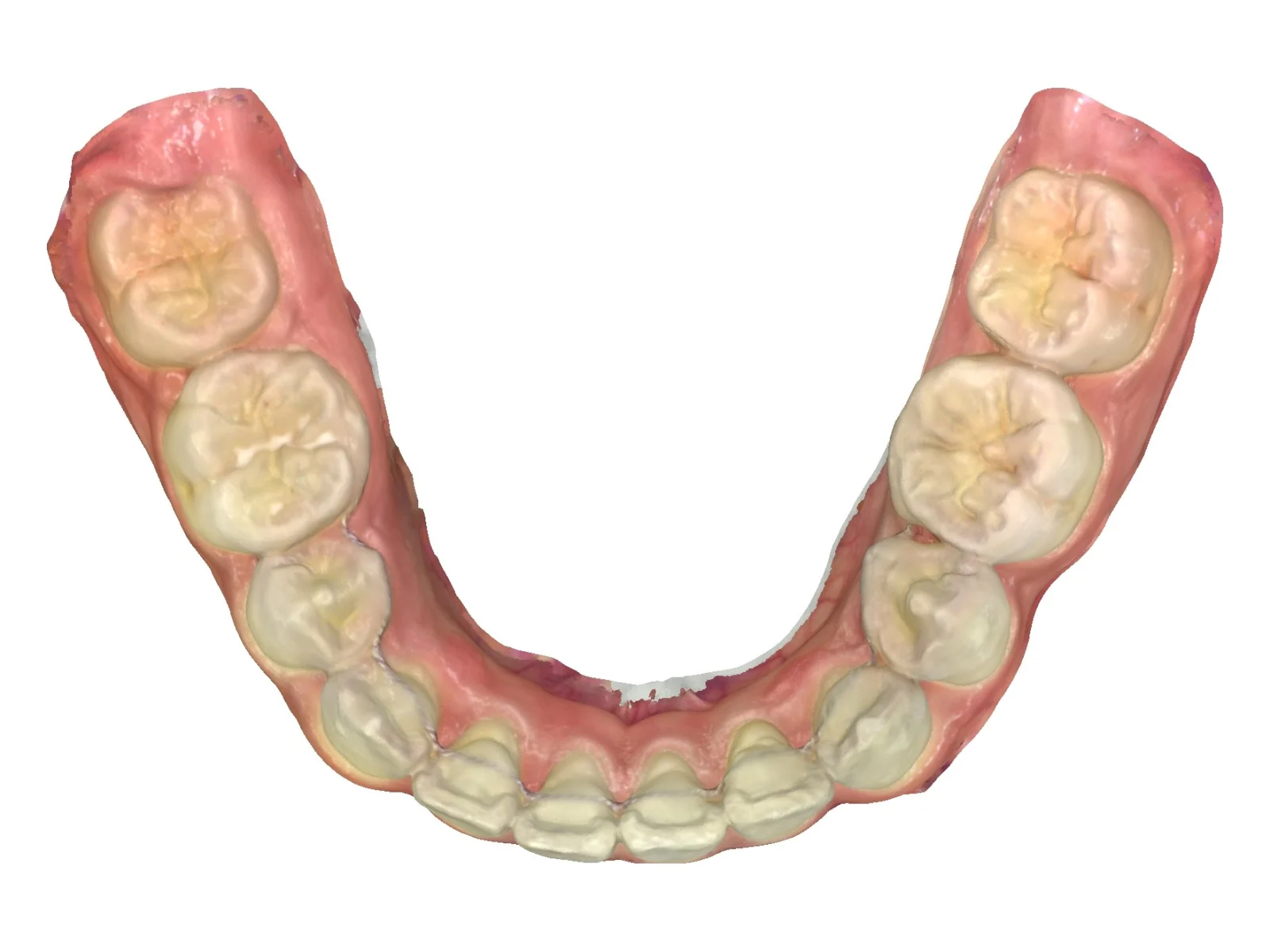
Intraoral scan
The lower teeth scanned with iTero after the braces were removed. The retainer is made from this digital model.
STEP 01
We scan on the day the braces come off and give you your retainer one week later
We remove the braces, smooth away the adhesive left on the tooth surfaces, and on the same day take an iTero intraoral scan of your teeth. The retainer made from this scan is given to you one week later, and we explain how to wear it and for how long.
Why we do thisRight after the braces come off is when teeth move most easily. Only by copying the alignment exactly as it is on that day can we make a retainer that fits that position precisely.
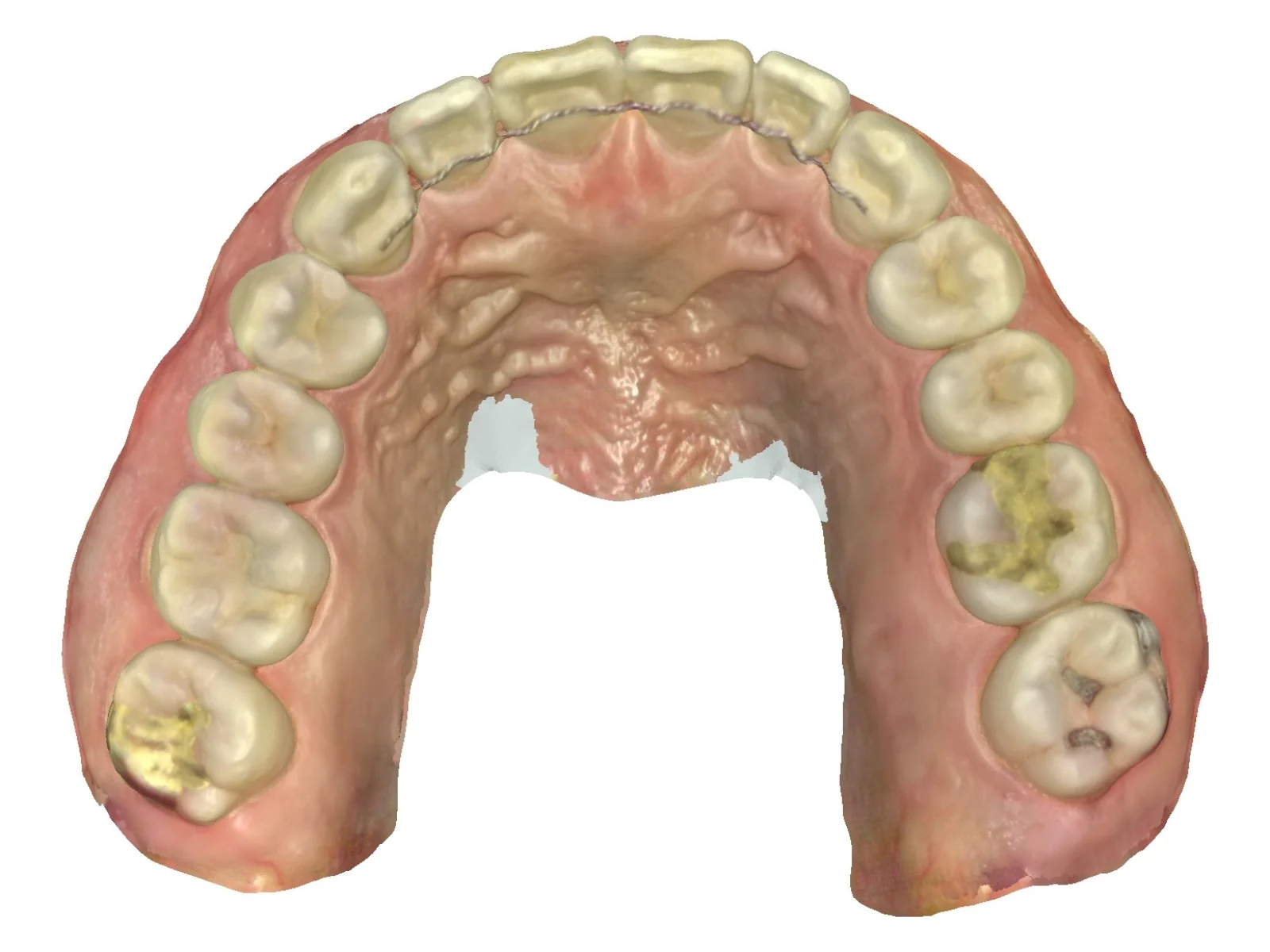
Record
Screen showing the alignment on the day the braces came off, saved with an iTero intraoral scan. It becomes the baseline for comparing how many millimeters the teeth move later.
STEP 02
We keep a digital record of your teeth on the day treatment ends
The scan taken on the day the braces come off to make your retainer is also kept as a record. It is the basis for remaking a lost retainer, and if you later feel your teeth have shifted, we scan the same way and overlay the two to compare.
Why we do thisWhether teeth have shifted is often unclear to the eye. Comparing numbers with the record from the last day of treatment shows whether they really moved, and which tooth moved how much.
STEP 03
We check at set intervals
We check at 1, 3, and 6 months after the braces come off, and once more one year after the 6-month check-up. At each check-up we see whether the fixed retainer is attached to every tooth, whether the clear retainer fits snugly, and whether tartar has built up.
Why we do thisIf a fixed retainer comes off at even one tooth, it does not hurt, so you may not notice. If we find it early, rebonding is enough; if we find it late, re-treatment may be needed.
STEP 04
You keep wearing retainers even after the 2-year check-up period
Retainer check-ups and adjustments for 2 years after treatment are included in the orthodontic fee. After that, we recommend keeping up the habit of wearing your clear retainer at night for a long time. We usually recommend a check-up once a year, when we also check the fixed retainer.
Why we do thisTeeth move a little throughout life whether or not you had braces. The most honest answer to how long you need a retainer is: for as long as you want to keep your current alignment.
When it shifted · Feb 2026
After correction · Aug 2026
An example of shifting. After the fixed retainer behind the lower front teeth came off, one front tooth was pushed forward (left, yellow mark), and it was moved back in about 6 months with partial re-treatment of the lower front teeth (right).
STEP 05
If your teeth have already shifted, we move back only what moved
We look in turn at which tooth moved and since when, whether your current retainer fits, how much it has moved compared with the record from the last day of treatment, and the condition of the gums and roots. Based on that, we choose among adjusting the retainer, partial re-treatment, full re-treatment, or watching.
Why we do thisA small shift does not need to be treated again from the start. Small changes can sometimes be reversed just by making a new retainer, so we consider the smallest treatment first.
* Clinical photos are published with the patient's consent. Some people may have side effects such as temporary pain or discomfort.
05°
Ceramic Dental Clinic's retainer policy
Retainer check-ups and adjustments for 2 years after treatment are included in the orthodontic fee. We also tell you in advance how costs are handled after that.
Included in the orthodontic fee for 2 years · Retainer check-ups and adjustments for 2 years after treatment are included in the orthodontic fee.
Rebonding a fixed retainer after 2 years · If a fixed retainer comes off after 2 years, there is a fee to rebond it.
Making a new clear retainer · If it no longer fits because it was not worn enough, or it is broken or lost, there is a fee to make a new one.
Fees · Listed on our treatment cost page.
06°
If your teeth have already shifted, which option is right?
Adjusting or remaking the retainer
Partial re-treatment
Full re-treatment
Watching
Who it suits
Small changes that happened recently
A few front teeth have visibly shifted
The bite no longer fits, or teeth have shifted in several places
Very small changes that do not bother you
Duration
Usually a few weeks to a few months
Usually 3–6 months
Usually 1 year or more
Regular check-ups
Limits
Teeth that moved a lot are hard to move back
Does not change the bite or lip position
The scope may be limited by the condition of the roots and gums
Teeth may move further in the meantime, so check-ups are needed
If even one applies, contact us instead of waiting for your next check-up. The sooner we check, the smaller the fix.
08°
Side effects and limits
Please read
· Even with retainers, very small changes can occur with age.
· Tartar builds up easily around a fixed retainer, so flossing and regular scaling are needed.
· If only part of a fixed retainer comes off, the tooth at that spot can move, or, rarely, a tooth held by the wire can tilt in an unwanted direction. We check for this at check-ups.
· Clear retainers warp in hot water and wear with use, so they sometimes need to be remade.
· Forcing in a retainer that no longer fits because it was not worn for a long time can strain the teeth and gums. If it feels tight and hurts, contact us.
09°
If you had braces at another clinic
If you finished braces at another clinic, you can still have retainer check-ups and consultations here. We can rebond a fixed retainer that came off or make a new clear retainer, and we explain the fee at the consultation.
FAQ
FAQ
How long do I need to wear my retainer?
Teeth move a little throughout life whether or not you had braces, so we recommend wearing a retainer for as long as you want to keep your current alignment. Right after the braces come off you wear it for long hours, and later you cut back to wearing it mainly while you sleep. After a certain period, you reduce it to wearing it only while you sleep, one or two nights a week.
If your fixed retainer has come off, contact us quickly instead of waiting for your next check-up. Within 2 years after treatment, we rebond it as part of the check-ups included in the orthodontic fee; after 2 years, there is a fee for rebonding.
I lost my retainer.
If a retainer is lost or broken, there is a fee to make a new one. Your teeth can move until the new one is made, so please come in as soon as possible. The fee is listed on our treatment cost page.
What does the 2-year retainer care included in the orthodontic fee cover?
For 2 years after you finish orthodontic treatment at Ceramic Dental Clinic, retainer check-ups and adjustments are covered by the orthodontic fee. If a retainer no longer fits because it was not worn enough, or it is lost or broken and must be remade, there is a fee.
My teeth shifted a little after braces. Can a retainer move them back?
Small changes that happened recently can sometimes be reversed by making a new retainer or adjusting the current one. If the teeth have moved a lot, partial re-treatment may be needed, so we first compare with the records from the day treatment ended.
I had braces at another clinic. Can I get just a retainer here?
If you finished braces at another clinic, you can still have retainer check-ups and consultations here. We first check your current alignment and then tell you whether to make a new retainer or to correct the shifted part first.
Can wisdom teeth make my straightened teeth shift?
Many people believe wisdom teeth push the teeth in front of them and make the front teeth overlap, but there is no clear evidence that wisdom teeth alone make the front teeth shift. Retainer wear and age-related changes play a bigger role when front teeth overlap again, and we decide separately whether to remove wisdom teeth based on their condition.
Can I still brush well with a fixed retainer?
The area around a fixed retainer is hard to clean with a toothbrush alone, so tartar builds up easily. You can clean under the wire with a floss threader or an interdental brush and have it cared for at regular scaling.
Questions from patients who travel to Seoul for treatment.
How much does orthodontic treatment cost?
The fee depends on the appliance. For example, metal braces are KRW 4,800,000, ceramic braces KRW 6,000,000, Invisalign KRW 8,500,000 and lingual braces KRW 8,600,000. The orthodontic fee includes the orthodontic diagnosis, extraction (except wisdom teeth), mini-screws, basic retainers and retention care for 2 years. If you have only the diagnosis and do not start treatment, it is KRW 50,000 (KRW 100,000 if a CT scan is needed). If a retainer breaks or is lost later, remaking it costs extra. International and Korean patients pay the same fees. We explain the total before treatment starts. See our fee schedule.
Can I continue treatment after I go home?
Yes, but it needs a plan. Fixed braces need regular adjustment visits: the first two visits are 2 weeks apart, then usually once a month. Clear aligners are easier from abroad: after you receive your aligners, you visit once every 2–3 months, and between visits we check by photo only if something comes up. Your doctor tells you at diagnosis which method fits your case.
Can I have my consultation in English?
Yes. The doctor in charge of each field consults with you directly in English. For orthodontics, this is Dr. Sunmin Kim, a board-certified orthodontist. Before you travel, you can send photos of your teeth on WhatsApp or by email. An accurate diagnosis is made after we examine you in person.
What happens after treatment, and what if something comes off?
You need retainers after treatment, because teeth tend to move back. Retention care for 2 years is included in the orthodontic fee. If a bracket comes off or a wire hurts after you go home, send us a photo on WhatsApp. We check it and tell you what to do. Some repairs need a visit.
My retainer broke, or my teeth have started to move, after I went home. What should I do?
Send us a photo on WhatsApp. We check it and tell you what to do. If a retainer needs to be remade, it costs extra and may need a visit.
Results, the number of visits and schedules vary from person to person. More questions: Visiting from abroad.


 Braces removed · Oct 2018
 7 years later · Jun 2026
 When found · Oct 2024
 After treatment · May 2025
 At the return visit · Jan 2016
 After re-treatment · May 2016
 At the return visit · Biting surface
 After re-treatment · Biting surface
 Fixed retainer
 Clear retainer
 Intraoral scan
 Record
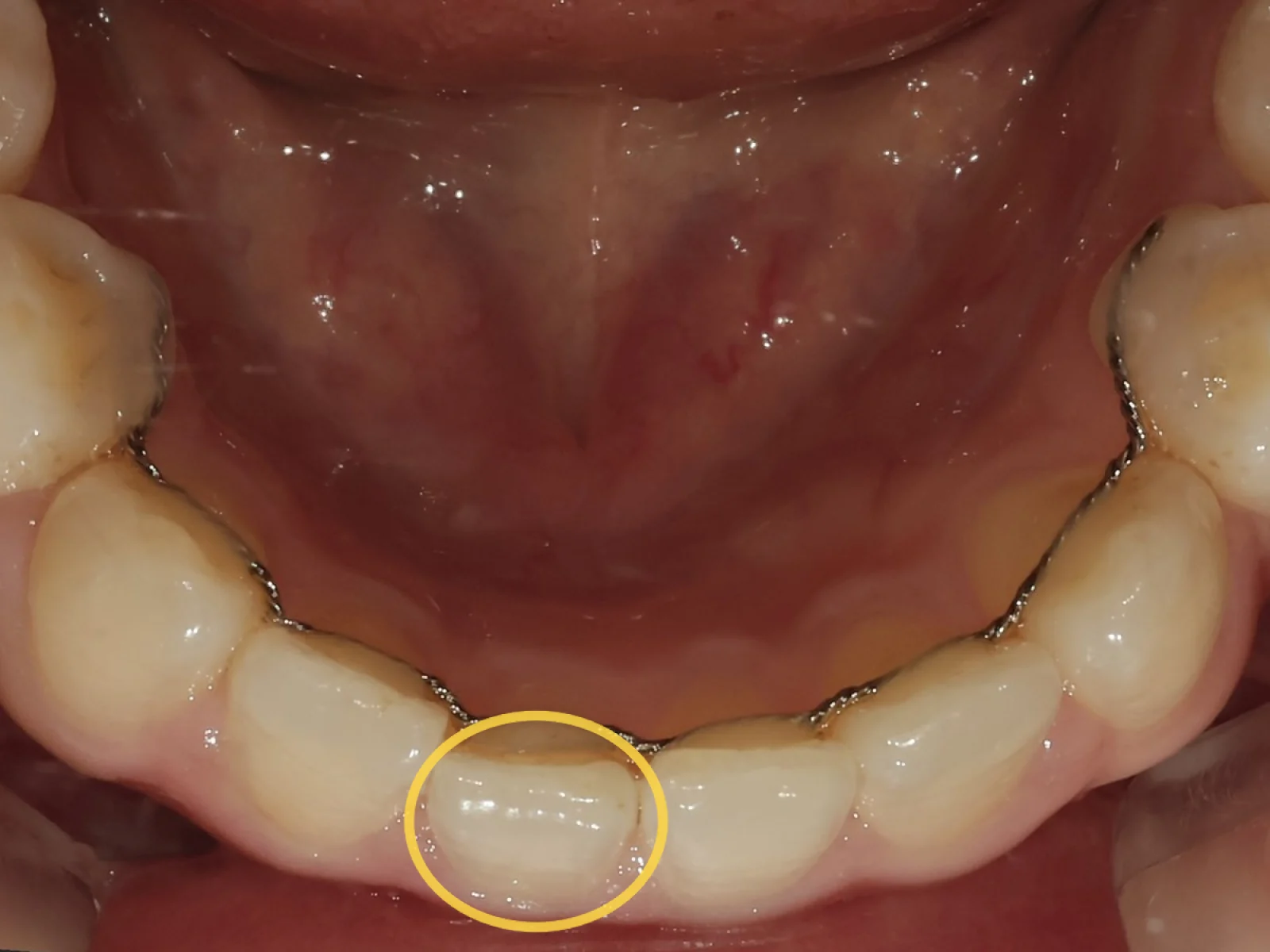 When it shifted · Feb 2026
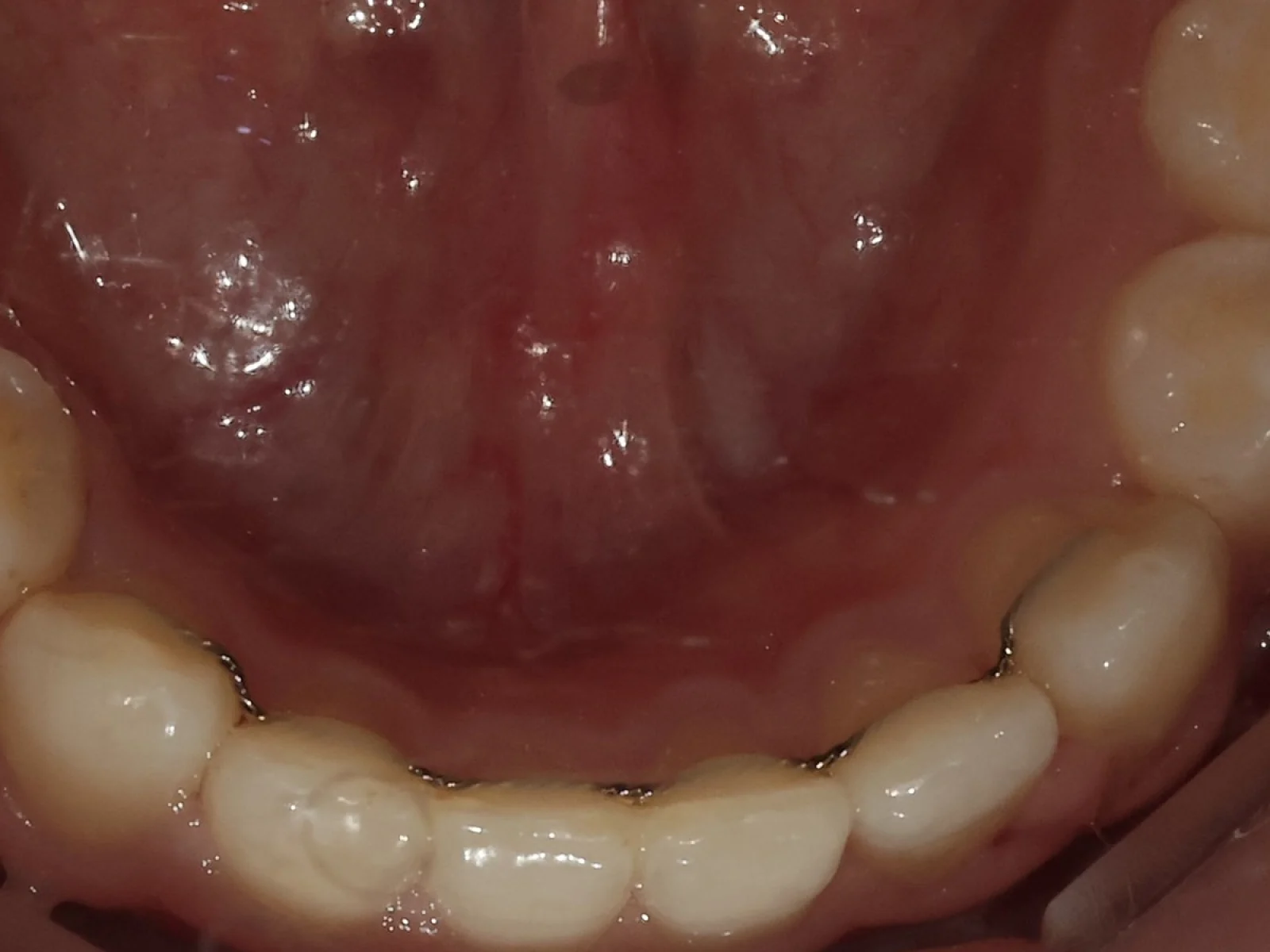 After correction · Aug 2026