
COLUMN ・ FRONT TEETH
Front Teeth Crowns vs Veneers: Which Is Right for You? Types, Tooth Reduction and Cost

By Dr. Sunmin Kim, lead dentist & orthodontist, Ceramic Dental Clinic ・ October 2026
I'm Dr. Sunmin Kim, lead dentist at Ceramic Dental Clinic in Gangnam, Seoul, and a board-certified orthodontist who has spent 16 years looking at teeth and faces. People who come in wanting ceramic front teeth usually ask the same three things first: which ceramic is best, how much of the tooth has to be reduced, and what it costs.
"Ceramic front teeth" actually covers several treatments. There are veneers, which are bonded only to the front surface, and crowns, which cover the whole tooth. Each comes in different materials such as e.max and zirconia. This article sorts out the ceramic options for front teeth and explains how to choose the one that fits your teeth.
Two main options for ceramic front teeth
Veneers: bonded to the front surface
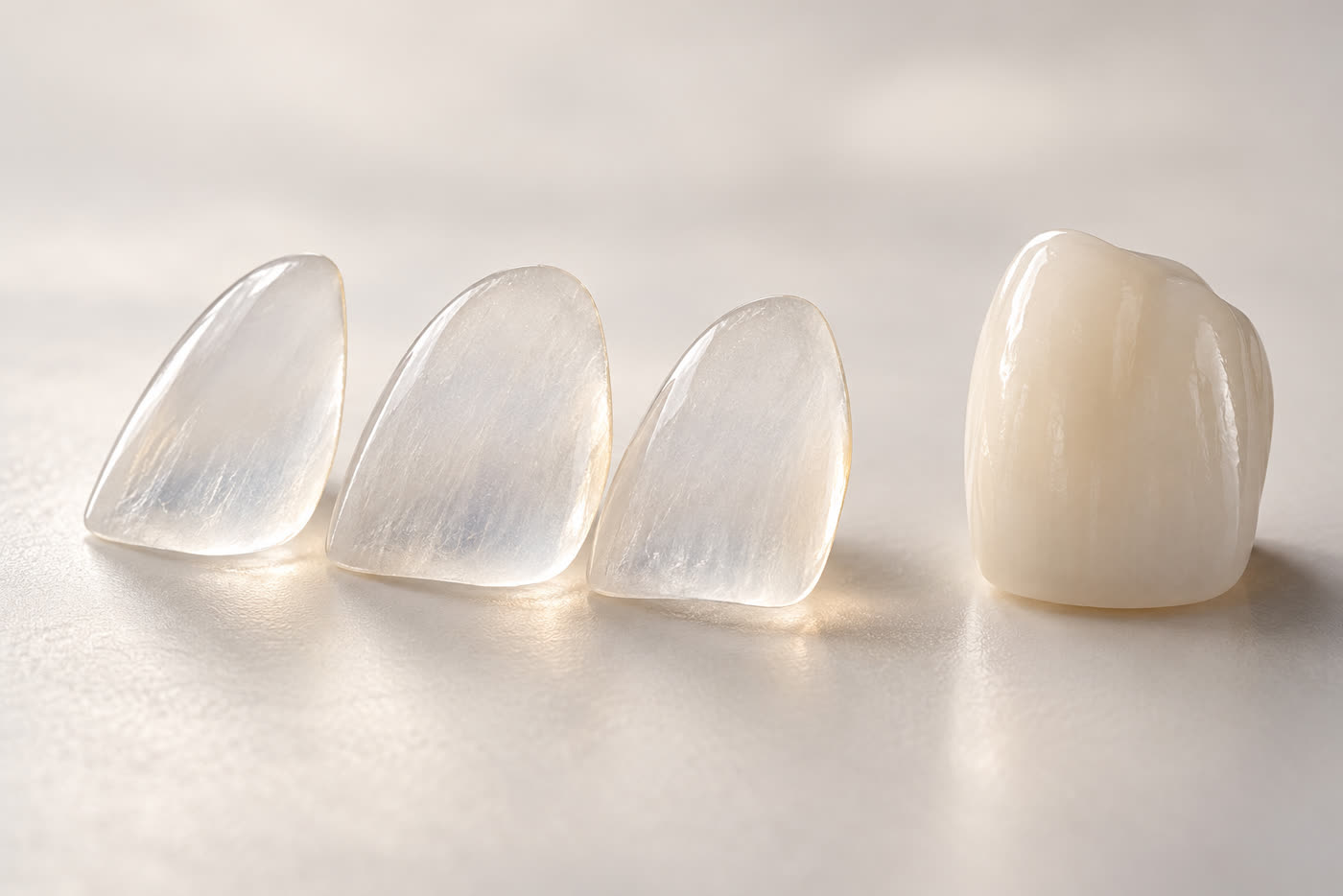
A thin ceramic shell of about 0.3–0.5 mm is bonded to the front of the tooth. In many cases it can be done no-prep or minimal-prep, and shape, color and small gaps can be corrected together. Veneers are mainly considered when the tooth itself is healthy but its shape or color bothers you.
Crowns: covering the whole tooth
The tooth is reduced evenly all the way around and then covered like a cap. This takes more reduction than a veneer, but because the crown holds the tooth from every side, it is better at protecting a tooth that is already badly damaged.
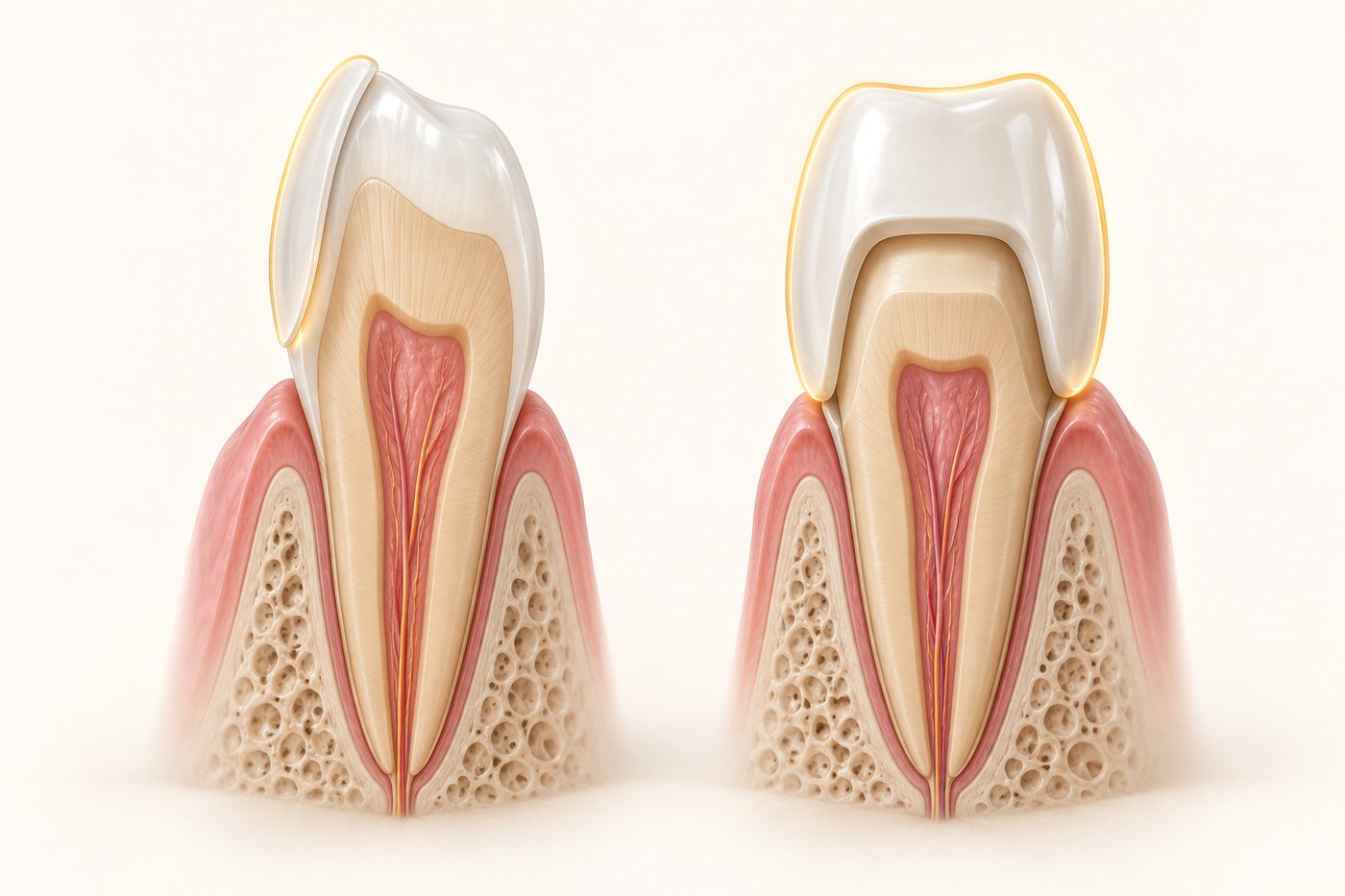
When a veneer, and when a crown?
We usually consider veneers first when:
- The teeth are healthy but uneven in shape or size
- There is discoloration that whitening cannot lighten
- There is a small gap between the front teeth or a slightly chipped edge
- Old resin fillings have become stained
We usually consider crowns first when:
- The tooth has had a root canal and is weakened, or has darkened from the inside
- A large part of the tooth has been lost to decay or fracture
- An old crown needs to be redone
Some teeth sit on the border between the two. In that case we decide based on how much tooth structure is left, the bite, and whether you grind your teeth. As an orthodontist, I first look at tooth position and bite on the records taken that day, and if the alignment itself is the real cause and orthodontics would suit you better, I will tell you so. If we think the border between the gums and teeth may change, our periodontist also gives an opinion so the restoration can last as long as possible.
Types of ceramic materials
e.max (lithium disilicate)
Light passes through it softly, much like a natural tooth, so it is widely used for front-tooth veneers and crowns. Our Ceranate veneers are also made of e.max.
Zirconia
Very strong and hard to break. It used to be too opaque for front teeth, but newer, more translucent zirconia is now used for front crowns as well. It can be helpful for masking a dark tooth.
PFZ (porcelain fused to zirconia)
A crown with a zirconia core and a porcelain outer layer. On a tooth that has darkened after a root canal, the zirconia core hides the dark color while the outer porcelain gives a natural shade and translucency. An all-ceramic crown can let the dark tooth show through, so we use PFZ for teeth like these.
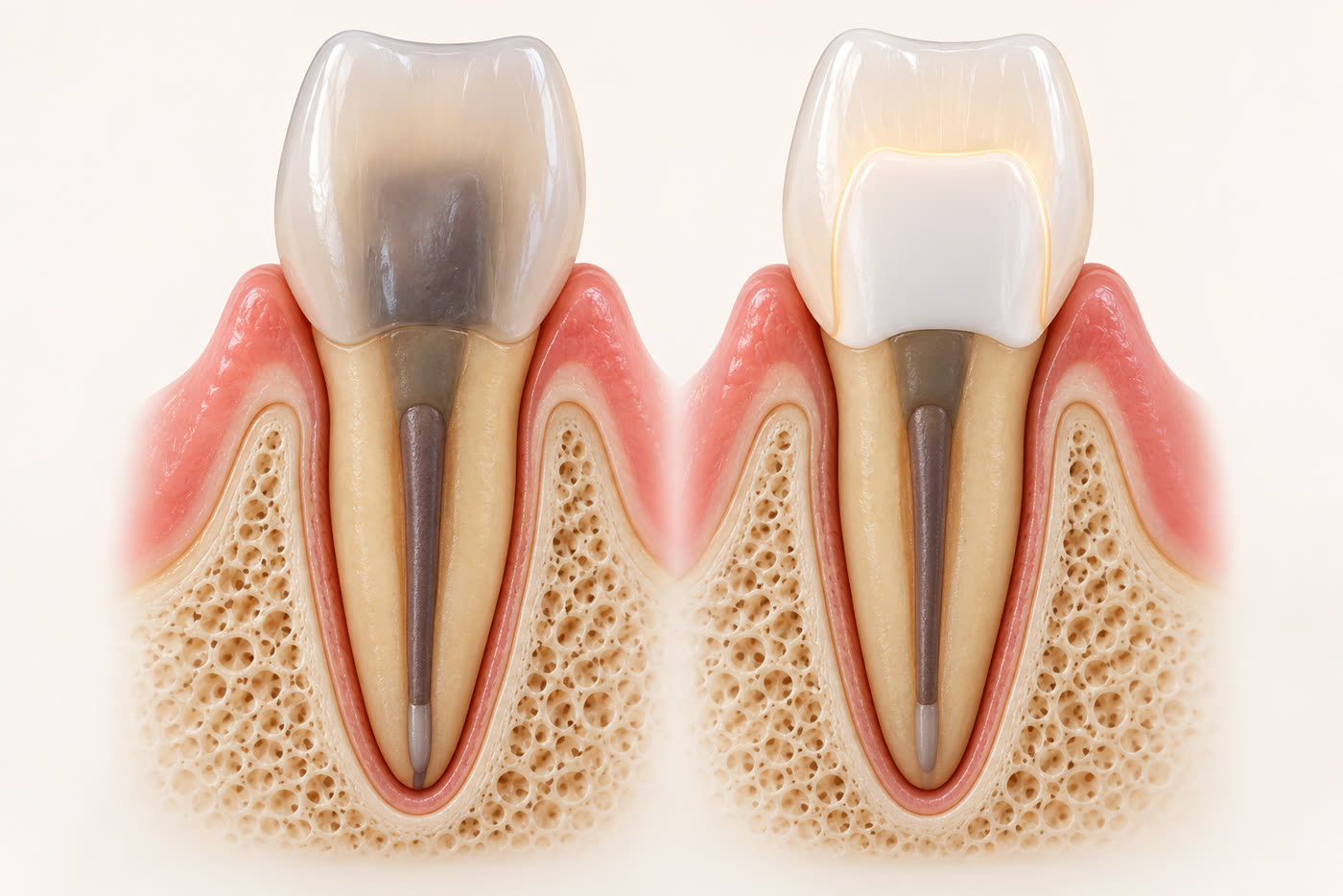
PFM (porcelain fused to metal)
A crown with a metal core and a porcelain surface. Over time, as the gums recede, the metal can show as a dark line at the edge, so we do not use PFM on front teeth, only on back teeth.
We choose the material based on the color of the remaining tooth, your bite, any grinding habit, and how bright you want the result to be.
Where regret comes from with ceramic front teeth
- The color doesn't match the neighboring teeth: Ceramic color can't be changed after bonding. We adjust both the ceramic shade and the cement shade, try in six cement shades on bonding day, and let you choose while looking in the mirror.
- The teeth look too long or too thick: The dentist designs length, edge line, symmetry and how much tooth shows when you smile on a 3D model, and discusses it with you while looking at your face and lip line.
- More tooth was reduced than needed: Putting a crown on a tooth that doesn't need one only increases reduction. Ask for an explanation, tooth by tooth, of which teeth will be reduced, why, and by how much.
- The gum line became visible: Gum inflammation should be treated first. Our periodontist also checks your gums and discusses whether gum treatment should come first.
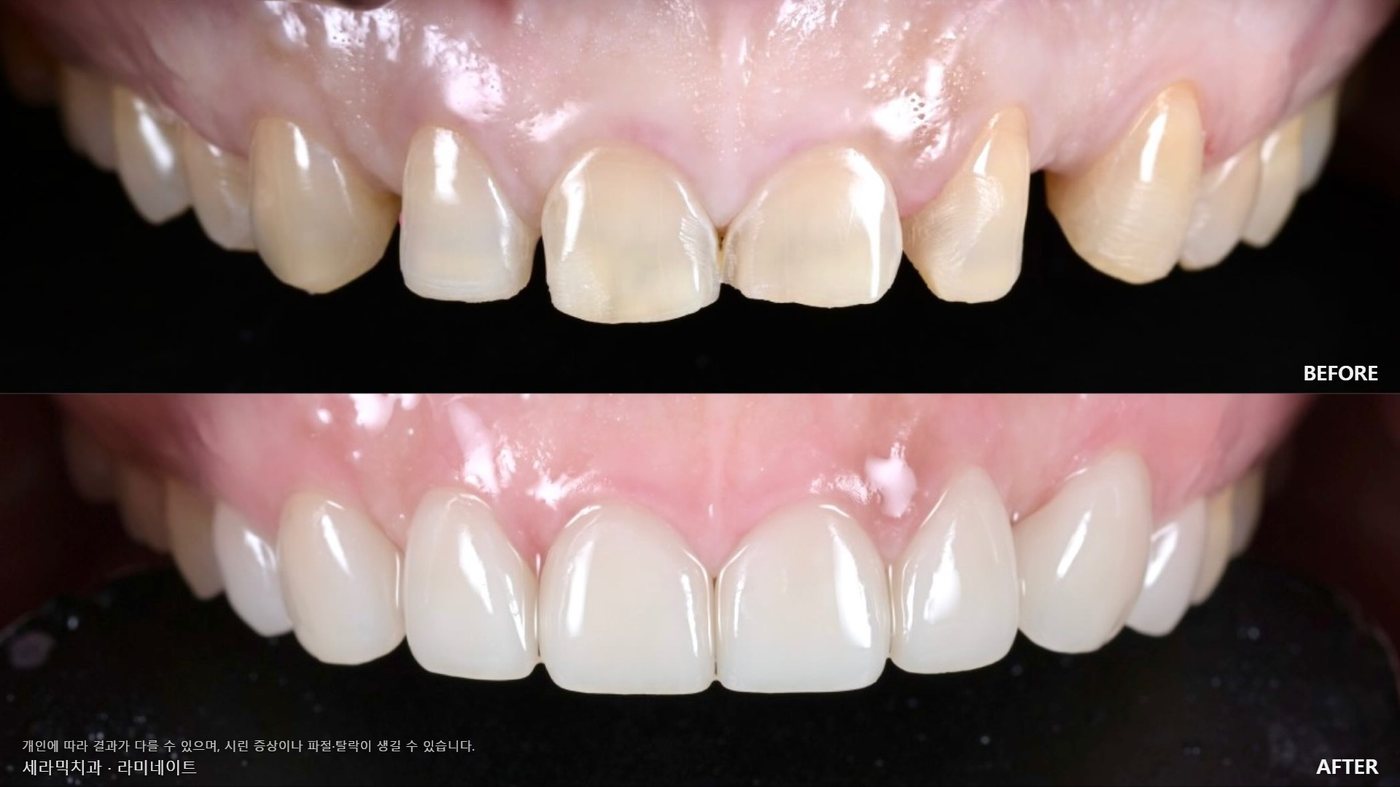
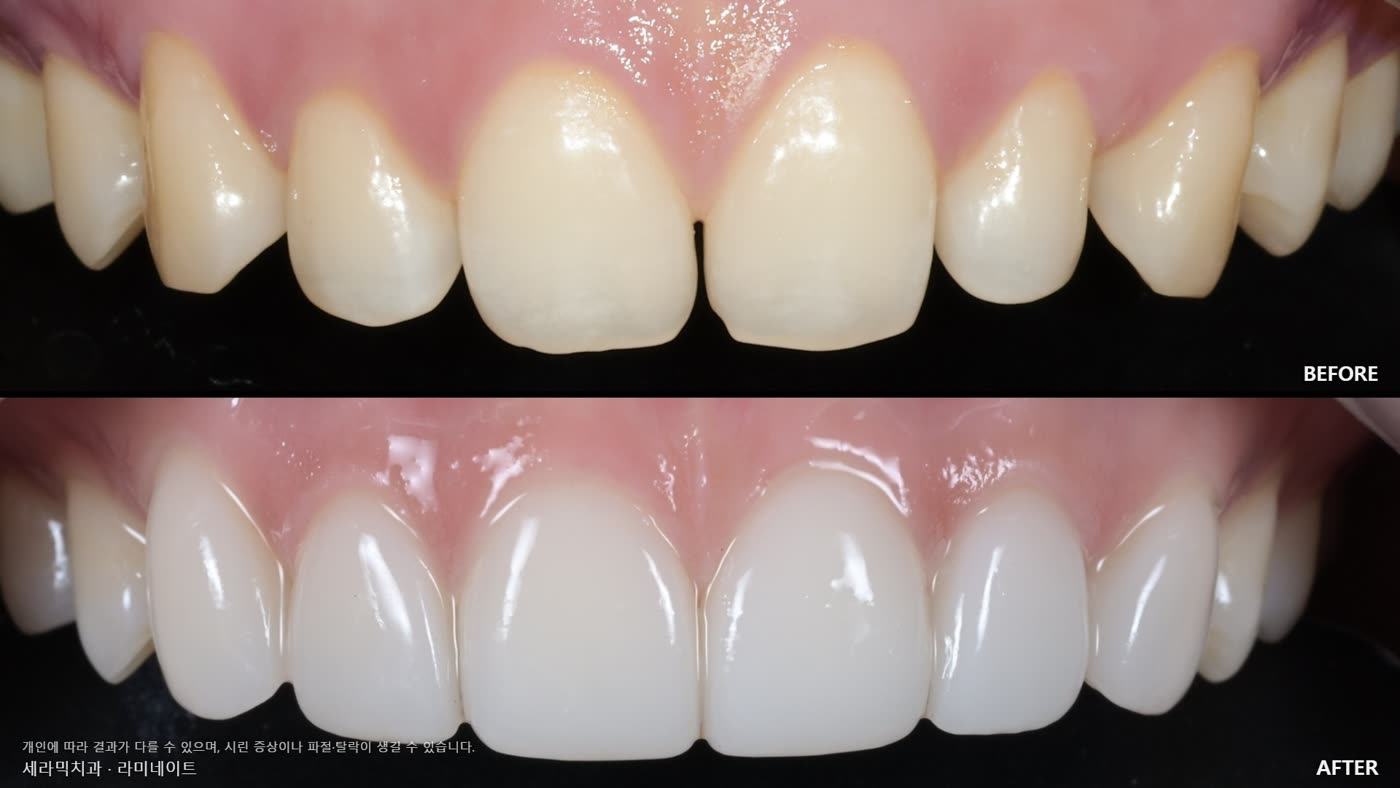
Results vary from person to person, and sensitivity, chipping or debonding can occur.
How many teeth should I do?
The more teeth you do, the higher the cost and the wider the reduction. We look at your actual smile and recommend only the teeth that show when you smile. Changing just one or two teeth can make color or shape differences with the neighboring teeth noticeable, and in that case we explain why.
Lifespan and care
Ceramic itself rarely stains, but changes in the gums, chipping or problems at the bond can mean it needs replacing at some point. It's hard to name a number of years, and care makes a big difference. If you grind or clench, wear a night guard, avoid biting hard foods with your front teeth, and have your gums and bite checked regularly.
Cost (as of October 2026)
- Ceranate veneers: KRW 550,000–770,000 per tooth (VAT included), about USD 415–580. Varies with materials and fabrication.
- Front-tooth crowns: all-ceramic KRW 700,000 (about USD 530), zirconia KRW 700,000 (about USD 530), PFZ KRW 800,000 (about USD 600) per tooth.
- Back-tooth crowns: zirconia KRW 600,000 (about USD 450), PFM KRW 450,000 (about USD 340) per tooth.
- Crowns are not subject to VAT. In Korea, VAT applies only to cosmetic treatments such as veneers and whitening.
- If a root-canal-treated tooth needs a post, add KRW 150,000 (about USD 115); a core adds KRW 100,000 (about USD 75).
- USD amounts are estimates at USD 1 = KRW 1,326 (October 22, 2026). Actual amounts depend on the exchange rate.
What to check if you're coming to Korea
- Visit schedule: Veneers usually take two visits about a week apart. At the first visit we prepare the teeth and take impressions; after about a week of fabrication, we check the color and bond them at the second visit. We prefer to bond once the teeth and gums have settled and there are no symptoms. Crowns follow the same schedule if no root canal is needed and there are no symptoms. If a root canal is needed, allow a generous month so we can confirm stability before proceeding.
- Check-ups after you go home: Send us photos after you return and we'll do a general check, and we ask you to stop by for a check-up the next time you're in Korea.
- Consultation language: Consultations are available in English.
Frequently asked questions
For front teeth, is a veneer or a crown better?
Can I get a veneer on a front tooth that's had a root canal?
I want to replace an old front-tooth crown.
Can I come in just for a consultation?
※ Results and side effects vary from person to person. You may notice sensitivity or an unfamiliar feeling after bonding or cementation.
※ Prices are as of October 2026.
Dr. Sunmin Kim Lead dentist at Ceramic Dental Clinic, board-certified orthodontist, PhD (Tokyo Medical and Dental University). Even for front-tooth consultations, he checks tooth position and bite first.