
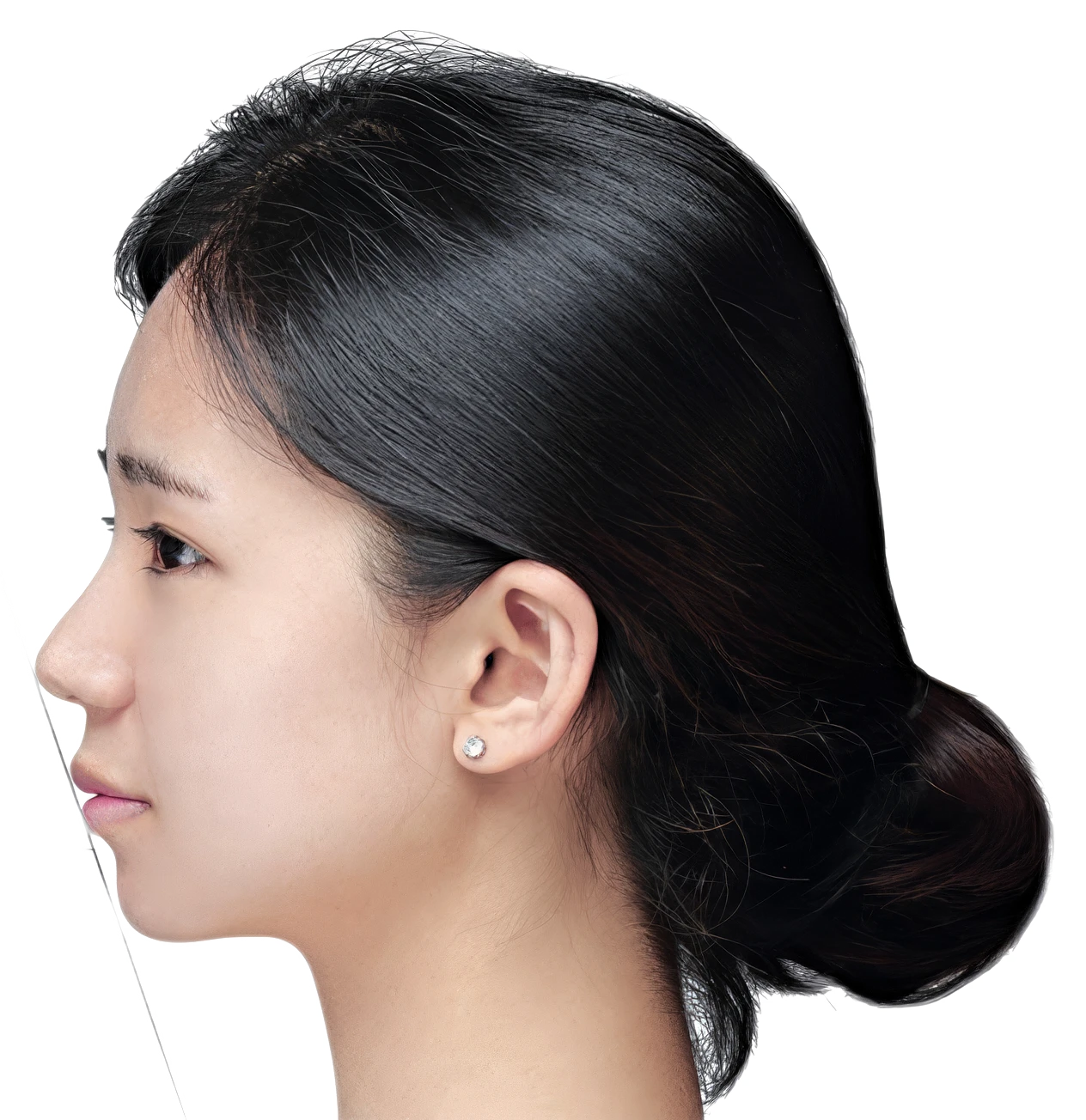
Facial Science Diagnosis
At Ceramic Dental Clinic, orthodontic treatment goes beyond simply aligning teeth to look good; it is based on facial science, which considers the balance and harmony of the whole face.
Facial Science at Ceramic Dental Clinic
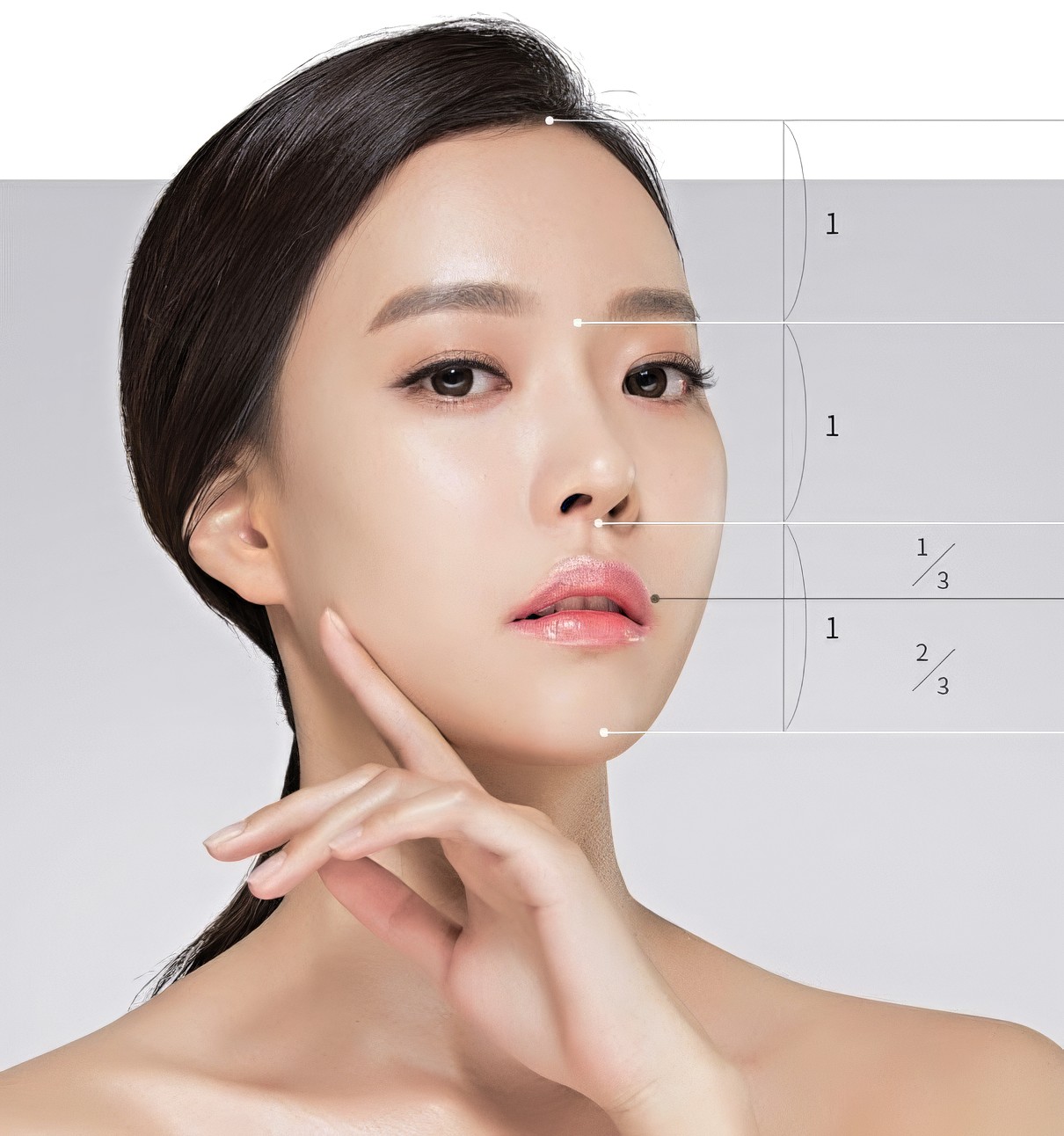
Ideal Frontal Facial Proportions
Viewed from the front, a 1:1:1 ratio between the hairline, the area between the eyebrows, and the tip of the nose is considered ideal,
and the ideal position for the lips to meet is one-third of the way from the tip of the nose to the tip of the chin.
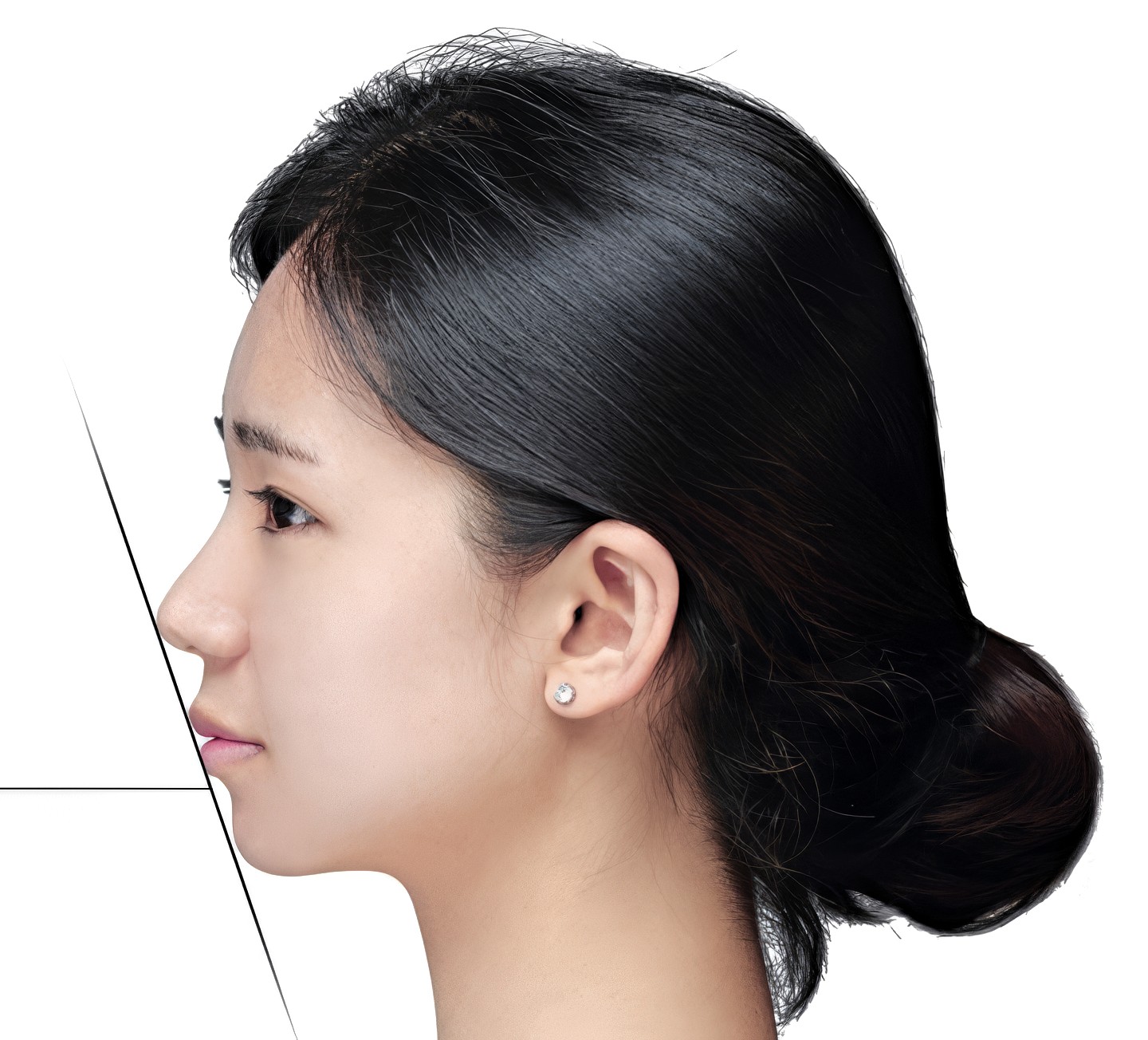
Facial Profile Science
The E-Line is the most basic method for evaluating a protruding mouth.
Viewed from the side, the degree of protrusion is judged against the line connecting the tip of the nose and the tip of the chin (the E-Line).
If you draw this line on a profile photo, or hold a ruler against your nose and chin,
and your lips extend beyond the E-Line, it can be called a protruding mouth.
Considering the Growth and Changes of the Facial Bones
The facial profile, from the tip of the nose to the mouth and chin, is rounded and protruding in childhood, becomes straighter toward adulthood, and the mouth becomes more recessed with age.
Lower jaw growth peaks in adulthood, and after that the alveolar bone (the bone that holds the teeth) is resorbed, so the mouth can actually look more recessed.
(Conversely, in some cases the mouth becomes more protruding with age.)
Based on about 5,000 orthodontic cases, Ceramic Dental Clinic not only considers age-related changes in the jawbone from the start of treatment,
but also checks the growth and changes of the facial bones through regular exams during treatment, working to make orthodontic treatment more effective.

FAQ
Tap a question to see the answer.
Will orthodontic treatment change my face?
What orthodontics changes is the alignment of your teeth, the position of the gum bone around them, and the position of the lips over them. There are limits to changing a fully grown jawbone with orthodontics alone. So I first explain which parts can be improved with orthodontics and which parts are difficult to improve.
What examinations do you do?
We do not draw conclusions from photos of the teeth alone. We check the position of the teeth and jawbones with the examinations below.
- Side-profile X-ray (cephalogram): position of the teeth and jawbones, angle of the front teeth
- Panoramic X-ray: tooth roots, wisdom teeth, condition of the gum bone
- Frontal X-ray (PA cephalogram): once you decide to start treatment, to check left-right asymmetry
- Facial photos: once you decide to start treatment, front, 45-degree and side views, relaxed and smiling
- Intraoral scan (iTero): when needed, a 3D impression of your teeth without biting into impression material
What do you look at when planning treatment?
I do not aim only for straight teeth. I plan the line and shape of the teeth seen when you smile, facial harmony, the lips, the bite and long-term retention together. I explain the expected changes and what will not change with numbers and drawings.
How do you explain the treatment plan?
I go through five points in order: cause, method, duration, limitations and other options. The method covers whether extraction is needed, whether mini-screws (small screws used as anchors) are used, and the type of appliance. Other options include partial orthodontics, surgical orthodontics and laminate veneers.
How often do I need to visit during treatment?
After the appliance is placed, the first two visits are two weeks apart so we can check how you are adjusting. After that, you usually come once a month for adjustments. Partway through, we may reassess your profile and adjust the plan.
What if the difference in the jawbones is large?
If it is hard to reach the change you want with orthodontics alone, we discuss surgical orthodontics together. When surgery is needed, we guide you so that you can choose between a local partner hospital or a university hospital.
Can I start treatment on the day of my consultation?
We first do a detailed examination and explain the plan. You can start once you fully understand the plan.
How long does orthodontic treatment take?
It depends on the condition of your teeth. For protrusion we usually estimate about 2 to 2.5 years, but it varies with the diagnosis and how far the teeth need to move. We give you an estimated period after the examination.
Can I come if I work during the day?
We are open until 9 p.m. on Tuesdays and Thursdays, so you can come after work.
Side effects and limitations
- Root resorption, where tooth roots become shorter, can occur during treatment, and the degree varies from person to person.
- The gums may recede or gaps may appear between the teeth.
- If the retainer is not worn properly after treatment, the teeth can move again.
- Jawbone problems have limits when treated with orthodontics alone.
Treatment results and side effects may vary from person to person.