
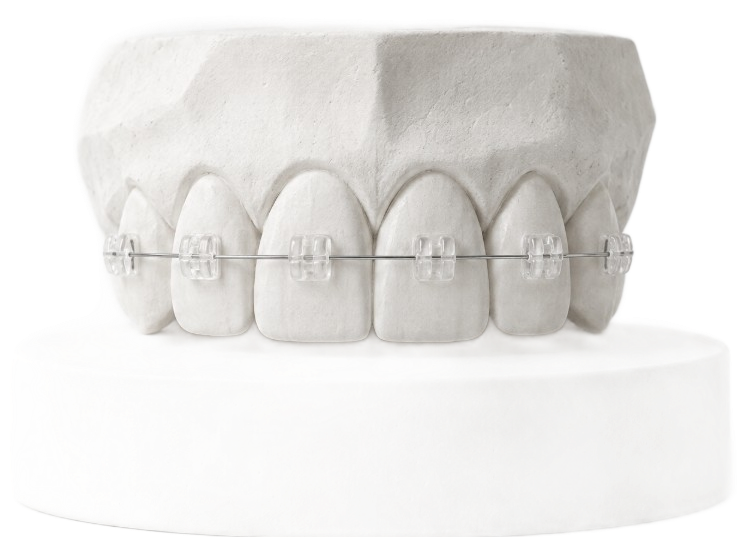
Self-Ligating Braces
Self-ligating braces hold the brackets to the orthodontic wire by opening and closing a cap attached to each bracket, without using elastic rings or ligature wires.
What are self-ligating braces?
‘Self-ligation’ is a system in which the appliance (bracket) is held to the orthodontic wire not with rubber rings or wire ties, but simply with a sliding door built into the appliance (a cap that opens and closes).
There is less friction between the appliance and the wire, less pain, and treatment time may be shorter.
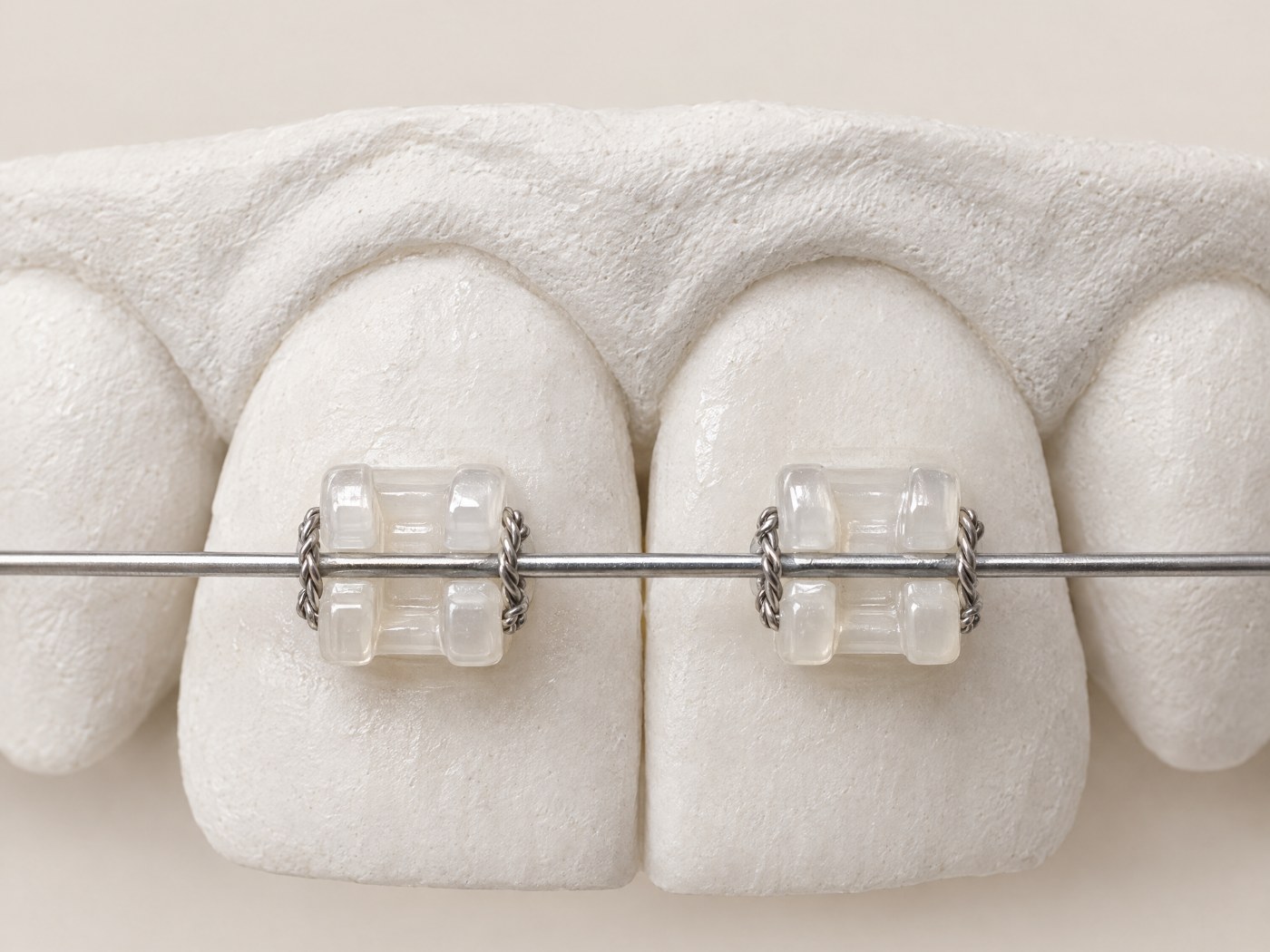
Wire ligation
In this method, fine wire ties hold the bracket to the orthodontic wire, which creates friction between the orthodontic wire and the bracket.
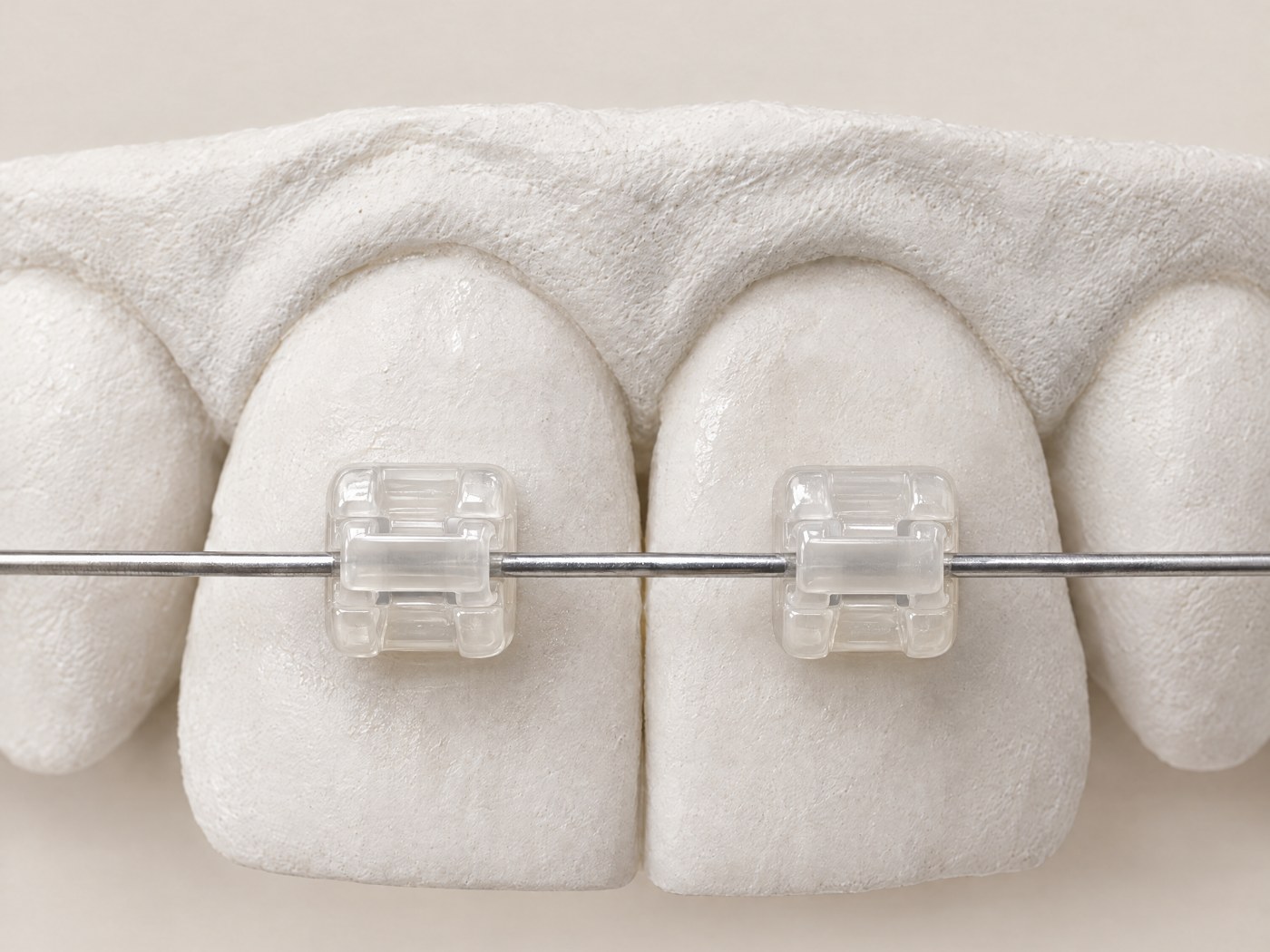
Self-ligation
Instead of tying with wire, a cap is closed to hold the wire in place, so there is less friction between the appliance and the wire, less pain, and treatment time may be shorter.
Advantages of self-ligating braces
Less pain during orthodontic treatment
Compared with conventional ligation, a lighter orthodontic force is applied to the teeth steadily, which reduces pain.
Less foreign-body feel in the mouth, prevents sores
Because no wire ties are used, there is less foreign-body feeling, and no wire pokes the inside of your mouth.
Shorter appointments
Appointments are shorter than with rubber-ring or wire ligation.
(About 50% less time)
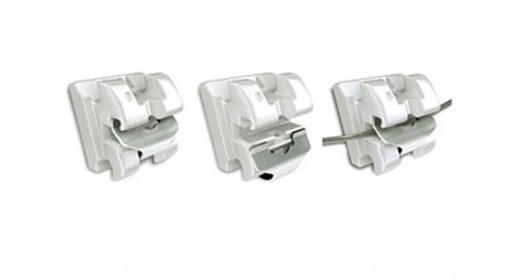
Clippy-C
A product of TOMY (Japan): the bracket is made of ceramic and the cap of Elgiloy alloy.
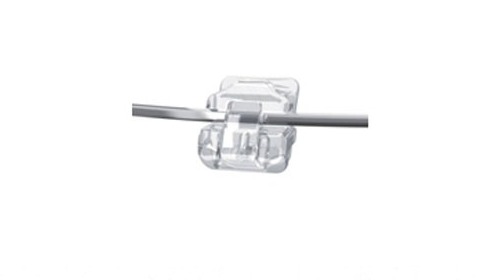
Damon Clear
A product of ORMCO (USA): even the ‘cap’ is ceramic, making it the most esthetic appliance.