Last reviewed October 29, 2026 · Dr. Ilseop Ahn (board-certified periodontist and board-certified specialist in advanced general dentistry)
At a glance
Good for
When you have or suspect a cavity
Treatment flow
Check the depth on X-rays → remove the decay → choose resin, inlay, or crown based on the remaining walls
Duration and limits
Resin is done the same day; an inlay usually takes 2 visits. We choose the option that removes the least tooth
Details
How a cavity is treated depends on how deep it is and how much of the tooth is left. An early cavity that stays in the outer enamel can be watched with fluoride and good care, and a small cavity that has reached the dentin is filled with resin on the same day. Even a wide cavity in a molar can be treated with an inlay made from an impression (usually 2 visits) if enough of the side walls remains. A molar that is badly broken or has had a root canal treatment is covered with a crown. At Ceramic Dental Clinic, we first check the depth on X-rays, remove the decay, and then check the thickness of the remaining walls directly to choose the option that removes the least tooth.
01°
Even for cavities, treatment differed depending on depth and how much tooth was left
We treated a small cavity with resin, a wide cavity with walls remaining with an inlay, and a cavity that reached the nerve with a root canal treatment and a crown. We show why we chose each option with X-rays and intraoral photos.
CASE01
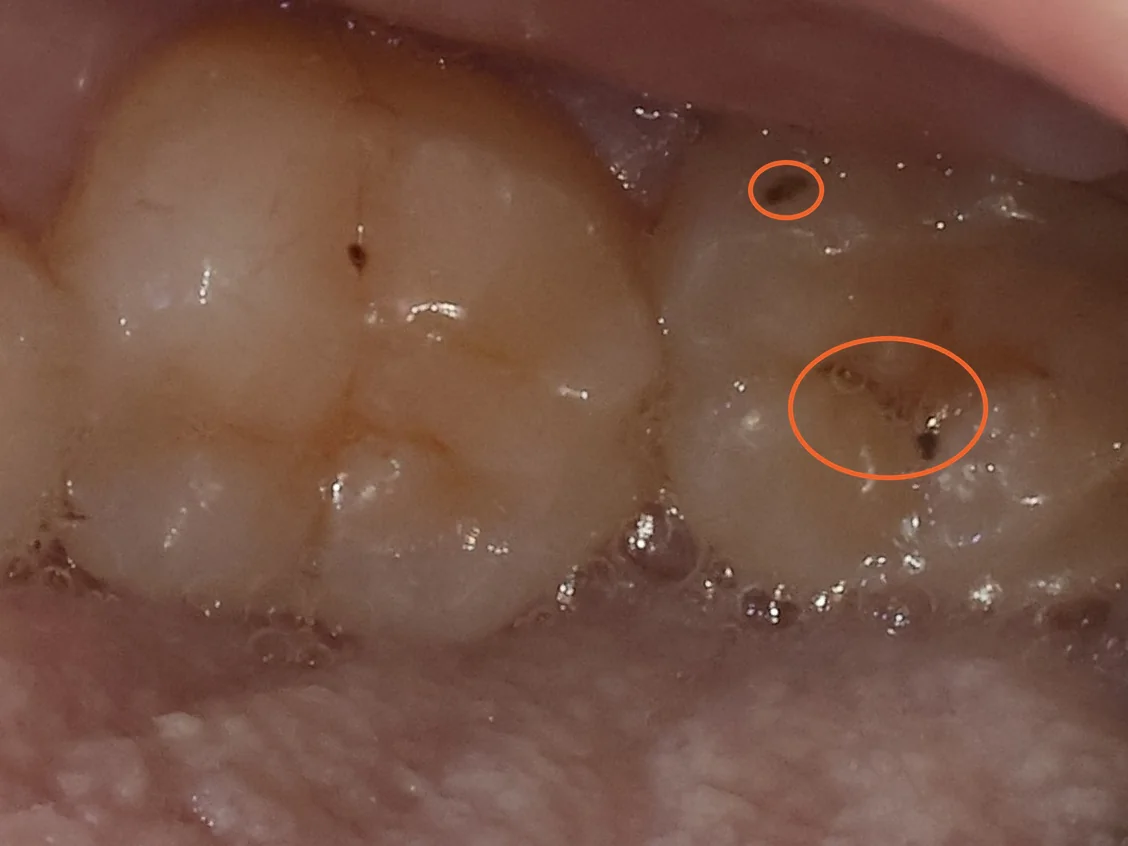
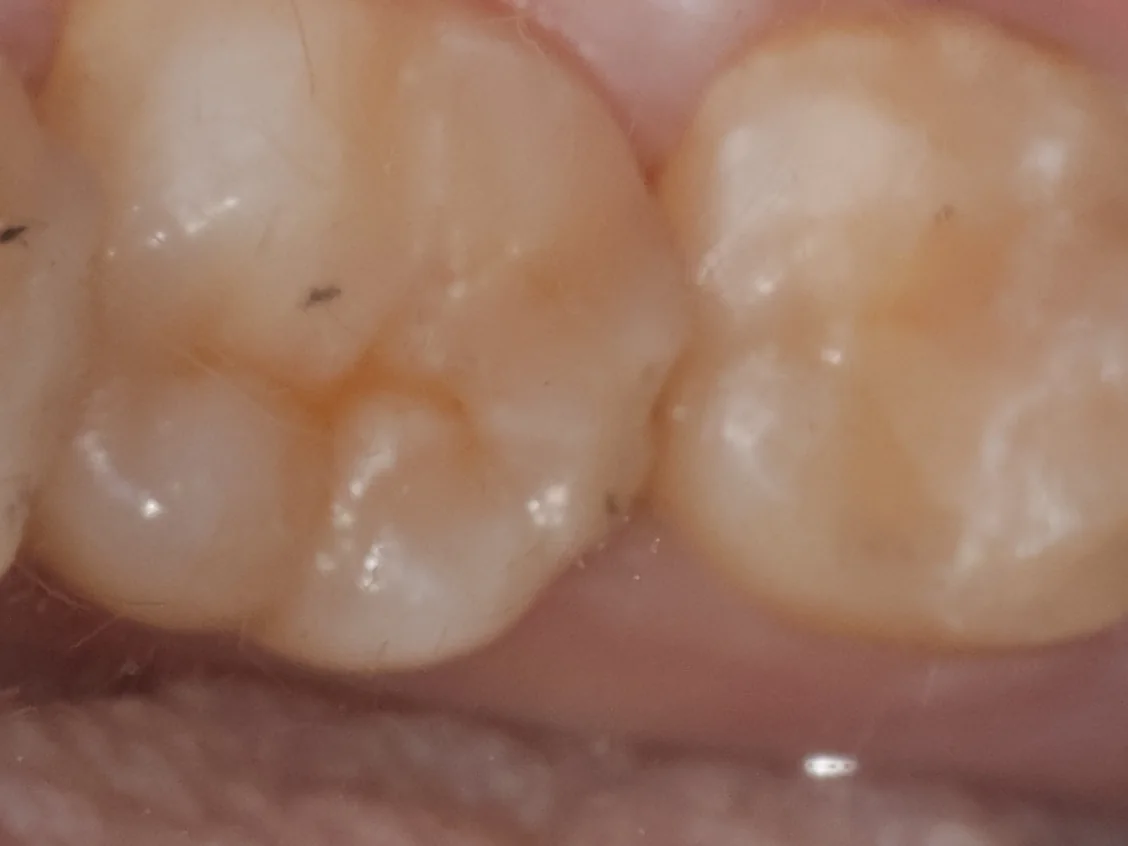
A small cavity in the groove of a molar's chewing surface
Resin · only the decayed part removed and filled with tooth-colored resin on the same day
Before treatment · April 2026
Molar chewing surfaces before treatment. The inside of the groove in the back molar had turned black (orange circle), and X-rays confirmed a cavity that had reached the shallow dentin.
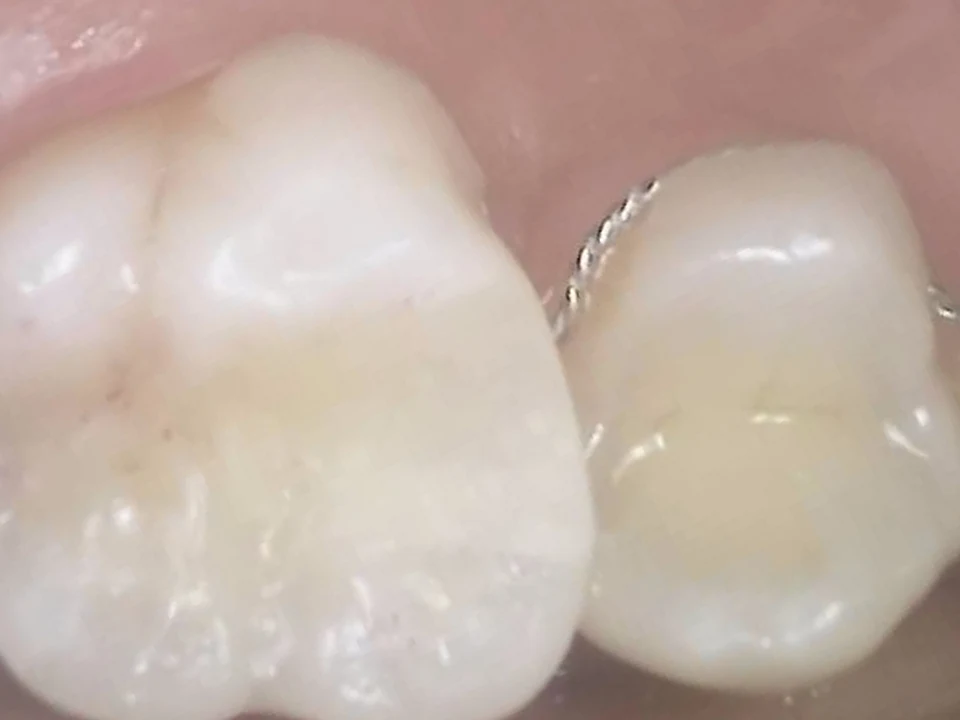
After treatment · April 2026
Right after the resin filling. Only the decayed grooves were removed and filled, so the healthy tooth walls and cusps remained intact.
Condition
A cavity that started in the groove of the chewing surface and reached the shallow dentin
Chosen
Only the decayed part removed and filled with tooth-colored composite resin
Not done
Inlay (the cavity was small and the walls were thick, so there was no reason to remove more tooth)
A cavity between molars that could not be seen from the outside
Inlay · after the decay was removed, enough of the side walls remained, so an inlay was used instead of a crown
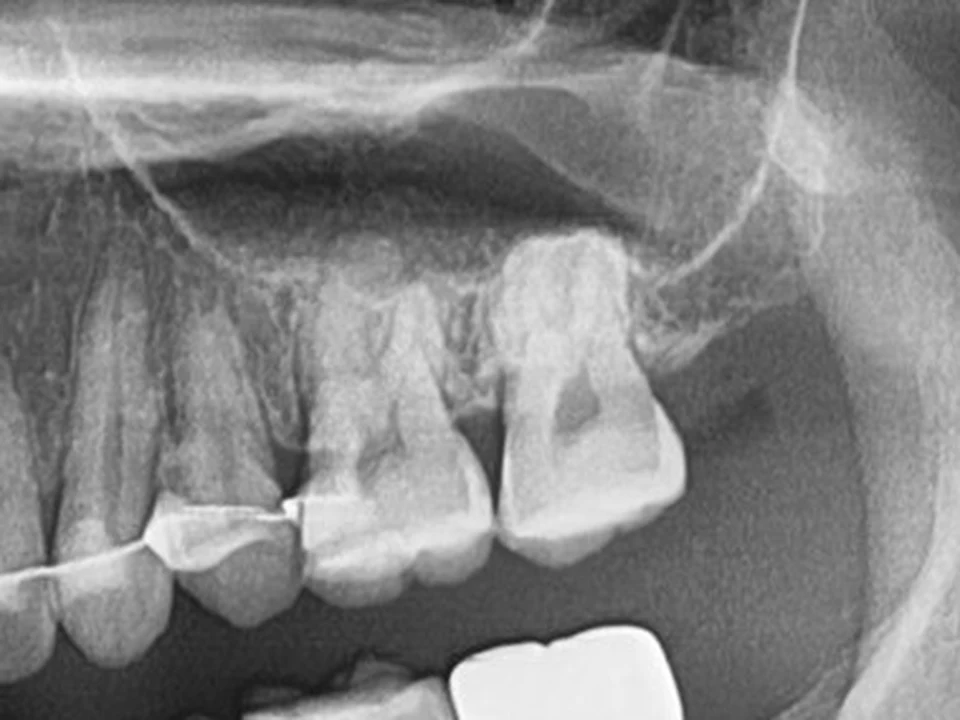
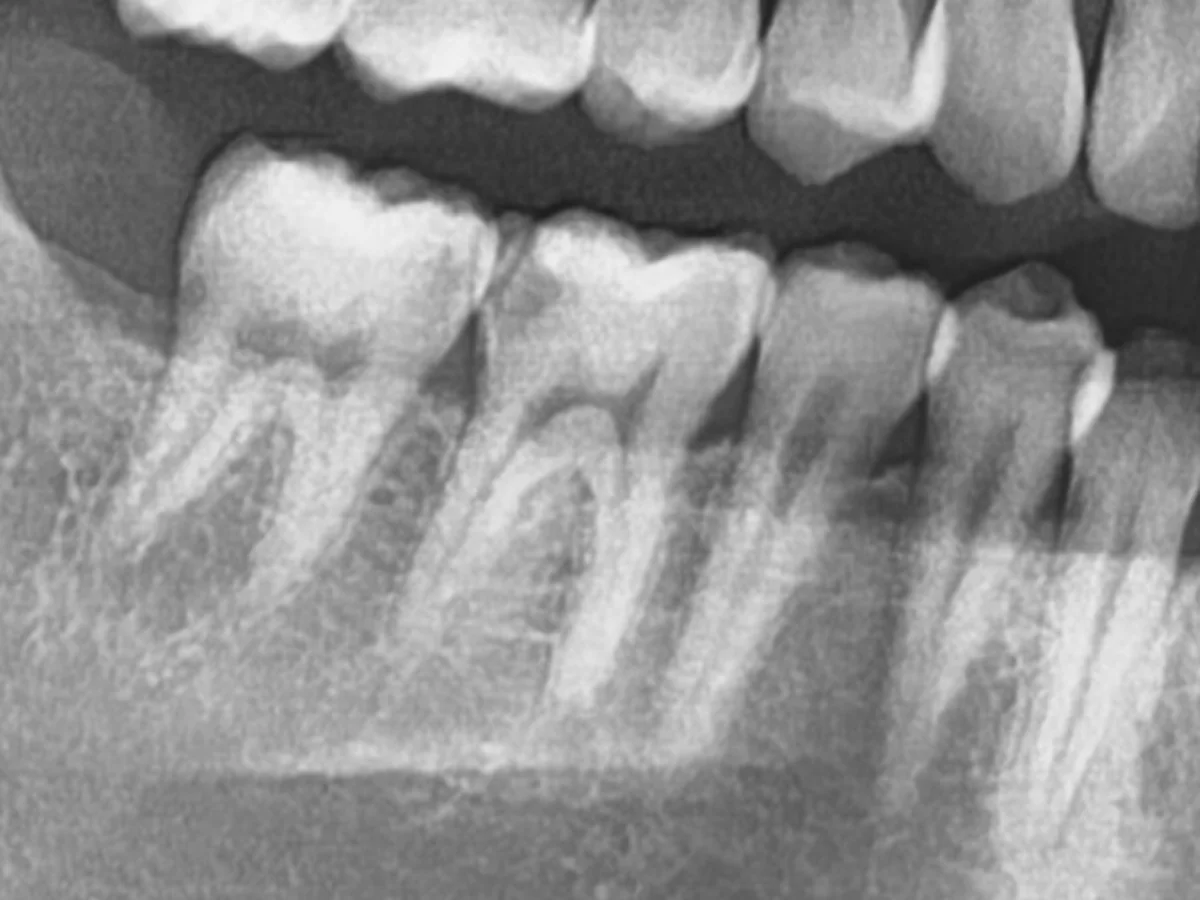
X-ray before treatment
X-ray enlarged from the pre-treatment panoramic image. A cavity shadow was visible on the side of the upper left first molar. It could hardly be seen from the outside.
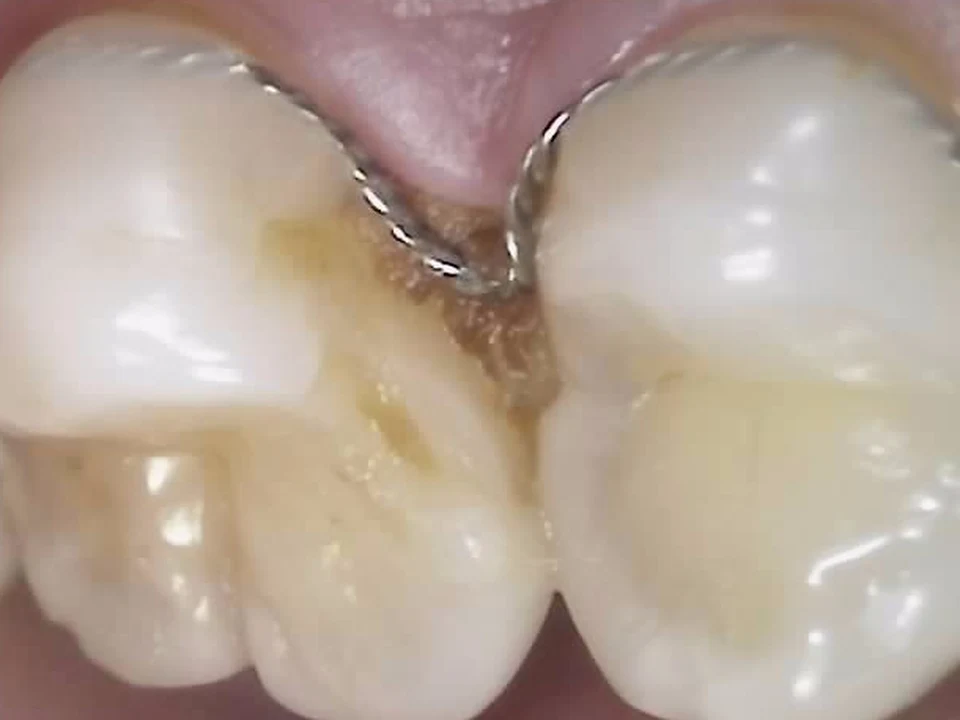
Before treatment · April 2026
Before the decay was removed. The chewing surface looked fine, but a brown cavity was hidden between the two teeth.
After treatment · April 2026
After the inlay was bonded. We adjusted the contact between the teeth and the bite height so food does not get stuck.
Condition
A cavity not visible from the outside that showed on X-rays as reaching the dentin between the teeth
Chosen
Hybrid inlay chosen after checking the thickness of the walls remaining after decay removal
Not done
Crown (the side walls and cusps remained, so there was no reason to trim the whole tooth)
Duration
2 visits (1–2 weeks apart)
Note
The border between the teeth is cared for with floss and checked with X-rays every year. Learn more about inlays →
CASE03
A deep cavity that throbbed at night
Crown after root canal treatment · the infection had reached the nerve, so the inside of the roots was filled and the tooth was covered
Before treatment
X-ray before treatment. The cavity had reached the nerve space, and the bone around the root tip looked dark.
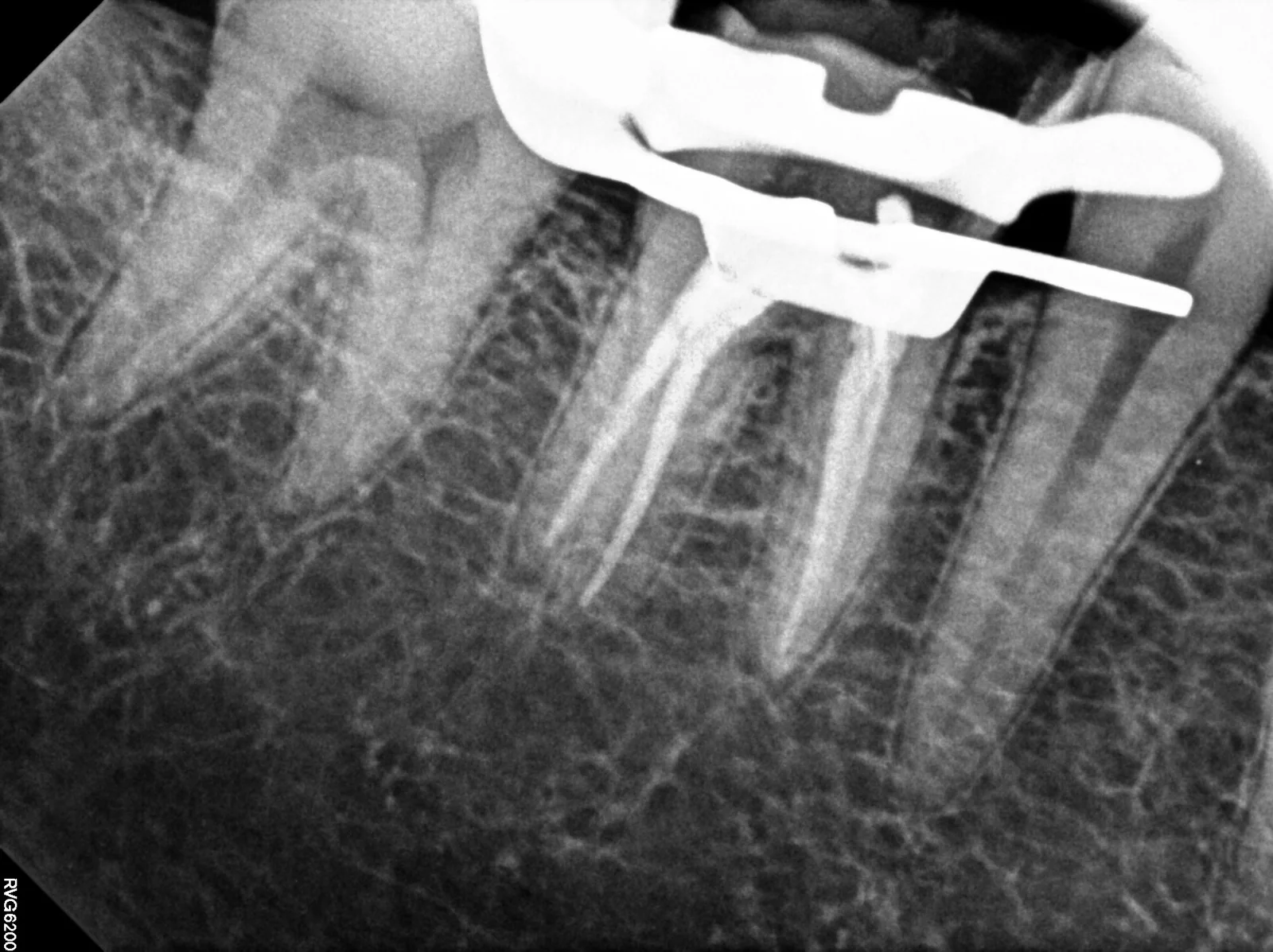
Right after root canal treatment
Right after root canal treatment. The inside of the roots was cleaned all the way to the end and filled with a material that appears white.
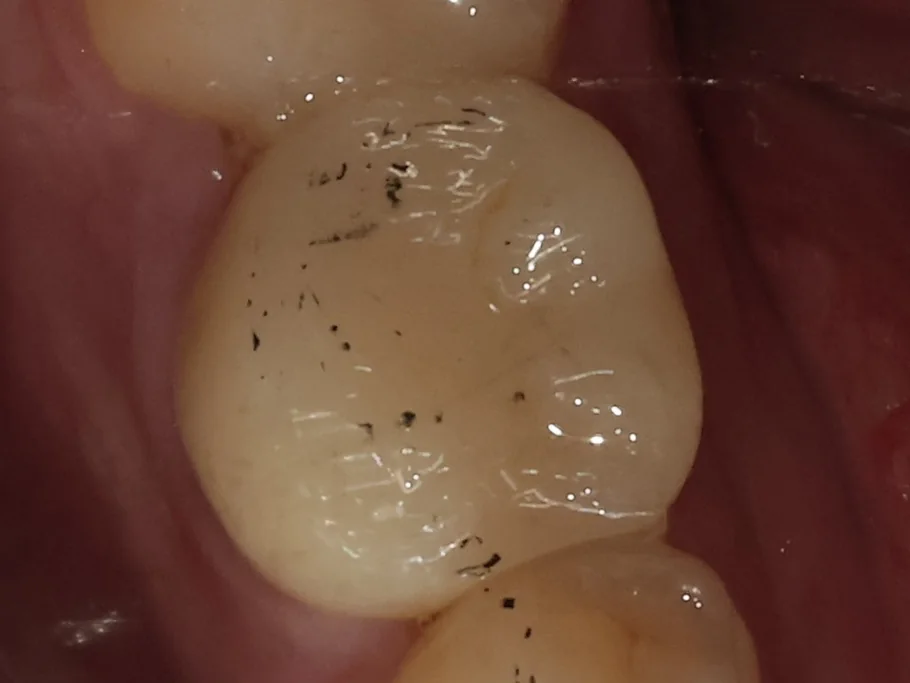
After crown · August 2026
After the crown was placed. The molar, weakened by root canal treatment, was covered so it would not break under chewing force.
Condition
The cavity reached the nerve, and the nerve inflammation was at an irreversible stage
Chosen
2–4 sessions of root canal treatment, followed by a core build-up and crown
Not done
Extraction and implant (the root and surrounding bone were in a condition that could be kept)
* Photos were taken under the same conditions and published with the patients' consent. Treatment results and side effects may vary from person to person.
02°
Removed tooth structure does not grow back. We treat only as much as needed
ONE
Dr. Ilseop Ahn is both a board-certified periodontist and a specialist in integrated dentistry, so the gums are checked along with cavity treatment.
TWO
We look at all teeth with a digital panoramic X-ray and at suspicious teeth with periapical X-rays, and if needed we check the distance to the roots and nerve with a Vatech 3D CT.
THREE
While looking at the exam images with you, we explain which of resin, inlay, or crown is possible, and how much tooth each removes, how many visits it takes, and its limits.
Key Point. 1
Keep treatment small when a small repair is enough
The amount of tooth removed increases from resin to inlay to crown. We check the depth on X-rays, remove the decay, and then look directly at the remaining walls to first judge whether a smaller treatment is enough.
BasisCavity depth checked on X-rays · final decision based on the thickness of the walls remaining after decay removal
Key Point. 2
Save the nerve when it can be saved, and look for ways to save the tooth before extraction
For deep cavities, we stop close to the nerve and check whether the nerve can be saved. Only after judging whether the tooth can be kept with root canal treatment or root canal retreatment do we talk about extraction and implants.
Key Point. 3
A specialist for each area
Care that saves each individual tooth is provided by a specialist in integrated dentistry, and problems with the gums and roots by a board-certified periodontist. If you plan to have orthodontic treatment, we coordinate the treatment order with Dr. Sunmin Kim, a board-certified orthodontist.
BasisDr. Ilseop Ahn is a board-certified periodontist and a specialist in integrated dentistry.
ABROAD
Living in Korea
Questions from international patients who live in Korea.
Can I use Korean National Health Insurance?
If you are enrolled in Korea's National Health Insurance, insured treatments are billed under the same insurance rules as for other enrollees. Whether a treatment is covered depends on the treatment and the insurance rules, and we tell you before treatment starts. If you are not enrolled, you pay the full fee.
Can I be seen in English?
Yes. The doctor in charge of each field consults with you directly in English, so you do not need an interpreter.
I am in Korea only for a short trip. Can I have this treatment?
It depends on how many visits the treatment needs. Tell us your travel dates when you contact us, and we will tell you after the examination whether the schedule is realistic.
Results, the number of visits and schedules vary from person to person. More questions: Visiting from abroad.
03°
What is your concern? Detailed explanations by concern
Cavity treatment depends on how deep the cavity is
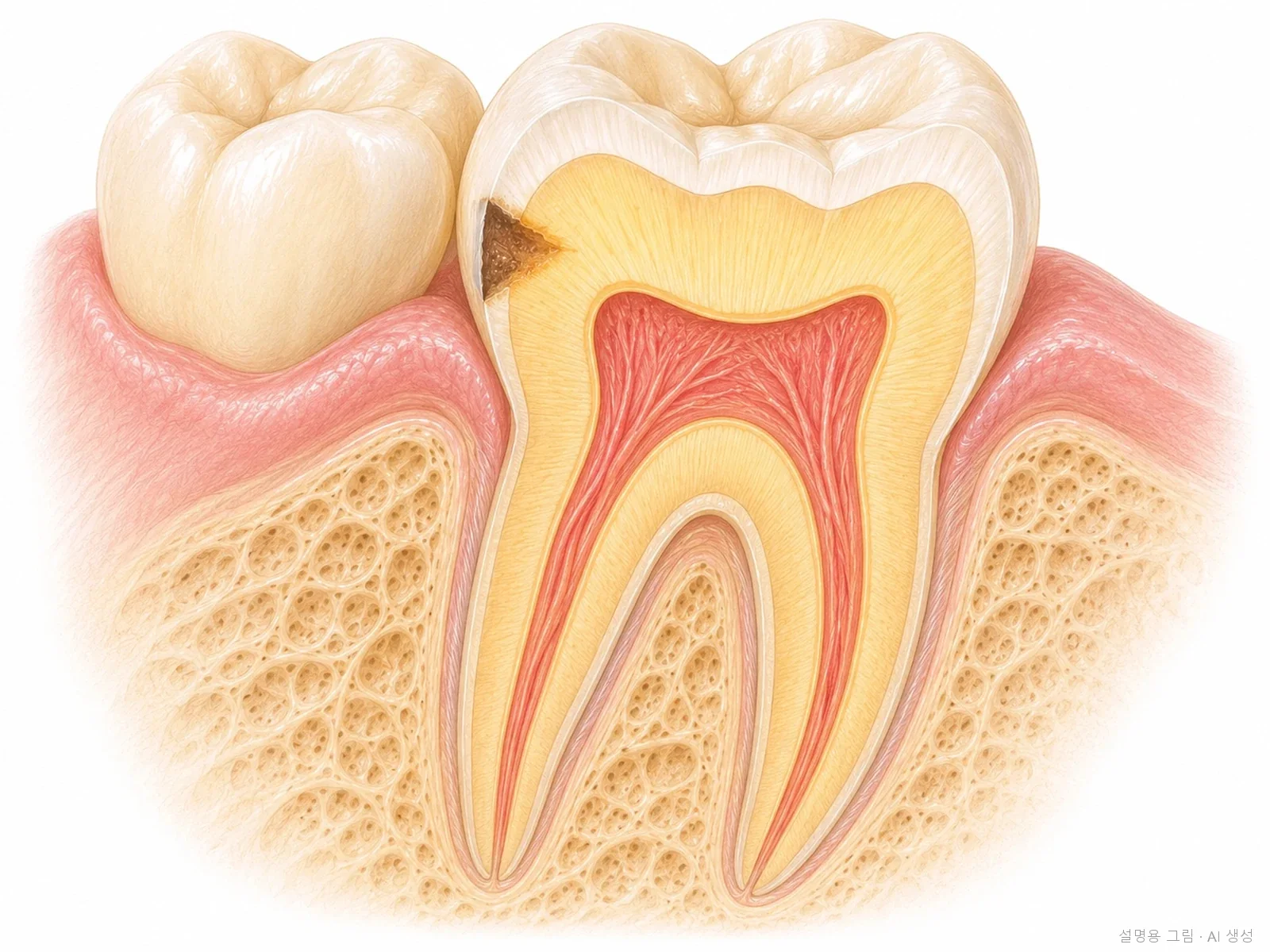
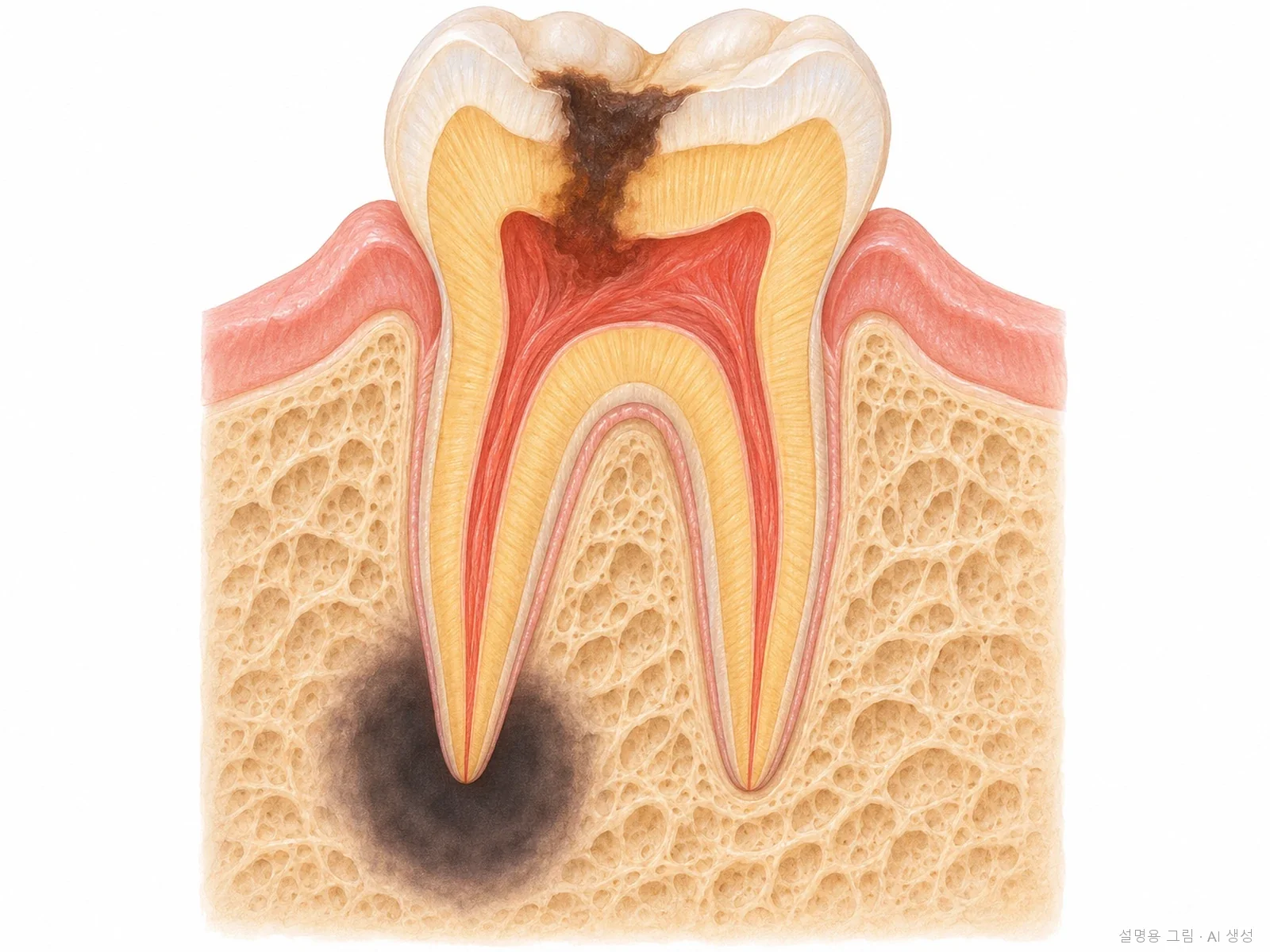
A tooth is made of hard enamel on the outside, dentin inside it, and the nerve (pulp) at the very center. How far the cavity has gone determines the treatment.
01A cavity only in the outer enamel
This is an early cavity where the tooth has turned white or the groove is lightly stained. If no hole has formed, its progress can be stopped with fluoride, brushing, and flossing, so we watch it at regular checkups.
02A cavity that has reached the dentin
Dentin is softer than enamel, so decay spreads quickly. It does not heal on its own, so it is treated with resin or an inlay depending on its size.
03A cavity close to the nerve
If the tooth is sensitive to cold but settles quickly, the nerve may still be at a stage where it can recover. We remove the decay carefully and check whether the nerve can be saved.
04A cavity with infection reaching the nerve
The tooth often throbs even when you are not doing anything, or pain wakes you at night. The inside of the roots is cleaned and filled with root canal treatment, and molars are then covered with a crown.
Dentin cavity
A cavity that has reached the middle of the dentin. Healthy dentin remains between the cavity and the nerve, so it can be treated with resin or an inlay.
Cavity reaching the nerve
A cavity that has reached the nerve. If an inflammation shadow appears at the root tip, root canal treatment is needed.
X-rays sometimes make a cavity look smaller than it really is. That is why we decide the final option after removing the decay and seeing its actual size.
05°
How cavity treatment proceeds
There are seven steps, from examination to regular checkups. For each step, we explain what we look at and why, with real clinical photos.
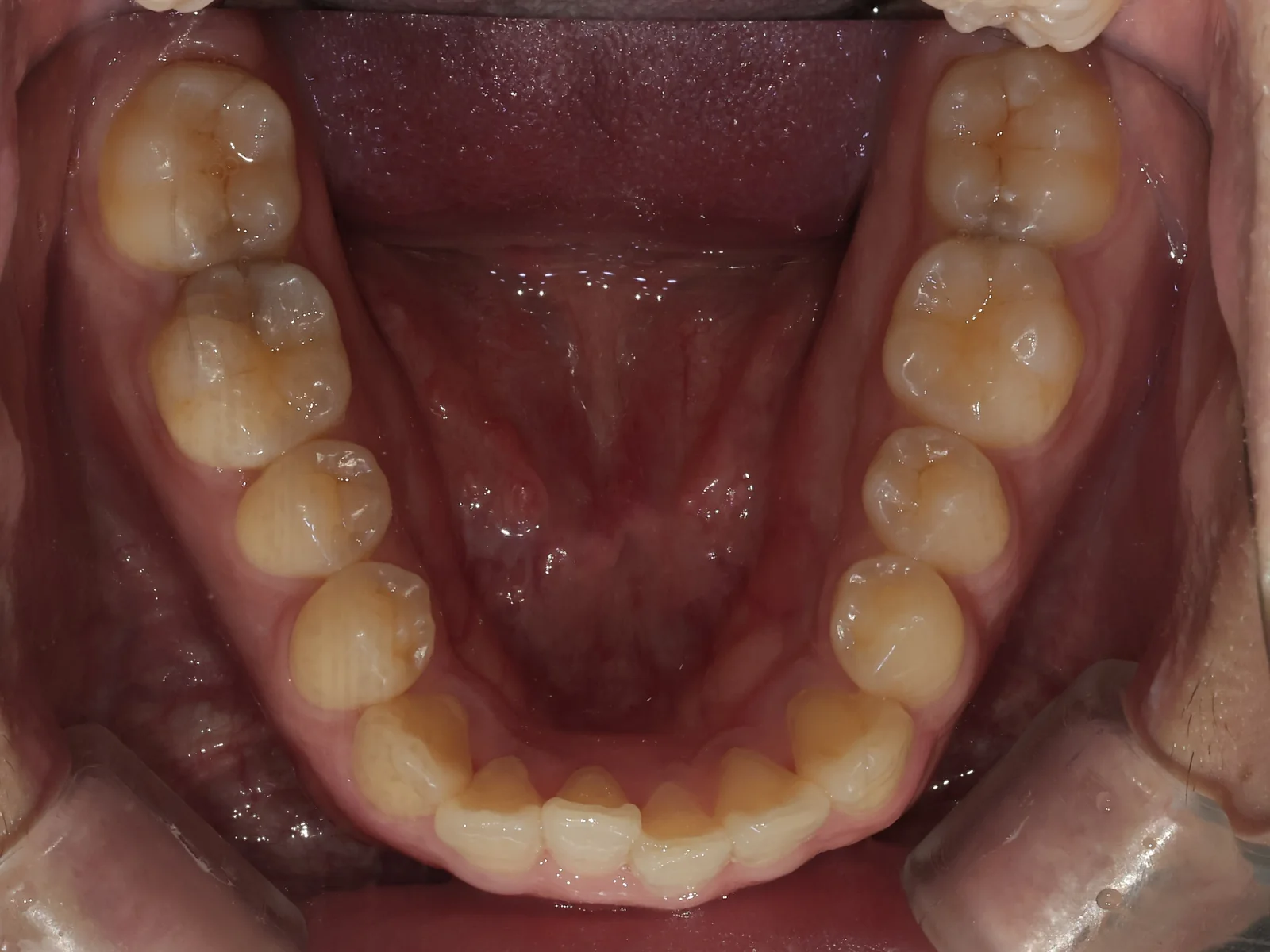
Interview and intraoral photos
Intraoral photos of the upper and lower chewing surfaces. Suspicious grooves, old restorations, and worn surfaces are recorded on one screen.
STEP 01
We ask when it hurts and photograph your whole mouth
We ask whether the tooth is sensitive to cold, twinges with sweets, hurts when you chew, or throbs even when you are not doing anything. Then we photograph all upper and lower teeth to record color changes in the grooves, old restorations, and broken areas.
Why we do thisHow it hurts gives a clue to the condition of the nerve. Sensitivity that settles soon after the stimulus goes away and pain that lasts on its own call for different treatment.
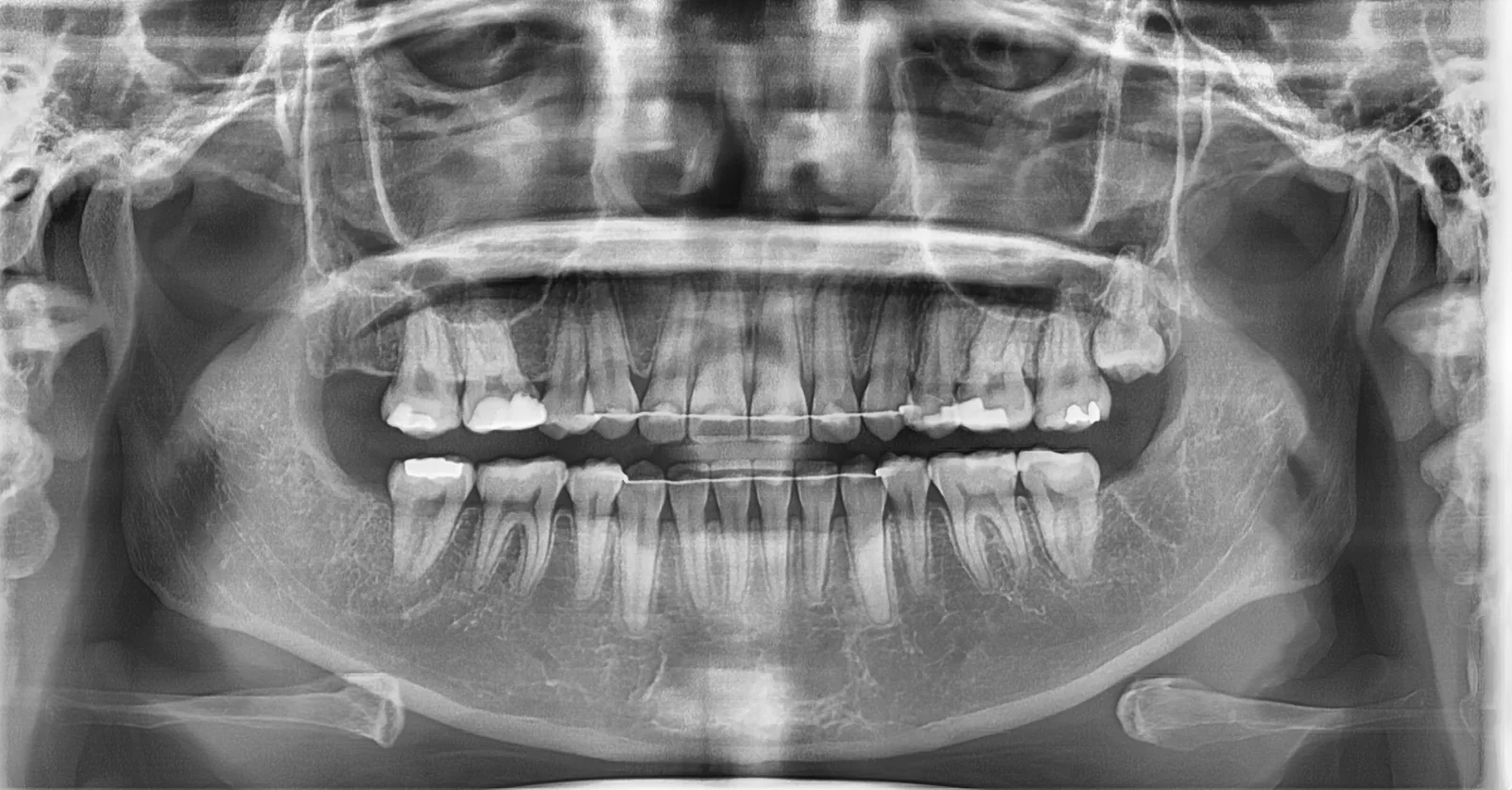
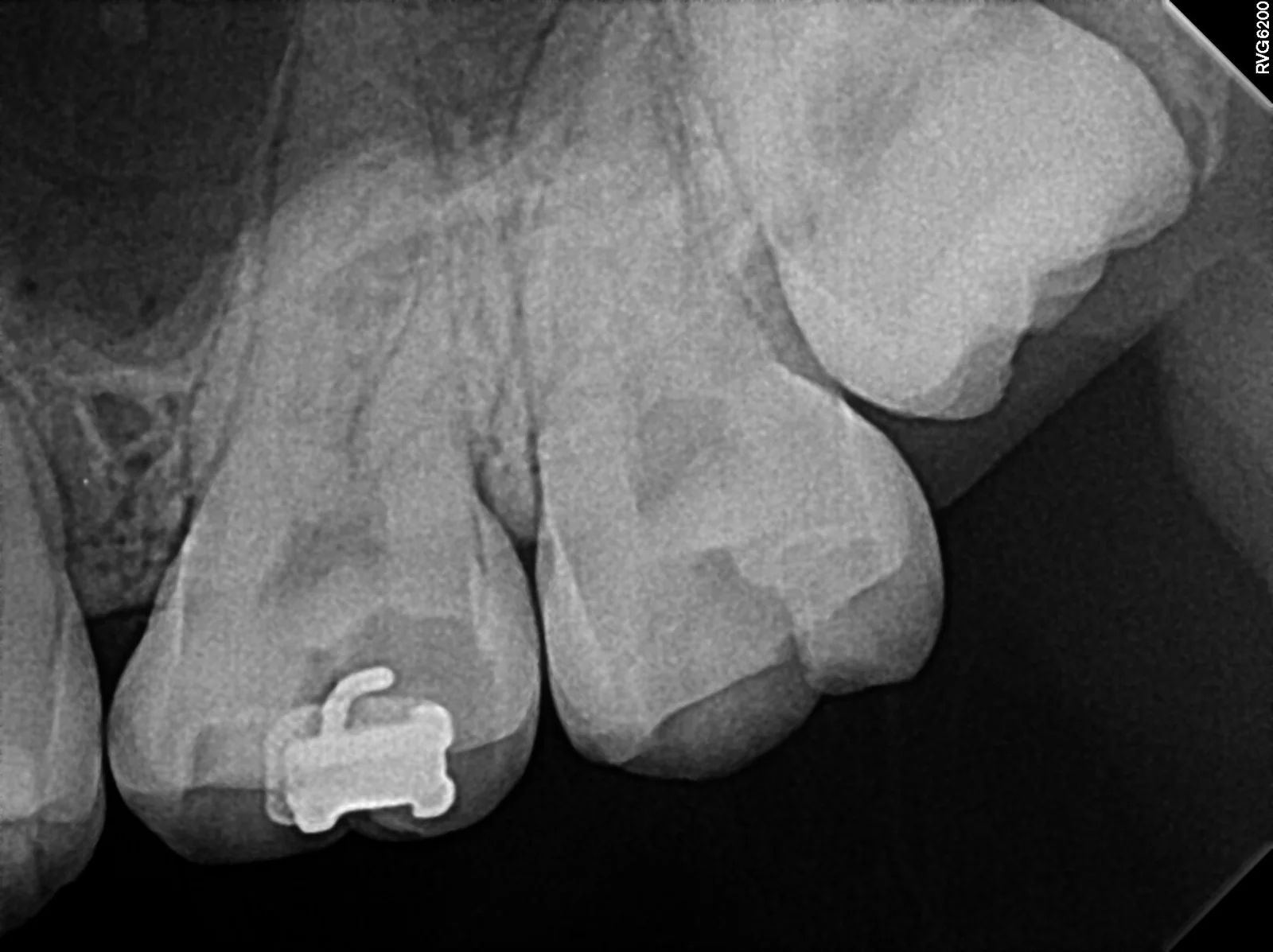
Panoramic
Periapical
We look at all teeth on the panoramic X-ray and at suspicious teeth in detail on periapical X-rays. Cavities between teeth show up on X-rays before they can be seen by eye. The panoramic and periapical images are from different patients.
STEP 02
We check cavity depth and the areas between teeth on X-rays
With a digital panoramic X-ray, we look at all teeth, roots, and wisdom teeth, and for teeth with suspected cavities we check the depth with periapical X-rays. If inflammation at the root tip or the distance to the nerve is unclear, we check in 3D with a Vatech 3D CT.
Why we do thisCavities between teeth and new decay under old gold fillings or resin (secondary caries) can hardly be seen from the outside. Finding them before they hurt allows smaller treatment.
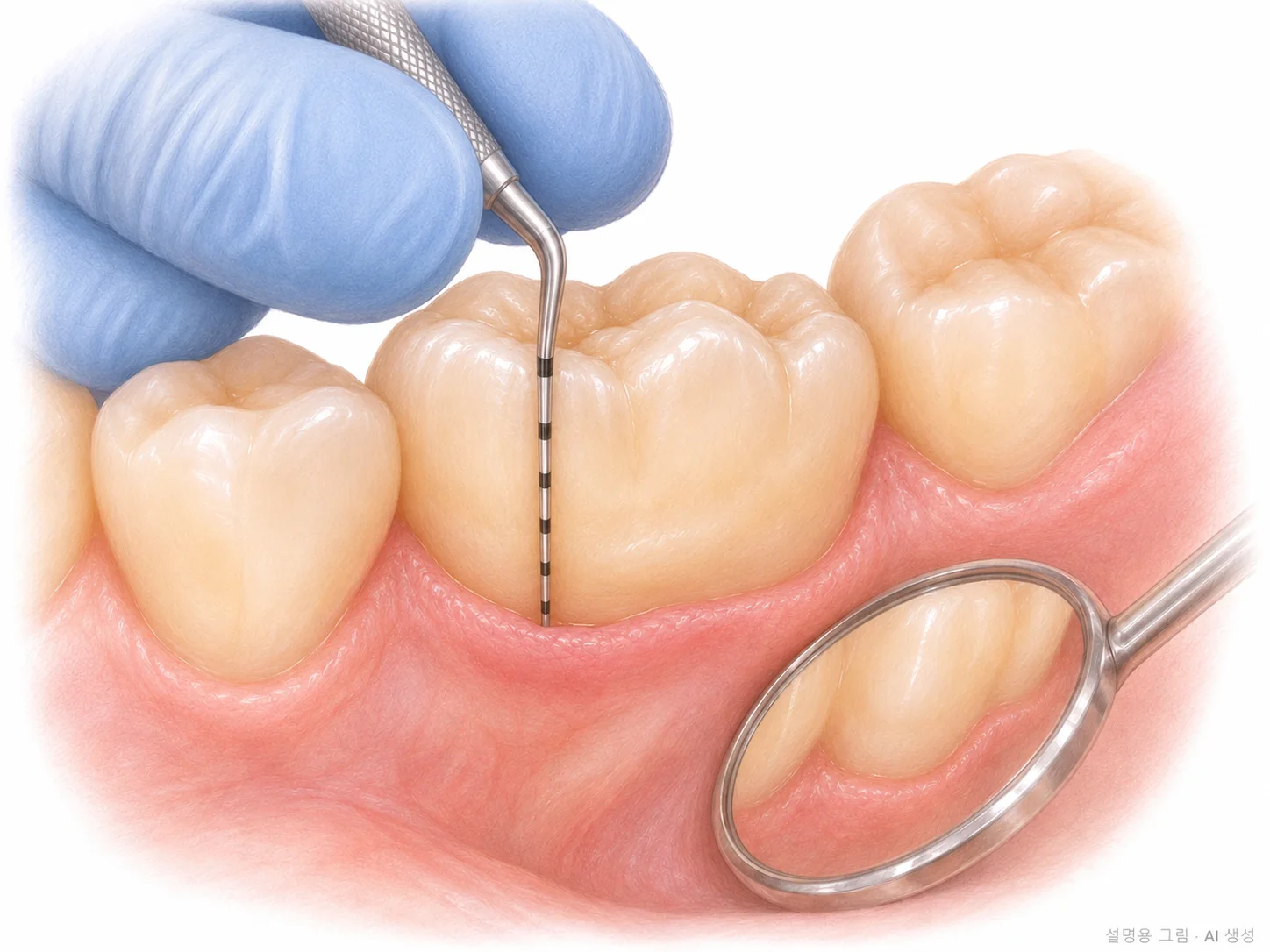
Gum exam
Measuring gum depth. We first check whether the gums around the tooth to be treated are inflamed.
STEP 03
We check the gums and bite together
A board-certified periodontist checks gum depth and bleeding around the tooth to be treated. If the chewing surfaces are worn flat or cracks are visible in the teeth, we also check for grinding or clenching.
Why we do thisIf the gums are inflamed, blood and fluid keep resin or inlays from bonding well, and the border can soon open up. For people who grind their teeth, ceramics break more easily, so the choice of material changes.
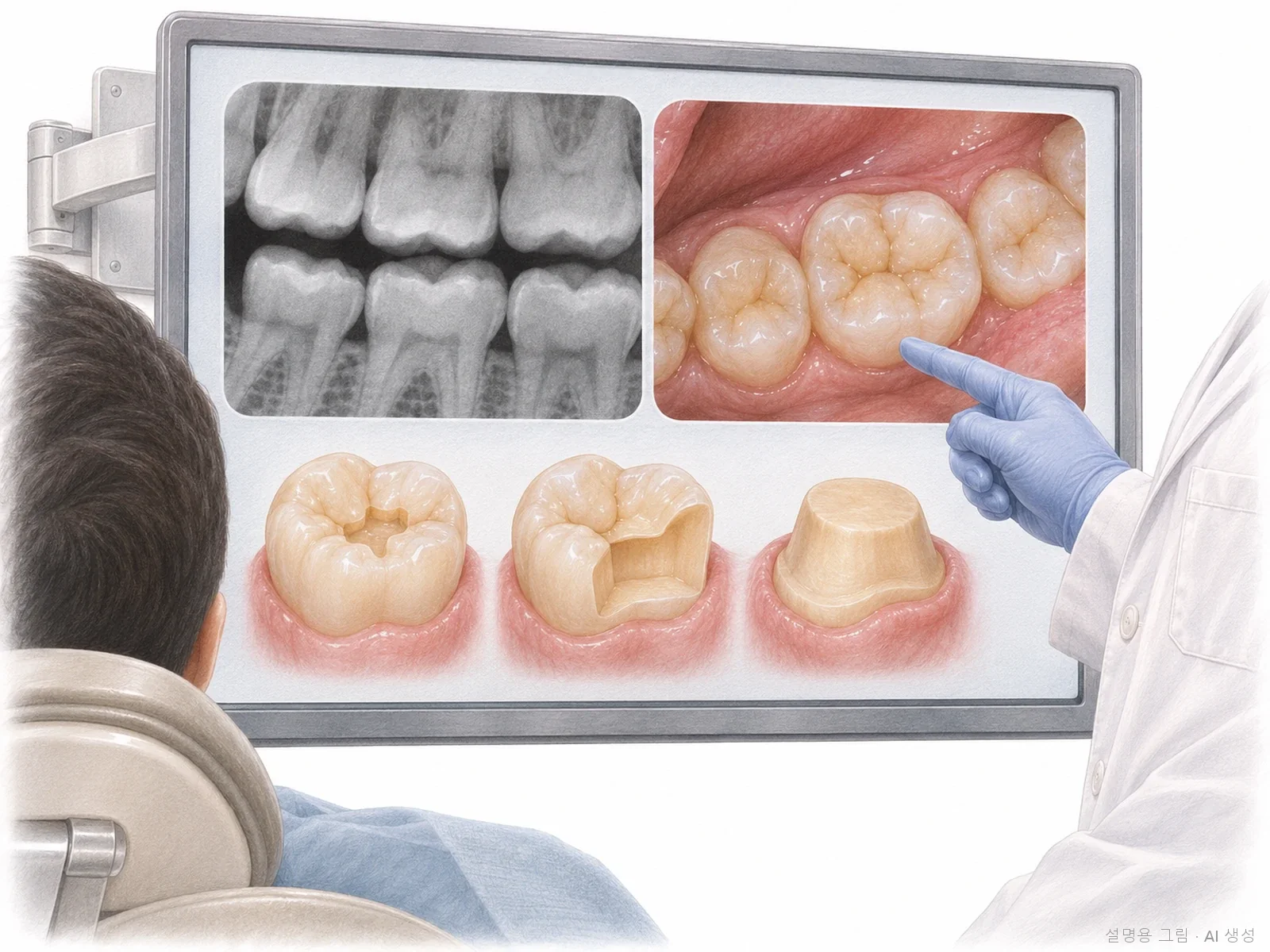
Description
Explaining while looking at the exam images. For each tooth to be treated, we show the possible options and the difference in how much tooth is removed.
STEP 04
We compare and explain the possible options
For each tooth, we tell you which of resin, inlay, or crown is possible and compare how much tooth each removes, how many visits you need, and whether it is covered by health insurance. We also tell you plainly about early cavities that do not need treatment now.
Why we do thisOnce tooth structure is removed, it cannot be restored. Even for the same cavity, the amount of tooth left differs by method, so you should know the difference before choosing.
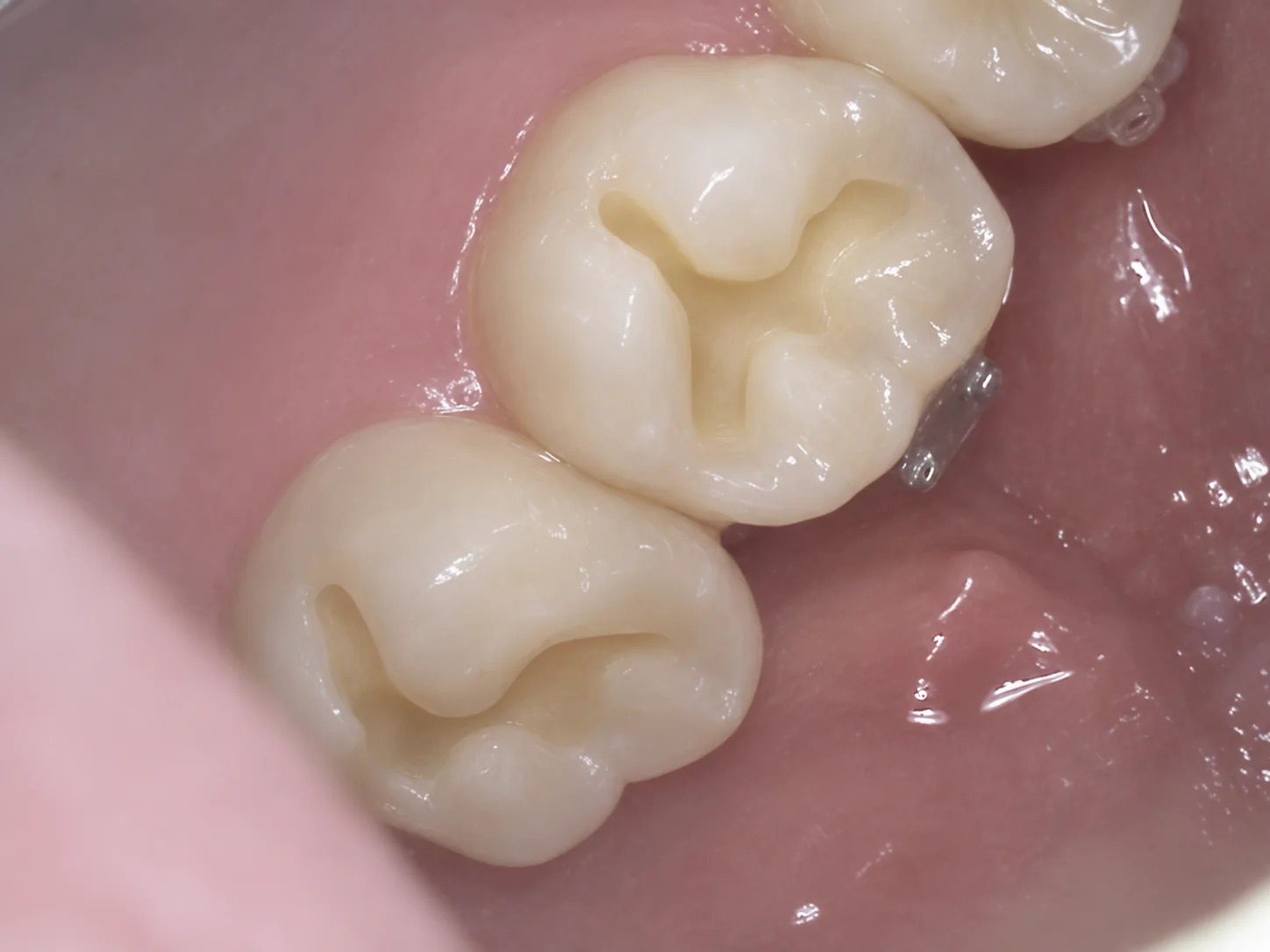
Decay removal
Right after removing the decay. We remove only the soft part, check the thickness of the remaining walls, and decide the final option.
STEP 05
We make the final decision after removing the decay and seeing the remaining walls
After anesthesia, we remove the soft decay. If the remaining walls are thick and the cusps are intact, we use resin or an inlay; if the walls are thin or cracks are visible, we tell you on the spot that switching to a crown is better. If the decay is deep and right next to the nerve, we do not force our way all the way down, but judge whether the nerve can be saved.
Why we do thisAn X-ray is an image of overlapping structures, so it cannot fully show the actual size. What we see after actually removing the decay is the most accurate basis.
Fit and bite
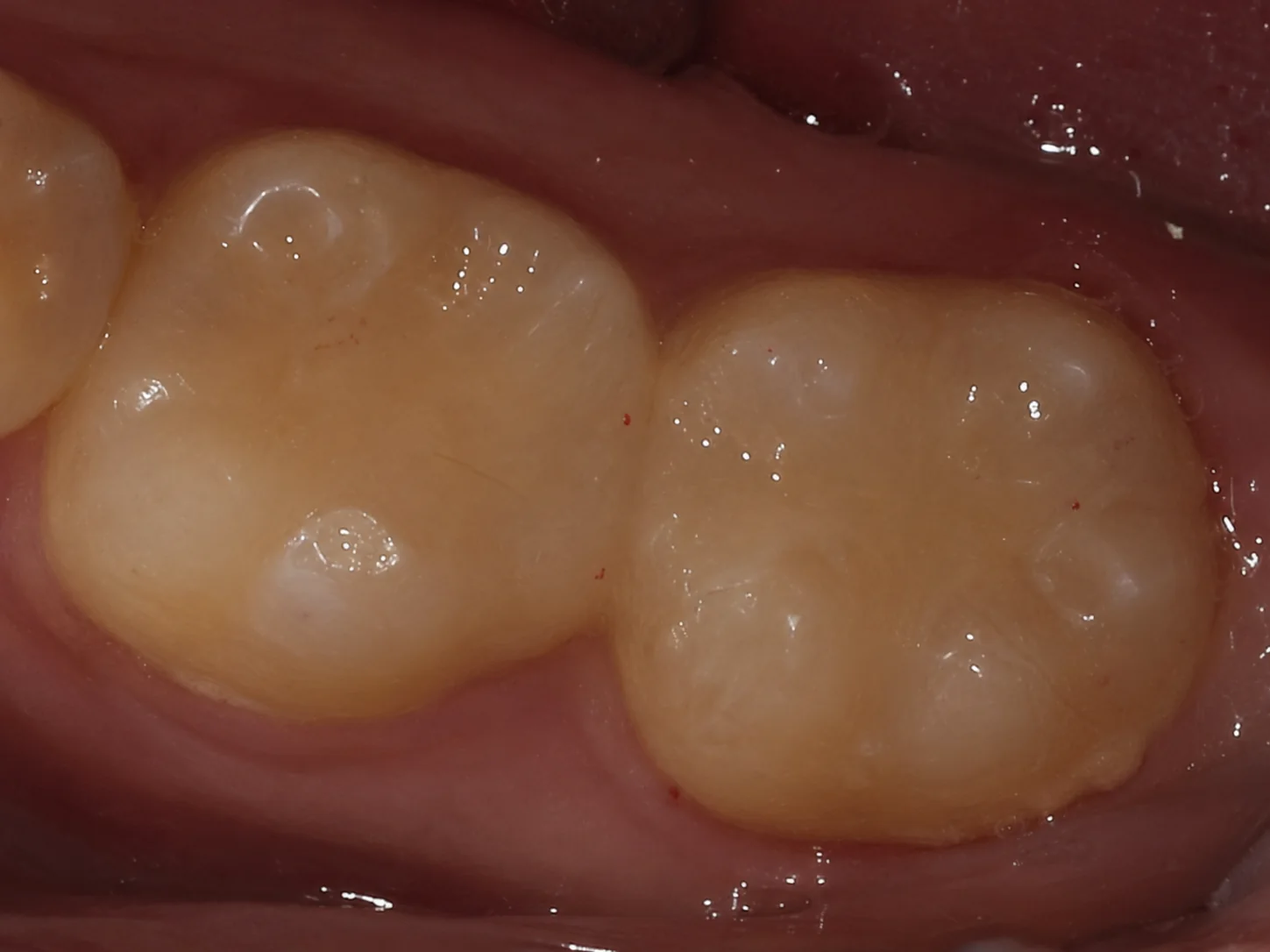
After the inlays were bonded and the bite height was checked with articulating paper. Where a spot touching too high is marked in color, we adjust that part.
STEP 06
We treat the tooth and adjust the bite height
Resin is filled the same day. For inlays and crowns, a model is made with an iTero intraoral scan or an impression, the tooth is temporarily sealed, and at the next visit we check the fit, the contact between teeth, and the borders before bonding.
Why we do thisEven a height of just a few hairs' thickness can cause pain when chewing or concentrate force on that tooth so it breaks. If the contact between teeth is loose, food gets stuck and new decay forms.
Regular checkup
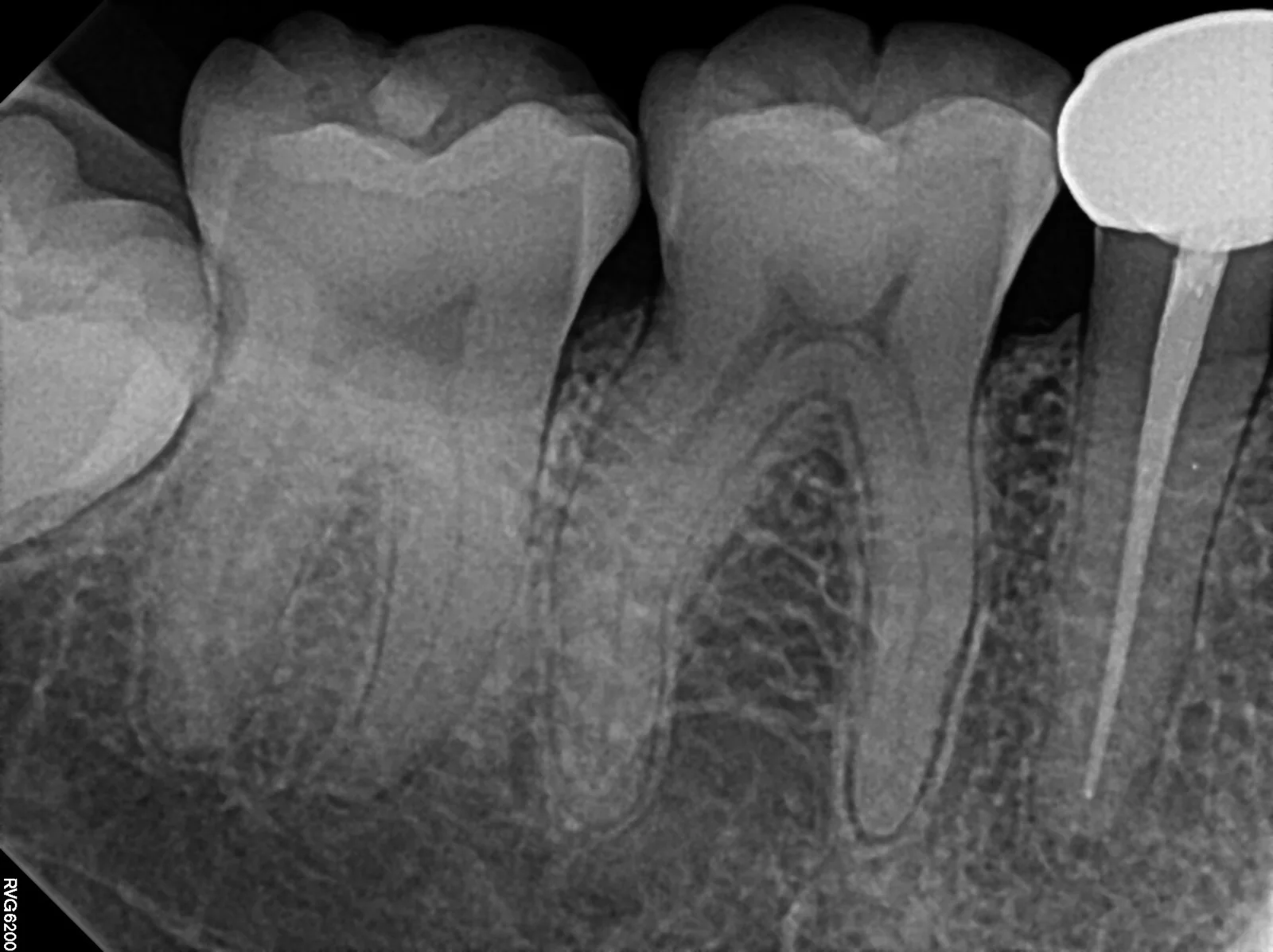
Regular checkup X-ray. We check whether new decay has formed at the borders of previously placed inlays and crowns.
STEP 07
We check the borders and gums at regular checkups
Even after treatment is finished, we check the borders of treated teeth and the gums at checkups. Checkups are usually every 6 months to 1 year, and the interval is shorter for people prone to cavities.
Why we do thisWith resin, inlays, and crowns alike, new decay starts at the border where the tooth and the material meet. If border decay is found while small, it can sometimes be fixed without replacing the restoration.
* Clinical photos were published with the patients' consent. Side effects such as temporary pain or discomfort may occur depending on the person.
06°
Comparing resin, inlays, and crowns
Watch and care
Resin
Inlay
Crown
Suitable cavity
Early enamel cavity with no hole
Small to medium cavity, front-tooth cavity
Medium to large cavity in a molar, when side walls remain
Badly broken tooth, cracked tooth, molar with root canal treatment
Tooth removed
None
Only the decayed part
A little more than resin (for shaping)
The most (covers the whole tooth)
Material
Fluoride application
Tooth-colored composite resin
Hybrid inlay
Zirconia, PFM (porcelain fused to metal), PFZ (porcelain fused to zirconia)
Visits
Regular checkup
1 visit
Usually 2 visits
Usually 2 or more visits (more if root canal treatment is needed)
Advantages
Tooth stays as it is
Little tooth removed and done the same day
Made outside the mouth, so it is hard with accurate shape and contact
Covers the whole tooth to prevent breakage
Limits
Needs checking whether it is progressing
On the wide chewing surface of a molar, it can wear or come off
The bonded border needs good care
Removes a lot of tooth if done on a healthy tooth
Korean National Health Insurance (NHI)
Not applicable
Covered for cavities in permanent teeth at ages 5 to 12 (no pulp lesion, excluding wisdom teeth); otherwise not covered
Not covered
Not covered
Rather than one option being the best, there is an option that fits the size of the cavity and the tooth that remains. Costs are listed on the Treatment costs page.
07°
What we do in these cases
Good for you if
Small cavities and front-tooth cavities: same-day treatment with resin
Wide cavities in molars with walls remaining: inlay
Badly broken teeth or molars with root canal treatment: crown
Other treatment comes first
People with severe gum inflammation: we treat the gums first
People who grind their teeth heavily at night: we choose the material along with a splint
People planning orthodontic treatment: we discuss with Dr. Sunmin Kim whether it is better to place the final restoration after orthodontics
You may not need it now
Early cavities with no hole and grooves that have only changed color are watched with good care
Old gold fillings or resin with no gaps or decay do not need to be replaced
08°
Why do teeth become sensitive?
Sensitive teeth have many causes, so we do not just apply a desensitizing agent and stop there. We check for worn areas, gums, cavities, and cracks in turn.
Receding gums exposing the roots · Root surfaces have no enamel, so they become sensitive easily. My gums have receded →
Cavities and cracked teeth · Suspect this if you feel a twinge with sweets or when chewing. Cavity treatment or a crown may be needed.
Temporary sensitivity after whitening or treatment · It usually eases within a few days to a few weeks. If it keeps getting worse, please contact us right away.
09°
Side effects and limits
Please read
· After treatment, the tooth may be sensitive for a few days to a few weeks. It usually eases gradually.
· Treating a deep cavity may require a change of plan to root canal treatment, so we explain this possibility in advance.
· Resin, inlays, and crowns are not permanent, and new decay can form at the borders.
· Filling a wide cavity with resin can lead to wear or the filling coming off.
· Ceramic-type materials can break if you grind your teeth heavily.
FAQ
FAQ
I have a cavity but it doesn't hurt. Does it need treatment?
Cavities often do not hurt until they go deep into the dentin. An early cavity that stays in the outer enamel can be watched with good care, but a cavity that has reached the dentin will not heal on its own, so treating it while it is small means less of the tooth has to be removed.
Which lasts longer, resin or an inlay?
For wide cavities in molars, an inlay, which is made hard outside the mouth and then bonded, generally lasts longer. On the other hand, using an inlay for a small cavity means removing more tooth to shape it, so resin is better for small cavities.
Resin is finished in one day. Inlays and crowns are made from an impression, so they usually take two visits. If a root canal treatment is needed first, more visits are needed.
Should I replace old gold fillings or amalgam?
We replace them only if a gap has opened or decay has formed underneath. Old gold or amalgam fillings with no problems on X-rays and examination can be left as they are.
My tooth is sensitive after cavity treatment. Is that okay?
After a deep cavity is treated, the tooth can be sensitive for a few days to a few weeks, and it usually eases gradually. If the sensitivity keeps getting worse, or the tooth throbs even when you are not doing anything, it may be a sign of nerve inflammation, so please contact us right away.
Can cavity treatment turn into a root canal treatment?
If a cavity is deep and close to the nerve, the nerve may become exposed while the decay is being removed, or nerve inflammation may develop after treatment, making a root canal treatment necessary. If a cavity looks deep on X-rays, we tell you about this possibility before treatment.
Is cavity treatment covered by health insurance?
For people enrolled in Korea's National Health Insurance (NHI), tooth-colored resin (light-cured composite resin) is covered for cavities in the permanent teeth of children aged 5 to 12, and is not covered for adults. Inlays and crowns are not covered, and root canal treatment is covered.
Why do teeth become sensitive?
Sensitive teeth have many causes: a worn notch at the neck of the tooth, receding gums that expose the root, a cavity or cracked tooth, or temporary sensitivity after whitening or treatment. Treatment differs by cause, so we check for worn areas, gums, cavities, and cracks in turn.
Evidence and references
Health Insurance Review and Assessment Service (HIRA). Coverage criteria for light-cured composite resin fillings (Notice No. 2023-56, effective 2023.3.29). View the source (Ages 5 to 12, cavities in permanent teeth without pulp lesions, excluding third molars)
Ministry of Health and Welfare press release. Expanded health insurance coverage for cavity treatment in children aged 12 and under (2018.12.31). View the source


 Before treatment · April 2026
 After treatment · April 2026
 X-ray before treatment
 Before treatment · April 2026
 After treatment · April 2026
 Before treatment
 Right after root canal treatment
 After crown · August 2026
 Dentin cavity
 Cavity reaching the nerve
 Interview and intraoral photos
 Panoramic
 Periapical
 Gum exam
 Description
 Decay removal
 Fit and bite
 Regular checkup