ROOT CANAL

Root Canal Treatment: Do I Need One, and How Many Visits?

Dr. Ilseop AhnTreated by Dr. Ilseop Ahn (board-certified periodontist and board-certified specialist in advanced general dentistry) · Reviewed by Dr. Ilseop AhnAbout the doctor →

Last reviewed October 29, 2026 · Dr. Ilseop Ahn (board-certified periodontist and board-certified specialist in advanced general dentistry)

At a glance

Good for
Teeth with decay or cracks that have infected the nerve
Treatment flow
Check whether the nerve can be saved → Clean and disinfect inside the root → Fill to the end → Usually a crown
Duration and limits
Usually 2–4 visits, covered by NHI. For teeth that are hard to save, we show you the reasons on an X-ray before starting
Details

A root canal treatment saves a tooth without extracting it when decay or a crack has infected the nerve. We remove the inflamed nerve, clean and disinfect the canals inside the root, and fill them all the way to the end. It usually takes 2–4 visits and is covered by Korea's National Health Insurance. A molar that has had a root canal treatment is weaker, so it is usually covered with a crown. At Ceramic Dental Clinic, we first check whether the nerve can still be saved. If a tooth is hard to save even with a root canal treatment, we show you the reasons on an X-ray before starting treatment.

01°

We show you with X-rays before and after root canal treatment

Whether a root canal treatment went well cannot be seen from the outside; it shows on X-rays. We check with before-and-after X-rays of the same tooth whether the canals were filled to the root tip and whether inflammation at the root tip has decreased.

CASE01

A molar with throbbing pain that woke the patient at night

Root canal treatment + crown · Deep decay; nerve inflammation at an irreversible stage
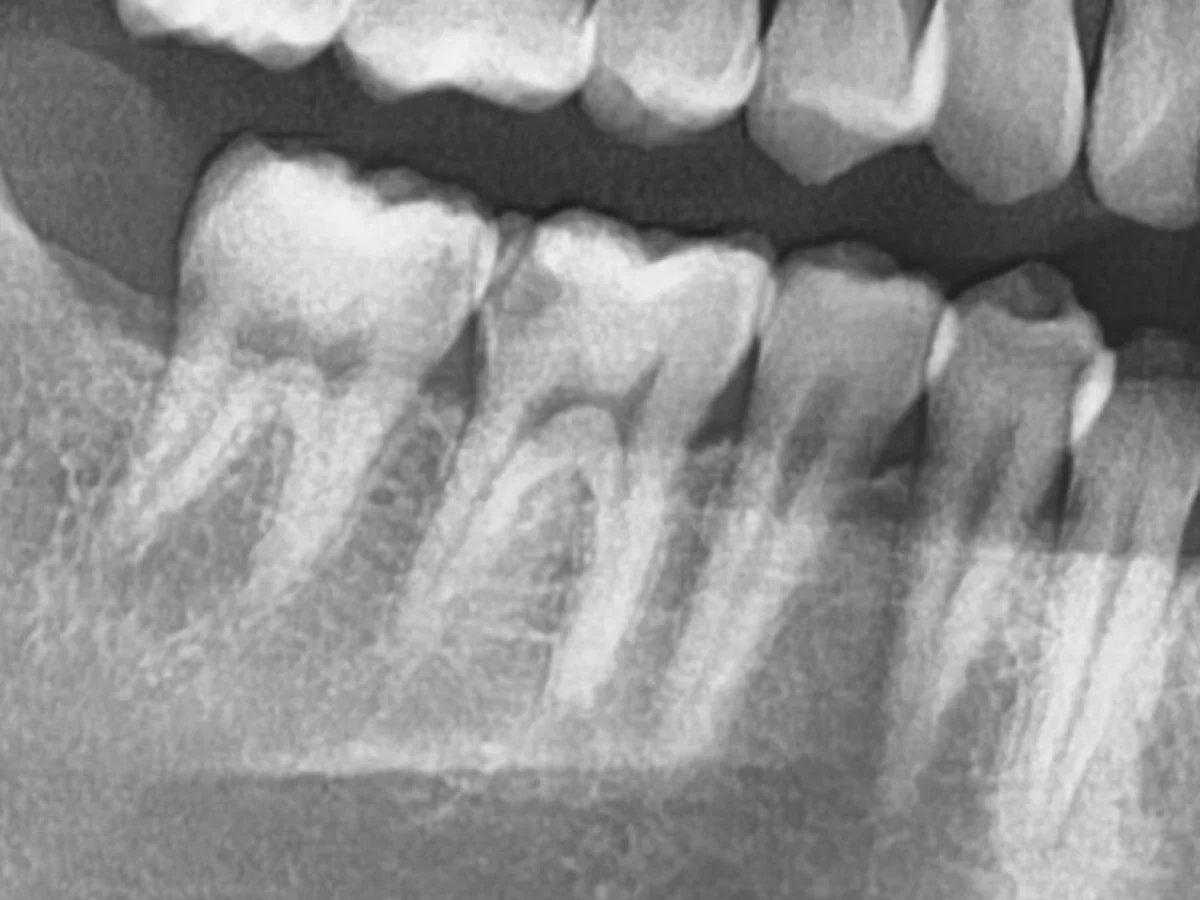
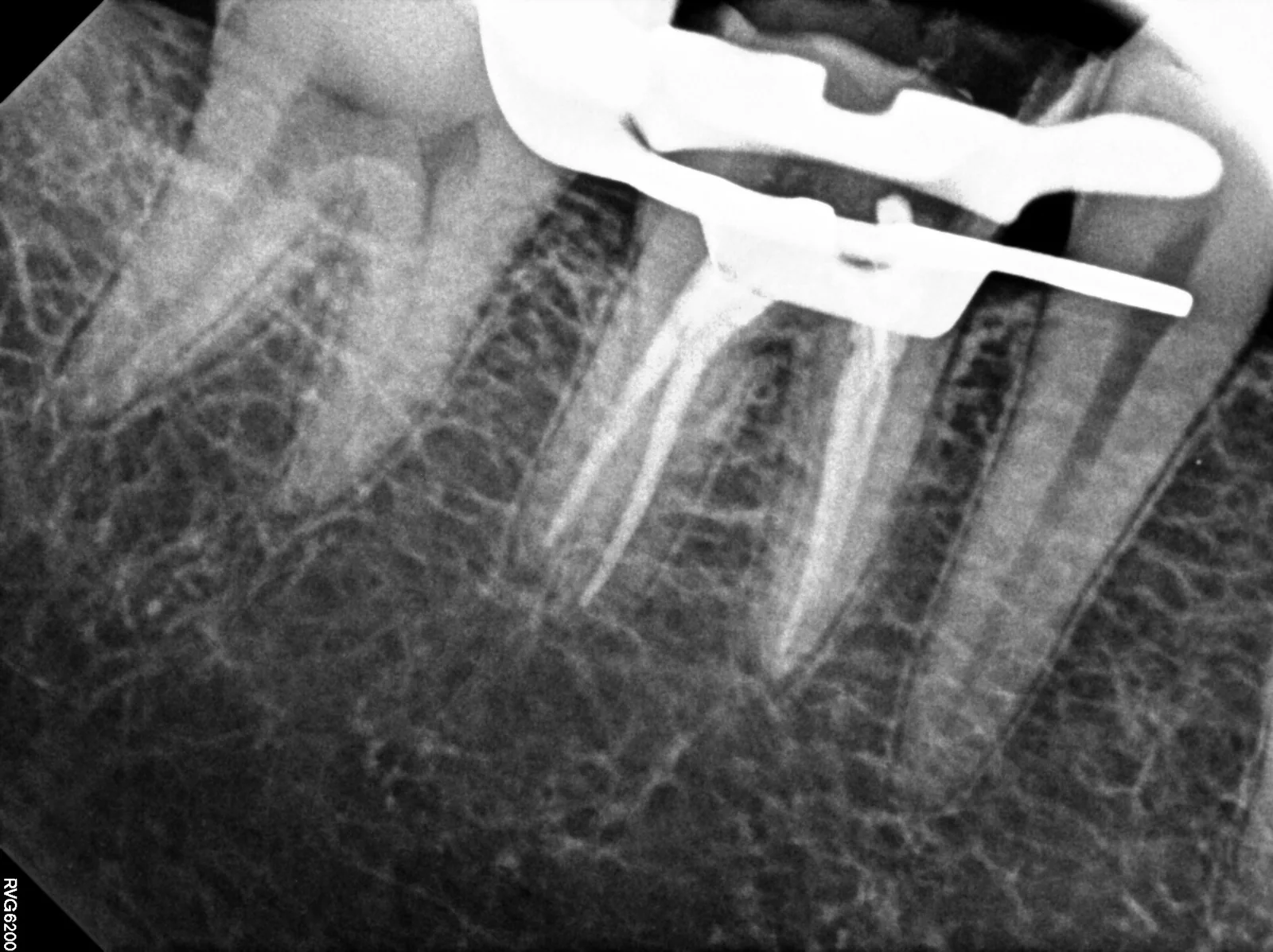
Close-up of the lower right molar area from an X-ray before treatmentBefore treatment
X-ray before treatment. The decay had reached the nerve space, and there was throbbing pain every night even at rest.
Periapical X-ray of the same molar right after the root canals were filledRight after root canal filling
Right after root canal filling. Each root was cleaned to the end and filled without gaps with material that shows up white.
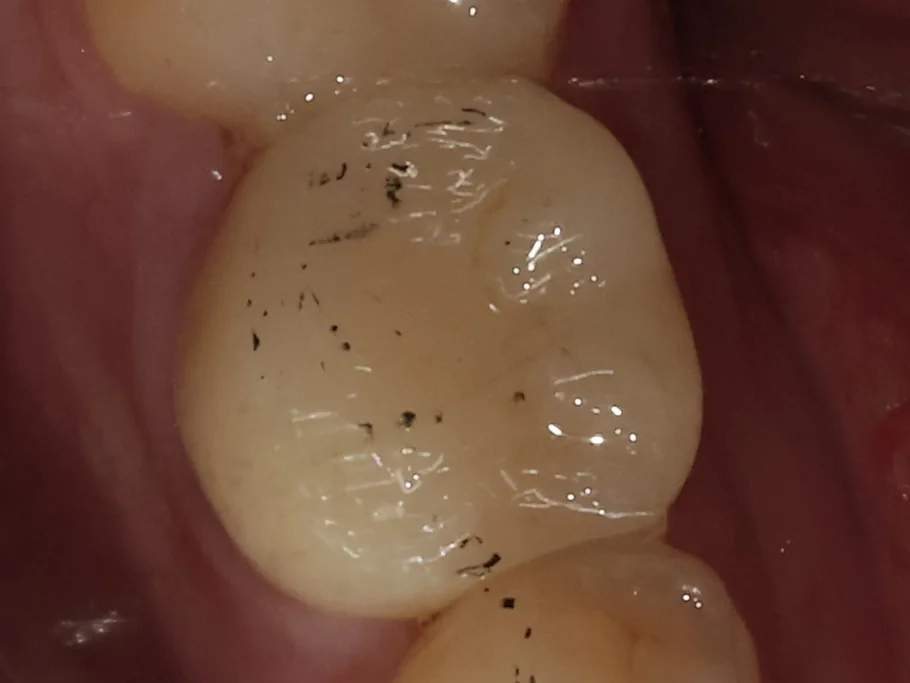
Chewing surface of the same molar after the crown was placedAfter crown · August 2026
After the post and crown were placed. The weakened molar was covered so it would not split under chewing force.
Condition
Deep decay, lingering pain to cold, throbbing at night
Chosen
Root canal treatment over 2–4 visits, core build-up, crown
Not done
Extraction (the root and surrounding bone could be saved)
Duration
About 3–4 weeks
Note
For teeth with a root canal treatment, we check the root tip with an X-ray at regular check-ups.
CASE02

A tooth that did not hurt but developed a pus pocket in the gum

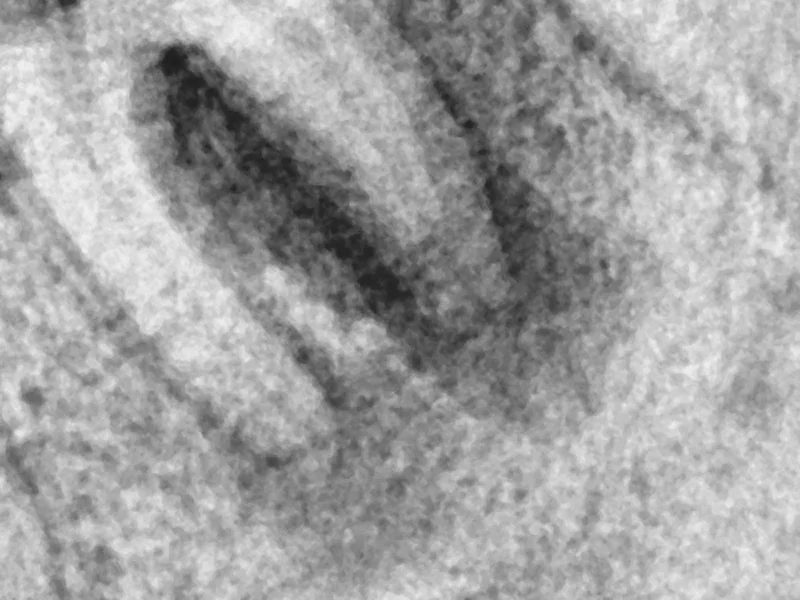
Root canal treatment · The nerve had already died with inflammation at the root tip; we tracked bone regrowth after treatment

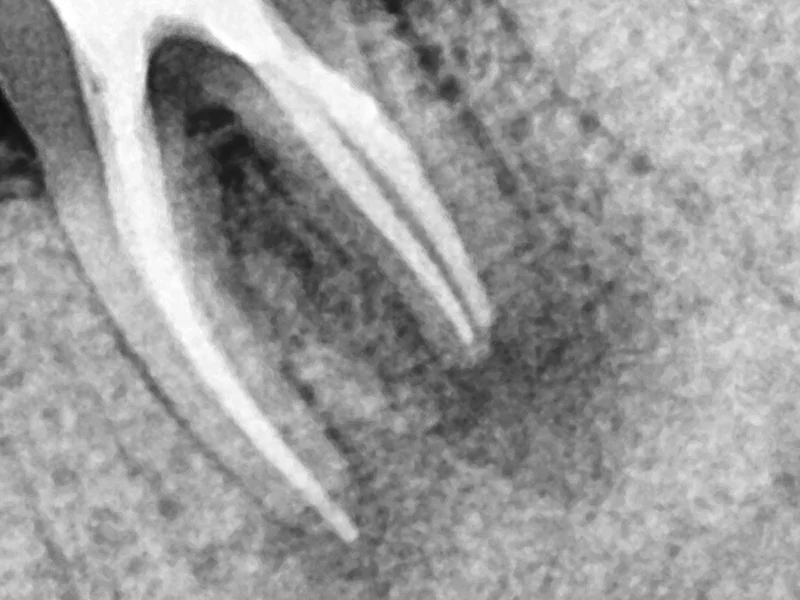
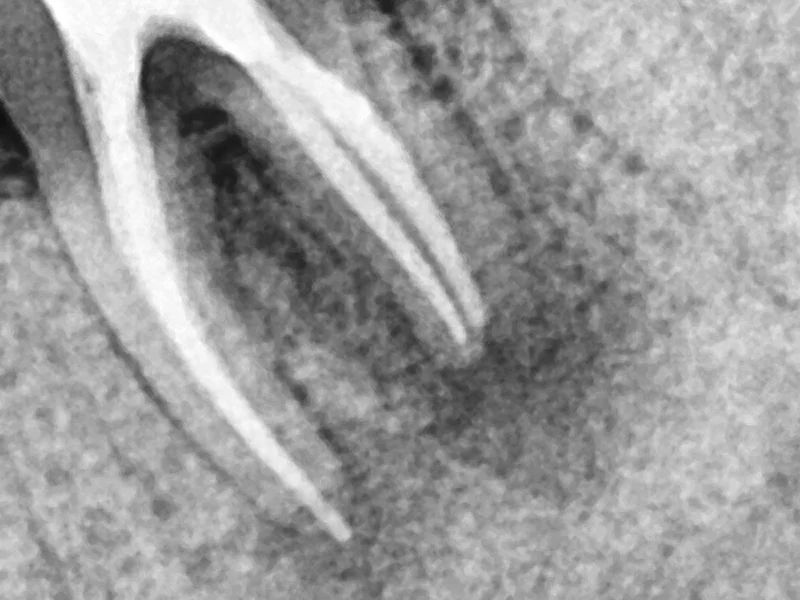
Periapical X-ray before treatment showing wide dark shadows around and between the roots of the lower left first molarBefore treatment · September 2023
X-ray before treatment. The bone around the roots and between the two roots looked dark over a wide area, and pressing on the gum released pus.
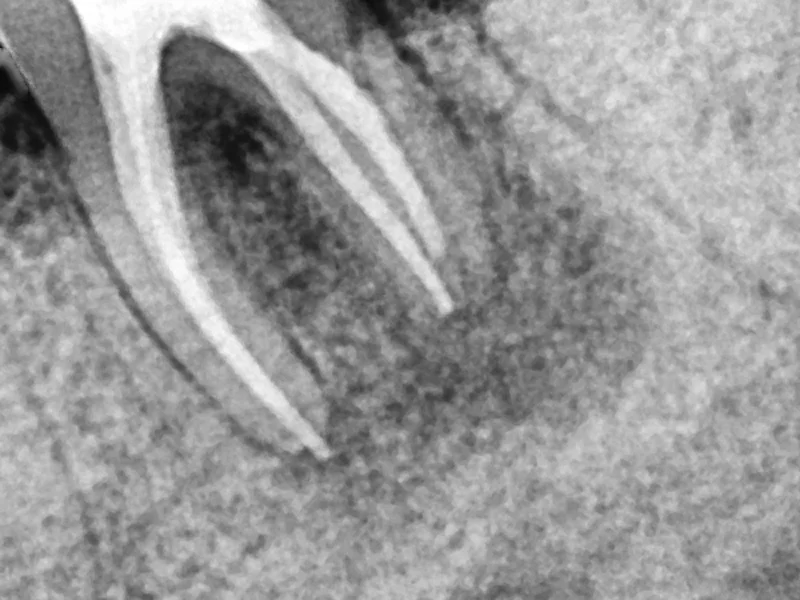
Periapical X-ray right after both roots of the same molar were filled to the endRight after root canal filling · November 2023
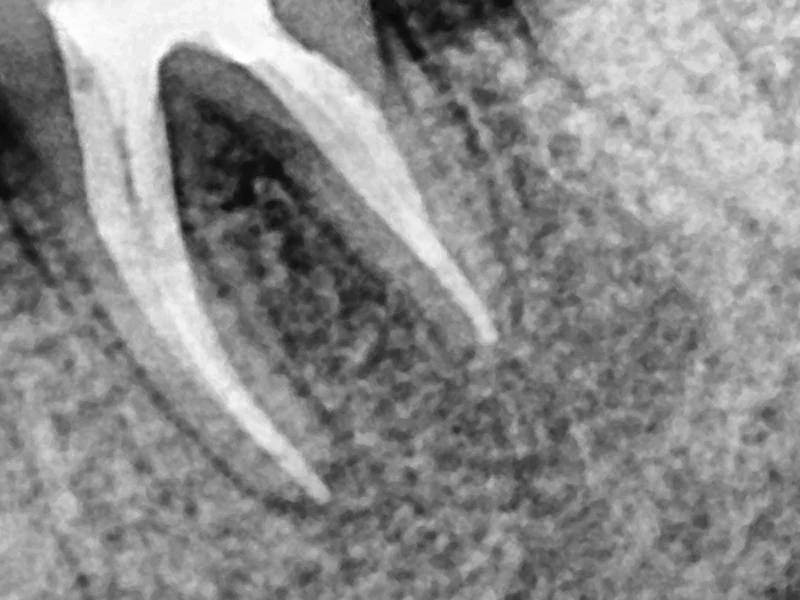
Right after root canal filling. We disinfected until the pus stopped, then filled both roots to the end without gaps.
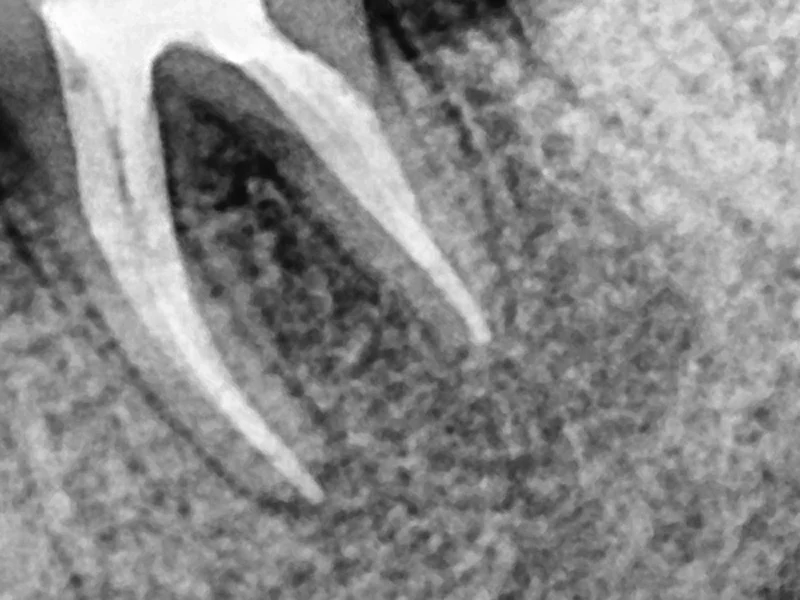
Periapical X-ray of the same molar about 5 months after root canal filling, taken at the same angleAbout 5 months later · April 2024
About 5 months after root canal filling. The dark shadow around the roots has shrunk as bone fills in. The three images were aligned at the same angle for easy comparison.
Condition
No pain, but the nerve had died, with inflammation at the root tip and a pus pocket in the gum
Chosen
Crown after root canal treatment
Not done
Immediate extraction (the root was not cracked and surrounding bone remained)
Duration
Root canal treatment over 2–3 visits; bone recovery checked over 5 months or more
Note
Bone can take a few months to over a year to recover, so we check again with an X-ray after 6 months to 1 year.

CASE03

A tooth that was hard to save even with a root canal treatment

Extraction and consultation on next treatment · The root was cracked lengthwise, so we did not recommend a root canal treatment

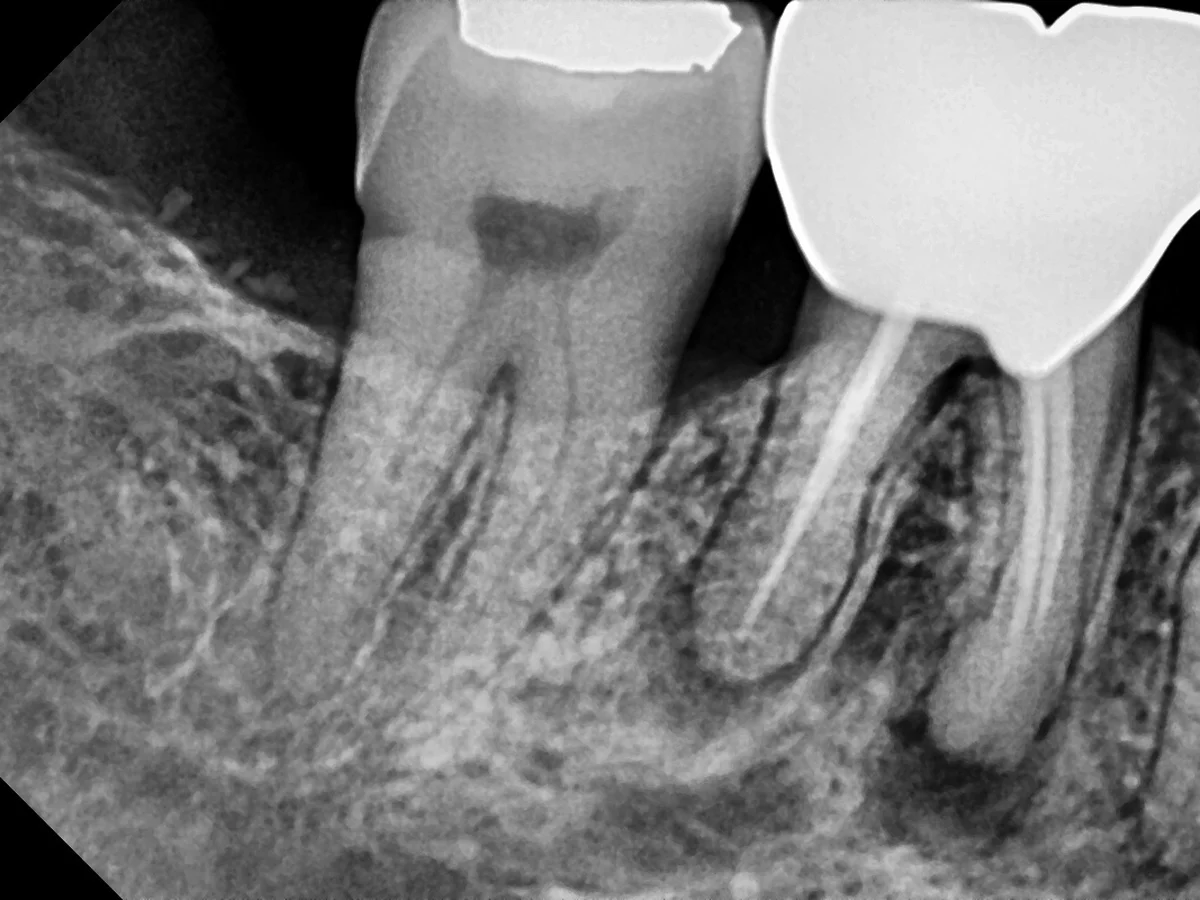
Periapical X-ray showing bone loss along the root of a lower molar that had a root canal treatment and a crownX-ray · June 2025
A molar that had a root canal treatment and a crown. Bone had been lost in a long strip along the front root. This is a common sign of a vertically cracked root.
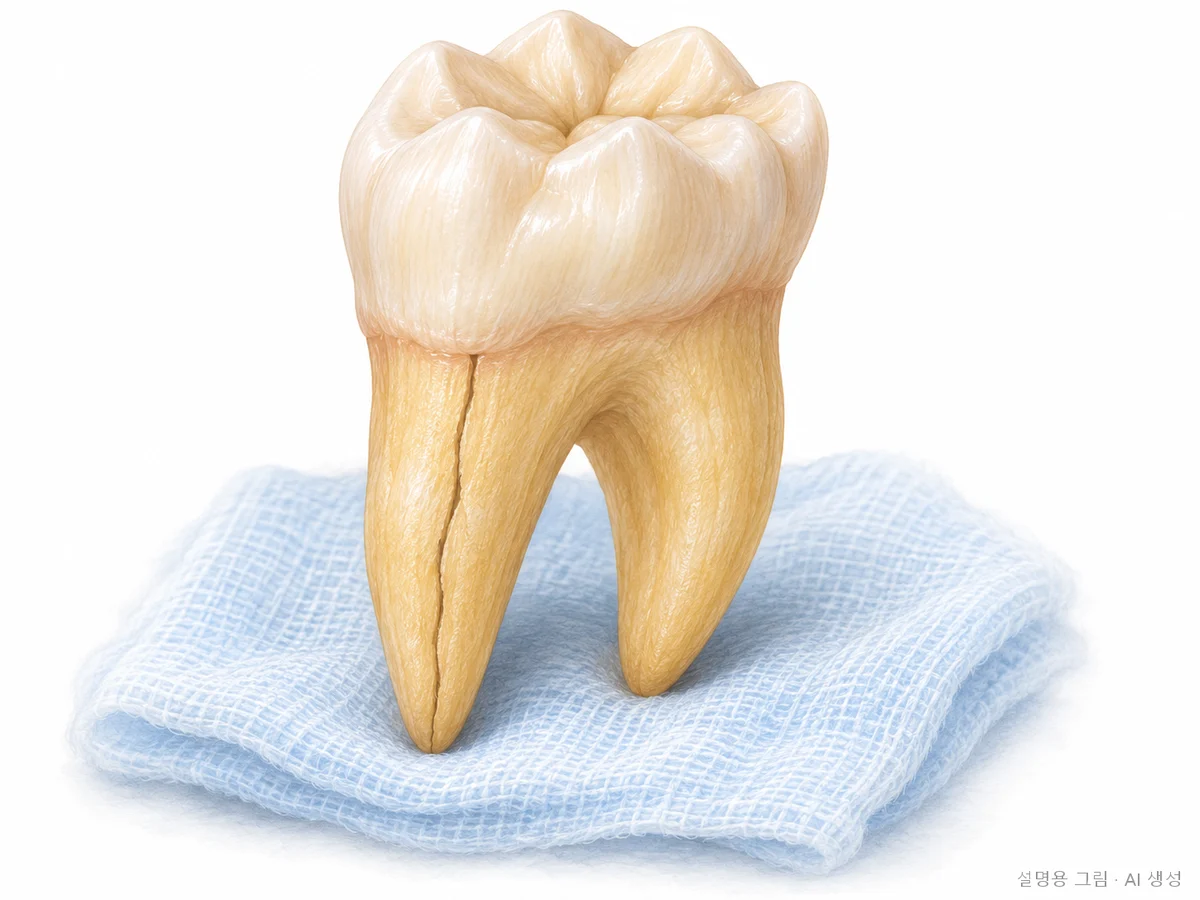
Illustration of a lengthwise crack in the root of an extracted molarVertical crack
A lengthwise crack in the root. With a crack like this, bacteria can get back in through the gap even after the canals are filled.
Condition
A tooth with a previous root canal treatment, pain when chewing, and a deep pocket on one side of the gum only
Chosen
Explained the reasons and discussed extraction and next treatment, such as an implant, with a board-certified periodontist
Not done
Root canal retreatment (a vertically cracked root is hard to keep for long even if filled)
Duration
1 consultation, 1 extraction
Note
A vertical root crack is sometimes hard to see on X-rays, so we judge by gum depth and symptoms together. Learn more about implants →

* Photos were taken under the same conditions and published with the patients' consent. Treatment results and side effects may vary from person to person.

02°

We first sort out whether the nerve can be saved, a root canal treatment is needed, or the tooth is hard to save

01When the nerve can be saved

If the tooth feels sensitive to cold but settles soon after the stimulus is gone, the nerve inflammation may still be reversible. We remove the decay, fill the tooth, and monitor how the nerve responds. Even if the decay has reached the nerve, if the nerve is in good condition, we sometimes do treatment that saves the nerve without removing all of it (VPT, vital pulp therapy). Whether this is possible is decided by the exam and the nerve's condition during treatment.

02When a root canal treatment is needed

When pain lingers or throbs on its own, when the nerve has already died, or when an X-ray shows inflammation at the root tip.

03When the tooth is hard to save

When the root is cracked lengthwise, the tooth is broken below the gum line with too little remaining, or much of the gum bone has been lost. We explain the reasons and look at next options together with a board-certified periodontist.

If any of these apply, have the nerve's condition checked. Even without symptoms, if an X-ray shows inflammation at the root tip, a root canal treatment may be needed.

03°

How root canal treatment works

Seven steps, from the exam to the crown and follow-up. For each step, we explain what we do and why, with real treatment photos.

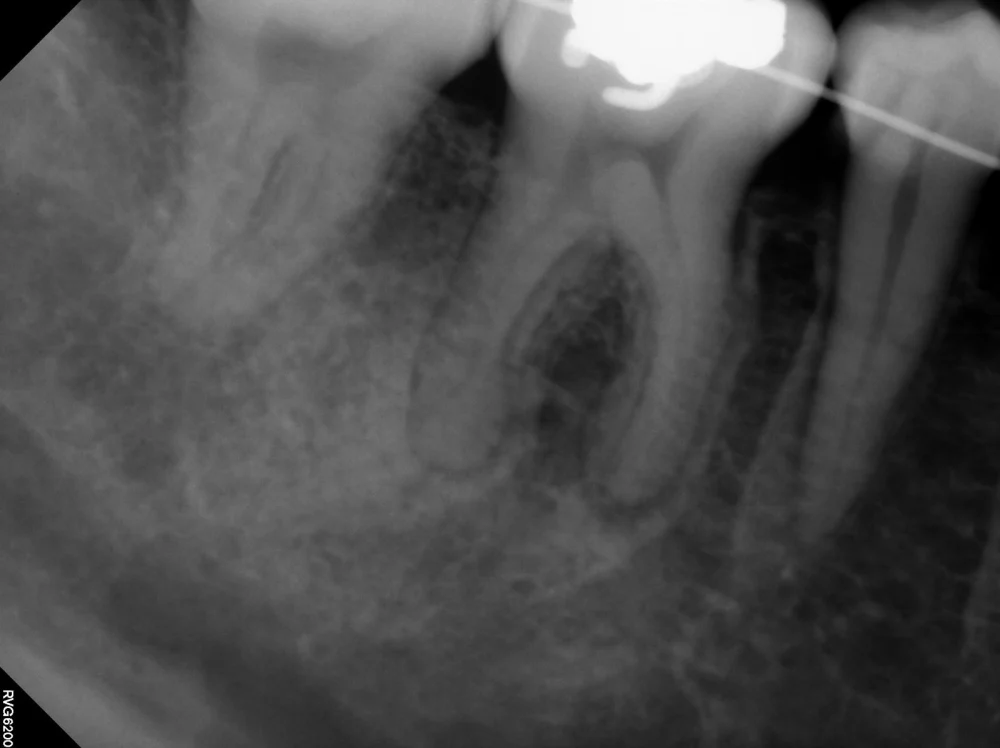
Periapical X-ray showing the two roots of a lower molar and the bone between themPeriapical
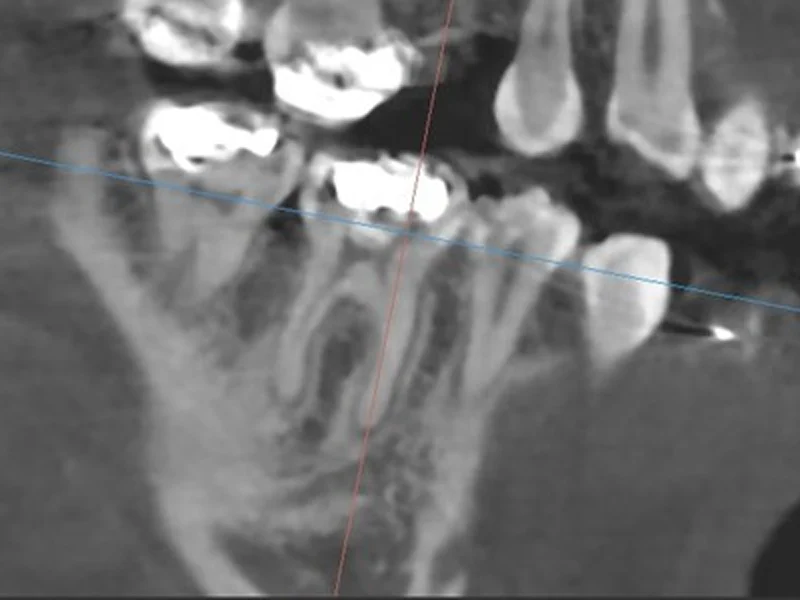
3D CT cross-section through the lower molar of the same patient3D CT
Periapical X-ray and 3D CT. We check the number of roots, how curved they are, and the extent of inflammation at the root tip in advance. Both images are from the same patient.

STEP 01

We check the nerve's condition and the shape of the roots

We check the response to cold, whether it hurts when tapped, and whether it hurts when the gum is pressed. With a periapical X-ray, we look at the depth of the decay and inflammation at the root tip. If the roots are very curved or the extent of inflammation is unclear, we check in 3D with a Vatech 3D CT. A board-certified periodontist measures gum depth to tell it apart from gum disease.

Why we do thisMolars usually have 2–3 roots, and the canals inside may be more numerous or curved. If a hidden canal is missed, bacteria remain inside and inflammation comes back.
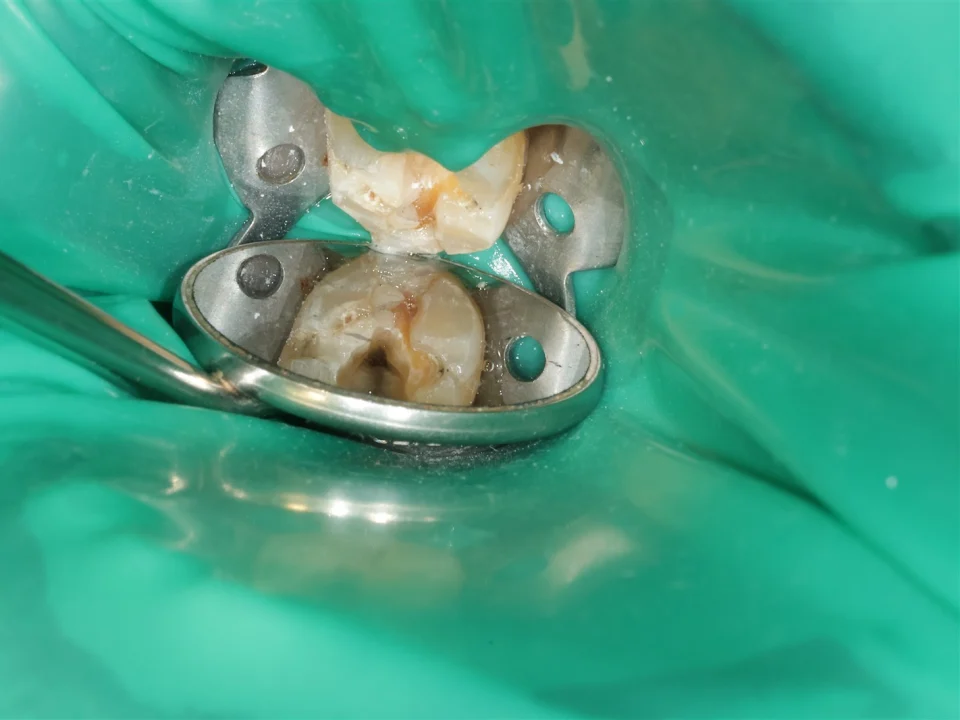
Real treatment photo of a rubber sheet and clamp isolating a single lower molar to be treatedIsolation
A rubber sheet (rubber dam) exposing only the tooth being treated. It keeps saliva and bacteria out of the root. Taken in a mirror, so left and right appear reversed.

STEP 02

We numb the tooth and isolate it from saliva

After sufficient anesthesia, we place a rubber sheet (rubber dam) to expose only the tooth being treated. It also prevents disinfectant from running into your throat and small instruments from being swallowed. We use a rubber dam for every root canal treatment.

Why we do thisSaliva contains many bacteria. Even if the inside of the root is cleaned well, saliva getting in during treatment can cause reinfection, so we isolate the tooth during treatment.
Length-measurement periapical X-ray taken with fine instruments inside the roots of a lower molarLength measurement
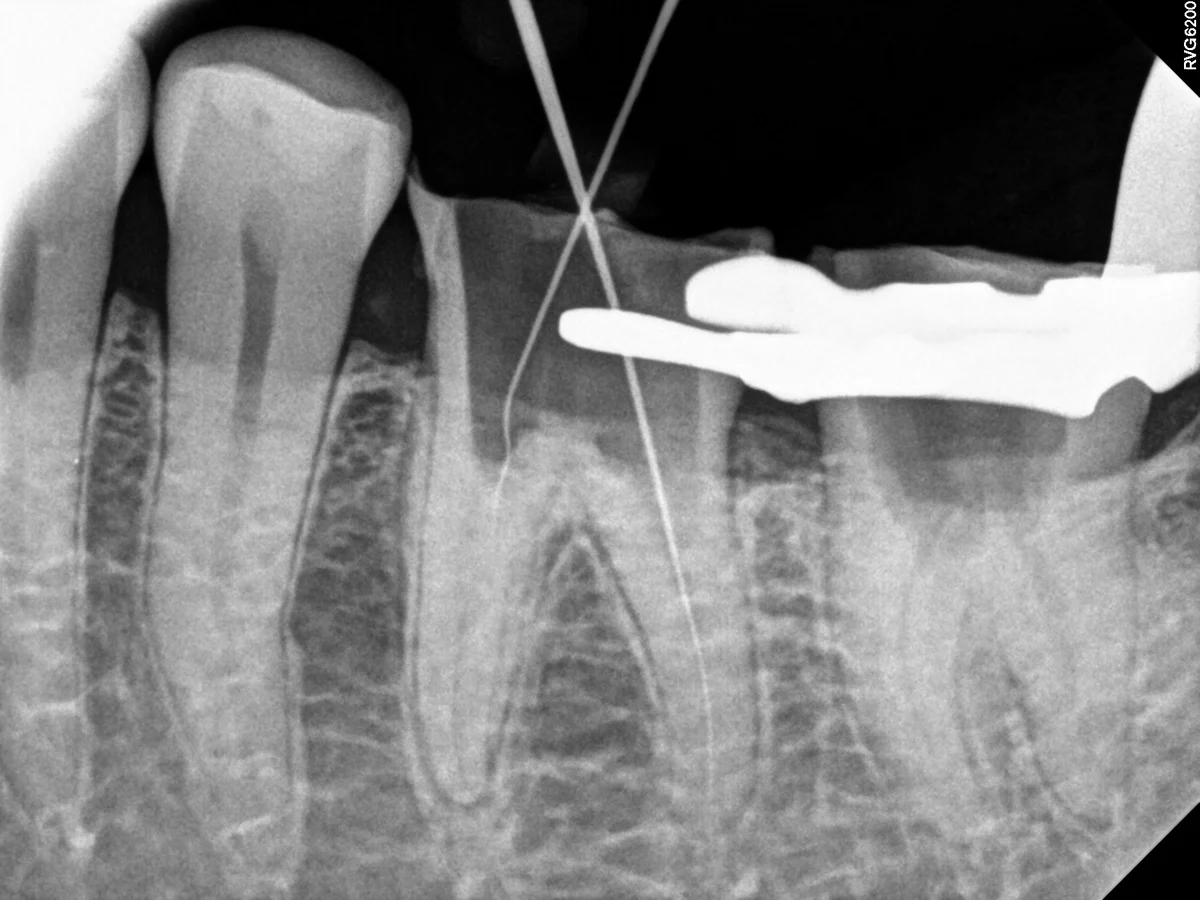
Root length measurement X-ray. We confirm that the fine instrument has reached just short of the root tip to set the cleaning length.

STEP 03

We remove the decay and nerve and measure the root length

We remove all the decay and open the space where the nerve is. We place a fine instrument in each canal, measure the length with an electronic apex locator, and confirm again with an X-ray.

Why we do thisIf cleaning and filling fall short of the root tip, inflammation returns in the remaining part. If they go past the root tip, they irritate surrounding tissue. That is why we measure each root separately.
Illustration of fine instruments widening the canals inside the root and rinsing them with disinfectantCleaning and disinfection
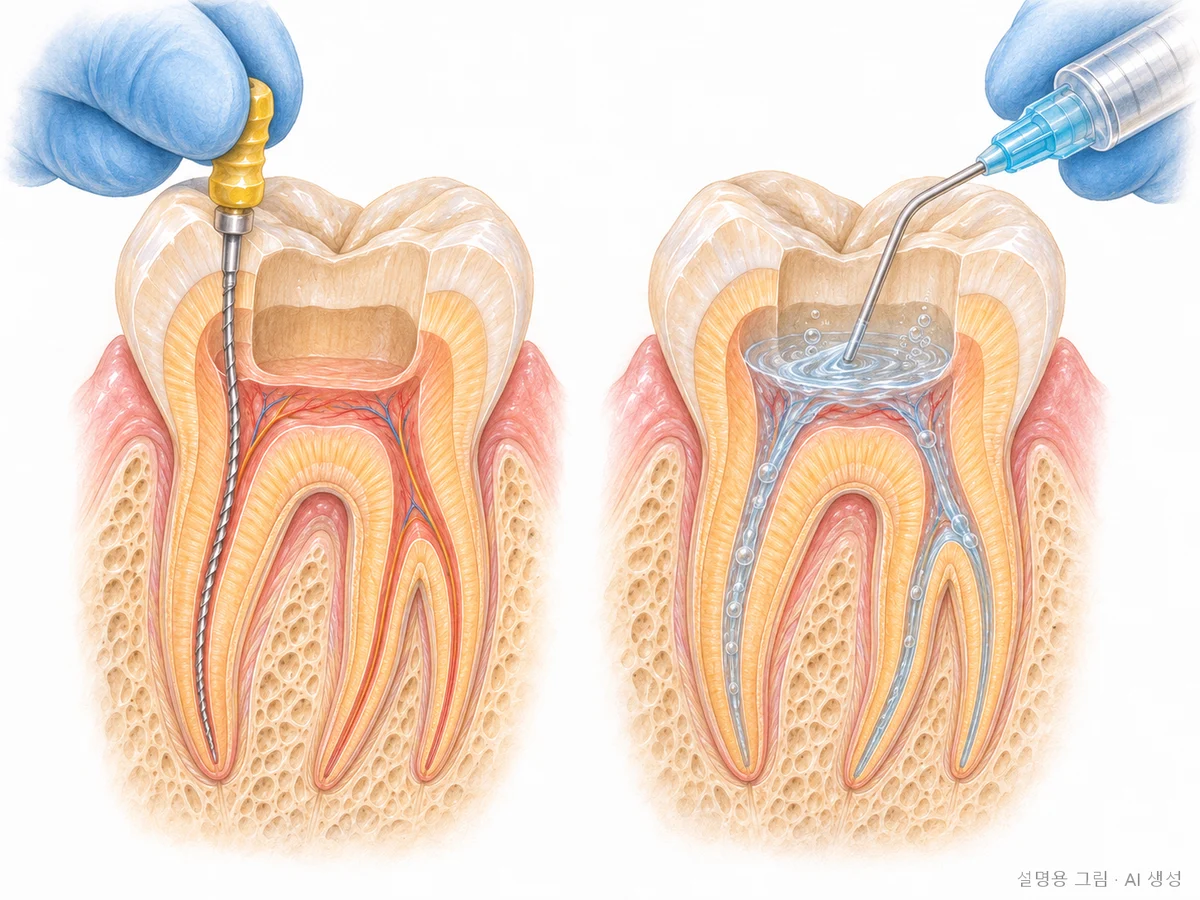
Cleaning and disinfecting inside the root. We widen the canals with fine instruments and rinse them several times with disinfectant.

STEP 04

We clean and disinfect inside the root

With fine instruments, we shave off the infected walls of the canals inside the root and rinse them several times with disinfectant. If inflammation is severe or there is pus, we place medication, seal the tooth temporarily, and rinse again at the next visit. This step is why a root canal treatment is split into several visits.

Why we do thisHow much the bacteria inside the root are reduced decides whether a root canal treatment succeeds. Filling in a hurry while inflammation remains can leave pain even after filling.
Periapical X-ray before starting root canal treatment showing a dark shadow around the roots of a lower molarBefore root canal treatment · September 2023
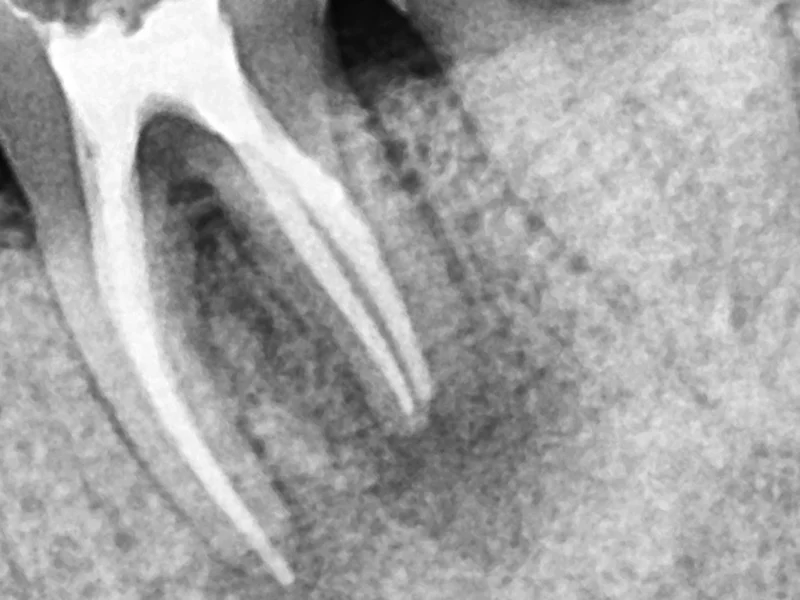
Periapical X-ray right after both roots of the same molar were filled white to the endRight after filling · November 2023
X-rays before root canal treatment and right after the roots were filled. We check that the cleaned and disinfected canals are filled white to the root tip without gaps. This is the same tooth as Case 2 above.

STEP 05

We fill to the root tip and check with an X-ray

Once pain and inflammation settle, we fill the cleaned canals with material to the root tip and seal the top. Right after filling, we check the length and any gaps with an X-ray.

Why we do thisIf gaps remain in the canals, bacteria can grow again in that space. The filling can only be checked on X-rays, so we take and keep one every time.
Periapical X-ray of two lower molars with root canal treatment, posts, and crownsCore build-up and crown
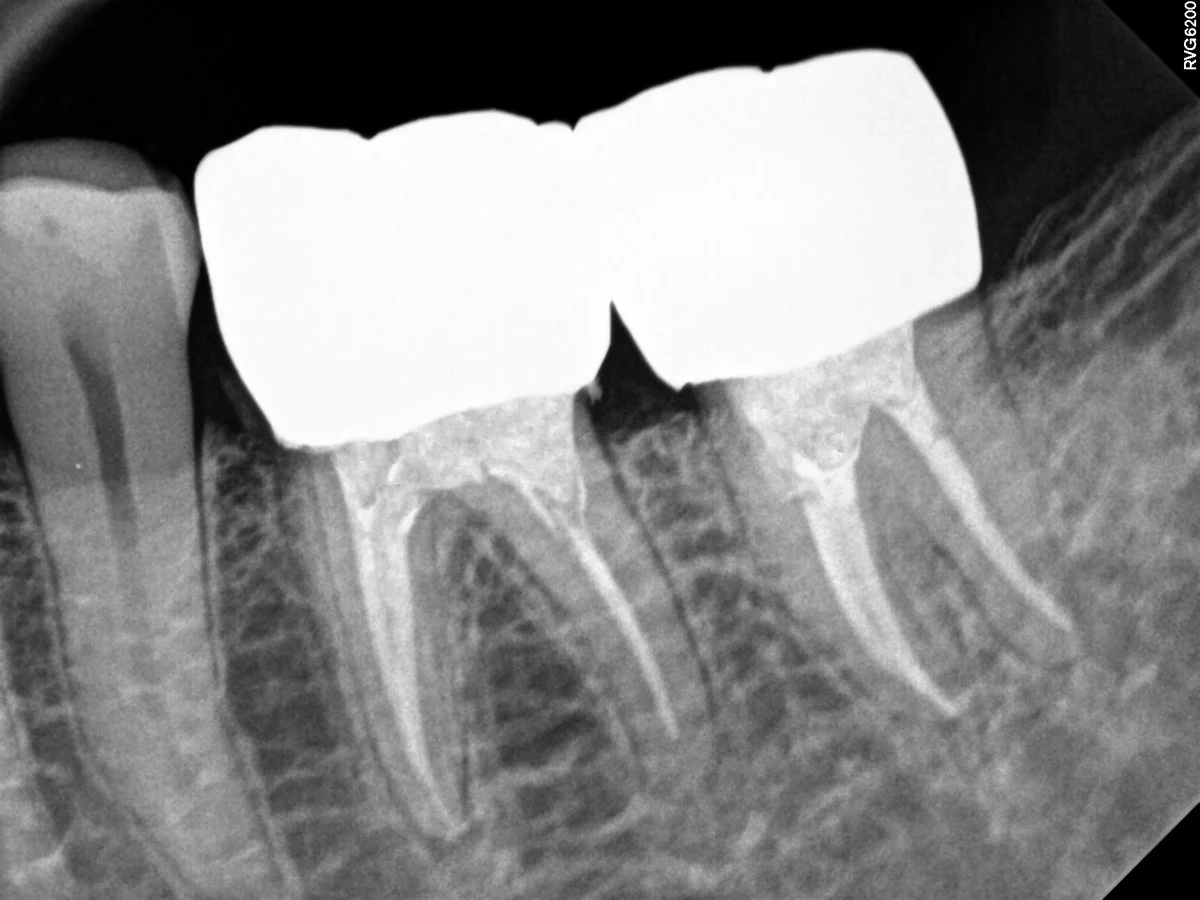
Post and crown after root canal treatment. We fill the hollow upper part of the tooth and cover the whole tooth to prevent splitting.

STEP 06

We build up the core and cover molars with a crown

If much of the upper part of the tooth is hollow, we fill it with a core build-up and then place a crown. We recommend not delaying the crown too long after finishing the root canal treatment.

Why we do thisA molar with a root canal treatment has a large hollow inside from decay and treatment, so it splits easily under chewing force. If the temporary seal stays too long, bacteria can get back in through gaps and infect even the filled root.
Periapical X-ray of a lower molar right after root canal fillingRight after filling · November 2023
Periapical X-ray of the same tooth about 2 months laterAbout 2 months later
Periapical X-ray of the same tooth about 5 months laterAbout 5 months later
Follow-up X-rays. Taken right after root canal filling, about 2 months later, and about 5 months later, aligned at the same angle side by side. The dark shadow around the roots gradually shrinks. This is the same tooth as Case 2 above.

STEP 07

We check the root tip again after 6 months to 1 year

For teeth that had inflammation at the root tip, we take another X-ray 6 months to 1 year after treatment to check whether bone is filling in. After that, we check at regular check-ups.

Why we do thisEven if the pain is gone, inflammation may remain at the root tip. Only when an X-ray shows the bone recovering can we say the treatment went well.

* Clinical photos were published with the patients' consent. Side effects such as temporary pain or discomfort may occur depending on the person.

A root canal treatment is usually split into 2–4 visits, about once a week, and may take more if inflammation is severe. During treatment, do not bite hard on the temporarily sealed side.

04°

If a tooth with a root canal treatment hurts again: root canal retreatment

Inflammation sometimes returns in a tooth that had a root canal treatment before. Often a hidden canal was missed, the filling fell short of the root tip, or bacteria got back in through a gap in the crown. Retreatment removes the old filling material, then cleans and fills again, so it is harder than the first treatment and the results may be less certain.

So we first find why it hurts again with X-rays and a 3D CT, and before starting, we explain the chances and limits of saving the tooth with retreatment, and cases where it is hard to save, such as a cracked root.

05°

Comparing root canal treatment, retreatment, and extraction

Root canal treatmentRoot canal retreatmentExtraction, then an implant or other option
Good forTeeth with irreversible nerve inflammation or a dead nerveTeeth with a previous root canal treatment where inflammation has returned but the root is not crackedWhen the root is cracked lengthwise or too little tooth or bone remains
AdvantagesKeeps your own tooth and rootAnother chance to keep your own toothEnds repeated inflammation in a tooth that is hard to save
LimitsThe tooth is weakened, so molars usually need a crownHarder than the first treatment, with less certain resultsTakes longer and costs more depending on bone condition
VisitsUsually 2–4 visitsUsually more than the first treatmentImplants usually take a few months
Korean National Health Insurance (NHI)CoveredCoveredExtraction is covered; implants are partly covered for ages 65 and over

If a tooth can be saved, we save it first. We discuss extraction only when there is a reason it is hard to save.

06°

What we do in these cases

A root canal treatment is right for

  • A tooth that throbs on its own or wakes you up at night with pain
  • A tooth with inflammation at the root tip or a pus pocket in the gum
  • A tooth with an exposed nerve from a break or deep decay

Another assessment comes first

  • A tooth with heavy bone loss from gum disease: a board-certified periodontist first checks whether it can be saved
  • A tooth with a suspected vertical root crack: we check first with gum depth and CT

You do not need it yet

  • Brief sensitivity to cold that settles soon: we treat only the decay and monitor how the nerve responds

07°

Side effects and limits

Please read

· During treatment or for a few days after filling, the tooth may hurt or feel sore when you chew.

· If the root is severely curved or the canal is blocked, it may be hard to clean all the way to the end.

· Very rarely, a fine instrument may break inside the root, or a hole may form on the side of the root. If this happens, we tell you right away and explain how we will handle it.

· A tooth with a root canal treatment becomes weaker and may darken, so molars need to be protected with a crown.

· Not every tooth can be saved with a root canal treatment. If inflammation remains after treatment, retreatment or extraction may be needed.

FAQ

FAQ

What happens if I leave it without a root canal treatment?
If a tooth infected to the nerve is left alone, the inflammation can spread past the root tip into the surrounding bone, and the gums may swell or form pus. Even if the pain goes away for a while, it may be because the nerve has died, so the risk of eventually losing the tooth increases.
How many visits does a root canal treatment take?
A root canal treatment usually takes 2–4 visits. Molars with many roots or teeth with severe inflammation need more rounds of disinfection, so the number of visits may increase.
Read more about this question →
Does a root canal treatment hurt a lot?
A root canal treatment is done under sufficient anesthesia, so pain during treatment is usually not severe. For a few days afterward, the tooth may feel sore when you chew, and this usually eases gradually.
Do I have to get a crown after a root canal treatment?
A molar with a root canal treatment has a large hollow inside and splits easily, so we usually recommend a crown. For front teeth with plenty of tooth remaining, we sometimes fill with resin and monitor.
I had a root canal treatment, but it hurts again. Why?
A hidden canal may have been left, bacteria may have entered again through a gap in the crown, or the root may be cracked. We find the cause with X-rays and, if needed, a 3D CT, then judge whether the tooth can be saved with root canal retreatment.
Read more about this question →
Wouldn't it be better to get an implant instead of a root canal treatment?
If a tooth can be saved, we first save your own tooth with a root canal treatment. When there is a reason it is hard to save, such as a cracked root or too little remaining tooth and bone, we discuss next options such as an implant.
Does a tooth change color after a root canal treatment?
A tooth with a root canal treatment may darken slightly over time. If it is a front tooth and the color bothers you, we discuss ways to match the color, such as internal whitening, a crown, or a porcelain veneer.
Is a root canal treatment covered by health insurance?
Root canal treatment is covered by Korea's National Health Insurance. The crown placed after a root canal treatment is not covered. Costs are listed in the treatment cost guide.

Evidence and references

COSTAll costs are gathered on one page, the treatment cost guideSee cavity and root canal treatment costs →

ABROAD

Living in Korea

Questions from international patients who live in Korea.

Can I use Korean National Health Insurance?
If you are enrolled in Korea's National Health Insurance, insured treatments are billed under the same insurance rules as for other enrollees. Whether a treatment is covered depends on the treatment and the insurance rules, and we tell you before treatment starts. If you are not enrolled, you pay the full fee.
Can I be seen in English?
Yes. The doctor in charge of each field consults with you directly in English, so you do not need an interpreter.
How do I book an appointment?
Message us on WhatsApp. You can also send us an email or call +82-2-517-0002.
I am in Korea only for a short trip. Can I have this treatment?
It depends on how many visits the treatment needs.Root canal treatment usually takes 2–4 visits, and checking that the bone has healed can take several months, so it may not fit a short trip. Tell us your travel dates when you contact us, and we will tell you after the examination whether the schedule is realistic.

Results, the number of visits and schedules vary from person to person. More questions: Visiting from abroad.

MORE

Related pages

Treatment results and side effects may vary from person to person.

You can ask first with a photo of the painful tooth

TOP
Request a ConsultationView