Last reviewed October 29, 2026 · Dr. Sunmin Kim (board-certified orthodontist, Certified Orthodontist of the Korean Association of Orthodontists)
At a glance
Good for
Children with an underbite, a bite shifted to one side, or bad oral habits
Treatment flow
First check-up (usually around age 7) → check the growth stage on X-ray → start or wait
Duration and limits
Treatment for alignment-only problems usually starts around age 11–13. Starting earlier is not always better
Details
Starting orthodontic treatment early is not always better for children. When to start depends on whether the problem needs to use growth or whether it is better to wait until growth is finished. An underbite where the lower teeth sit in front of the upper teeth, a bite shifted to one side, and habits such as thumb sucking or tongue thrusting are better checked early. Treatment for tooth alignment problems alone, such as crowding, often starts around age 11–13, when most permanent teeth have come in. We recommend a first orthodontic check-up around age 7. Dr. Sunmin Kim of Ceramic Dental Clinic carried out a study analyzing when facial bone growth ends using age and the cervical vertebrae maturation stage (Journal of Craniofacial Surgery 2024), and we check the growth stage on an X-ray to decide whether to start or wait.
01°
Some children started early, and some we decided to wait for
Even at the same age, depending on the type of problem and the growth stage, we started an appliance right away, corrected habits first, or waited until all the permanent teeth came in. Here are three typical situations shown with real cases.
CASE01
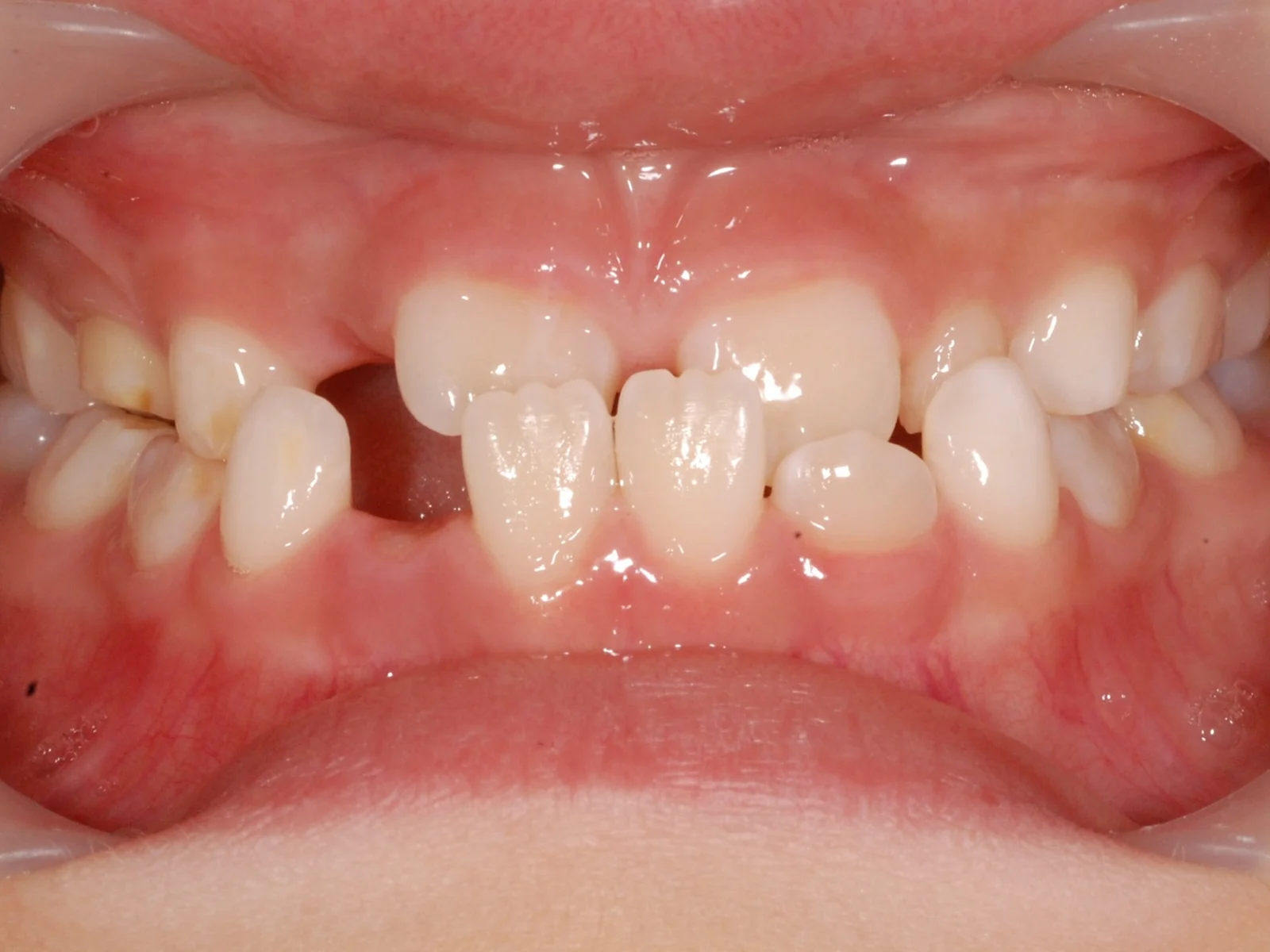
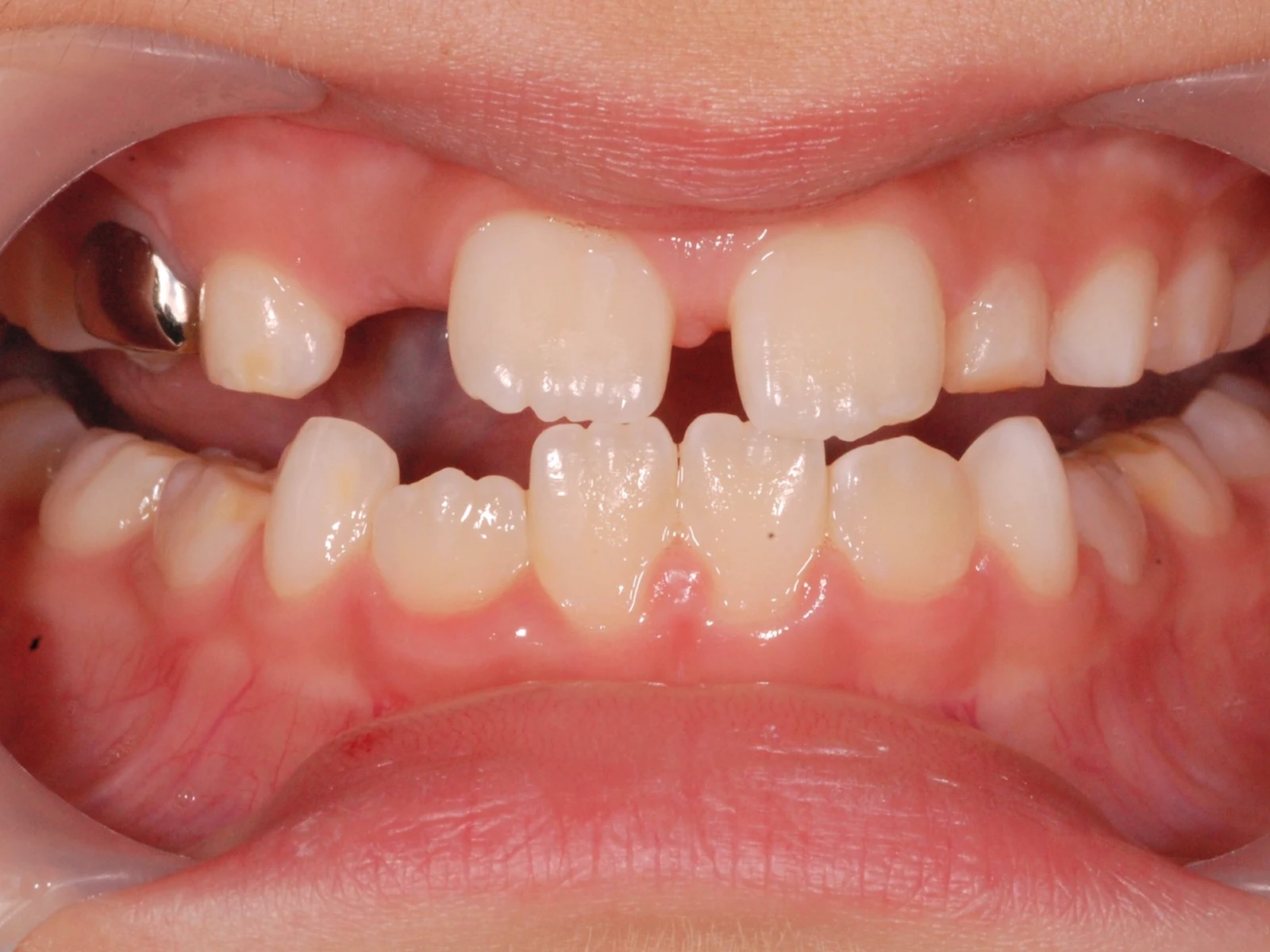
A child whose front teeth bite the wrong way round (anterior crossbite)
Phase 1 treatment · correcting the front-tooth bite and monitoring growth
Before · Apr 2015
Before treatment. The lower front teeth bit in front of the upper front teeth, which could hold back the growth of the front of the upper jaw.
During phase 1 · Jul 2015
About 2.5 months after starting the appliance. The upper front teeth moved in front of the lower front teeth and now bite in the normal direction.
Age and growth stage
Age 5, cervical vertebrae maturation stage 1
Cause
Functional crossbite, caused more by front-tooth position and biting habits than by a jawbone difference
Chosen
Phase 1 treatment, an activator to support upper jaw growth
Duration
About 2.5 months until the front-tooth bite was corrected
Why we treated early
Front teeth that bite the wrong way round can affect lower jaw growth or the jaw joint, so it is better to correct them as early as possible.
Afterward
Lower jaw growth remains, so we monitor regularly until growth in puberty is finished.
CASE02
A child who came early worried about a snaggletooth, but we decided to wait
Monitoring · one round of phase 2 treatment after the permanent canines came in
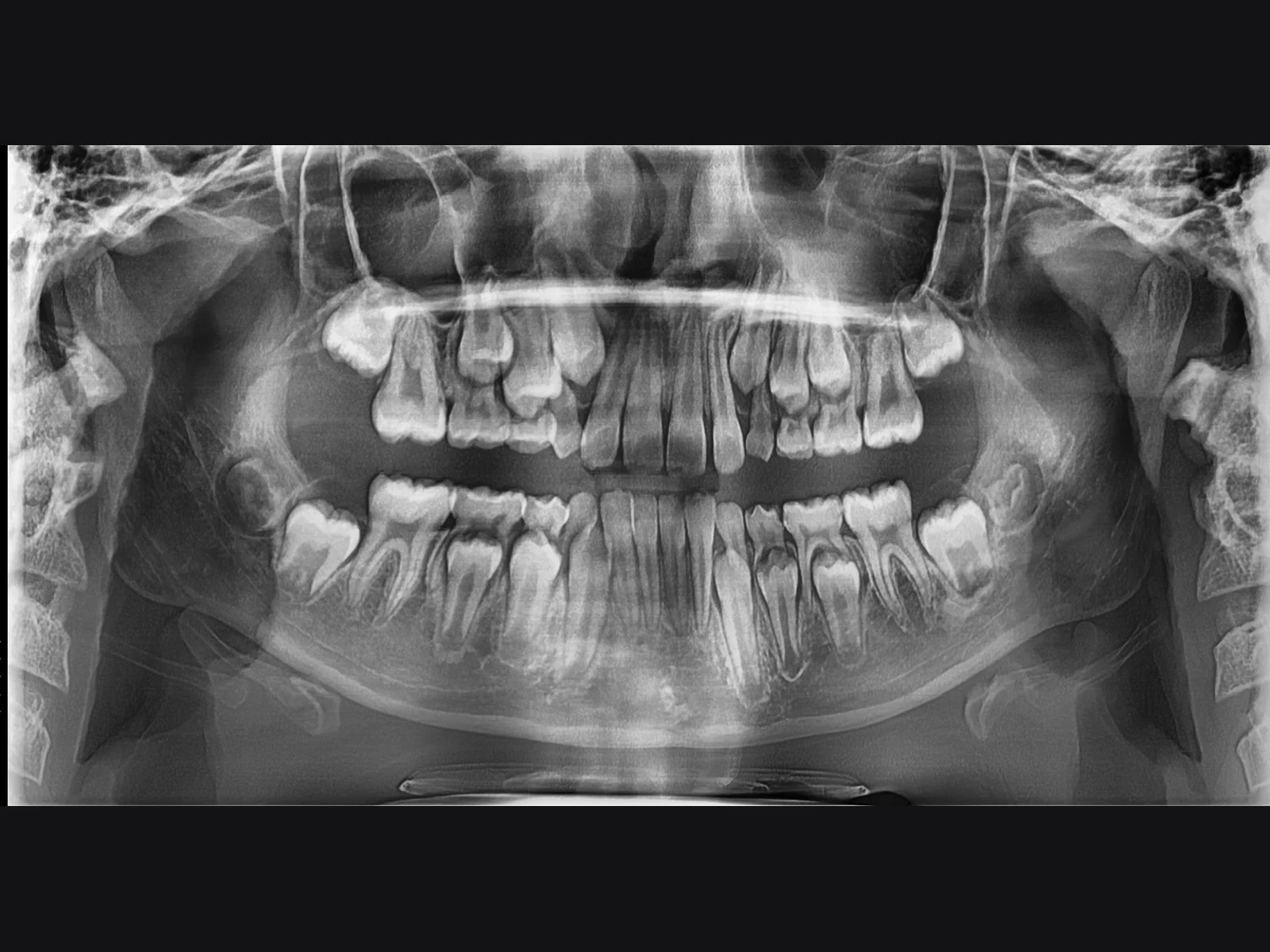
First check-up · Sep 2020
Panoramic X-ray at the first check-up. The permanent canine was still in the bone but erupting in a normal direction, so we decided to monitor.
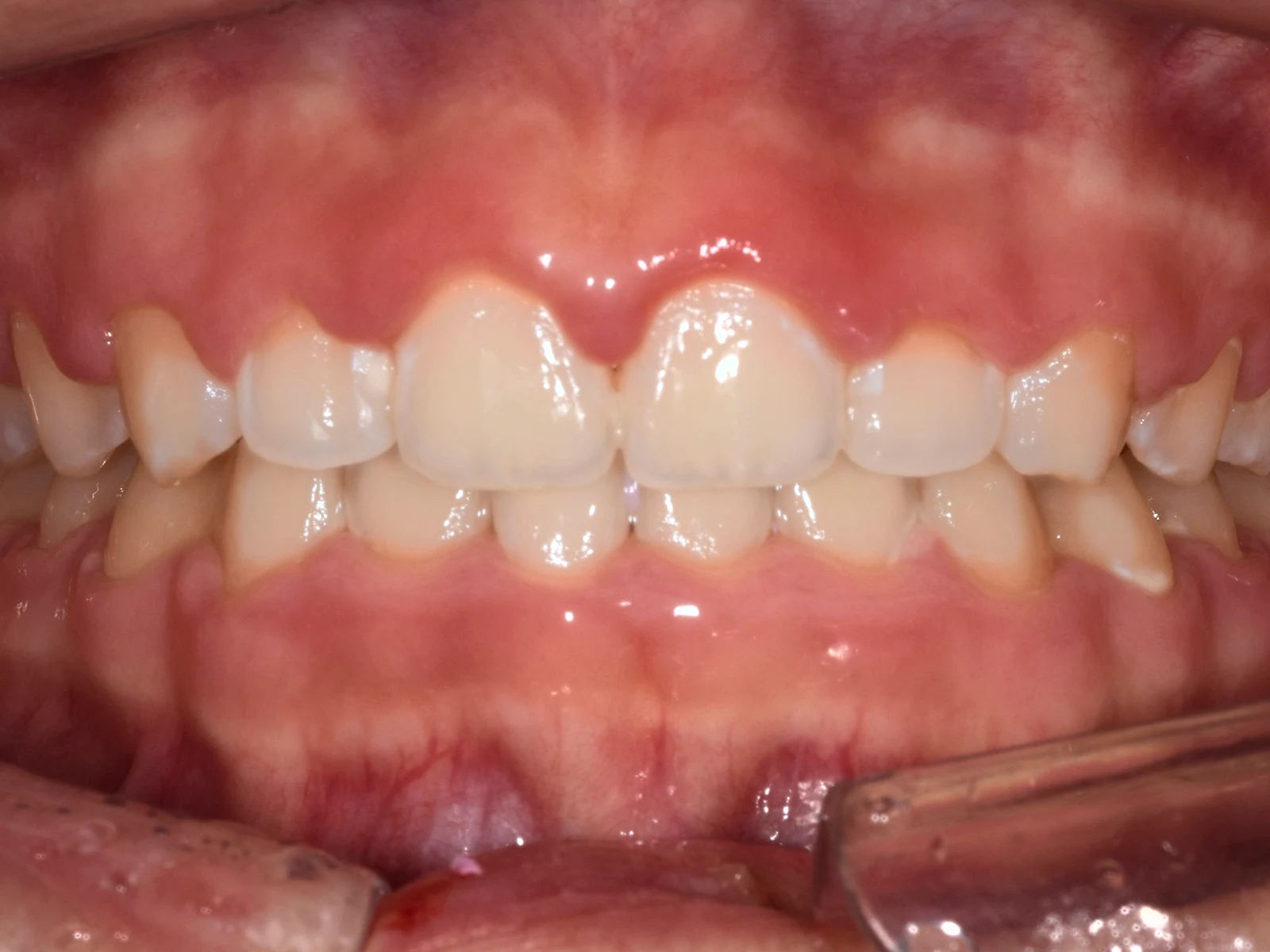
After phase 2 · Dec 2023
After treatment that started once all the permanent teeth had come in. The child needed braces only once.
Age at first check-up
Age 9
Assessment
Space was a little short, but there were no jaw growth or habit problems, so there was no reason to start an appliance early
Not done
Phase 1 treatment (treating in one go after all the permanent teeth came in meant less time and burden)
Duration
About 39 months from the first check-up to completion
CASE03
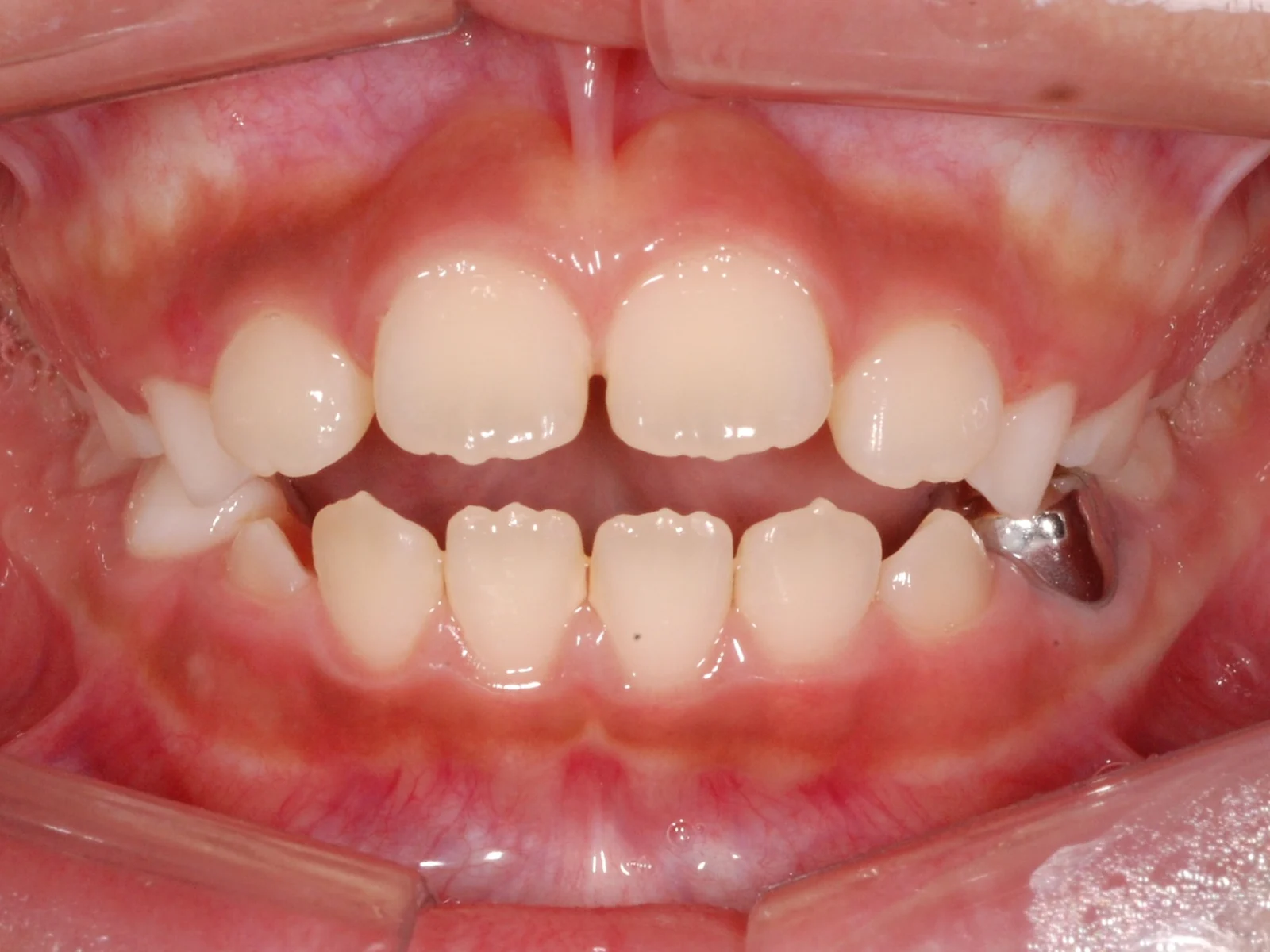
A child whose front teeth do not meet because of a tongue-thrusting habit
Habit-correcting appliance · reducing the habit so the front teeth come down on their own
Before · Jul 2015
Before treatment. When swallowing, the tongue pushed out between the front teeth, so the upper and lower front teeth did not meet.
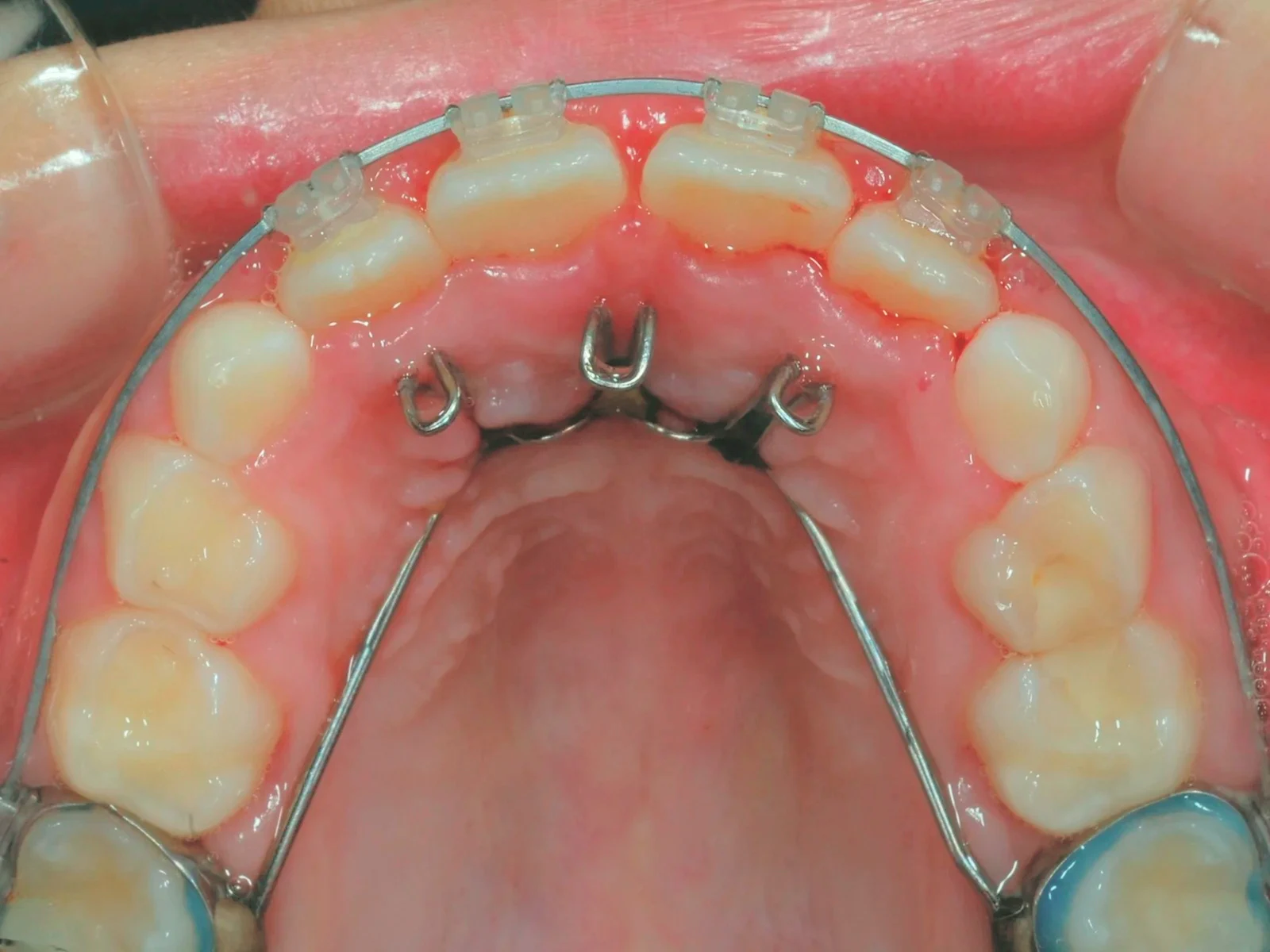
Tongue-thrust appliance · Nov 2015
During treatment. An appliance behind the upper front teeth keeps the tongue from pushing forward. This child also wore braces.
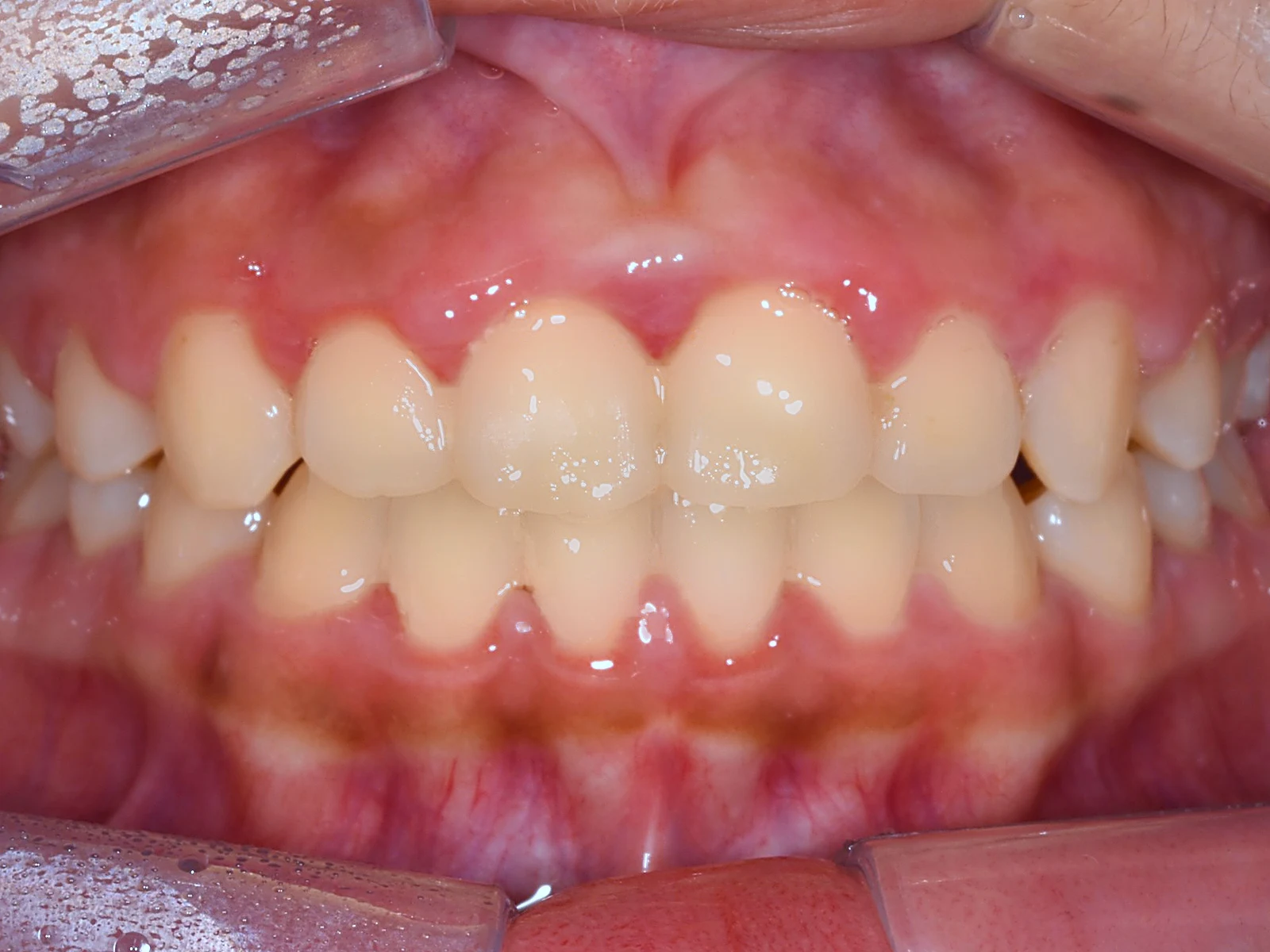
After · Jul 2020
After correcting the habit. Once the tongue stopped pushing on the front teeth, the front teeth came down and began to meet.
Age
Age 10
Cause
A habit of pushing the tongue forward when swallowing
Chosen
A tongue-thrust appliance and tongue exercises to rest the tongue on the roof of the mouth
Duration
About 1.5 years of appliance treatment
Note
If the habit comes back, the front teeth can open again, so we check regularly.
* Photos were taken under the same conditions and published with the consent of the patients and their parents or guardians. Treatment results and side effects may vary from person to person.
02°
When it is better to check early, and when it is better to wait
When growth makes a problem worse or growth can be used, early is better; problems of teeth lining up are usually better after all the permanent teeth have come in.
01Underbite (early)
If the lower front teeth bite in front of the upper front teeth, growth of the front of the upper jaw can be held back. If it is caused by front-tooth position, early correction is better; if the jawbone difference is large, we watch growth and decide the timing.
02One-sided bite and asymmetry (early)
If the upper jaw is narrow and the back teeth on one side bite the wrong way round, the lower jaw can grow while pushed to one side. It is better to check during the period when the upper jaw can still be widened.
03Habits (early)
Thumb sucking, tongue thrusting and mouth breathing can open the front teeth or narrow the upper jaw. The longer a habit lasts, the harder it is to correct.
04Snaggletooth and crowding (wait)
Problems of tooth alignment alone take less time and burden when treated in one go after most permanent teeth have come in. Meanwhile, we only check that baby teeth fall out and permanent teeth come in on time.
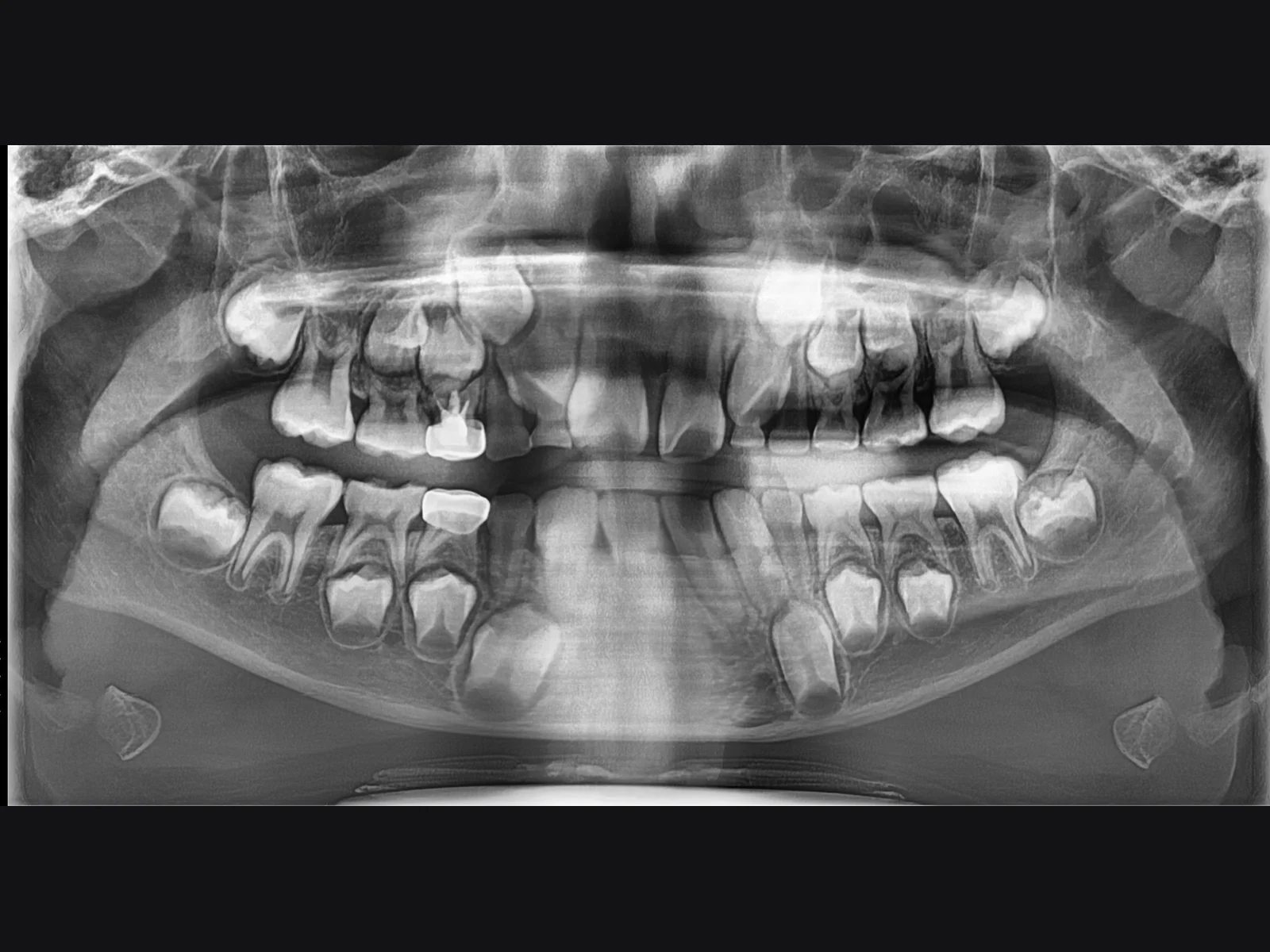
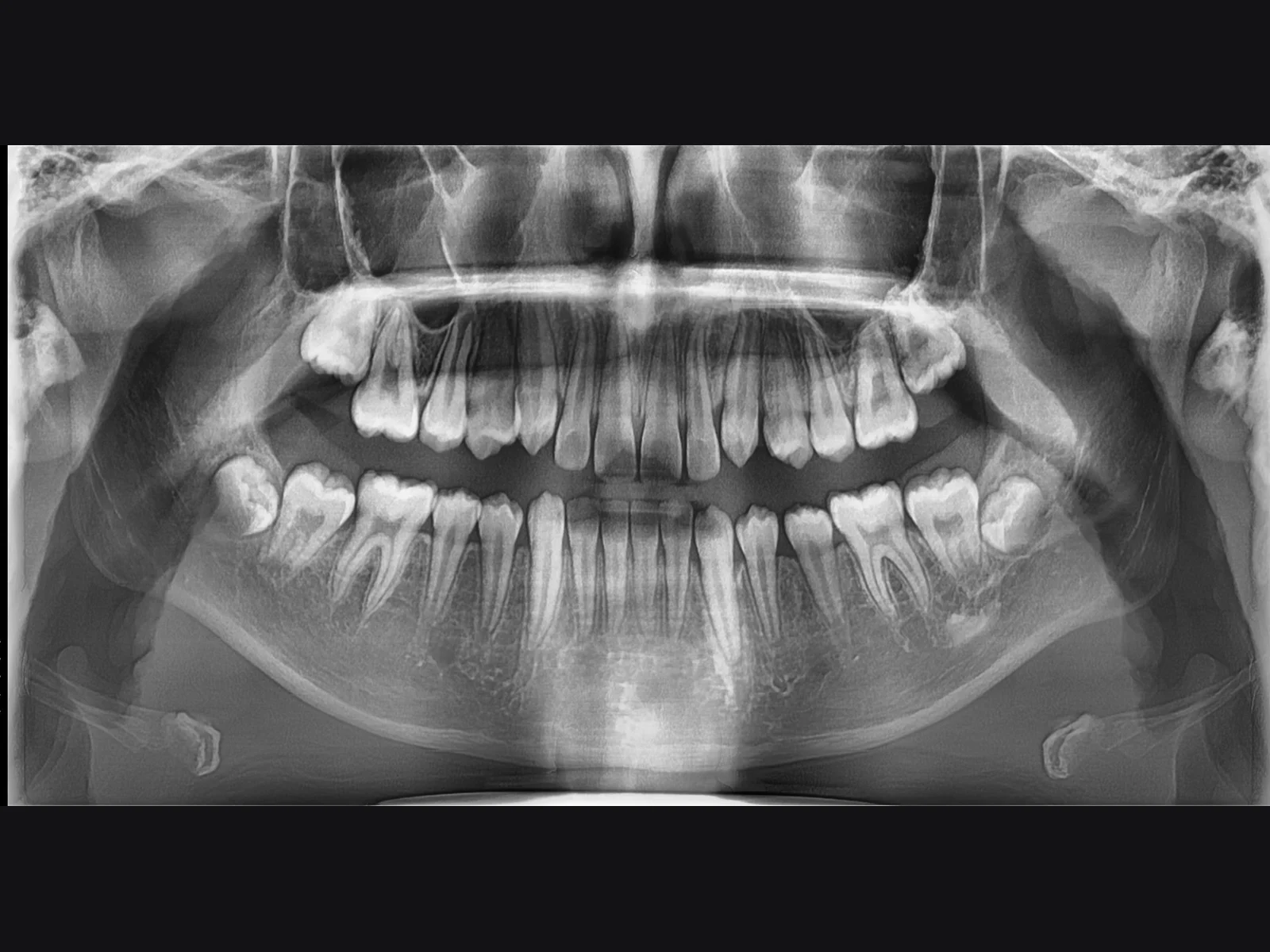
Panoramic X-ray
Panoramic X-ray during the mixed-dentition period. We check that all the permanent teeth are present, coming in the right direction, and not stuck in the bone.
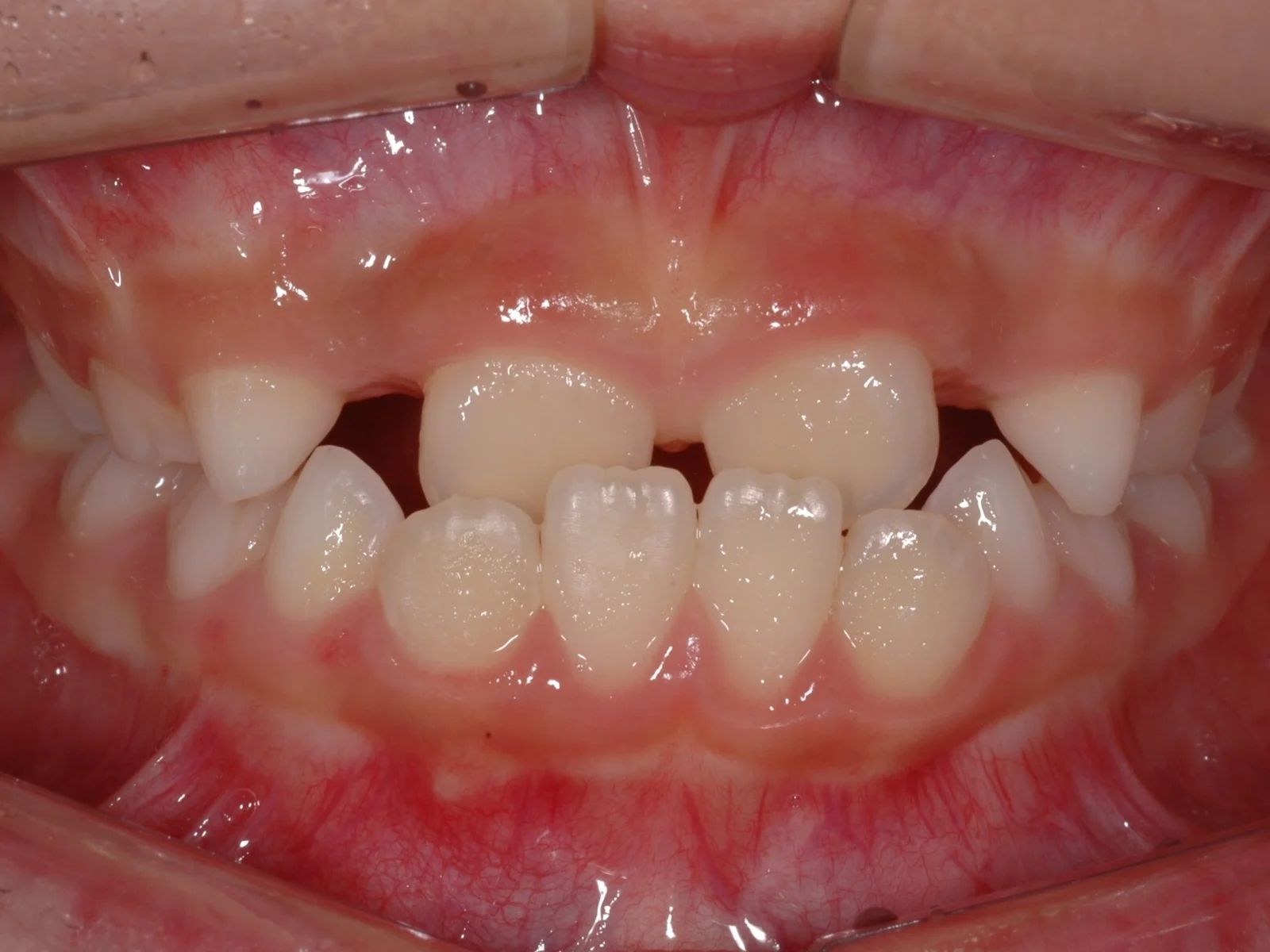
Anterior crossbite
Front teeth biting the wrong way round. If the lower front teeth bite in front of the upper front teeth, growth of the front of the upper jaw can be held back, so we check early.
The American Association of Orthodontists recommends a first orthodontic check-up around age 7. Having a check-up at that age does not mean starting treatment right away.
03°
How children's orthodontic treatment works
There are five steps, from the first check-up to deciding on phase 2. Not every child goes through every step, and many end with monitoring only.
First check-up
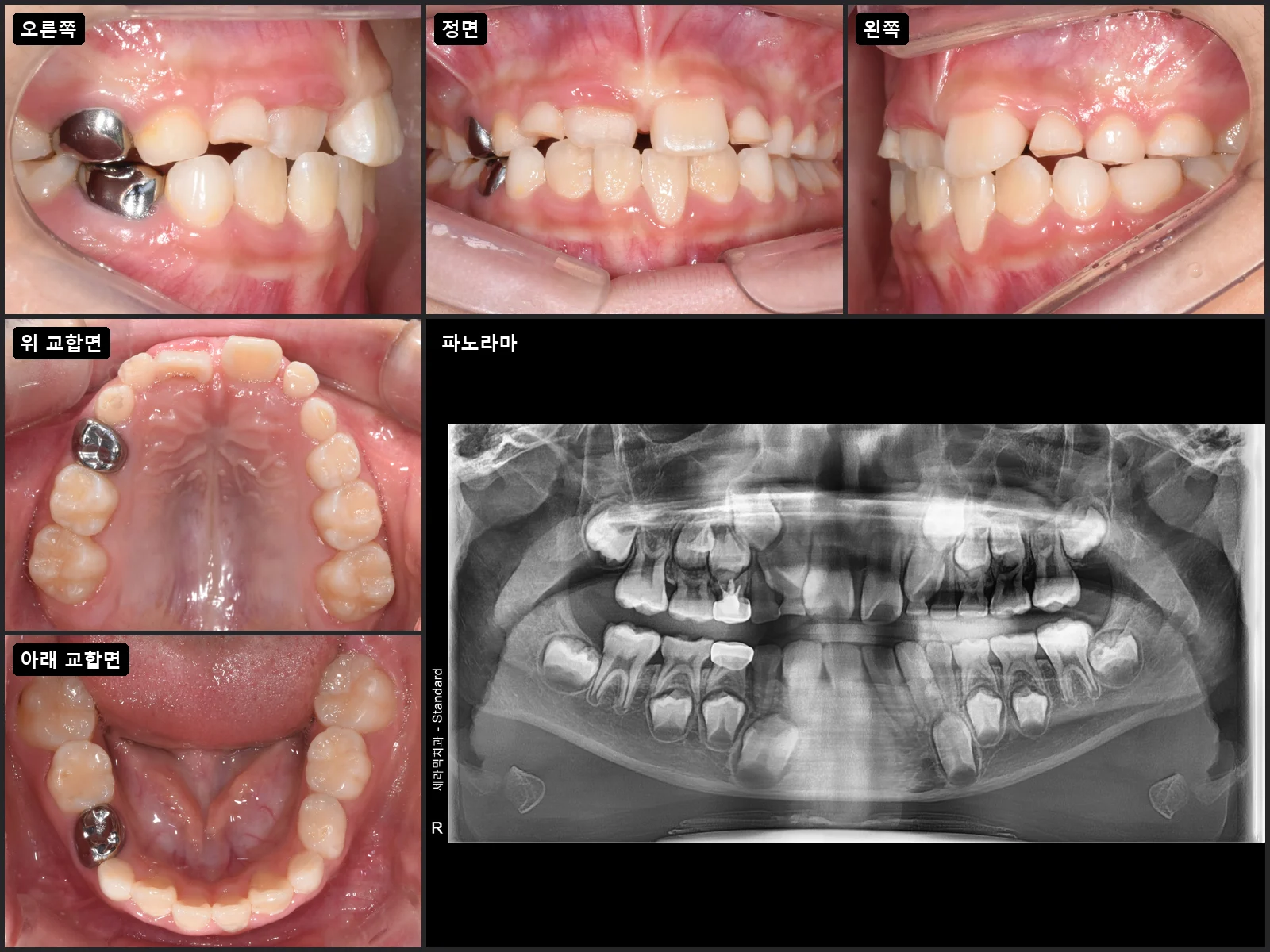
First check-up records. We check the bite with intraoral photos, and the number and direction of the permanent teeth with a panoramic X-ray.
STEP 01
At the first check-up, we check the bite and the permanent teeth
With intraoral photos, we look at the bite of the front and back teeth and signs of habits. With a panoramic X-ray, we check that all the permanent teeth are present, whether any tooth is stuck in the bone or extra (supernumerary), and whether the roots of baby teeth are dissolving on time. We also ask about thumb sucking, snoring and sleeping with the mouth open.
Why we do thisMissing permanent teeth or teeth stuck in the bone cannot be seen from outside. Finding them early often means we can manage simply by removing baby teeth on time or holding the space.
Growth stage
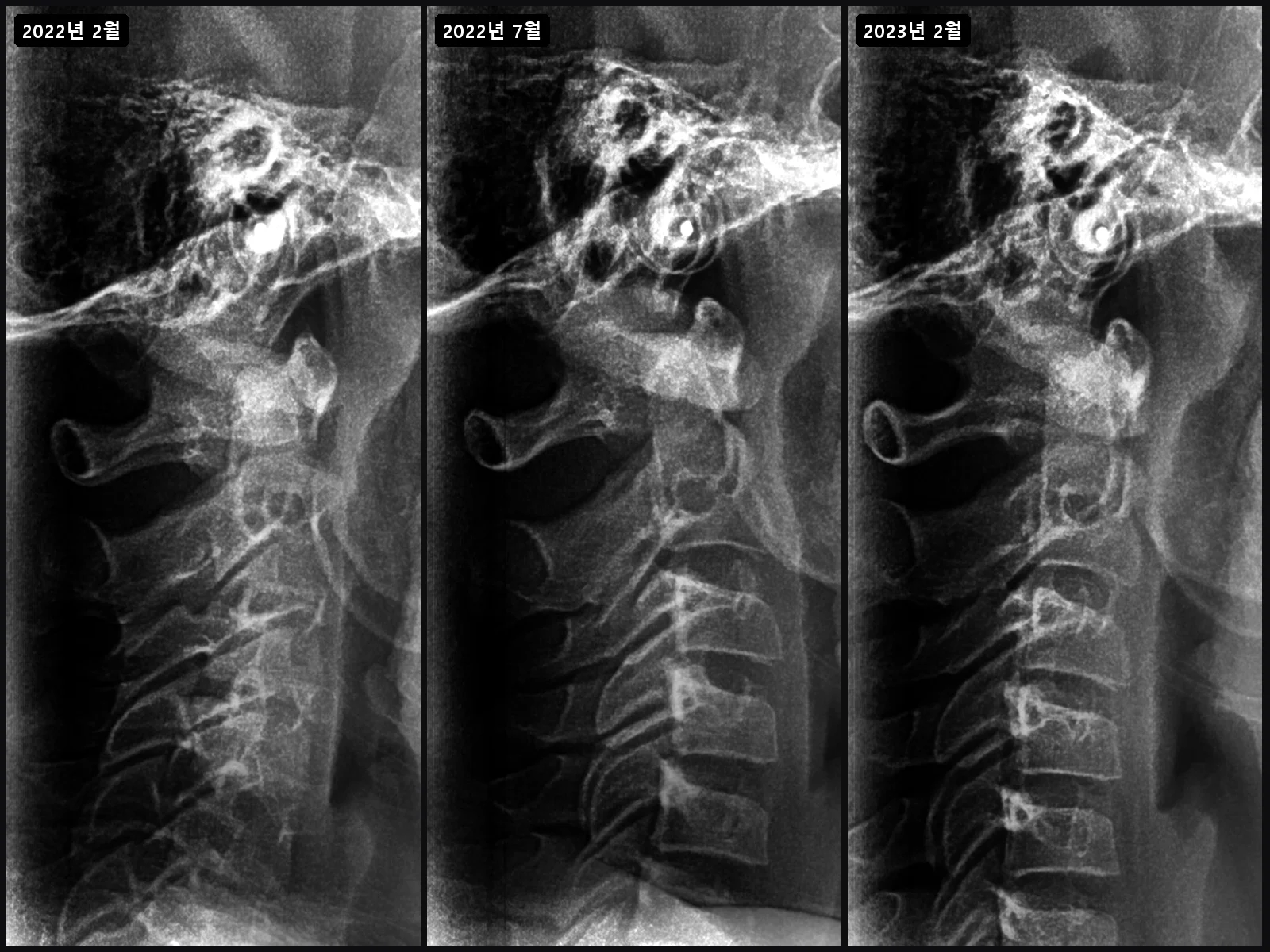
Shape of the neck bones on a side-view X-ray. We estimate the growth stage from how concave the lower edge of the neck bones becomes and how their shape changes from square to taller.
STEP 02
We check the growth stage on X-ray
On a side-view X-ray (cephalogram), we look at the shape of the neck bones along with the position of the upper and lower jaws. The neck bones change shape as a child grows, so they tell us whether growth is at its peak now or has already passed.
Why we do thisThe period when height increases and the period when the facial bones grow differ a little, and age alone varies greatly from child to child. I carried out a study analyzing when one growth center of the facial bones fuses, using age and the cervical vertebrae maturation stage, and I use this as the basis for timing treatment that uses growth versus treatment that waits for growth to finish.
STEP 03
We tell you whether to start now or wait
Looking at the X-ray, we explain the type of problem and the growth stage, and tell you whether starting now or waiting is better. If waiting is better, we tell you to wait and write down the next check-up time, usually 6 months to 1 year later.
Why we do thisStarting an appliance when it is not needed only lengthens the total treatment time and wears the child out. On the other hand, missing the time when growth should be used reduces the options available later. That is why, in children's orthodontics, we put the most effort into deciding when to start.
First consultation · Apr 2015
Appliance start · Apr 2015
Midway · Jul 2015
Front-tooth alignment completed · Jan 2017
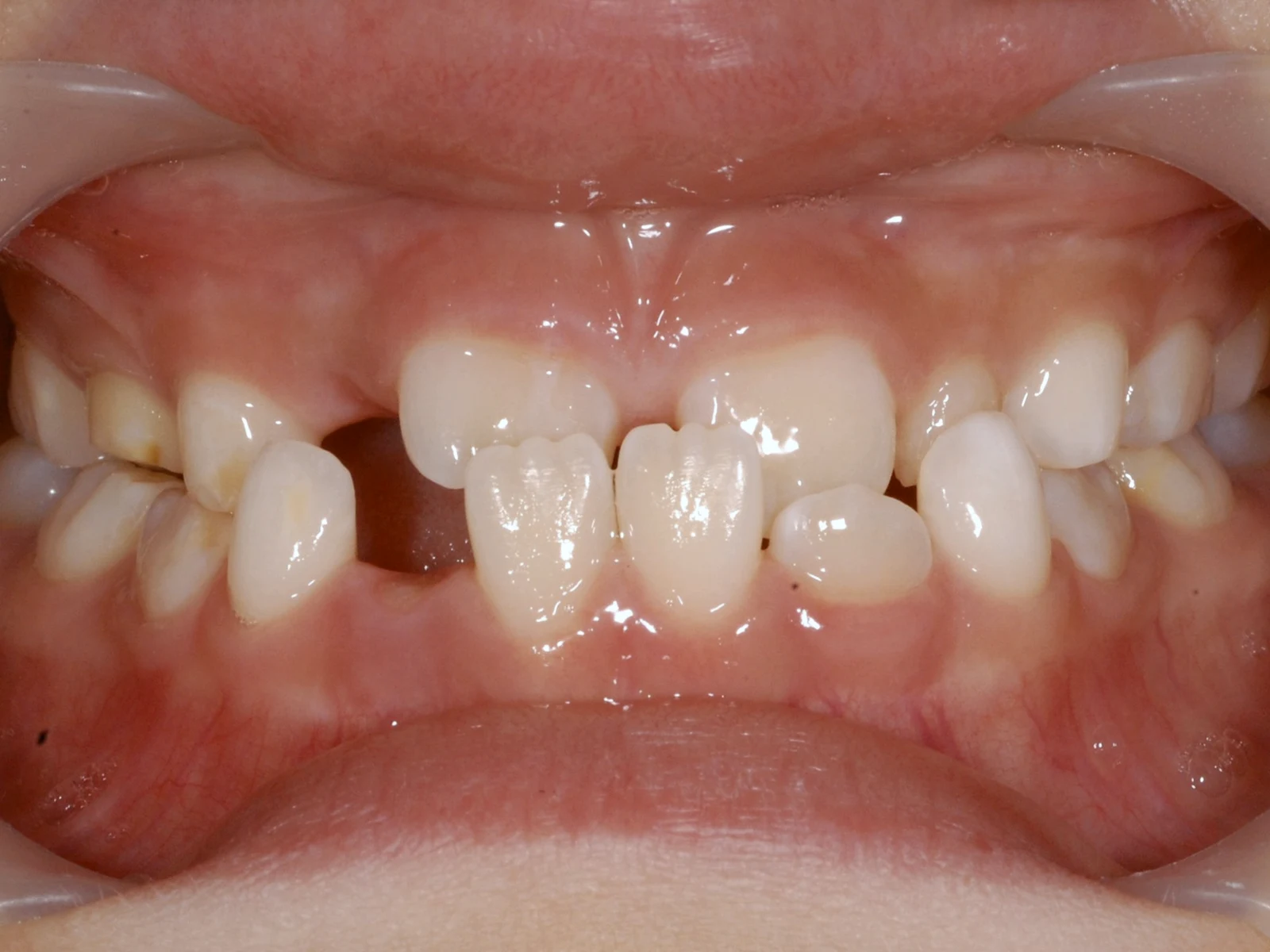
Phase 1 treatment of the same child. How consistently the appliance is worn greatly affects the result.
STEP 04
If needed, we do phase 1 treatment
Phase 1 treatment manages the direction of jaw growth, habits and the space for permanent teeth during growth. Depending on the problem, we use a habit-correcting appliance, an appliance that widens the upper jaw or guides growth, or an appliance that holds the space where a baby tooth was lost early. To support upper jaw growth, we use functional appliances such as an activator, Twin Block or facemask. For each appliance, we give you a written guide on wearing time and care.
Why we do thisDuring growth, the suture in the middle of the upper jaw has not yet fused, so the jaw can be widened, and habits are easier to correct than in adults. After this period, the same effect is hard to achieve, so we do it at this time only for children who need it.
Phase 2 diagnosis · Apr 2022
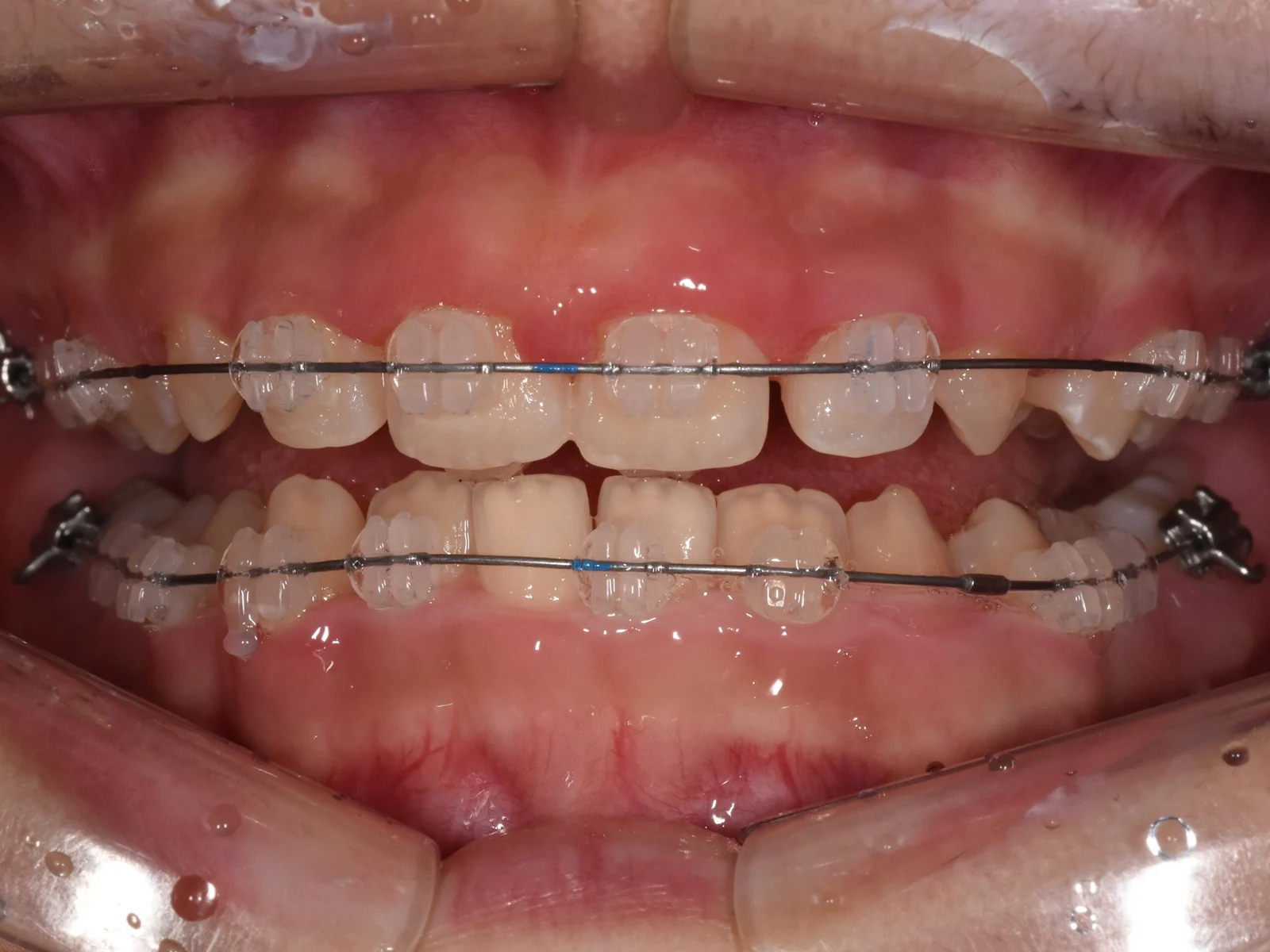
Phase 2 treatment · Jun 2022
Monitoring period after phase 1. We watch until all the permanent teeth have come in, then decide whether phase 2 is needed.
STEP 05
When all the permanent teeth are in, we check again whether phase 2 is needed
After phase 1, we watch growth and the eruption of the permanent teeth, and when all the permanent teeth are in, we check the alignment and bite again. Sometimes phase 1 avoids phase 2 or reduces its scope, and sometimes phase 2 is needed to line up the teeth.
Why we do thisPhase 1 guides the direction of the jaws and space; it does not line up each permanent tooth. So we do not say treatment is finished when phase 1 ends, and we explain in advance what may remain afterward.
* Clinical photos were published with the patients' consent. Side effects such as temporary pain or discomfort may occur depending on the person.
Before fitting the appliance, we explain to the child directly why it is needed. When children understand and agree, they often keep to the wearing time.
04°
What decides when to start?
We do not decide by age alone. We look at the four points below together and decide whether to start now, correct habits first, or wait.
Type of problem · First, we sort out whether the problem is related to jaw growth or only to tooth alignment.
Growth stage · From the shape of the neck bones on a side-view X-ray, we see whether growth is at its peak or has passed.
Eruption of the permanent teeth · With a panoramic X-ray, we check the number and direction of the permanent teeth and how far the baby-tooth roots have dissolved.
Habits and cooperation · If a habit continues, the appliance works less well, and whether the child can wear the appliance consistently also affects the timing.
In an underbite where the lower jaw grows a lot, the result is hard to predict until growth is finished, so even if we start, we keep monitoring growth.
05°
Comparing orthodontic approaches for children
Monitoring (regular check-ups)
Habit-correcting appliance
Growth-guiding and upper jaw expansion appliances
Space maintainer
Permanent-teeth orthodontics (phase 2)
For
Children who do not need treatment right now after the first check-up
Children with thumb-sucking or tongue-thrusting habits
Growing children with an underbite, a narrow upper jaw or a one-sided bite
Children who lost baby teeth early, so the space for permanent teeth may shrink
After most permanent teeth have come in (usually from age 11–13)
Purpose
Checking the growth stage and the eruption of permanent teeth
Reducing habits to protect the front teeth and upper jaw
Managing the direction of jaw growth, widening the upper jaw
Holding the space for permanent teeth
Aligning the permanent teeth and correcting the bite
How it is worn
No appliance
Fixed or removable appliance
Fixed, or worn for set hours, depending on the appliance
Usually a fixed appliance
Fixed braces or clear aligners
Visits
Usually once every 6 months to 1 year
Usually once a month
Usually once a month
Usually once a year
Usually once a month (once every 2–3 months with clear aligners)
Limits
Changes can occur in between, so check-up times must be kept
The child's cooperation decides the result
Results vary with the direction and amount of growth
Removed once the permanent teeth come in; does not correct alignment itself
The actual appliance is chosen according to the child's problem and growth stage. At Ceramic Dental Clinic, we use a facemask, Class II and Class III activators, a chin cap and others.
06°
Self-check for parents
If any item applies, have a check-up regardless of age. Even if none applies, a check around age 7 is a good idea.
07°
In these cases, other treatment comes first, or it is fine to wait
Early check needed
Children whose front teeth bite the wrong way round
Children whose back teeth on one side bite the wrong way round, or whose jaw shifts to one side
Children with an ongoing thumb-sucking or tongue-thrusting habit
Other treatment comes first
Children with many cavities: we treat and manage the cavities first
Children who always breathe through the mouth because of a blocked nose: we also recommend seeing an ear, nose and throat (ENT) doctor
It is fine to wait for now
Permanent front teeth that have just come in and are a little crooked or gapped: they often settle as the neighboring teeth come in
Only a snaggletooth is a concern, with no jaw growth or habit problems: we monitor until all the permanent teeth come in
08°
Side effects and limits
Please read
· The direction and amount of growth differ from child to child, so the results of growth-guiding treatment vary. Lower jaw growth in particular is hard to predict until puberty is over.
· How consistently the appliance is worn greatly affects the result.
· Even after phase 1, phase 2 may be needed to align the permanent teeth.
· Cavities form easily while wearing appliances, so brushing and regular check-ups are needed.
· With an upper jaw expansion appliance, the area around the nose may feel tight for the first few days, or a gap may briefly open between the front teeth.
FAQ
FAQ
At what age should my child have a first orthodontic check-up?
We usually recommend a first orthodontic check-up for children around age 7. By then, the permanent front teeth and the first permanent molars have come in, so we can see the bite and the relationship of the jaws. Having a check-up does not mean starting treatment right away. If the lower teeth sit in front of the upper teeth or your child has a habit, you can come earlier.
Does starting orthodontic treatment early shorten the total time?
Starting early does not shorten the overall treatment time for children. Problems that need to use growth, such as an underbite or habits, are better treated early, but problems of tooth alignment alone, such as a snaggletooth, take less time and burden when treated in one go after all the permanent teeth have come in.
If my child has phase 1 treatment, will phase 2 also be needed?
Phase 1 treatment does not always mean phase 2 is needed; sometimes phase 1 avoids phase 2 or reduces its scope. But phase 1 manages the jaws and space, so phase 2, which aligns the teeth after all the permanent teeth have come in, may still be needed. We explain this possibility from the start.
How do you judge a child's growth stage?
We look at the shape of the neck bones (cervical vertebrae) on a side-view X-ray to judge whether growth is at its peak or has passed. Dr. Sunmin Kim carried out a study analyzing when a growth center of the facial bones fuses, using age and the cervical vertebrae maturation stage (Journal of Craniofacial Surgery 2024).
Will my child be able to wear the appliance properly?
In children's orthodontics, how consistently the appliance is worn greatly affects the result. Before starting, we explain directly to the child why the appliance is needed and give parents a written guide on wearing time and care.
Does orthodontic treatment affect my child's height?
There is no evidence that orthodontic treatment or growth appliances stop or increase height growth. Orthodontic appliances affect the jaws and teeth; height is determined by other factors such as genes, nutrition and sleep.
Can teenagers have clear aligner treatment?
Many teenagers whose permanent teeth have mostly come in have clear aligner treatment. But the aligners must be worn 20 hours or more a day for the teeth to move as planned, so we also consider whether the child can keep to the wearing time before choosing the appliance.
A baby tooth came out, but the permanent tooth has not come in.
If the permanent tooth has not come in several months after the baby tooth came out, we check with a panoramic X-ray whether the permanent tooth exists and whether it is stuck in the bone. If the permanent tooth is missing or its path is blocked, we plan an appliance to hold the space or a procedure to open the path.
Evidence and references
Kim S, et al. Characterization of Spheno-occipital Synchondrosis Fusion From Preadolescents to Young Adults Using Age and Cervical Vertebrae Maturation Index. Journal of Craniofacial Surgery 35(2), 2024. (Analysis of when a growth center of the facial bones fuses, using age and the cervical vertebrae maturation stage)
Recommended age for the first orthodontic check-up: the American Association of Orthodontists' recommendation of a check-up around age 7
Questions from international patients who live in Korea or travel to Seoul for treatment.
Can I use Korean National Health Insurance?
If you are enrolled in Korea's National Health Insurance, insured treatments are billed under the same insurance rules as for other enrollees. Whether a treatment is covered depends on the treatment and the insurance rules, and we tell you before treatment starts. If you are not enrolled, you pay the full fee.
I am in Korea only for a short trip. Can I have this treatment?
It depends on how many visits the treatment needs. Braces for children need regular visits, usually once a month with fixed braces, so treatment is for families who live in Korea. Tell us your travel dates when you contact us, and we will tell you after the examination whether the schedule is realistic.
How much does orthodontic treatment cost?
The fee depends on the appliance. For example, metal braces are KRW 4,800,000, ceramic braces KRW 6,000,000, Invisalign KRW 8,500,000 and lingual braces KRW 8,600,000. The orthodontic fee includes the orthodontic diagnosis, extraction (except wisdom teeth), mini-screws, basic retainers and retention care for 2 years. If you have only the diagnosis and do not start treatment, it is KRW 50,000 (KRW 100,000 if a CT scan is needed). If a retainer breaks or is lost later, remaking it costs extra. International and Korean patients pay the same fees. We explain the total before treatment starts. See our fee schedule.
Can I have my consultation in English?
Yes. The doctor in charge of each field consults with you directly in English. For orthodontics, this is Dr. Sunmin Kim, a board-certified orthodontist. Before you travel, you can send photos of your teeth on WhatsApp or by email. An accurate diagnosis is made after we examine you in person.
What happens after treatment, and what if something comes off?
You need retainers after treatment, because teeth tend to move back. Retention care for 2 years is included in the orthodontic fee. If a bracket comes off or a wire hurts after you go home, send us a photo on WhatsApp. We check it and tell you what to do. Some repairs need a visit.
Results, the number of visits and schedules vary from person to person. More questions: Visiting from abroad.


 Before · Apr 2015
 During phase 1 · Jul 2015
 First check-up · Sep 2020
 After phase 2 · Dec 2023
 Before · Jul 2015
 Tongue-thrust appliance · Nov 2015
 After · Jul 2020
 Panoramic X-ray
 Anterior crossbite
 First check-up
 Growth stage
 First consultation · Apr 2015
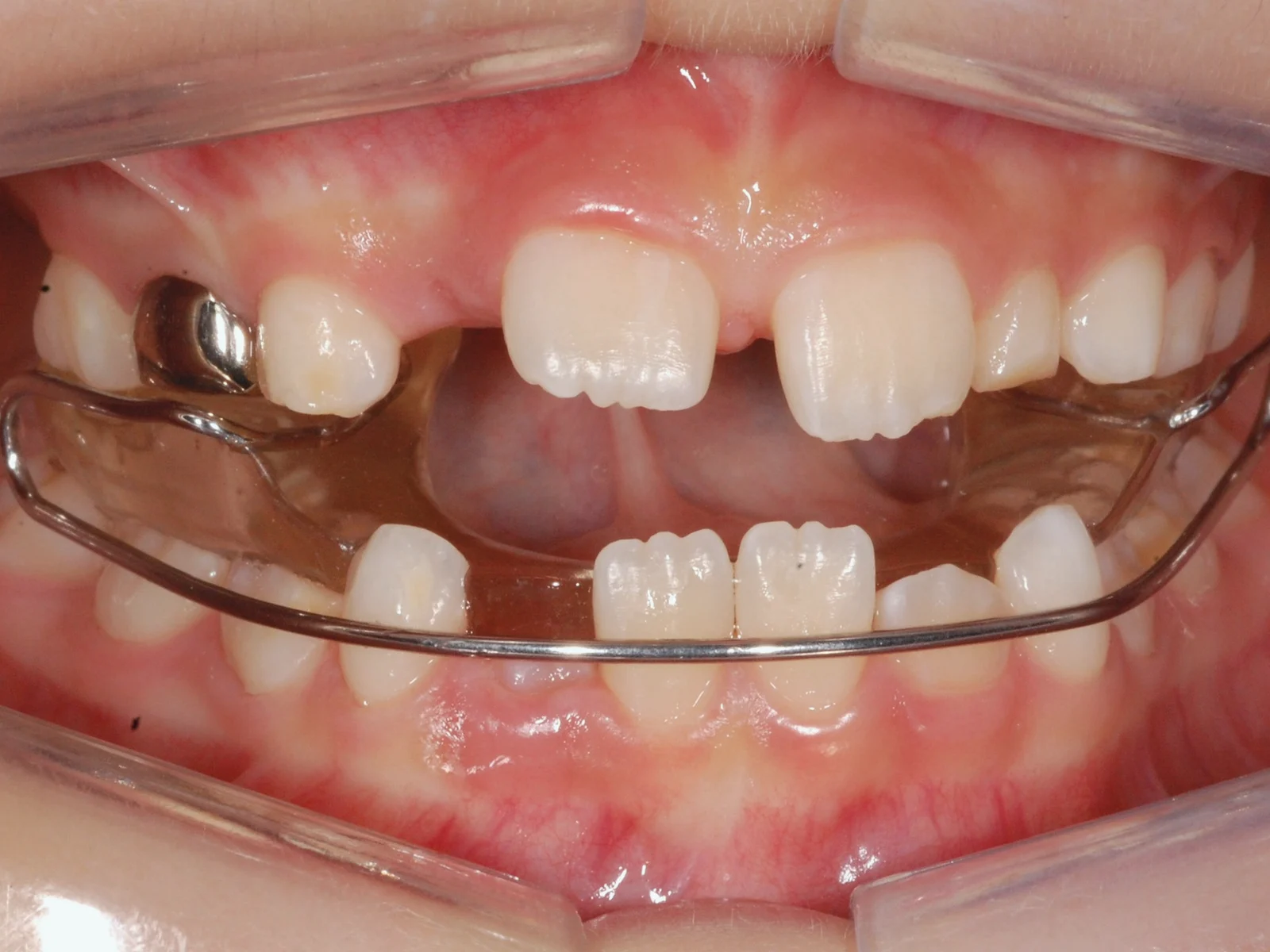 Appliance start · Apr 2015
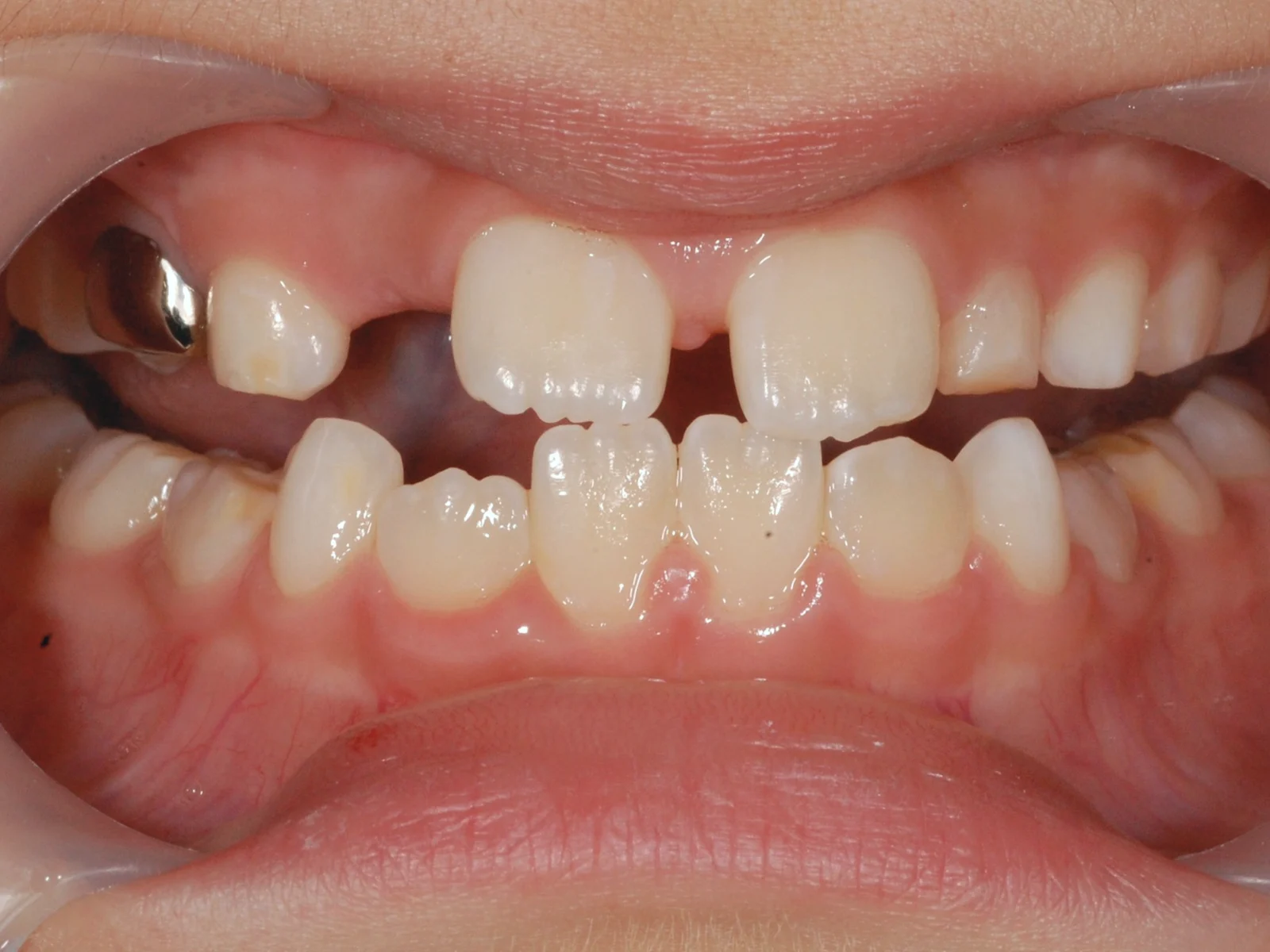 Midway · Jul 2015
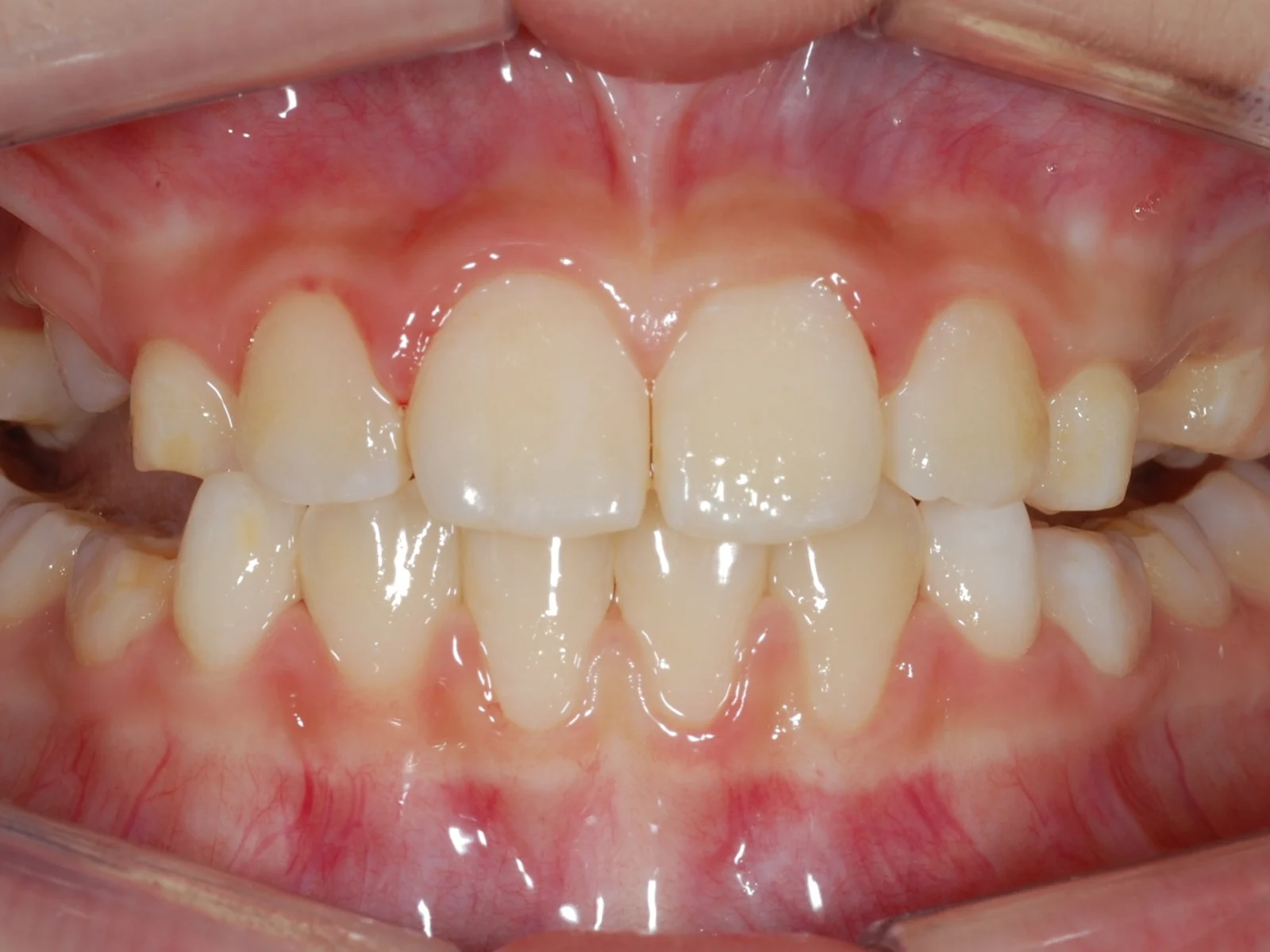 Front-tooth alignment completed · Jan 2017
 Phase 2 diagnosis · Apr 2022
 Phase 2 treatment · Jun 2022