TMJ

TMJ Pain and Jaw Clicking: How Is It Treated?

Dr. Sunmin Kim, Head DentistTreatment: Dr. Sunmin Kim (board-certified orthodontist, main doctor) · Dr. Ilseop Ahn (board-certified periodontist and specialist in integrated dentistry) · Reviewed by Dr. Sunmin KimAbout the doctor →

Last reviewed October 29, 2026 · Dr. Sunmin Kim (board-certified orthodontist, Certified Orthodontist of the Korean Association of Orthodontists)

At a glance

Good for
Your jaw hurts, makes sounds, or does not open well
Treatment flow
Measure mouth opening, muscles, and sounds → daily-habit changes, exercises, medication, laser physical therapy → reassess after about 2 months
Duration and limits
Most cases improve with simple treatments that can be reversed. We do not start with treatments that grind down teeth or permanently change your bite
Details

Jaw joint (TMJ) pain is common, and most cases get better with simple treatments that can be reversed. At the first visit, we measure how many mm your mouth opens, which muscles hurt, and whether there is clicking or catching, so we can first tell whether the cause is the muscles, the joint disc, or the joint bone. Treatment starts with changes to daily habits, home jaw exercises, medication, and Perfect Healing Laser PHL-15 physical therapy, usually for 2 weeks. After about 2 months we compare with your first record, and if you have not improved we consider a splint or Botox (if you are already receiving Botox or the cause is clear, we sometimes use it from the start). We do not start with treatments that reduce your teeth or permanently change your bite.

01°

Even with the same jaw pain, the cause and treatment order differed from person to person

With the jaw joint, a single photo cannot show the result, so we show records of symptoms, measurements, treatment order, and reassessment results. Here are three typical cases.

CASE01

Jaw stiffness every morning and pain when chewing

Muscle-related pain · daily-habit guidance, home exercises, medication, PHL-15 physical therapy for 2 weeks → reassessment at about 2 months
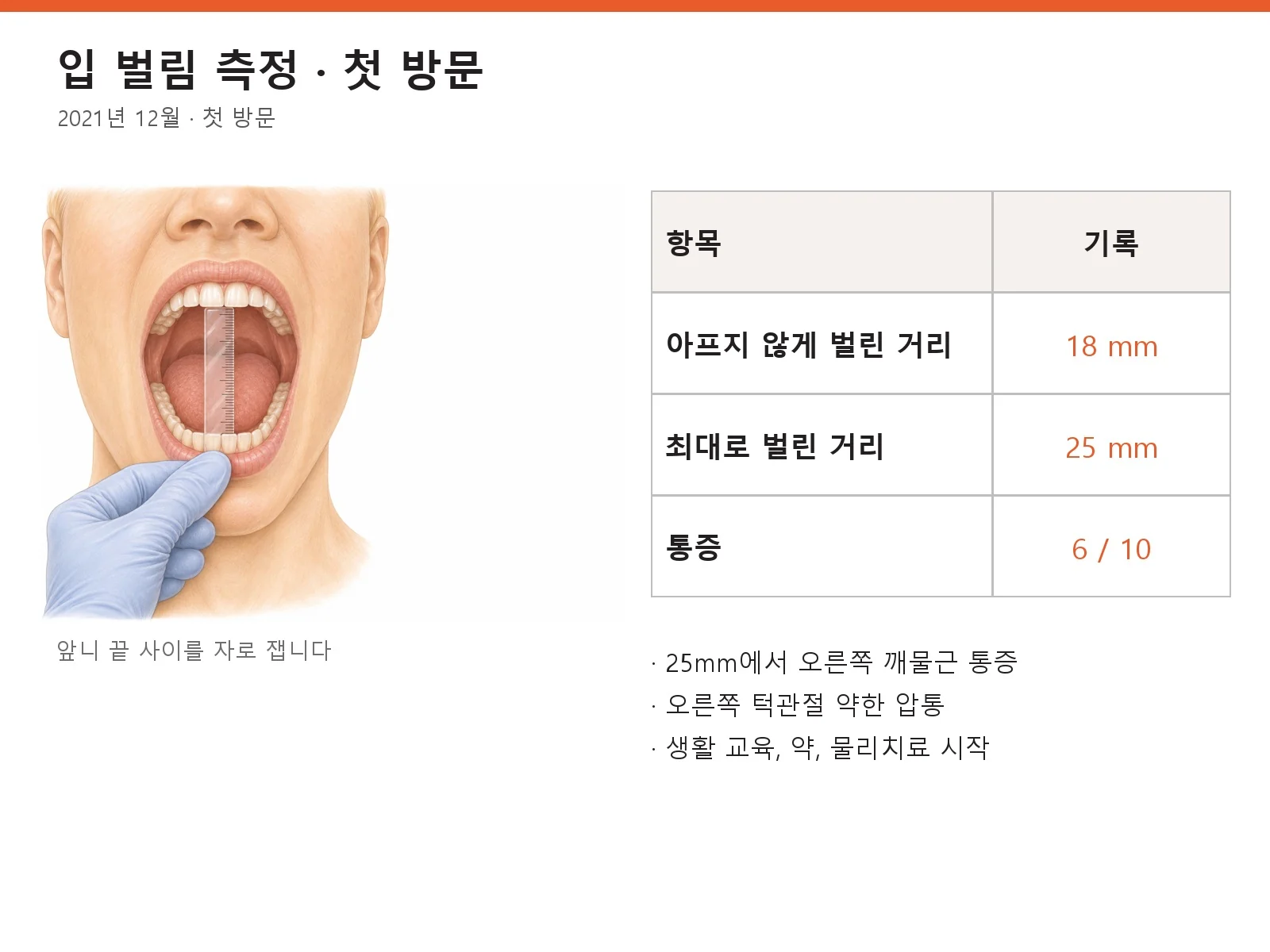
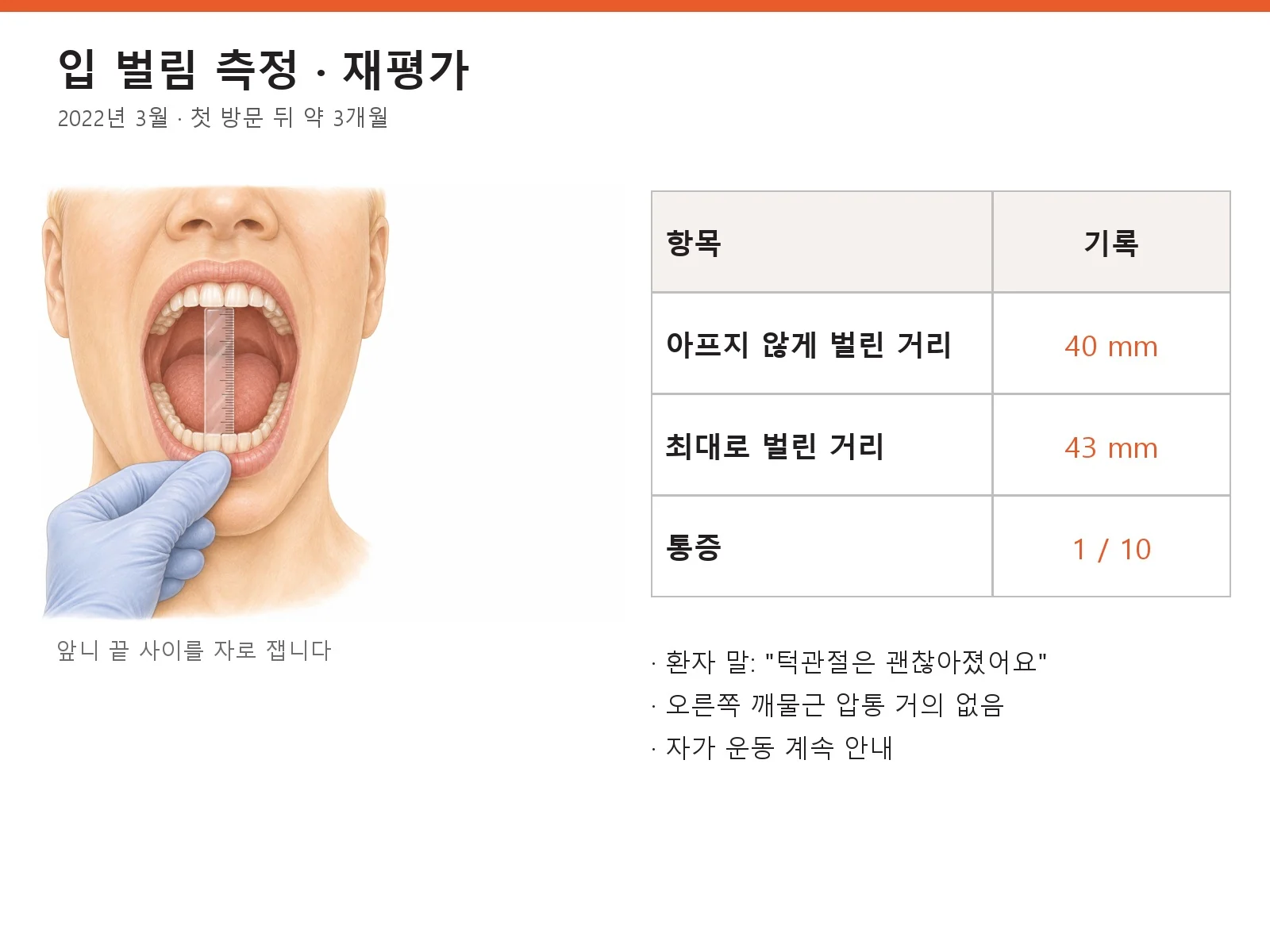
First-visit mouth-opening record. Maximum opening 25mm, pain score 6First visit
First-visit mouth-opening measurement. We record in mm how far you can open without pain and how far you can open at most.
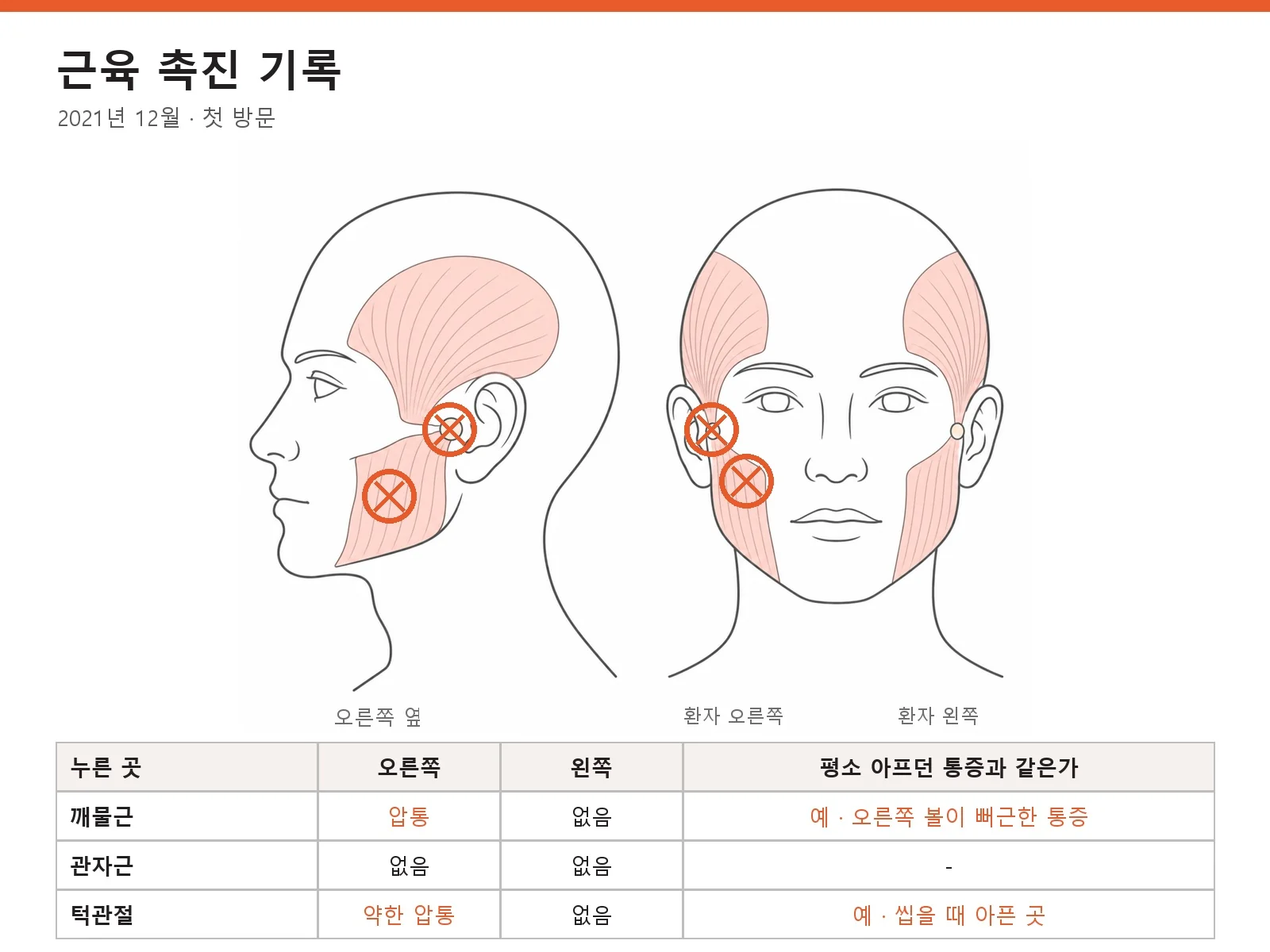
Muscle palpation record marking on a face drawing where the right masseter muscle and jaw joint hurt when pressedMuscle record
Muscle palpation record. On a face drawing, we mark the spots in the masseter and temporalis muscles that hurt when pressed.
Mouth-opening record at reassessment about 3 months later. Maximum opening 43mm, pain score 12-month reassessment
Reassessment at about 2 months. We measure again the same way as the first time and compare the change.
Condition
30s, stiffness in the jaw and temples in the morning, pain when chewing, habit of keeping the teeth together during the day
Chosen
Resting-position guidance and home jaw exercises, medication and PHL-15 physical therapy for 2 weeks
Not done
Splint and Botox (the reassessment showed enough improvement)
Record
Pain 6/10 → 1/10 · Mouth opening 25mm → 43mm
Note
Stiffness can come back during stressful periods, so we advised continuing the home exercises. Why Botox is not the first treatment →
CASE02

Night grinding wore down the back teeth and broke a crown

Night grinding and muscle pain · reassessment after step 1 treatment, splint for remaining pain and tooth protection

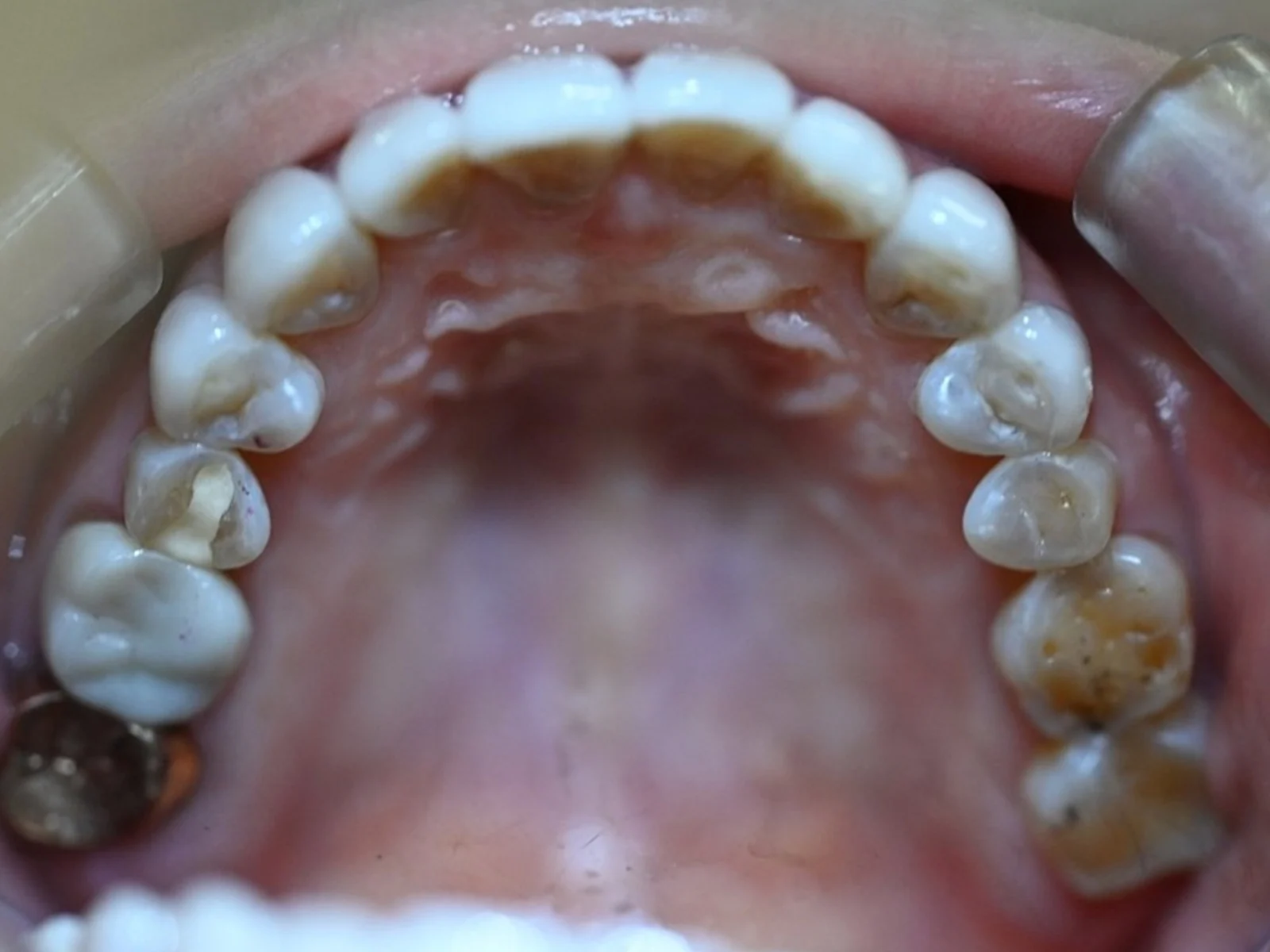
Biting-surface photo of the upper teeth showing worn teethTooth wear
Canines and back teeth worn flat by night grinding. We record where and how much wear there is with photos and scans.
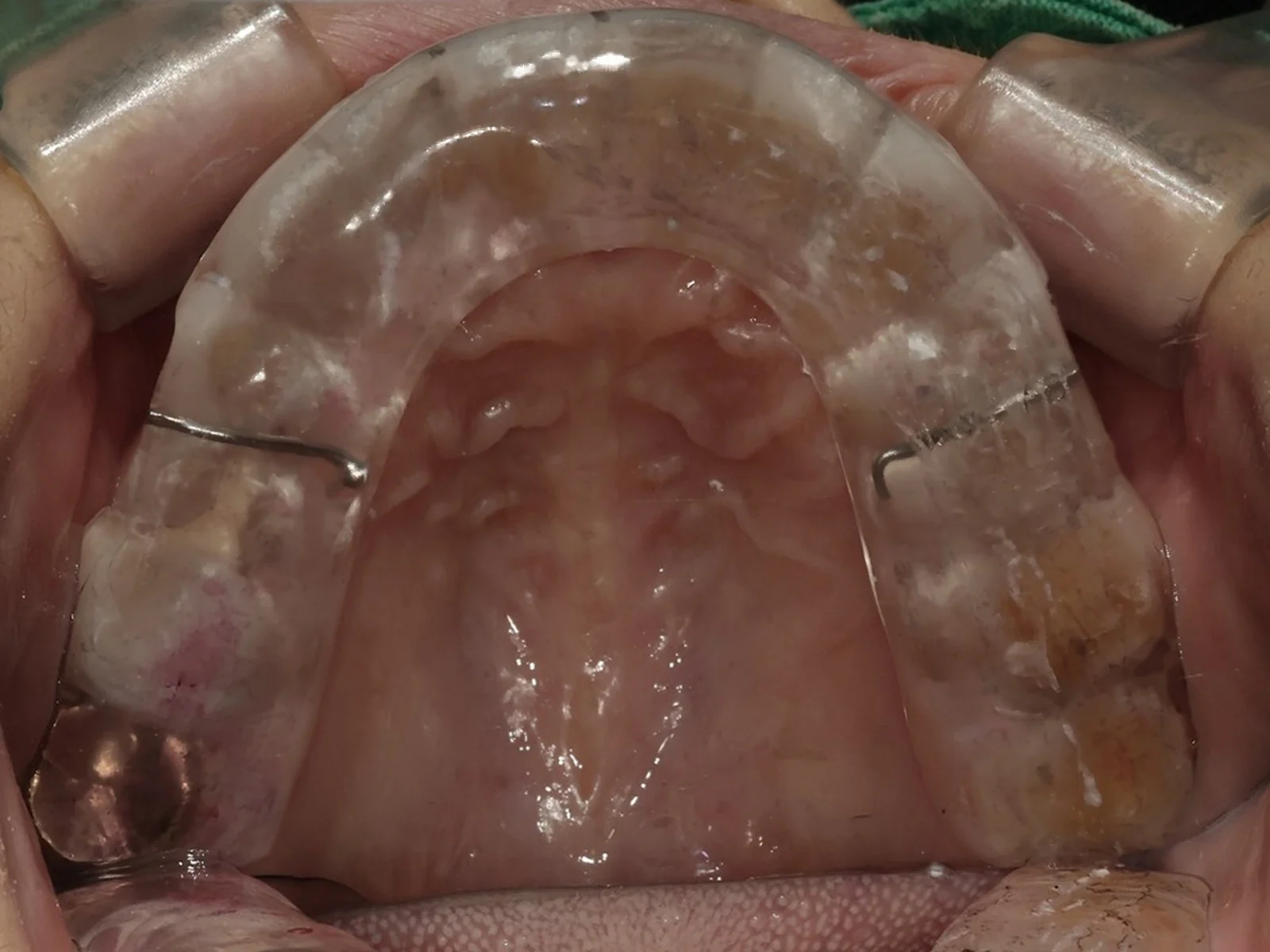
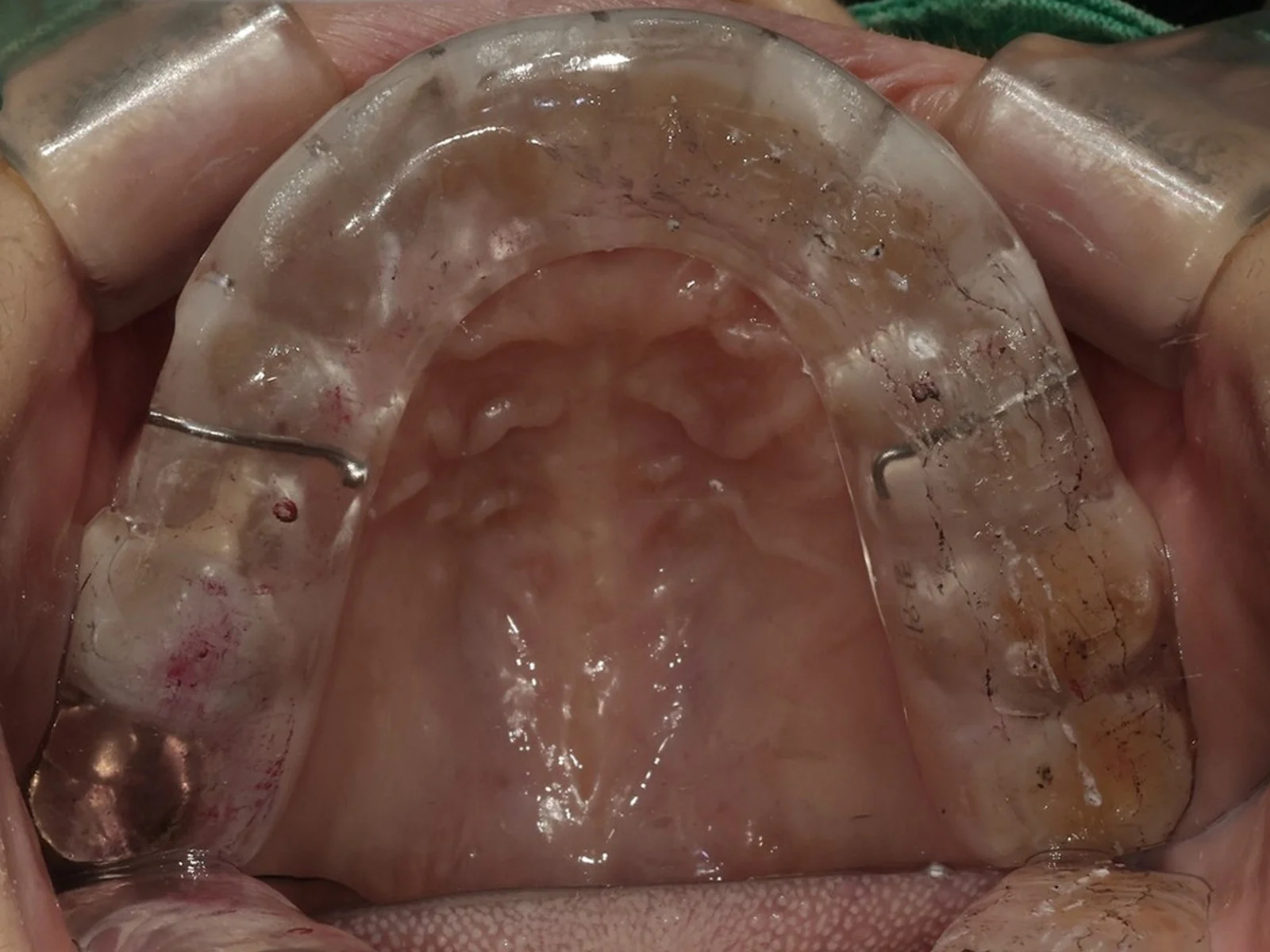
Biting-surface photo of a clear custom splint fitted on the upper teethSplint
Custom splint worn at night. It keeps the upper and lower teeth from grinding directly against each other, protecting the teeth and restorations.
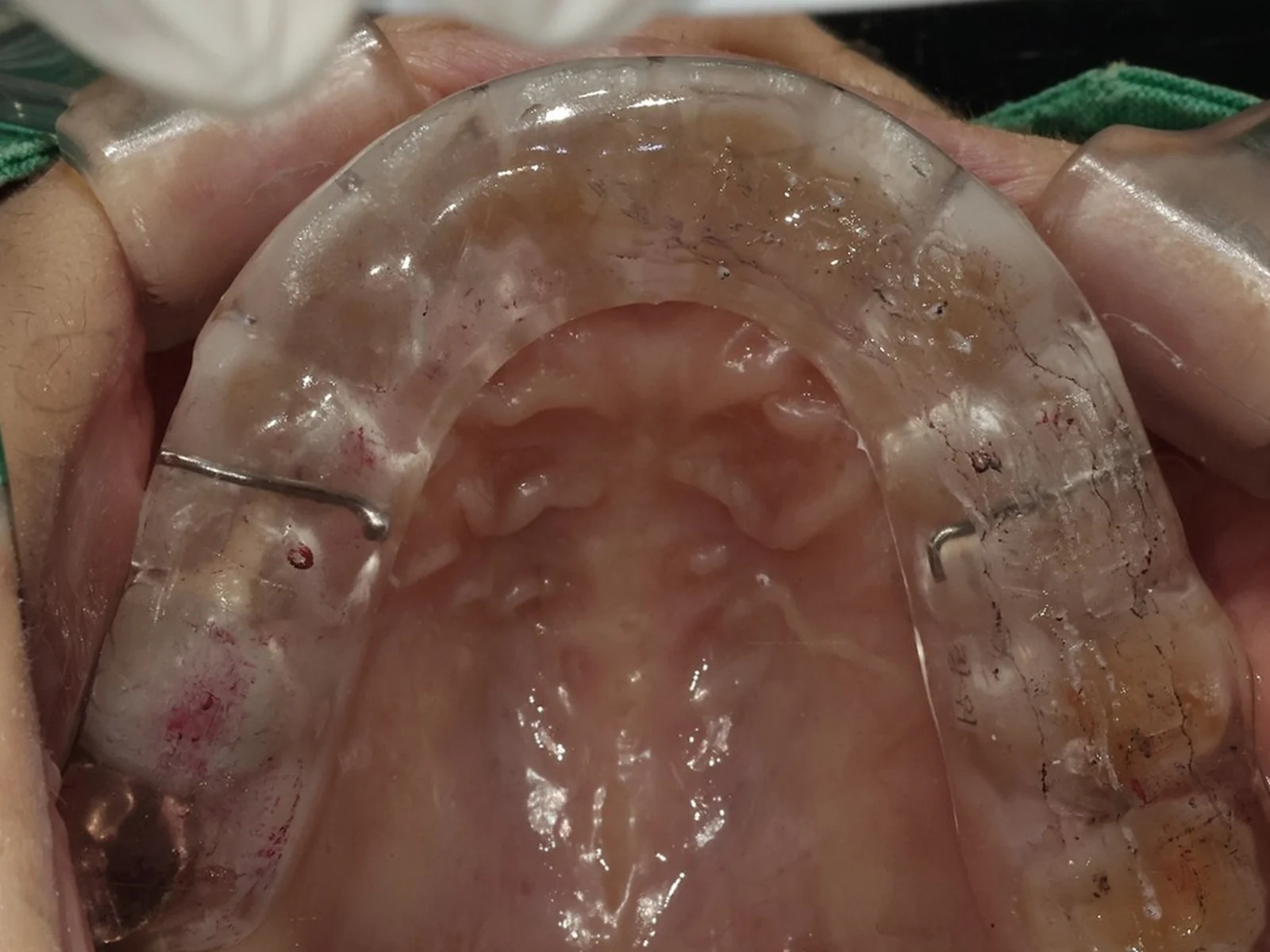
Photo of bite marks left on the chewing surface of a splintRegular check-ups
A splint used for several months. The marks on its surface show how hard and in which direction you grind.
Condition
40s, morning jaw stiffness, worn back teeth and a broken crown, family heard grinding sounds
Chosen
Correcting the daytime clenching habit, reassessment after medication and physical therapy, custom splint
Not done
Grinding teeth down to adjust the bite (it cannot be reversed and evidence is lacking)
Record
Pain 5/10 → 2/10
Note
A splint does not stop grinding; it protects the teeth. We check the appliance every 6 months. More on teeth grinding and splints →

CASE03

Clicking and pain when opening the mouth found at an orthodontic consultation

Joint disc symptoms · stabilizing treatment before orthodontics → orthodontics started after the pain eased

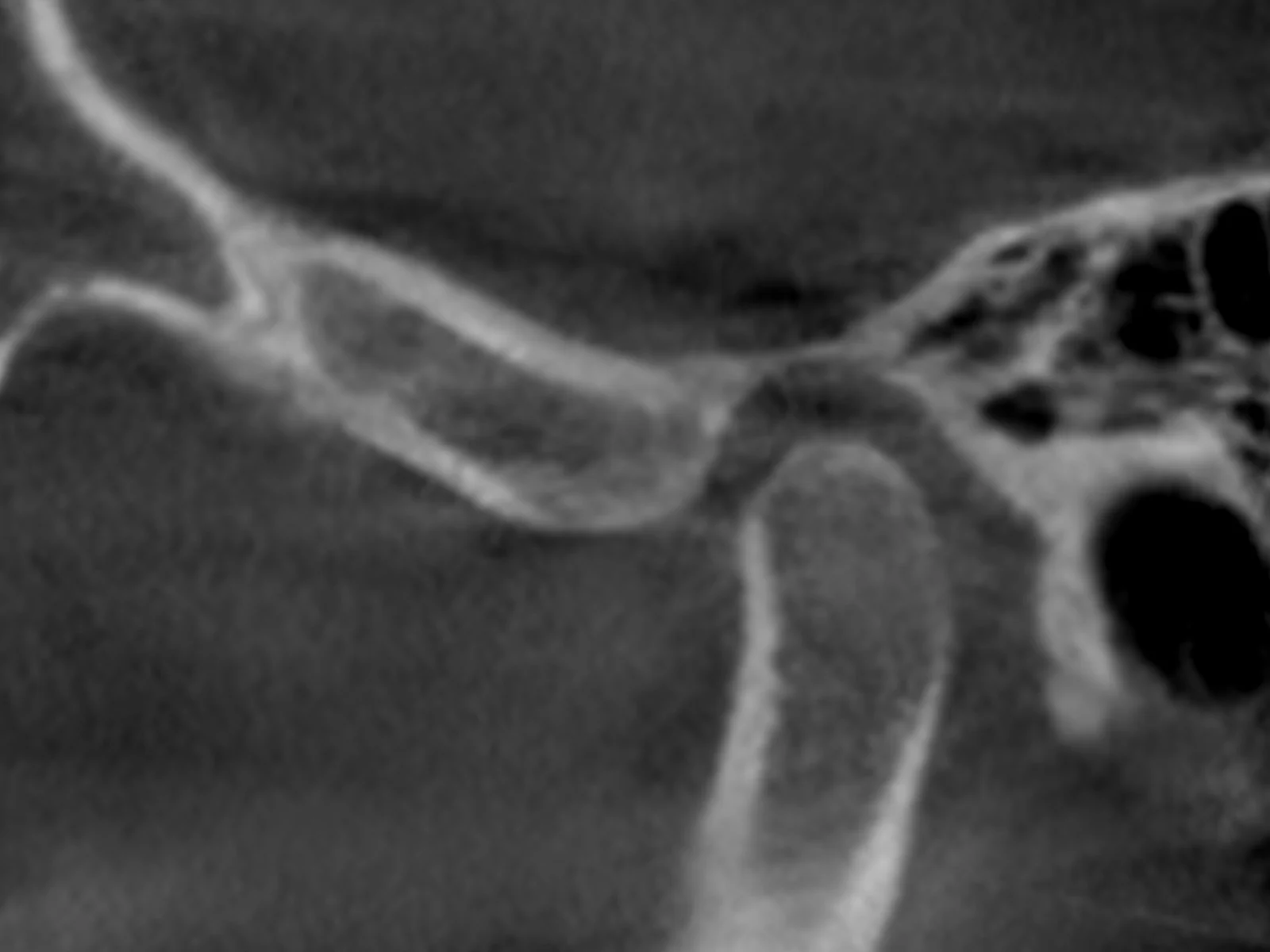
3D CT cross-section of the jaw joint3D CT
3D CT cross-section of the jaw joint. We check whether the joint bone surface is worn or has changed shape.
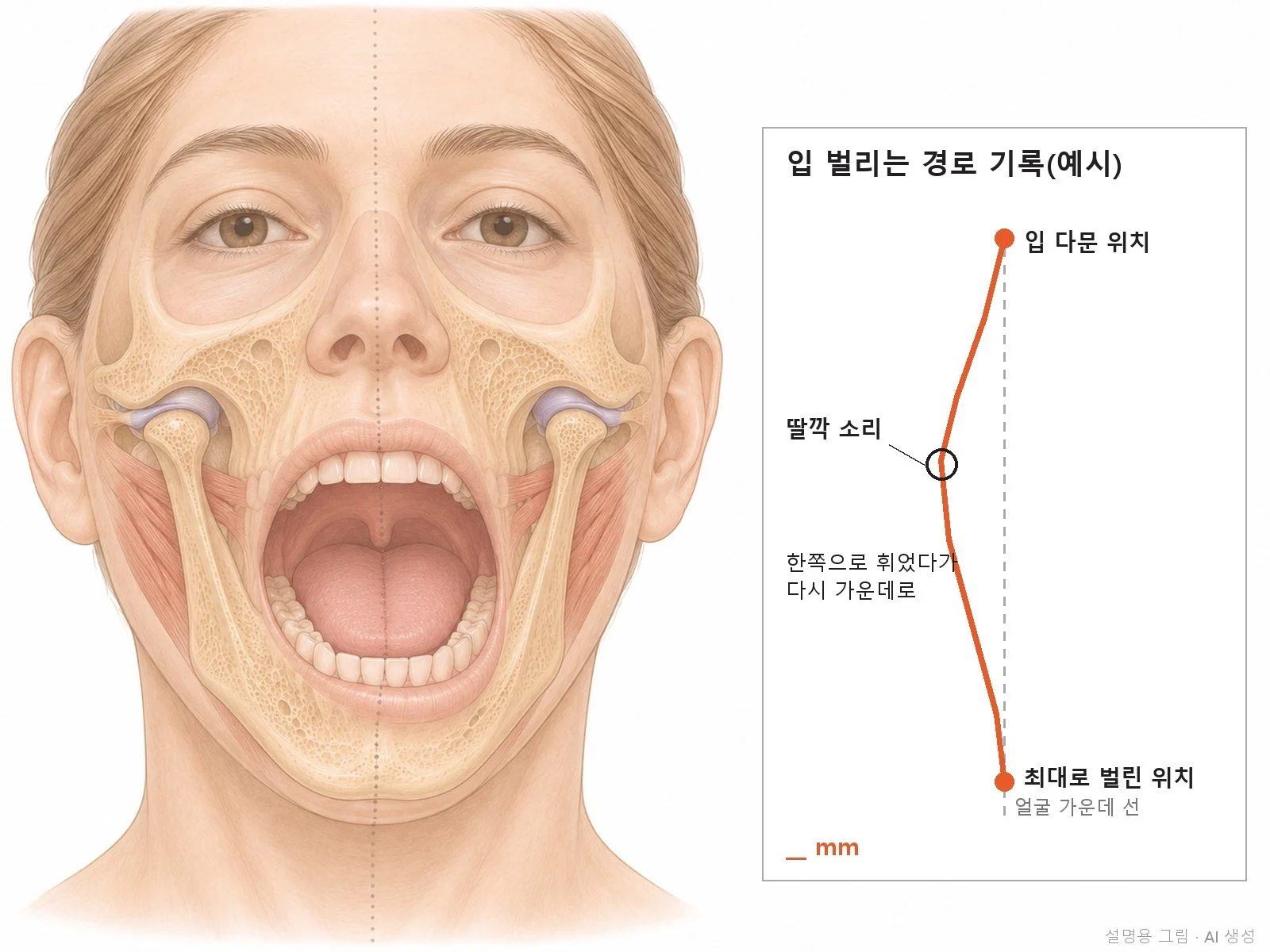
Illustration showing the path of the jaw shifting to one side and returning to the center as the mouth opensMovement record
Mouth-opening path record. We note whether the jaw shifts to one side when opening and at which point a sound occurs.
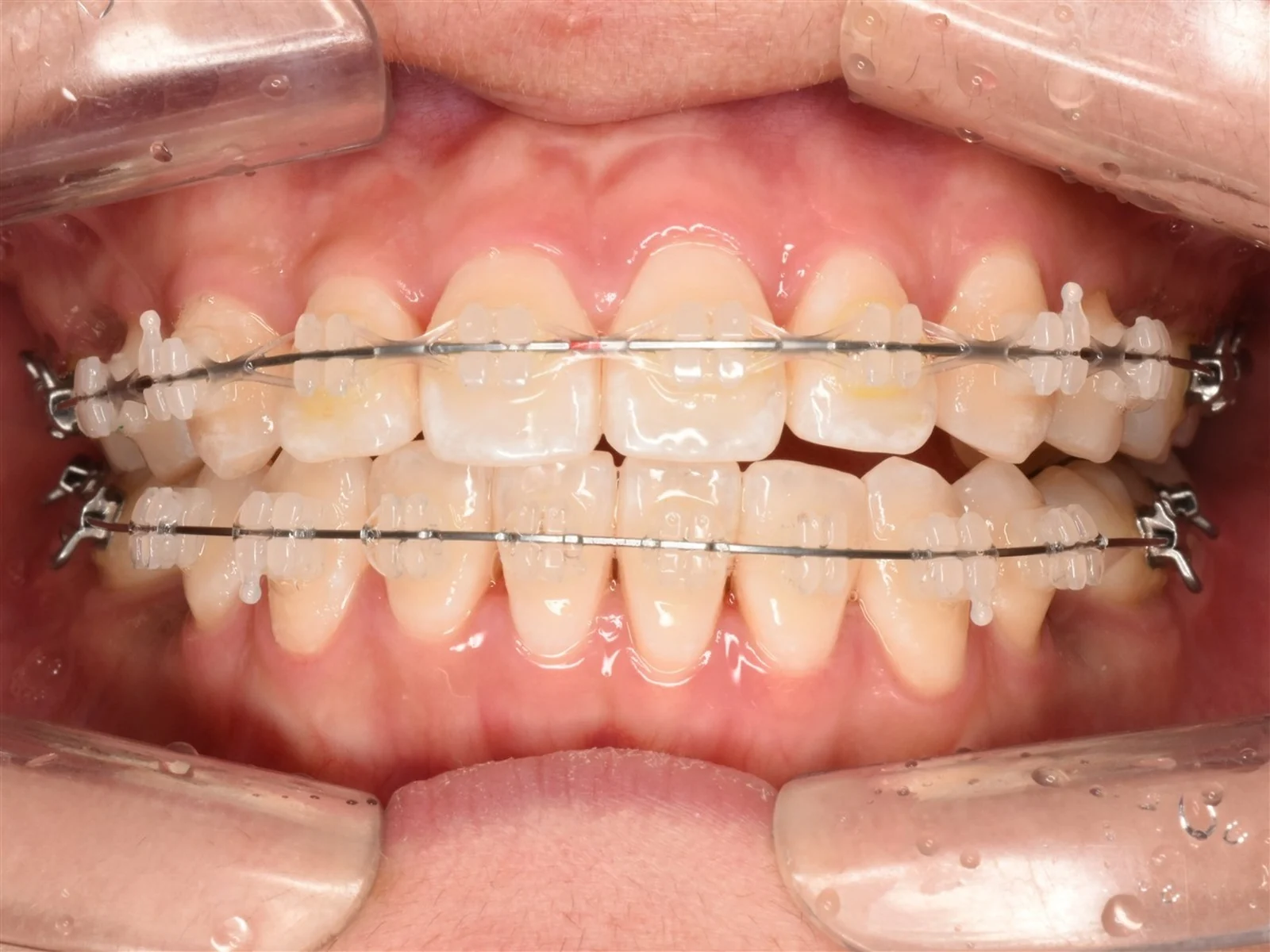
Front photo inside the mouth with orthodontic appliances attached after the pain easedOrthodontics started
We started orthodontic treatment after confirming the pain had eased.
Condition
Clicking and pain when opening the mouth, found during an orthodontic consultation
Chosen
Stabilized before orthodontics with daily-habit guidance, medication, and physical therapy; orthodontics started after reassessment
Not done
Starting orthodontics right away while in pain
Duration
Stabilizing treatment before orthodontics, about 2–4 months
Note
Orthodontic treatment does not treat the jaw joint. Painless clicking can remain after orthodontic treatment. See the 12-step pre-orthodontic exam →

* Records and photos were published with the patients' consent. Pain scores are rated by the patients themselves from 0–10. Treatment results and side effects may vary from person to person.

02°

Jaw pain comes from the muscles, the joint disc, or the joint bone

Even with the same jaw pain, treatment differs depending on where it started. That is why we identify the cause before choosing a treatment.

01Muscles

This is the most common type: pain from the muscles that move the jaw not getting enough rest. Common causes are keeping the teeth together or clenching during the day, grinding, stress, and lack of sleep. The temples and cheeks feel stiff, often worst in the morning.

02Joint disc

The disc inside the joint shifts position, so the jaw clicks when opening or the mouth catches partway. If it does not hurt and opens well, clicking alone often does not need treatment.

03Joint bone

The joint bone surface is worn or has changed shape. The joint area may hurt when chewing and make a grating sound, so we check the bone shape with a Vatech 3D CT.

04Other causes

Problems with the ears, sinuses, nerves, or inflammatory diseases can feel like jaw pain. If our exam shows the jaw joint is not the cause, we refer you to the right department.

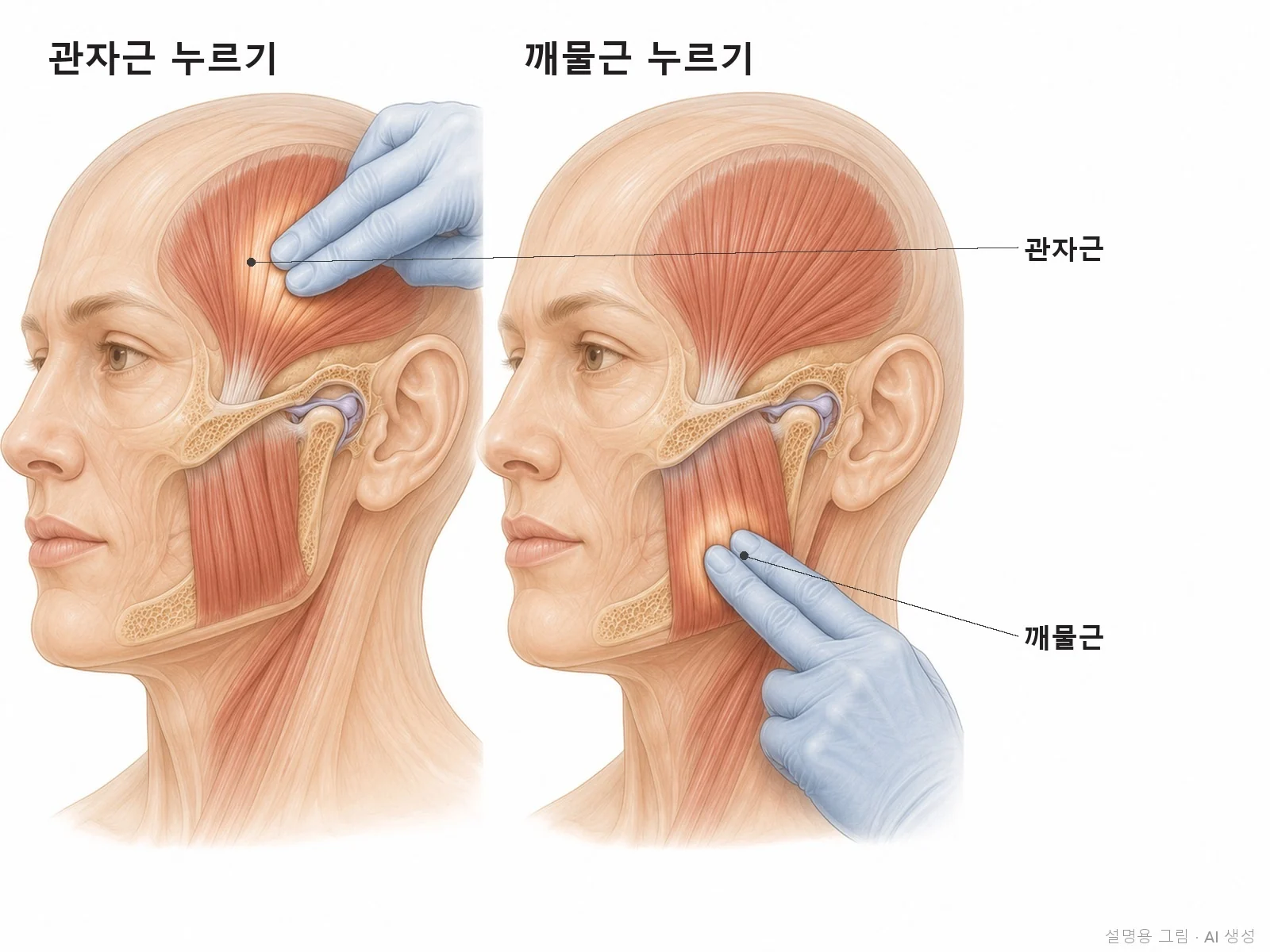
Illustration of pressing the temporalis and masseter muscles with the fingers to check themMuscle check
Muscle palpation. We press jaw muscles such as the masseter and temporalis with steady force to find sore spots and see whether your usual pain is reproduced.
3D CT cross-section of the jaw jointJoint bone check
3D CT cross-section comparison of the jaw joint. We look at whether the joint bone surface is smooth or worn or has changed shape.

03°

How TMJ treatment works

We start with treatments that can be reversed and move one step at a time, checking improvement with records. For each step, we explain what we look at and why.

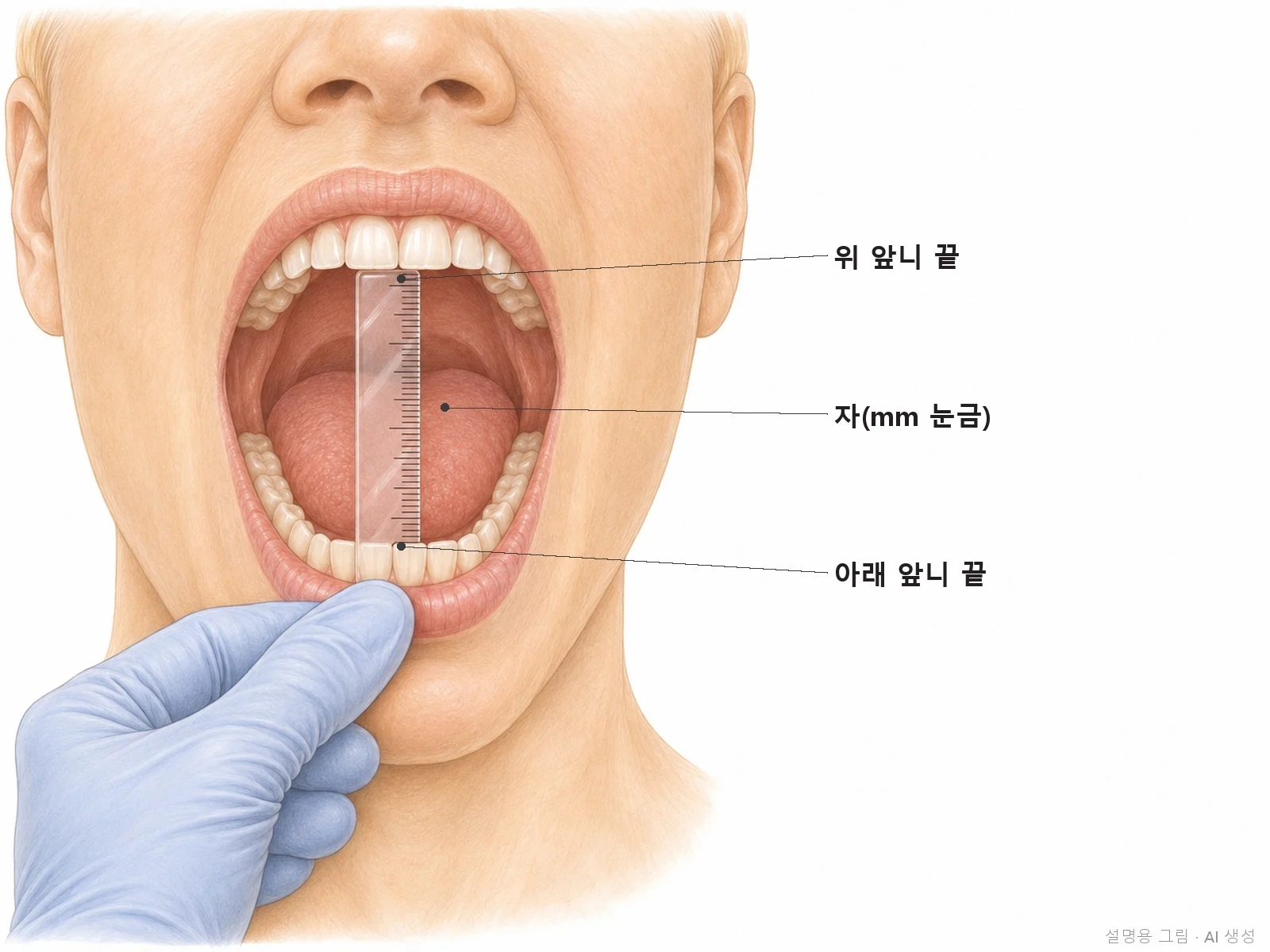
Illustration of measuring mouth opening with a ruler placed between the front teeth edgesDiagnosis
Mouth-opening measurement. We measure in mm how far you can open without pain and how far you can open at most, and keep it as the first record. Adults usually open 40mm or more.

STEP 01 · First visit

We make the first record with questions and measurements

We ask when, where, and in what situations it hurts, and ask you to rate the pain from 0–10. We check how many mm your mouth opens, whether the jaw shifts to one side when opening, at which point a sound occurs, and which muscles hurt when pressed. We take a panoramic X-ray, and if joint bone changes are suspected, a Vatech 3D CT.

Why we do thisJaw pain goes up and down, so it is hard to judge from memory alone whether it has improved. A record in numbers from the first day lets us compare the same way at 2 weeks and at 2 months and decide whether to move to the next step.
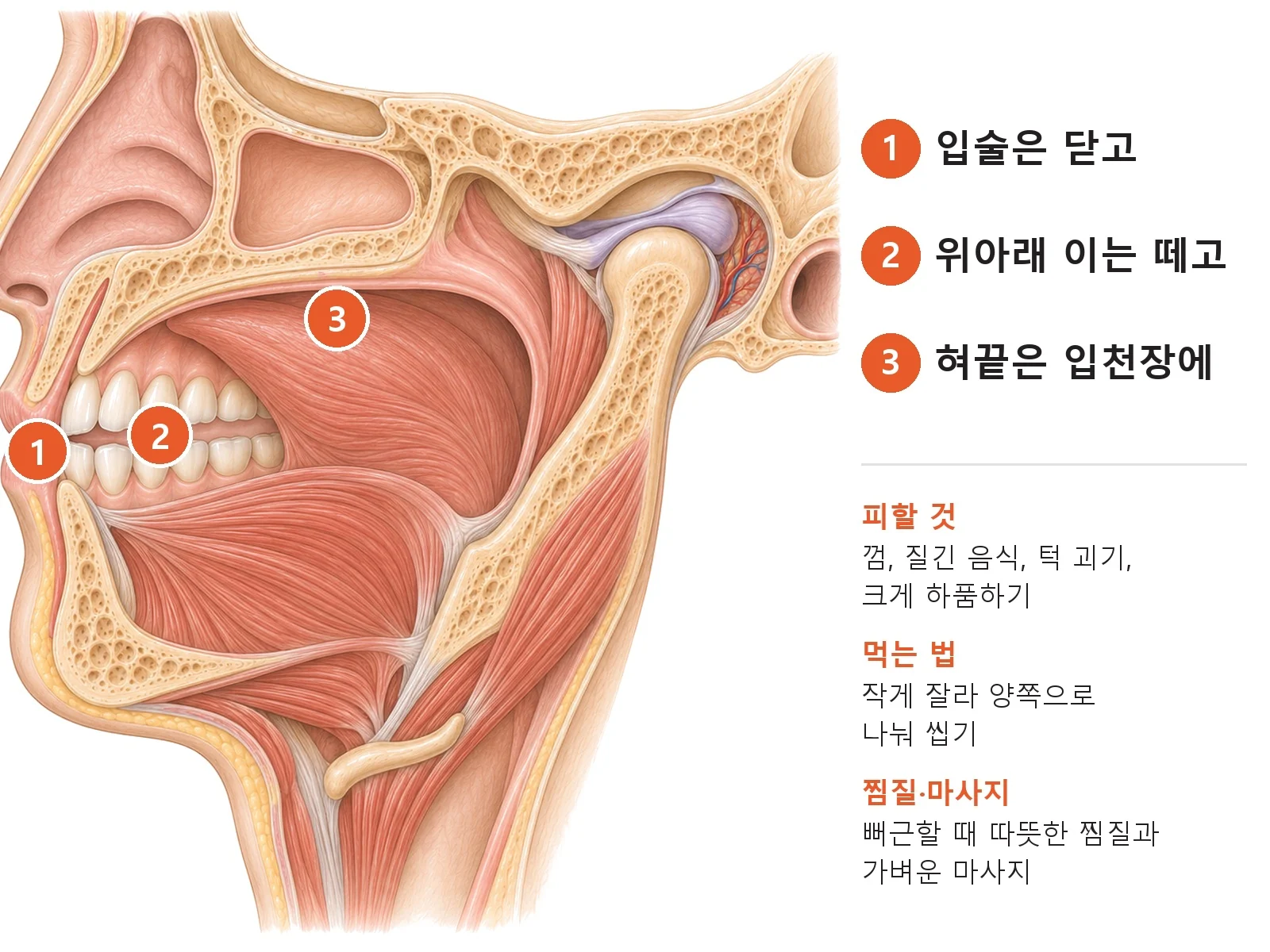
Illustration of the resting position: lips closed, upper and lower teeth apart, tip of the tongue on the roof of the mouthStep 1 · Daily-habit guidance

STEP 02 · From day one

We teach habits that rest the jaw and home exercises

This is not a separate appointment. During your visit, we show you the resting position, foods and habits to avoid, warm compresses and massage, and simple home jaw exercises.

Why we do thisMuscle-related pain often improves a lot just by spending less time keeping the teeth together during the day. Daily-habit guidance and home exercises are the first treatment recommended in common by guidelines in many countries. They cost nothing and also support the effect of other treatments.
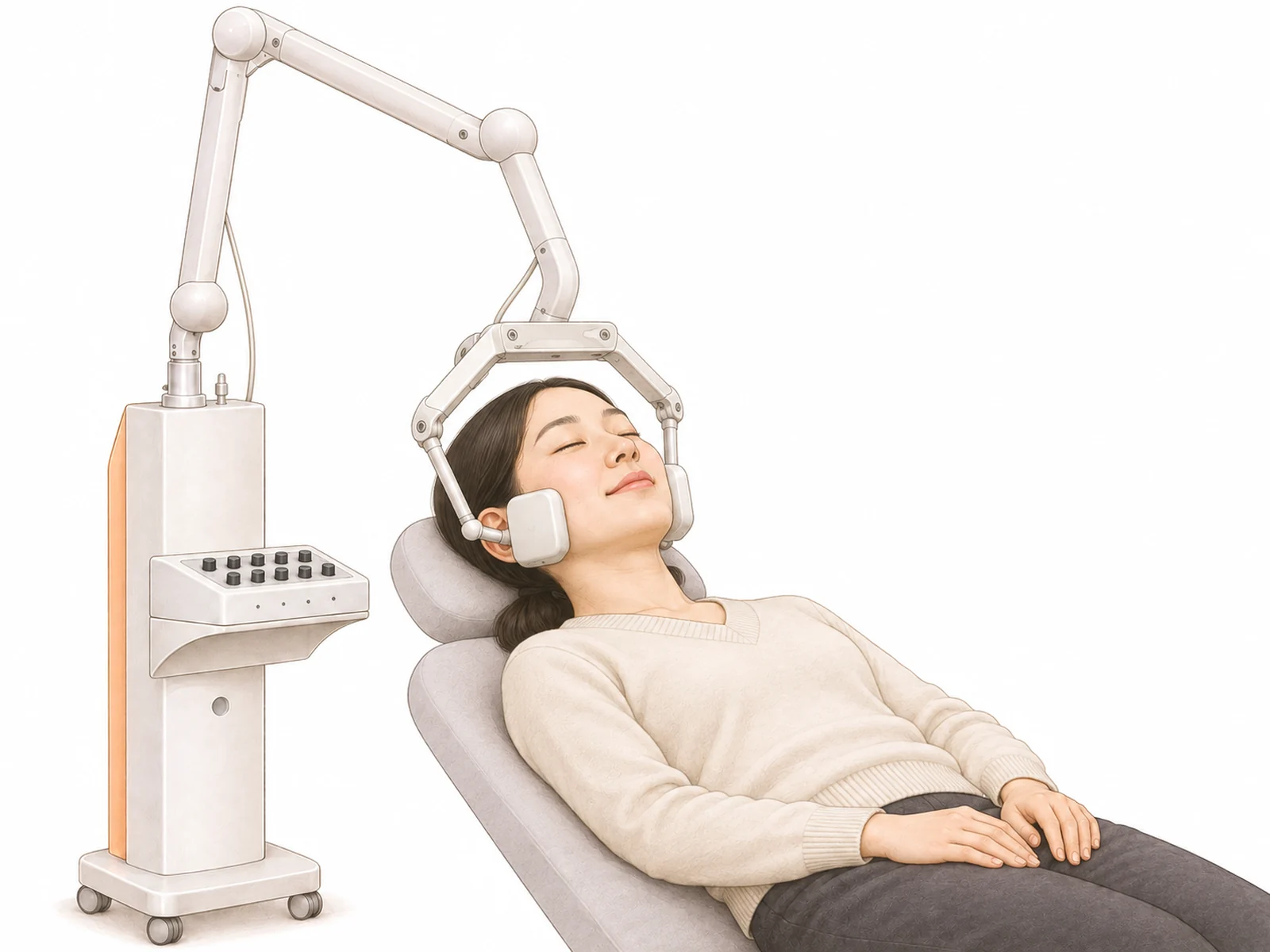
Illustration of physical therapy with a laser/LED pad placed on the jaw joint area in front of the ear of a patient lying in a dental chairStep 1 · Physical therapy
Perfect Healing Laser PHL-15 physical therapy. Low-level laser and LED light are applied to sore muscles and the joint area.

STEP 03 · Usually 2 weeks

We combine medication with low-level laser physical therapy

If you have pain, we usually prescribe medication for 2 weeks, and during the same period you have PHL-15 low-level laser physical therapy 1–2 times a week. After 2 weeks, we check your pain score and how much you did the exercises.

Why we do thisThe medication is meant to briefly reduce pain and muscle tension so you can do the home exercises, so it is not used for long. The Japanese Society for Temporomandibular Joint 2023 guideline conditionally suggests low-level laser while noting the evidence level is very low, and a recent systematic review also reported pain reduction. The effect varies from person to person, and we tell you this first.
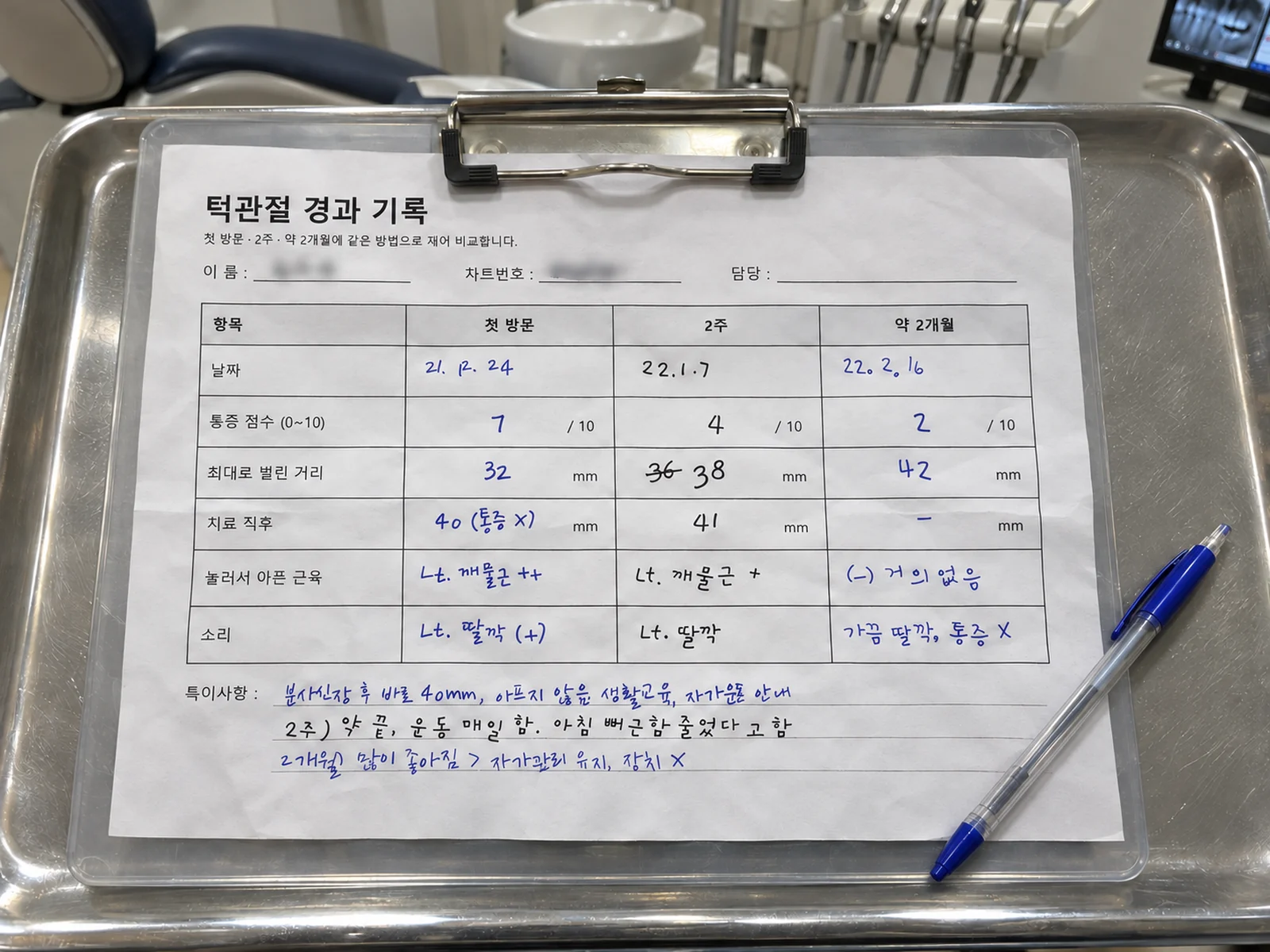
Handwritten progress sheet with pain scores and mouth-opening distances at the first visit, 2 weeks, and about 2 monthsReassessment
Progress chart. At the first visit, 2 weeks, and about 2 months, we measure pain scores and mouth-opening distance the same way and compare them side by side.

STEP 04 · About 2 months

We compare with the first record and decide the next step

After about 2 months, we measure the pain score, mouth opening, and muscle palpation again the same way as the first time and compare. We also ask how well you actually followed the daily-habit guidance. If you have improved enough, you continue self-care; if symptoms remain, we consider the next step.

Why we do thisMany cases of TMJ pain get better over time, so adding an appliance or injection too early makes it impossible to know what worked. The 2 months does not mean you should just put up with it. If the pain gets worse or you cannot open your mouth in the meantime, contact us right away.
Photo of a custom splint fitted on the upper teethSplint
Custom splint, used only when needed. After fitting, we adjust the bite so the upper and lower teeth touch evenly.

STEP 05 · Only when needed

We consider a splint or Botox based on the remaining symptoms

If pain remains after reassessment, or you also grind or clench at night, we consider a night splint as a supporting treatment. For muscle-related pain that has not improved enough with the earlier steps, we consider Botox in limited cases, and we explain which of the two we choose and why.

Why we do thisA splint can reduce muscle strain and tooth wear, but a review found the evidence very uncertain, so the UK guideline places it as a supporting treatment, not a stand-alone one. Botox is not a first-line treatment in the UK guideline, is not approved for TMJ disorder in the United States, and study results are mixed. That is why we discuss it only after trying the earlier steps.
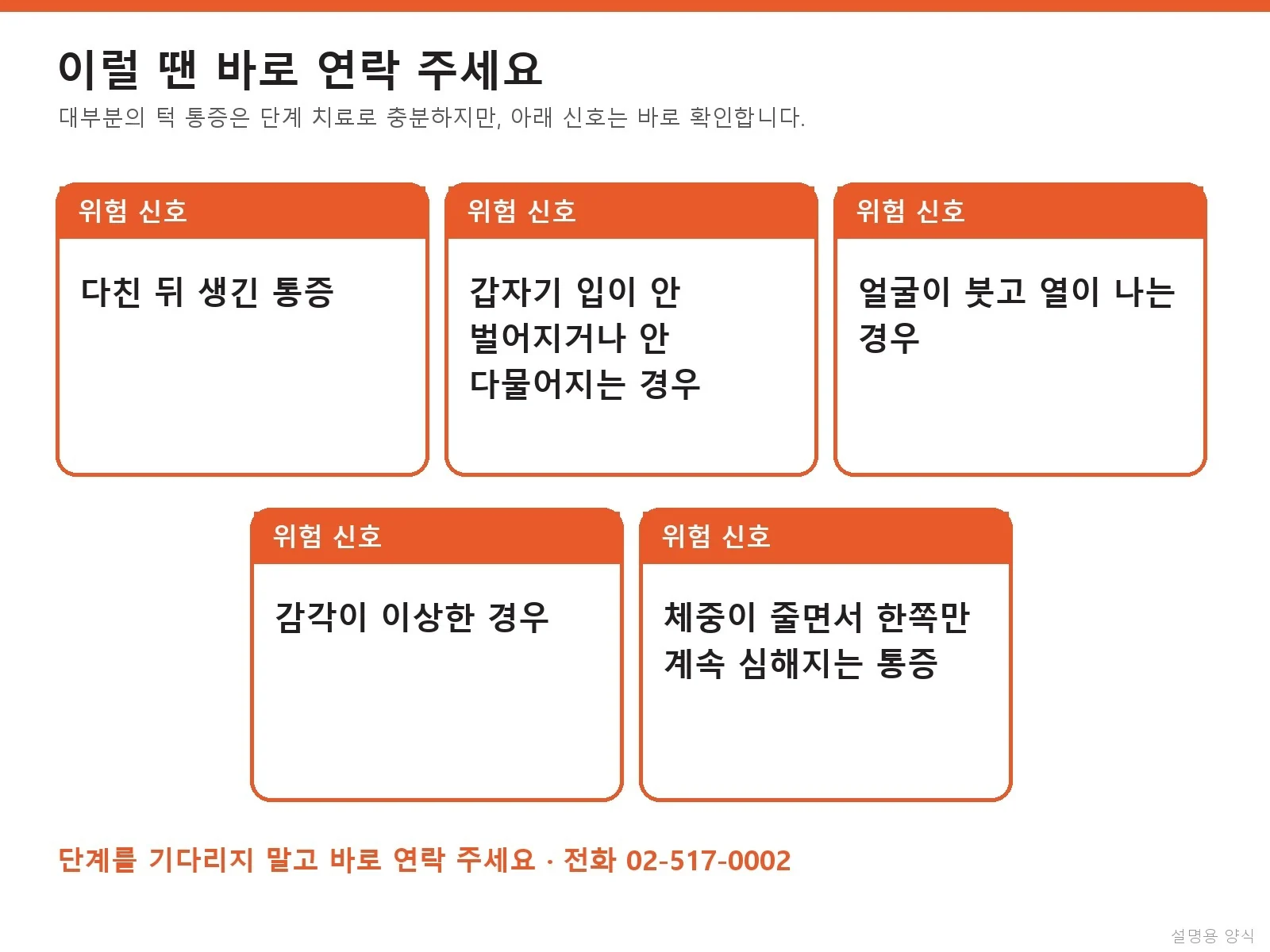
Guide card listing five warning signs that need contact right awayWarning signs
Warning sign guide. The symptoms below mean you should contact us right away instead of waiting for the next step.

STEP 06 · Any time

If there are warning signs, we skip the steps and see you right away

Pain that started after an injury, suddenly being unable to open or close your mouth, facial swelling with fever, unusual sensation, or pain on one side that keeps getting worse with weight loss: we check these right away and, if needed, refer you to a university hospital or an oral medicine clinic.

Why we do thisMost jaw pain is managed well with step-by-step treatment, but rarely a cause such as a fracture, infection, or tumor that needs care outside dentistry first may be hidden. Not missing these signs is the basis of step-by-step treatment.

* Clinical photos were published with the patients' consent. Side effects such as temporary pain or discomfort may occur depending on the person.

This order is a general flow and changes with the diagnosis. From the first visit to reassessment usually takes about 2 months.

04°

Who needs treatment, who can wait and watch, and who needs other care first

Treatment is needed

  • Pain that lasts more than 1–2 weeks
  • Pain when chewing or opening your mouth
  • Your mouth does not open fully or catches partway
  • Your jaw feels stiff every morning

Other care may come first

  • Pain that started after an injury
  • Suddenly unable to open or close your mouth
  • Facial swelling with fever, or unusual sensation
  • Pain on one side that keeps getting worse, with weight loss

Waiting is fine for now

  • Only painless jaw clicking
  • No trouble opening your mouth: we give you a daily-habit guide and check again at your regular check-up

05°

Comparison of TMJ treatments

Good forHow it worksMethod and durationEvidence levelLimitsCost
① Daily-habit guidance and home exercisesEveryoneRests the muscles and joint2–3 times a day, from day oneFirst-line treatment recommended in common by several guidelinesWorks only if done consistentlyNo cost
② MedicationWhen there is painRelieves pain and muscle tensionUsually 2 weeksShort-term pain reliefNot meant for long-term useCovered by Korea's National Health Insurance (NHI)
③ Low-level laser physical therapy (PHL-15)Muscle and joint painPhysical therapy that applies low-level laser and LED lightUsually 2 weeks, 1–2 times a week · about 30 minutes per sessionConditionally suggested by the Japanese Society for Temporomandibular Joint 2023 guideline (very low evidence level); a 2025 systematic review reported pain reductionEffect varies from person to personCovered by Korea's National Health Insurance (NHI) when diagnosed with TMJ disorder
④ SplintPain still remaining after about 2 months, with night grinding or clenchingA night appliance that reduces muscle strain and tooth wear2–3 visits for impressions, fitting, and adjustmentCochrane review (2024): may reduce muscle pain but the evidence is very uncertain; the UK guideline places it as a supporting treatmentNot a stand-alone treatment; does not stop grinding itselfNot covered by NHI · See the fee schedule →
⑤ BotoxMuscle-related pain or clenching that has not improved enough with the earlier stepsTemporarily reduces muscle strengthUsually every 4–8 monthsNot first-line in the UK guideline; not FDA-approved in the US and study results are mixed (NIDCR); also not approved in Korea for TMJ disorder or grinding (off-label use)Effect is temporary; chewing force may weaken, and moreNot covered by NHI · See the Botox page →

06°

Who treats you, and by what standards

ONE

Dr. Sunmin Kim, a board-certified orthodontist, sees you in person. He completed orthodontic training at Tokyo Medical and Dental University, earned a PhD in dentistry at its graduate school, and completed a TMJ clinical training course (Dentalbean). This is a training course and is different from academic society certification.

TWO

Our treatment order follows the US NIDCR guidance, the UK NHS GIRFT and Royal College of Surgeons guideline (2025), and the Japanese Society for Temporomandibular Joint clinical practice guideline (2023).

THREE

We check the joint bone shape with a Vatech 3D CT and provide low-level laser physical therapy with the Perfect Healing Laser PHL-15.

07°

Treatments we do not provide, and why

Key Point. 1

We do not start by reducing teeth to adjust the bite

There is not enough evidence that grinding teeth down to change the bite reduces TMJ pain, and the removal of tooth structure is irreversible.

BasisNIDCR guidance · UK NHS GIRFT and Royal College of Surgeons guideline (2025)

Key Point. 2

We do not say “orthodontics treats the jaw joint”

Several systematic reviews found no evidence that orthodontic treatment causes TMJ disorder, nor that it treats it. We explain orthodontics as treatment for tooth alignment and bite.

BasisSystematic review on orthodontic treatment and TMJ disorder (2015) · Umbrella review (2026)

Key Point. 3

We do not recommend an appliance for painless jaw clicking alone

If there is no pain and your mouth opens well, clicking alone often does not need an appliance or injection. We give you a daily-habit guide and check again at your regular check-up.

Key Point. 4

We do not recommend Botox as the first treatment

We discuss it only in limited cases of muscle-related pain that remains after trying daily-habit guidance, medication, and physical therapy and reassessing at about 2 months. However, if you are already receiving Botox, or your symptoms clearly point to the muscles as the cause, we sometimes use it from the start.

08°

Why we check the jaw joint before orthodontics

Many people who come for an orthodontic consultation also have jaw symptoms. Orthodontics does not fix the jaw joint, but starting orthodontics while the jaw hurts makes treatment more uncomfortable, and the bite keeps changing, which makes it hard to assess accurately.

So in the orthodontic exam, we first check pain, sounds, and mouth opening, and if it hurts, we settle it down before starting orthodontics. If your jaw starts to hurt during orthodontic treatment, we reduce the orthodontic force for a while and treat the jaw first.

09°

Self-checklist

If 2 or more apply, we recommend an exam. If even 1 warning sign applies, contact us right away.

10°

What to do at home when your jaw hurts

At your first visit, we give you a handout on what to do at home. It was made with reference to the self-care items in the UK NHS GIRFT and Royal College of Surgeons guideline (2025) and patient handouts from UK NHS hospitals, and is prepared for printing in Korean, Japanese, and English.

  • Resting position · Keep your lips closed, upper and lower teeth apart, and the tip of your tongue on the roof of your mouth.
  • Avoid · Chewing gum, tough foods, resting your chin on your hand, yawning widely
  • How to eat · Cut soft foods into small pieces and chew on both sides.
  • Warm compress and massage · A warm compress and gentle massage when your muscles feel stiff
  • Jaw exercises ①–④ · The exercises we practiced together in the clinic, 2–3 times a day

11°

Side effects and limits

Please read

· TMJ pain can come back even after it improves, depending on stress, habits, and sleep.

· Laser, splints, and Botox all work differently for each person, and some have a low level of evidence. We tell you this first.

· Medication can cause side effects such as stomach upset or drowsiness, so we use it for a short time.

· With a splint, you may have more saliva or your bite may feel strange in the morning for the first few days.

· Painless jaw clicking can remain after treatment.

· If the joint bone has changed a lot, dental treatment alone may not solve it, and you may need care at another institution.

FAQ

FAQ

My jaw only clicks. Do I need TMJ treatment?
If it does not hurt and your mouth opens well, clicking alone often does not need treatment. If the clicking comes with pain or your mouth catches partway when opening, it is a good idea to get checked.
Read more about this question →
How long does TMJ pain treatment take?
Daily-habit guidance, home exercises, medication, and physical therapy usually last 2 weeks, and after about 2 months we reassess by comparing with your first record. How quickly you improve differs from person to person, so we decide the next step based on the reassessment.
Will orthodontic treatment improve my jaw joint?
There is no confirmed evidence that orthodontic treatment treats TMJ disorder. Before orthodontic treatment, we check your jaw, and if it hurts, we settle it down first and then start orthodontics.
Is laser physical therapy for the TMJ painful or risky?
PHL-15 low-level laser physical therapy shines a gentle light on the sore area, and most people feel only mild warmth. During treatment, you may wear protective glasses to protect your eyes if needed.
What if my jaw starts to hurt during orthodontic treatment?
If jaw pain starts during orthodontic treatment, we first find the cause. If needed, we reduce the orthodontic force for a while and treat the jaw first. Once we confirm the pain has settled, we continue orthodontic treatment.
Do I have to wear a TMJ splint for the rest of my life?
A splint is not something you wear for life. We decide how long to use it based on your symptoms and how much you grind. If you need to protect your teeth from night grinding, you use it while the grinding continues, and we check at regular check-ups whether you still need it.
My jaw hurts. Can I just get Botox first?
We do not recommend Botox as the first treatment for TMJ pain. We consider it only in limited cases of muscle-related pain that has not improved enough with daily-habit guidance, medication, and physical therapy. However, if you are already receiving Botox, or your symptoms clearly point to the muscles as the cause, we sometimes use it from the start.
What should I do if I suddenly cannot open my mouth?
If you suddenly cannot open or close your mouth, do not wait for step-by-step treatment. Contact us right away. We will find the cause and guide you to the care or department you need.
Is TMJ treatment covered by health insurance?
For people enrolled in Korea's National Health Insurance (NHI), some TMJ exams and physical therapy are covered, while splints and Botox are not covered. The exact coverage depends on the diagnosis, so we explain it at your consultation.

Evidence and references

  • US National Institute of Dental and Craniofacial Research (NIDCR) patient information on TMJ disorders: most cases improve over time and respond to simple treatments, and treatments that cannot be reversed should be avoided. View the source
  • UK NHS GIRFT and Royal College of Surgeons guideline for adult TMJ disorders (v1.1, 2025): self-management first; see a specialist if there is no improvement after 6–8 weeks; splints are a supporting treatment; Botox is not a first-line treatment. View the source
  • Japanese Society for Temporomandibular Joint clinical practice guideline for initial treatment (2023): first suggests self-performed mouth-opening exercises and intraoral appliances, and conditionally suggests low-level laser when the cost is not high (very low evidence level). View the source
  • Systematic review of low-level laser (2025, 44 randomized controlled trials): reported pain reduction. View the source
  • Cochrane review of occlusal treatments (Singh et al., 2024): splints may reduce muscle pain, but the evidence is very uncertain. View the source
  • Systematic review on orthodontic treatment and TMJ disorder (2015) and umbrella review (2026): no evidence that orthodontics causes or treats TMJ disorder. 2015 source · 2026 source
COSTAll costs are gathered on one page, the treatment cost guideSee TMJ and teeth grinding costs →

ABROAD

Living in Korea

Questions from international patients who live in Korea.

Can I use Korean National Health Insurance?
If you are enrolled in Korea's National Health Insurance, insured treatments are billed under the same insurance rules as for other enrollees. Whether a treatment is covered depends on the treatment and the insurance rules, and we tell you before treatment starts. If you are not enrolled, you pay the full fee.
Can I be seen in English?
Yes. The doctor in charge of each field consults with you directly in English, so you do not need an interpreter.
How do I book an appointment?
Message us on WhatsApp. You can also send us an email or call +82-2-517-0002.
I am in Korea only for a short trip. Can I have this treatment?
It depends on how many visits the treatment needs. Treatment starts with a first visit and about 2 weeks of physical therapy, followed by a re-evaluation after about 2 months. Tell us your travel dates when you contact us, and we will tell you after the examination whether the schedule is realistic.

Results, the number of visits and schedules vary from person to person. More questions: Visiting from abroad.

MORE

Related pages

Treatment results and side effects may vary from person to person.

You are welcome to write first when, where, and in what situations it hurts and send it to us

TOP
Request a ConsultationView