OPEN BITE

Open Bite: My Front Teeth Don't Touch

Dr. Sunmin Kim, Head DentistTreatment: Dr. Sunmin Kim (board-certified orthodontist) · Reviewed by Dr. Sunmin Kim · Jaw joint care provided alongside orthodontic treatmentAbout the doctor →

Last reviewed Oct 29, 2026 · Dr. Sunmin Kim (board-certified orthodontist, certified by the Korean Association of Orthodontists)

At a glance

Who it suits
The front teeth do not touch even when you close on your back teeth
Treatment flow
Find the cause (habits, face shape, jaw joint, tooth position) → jaw joint exam → braces while removing the cause
Duration and limits
If the gap began recently, we stabilize the jaw joint first before starting
Read more

An open bite, where the upper and lower front teeth do not touch even when you close on your back teeth, can be caused by a habit of pushing the tongue between the front teeth, a long face shape with tall back-teeth height, resorption of the jaw joint head, or tooth position. If habits or tooth position are the cause, it can be closed with braces and tongue-habit training. If the back teeth are too tall, we consider placing mini-screws to move the upper molars up into the gums so the front teeth close. If your front teeth began to separate only in the last few years, it may be a change in the jaw joint, so at Ceramic Dental Clinic we examine the jaw joint first before open-bite treatment and, if needed, stabilize it before starting.

01°

The front teeth did not touch for different reasons, so we closed them in different ways

Here are real cases: one caused by a tongue habit, one where the back teeth were too tall, and one that opened recently because of jaw joint changes.

CASE01

An open bite where the tongue came between the front teeth when swallowing

Braces + tongue-habit training · The front teeth were uprighted and closed while tongue-position training was done at the same time
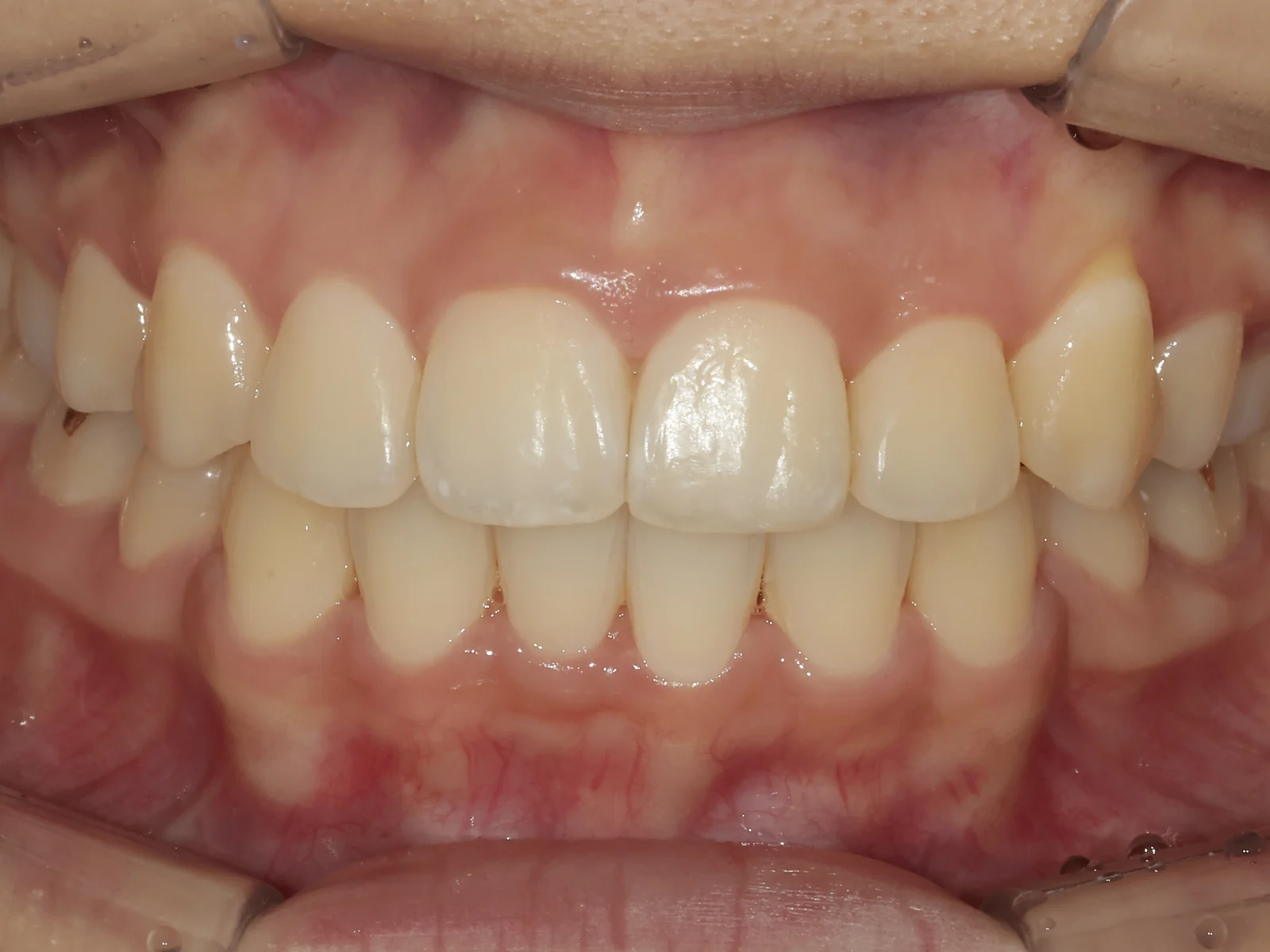
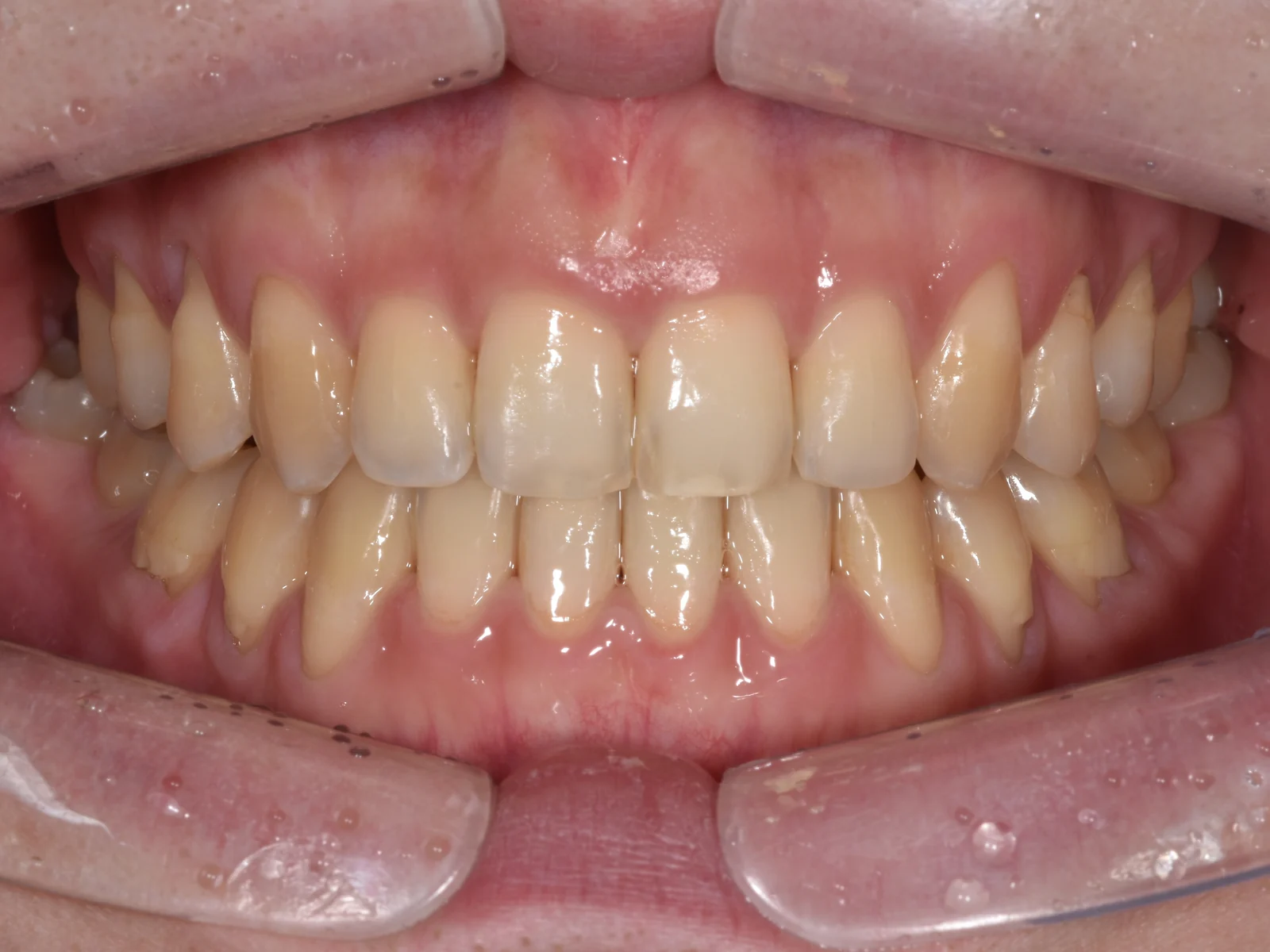
Front view inside the mouth before treatment, with a gap between the upper and lower front teeth even when closing on the back teethBefore · Apr 2024
Front view inside the mouth before treatment. Even when closing on the back teeth, there was a gap between the upper and lower front teeth, and the tongue came through it when swallowing.
Front view inside the mouth after treatment, with the upper and lower front teeth now touchingAfter · Sep 2026
Front view inside the mouth after treatment. The upper and lower front teeth now touch, and the patient also learned the habit of resting the tongue on the roof of the mouth.
Condition
Open bite caused by a tongue-thrust habit and front-teeth position; no abnormalities on the jaw joint exam
Choice
Front-teeth position adjusted with extraction braces, with tongue-position training
Not done
Mini-screws (back-teeth height was not the cause)
Duration
About 2 years 6 months
Note
If the tongue habit returns, the bite can reopen, so we continue with retainers and habit management.
CASE02

A long face shape where the back teeth were too tall and the front teeth were apart

Braces + mini-screws · The upper molars were moved up into the gums, so the lower jaw rotated upward and the front teeth met

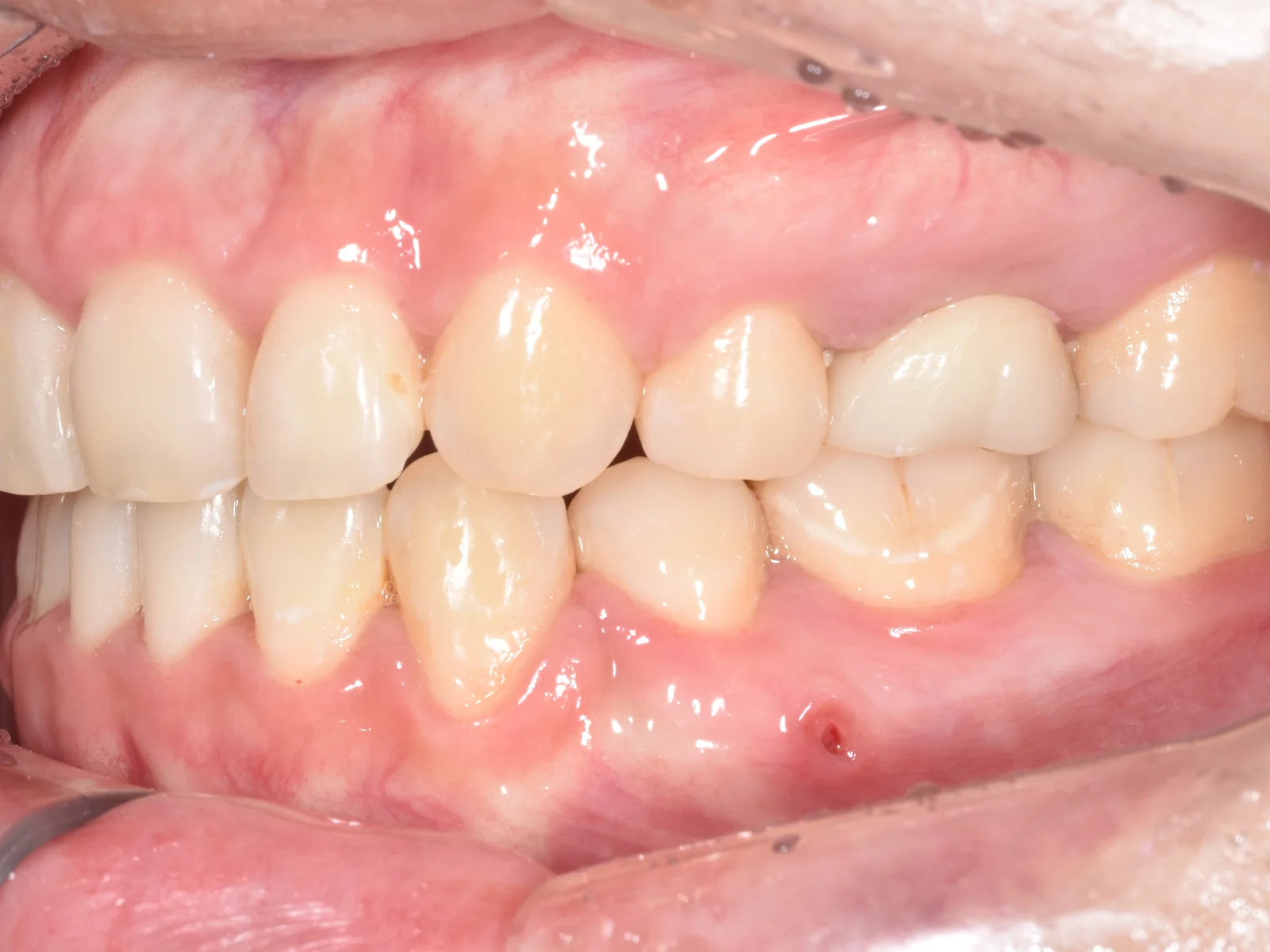
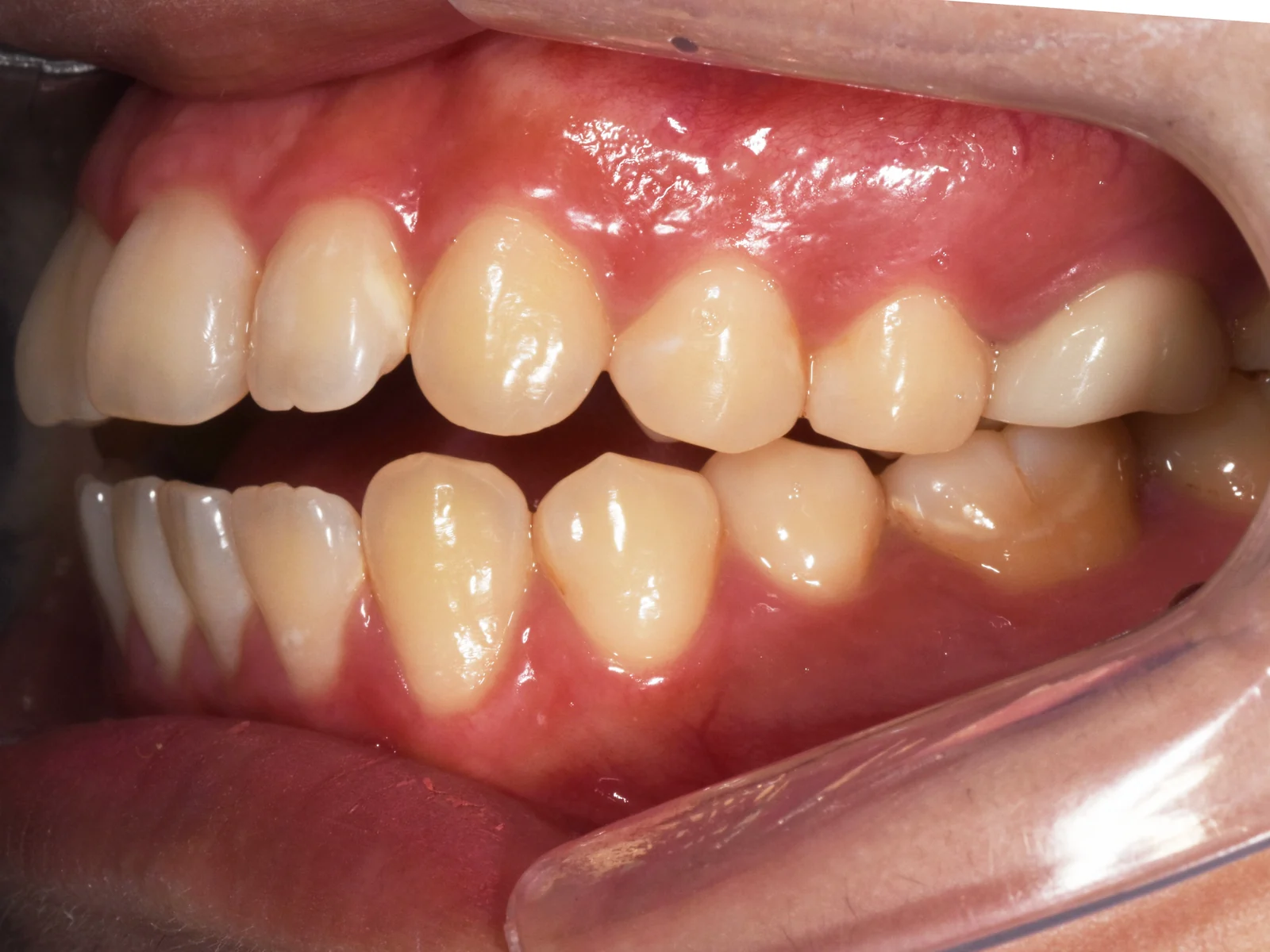
Side view inside the mouth before treatment, with only the back teeth touching and the gap widening toward the frontBefore · Apr 2022
Side view inside the mouth before treatment. Only the back teeth touch, and the gap between the upper and lower teeth widens toward the front. The lower face was on the long side.
Side view inside the mouth after treatment, with the upper and lower teeth touching through the front teethAfter · May 2025
Side view inside the mouth after treatment. Moving the upper molars up into the gums let the lower jaw rotate up slightly, and the front teeth came together.
Condition
Skeletal open bite with increased posterior dental height (a relatively small difference); no abnormalities on the jaw joint exam
Choice
Molars moved up into the gums with mini-screws at the upper back teeth
Not done
Jaw surgery (the difference could be closed with braces)
Duration
About 2 years 11 months
Note
Molars that were moved up into the gums tend to come back a little, so a retainer designed to prevent open-bite relapse is worn for a long time.

CASE03

Front teeth that began to separate in the last few years

Braces after confirming jaw joint stability · Started after jaw joint treatment and re-evaluation showed the change had stopped

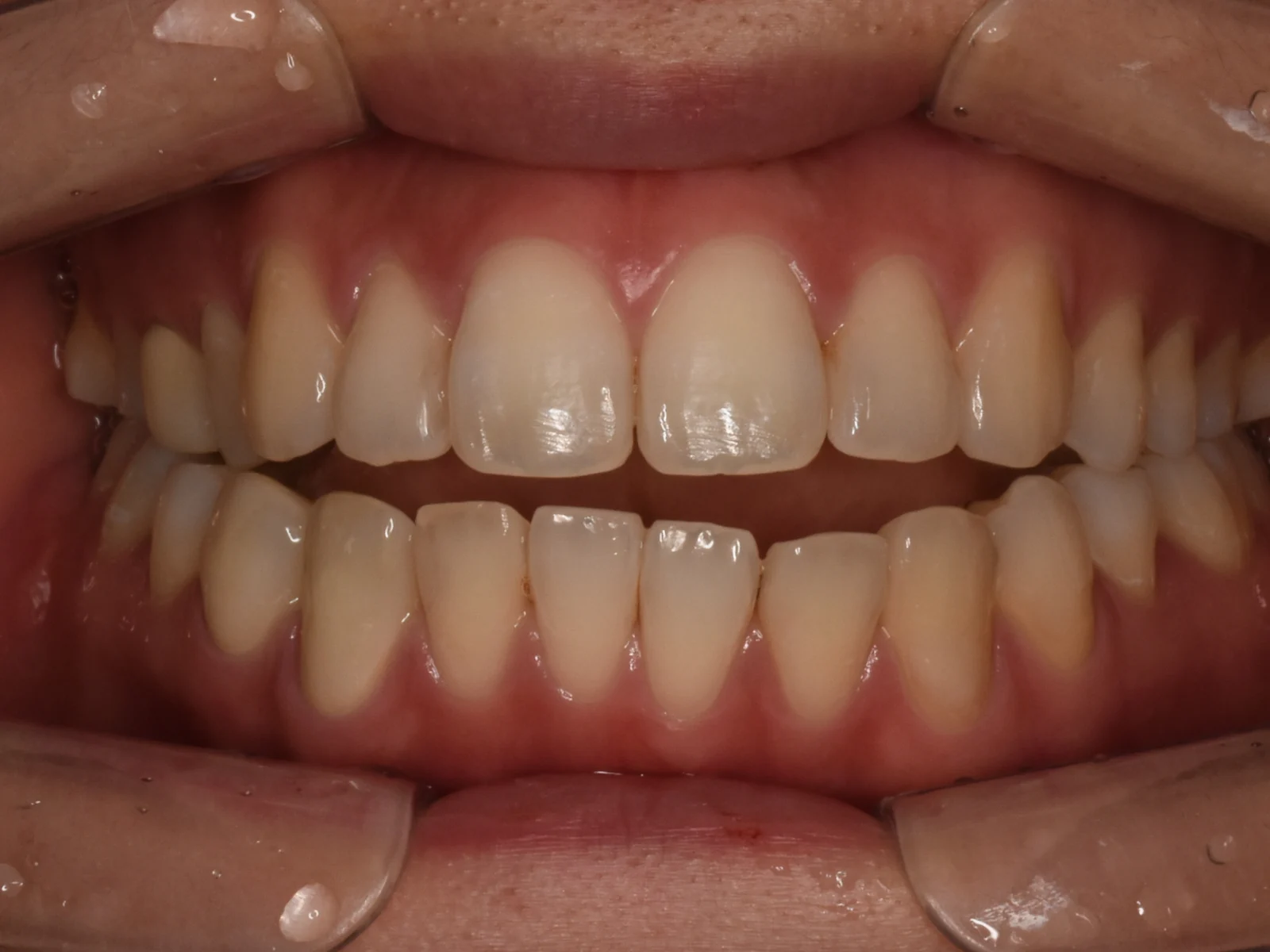
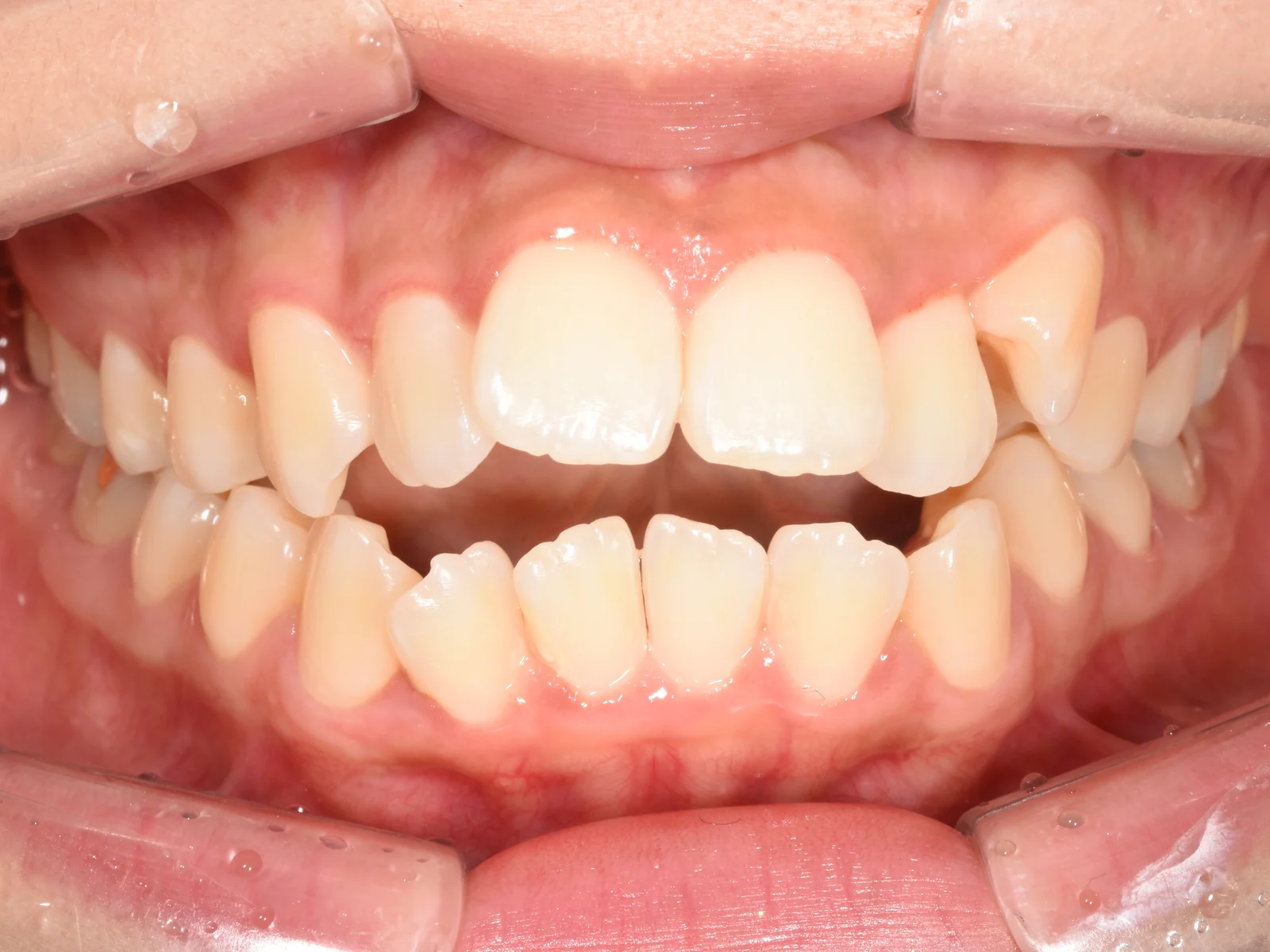
Front view inside the mouth before treatment, with the front teeth apart again after previous bracesBefore · Sep 2023
Front view inside the mouth before treatment. The front teeth began to separate after braces were finished 4 years earlier, and the exam showed wear of the right jaw joint head.
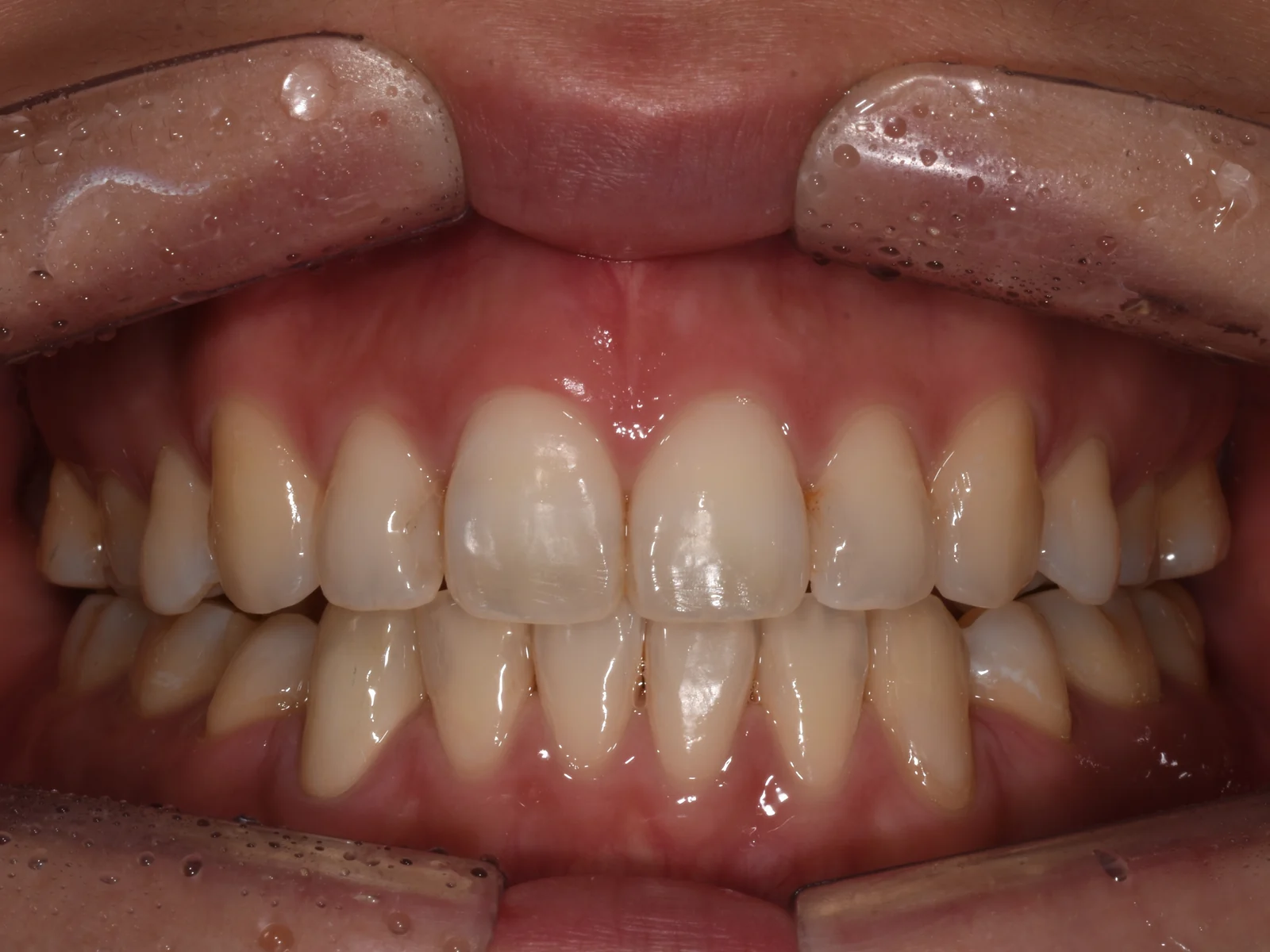
Front view inside the mouth with the front teeth touching after braces, once jaw joint stability was confirmedAfter · Dec 2025
Front view inside the mouth after braces. After re-evaluation confirmed the jaw joint was stable, the front teeth were closed with braces.
Condition
Open bite that progressed recently due to resorption of the jaw joint head
Choice
Medication and Perfect Healing Laser PHL-15 physical therapy → re-evaluation → braces after stability was confirmed
Not done
Starting braces right away while the joint was still changing
Duration
About 27 months including the jaw joint stabilization period
Note
If the jaw joint changes progress again, the bite can open again, so we check regularly.

* Photos were taken under the same conditions and published with the patient's consent. Treatment results and side effects can vary from person to person.

02°

An open bite has four causes

An open bite that has been there since childhood and one that appeared recently are likely to have different causes. When your front teeth stopped touching is the first clue.

01Habits

Caused by habits such as pushing the tongue between the front teeth when swallowing, sucking a thumb or finger, or breathing through the mouth. The habit has to be corrected too, or the bite opens again.

02Skeletal: long face shape

The back teeth are tall or the lower face is long, so only the back teeth touch and the front teeth stay apart. We consider moving the upper molars up into the gums.

03Jaw joint changes

As the jaw joint head resorbs, the lower jaw rotates back and the front teeth gradually separate. Many people tell us, "My front teeth recently stopped touching."

04Tooth position

The front teeth did not come down far enough or tilt forward, so they do not touch. Correcting the front-teeth position with braces often closes the gap.

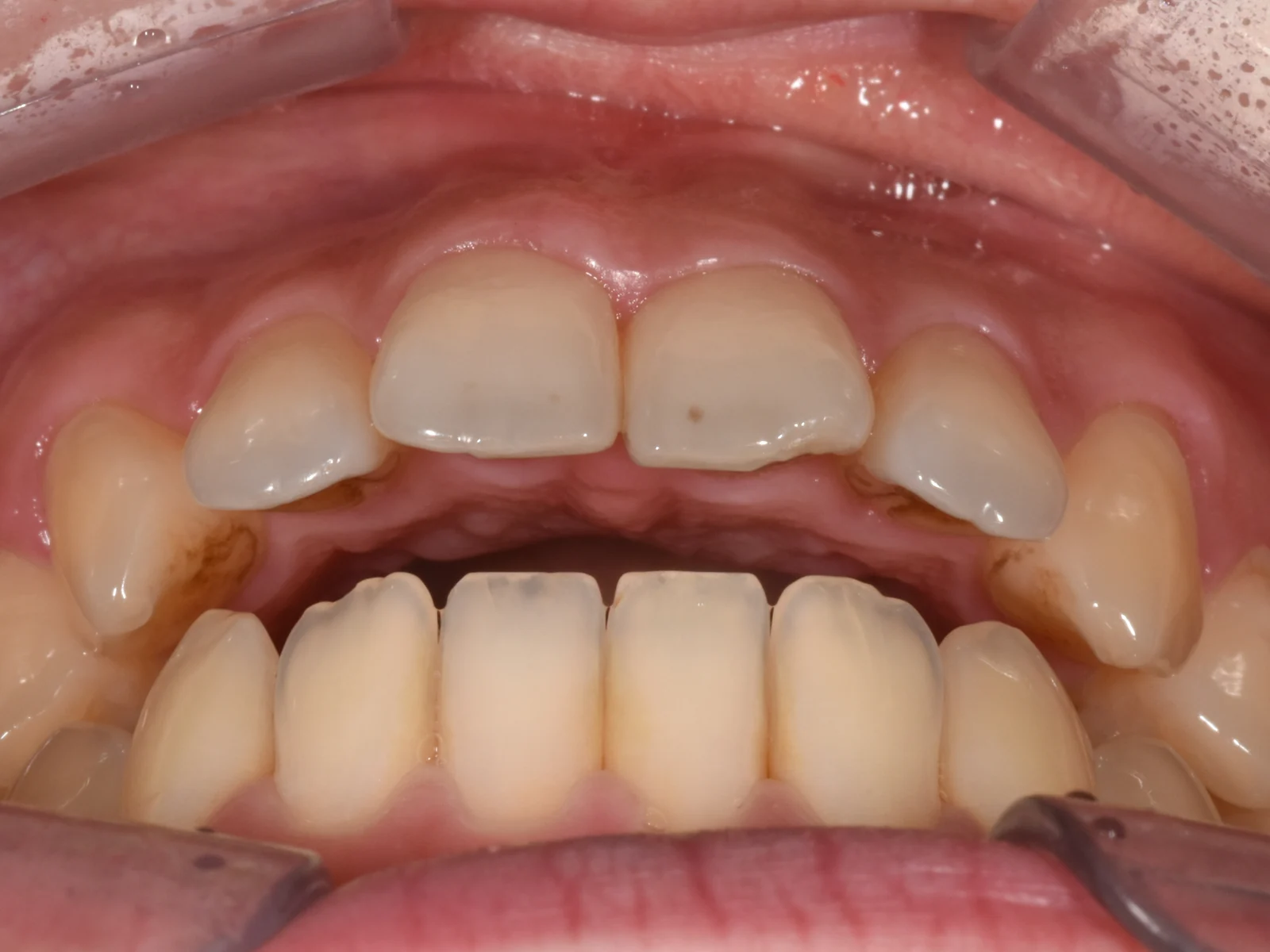
Gap between the upper and lower front teeth in a patient with a tongue-thrust habitTongue-thrust habit
Inside the mouth before treatment, in a patient with a tongue-thrust habit. Each time the patient swallows, the tongue comes through this gap and pushes the front teeth outward, keeping them from touching.
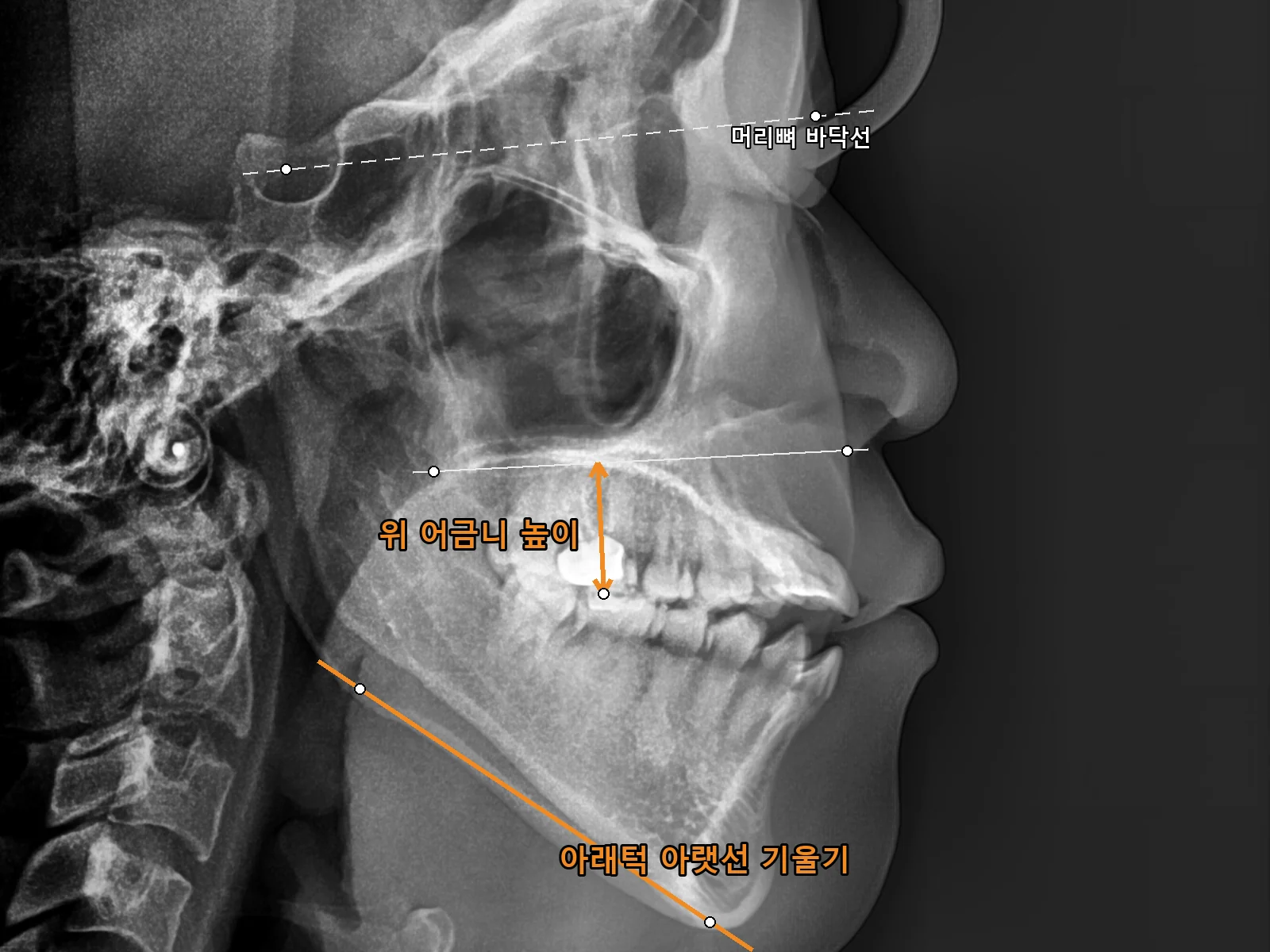
Side-view X-ray of a long face shape, marking the upper back-teeth height and the steep lower border of the jawLong face shape
Side-view X-ray of a long-face open bite. The back-teeth height is large and the lower border of the jaw slopes steeply.

Most cases are a mix of two or more causes. A tongue habit can be both a cause and a result of the gap.

03°

Before closing the front teeth, we look at the jaw joint

If the front teeth are closed with braces while the jaw joint head is resorbing and changing, the joint change can continue after treatment and the bite can open again. So for an open bite, I examine the jaw joint before braces and, if needed, stabilize it with jaw joint treatment before starting.

Jaw joint treatment starts with medication and Perfect Healing Laser PHL-15 physical therapy, followed by re-evaluation, and a splint is used if needed. We do not tell you that braces treat the jaw joint. Braces are a treatment to set the bite after the joint has become stable.

04°

How open-bite treatment works

There are six steps, from tests that sort out the cause to retainers. For each step, we explain what we look at and why, with real clinical photos.

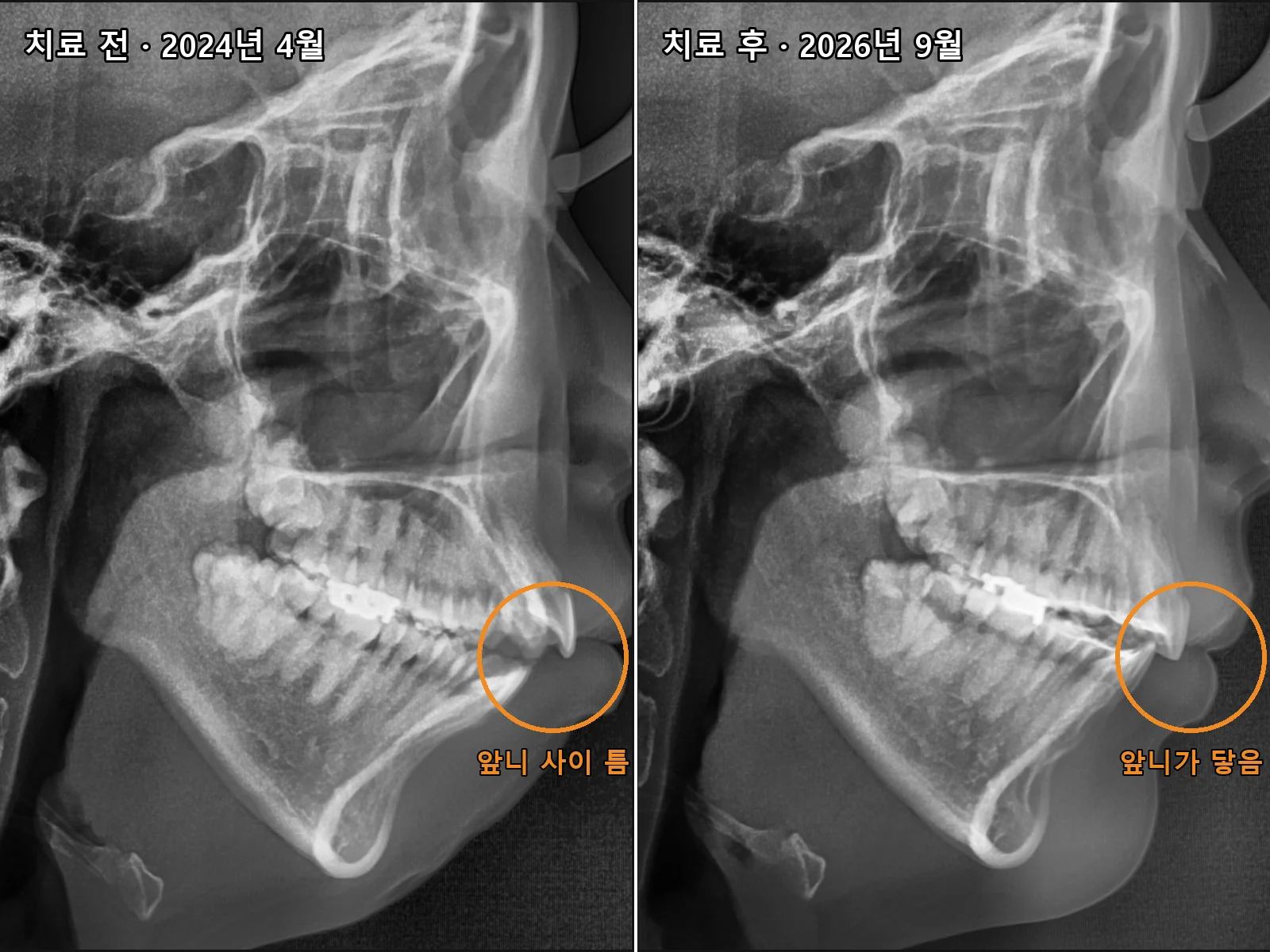
Side-view X-rays of an open-bite patient before and after treatment, aligned on the skullComparing X-rays before and after treatment
Side-view X-rays from two points in time. When they are aligned on the skull and placed side by side, you can see how the gap between the front teeth and the lower-jaw position changed. The images show one patient before and after treatment.

STEP 01

We ask when your front teeth stopped touching and compare with old photos

We ask whether it has been like this since childhood or began in the last few years. If you have old photos or X-rays from another dental clinic, we compare them with now.

Why we do thisA recently developed open bite should first be suspected of jaw joint changes. The treatment order is completely different from an open bite that has existed since childhood, so we check this first.
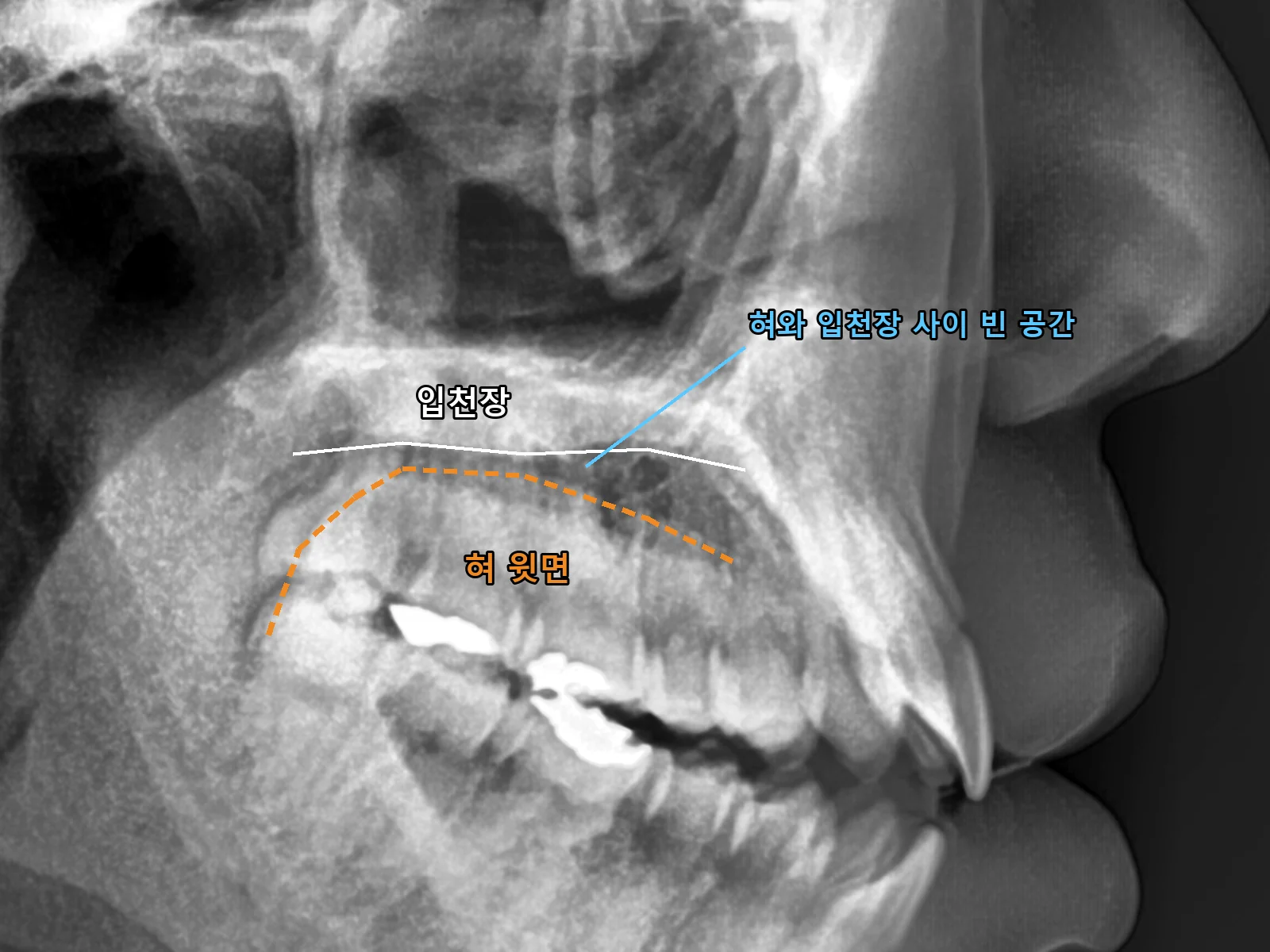
Illustration marking the roof of the mouth and the top of the tongue on a side-view X-rayTongue position
Tongue position seen on a side-view X-ray. The top of the tongue (orange dotted line) sits low instead of against the roof of the mouth, leaving an empty space between them. We also check whether the tongue comes between the front teeth when swallowing.

STEP 02

We look at tongue position, swallowing habits, and how you breathe

We check whether, at rest, your tongue sits behind the lower front teeth or against the roof of the mouth, whether it comes between the front teeth when you swallow, and whether you breathe through your mouth. If there is a habit, we plan tongue-position training along with braces.

Why we do thisThe tongue pushes on the front teeth hundreds of times a day as you swallow. If the front teeth are closed while the habit remains, the tongue can push them apart again after treatment.
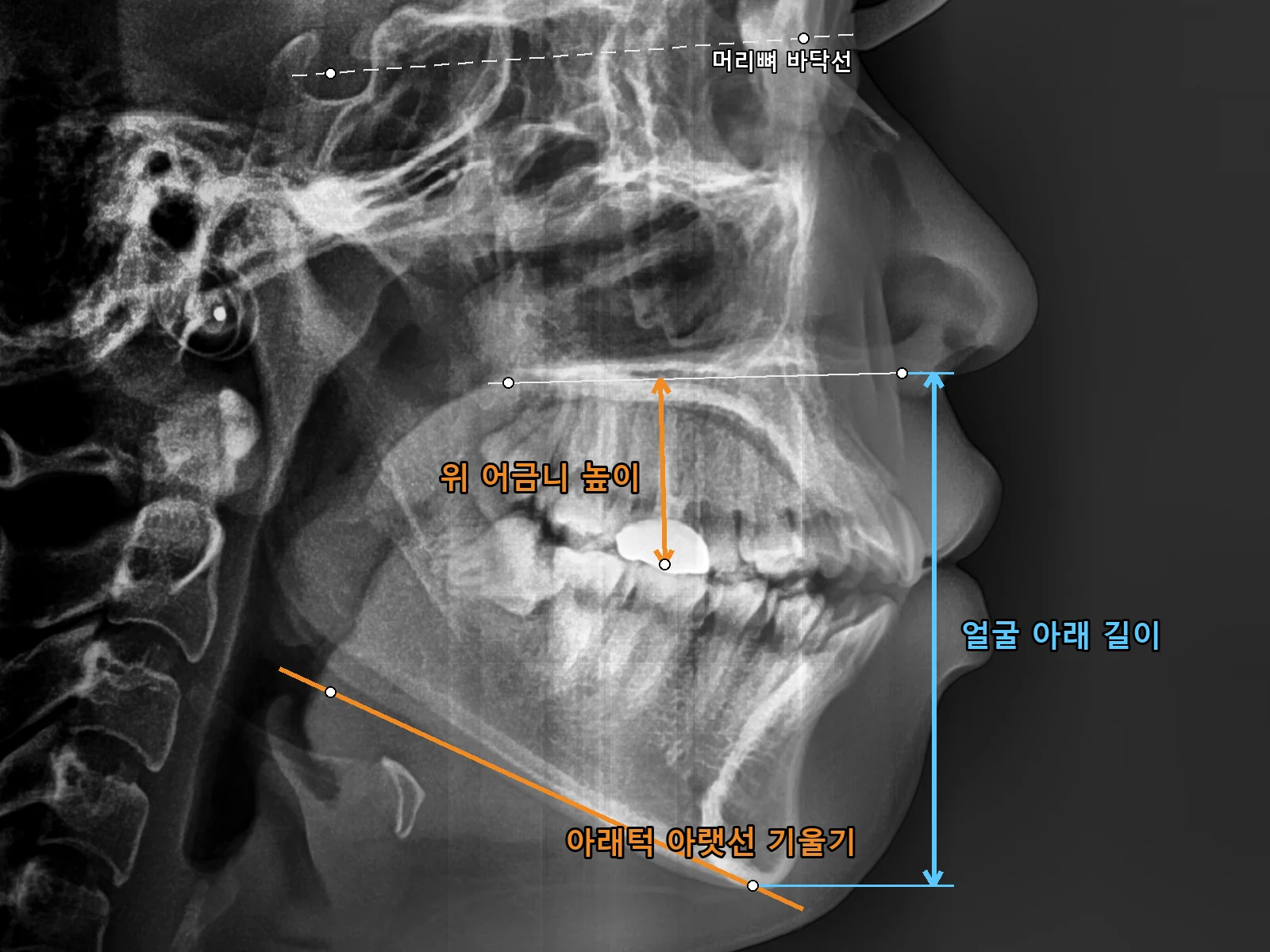
Side-view X-ray marking lower face height, upper back-teeth height, and the slope of the lower border of the jawCephalogram
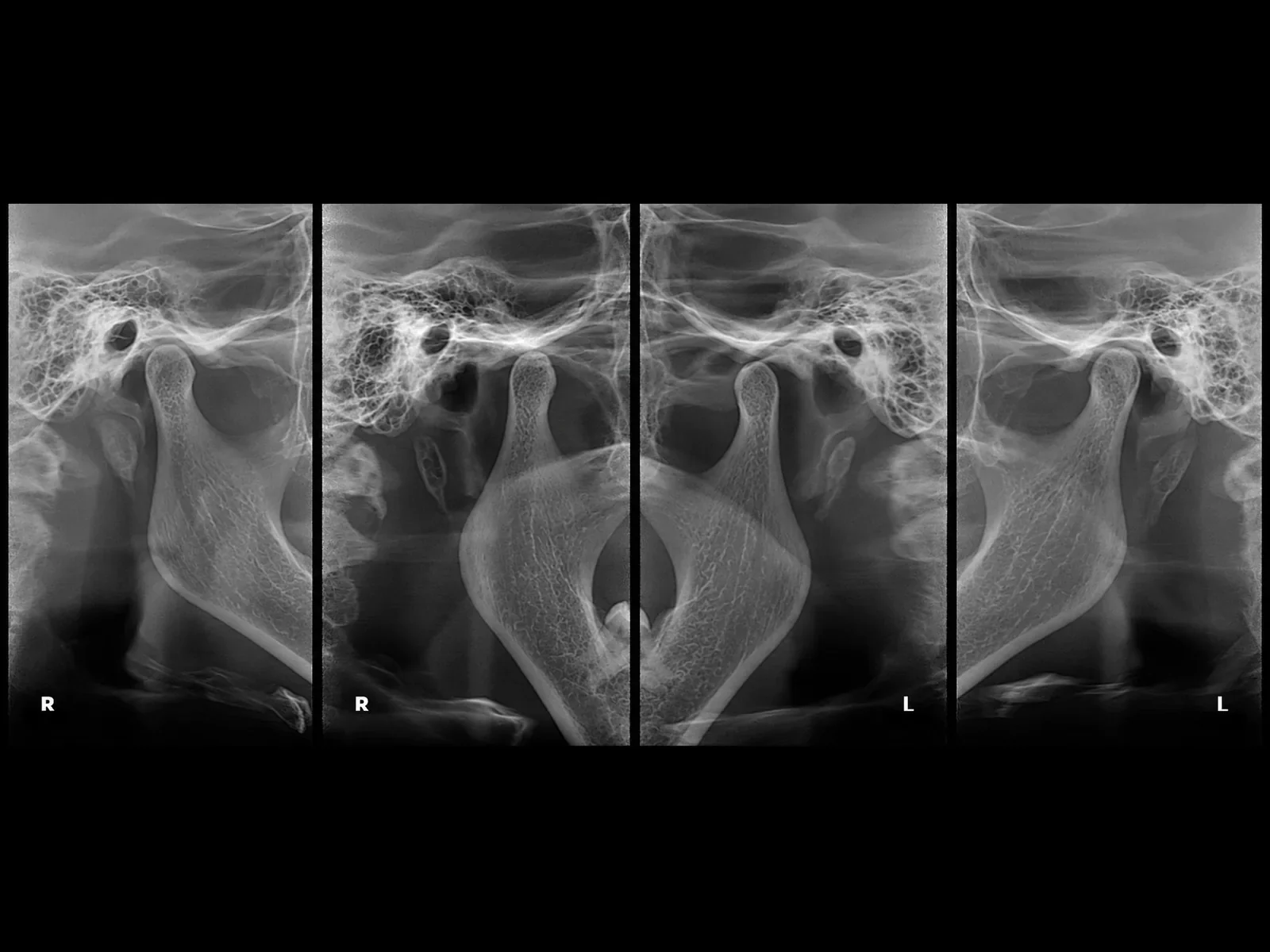
X-rays of the left and right jaw joints taken with the mouth closed and openJaw joint X-ray
Side-view X-ray and jaw joint X-rays. We measure back-teeth height and face length and check whether the shape of the jaw joint head has changed. If a change is suspected, we look more closely with 3D CT.

STEP 03

We sort out the cause with a side-view X-ray and a jaw joint exam

On a side-view X-ray (cephalogram), we measure lower face height, back-teeth height, and the slope of the lower border of the jaw. For the jaw joint, we check pain, sounds, and how wide the mouth opens, and if the gap appeared recently or a joint change is suspected, we look at the shape of the joint head with 3D CT.

Why we do thisIf tall back teeth are the cause, moving the molars up is the answer; if joint change is the cause, stabilizing the joint comes first. Causes are often mixed, so we look at both exams together. If active resorption of the jaw joint head is seen, we refer you to a university hospital or an oral medicine specialist.
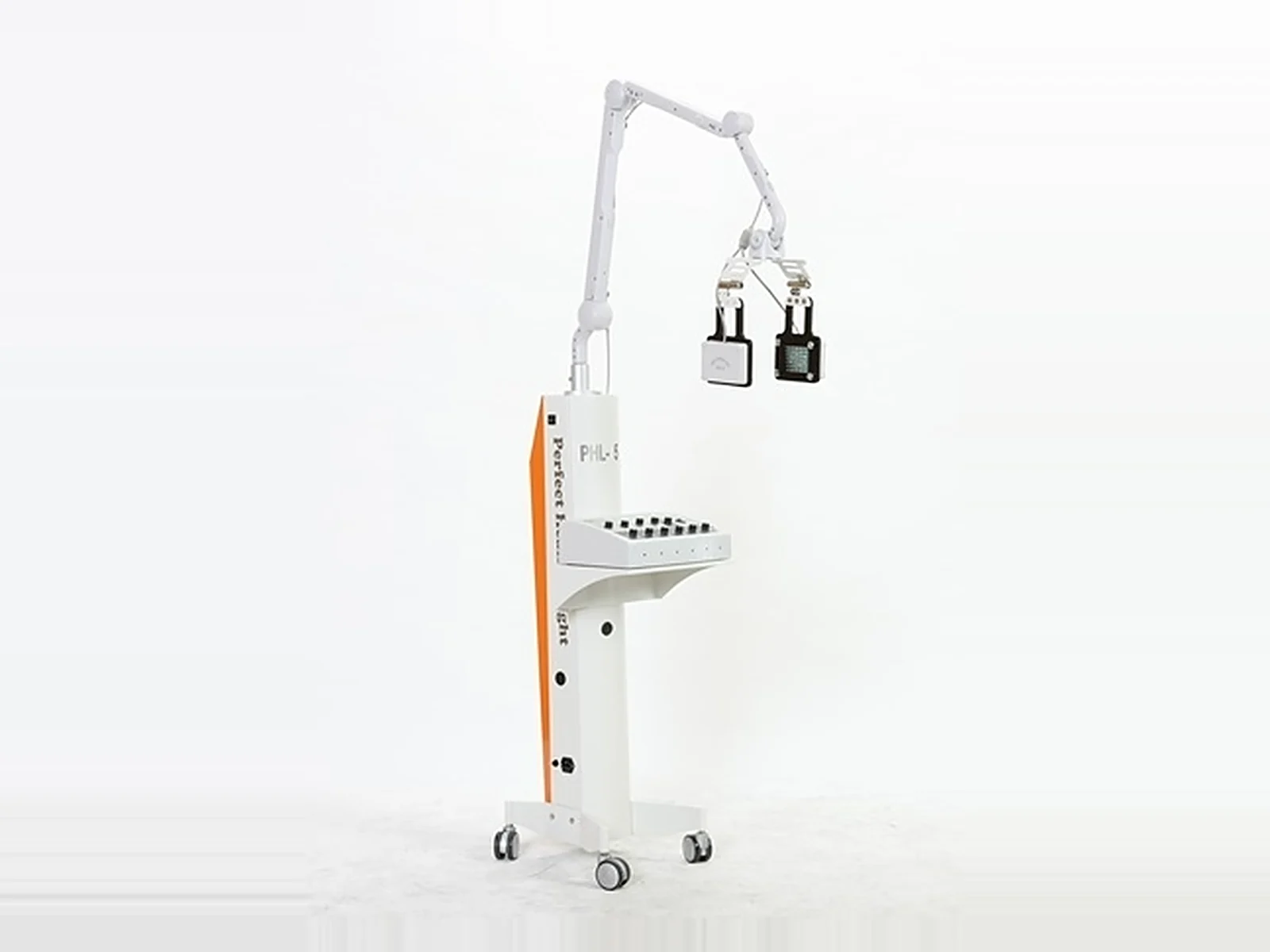
Main unit of the Perfect Healing Laser PHL-15, a physical therapy laser for the jaw jointPhysical therapy laser
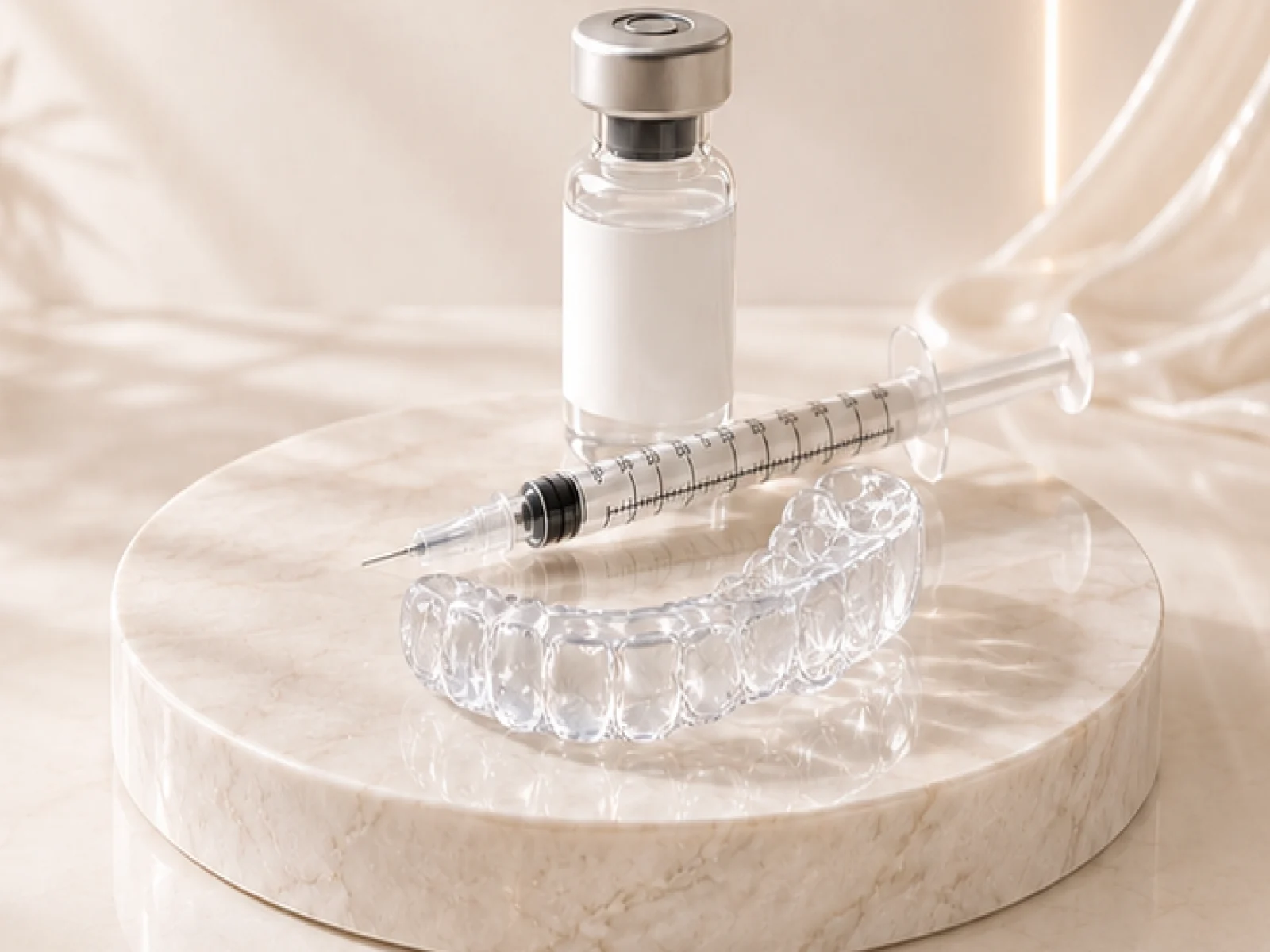
Botulinum toxin syringe and vialInjection treatment
Jaw joint treatment. We start with medication and Perfect Healing Laser PHL-15 physical therapy, re-evaluate, and use botulinum toxin injections or a splint if needed.

STEP 04

If there is a jaw joint problem, we stabilize it first and re-evaluate

If you have jaw joint pain or the joint change seems to be progressing, we postpone braces and treat the jaw joint first. We start with medication and laser physical therapy, re-evaluate, and use a splint if needed. We start braces after confirming that the bite has not opened further for a certain period.

Why we do thisIf the joint is still changing, the bite set by braces moves with it. Even if it means waiting, we choose the approach that keeps the bite from reopening after treatment.
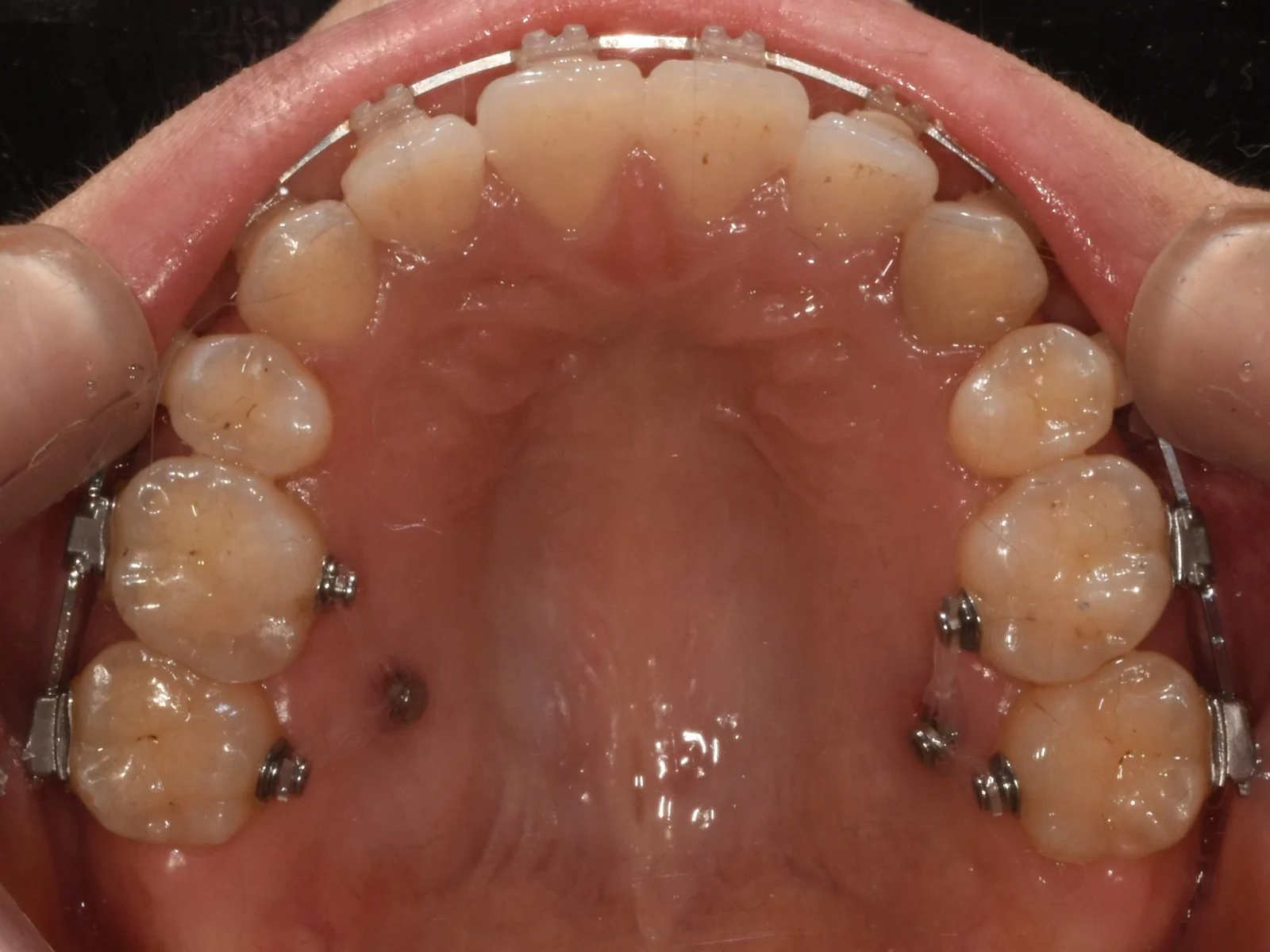
Mini-screw on the palate side between the upper first and second molars, with buttons on the inner side of the molarsMoving the molars up
Palatal mini-screw. A mini-screw is placed on the palate side between the upper first and second molars and connected to buttons bonded to the inner side of the two molars to pull them. Moving the molars up into the gums lets the lower jaw rotate up slightly and closes the gap between the front teeth.

STEP 05

Depending on the cause, we upright the front teeth or move the molars up into the gums

If tooth position is the cause, we upright the front teeth and bring them down to meet. For a long face shape with tall back teeth, we place mini-screws in the gum bone between the upper molars and move the molars up into the gums. As the molars go up, the lower jaw rotates up slightly and the front teeth meet.

Why we do thisIf only the front teeth are pulled far down to close the gap, a lot of gum shows when you smile and the bite tends to reopen. If the cause is back-teeth height, moving the molars up suits both the face and the bite. This movement depends on the direction of force, so I design it based on my research experience measuring the force and turning force on teeth.
Front view inside the mouth with the braces removed and the upper and lower front teeth touchingFinishing · Jan 2025
Finishing and retainers. After the front teeth meet, they are kept in place with a fixed retainer and a clear retainer, and we keep checking the tongue habit. If the tongue habit remains, we may use an upper retainer with a wire loop behind the front teeth that blocks the tongue (tongue crib).

STEP 06

Even after the front teeth are closed, we keep checking tongue habits and the jaw joint

After the front teeth meet, the braces come off and you use a fixed retainer and a clear retainer together. Retainer check-ups and adjustments for 2 years after treatment are included in the orthodontic fee, and at these check-ups we also look at tongue habits and the jaw joint.

Why we do thisAn open bite tends to reopen because of tongue habits or jaw joint changes. We schedule check-ups closer together in the first year after treatment and catch small changes early.

* Clinical photos are published with the patient's consent. Some people may have side effects such as temporary pain or discomfort.

Mini-screws are placed under local anesthesia, and they may feel strange in your mouth for the first few days. During treatment, you usually visit once a month.

05°

Comparing treatment options

Braces + tongue-habit trainingBraces + mini-screws (moving the molars up)Braces after jaw joint stabilizationSurgical orthodontics
Suitable causeHabits such as tongue thrust, thumb or finger sucking, or mouth breathing; tooth positionLong face shape with tall back teethRecently progressed cases due to jaw joint head changesLarge skeletal difference
How it worksCorrects the front-teeth position, with tongue-position trainingUses mini-screws as anchors to move the upper molars up into the gumsBraces start after the jaw joint is stabilized with treatmentPre- and post-surgical braces with jaw surgery
What changesFront-teeth biteFront-teeth bite, part of the lower face heightFront-teeth bite (after joint stabilization)Jaw position and face length
LimitsThe bite can reopen if the tongue habit returnsThe molars tend to come back a little, so retention is important, and mini-screws can loosenResults can change if jaw joint changes progress againSurgery requiring general anesthesia and a hospital stay
DurationUsually 1.5–2 yearsUsually 2–2.5 yearsJaw joint stabilization period + braces, usually 2–2.5 yearsUsually 2–2.5 years including pre- and post-surgical braces
CostSee the fee schedule →See the fee schedule →See the fee schedule →We can refer you to a partner hospital for surgery, but you are free to choose another hospital

06°

For these people, another treatment comes first, or waiting is fine

This suits you if you have

  • An open bite caused by tongue habits or tooth position
  • Tall back teeth with a small skeletal difference
  • Jaw joint stability confirmed on examination

Another treatment comes first

  • Jaw joint pain, or a gap that has recently been getting wider: stabilize the jaw joint first
  • A large skeletal difference: consultation for surgical orthodontics
  • Mouth breathing due to a blocked nose: check the airway first

Waiting is fine for now

  • A small open bite in a child caused by a thumb- or finger-sucking habit: it sometimes improves once the habit stops, so we watch it first.

07°

Self-check

If the gap has recently grown or your jaw hurts, have your jaw joint checked first. If you have old photos, bringing them along helps.

08°

Side effects and limits

Please read

· An open bite tends to reopen, so you need to keep up with retainers and habit management for a long time.

· If a tongue habit continues, it affects the result.

· If jaw joint changes progress again, the bite can open again.

· Molars moved up into the gums tend to come back a little.

· If a mini-screw loosens and comes out, we place it again in a different spot.

· Tooth roots can become shorter (root resorption), or the gums can recede.

FAQ

FAQ

Why do you check the jaw joint first before open-bite treatment?
If the front teeth are closed while the jaw joint head is still changing, the joint changes may continue and the bite may open again. So for an open bite, we examine the jaw joint before braces and, if needed, stabilize it with jaw joint treatment before starting.
Can an open bite be corrected with braces, without surgery?
In some cases, an open bite can be closed with braces when tongue habits or tooth position are the cause, or with braces and mini-screws to intrude the molars when a long face shape and increased molar height are the cause. If the skeletal difference is large, we also discuss surgical orthodontics.
Can an open bite reopen after treatment?
An open bite tends to reopen because of tongue habits or jaw joint changes. So the retainer is worn for a long time, and at the check-ups during the 2 years after treatment we also check tongue habits and the jaw joint.
Do I need to fix my tongue habit if I have an open bite?
If a tongue-thrust habit is the cause, we do tongue-position training along with braces. If the habit is left as it is, the tongue can push the front teeth apart again after treatment. However, not every open bite is caused by a tongue habit, so we first find the cause and treat it by removing that cause.
My child sucked their thumb and now the front teeth don't meet.
A small open bite caused by a thumb- or finger-sucking habit sometimes improves on its own once the habit stops, so we may watch it first. If it stays the same after the habit stops, or a tongue habit is also present, we judge the timing of treatment separately.
Does an open bite affect speech?
Some people's "s" or "j" sounds leak because the tongue comes through the gap between the front teeth. This can improve when the front teeth meet and the tongue position changes, but speech is also strongly affected by habits, so it differs from person to person.
Is the jaw joint examination for open-bite treatment covered by insurance?
For people enrolled in Korea's National Health Insurance, some examinations and treatments are covered when you are seen for jaw joint symptoms. Regular orthodontic treatment is not covered by the National Health Insurance (except for some congenital conditions such as cleft lip and palate), and examinations for orthodontic diagnosis may not be covered either, so we tell you in advance at the consultation.

Evidence and references

  • Kim S, et al. Influence of different ligation methods on force and moment generation in a simulated condition of the maxillary crowded anterior dentition with linguo-version and rotation. Bio-Medical Materials and Engineering, 2022. doi:10.3233/BME-211288 (Measured orthodontic force and turning force on teeth)
  • Order of jaw joint examination and treatment: Jaw joint and teeth grinding page
  • Ceramic Dental Clinic's 12-step orthodontic examination and diagnosis: Orthodontics main page
COSTAll costs are gathered in one place on our treatment cost pageSee orthodontic costs →

ABROAD

Visiting from abroad

Questions from patients who travel to Seoul for treatment.

How much does orthodontic treatment cost?
The fee depends on the appliance. For example, metal braces are KRW 4,800,000, ceramic braces KRW 6,000,000, Invisalign KRW 8,500,000 and lingual braces KRW 8,600,000. The orthodontic fee includes the orthodontic diagnosis, extraction (except wisdom teeth), mini-screws, basic retainers and retention care for 2 years. If you have only the diagnosis and do not start treatment, it is KRW 50,000 (KRW 100,000 if a CT scan is needed). If a retainer breaks or is lost later, remaking it costs extra. International and Korean patients pay the same fees. We explain the total before treatment starts. See our fee schedule.
Can I continue treatment after I go home?
Yes, but it needs a plan. Fixed braces need regular adjustment visits: the first two visits are 2 weeks apart, then usually once a month. Clear aligners are easier from abroad: after you receive your aligners, you visit once every 2–3 months, and between visits we check by photo only if something comes up. Your doctor tells you at diagnosis which method fits your case.
Can I have my consultation in English?
Yes. The doctor in charge of each field consults with you directly in English. For orthodontics, this is Dr. Sunmin Kim, a board-certified orthodontist. Before you travel, you can send photos of your teeth on WhatsApp or by email. An accurate diagnosis is made after we examine you in person.
What happens after treatment, and what if something comes off?
You need retainers after treatment, because teeth tend to move back. Retention care for 2 years is included in the orthodontic fee. If a bracket comes off or a wire hurts after you go home, send us a photo on WhatsApp. We check it and tell you what to do. Some repairs need a visit.

Results, the number of visits and schedules vary from person to person. More questions: Visiting from abroad.

MORE

Related pages

Treatment results and side effects can vary from person to person.

You can ask us first with a photo of the inside of your mouth with your teeth closed

TOP
Request a ConsultationView