Last reviewed Oct 29, 2026 · Dr. Sunmin Kim (board-certified orthodontist, certified by the Korean Association of Orthodontists)
At a glance
Who it suits
The back-teeth bite is fine and only a few front teeth are a concern
Treatment flow
Examination to see whether partial braces suit you → clear aligners or front-teeth braces → retainer
Duration and limits
Usually 4–6 months. If extractions are needed or you want to change your lip position, we recommend full braces
Read more
Front-teeth partial braces suit you when your back-teeth bite is fine and your only concern is a few overlapping front teeth, a small gap, or slightly rotated teeth. Treatment usually takes 4–6 months and is done with clear aligners or with ceramic or lingual (inside) braces on the front teeth only. If a lot of space is missing and extractions are needed, or you want to change your lip position or your upper and lower bite, partial braces will not give the result you want, so we recommend full braces. At Ceramic Dental Clinic, an orthodontic specialist first judges at the examination whether partial braces are suitable, and also considers whether veneers will be needed after braces.
01°
We chose cases where moving only the front teeth was enough, and did only as much as needed
These patients had a correct back-teeth bite and only needed the space at the front fixed. Here are three real cases where the appliances and the finish differed according to the concern and goal.
CASE01
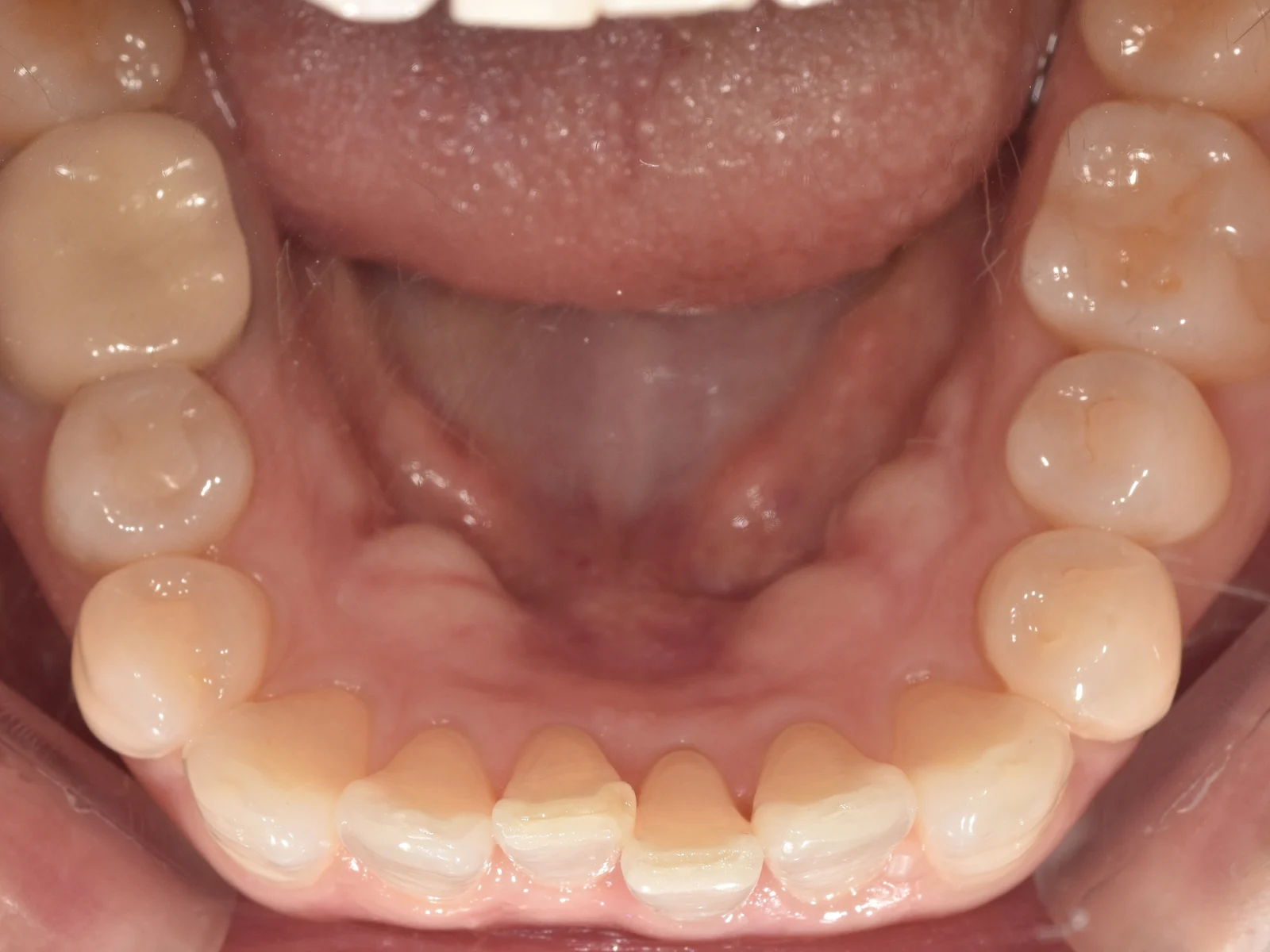
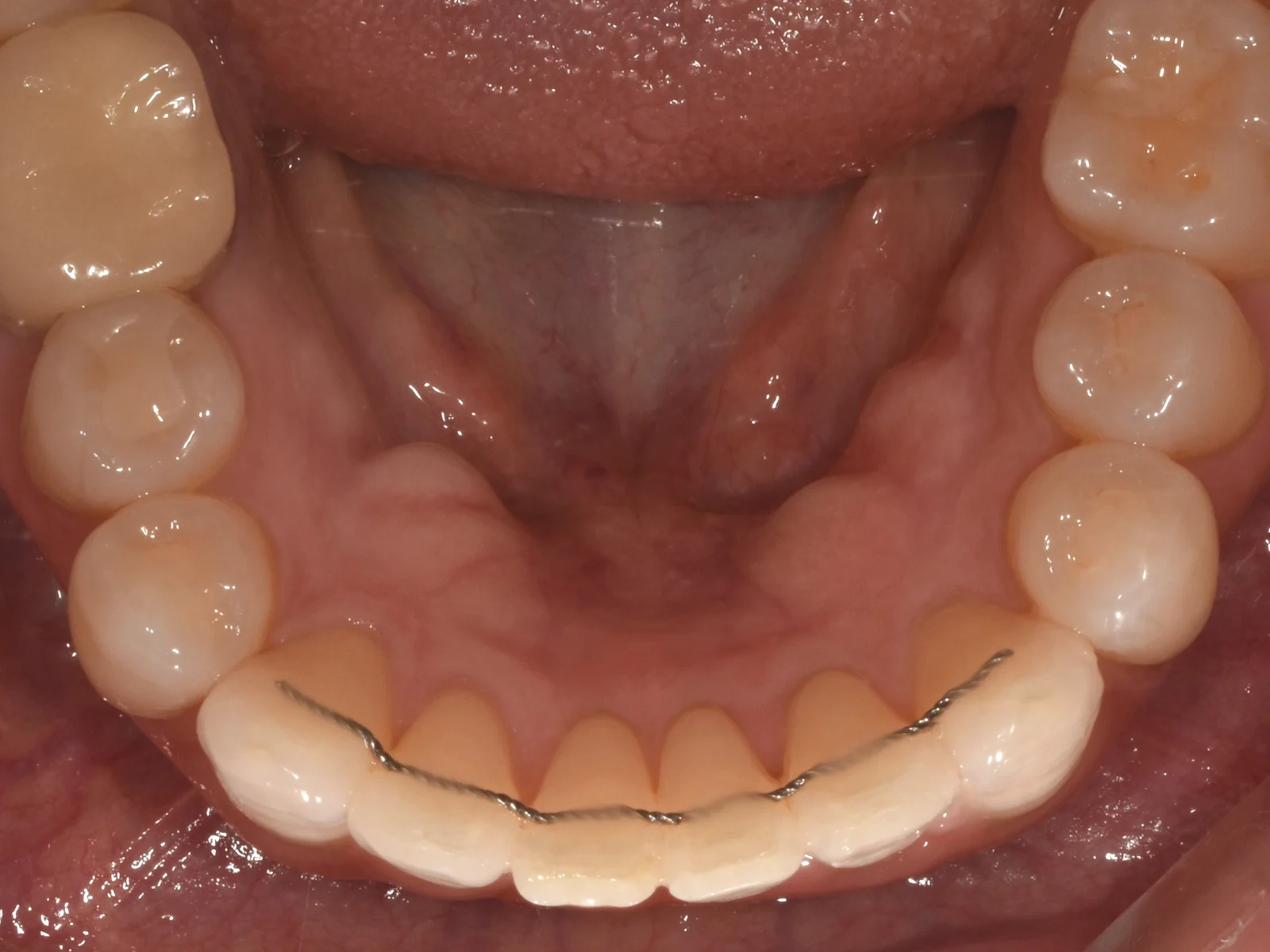
Overlapping lower front teeth that bothered the patient
Partial treatment with clear aligners · 2 mm of space was made by slightly reshaping between teeth, and the teeth were aligned without extractions
Before · Apr 2020
Lower front teeth before treatment. About 2 mm of space was missing, so one front tooth overlapped inward.
After · Dec 2020
Lower front teeth after treatment. Using the space made by slightly reshaping between teeth, the overlapping front tooth was brought into line.
Condition
Normal back-teeth bite; 2 mm space shortage at the lower front teeth
Choice
Reshaping between teeth + clear aligners
Not done
Extractions, full upper and lower braces (there were no problems with the bite or lip position)
Duration
About 8 months (Apr → Dec 2020)
CASE02
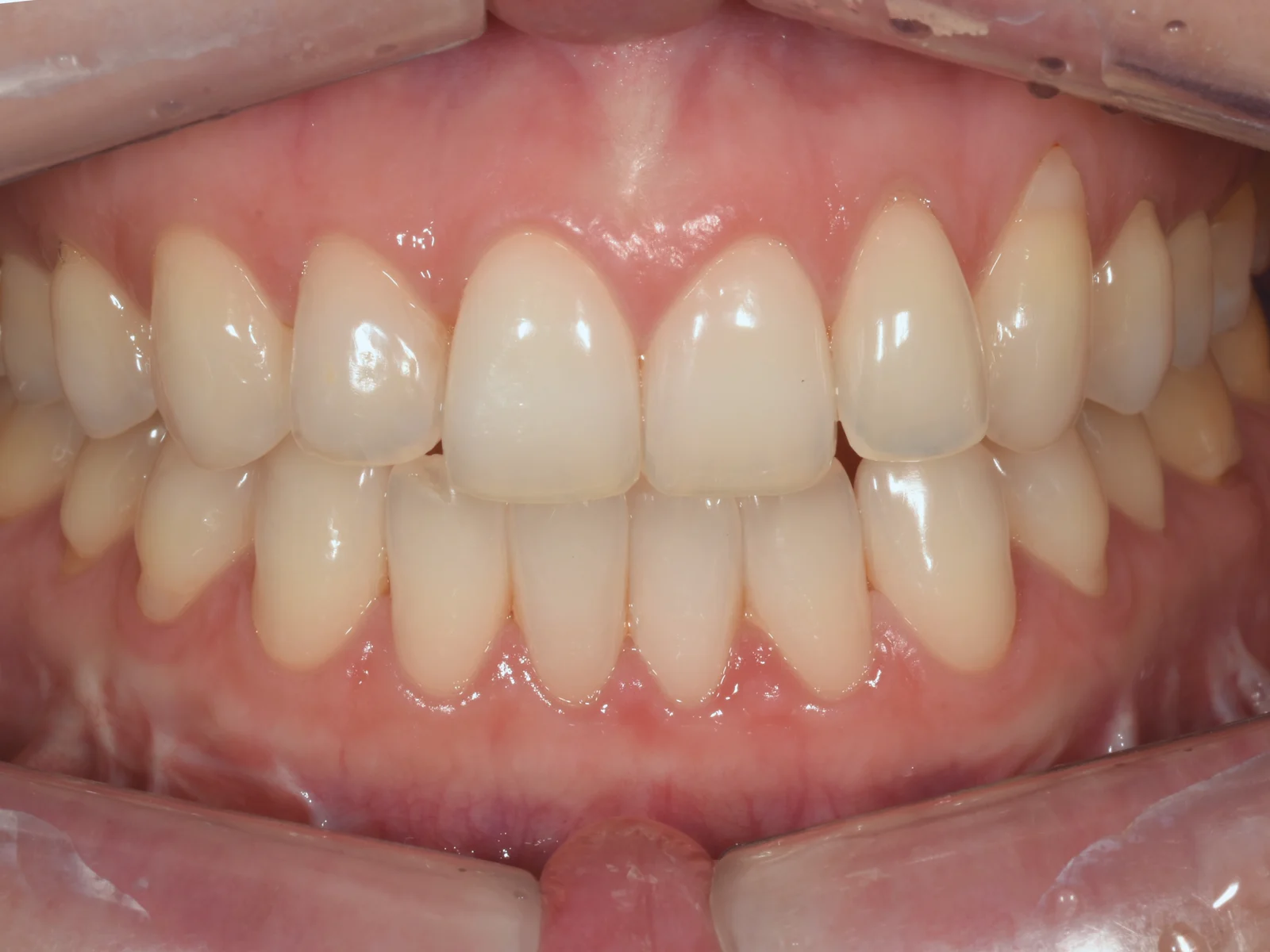
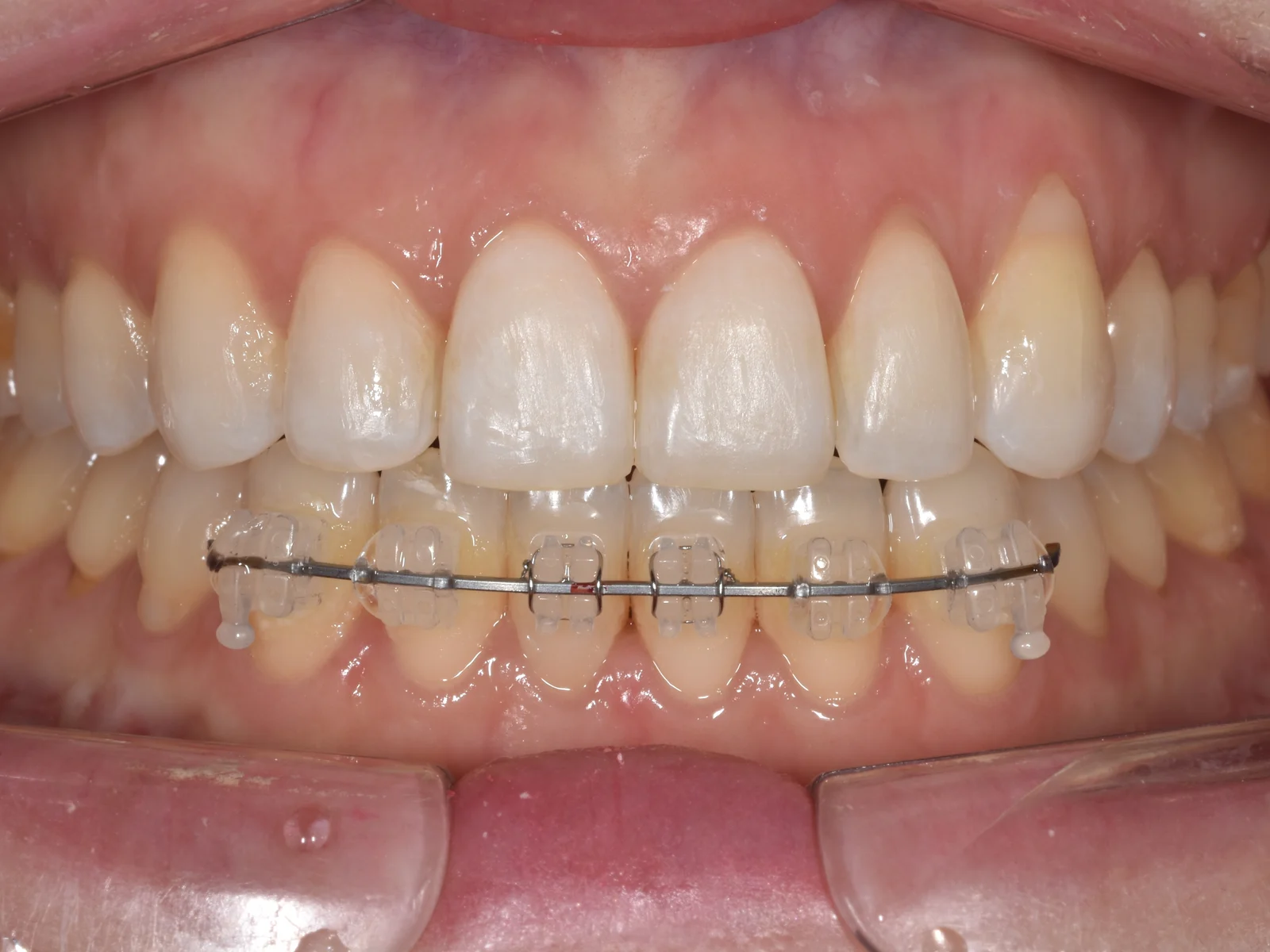
Rotated front teeth straightened before veneers
After setting positions with a few months of partial braces · Veneers with less reshaping
Before · Sep 2024
Before treatment. One upper front tooth was rotated forward, so placing veneers right away would have required shaving a lot off the side that stuck out.
After braces · Apr 2025
Right after partial braces. The rotated front tooth was brought into line, creating an even base for the veneers.
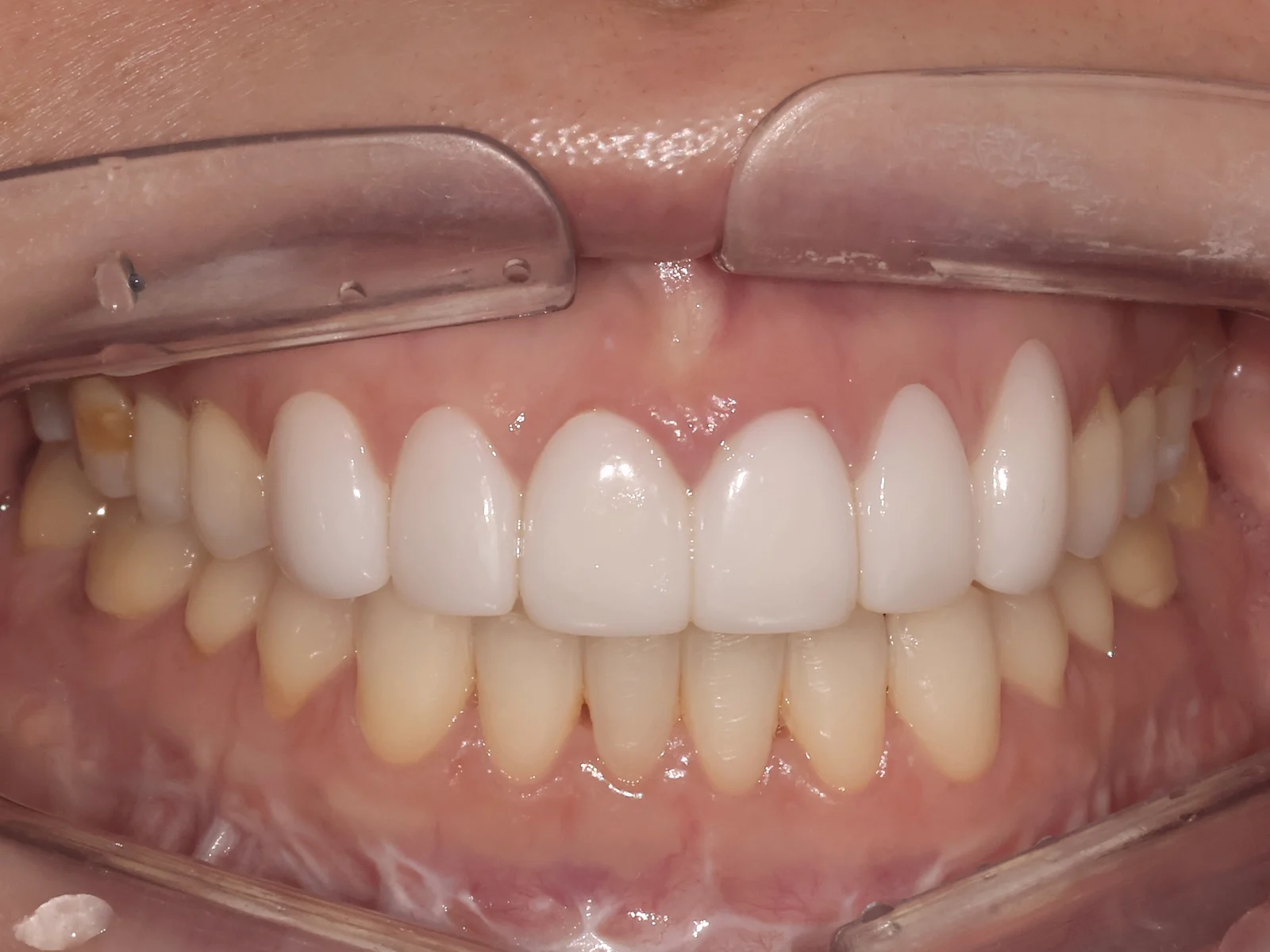
After veneers · Jun 2026
After veneers. Because the front-teeth positions were set first, the veneers were placed with less reshaping of the outer tooth surfaces.
Condition
Normal back-teeth bite; one upper front tooth rotated; also wanted to change color and shape
Choice
Front-teeth partial braces, then 8 veneers
Not done
Veneers right away (covering the rotated tooth would have required shaving a lot)
Duration
Partial braces about 7 months (Sep 2024 → Apr 2025)
CASE03
One upper front tooth rotated again after previous braces
Only the front teeth were realigned with clear aligners · A new retainer was fitted
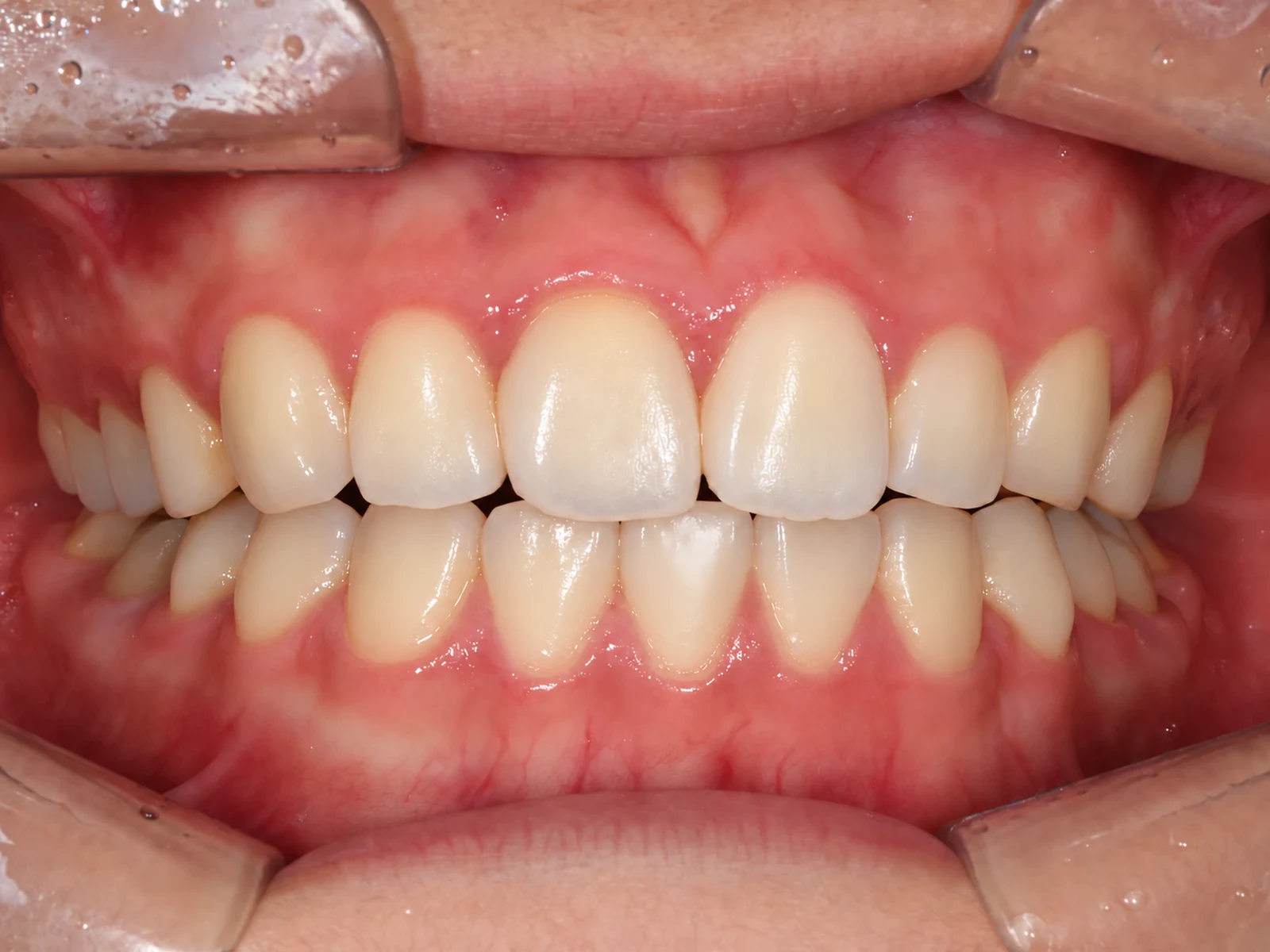
Before · Sep 2019
Before treatment. The retainer had not been worn for a long time after previous braces, so one upper front tooth rotated again.
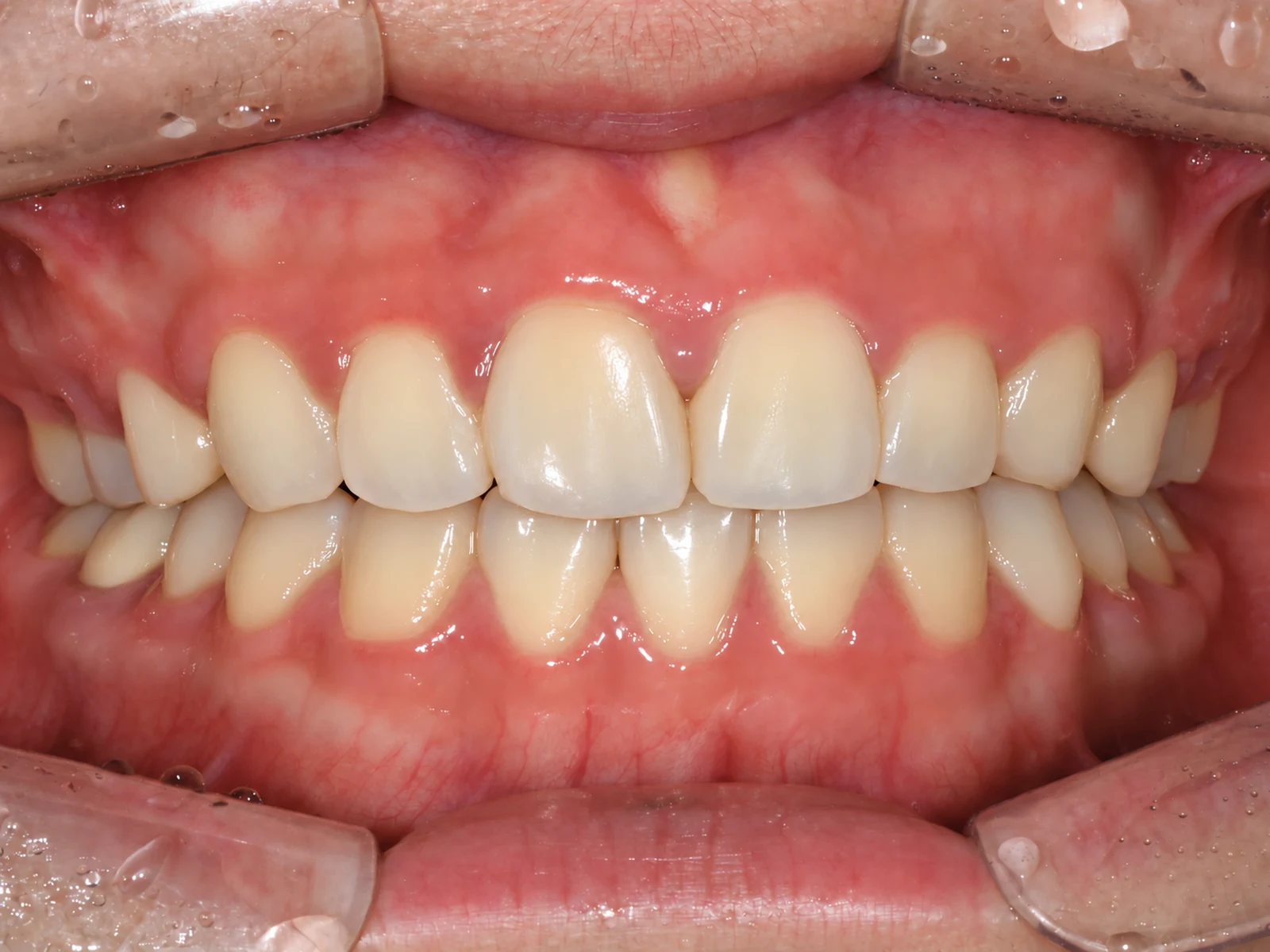
After · Aug 2020
After treatment. Only the front teeth were realigned, and a new fixed retainer was bonded.
Condition
After previous braces, only one upper front tooth rotated again; the back-teeth bite stayed the same
Choice
Partial re-treatment with clear aligners, started after checking root length
Not done
Full re-treatment (the shift was limited to the front teeth)
Duration
About 8 months
Note
Because this tooth had rotated once before, it can rotate again if the retainer is neglected.
* Photos were taken under the same conditions and published with the patient's consent. Treatment results and side effects can vary from person to person.
02°
Four points decide whether partial braces will work
Whether moving only the front teeth is enough is decided not by the front teeth but by the back teeth and the space. If even one of the four points does not fit, partial braces are unlikely to give the result you want.
01Back-teeth bite
Partial braces leave the back teeth as they are and move only the front teeth. The upper and lower back teeth must fit together correctly for the bite to work when only the front teeth are fixed.
02Missing space
If the space needed to straighten the front teeth is a few millimeters, it can be gained by slightly reshaping between teeth. If much more is missing, extractions are needed and it becomes full braces.
03Front-teeth tilt and lip position
If your mouth looks like it sticks out and you want to move the front teeth back a lot, partial braces will not do it. It suits cases where the front-teeth angle is in the normal range.
04Front-teeth midline
If the midlines of the upper and lower front teeth are far off, or a crowded canine sits high, the teeth behind the canines must also move, which goes beyond the scope of partial braces.
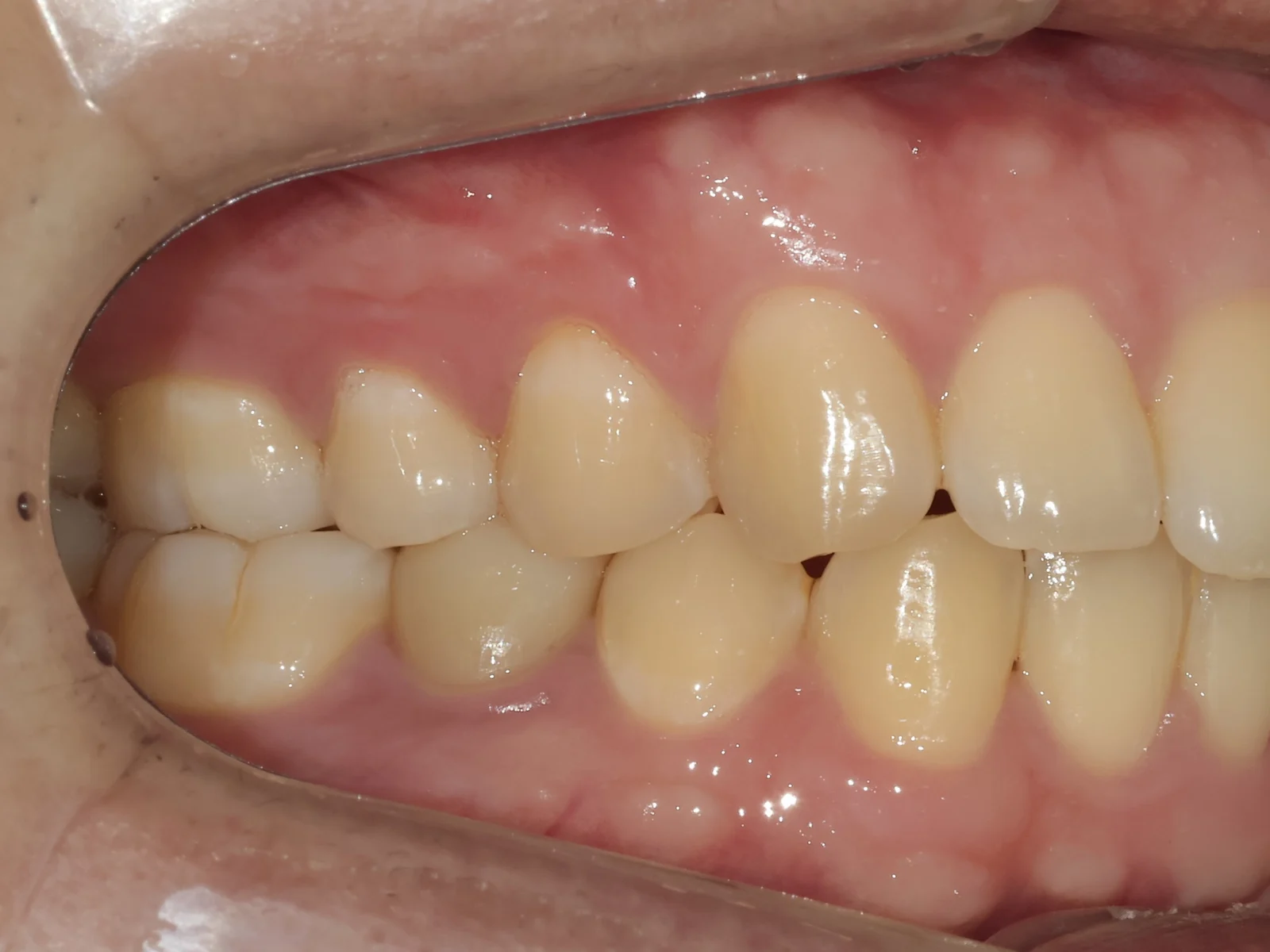
Normal back-teeth bite
Side view with a normal back-teeth bite. The bulges of the upper molars fit into the grooves of the lower molars, so moving only the front teeth is enough.
Space calculation
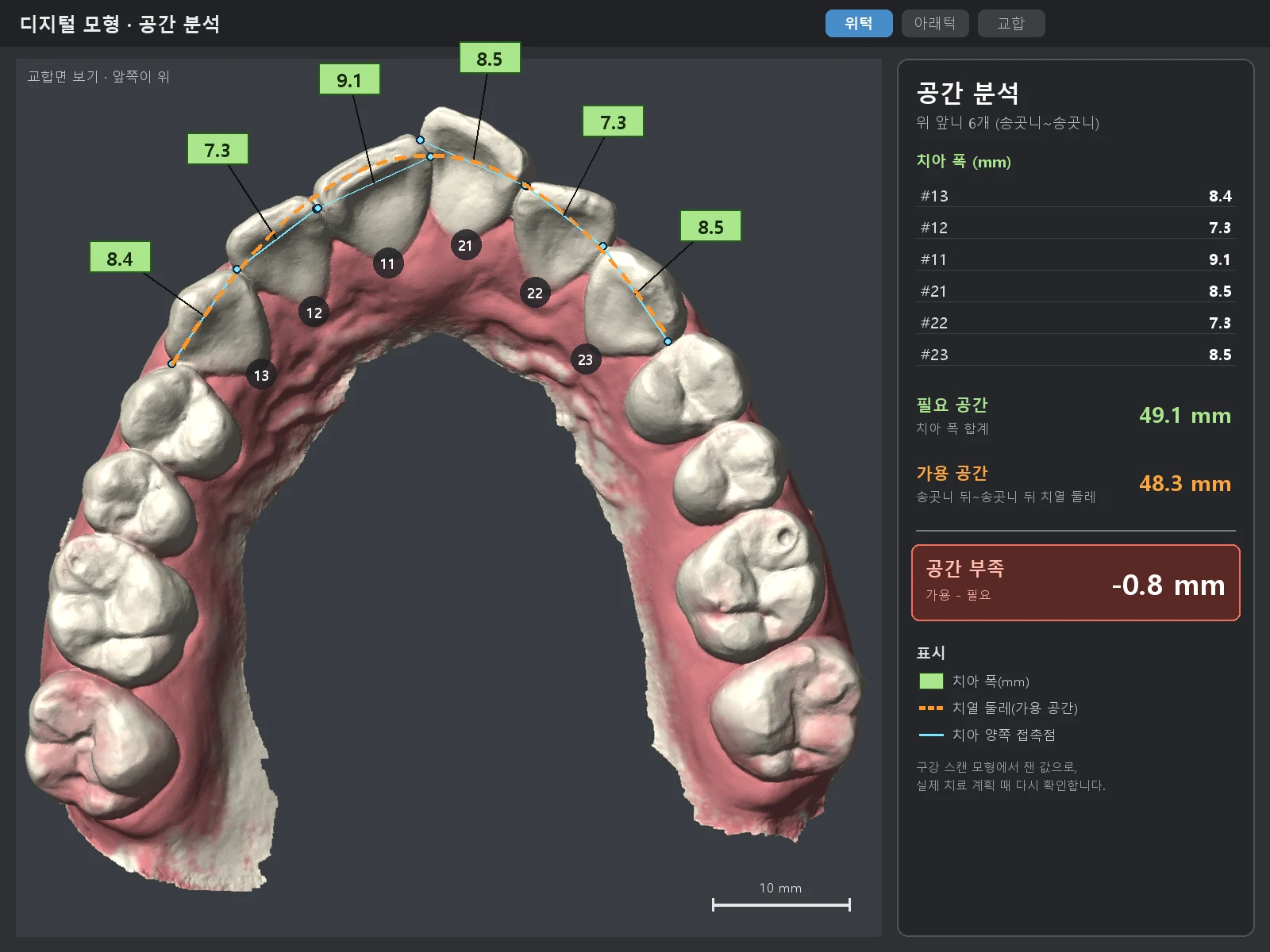
Front-teeth space calculation screen. We measure on a digital model how many millimeters are missing to straighten the six front teeth.
If all four points fit, partial braces are likely to work. If even one does not, we explain why and suggest other options.
03°
How front-teeth partial braces work
There are six steps, from the examination to retainers. Even for a short treatment, we do not skip steps. For each step, we explain what we look at and why, with real clinical photos.
Examination
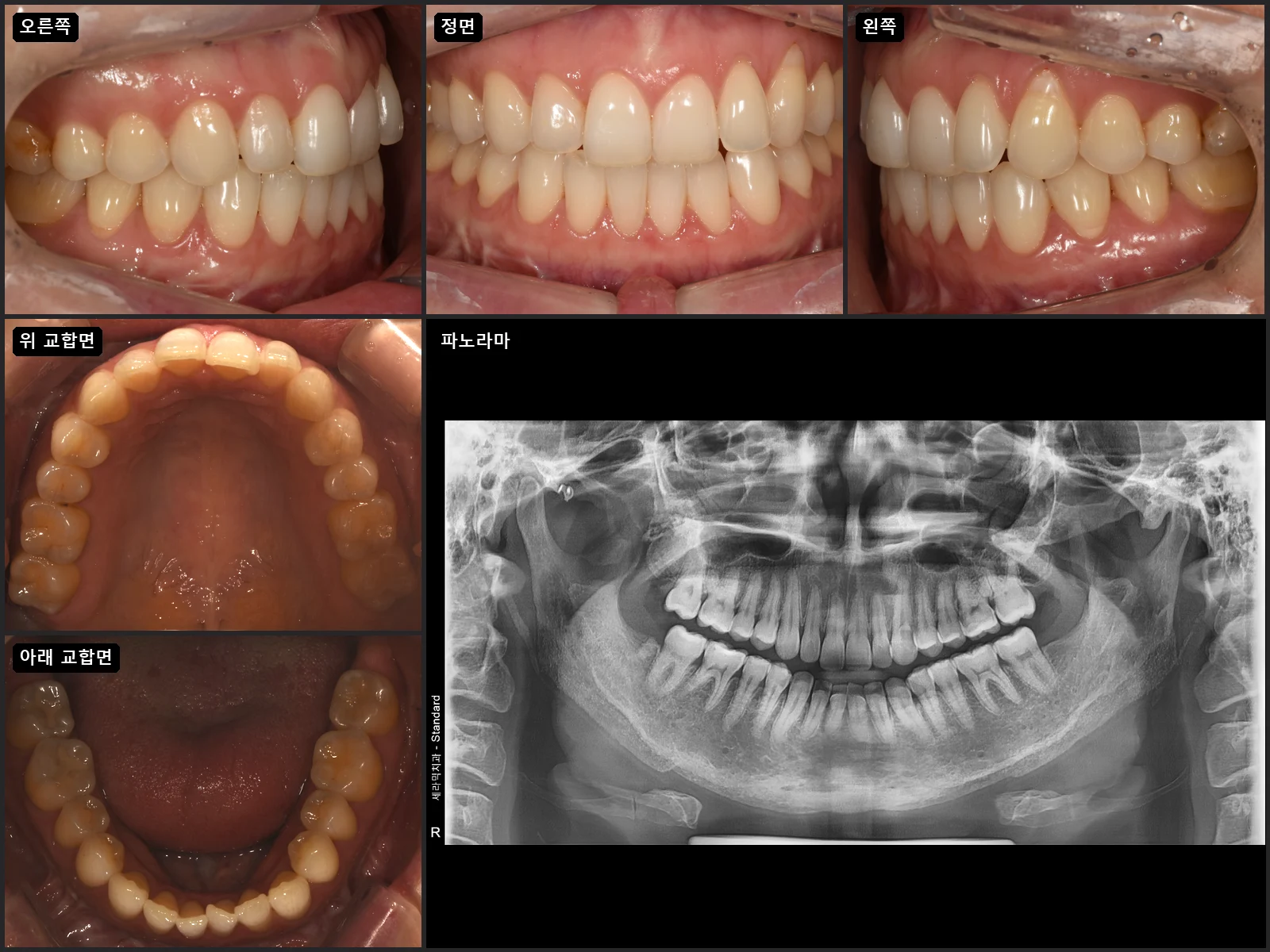
Examination records for partial braces. Intraoral photos show the front-teeth and back-teeth bite, and the panoramic X-ray shows root length and gum bone.
STEP 01
We look not only at the front teeth but also at the back teeth and roots
Intraoral photos show the back-teeth bite, a panoramic X-ray shows front-teeth root length and gum bone, and a side-view X-ray (cephalogram) measures the front-teeth angle. If you have had braces before, we also check whether the roots became shorter at that time.
Why we do thisThe shorter the treatment, the more the first judgment decides the result. If only the front teeth are straightened when the back-teeth bite does not fit, the upper and lower front teeth can hit each other, or the straightened front teeth soon get pushed out again.
Planning
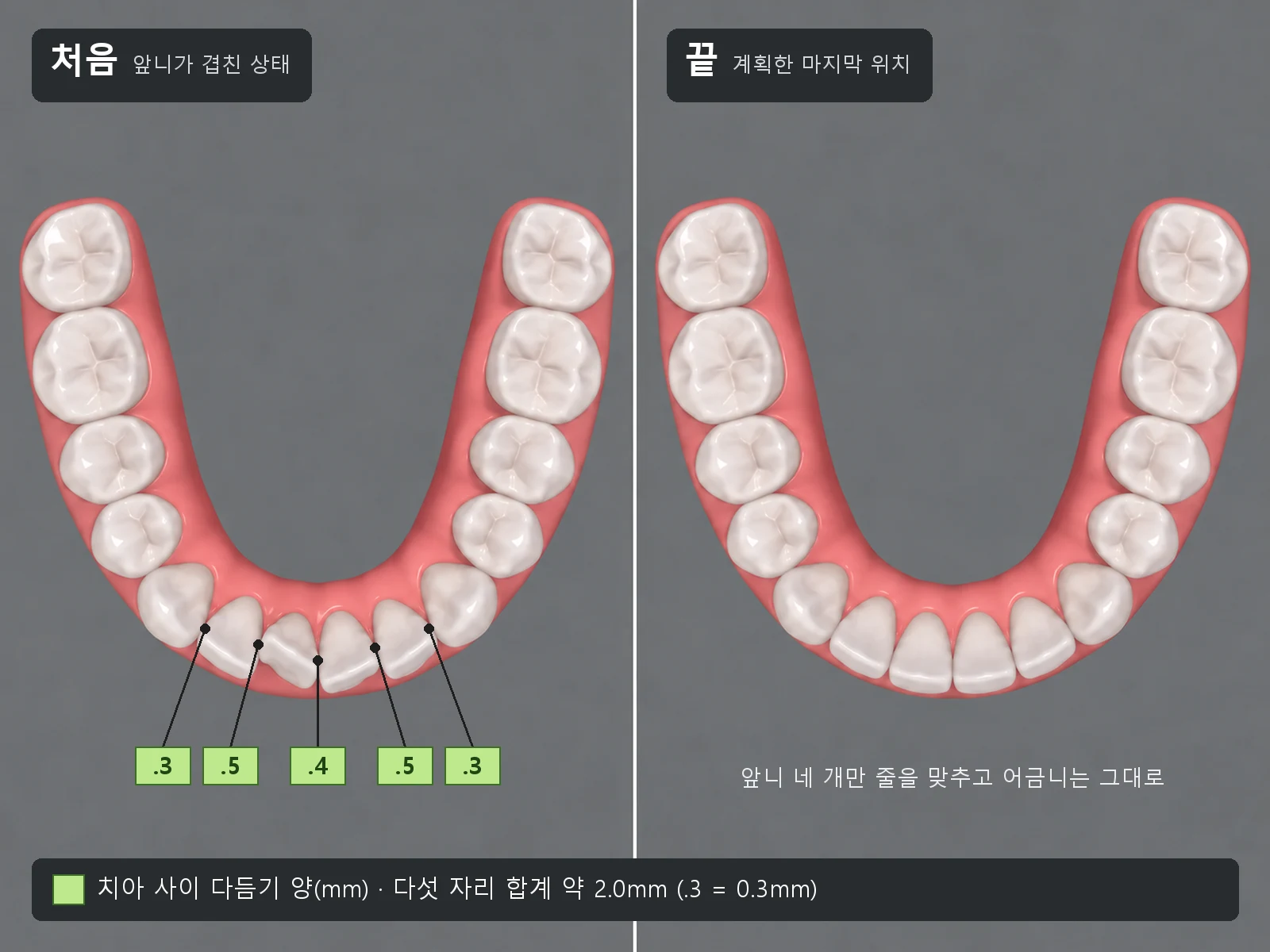
Treatment plan screen. We preview how the front teeth will move and mark how many millimeters to reshape between which teeth to gain space.
STEP 02
We preview the movement and decide where the space will come from
On a digital model made with an iTero intraoral scan, we preview how the front teeth will move. We decide between which teeth and how much space to gain, and show you the result on screen.
Why we do thisIf overlapping front teeth are straightened without space, they come forward and the mouth can look like it sticks out. Deciding first how many millimeters will come from where lets the front teeth line up in place.
Reshaping between teeth
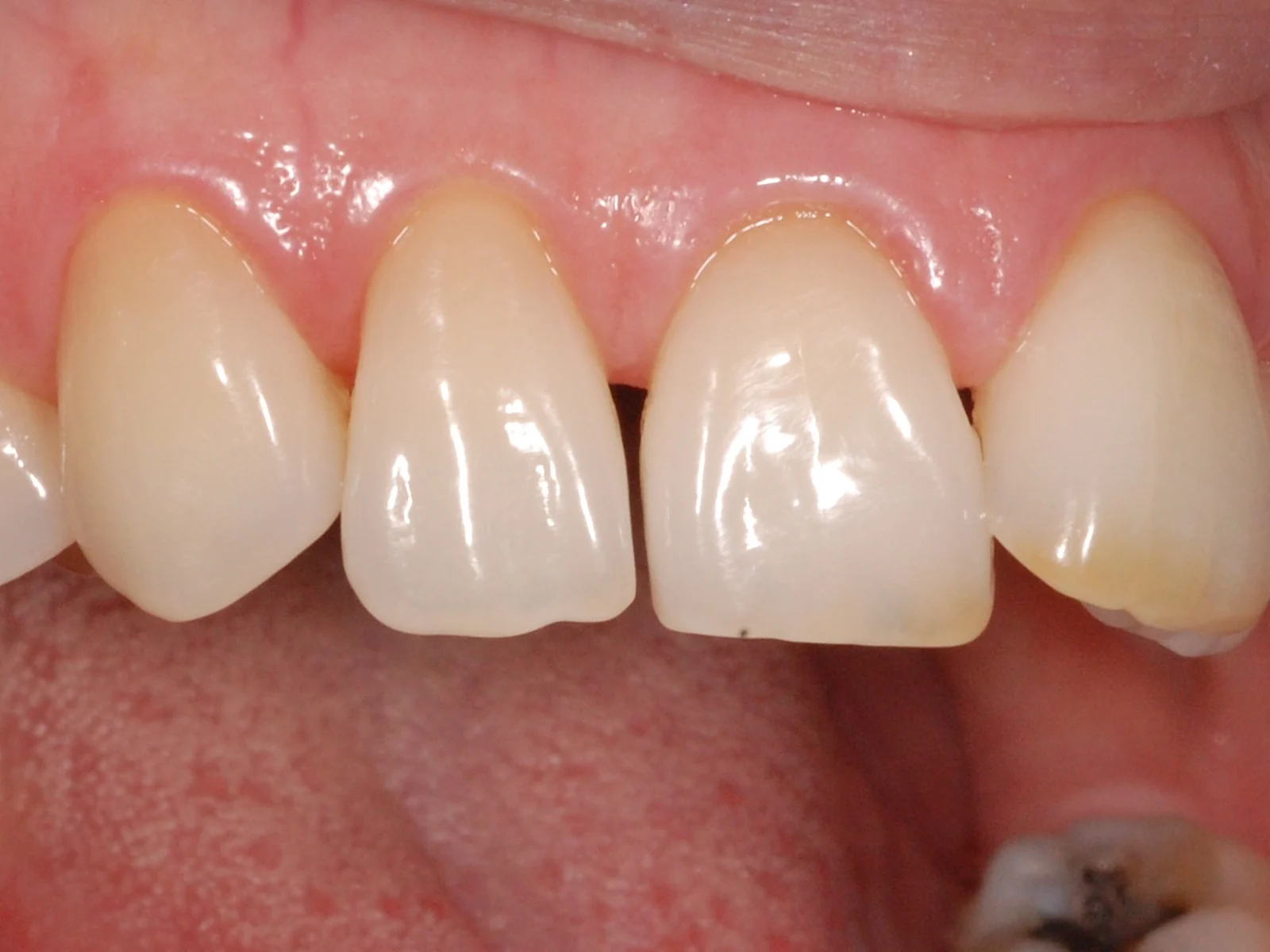
Reshaping between teeth. The enamel at the contact surfaces between the front teeth is thinly reshaped to make room for straightening them.
STEP 03
If needed, we make space by slightly reshaping between the teeth
If the shortage is a few millimeters, we make space by thinly reshaping the enamel at the contact surfaces between the front teeth, usually about 0.5 mm per contact. The reshaped surfaces are smoothed, and if there is enough space, we do not reshape.
Why we do thisReshaping between teeth stays within the thickness of the enamel, so it does not reach the nerve. This space is needed to straighten the front teeth in place without extractions.
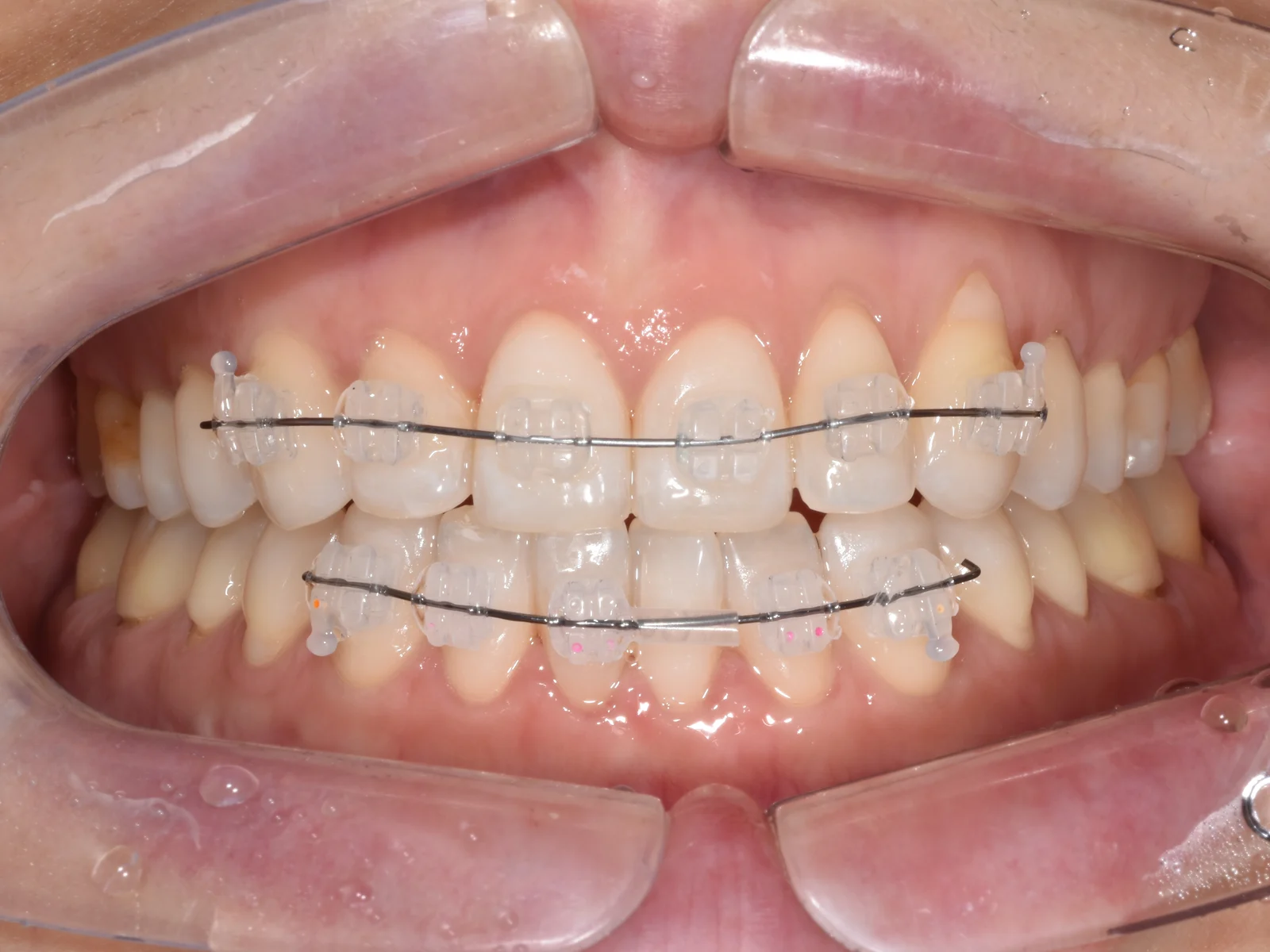
Start · Dec 2024
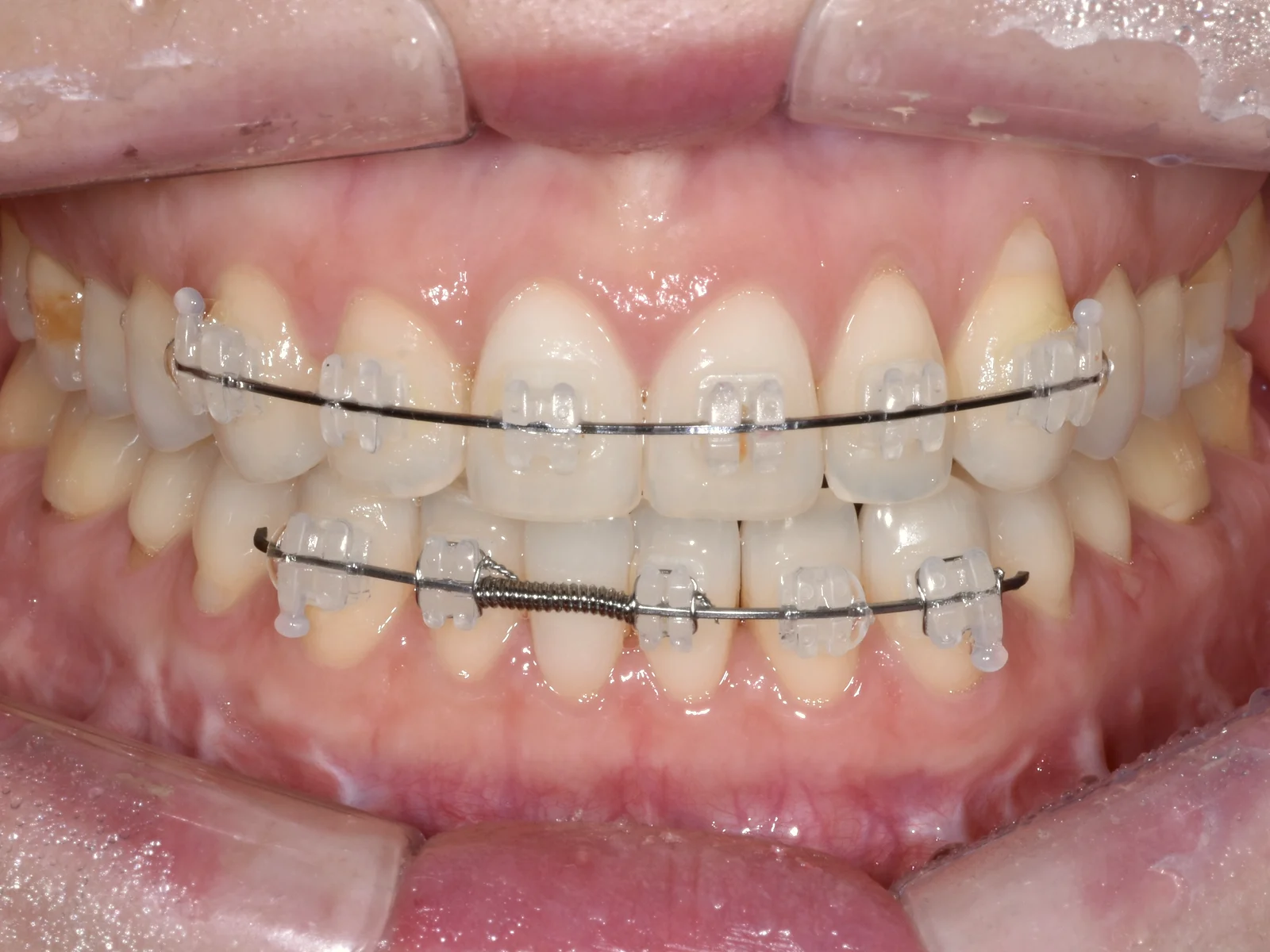
Midway · Mar 2025
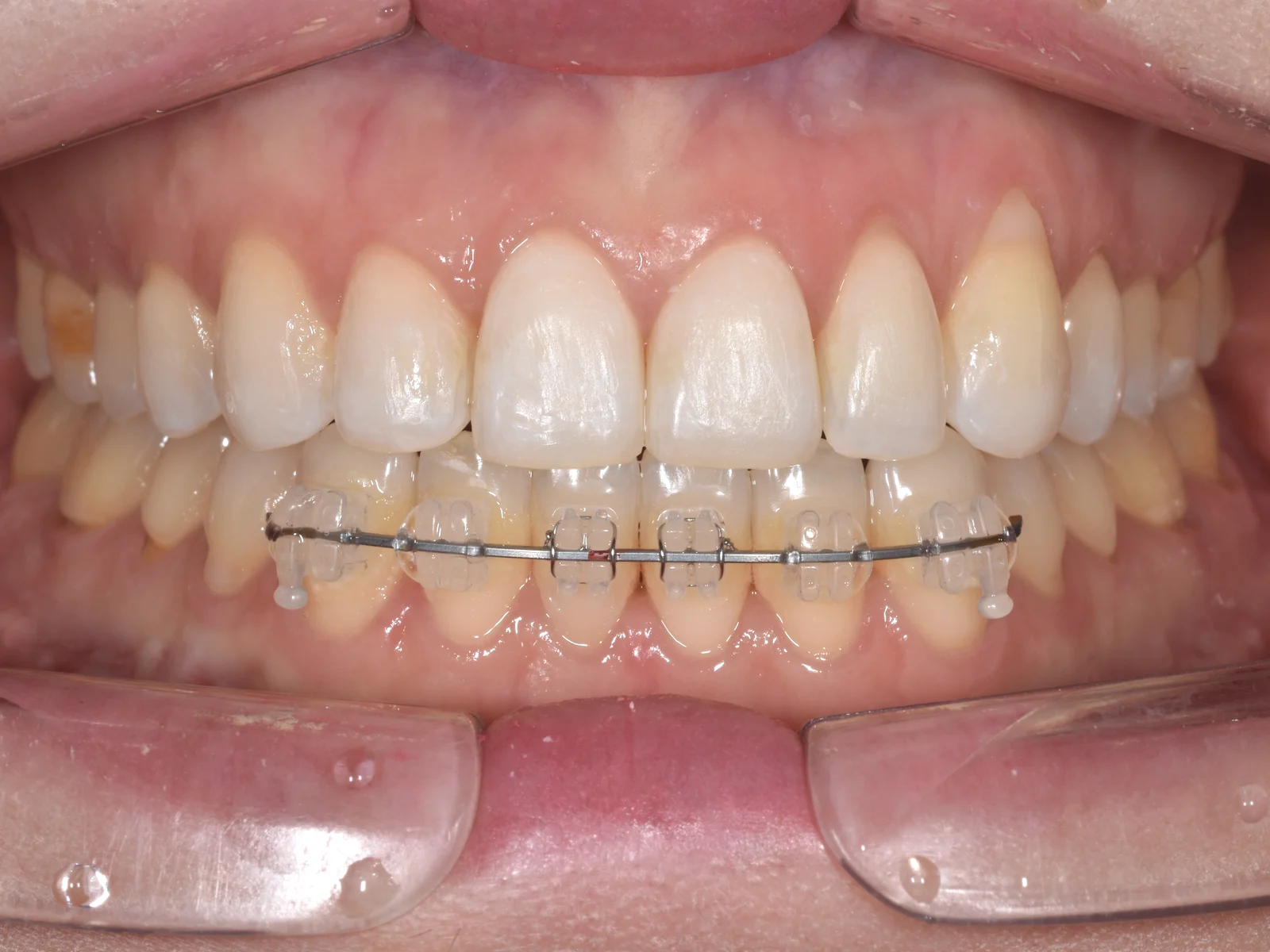
Done · Apr 2025
The same patient's front teeth lining up. Front-teeth partial braces usually finish within 4–6 months.
STEP 04
We align the teeth in 4–6 months with clear aligners or front-teeth braces
Clear aligners are worn 20 hours or more a day and switched to the next set on scheduled dates. You usually visit once every 2–3 months. With fixed braces, tooth-colored ceramic braces or lingual braces are bonded to the front teeth only and usually adjusted once a month.
Why we do thisEven if treatment is short, teeth aligned by tilting only the crowns tend to shift again. Rotated front teeth need turning force to stand in place, so when choosing appliances and order we use my research finding that the force changes depending on how the wire is tied.
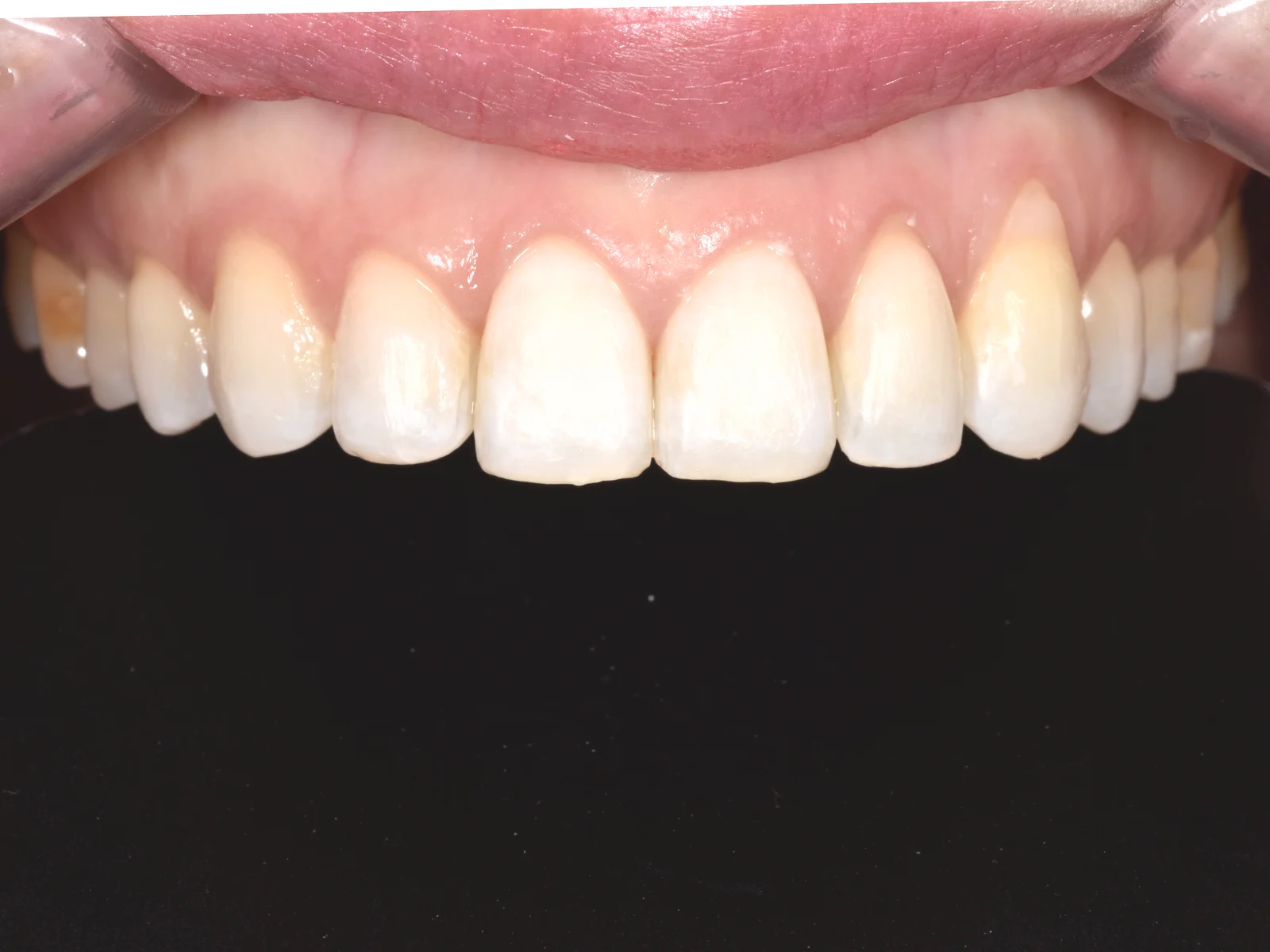
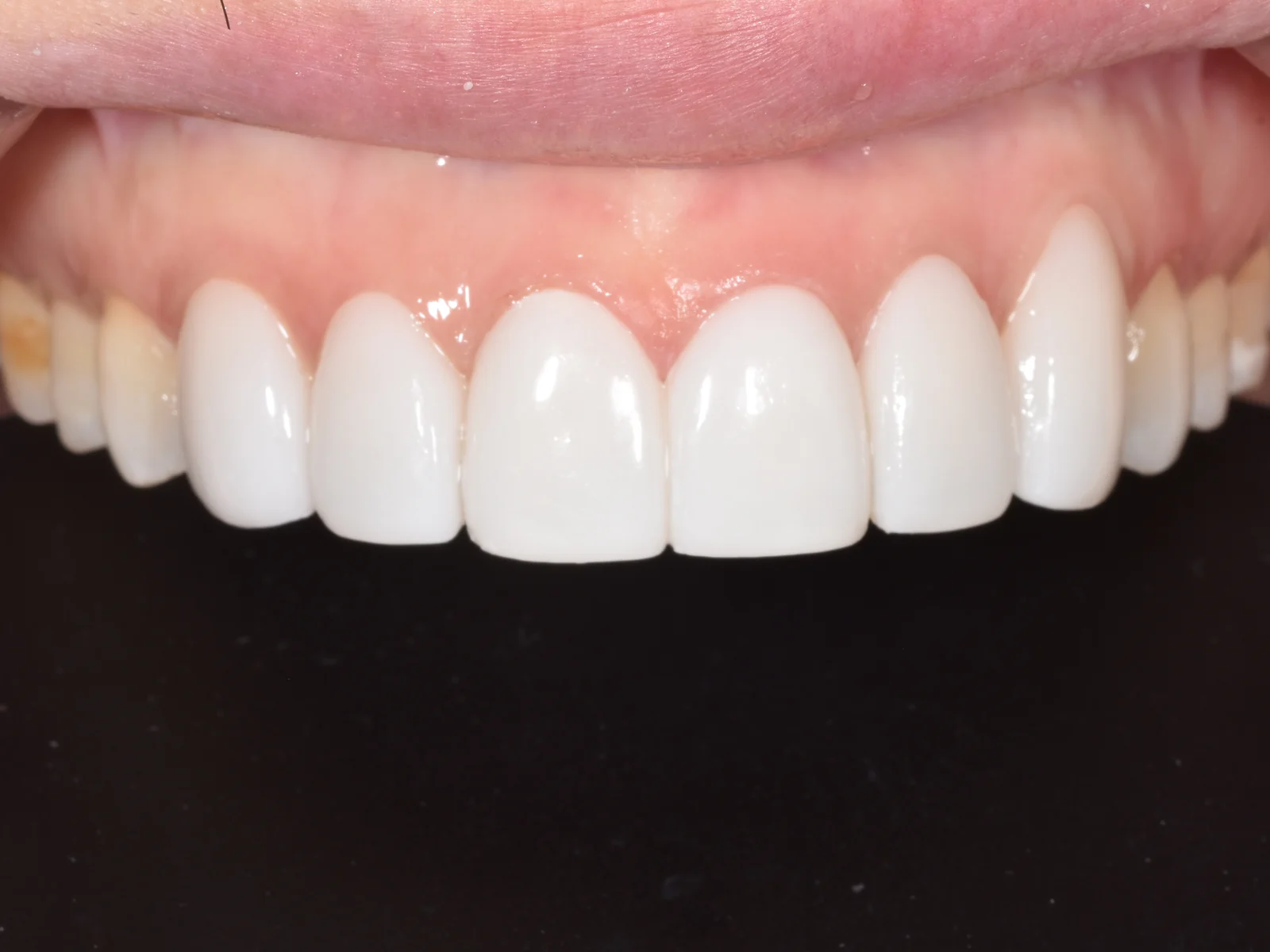
Right after partial braces · Apr 2025
After veneers · Apr 2025
Front-teeth shape and color refined with veneers after partial braces. Because the front-teeth positions were set first, less reshaping was needed.
STEP 05
If you also want to change shape and color, we continue with veneers
If you also want to change the shape or color of your front teeth, veneers are placed after partial braces are finished. After the consultation, we assign a veneer doctor, who works from the same examination records as the doctor who planned your braces.
Why we do thisCovering rotated or protruding front teeth with veneers as they are requires shaving a lot off the side that sticks out. Setting their positions first with a few months of partial braces sometimes means less reshaping, or none at all.
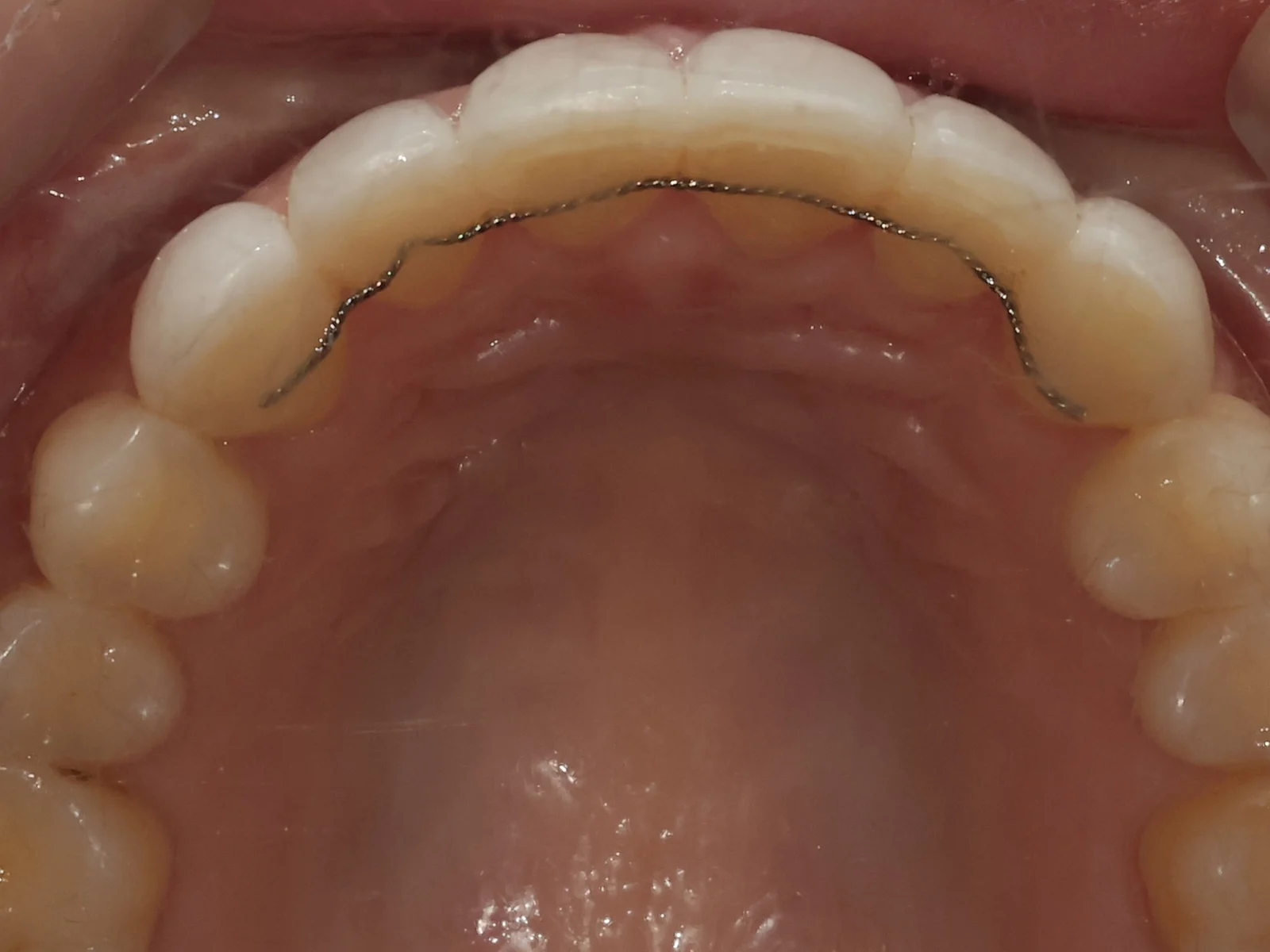
Fixed · Upper
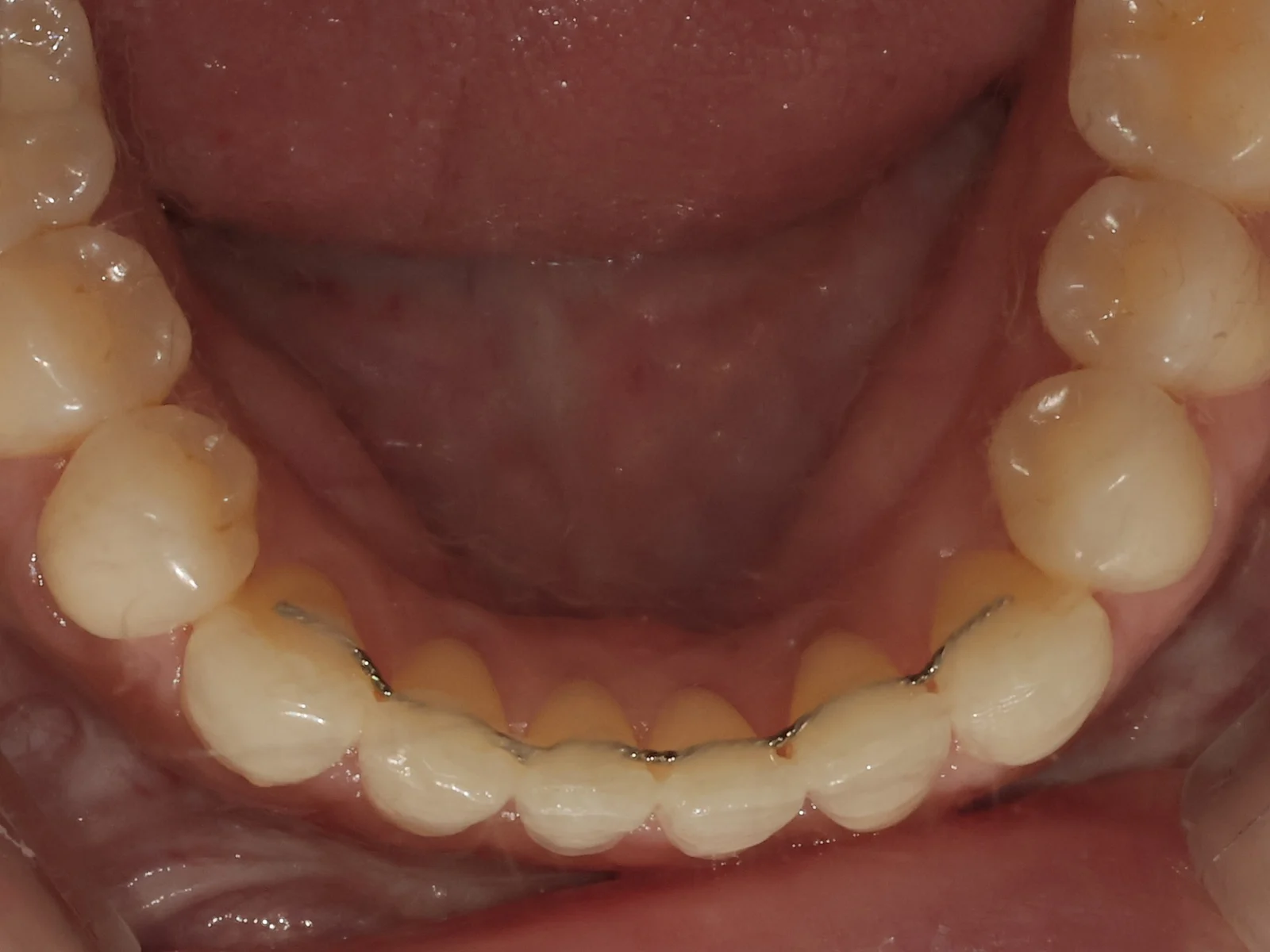
Fixed · Lower
Fixed retainers bonded behind the upper (left) and lower (right) front teeth after partial braces.
STEP 06
After treatment, retainers keep the teeth in place
When partial braces are finished, we always bond a fixed retainer behind the front teeth. For 2 years after treatment, retainer check-ups and adjustments are covered by the orthodontic fee.
Why we do thisTeeth moved in just a few months tend to return to their old positions just as much as with full braces. Previously rotated front teeth and lower front teeth in particular move easily, so you need to wear your retainer consistently.
* Clinical photos are published with the patient's consent. Some people may have side effects such as temporary pain or discomfort.
For the first few days after the appliance goes in, your front teeth may feel sore and chewing may be uncomfortable. With clear aligners, you feel tightness on the first day of each new set.
04°
When do we recommend full braces instead of partial braces?
When moving only the front teeth will not give the result you want, or the result would be hard to keep for long. In these cases, we do not start with partial braces and explain why first.
When a lot of space is missing · If you need more than the few millimeters that reshaping between teeth can give, extractions are needed.
When you want to change your lip position · If your mouth looks like it sticks out and you want to move the front teeth back a lot, the back teeth must move too.
When the upper and lower bite is the cause · A deep bite, front teeth that don't touch, or lower teeth in front cannot be fixed with the front teeth alone.
When the front-teeth midline is far off · One whole side must move for the midline to line up.
When a crowded canine sits high · To bring the canine down, the teeth behind it must move too.
If tooth size, color, or shape is the real concern, whitening, resin bonding, or veneers may suit you better than braces.
05°
Comparing treatment options
Front-teeth partial braces (ceramic or lingual)
Partial treatment with clear aligners
Full braces
Veneers only
Veneers after partial braces
Who it suits
Normal back-teeth bite with small overlaps, gaps, or rotations of the front teeth
Normal back-teeth bite with small overlaps, gaps, or rotations of the front teeth
A large space shortage requiring extractions, or the lip position or bite is the cause
Tooth position is fine; size, color, or shape is the concern
Front teeth slightly rotated, and you also want to change shape and color
How space is made
Reshaping between teeth when needed
Reshaping between teeth when needed
Extractions, widening the arch, reshaping between teeth
Not applicable
Positions are set first with partial braces
Duration
Usually 4–6 months
Usually 4–6 months
Usually 1.5–2.5 years
Usually 2–3 visits
A few months of partial braces + veneers
Visibility
Ceramic braces are tooth-colored and less visible; lingual braces are almost invisible
Hard to see unless viewed up close
Depends on the type of appliance
Not applicable
During braces, depends on the appliance
Limits
Does not change the bite or lip position; lingual braces may affect speech at first
Does not change the bite or lip position; must be worn 20 hours or more a day
Takes longer and covers a wider area
Covering rotated front teeth requires shaving a lot off the side that sticks out
For these people, another treatment comes first, or treatment is not needed
Partial braces suit you
Your back-teeth bite is normal and only 2–4 front teeth bother you
You had braces before and only your front teeth have shifted a little
You want to set your front-teeth positions before veneers
Another treatment comes first
Bleeding or receding gums: we treat the gums first
Cavities in the front teeth
A large space shortage, or the bite or lip position is the cause: we discuss full braces
Not needed for now
Tooth position is fine and color is the concern: whitening comes first
A very small shift that does not bother you
07°
Self-check (whether partial braces may work)
If all apply, partial braces are likely to work; if even one does not, we check at an examination.
08°
Side effects and limits
Please read
· Partial braces do not change the upper and lower bite or the lip position.
· Reshaping between teeth removes a little enamel. It stays within the thickness of the enamel, but you may feel temporary sensitivity.
· When overlapping front teeth are straightened, dark triangles (black triangles) may appear in the gums between the teeth.
· Straightened teeth can move again, so a retainer is needed after treatment.
· If clear aligners are not worn long enough, the teeth do not move as planned and treatment takes longer.
· Tooth roots can become shorter (root resorption). If you have had braces before, we check root length at the start in particular.
FAQ
FAQ
How many months do front-teeth partial braces take?
Front-teeth partial braces usually take 4–6 months. It can be a little shorter or longer depending on how much the teeth overlap, how far they are rotated, and how consistently you wear your clear aligners.
Can my teeth shift again after partial braces?
Teeth moved with partial braces also tend to return to their old positions, so you need a retainer. A fixed retainer is bonded behind the front teeth or a clear retainer is worn at night, and retainer check-ups and adjustments for 2 years after treatment are included in the orthodontic fee.
For partial braces, which is better: clear aligners or fixed braces?
Clear aligners are hard to see and can be taken out for brushing, but they must be worn 20 hours or more a day. With fixed braces you don't need to worry about wear time, and they are good for precisely turning rotated front teeth. We choose together based on how far your front teeth are rotated and your lifestyle.
Why do you recommend full braces instead of partial braces?
If a lot of space is missing and extractions are needed, you want to change your lip position, the upper and lower bite is the cause, the midline of the front teeth is far off, or a crowded canine sits high, moving only the front teeth will not give the result you want. In these cases, we recommend full braces so that you are not disappointed after starting with partial braces.
Can partial braces and veneers be combined?
If your front teeth are slightly rotated and you also want to change their shape and color, we can set their positions with a few months of partial braces and then place veneers. This way, compared with covering rotated teeth as they are, the teeth sometimes need less reshaping or none at all.
Can I have partial braces on my lower teeth only?
If your back-teeth bite is normal and only the lower front teeth overlap slightly, partial braces on the lower teeth only are possible. However, straightening the lower front teeth can change where they meet the upper front teeth, so we check in advance on a digital model how the upper and lower front teeth will fit together.
Is it safe to reshape between the teeth?
Reshaping between teeth removes usually about 0.5 mm per contact, within the thickness of the enamel, so it does not reach the nerve. The reshaped surfaces are smoothed, and there is no clear evidence that cavities form more easily there afterward, but you do need to keep flossing.
I had braces at another clinic before. Is partial orthodontic treatment enough?
If only your front teeth have shifted a little after previous braces, partial re-treatment is often enough. Because these teeth have already been moved once, we first check root length on a panoramic X-ray, and we also look at your previous treatment records if you have them.
Evidence and references
Kim S, et al. Influence of different ligation methods on force and moment generation in a simulated condition of the maxillary crowded anterior dentition with linguo-version and rotation. Bio-Medical Materials and Engineering, 2022. doi:10.3233/BME-211288 (Measured orthodontic force and turning force by ligation method on rotated upper front teeth)
Questions from patients who travel to Seoul for treatment.
How much does partial orthodontics cost?
Partial orthodontics for the upper or lower teeth is KRW 3,000,000. The orthodontic fee includes the orthodontic diagnosis, extraction (except wisdom teeth), mini-screws, basic retainers and retention care for 2 years. If you have only the diagnosis and do not start treatment, it is KRW 50,000 (KRW 100,000 if a CT scan is needed). If a retainer breaks or is lost later, remaking it costs extra. International and Korean patients pay the same fees. We explain the total before treatment starts. See our fee schedule.
Can I continue treatment after I go home?
Yes, but it needs a plan. Fixed braces need regular adjustment visits: the first two visits are 2 weeks apart, then usually once a month. Clear aligners are easier from abroad: after you receive your aligners, you visit once every 2–3 months, and between visits we check by photo only if something comes up. Your doctor tells you at diagnosis which method fits your case.
Can I have my consultation in English?
Yes. The doctor in charge of each field consults with you directly in English. For orthodontics, this is Dr. Sunmin Kim, a board-certified orthodontist. Before you travel, you can send photos of your teeth on WhatsApp or by email. An accurate diagnosis is made after we examine you in person.
What happens after treatment, and what if something comes off?
You need retainers after treatment, because teeth tend to move back. Retention care for 2 years is included in the orthodontic fee. If a bracket comes off or a wire hurts after you go home, send us a photo on WhatsApp. We check it and tell you what to do. Some repairs need a visit.
Results, the number of visits and schedules vary from person to person. More questions: Visiting from abroad.


 Before · Apr 2020
 After · Dec 2020
 Before · Sep 2024
 After braces · Apr 2025
 After veneers · Jun 2026
 Before · Sep 2019
 After · Aug 2020
 Normal back-teeth bite
 Space calculation
 Examination
 Planning
 Reshaping between teeth
 Start · Dec 2024
 Midway · Mar 2025
 Done · Apr 2025
 Right after partial braces · Apr 2025
 After veneers · Apr 2025
 Fixed · Upper
 Fixed · Lower