WISDOM TOOTH

Wisdom Tooth Extraction: Is It Necessary? What If It's Near the Nerve?

Dr. Ilseop AhnTreated by Dr. Ilseop Ahn (board-certified periodontist and board-certified specialist in advanced general dentistry) · Reviewed by Dr. Ilseop AhnAbout the doctor →

Last reviewed October 29, 2026 · Dr. Ilseop Ahn (board-certified periodontist and board-certified specialist in advanced general dentistry)

At a glance

Good for
Wisdom teeth that keep getting inflamed, damage the molar in front, or get in the way of orthodontics
Treatment flow
Check the distance to the nerve with X-rays and 3D CT → extraction → stitches removed after 1 week to 10 days
Duration and limits
If it has come in straight without problems, it can be monitored. If the risk of nerve injury is high, we refer you to a university hospital
Details

Not every wisdom tooth needs to be removed. It is better to remove it if the gums around it keep getting inflamed, if it causes a cavity or root damage on the molar in front, if a cyst has formed, or if it gets in the way of an orthodontic plan. If it has come in straight and is easy to clean, or is fully buried in the bone without problems, we can monitor it with regular X-rays. For wisdom teeth that are lying sideways or close to the lower jaw nerve canal, we check the distance to the nerve with a Vatech 3D CT and decide on the method. If the risk of nerve injury is high, we refer you to a university hospital. For people enrolled in Korea's National Health Insurance (NHI), extraction is covered, and stitches are usually removed after 1 week to 10 days.

01°

We used images to judge whether to remove it, how, and whether it was right to do it here

Even for the same lower wisdom tooth, the decision differed depending on how far it had come in, its angle, and the distance to the nerve canal. We show cases that were removed and a case that was not.

CASE01

A half-erupted lower wisdom tooth with gums that kept swelling

Extraction · food trapped in the gap under the covering gum caused repeated inflammation
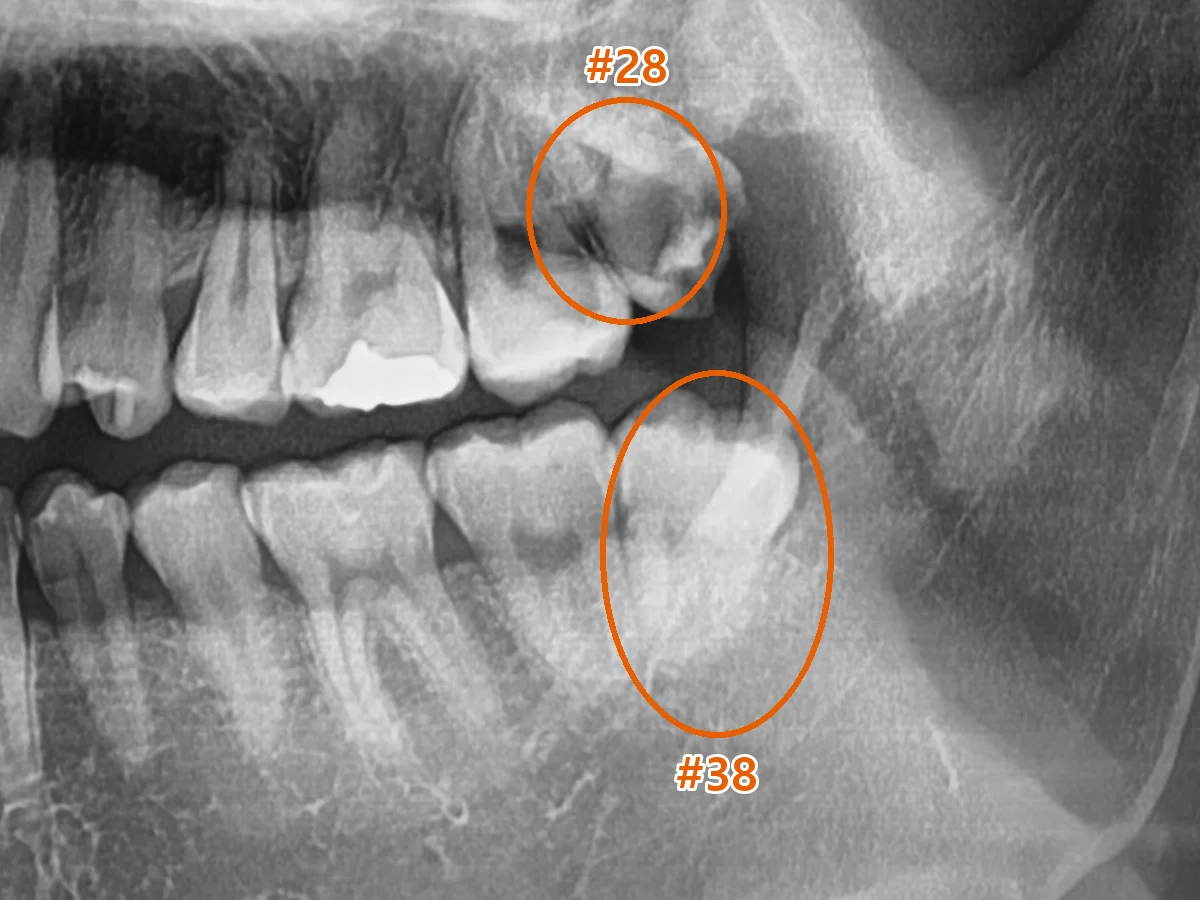
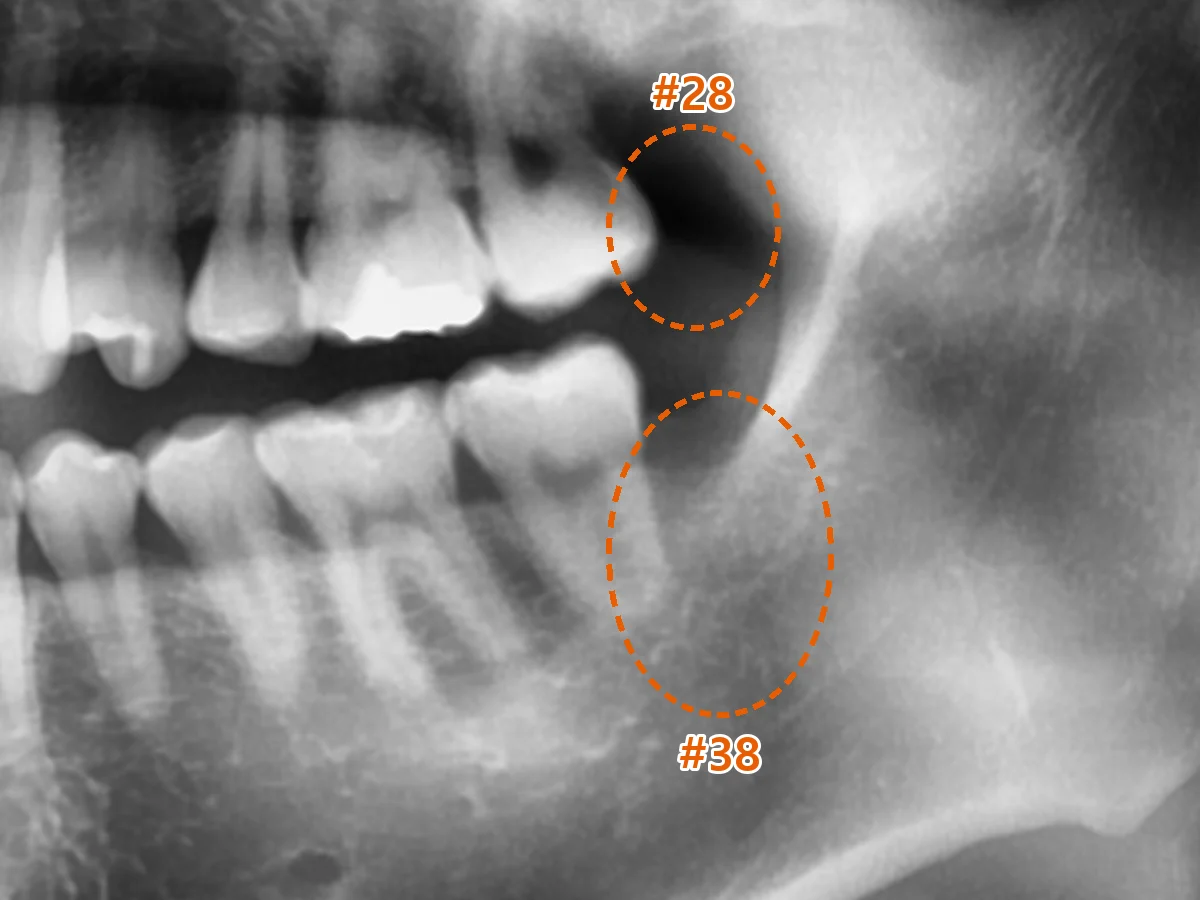
Close-up of a pre-extraction panoramic X-ray with the upper and lower left wisdom teeth circled in orangeBefore extraction · March 2026
Panoramic X-ray. The wisdom tooth had only half come in, with the back covered by gum, and the patient said food got trapped in the gap and the gums swelled several times. The orange circles are the wisdom teeth that were removed (lower #38, upper #28).
Close-up of a panoramic X-ray of the same area about 2 and a half months after extraction, with the extraction sites marked by dotted linesAbout 2 and a half months after extraction · July 2026
Healed after extraction. We chose a time when the inflammation had settled to remove it, and the back of the molar in front became easier to clean. The dotted lines mark the extraction sites.
Condition
Half-erupted lower wisdom tooth, repeated inflammation of the surrounding gums
Chosen
Extraction after first settling the inflammation
Not done
3D CT (it looked far enough from the nerve canal on the panoramic X-ray)
Duration
1 extraction visit, 1 stitch-removal visit
Note
For 2–3 days after the extraction, there could be swelling and pain. Swelling and pain usually settle within 1 week, and the gums at the extraction site heal after 2–3 weeks.
CASE02

An impacted wisdom tooth lying toward the molar in front and causing a cavity

Sectioned extraction + treatment of the molar in front · the wisdom tooth pushed against the back of the molar in front and caused a cavity

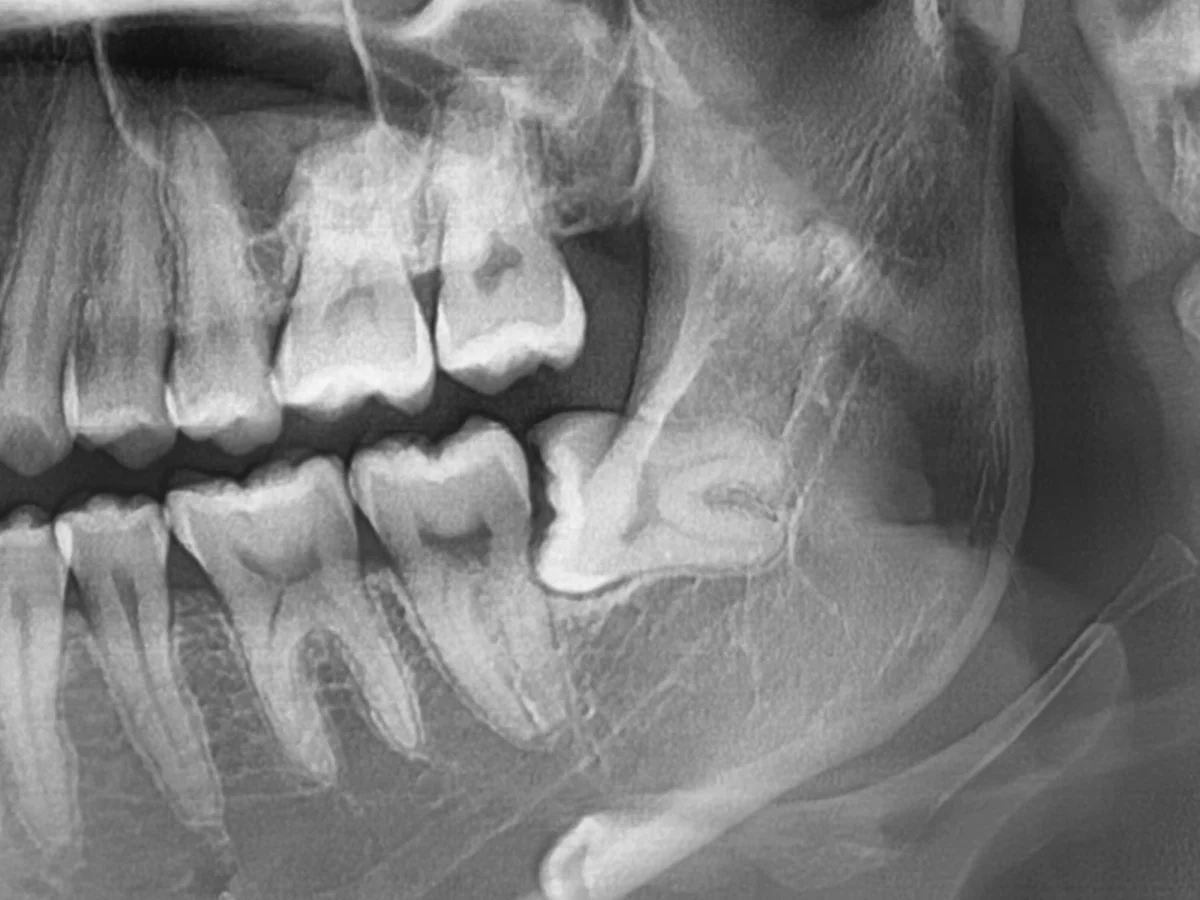
Close-up of a panoramic X-ray showing the lower left wisdom tooth lying toward the molar in frontBefore extraction · August 2026
X-ray. The wisdom tooth was lying toward the molar in front, touching its back surface, and a cavity shadow was visible where they touched.
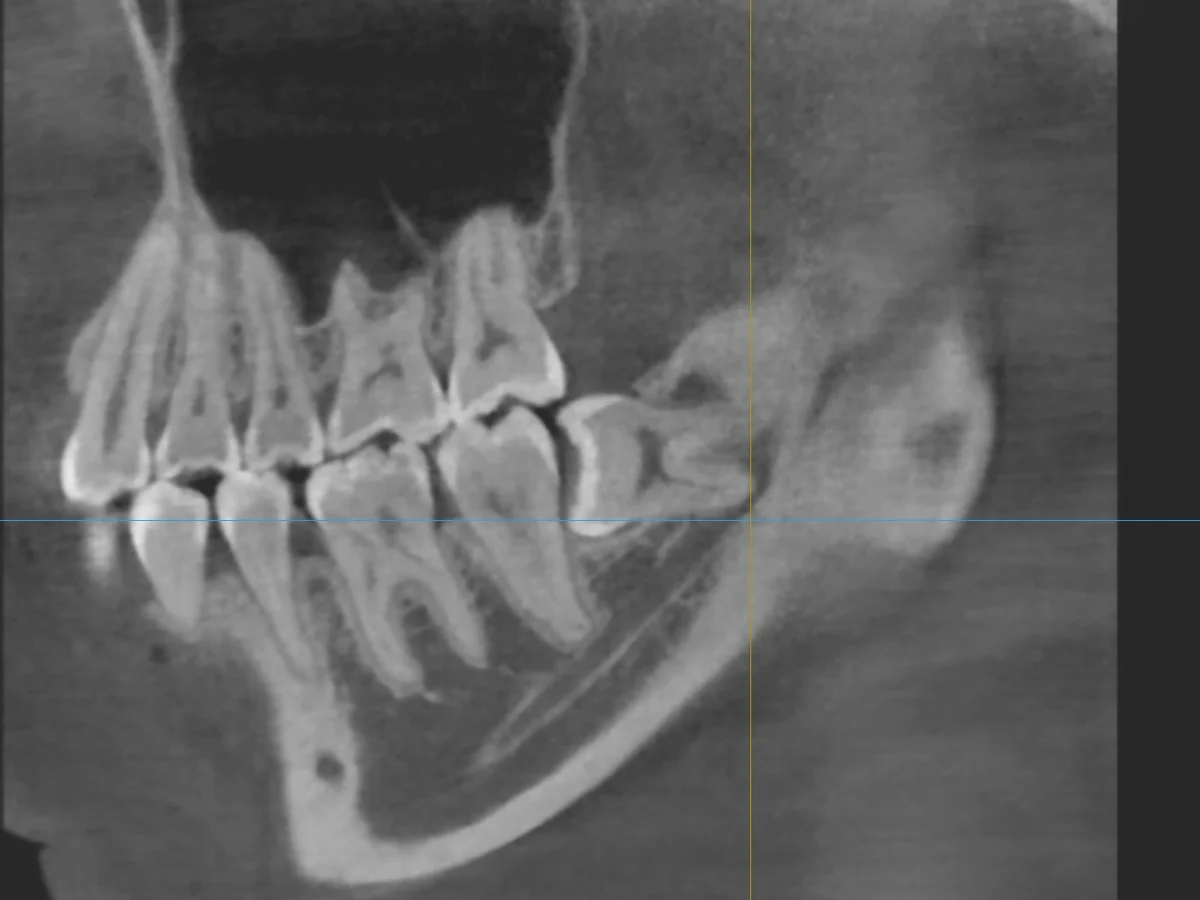
3D CT sagittal section showing the nerve canal running right under the lying lower wisdom tooth3D CT section
3D CT section. The lower jaw nerve canal ran right under the lying wisdom tooth, almost touching it. We decided to remove the wisdom tooth in sections so that no force would go toward the nerve.
Condition
Lying impacted wisdom tooth, cavity on the back of the molar in front, occasional pain
Chosen
Opening the gum and removing the wisdom tooth in sections, then treating the cavity on the molar in front
Not done
Leaving it as it is (the cavity on the molar in front could keep growing)
Duration
1 extraction visit, 1 stitch-removal visit, 1–2 visits for the cavity on the molar in front
Note
The bone behind the molar in front takes time to recover, so we check again with an X-ray a few months later.

CASE03

A wisdom tooth overlapping the nerve canal but with no problems

Monitoring · fully buried in the bone with no problems around it, so not removed

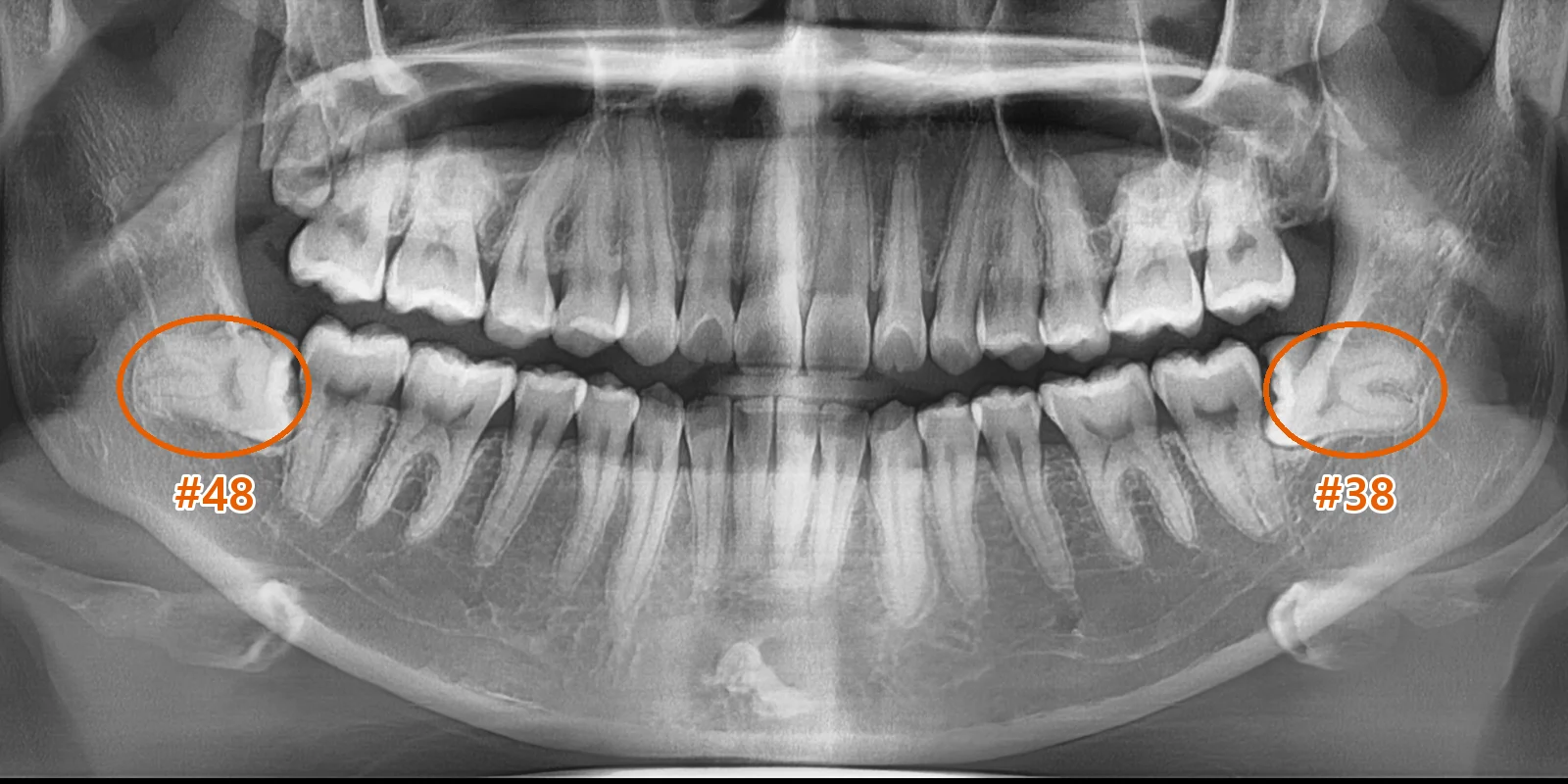
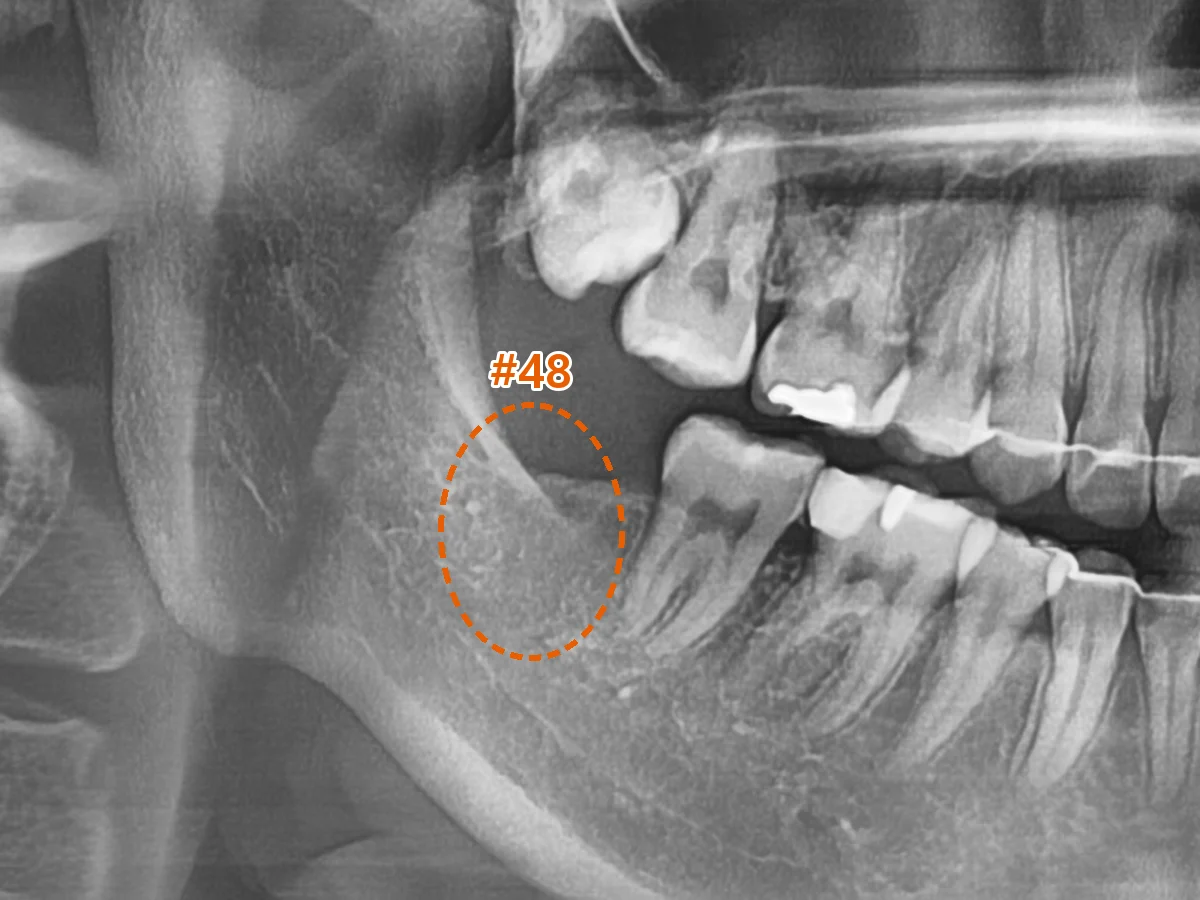
Panoramic X-ray with both lower wisdom teeth circled in orangePanoramic X-ray · August 2026
Panoramic X-ray. This is the same patient as Case 2. The roots of both lower wisdom teeth (#38 and #48, orange circles) appeared to overlap the shadow of the lower jaw nerve canal, so we checked the actual distance with a 3D CT. The lower left (#38) was removed as in Case 2 because of the cavity on the molar in front, and the lower right (#48) had no problems around it, so we decided to monitor it.
Condition
Fully impacted, touching the nerve canal, no symptoms or problems around it
Chosen
Monitoring with regular X-rays without removal
Not done
Preventive extraction (the risk of nerve injury outweighed the benefit)
Duration
Checked at regular check-ups
Note
If inflammation or a cyst develops later, we will discuss it again then, including referral to a university hospital.

* Photos were taken under the same conditions and published with the patients' consent. Treatment results and side effects may vary from person to person.

02°

Wisdom teeth better removed, and wisdom teeth that can be monitored

Better removed

  • The gums around the wisdom tooth keep getting inflamed
  • A cavity or root damage has formed on the back of the molar in front
  • A cyst has formed around the wisdom tooth
  • Half-erupted, trapping food and hard to clean
  • Needed for the orthodontic plan (decided together with Dr. Sunmin Kim)

Another facility may be better

  • If the CT shows a high chance of damaging the nerve canal wall during extraction, we do not push it and refer you to a university hospital.
  • If you take blood thinners, we consult your prescribing doctor first

No need to remove it now

  • A wisdom tooth that has fully come in straight, is used for chewing, and is easy to clean
  • A wisdom tooth fully buried in the bone with no symptoms and no problems around it: we check it with regular X-rays

The UK National Institute for Health and Care Excellence (NICE) guidance on wisdom tooth extraction also recommends not removing problem-free impacted wisdom teeth routinely as prevention, but removing them when there are problems such as inflammation or cavities.

03°

How difficult a wisdom tooth is to remove depends on its angle and its distance to the nerve

01Fully erupted wisdom tooth

It has come in fully above the gums like other molars. If it needs to be removed, it can usually be taken out without opening the gum.

02Wisdom tooth partly covered by gum

Only part has come in, and the back is covered by gum. Food gets trapped in the covered gap, so inflammation develops easily.

03Impacted wisdom tooth lying in the bone

It is lying toward the molar in front or sideways and buried in the bone. We open the gum and remove the wisdom tooth in two or three pieces.

04Wisdom tooth close to the nerve canal

The roots of a lower wisdom tooth touch or overlap the lower jaw nerve canal. We look at the actual distance with a 3D CT and decide on the method and place.

For upper wisdom teeth, we check whether they are close to the air space beside the nose (maxillary sinus).

04°

How wisdom tooth extraction works

There are seven steps, from checking to the follow-up after healing. The photos show actual examination screens, and some are explanatory illustrations.

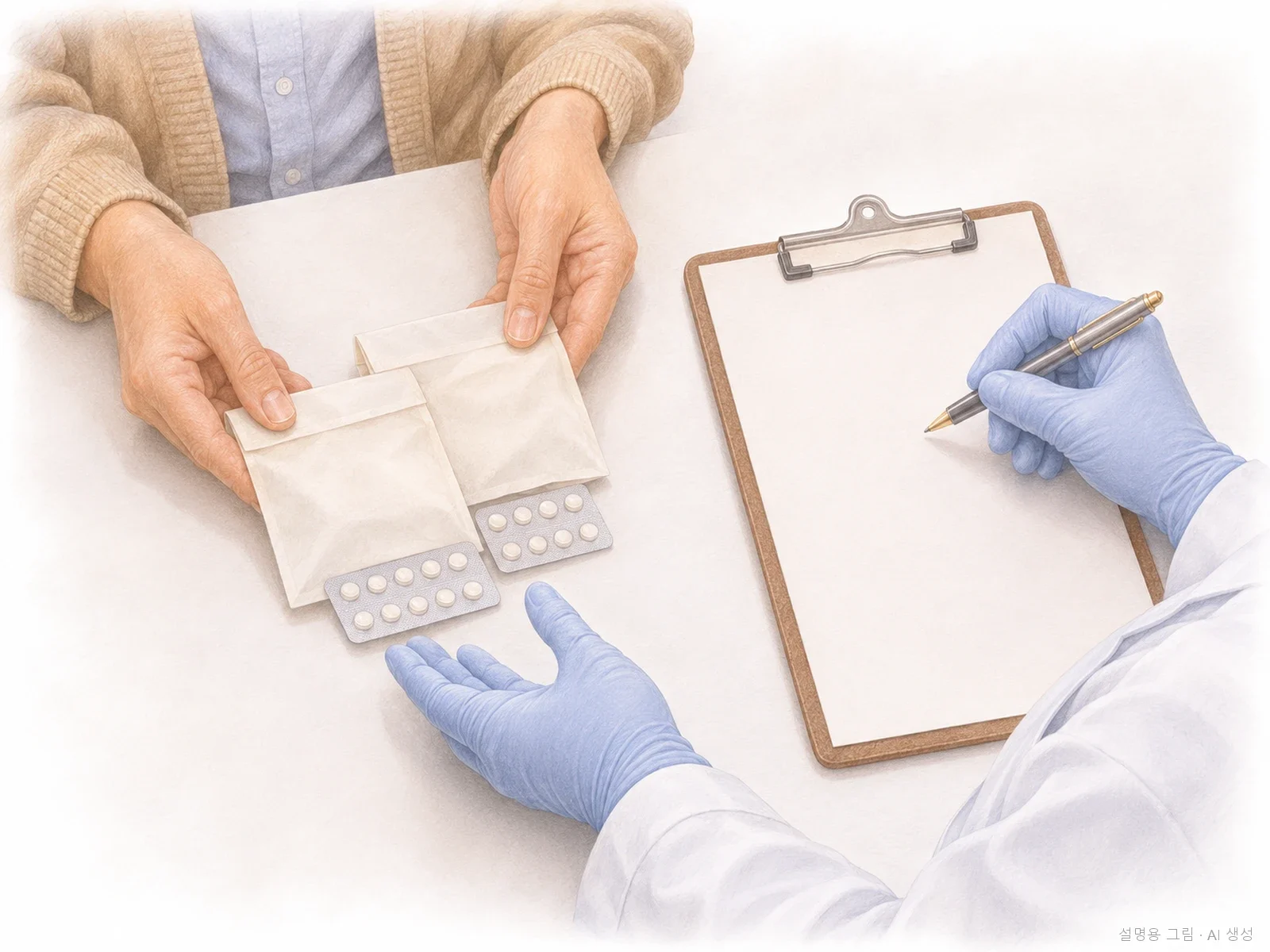
Illustration of checking the medications you take with a health questionnaire and medicine bags laid outCheck
Checking medications and medical history. We first ask about your general health, such as blood thinners, osteoporosis medication, and diabetes.

STEP 01

We first check your symptoms and medications

We look at when the swelling or pain started and whether there is inflammation now. We ask about blood thinners, osteoporosis medication, diabetes, and pregnancy, and if needed, consult your prescribing doctor first.

Why we do thisBlood thinners make bleeding harder to stop, and some osteoporosis medications can slow bone healing. These change the extraction date and method.
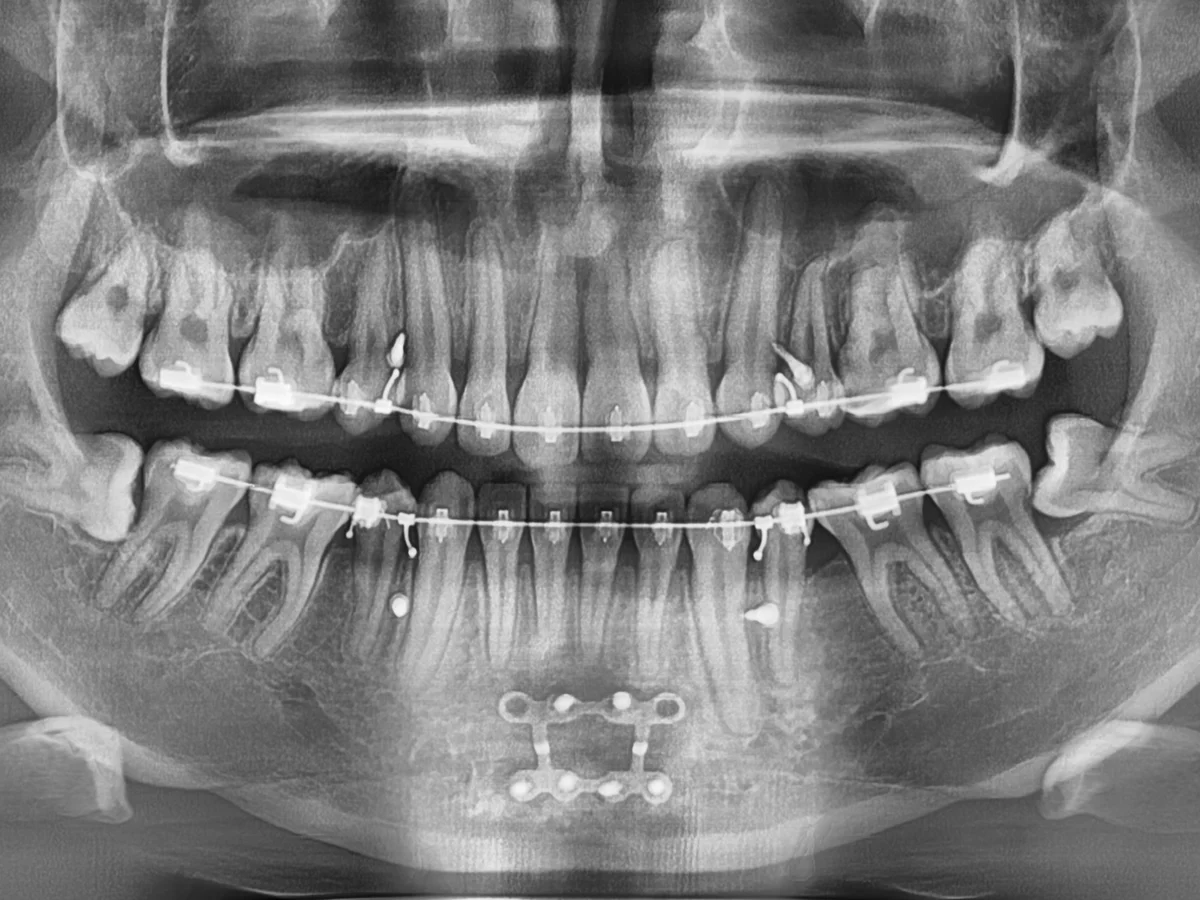
Digital panoramic X-ray showing four upper and lower wisdom teethPanoramic X-ray
Digital panoramic X-ray. We see the position, angle, root shape, and relationship to the nerve canal shadow of all four wisdom teeth at once.

STEP 02

We check the position and angle with a panoramic X-ray

With a digital panoramic X-ray, we see how far the wisdom tooth has come in, which way it is lying, how many roots it has and whether they curve, and whether it has caused a cavity on the molar in front. If the roots appear to overlap the nerve canal shadow, we take a 3D CT.

Why we do thisA panoramic X-ray spreads a 3D structure onto one flat image, so things that appear to overlap may actually be apart. We check the actual distance with CT only when they appear to overlap.
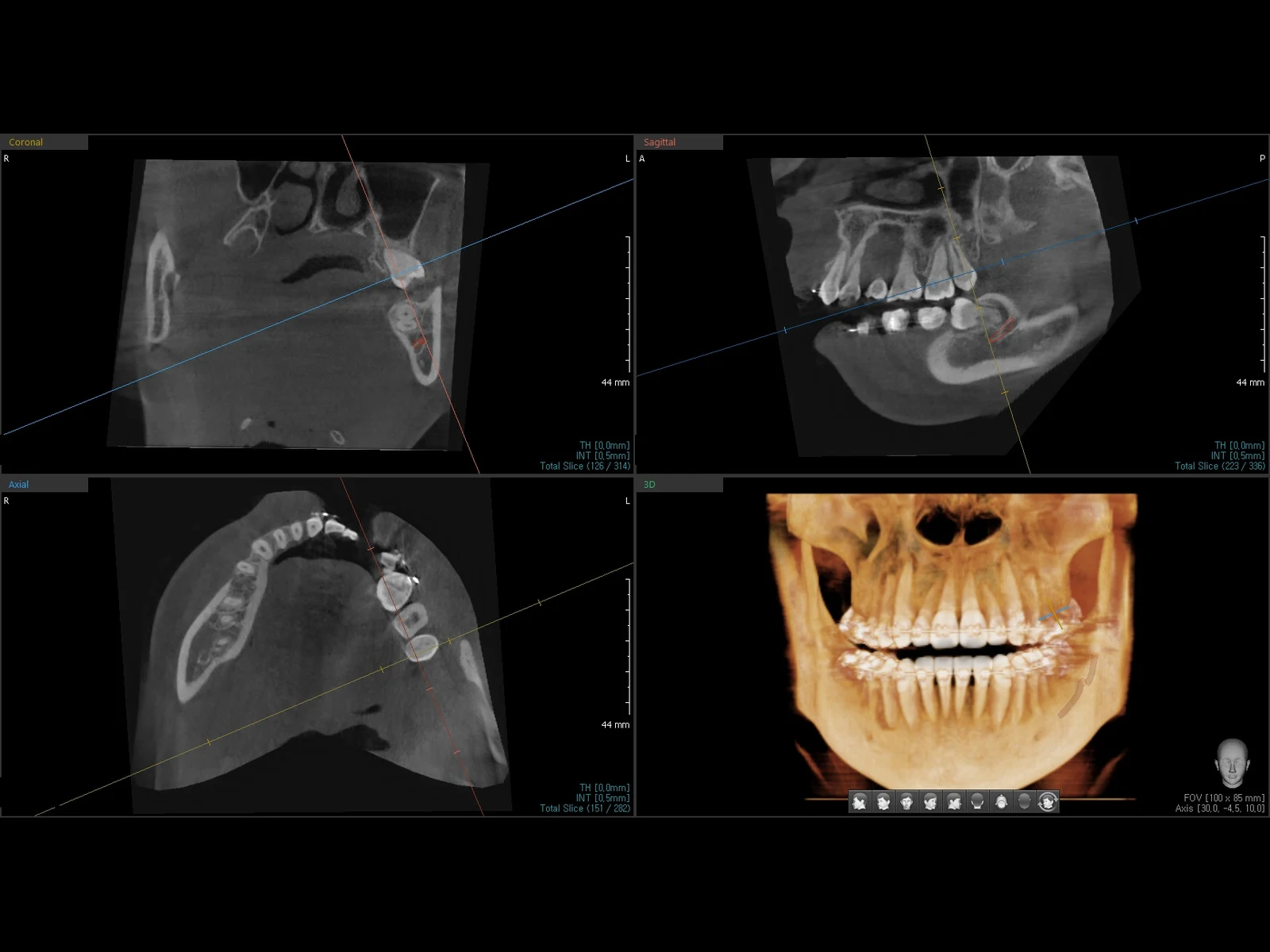
3D CT four-view screen of a lying lower left wisdom tooth with the nerve canal marked by a red line3D CT
3D CT section. We measure the distance between the wisdom tooth roots and the lower jaw nerve canal in several sections and see on which side of the roots the nerve canal runs. The red line is the lower jaw nerve canal.

STEP 03

If needed, we measure the distance to the nerve with a 3D CT

With a Vatech 3D CT, we check whether bone remains between the lower wisdom tooth roots and the nerve canal, and whether the nerve canal runs on the outer side, the inner side, or between the roots. For upper wisdom teeth, we check the distance to the floor of the maxillary sinus.

Why we do thisWe check the distance with CT not to eliminate the risk, but to know it in advance and choose the method. Depending on the distance, the extraction direction, where to section the tooth, and whether to do it here or at a university hospital change.
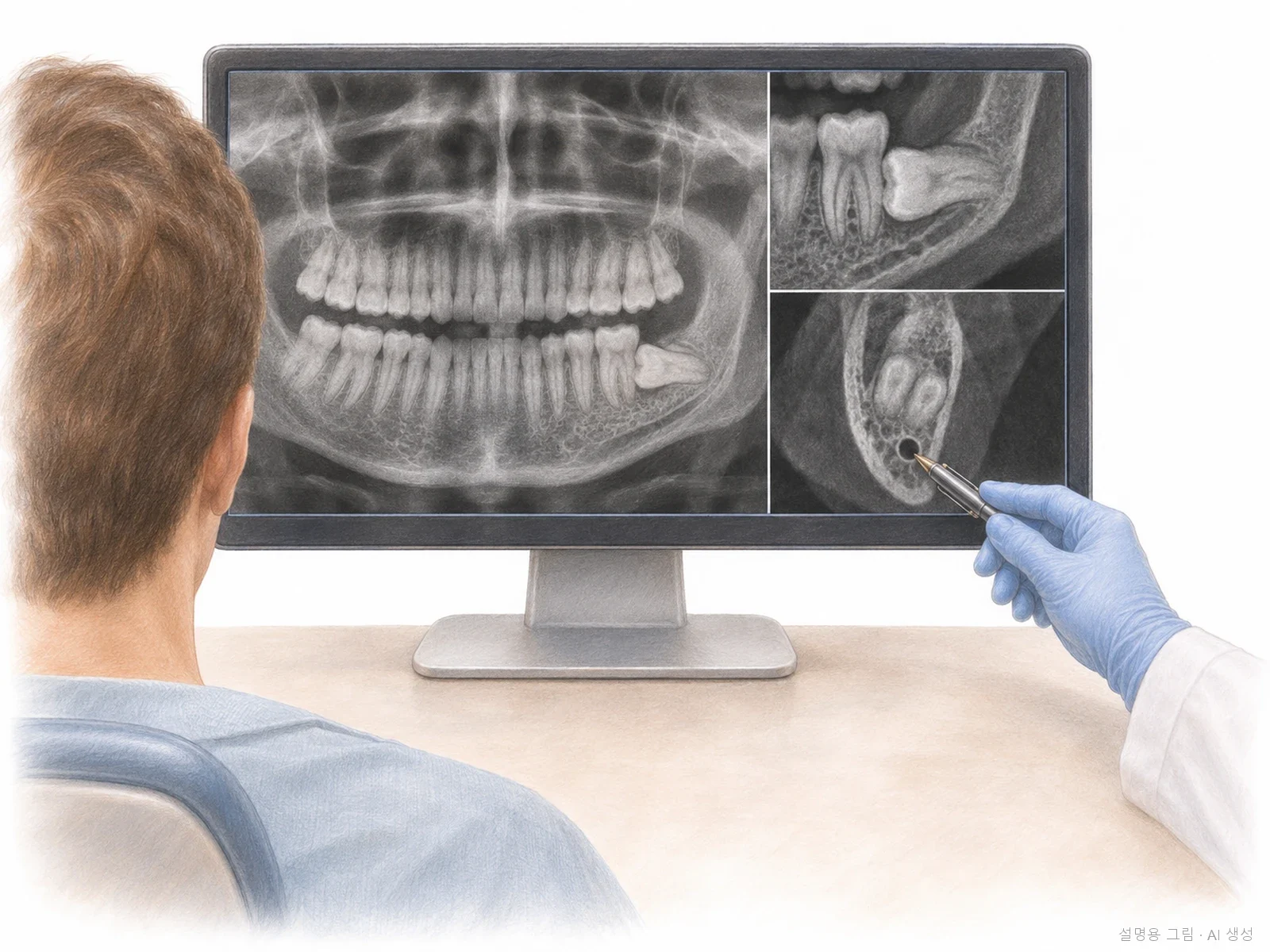
Illustration of explaining the nerve canal position by pointing at a panoramic X-ray and CT sections on a monitorExplanation and decision
Explaining while looking at the exam images. We tell you whether to remove it, which method, how long it will take, and what risks there are.

STEP 04

We decide together whether to remove it, how, and where

We explain whether removal is better or monitoring is fine, and if removing, the expected time, swelling, and nerve- and sinus-related risks. If we judge the risk to be high, we refer you to a university hospital. Usually we remove one side at a time, taking the upper and lower wisdom teeth on that side together. We also decide the scope of extraction at this point.

Why we do thisIn wisdom tooth extraction, the decision matters more than the extraction itself. Removing a wisdom tooth that did not need to be removed only adds risk. Postponing one that needs to be removed can cost you the molar in front as well.
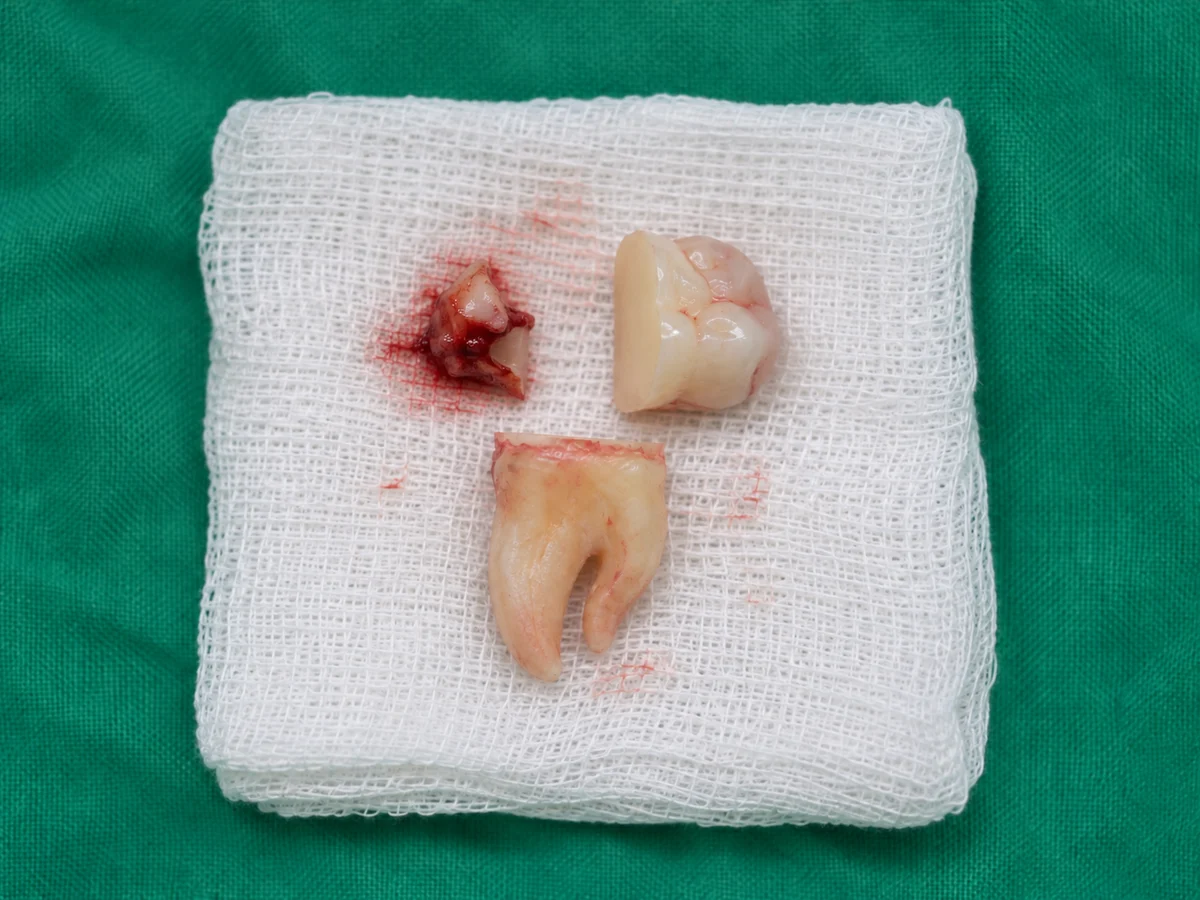
Illustration of an impacted wisdom tooth removed in three pieces, placed on gauzeExtraction
An impacted wisdom tooth removed in sections. To remove less bone, we divide the wisdom tooth into two or three pieces and take them out one by one.

STEP 05

After anesthesia, we remove the wisdom tooth in sections if needed

After sufficient anesthesia, a fully erupted wisdom tooth is removed as it is. For an impacted wisdom tooth, we open the gum, divide the tooth into two or three pieces, and take them out one by one in the direction away from the nerve canal. The extraction time depends on difficulty and is usually about 10–30 minutes including anesthesia.

Why we do thisTaking it out in one piece requires removing a lot of the surrounding bone, which increases swelling and pressure toward the nerve. Taking it out in sections removes less bone and puts less force toward the nerve.
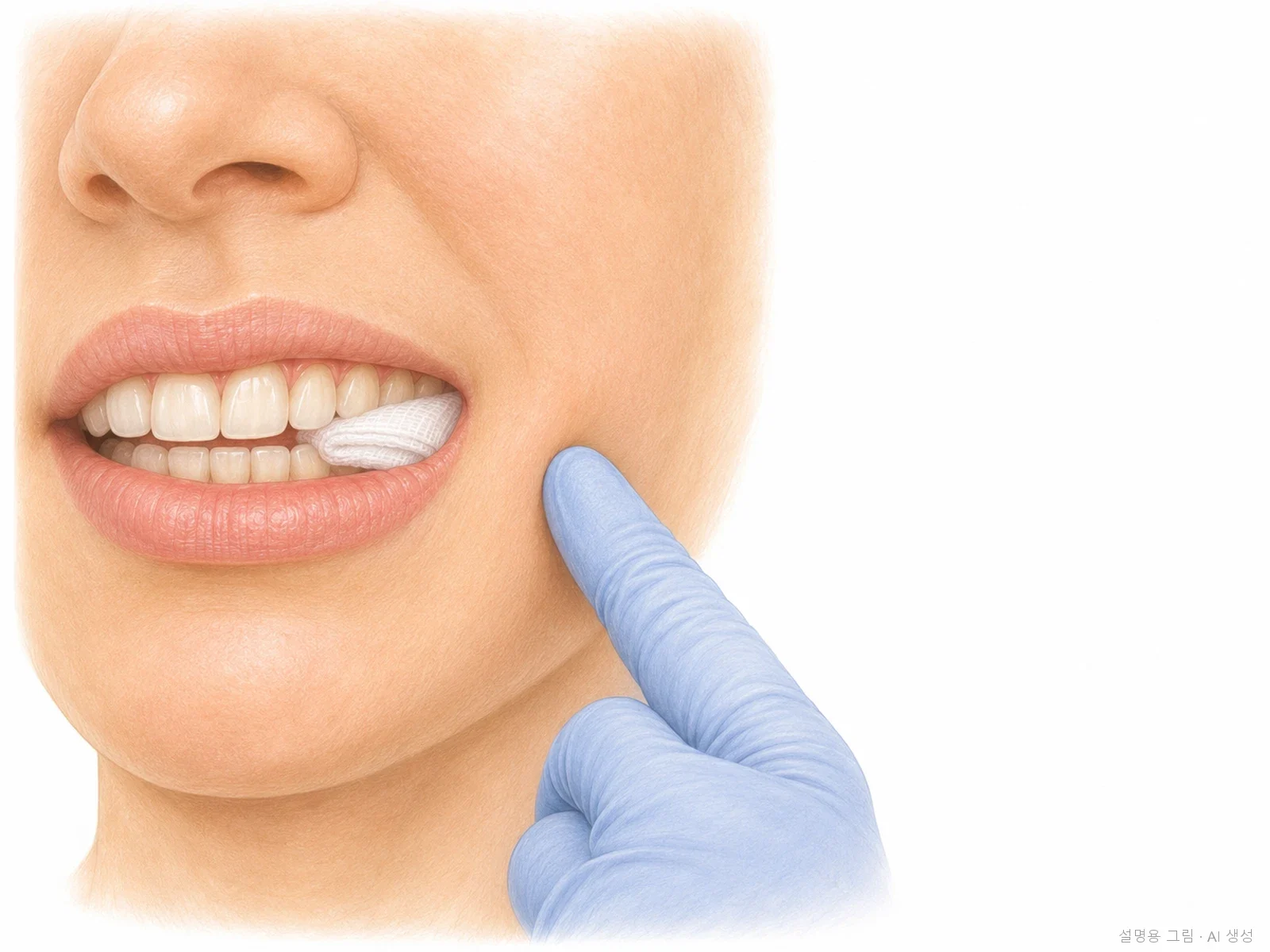
Illustration of the mouth area biting on gauze after extractionStitches and instructions
Biting on gauze after extraction. After stitching the gum, we have you bite on gauze and also give you the instructions on paper.

STEP 06

We stitch the area and tell you what to do at home

We stitch the gum and have you bite on gauze. Stitches are usually removed after 1 week to 10 days. Following the instructions below can reduce swelling and the risk of dry socket.

  • Keep biting firmly on the gauze for about 30 minutes to 1 hour.
  • Swallow saliva and blood instead of spitting. Avoid straws, smoking, and alcohol for a few days.
  • On the first day, apply a cold compress to the outside of your cheek. Swelling is usually worst on day 2–3.
  • Take the prescribed medication and chew on the other side.
Why we do thisThe blood clot that forms in the extraction site covers the bone and helps it heal. Spitting hard or sucking through a straw can dislodge the clot and expose the bone, causing a dry socket.
Close-up of a panoramic X-ray about 6 months after extracting the lower right wisdom tooth, with the extraction site marked by a dotted lineAbout 6 months after extraction · September 2026
Check after healing. We check whether the extraction site has healed well and the condition of the bone and any cavity behind the molar in front. The dotted line marks the site where #48 was removed.

STEP 07

We remove the stitches and also check the molar in front

When removing the stitches, we check how it is healing and whether there is any unusual sensation. If the wisdom tooth caused a cavity on the molar in front, we continue that treatment at this time.

Why we do thisIf a sideways wisdom tooth has pressed against the molar in front for a long time, the back of that molar and the bone behind it may be damaged. Ultimately, removing the wisdom tooth is intended to protect the molar in front.

* Clinical photos were published with the patients' consent. Side effects such as temporary pain or discomfort may occur depending on the person.

05°

Contact us right away in these cases

  • Bleeding does not stop even after biting on gauze again
  • After 3–4 days, the pain gets worse instead or spreads toward the ear (possible dry socket)
  • Unusual sensation in the lips, chin, or tongue continues
  • Fever or pus, or your mouth gradually opens less

06°

Risks and limits

Please read

· Swelling, pain, and bruising may occur, and your mouth may open less for a few days.

· If the blood clot comes out of the extraction site, the bone can be exposed, causing a painful dry socket.

· After lower wisdom tooth extraction, altered sensation in the lips, chin, or tongue may occur. Normal sensation usually returns over time, but rarely the change may last a long time or persist.

· With upper wisdom teeth, an opening into the maxillary sinus may form.

· The molar in front may be sensitive for a while after the extraction.

· Even after checking the distance with CT, the risk does not drop to 0. The purpose is to know the risk in advance and choose the method.

07°

If you are in or planning orthodontic treatment

Whether to remove wisdom teeth before or during orthodontic treatment depends on the orthodontic plan. If the plan requires moving the molars back, space where the wisdom teeth are is needed, so they are sometimes removed first; if the wisdom teeth are not causing problems, they may be left. That is why, for orthodontic patients, we decide together with Dr. Sunmin Kim, a board-certified orthodontist. At the orthodontic diagnosis, we look at the position and direction of the wisdom teeth with a panoramic X-ray and, if needed, a CT before deciding.

FAQ

FAQ

Do I need to remove a wisdom tooth that does not hurt?
A wisdom tooth that does not hurt and has no problems around it, such as a cavity, inflammation, or a cyst, can be monitored with regular X-rays. However, even if it does not hurt, if it is causing a cavity on the back of the molar in front, it is better to remove it.
Read more about this question →
Does removing an impacted wisdom tooth hurt a lot?
Even impacted wisdom teeth are removed under sufficient local anesthesia, so pain during the extraction is usually not severe. For 2–3 days after the extraction, there may be swelling and pain; taking the prescribed medication and using a cold compress can help.
Read more about this question →
I was told my wisdom tooth is close to the nerve. Is that a problem?
If it overlaps with the nerve canal on the panoramic X-ray, we check the actual distance and where the nerve canal runs with a 3D CT. If the risk is high, we change the extraction method, monitor it without removing it, or refer you to a university hospital.
Can I have wisdom teeth on both sides removed at once?
If both sides are removed at once, you have no side to chew on for a few days, so we usually remove one side at a time. Whether to remove the upper and lower teeth on the same side at once is decided based on difficulty and recovery.
Can I have a wisdom tooth removed during pregnancy?
During pregnancy, the general rule is to postpone it until after delivery unless it is urgent. If the inflammation is severe and treatment is necessary, we decide the timing and medication after consulting your obstetrician.
Do I have to remove my wisdom teeth before orthodontic treatment?
It depends on the orthodontic plan. If the molars need to be moved back, we sometimes remove them first; otherwise we may leave them. We decide together with our board-certified orthodontist.
When are wisdom tooth stitches removed?
After a wisdom tooth extraction, stitches are usually removed after 1 week to 10 days. At that time, we also check how it is healing and whether there is any unusual sensation.
Is wisdom tooth extraction covered by health insurance?
For people enrolled in Korea's National Health Insurance (NHI), wisdom tooth extraction, including impacted wisdom teeth, is covered. The cost varies with difficulty and tests, so please check the treatment cost guide and our explanation after the exam.

Evidence and references

COSTAll costs are gathered on one page, the treatment cost guideSee cavity and root canal treatment costs →

ABROAD

Living in Korea

Questions from international patients who live in Korea.

Can I use Korean National Health Insurance?
If you are enrolled in Korea's National Health Insurance, insured treatments are billed under the same insurance rules as for other enrollees. Whether a treatment is covered depends on the treatment and the insurance rules, and we tell you before treatment starts. If you are not enrolled, you pay the full fee.
Can I be seen in English?
Yes. The doctor in charge of each field consults with you directly in English, so you do not need an interpreter.
How do I book an appointment?
Message us on WhatsApp. You can also send us an email or call +82-2-517-0002.
I am in Korea only for a short trip. Can I have this treatment?
It depends on how many visits the treatment needs. Wisdom tooth removal is one visit, and the stitches are usually removed 1 week to 10 days later. Tell us your travel dates when you contact us, and we will tell you after the examination whether the schedule is realistic.

Results, the number of visits and schedules vary from person to person. More questions: Visiting from abroad.

MORE

Related pages

Treatment results and side effects may vary from person to person.

If you have a panoramic X-ray, you are welcome to send it to us first

TOP
Request a ConsultationView