Last reviewed October 29, 2026 · Dr. Ilseop Ahn (board-certified periodontist and board-certified specialist in advanced general dentistry)
At a glance
Good for
The neck of a tooth (near the gums) is worn into a wedge shape and sensitive
Treatment flow
Find the cause (brushing, biting force, gums) → if shallow, correct brushing and monitor → if deep or sensitive, fill with resin
Duration and limits
If the gums have also receded, we consider a gum graft. If the cause is left as it is, the wear can come back
Details
When the neck of a tooth (near the gums) wears into a wedge or saucer shape and becomes sensitive, it is called cervical wear (a cervical lesion). Unlike a cavity, it is caused by wear. It often comes from two or three causes together: hard side-to-side brushing, the force of clenching, roots exposed by receding gums, and acidic foods. If it is shallow and not sensitive, we change your brushing and monitor it. If it is deep or sensitive, we fill it with resin, and if the gums have also receded, we consider a gum graft. Before filling, our board-certified periodontist measures your gums and we check your bite and brushing to find out first why the wear happened.
01°
The worn shapes looked similar, but the causes differed, so the treatments differed
When brushing was the cause, we worked on brushing; when clenching was also present, on the force; when the gums had receded, on the gums too. This is because if the cause is left as it is, the filling can come off again.
CASE01
Canine and premolars worn side by side on one side
Brushing correction + resin · hard side-to-side brushing was the main cause
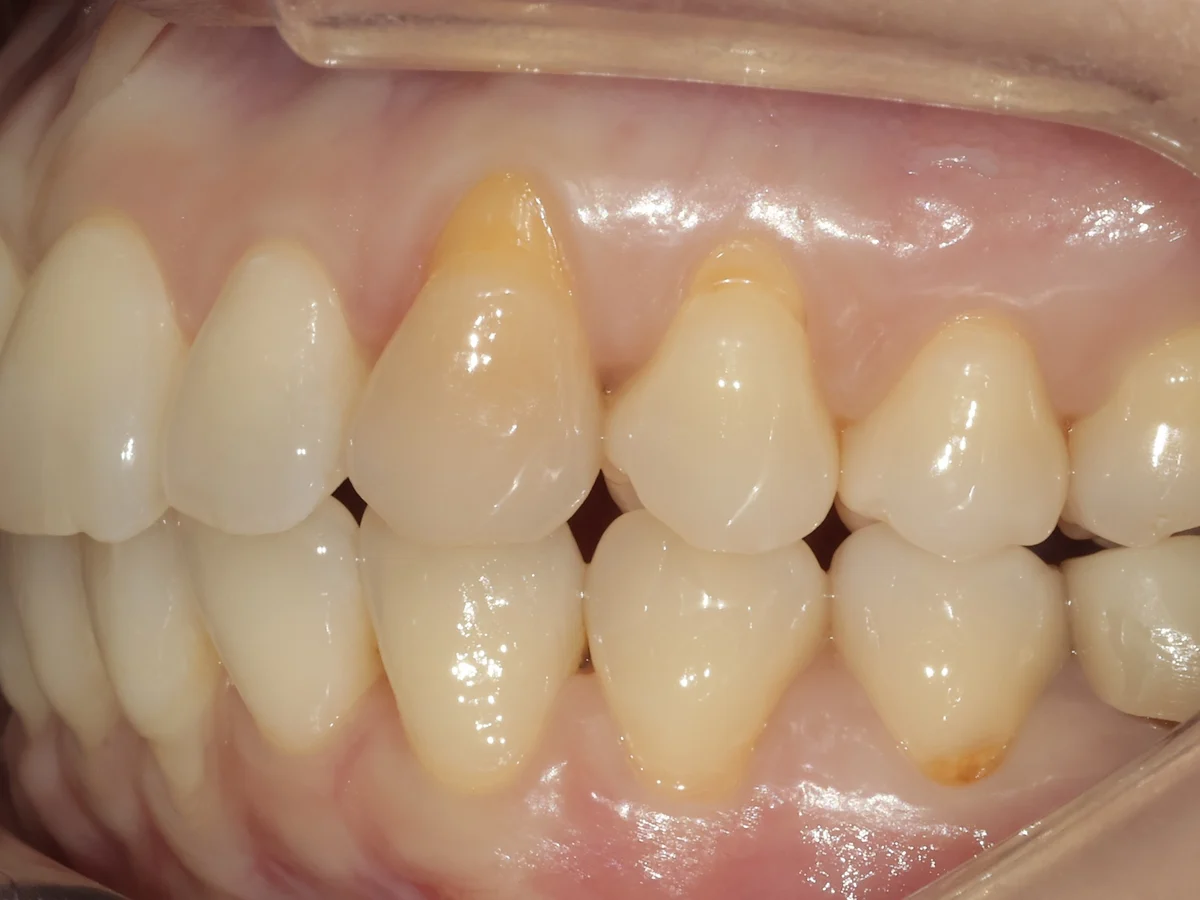
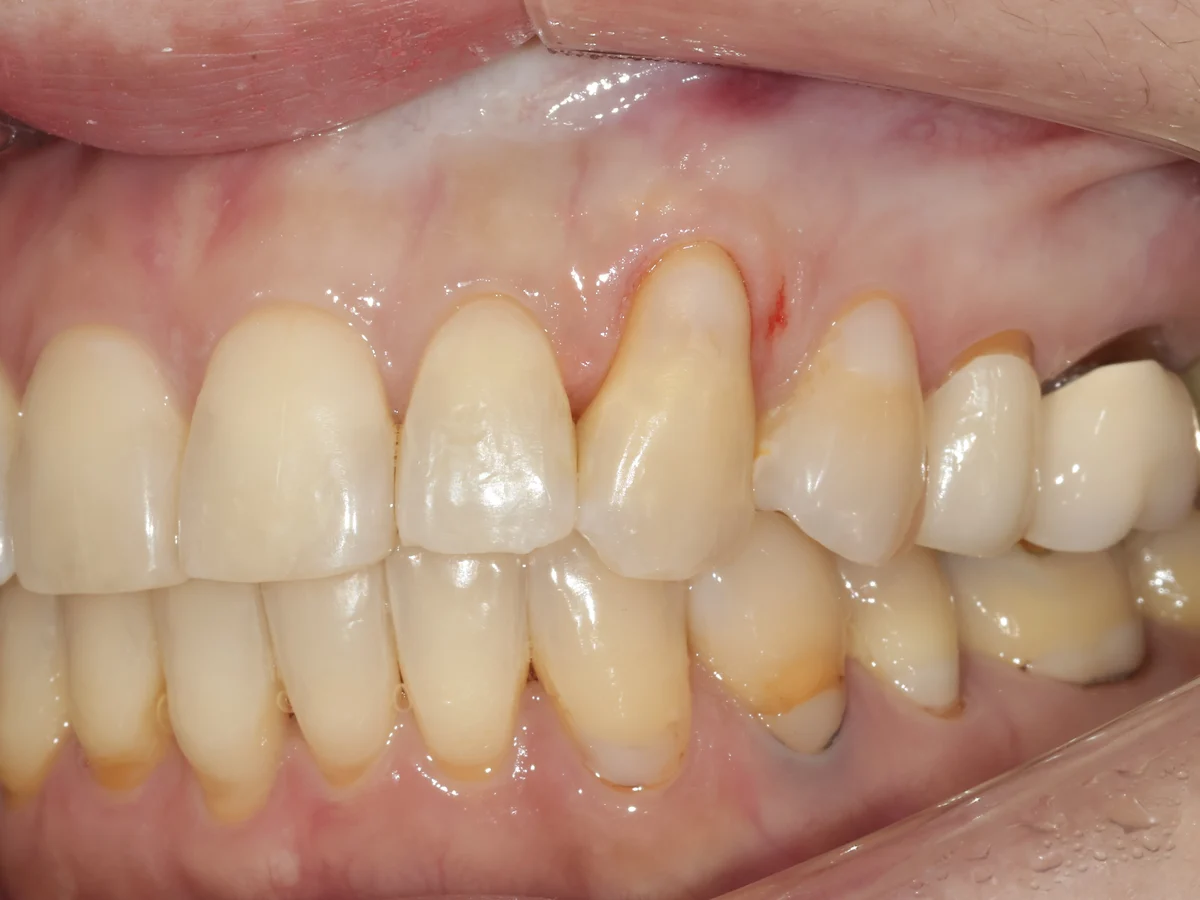
Before treatment · October 2026
Before treatment. The necks of the canine and premolars on one side were worn smooth side by side, and the toothbrush bristles were splayed outward. The patient said they usually brushed by scrubbing side to side.
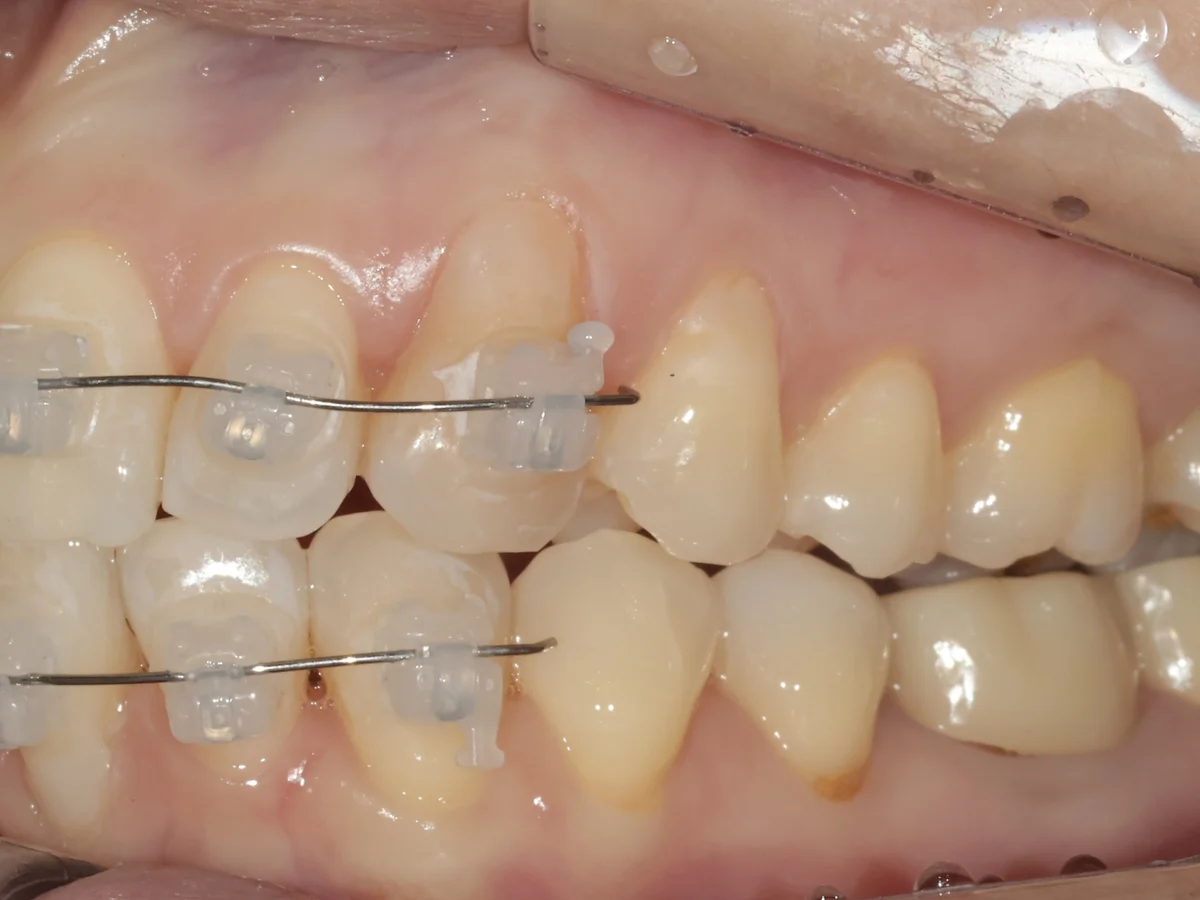
After · Oct 2026
After filling only the deep, very sensitive areas with resin. For the shallow areas, we changed the brushing and took photos to compare later. This photo was taken after orthodontic appliances were attached on the same day.
Condition
Smooth wear concentrated on one side, splayed toothbrush bristles, little wear on the chewing surfaces
Chosen
Brushing lessons with a soft toothbrush, brushing lightly up and down; resin only for deep areas
Not done
Filling every area, including shallow ones (changing the brushing can stop the progression)
Duration
1 visit (brushing and filled areas checked at later regular check-ups)
Note
If the brushing becomes hard again, the edges of the filling can wear, so we also check brushing at check-ups.
CASE02
Chewing surfaces also worn, with only a few teeth deeply worn
Resin + splint · a clenching habit combined with brushing
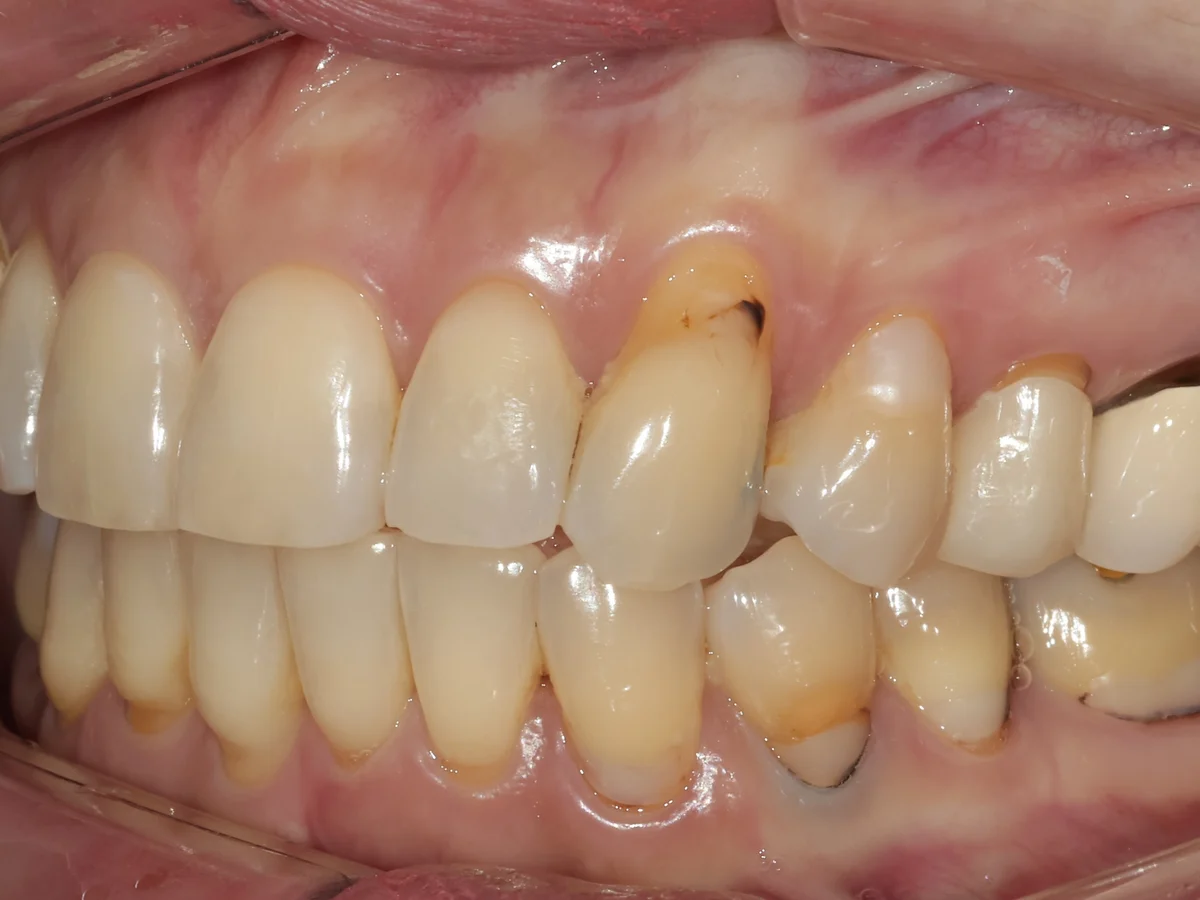
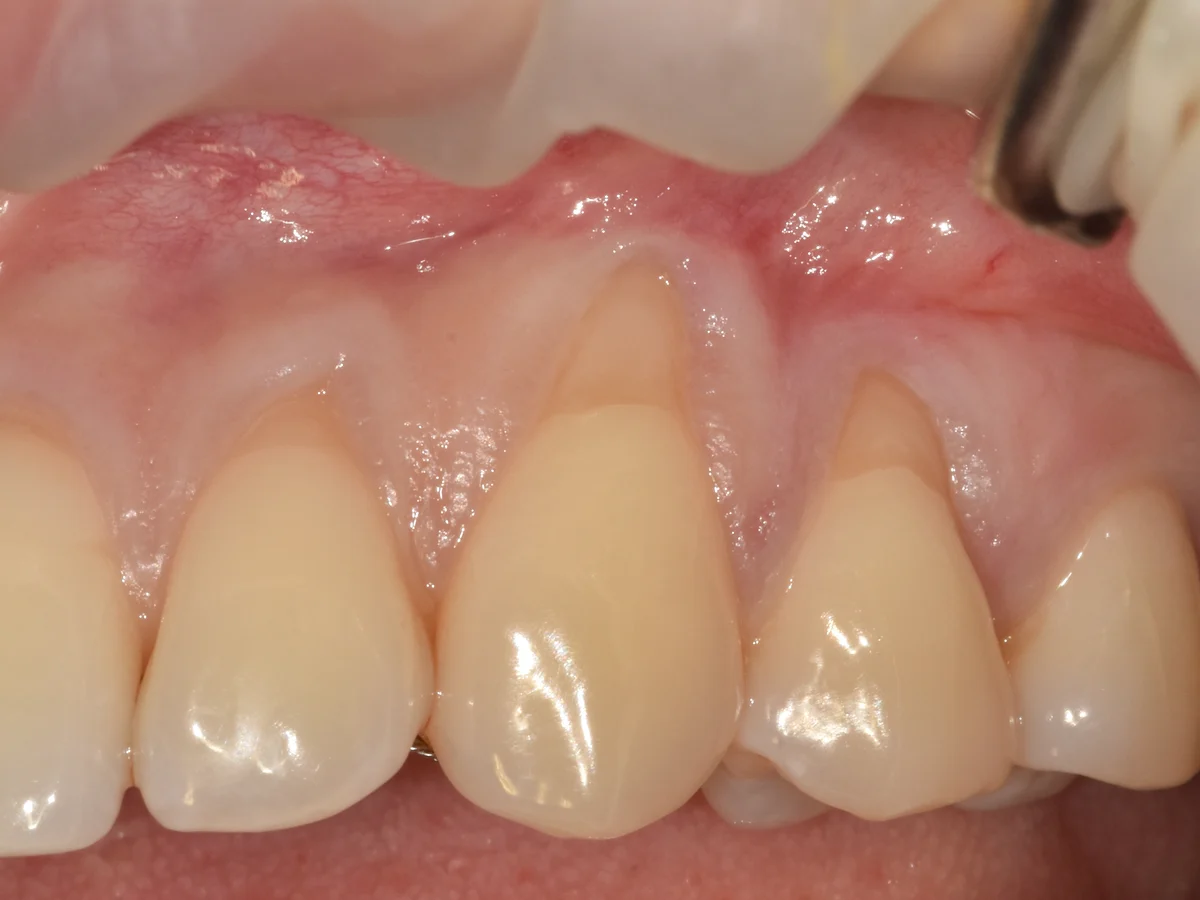
Before · March 2026
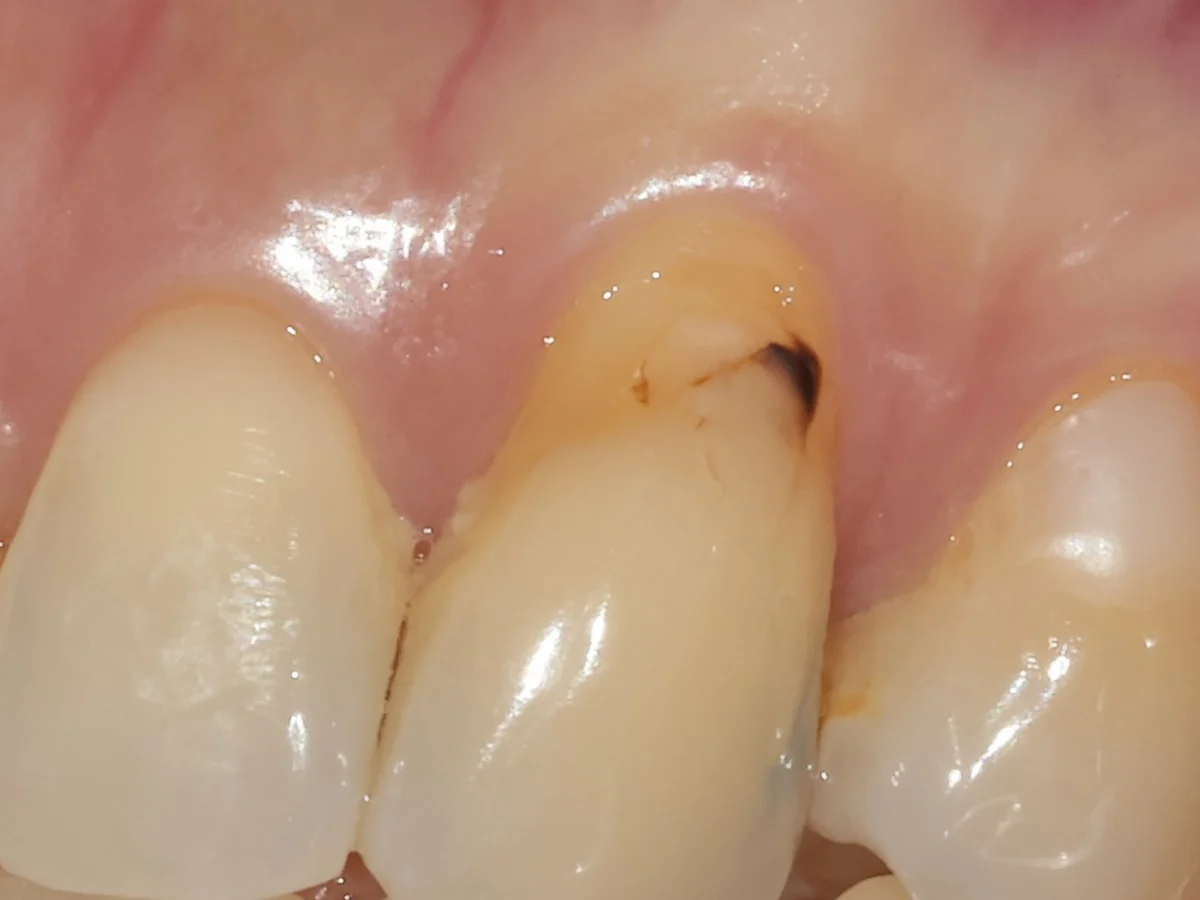
Before treatment. The neck of the upper canine was deeply worn.
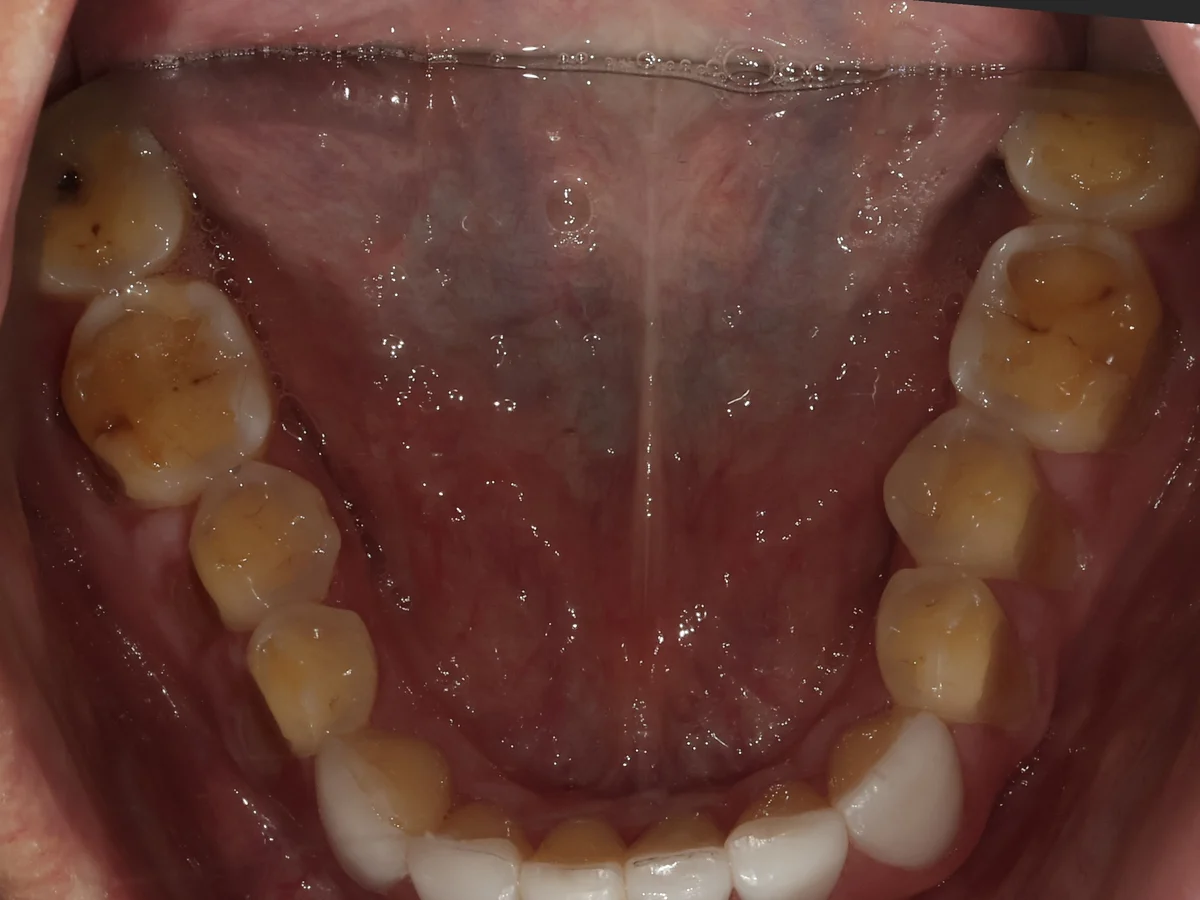
Chewing surface · different patient
An example of severely worn chewing surfaces. The molar cusps are worn flat and the inner dentin shows yellow. This photo is of a different patient.
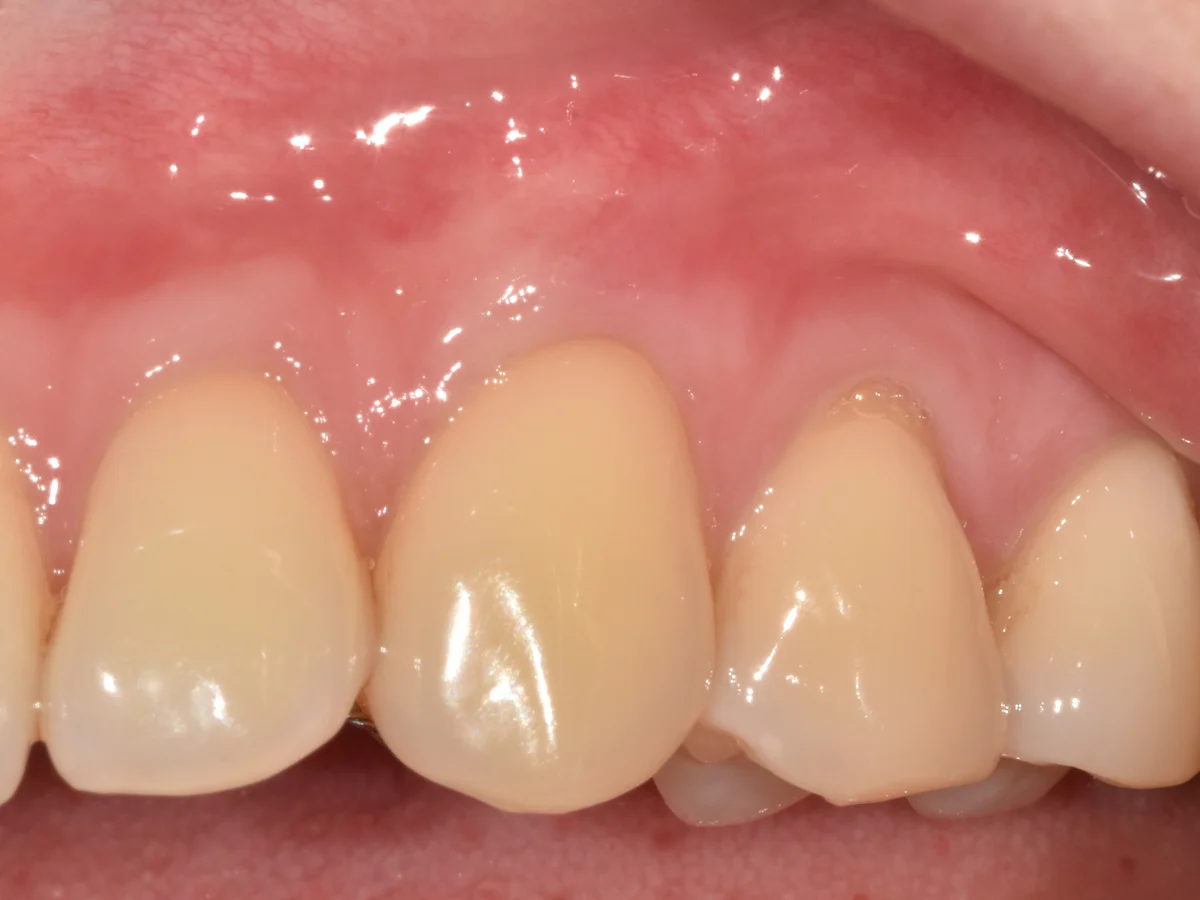
After · Mar 2026
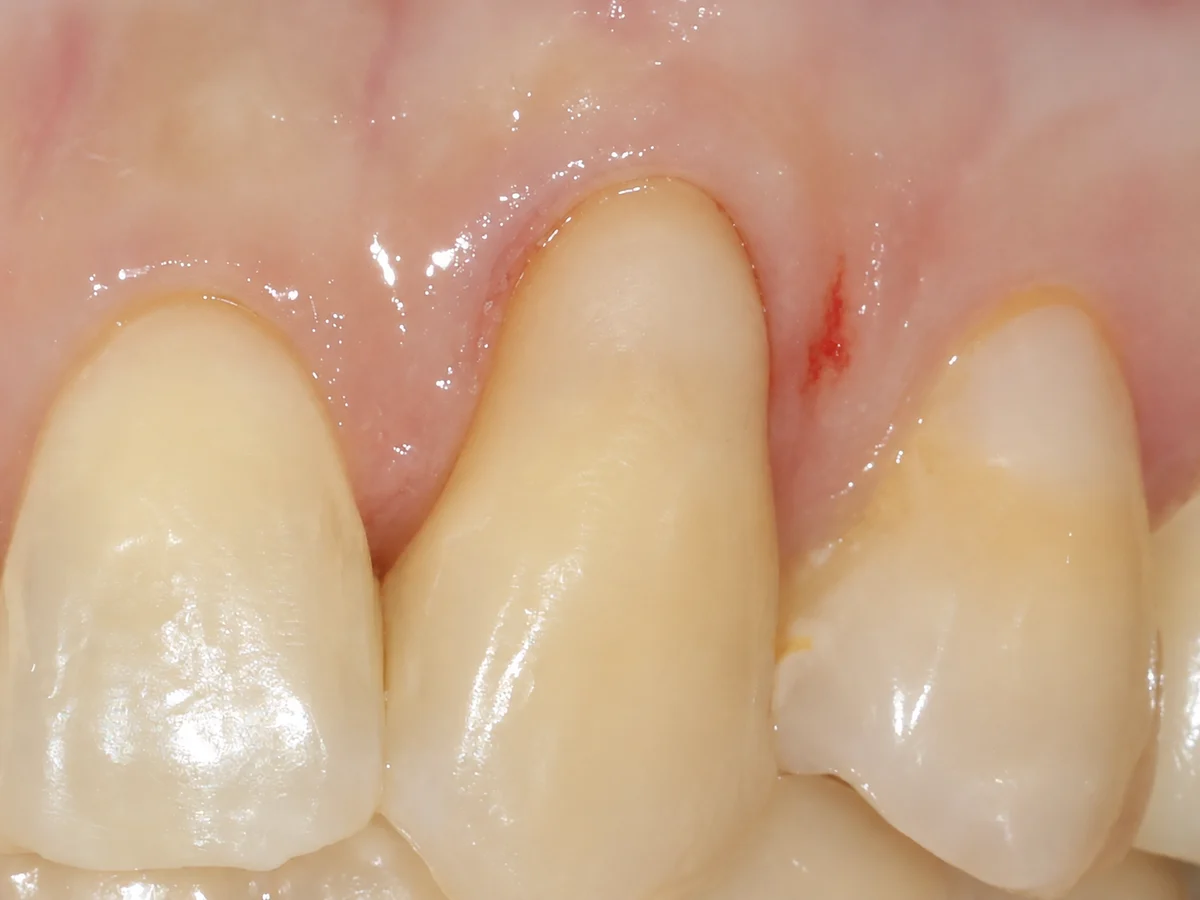
After filling with resin. We also made a night splint so less force falls on the filled area.
Condition
Deep wedge-shaped wear, worn chewing surfaces, jaw stiffness in the morning
Chosen
Resin, night splint, brushing correction
Not done
Crown (only the worn area needed filling, so there was no reason to reshape the whole tooth)
Duration
2 visits (resin on the same day, splint fitted 1–2 weeks later), regular checks after fitting
* Photos were taken under the same conditions and published with the patients' consent. Treatment results and side effects may vary from person to person.
02°
Why does the neck of a tooth wear away? Often two or three causes overlap
The neck of a tooth is where the covering enamel is thinnest, so it wears more easily than other areas. The shape and location of the wear differ slightly by cause.
01Brushing
Hard side-to-side brushing, a stiff toothbrush, and toothpaste with a lot of abrasive can cause it. It wears smooth on the canines and premolars, which the toothbrush touches most. Right-handed people often have more wear on the left teeth.
02Clenching and grinding
One explanation is that biting force concentrates at the tooth neck and wears it into a sharp wedge shape. The chewing surfaces of the same teeth are often worn too, but studies differ on how much force contributes, so we look at it together with other causes.
03Receding gums
When gum disease, thin gums, or orthodontic tooth movement exposes the root, the root surface has no enamel, so it wears and becomes sensitive much more easily.
04Acid (erosion)
Fizzy drinks, sour foods such as vinegar and fruit, and acid reflux soften the tooth surface. Brushing hard right then wears it more easily, often into a rounded, wide saucer shape.
In most cases, it is not one cause but two or three together. So along with filling, we also decide how to reduce the causes.
03°
Finding the cause and treating it
Before filling, there are four steps of exams to identify the cause, followed by two steps of treatment and follow-up.
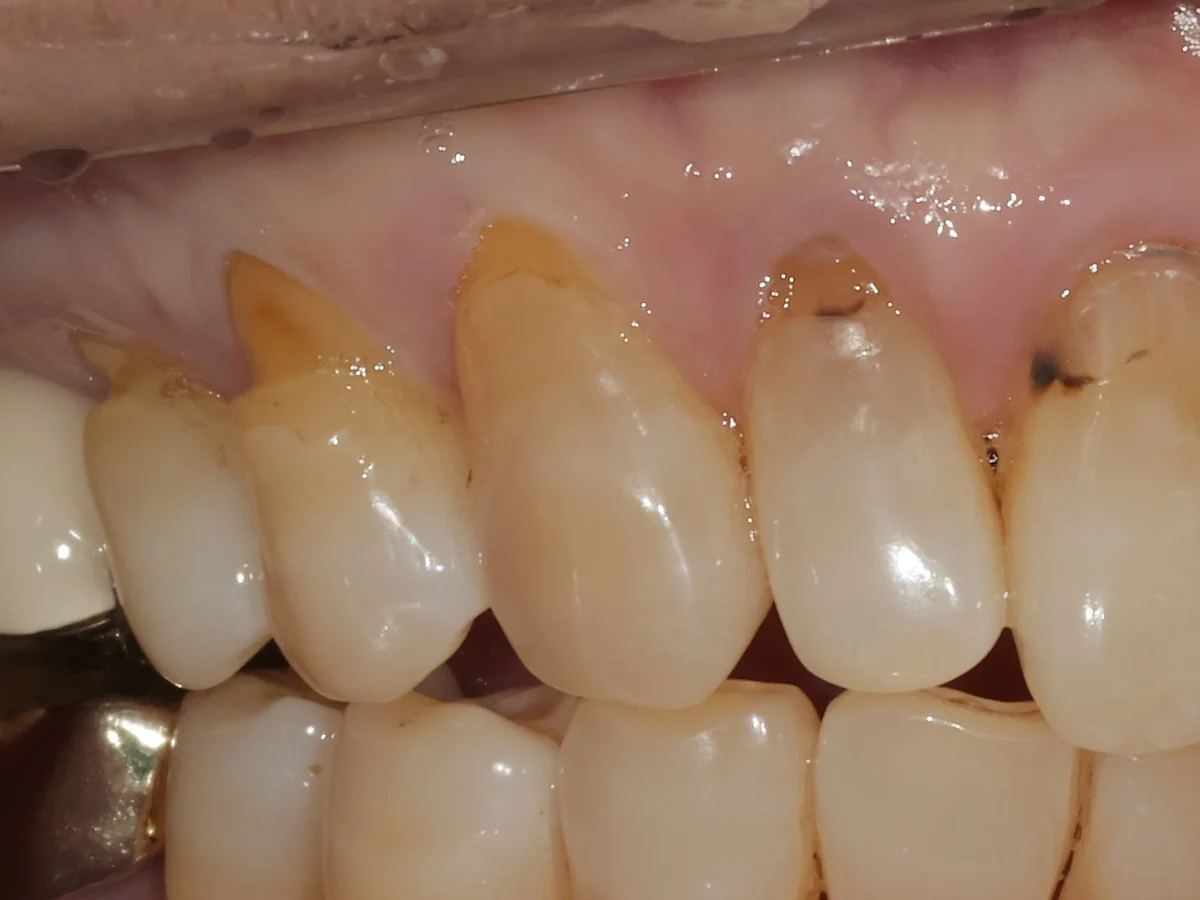
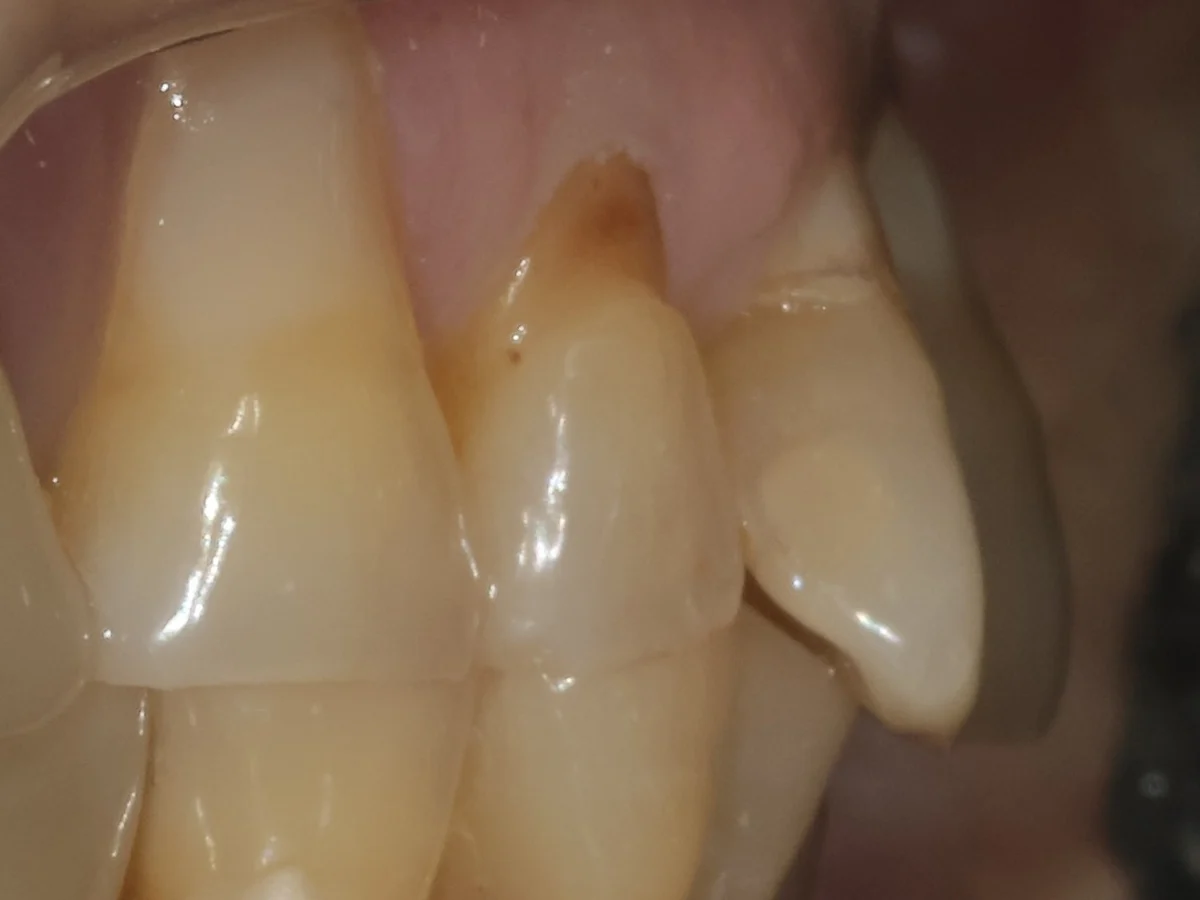
Wedge shape · premolar
Wedge shape · canine
Recording the wear shape. Both photos show angular wedge shapes. Sharp wedge shapes often come from brushing plus force, and rounded saucer shapes from acid plus brushing. The two photos are of different patients.
STEP 01
We record the shape and location of the wear with photos
We photograph whether the wear is a sharp wedge or a rounded saucer, which teeth it is on, and whether it is concentrated on one side or spread evenly on both sides. We also blow cold air to check how sensitive it is.
Why we do thisThe shape and location are clues to the cause. If it is concentrated on one side, we first suspect brushing; if it is deep on teeth with worn chewing surfaces, force; if it is wide and rounded, acid.
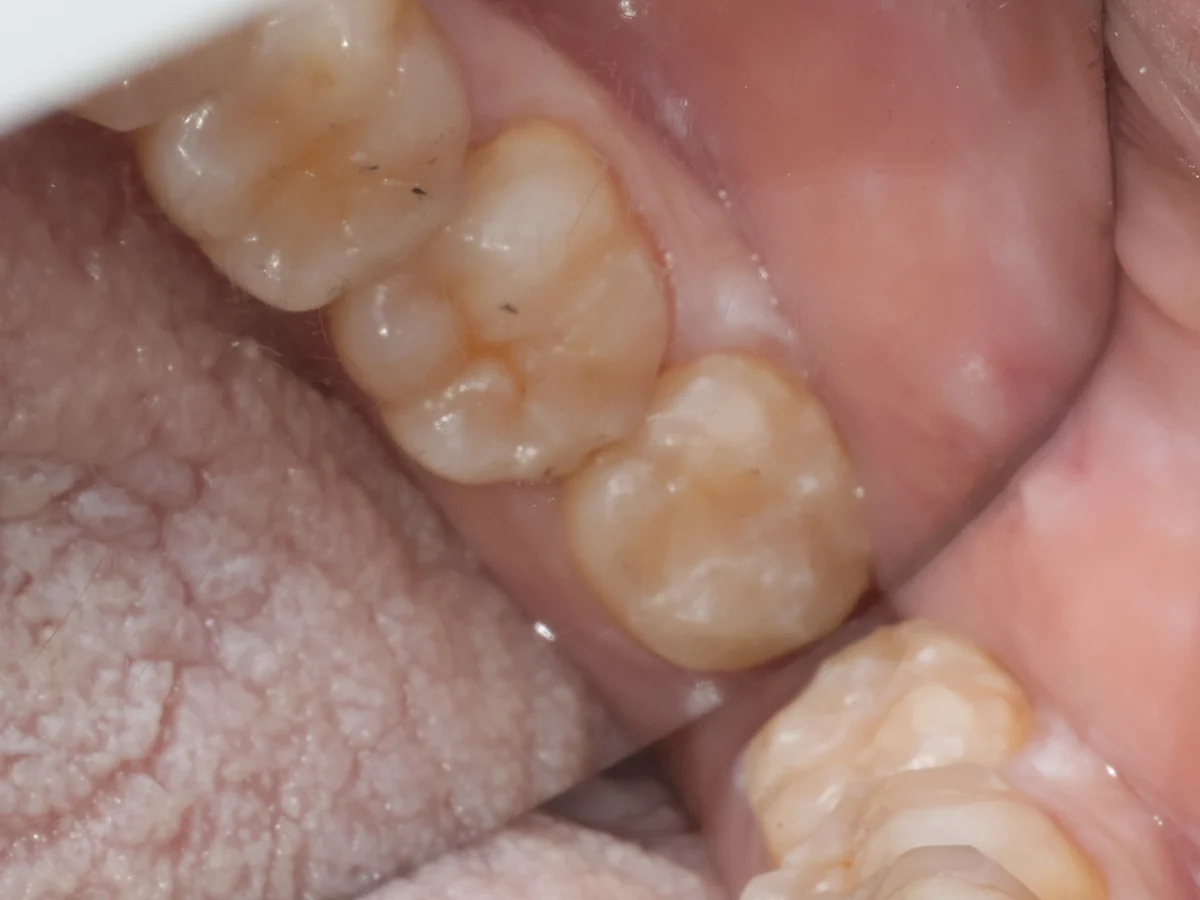
Bite and wear
Checking chewing-surface wear. If the cusps are worn flat, we consider that a clenching habit may also be present.
STEP 02
We look for signs of clenching on the chewing surfaces and in the bite
We check whether the cusps of the chewing surfaces are worn flat, whether force hits certain teeth first, and whether there are pressure marks inside the cheeks and along the edges of the tongue. If the bite is uneven, we check it together with our board-certified orthodontist.
Why we do thisIf clenching force keeps acting on the tooth, the resin filling comes off easily. If force is one of the causes, using a splint as well helps the filling last longer.
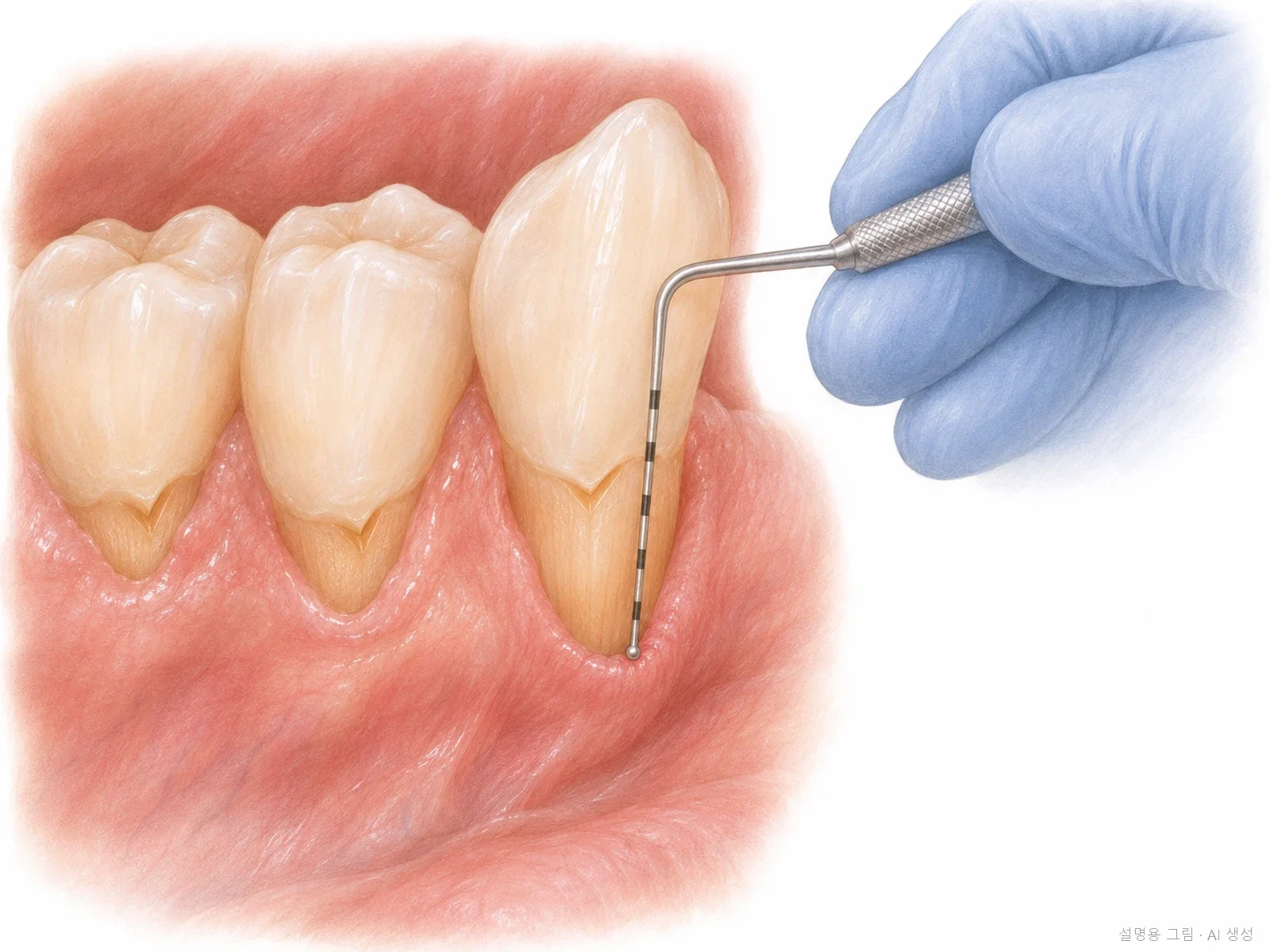
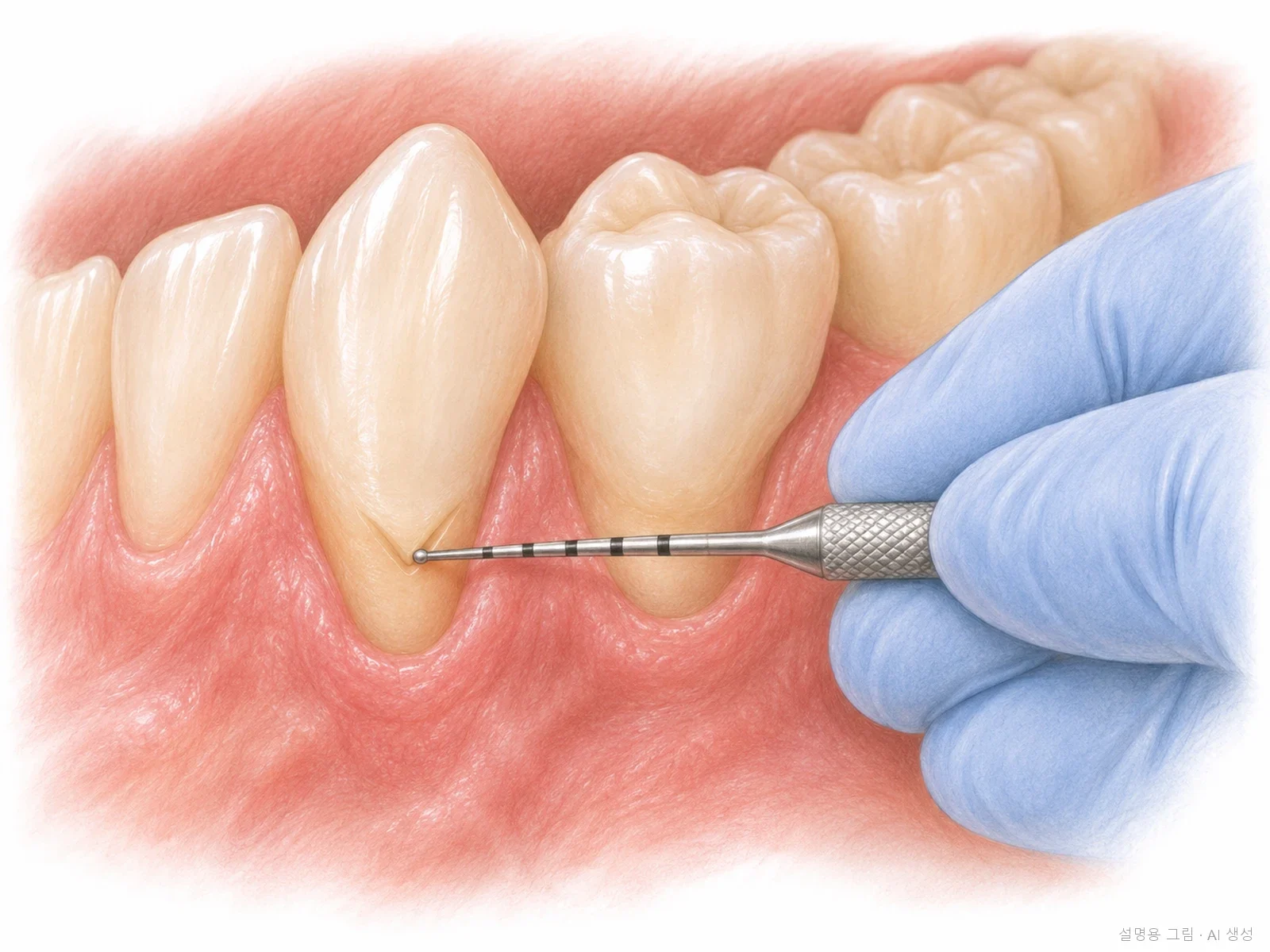
Gum height
Wear depth
Gum measurement. Our board-certified periodontist measures in mm how far the gums have receded and how deep the gum pockets are.
STEP 03
Our board-certified periodontist measures your gum level
We measure how far the gums around the worn tooth have receded, whether the gum pockets are deep, and whether the gums are thin. If there is gum disease, we treat the gums before filling.
Why we do thisIf the gums are still receding, the root will be exposed again below the resin filling. If the area can be covered with gum, a gum graft may be better than filling.
Brushing comparison
When scrubbing hard
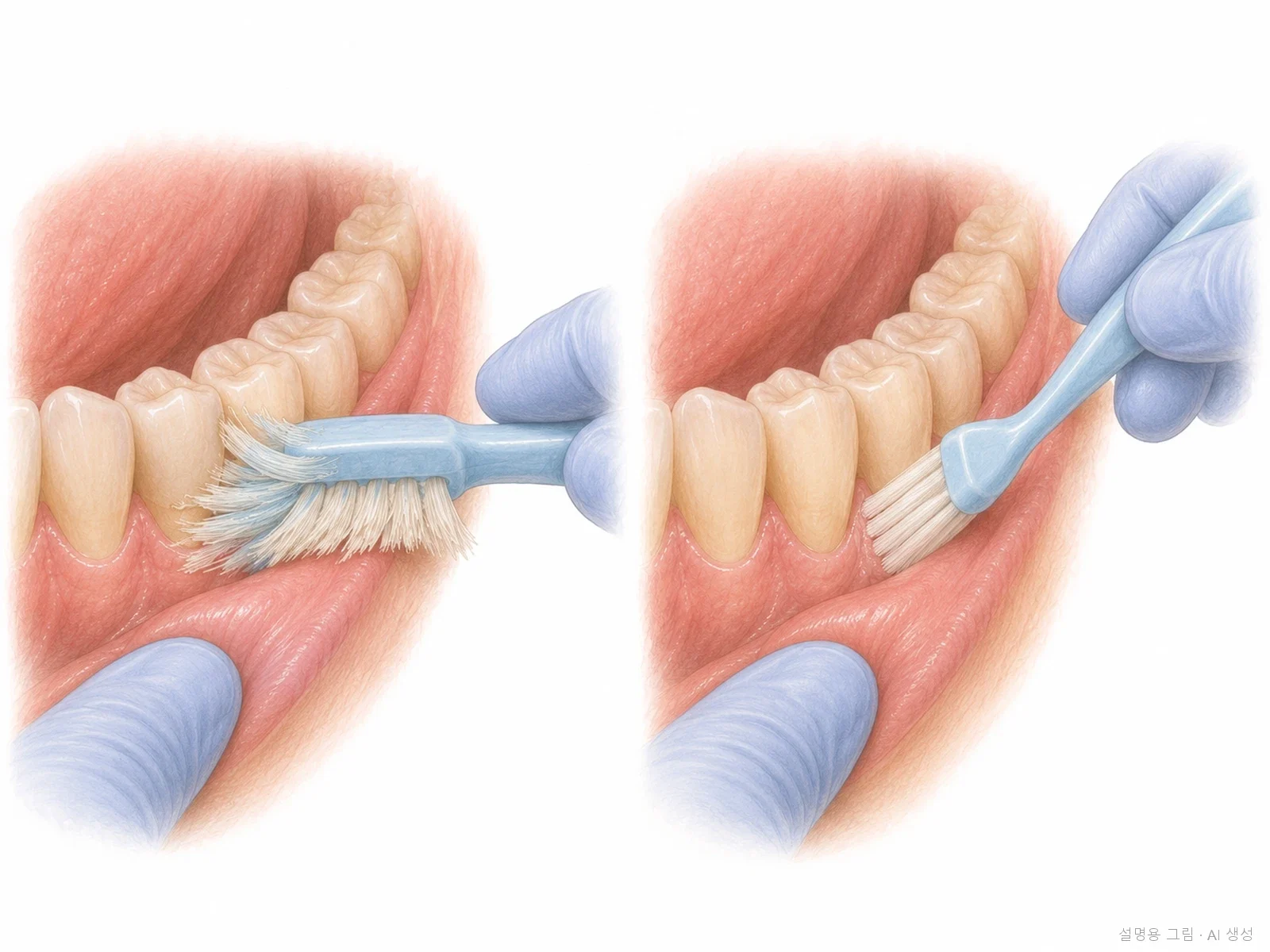
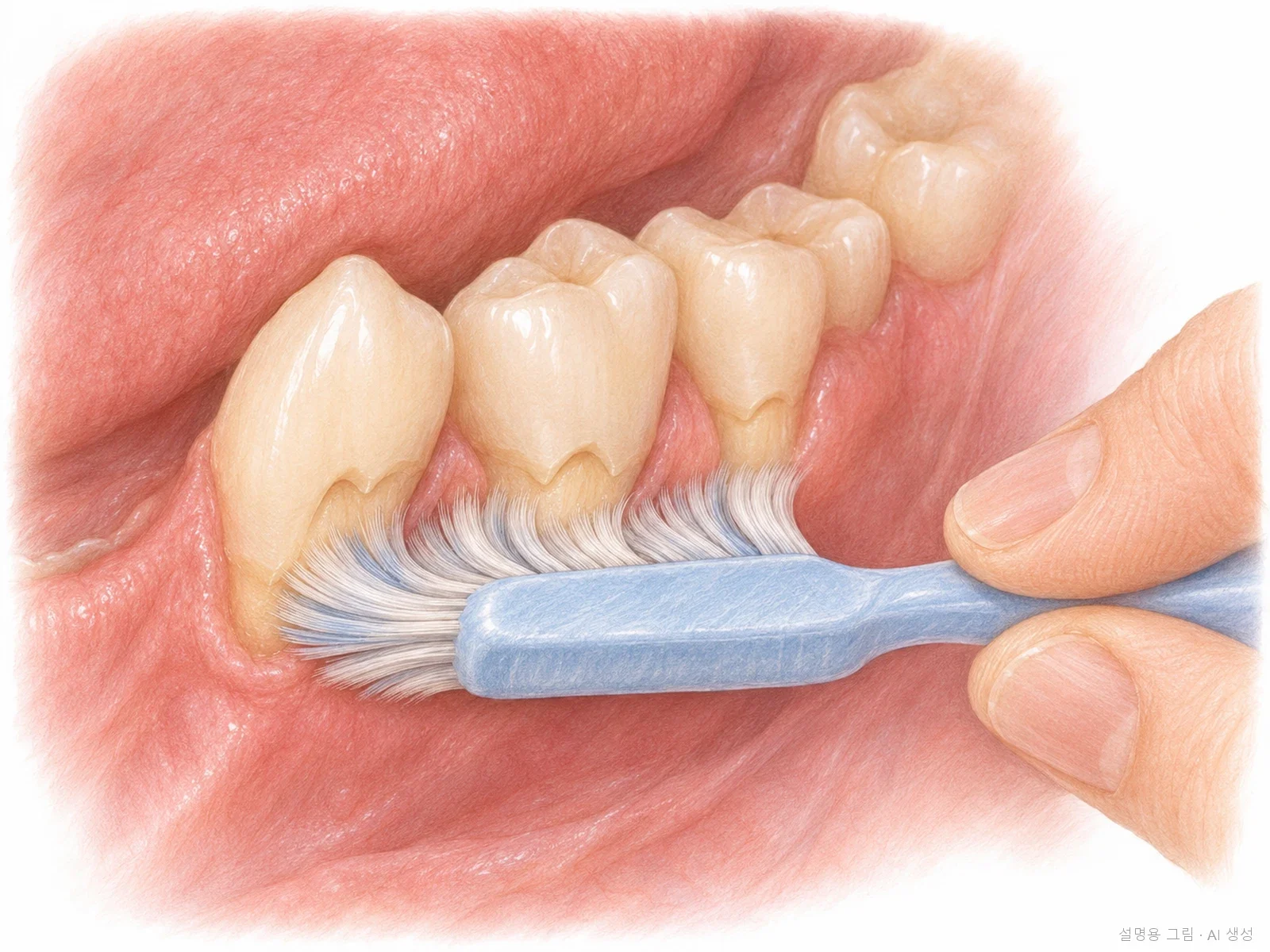
Checking brushing. We look directly at the condition of your usual toothbrush's bristles and the actual direction and force of your brushing.
STEP 04
We look directly at your usual toothbrush and brushing
If you bring your usual toothbrush, we look together at how splayed the bristles are and in which direction and how hard you brush. In front of a mirror, you practice brushing gently up and down with a soft toothbrush and a light touch.
Why we do thisIf brushing is the cause, the same brushing will wear the edge of the filling again. Just changing your brushing often stops shallow wear from progressing.
Before
After
Before and after filling with resin (same day). We fill and polish so it continues smoothly to the gum-side edge. This is the same tooth as in Case 2 above.
STEP 05
We fill according to the cause and also address force or gums
If it is deep, sensitive, or traps food, we fill it with tooth-colored resin. We keep blood and fluid away from the gum-side edge and then polish it smooth. If it is only sensitive and shallow, we apply a desensitizer and monitor it. If you clench, we also consider a splint; if your gums have receded, a gum graft.
Why we do thisThe tooth neck is close to the gums, so blood or saliva touches it easily, and this is a common reason resin comes off. If the edge is not smooth, plaque builds up on the ledge and the gums swell.
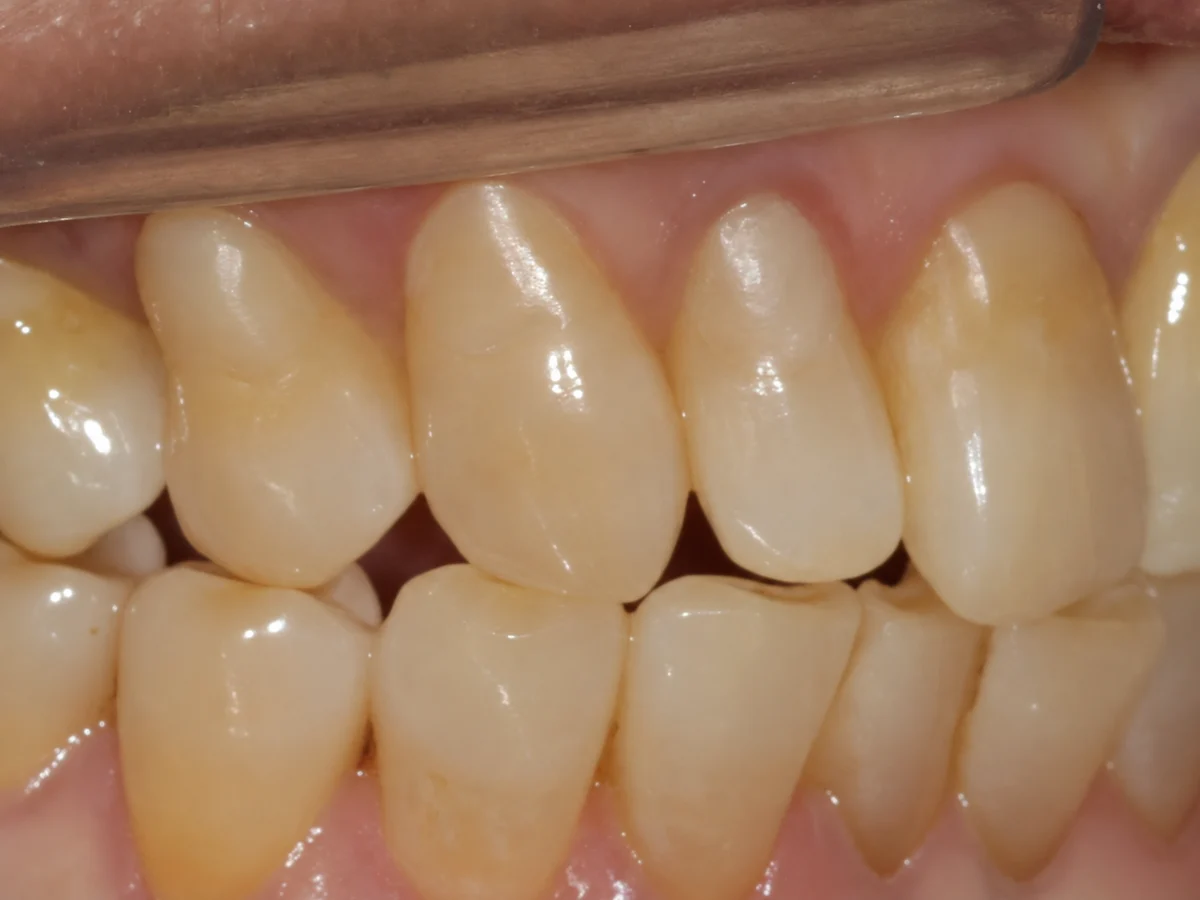
Follow-up · about 4 months later
Follow-up. This photo was taken from the same side about 4 and a half months after filling the tooth necks. We compare from the same angle whether the filling edges have worn or come off and whether any new wear has appeared.
STEP 06
At regular check-ups, we check the edges and your brushing
At regular check-ups, we check with photos whether the filling edges are intact, whether there is new wear, and whether your brushing has become hard again.
Why we do thisCervical wear progresses slowly if the cause remains. Comparing photos taken from the same angle as the first time lets us see objectively whether it is progressing.
* Clinical photos were published with the patients' consent. Side effects such as temporary pain or discomfort may occur depending on the person.
04°
Treatment choices by cause and severity
Good for
Method
Advantages
Limits
Health insurance and cost
Monitoring + changing brushing
Shallow and not sensitive
Soft toothbrush, brushing lightly up and down, low-abrasive toothpaste
The tooth stays as it is
Progression needs to be checked
No extra cost beyond the exam
Treatment for sensitive teeth
Sensitive but shallow
Applying a desensitizer, toothpaste for sensitive teeth
Simple
The effect may be temporary
Covered by Korea's National Health Insurance (NHI) (treatment for dentin hypersensitivity) · may not be covered if a filling or gum treatment is done on the same day
Resin filling
Deeply worn, very sensitive, or trapping food
Tooth-colored composite resin
Reduces sensitivity and prevents further wear
May come off if the cause remains
Composite resin for areas worn by abrasion is not covered by NHI Price list →
Gum graft
Gum recession is also present and the root can be covered
Under Korea's National Health Insurance (NHI), tooth-colored resin is covered only for cavities in the permanent teeth of children aged 5–12; worn areas (abrasion and erosion) are not eligible.
05°
What we do in these cases
Filling is the right choice
Deeply worn or very sensitive
Food gets trapped in the worn area, or a cavity has formed there
Other treatment comes first
If you have gum disease: we treat the gums first
If gum recession is large and can be covered: we first consider a gum graft
If you often have acid reflux: we also recommend seeing an internal medicine doctor
You may not need it now
Shallow and not sensitive: we only change your brushing and monitor with photos
06°
Side effects and limits
Please read
· If the cause remains, the resin filling can wear or come off.
· If the gums recede further after filling, the edge may become visible again.
· Sensitivity may not go away completely even after filling.
· A gum graft may not cover the entire exposed root.
· A splint can reduce the force of clenching and grinding, but it cannot stop the habit itself.
FAQ
FAQ
Is a worn tooth neck a cavity?
Cervical wear, where the neck of the tooth wears into a wedge shape, is not a cavity but is caused by wear. However, if plaque builds up in the worn area, a cavity can form there, so we check for it during the exam.
Does a worn tooth neck have to be filled?
If it is shallow and not sensitive, you can just change your brushing and monitor whether it progresses with photos. If it is deeply worn, very sensitive, or traps food, filling it with resin is better.
My tooth neck was filled, but the filling came off again. Why?
If causes such as the force of clenching or hard brushing remain, the resin filling can come off. Before filling it again, we recheck your bite, brushing, and gums, and use a splint as well if needed.
How should I change my brushing to keep my tooth necks from wearing?
Use a soft toothbrush with a light touch and brush in short circles from the gums toward the teeth. Do not scrub side to side with long strokes. Right after sour foods or fizzy drinks, it is better to rinse with water and wait a little before brushing.
Do I have to get a gum graft?
We recommend it only when the gums have also receded, the root is exposed, and it can be covered with gum. If the recession is small or hard to cover, we fill the area with resin and monitor whether the gums recede further.
Can orthodontic treatment cause the tooth neck to wear?
As teeth move during orthodontic treatment, gums on the thin side may recede and expose the root, and an exposed root wears more easily. That is why our board-certified periodontist also checks the gums of orthodontic patients.
Is treatment for cervical wear covered by health insurance?
Under Korea's National Health Insurance (NHI), tooth-colored resin is covered only for cavities in the permanent teeth of children aged 5–12, so filling worn areas with composite resin is not covered. Whether filling with other materials is covered, and the cost, will be explained after the exam.
Evidence and references
Health Insurance Review and Assessment Service (HIRA). Coverage criteria for light-cured composite resin fillings (Notice No. 2023-56). View the source (Limited to cavities without pulp disease; abrasion, erosion, and fractures are not eligible)
Questions from international patients who live in Korea.
Can I use Korean National Health Insurance?
If you are enrolled in Korea's National Health Insurance, insured treatments are billed under the same insurance rules as for other enrollees. Whether a treatment is covered depends on the treatment and the insurance rules, and we tell you before treatment starts. If you are not enrolled, you pay the full fee.
Can I be seen in English?
Yes. The doctor in charge of each field consults with you directly in English, so you do not need an interpreter.
I am in Korea only for a short trip. Can I have this treatment?
It depends on how many visits the treatment needs. Tell us your travel dates when you contact us, and we will tell you after the examination whether the schedule is realistic.
Results, the number of visits and schedules vary from person to person. More questions: Visiting from abroad.


 Before treatment · October 2026
 After · Oct 2026
 Before · March 2026
 Chewing surface · different patient
 After · Mar 2026
 Before · April 2021
 After treatment · November 2022
 Wedge shape · premolar
 Wedge shape · canine
 Bite and wear
 Gum height
 Wear depth
 Brushing comparison
 When scrubbing hard
 Before
 After
 Follow-up · about 4 months later