Last reviewed Oct 29, 2026 · Dr. Sunmin Kim (board-certified orthodontist, certified by the Korean Association of Orthodontists)
At a glance
Who it suits
Teeth that were straightened before have shifted again
Treatment flow
Compare previous records with current X-rays → check roots and gum bone → partial or full re-treatment
Duration and limits
If only a few front teeth are involved, it usually finishes within a few months. We set the range of movement more conservatively than the first time
Read more
If teeth that were straightened before have shifted again, it is often enough to redo only part of the treatment rather than start everything over. If only a few front teeth shifted because the retainer could not be worn, partial re-treatment usually finishes within a few months; if the problem is that the mouth was moved back too far or the bite does not fit, we plan the whole treatment again. Because these teeth have already been moved once, we first check root length and gum bone and set the range of movement more conservatively than in the first treatment. Ceramic Dental Clinic also sees patients who had braces at another clinic, and if you have previous treatment records, we overlay them with current X-rays to compare what has changed.
01°
The reasons the teeth shifted differed, and so did the scope of re-treatment
Depending on whether it was a retainer problem, a problem with the direction of the first plan, or treatment that stopped before it was finished, we redid only the front teeth or planned the whole treatment again. Here are three typical cases.
CASE01
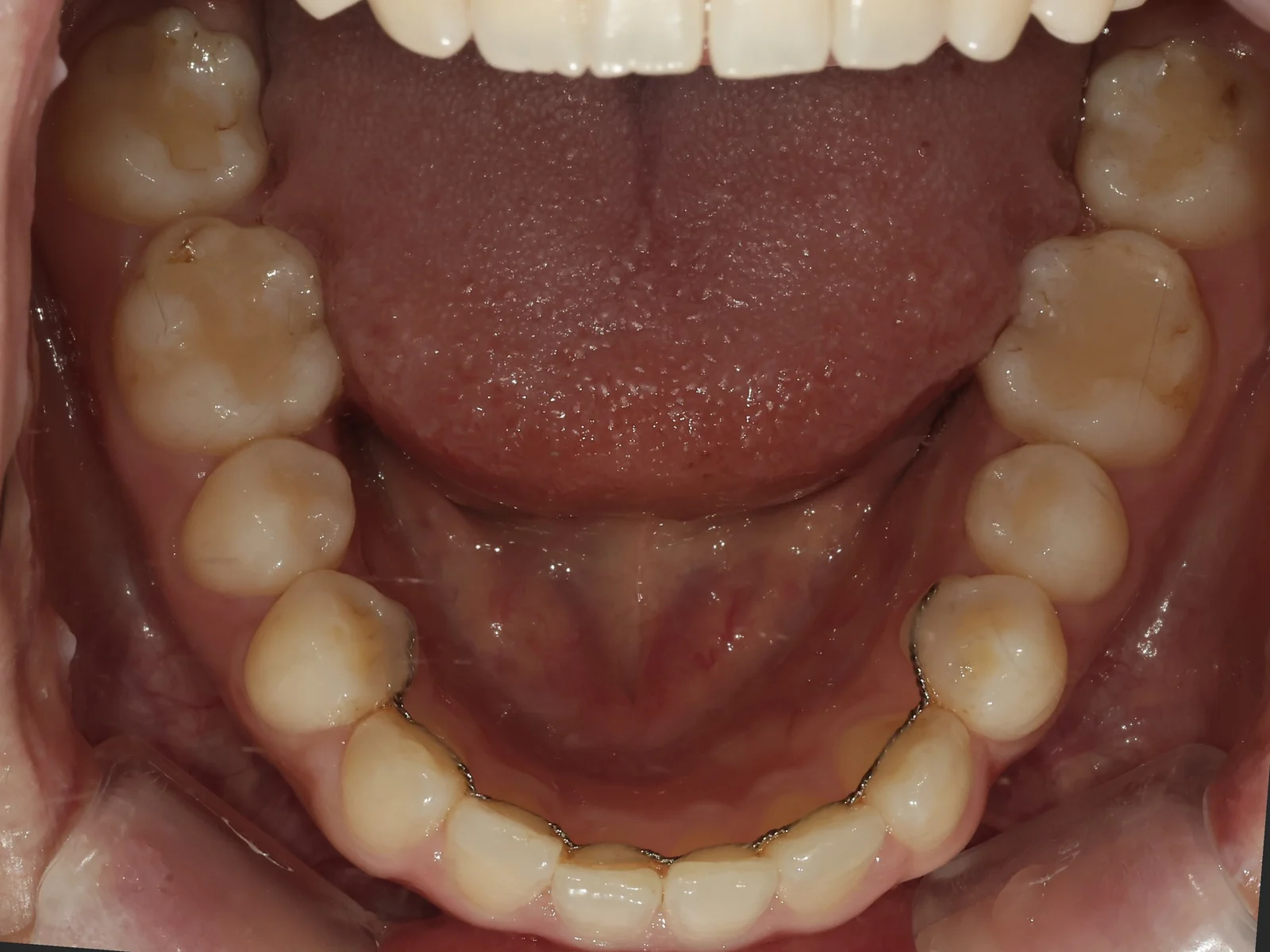
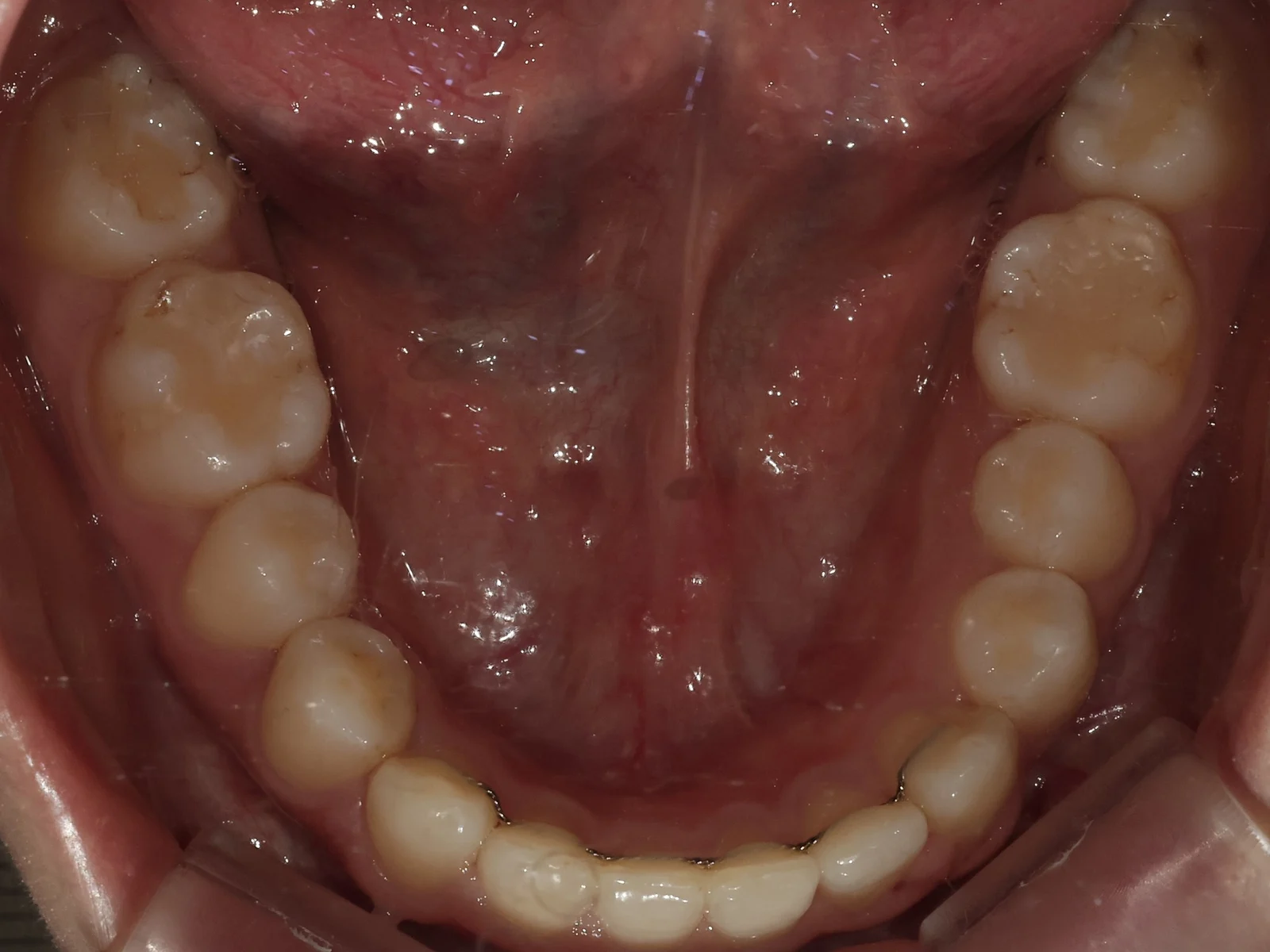
Lower front teeth shifted again after a fixed retainer came off
Partial re-treatment with brackets · Only the lower front teeth were realigned after root length was checked
Before · Feb 2026
Lower front teeth before treatment. While the patient did not know the fixed retainer had come off, the lower front teeth shifted again.
After · Aug 2026
After treatment. Only the lower front teeth were realigned with brackets, and a new fixed retainer was bonded.
Causes
Lower front teeth shifted after the fixed retainer came off
Choice
Partial re-treatment with brackets; panoramic X-ray confirmed no problems with root length
Not done
Full re-treatment (the back-teeth bite had stayed the same)
Duration
About 6 months (Feb → Aug 2026)
Afterward
The fixed retainer was rebonded, and a clear retainer is also worn at night
CASE02
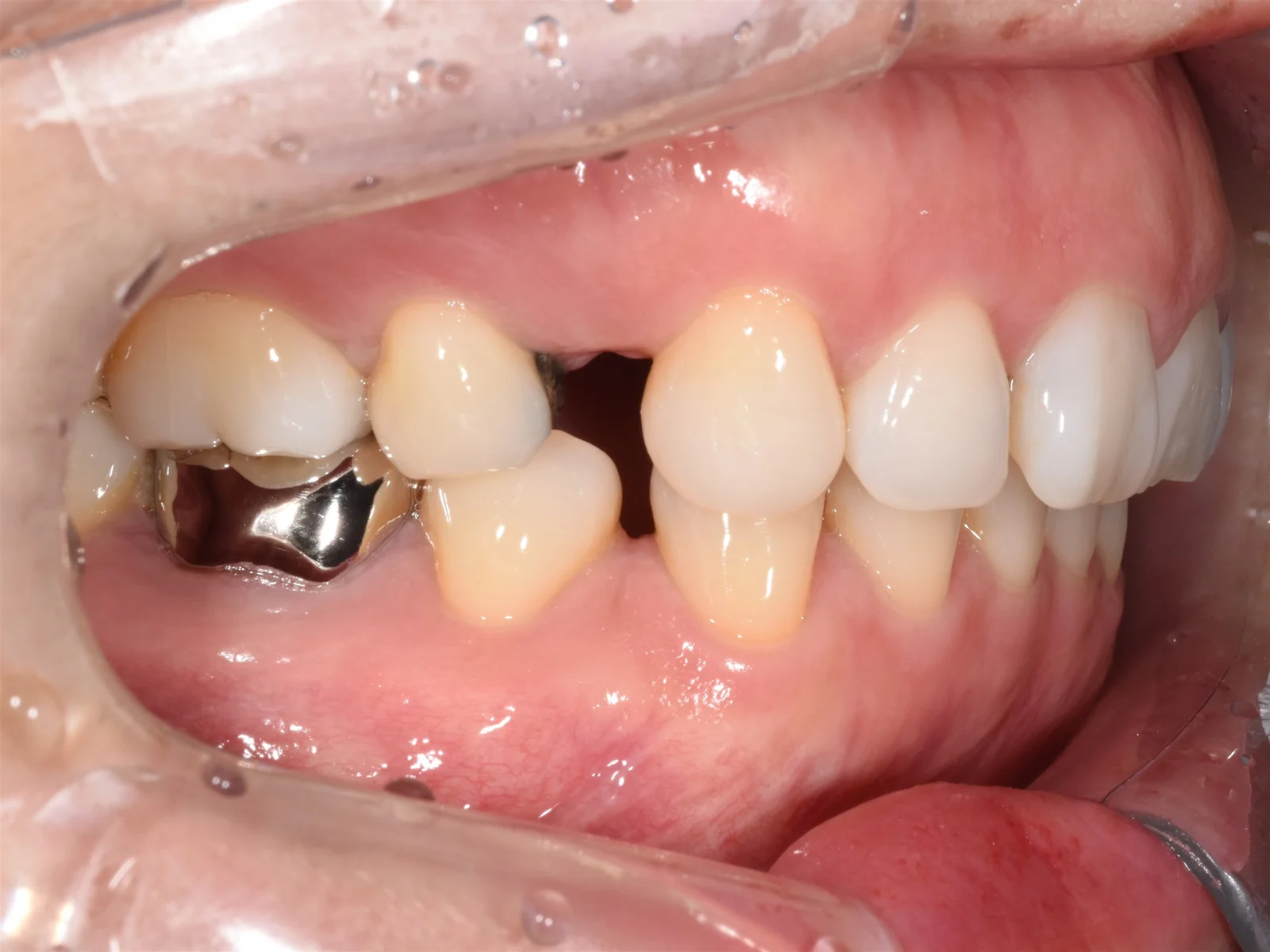
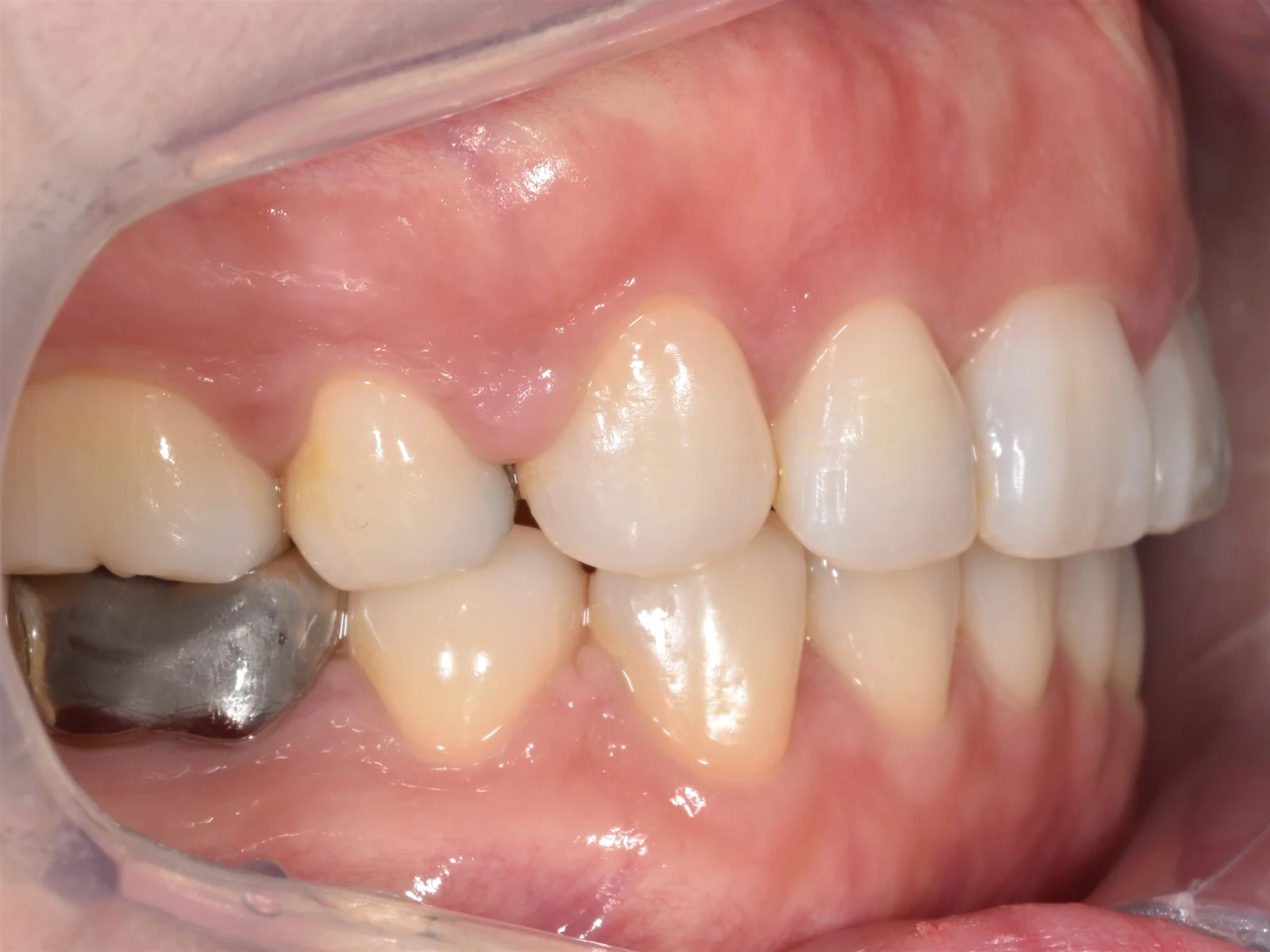
Front teeth moved back too far during extraction braces, leaving them tipped inward (corrective re-treatment)
Reverse treatment · Using mini-screws behind the canines as anchors, the molars were moved forward to close the remaining space and the front teeth were uprighted
Before · Oct 2021
Side view inside the mouth before treatment. During previous extraction braces, the upper front teeth tipped inward and deeply cover the lower front teeth, and extraction space remains.
After · Nov 2024
After reverse treatment. Instead of moving the front teeth back further, the molars were moved forward to close the space, and the upper front teeth were uprighted so they cover the lower ones less deeply.
Causes
During previous extraction braces, the front teeth moved back too far and tipped inward; came in with extraction space remaining
Choice
Mini-screws placed behind the upper canines (FDI tooth numbers 13 and 23) as anchors; the molars were moved forward to close the remaining extraction space. The front teeth were uprighted at the same time
Not done
Closing the space by pulling the front teeth back (they would move back even further)
Duration
About 2 years 3 months (excluding periods without visits)
Note
Premolars that were already removed cannot be brought back, so the lip position does not return to how it was before the first treatment.
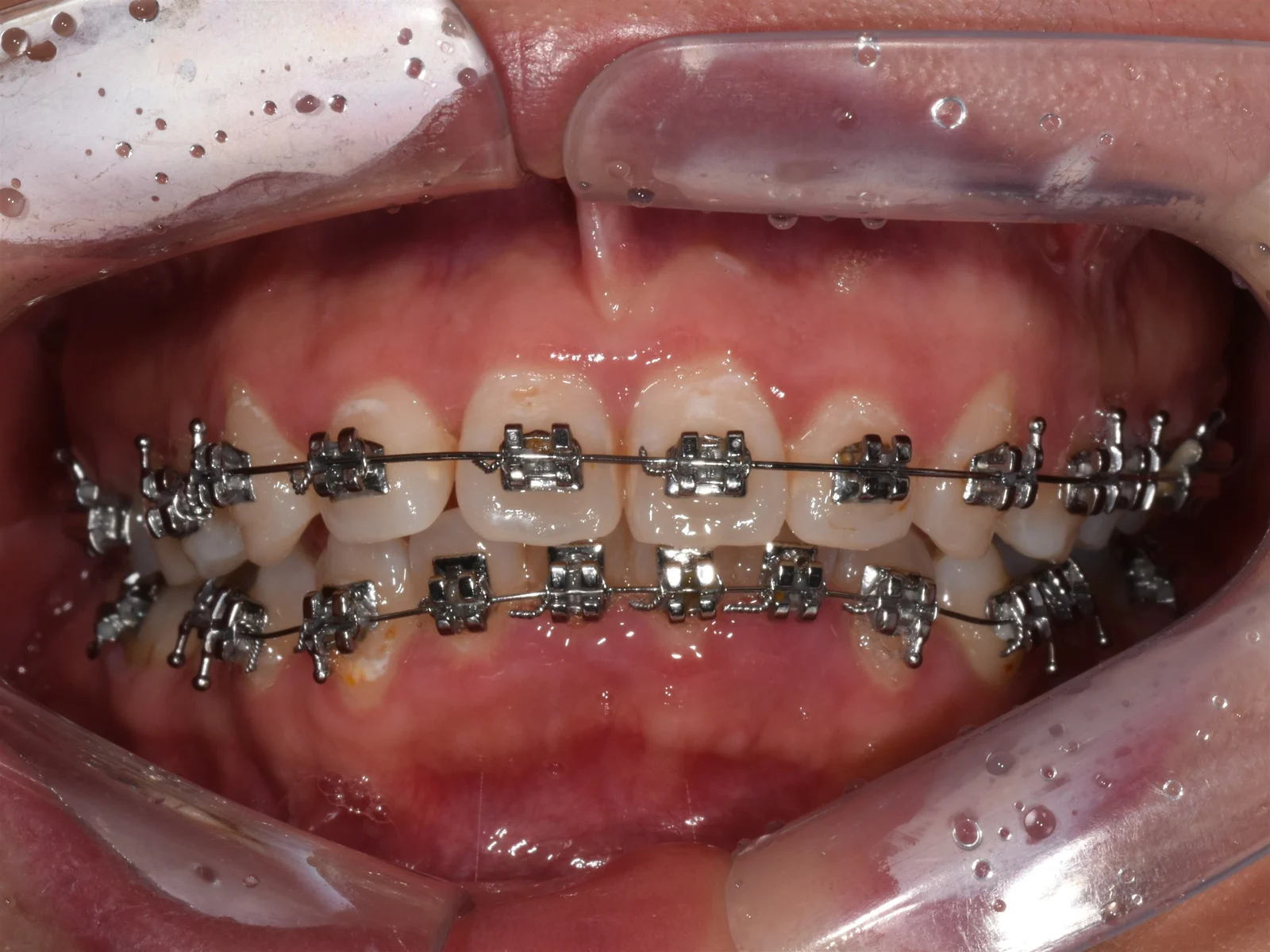
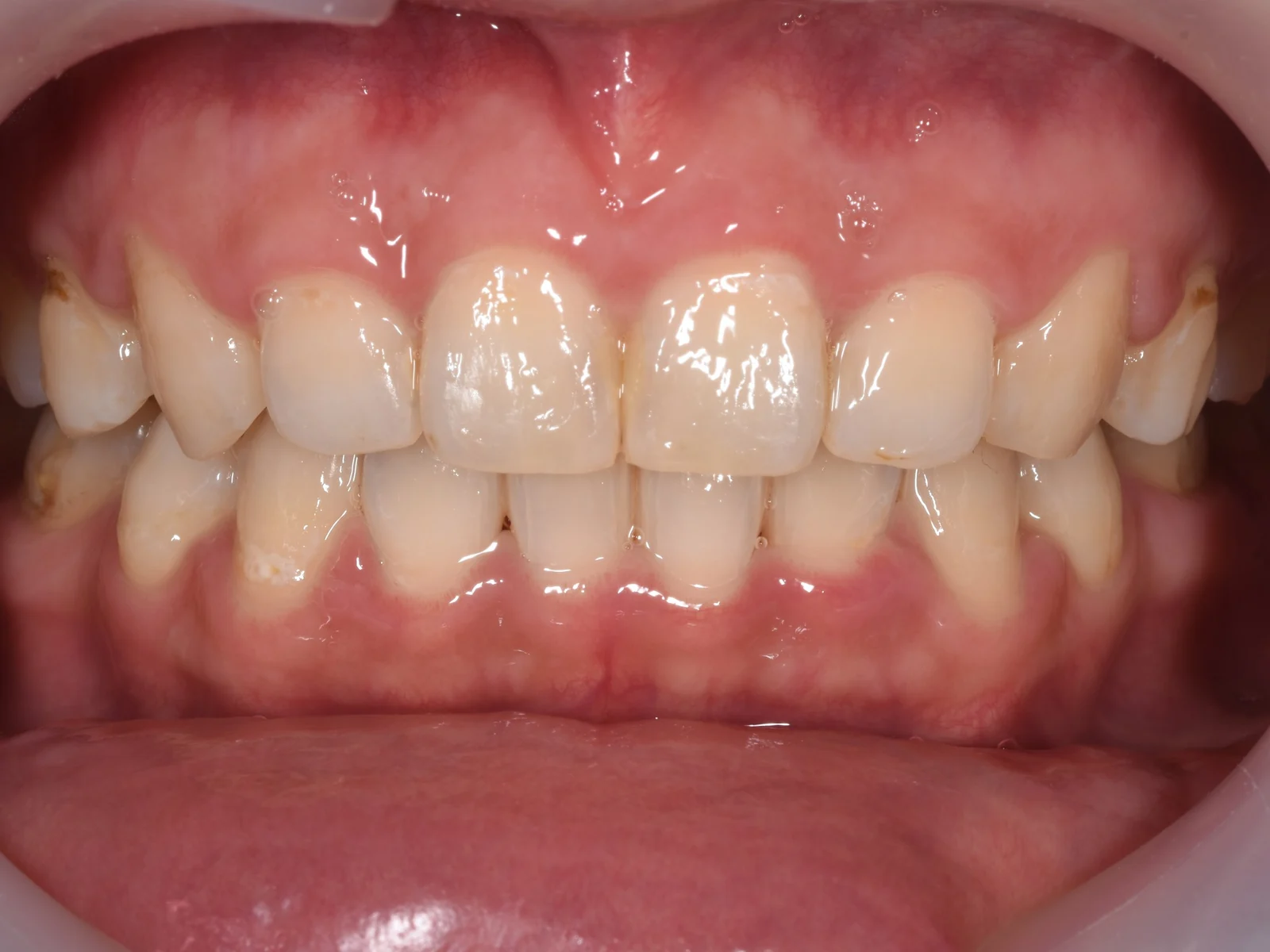
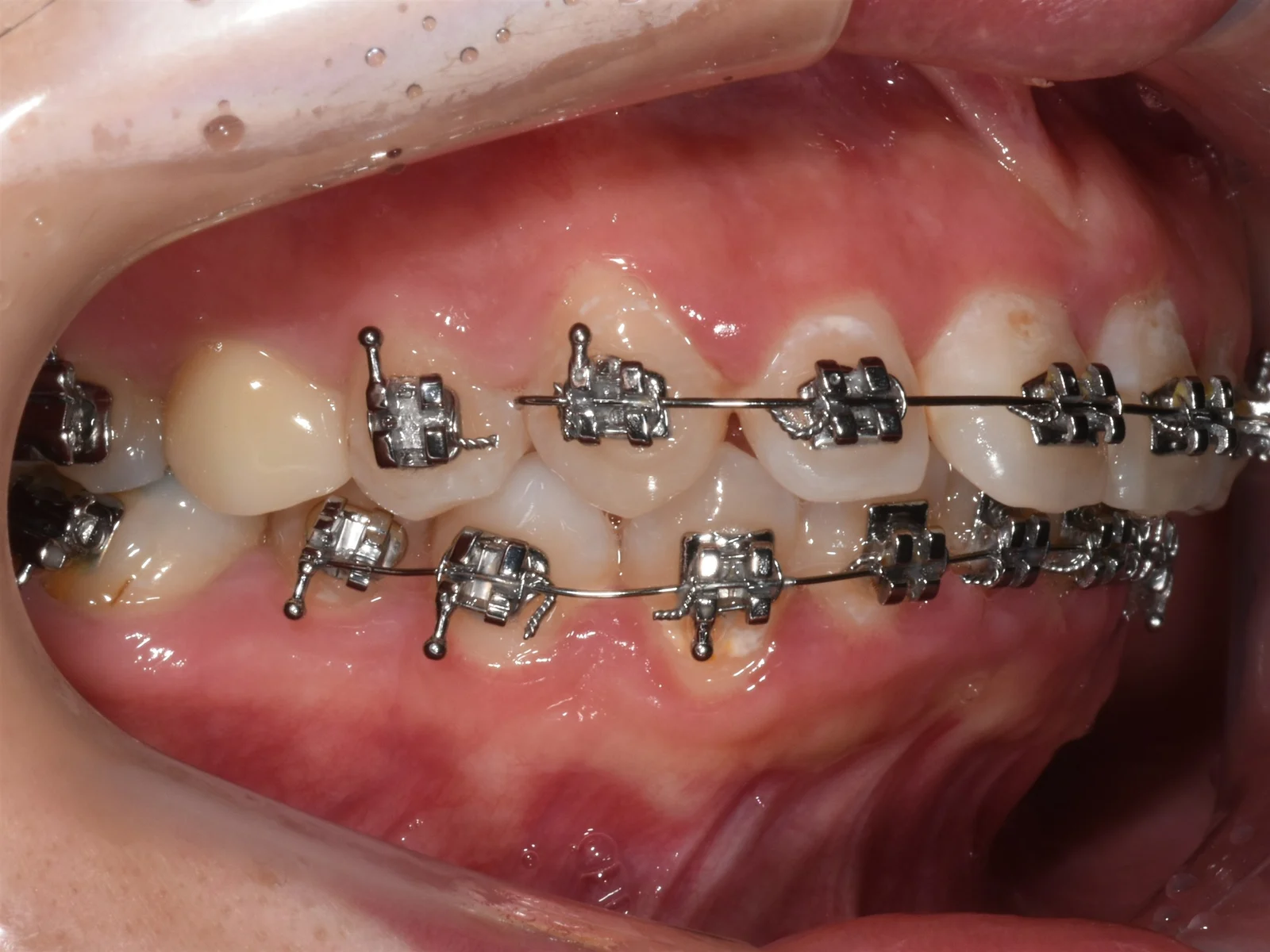
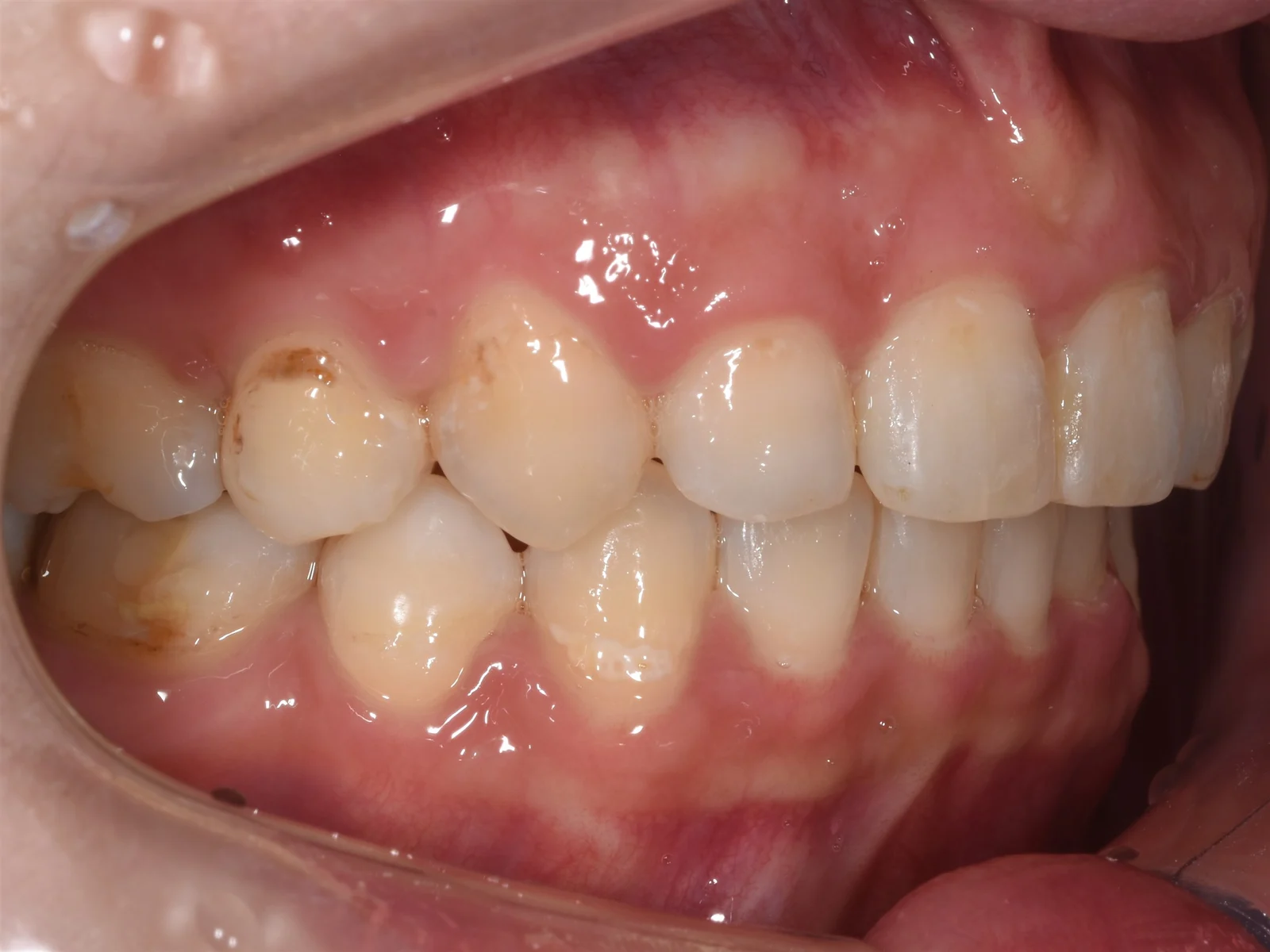
CASE03
The first treatment stopped before it was finished
Full re-treatment · The remaining space was closed and the upper and lower bite was set again
Before · Mar 2022
Front view inside the mouth before treatment. Braces at another clinic stopped when that clinic closed, so the patient came in still wearing them.
After · Nov 2025
Front view inside the mouth after re-treatment. The upper and lower front-teeth bite was set again.
Before · Mar 2022
Side view inside the mouth before treatment. The upper and lower bite was unfinished.
After · Nov 2025
Side view inside the mouth after re-treatment. The remaining space was closed and the molar and canine bite was set again.
Causes
Previous treatment stopped; extraction space and bite unfinished
Choice
Full upper and lower re-treatment
Not done
Additional extractions (the previous treatment was following an extraction plan, so teeth had already been removed)
Duration
About 2 years (excluding periods without visits)
* Photos were taken under the same conditions and published with the patient's consent. Treatment results and side effects can vary from person to person.
02°
Why do straightened teeth shift again?
Teeth that shift again are usually the result of several overlapping reasons rather than one. If we straighten them again without dealing with the cause, they can shift again for the same reason, so we look for the cause first.
01Retainers
The retainer was not worn, or a fixed retainer came off without the patient noticing. This is the most common cause, and usually only a few front teeth shift.
02Growth
Treatment ended while the jaw was still growing, and later growth changed the bite. This is seen especially in people whose lower jaw keeps growing until late.
03Direction of the first plan
The result differed from expectations, for example when extraction space was used mostly for the front teeth and the mouth moved back too far, or when the arch was widened without extractions and the front teeth came forward more.
04Tongue and lip habits
Habits such as pushing the front teeth with the tongue when swallowing, or biting the lips, kept pushing the teeth and made them shift.
05Gum and bone changes
Bone was lost to gum disease and the teeth were pushed and moved. If teeth shift again in middle age or later, we check the gums first.
06Stopped before finishing
The first treatment stopped before it was finished for reasons such as moving, cost, or schedule.
Before vs. now
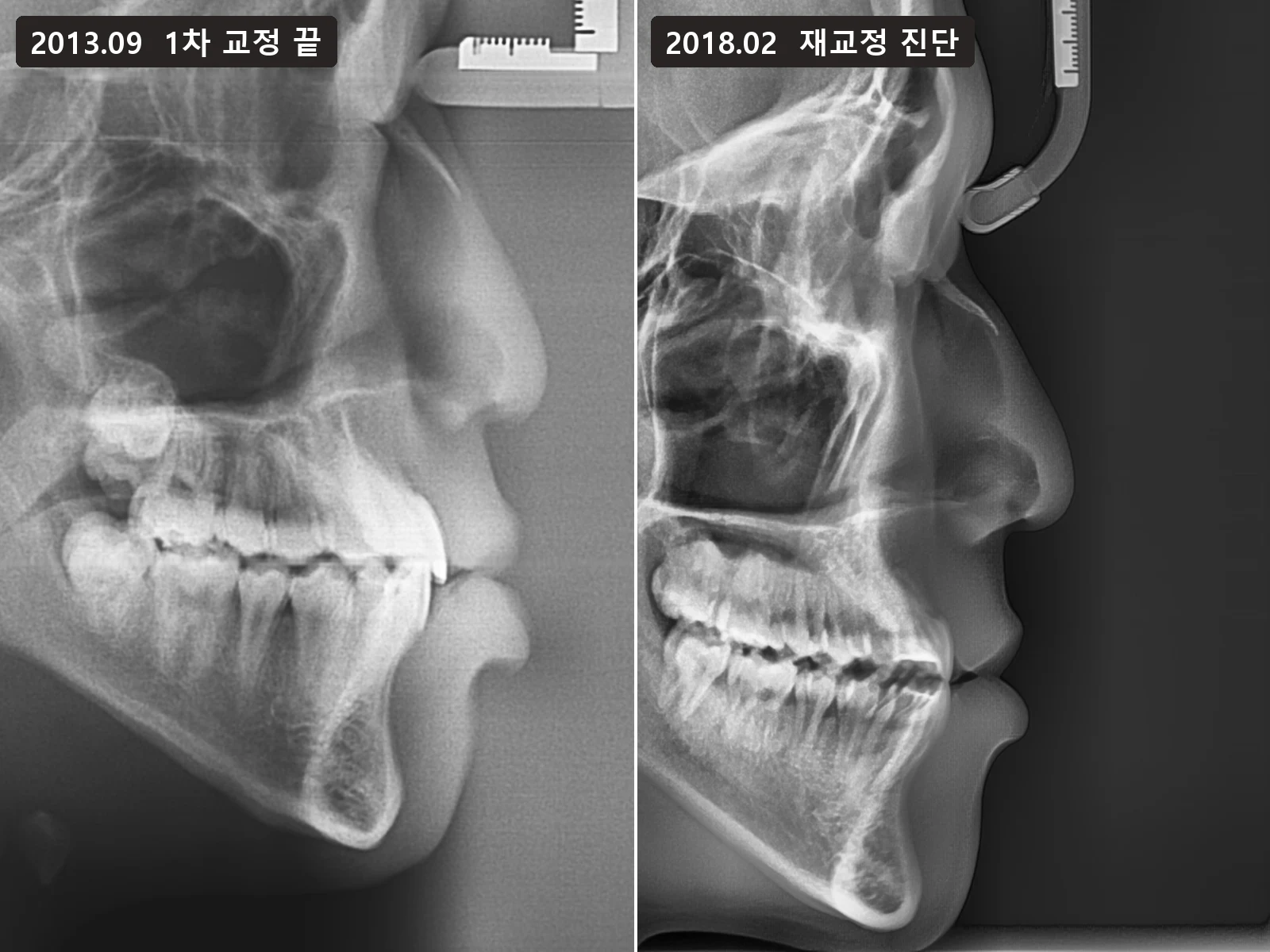
Side-view X-rays at the end of the first treatment (2013) and at the re-treatment diagnosis (2018). Front teeth that had overlapped normally came to meet edge to edge as the lower jaw grew in the meantime.
Retainer came off
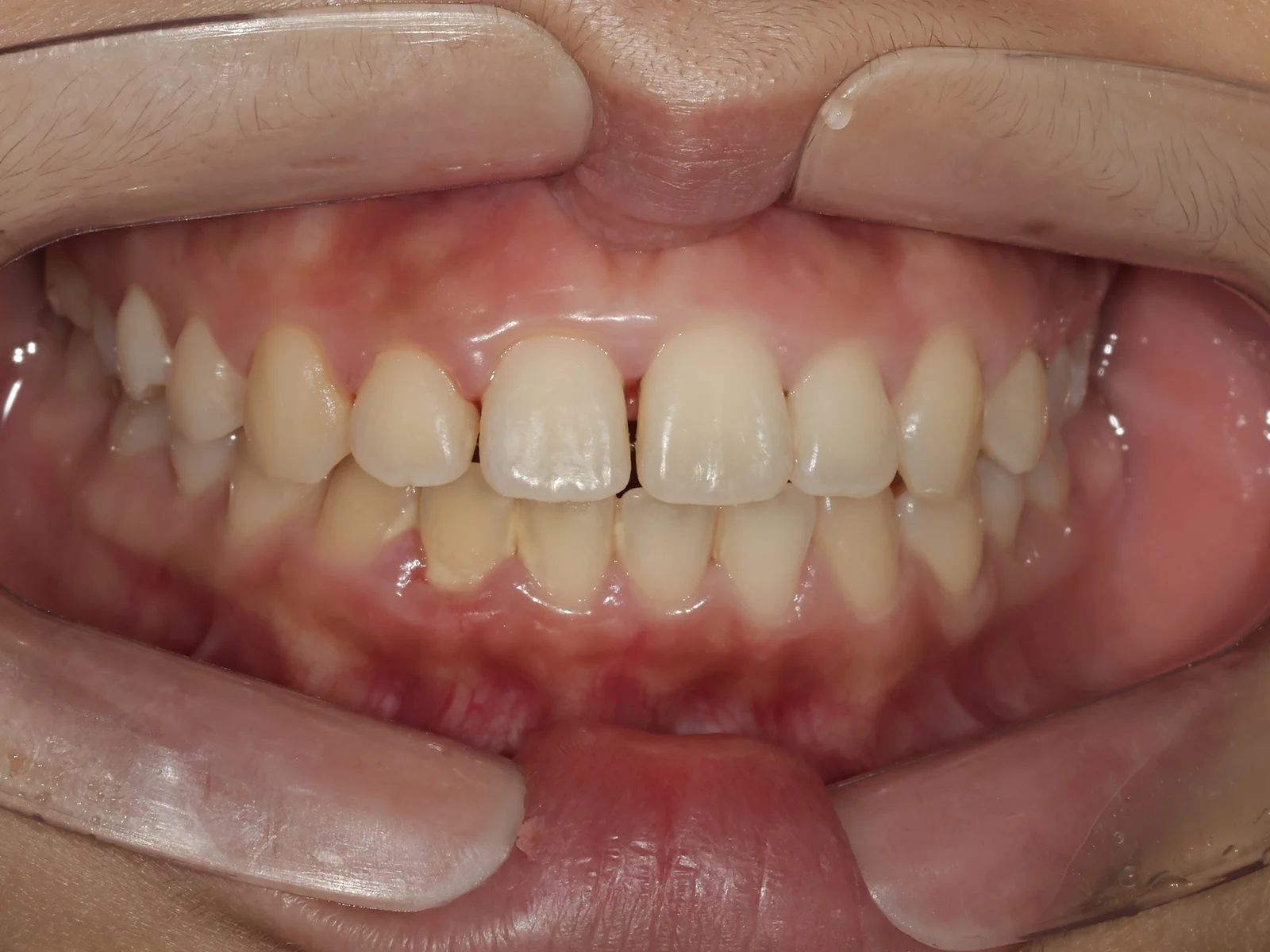
A gap opened between the central front teeth after the fixed retainer behind the upper front teeth came off. The teeth start moving again from the spot where it came off.
Shifting again is partly just the nature of teeth. The purpose of finding the cause is not to decide whose fault it was, but to make the second treatment last.
03°
How re-treatment works
It follows the same five steps as the first treatment, but because the teeth have already been moved once, there are extra checks at each step. We explain them with real clinical photos.
Facial photos · AI illustration
Intraoral photos
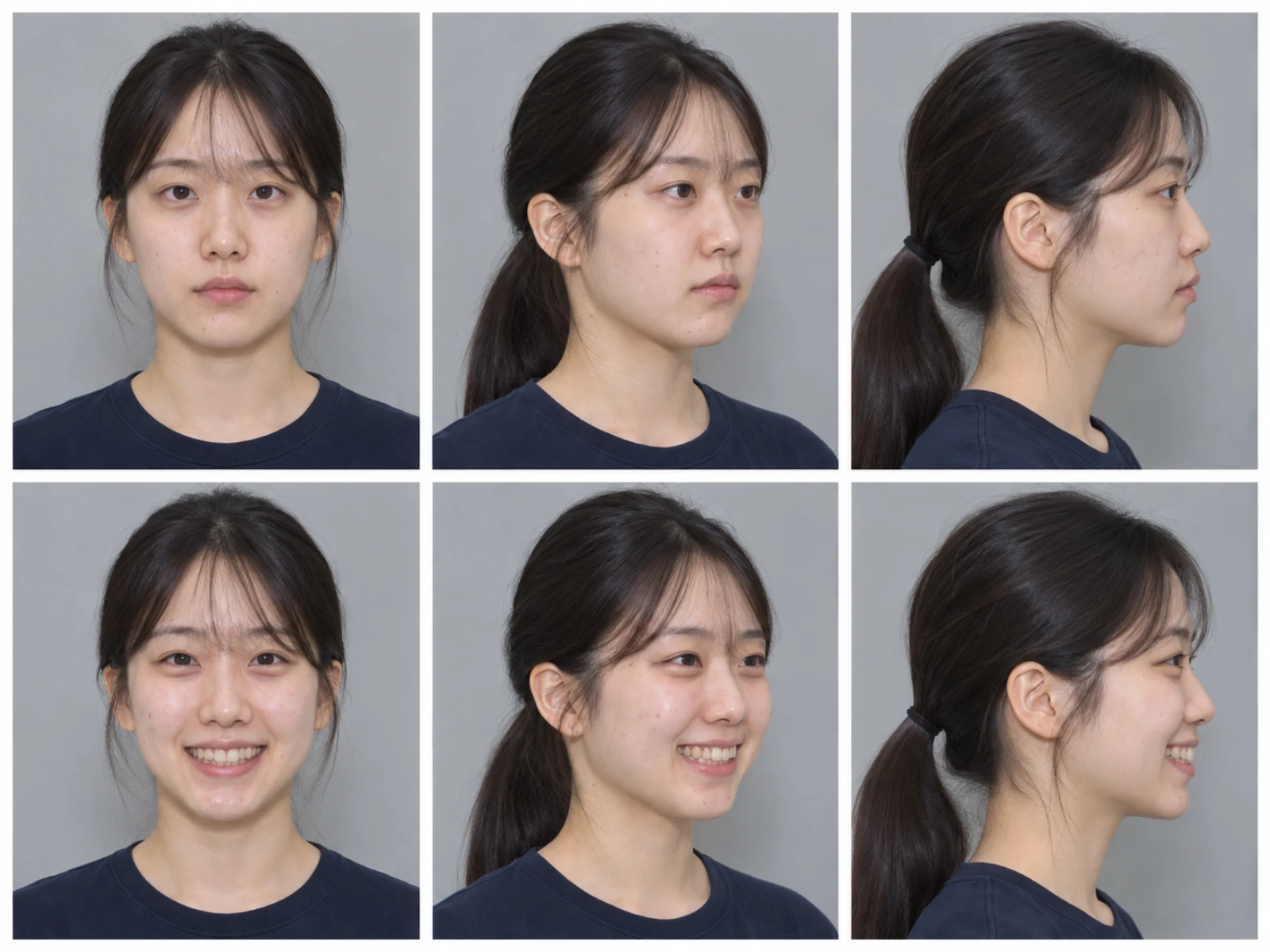
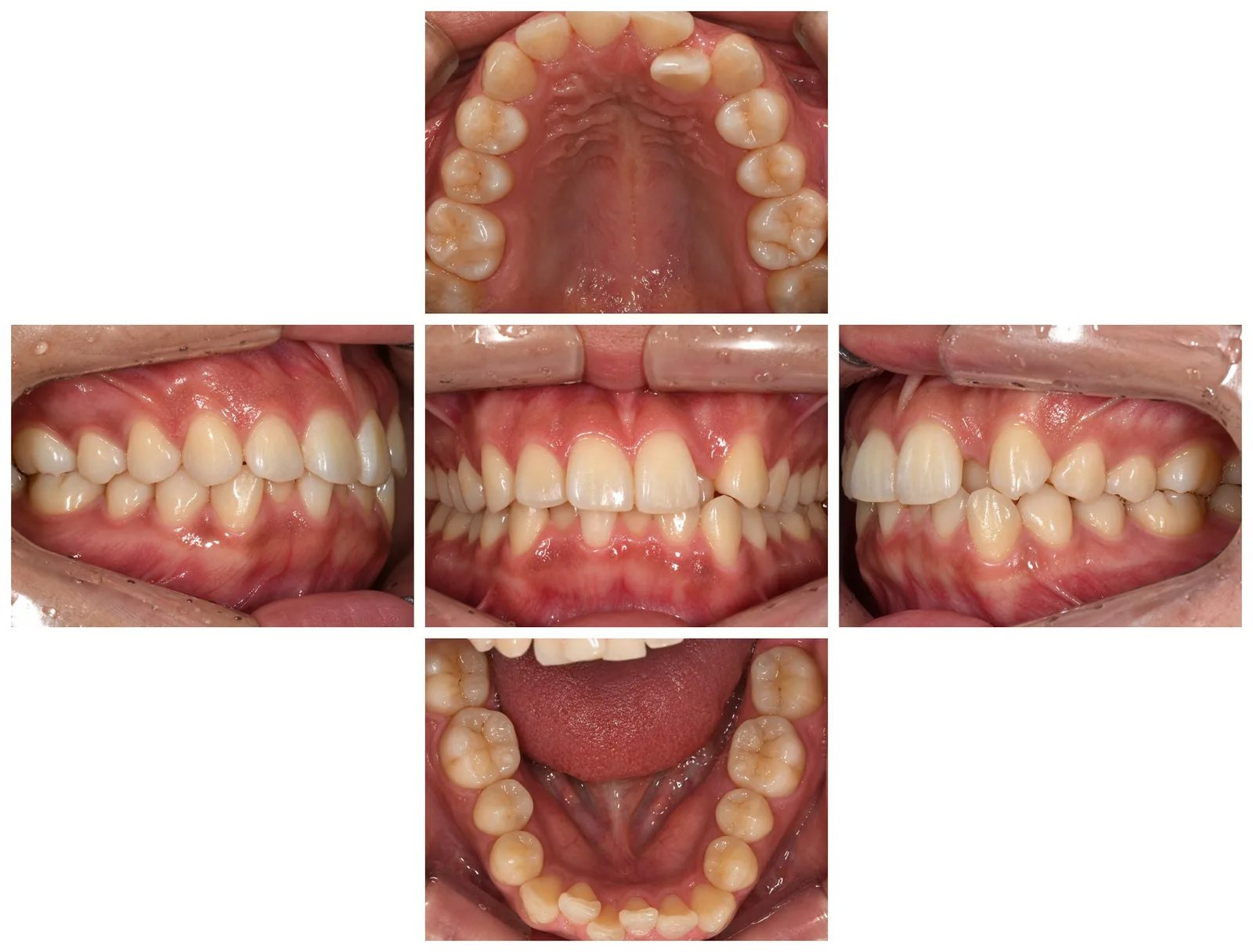
Current facial and intraoral photos. If previous treatment records exist, we place them side by side to see which teeth moved, since when, and in which direction. The facial photos are an AI-generated example illustration to help explain.
STEP 01
We find out why the teeth shifted again
We take current intraoral photos, an iTero intraoral scan, and a side-view X-ray (cephalogram), and look at previous treatment records (photos, X-rays, diagnosis documents) if you have them. You can have a consultation even without records. We also ask since when you stopped wearing your retainer and whether you have a tongue habit.
Why we do thisIf the retainer was the cause, redoing only the front teeth is enough, but if the direction of the first plan or growth was the cause, the scope is different. Straightening the teeth again without knowing why can lead to the same thing happening again.
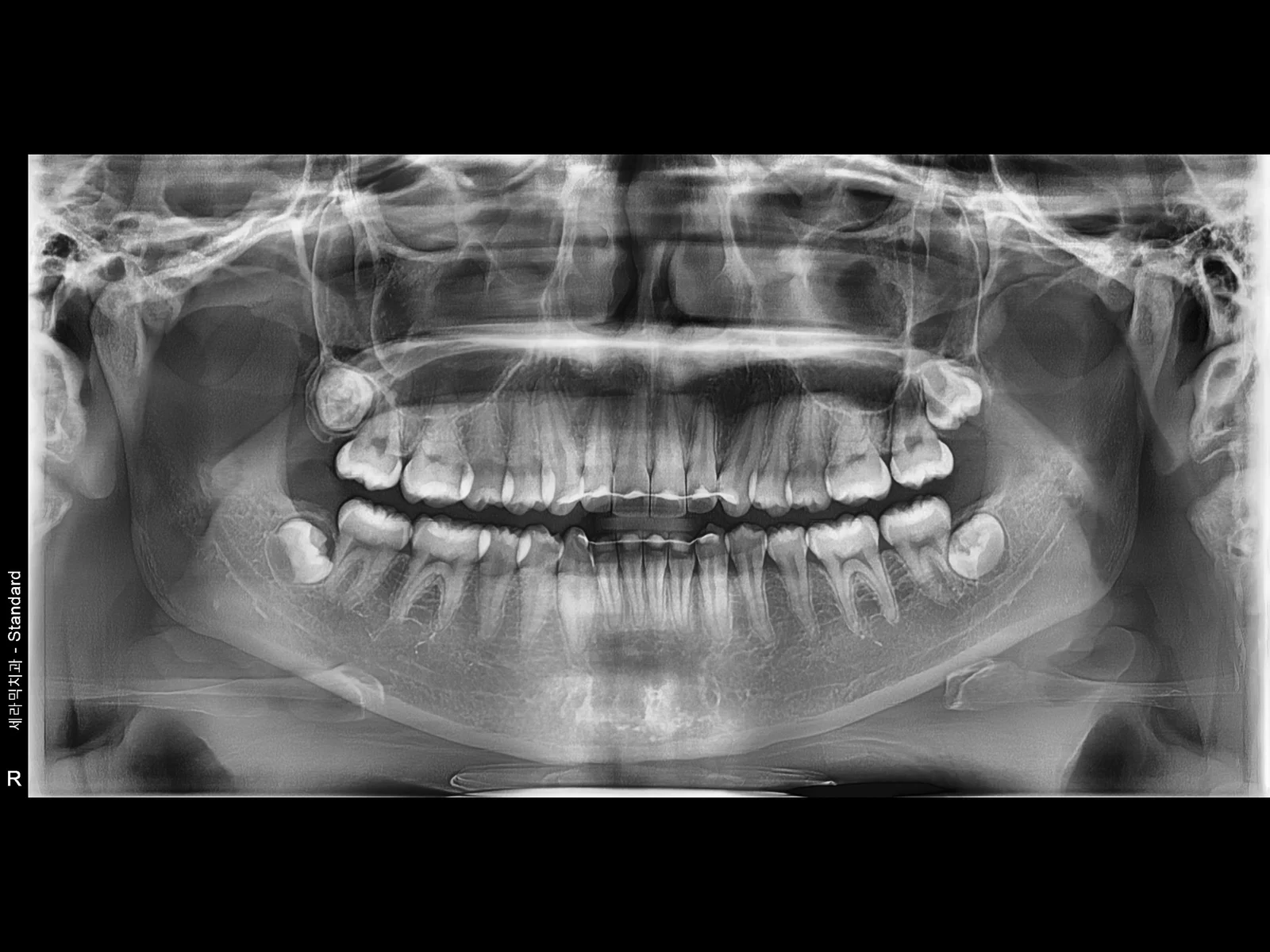
Checking roots and bone
Checking roots before re-treatment. With a panoramic X-ray and, if needed, 3D CT, we check whether the roots became shorter during the previous treatment and how much bone remains around the front teeth.
STEP 02
We first check root length and gum bone
We check root length on a panoramic X-ray, and if the bone at the front teeth looks thin, we check its thickness on 3D CT. For adults, Dr. Ilseop Ahn, a board-certified periodontist and specialist in integrated dentistry, also checks gum pocket depth and how far the gums have receded. We also check whether there is pain or sound in the jaw joint.
Why we do thisIf the roots became shorter or the bone became thinner during the first treatment, the amount the teeth can be moved again is smaller. Moving them like the first time without this check can shorten the roots further or make the gums recede.
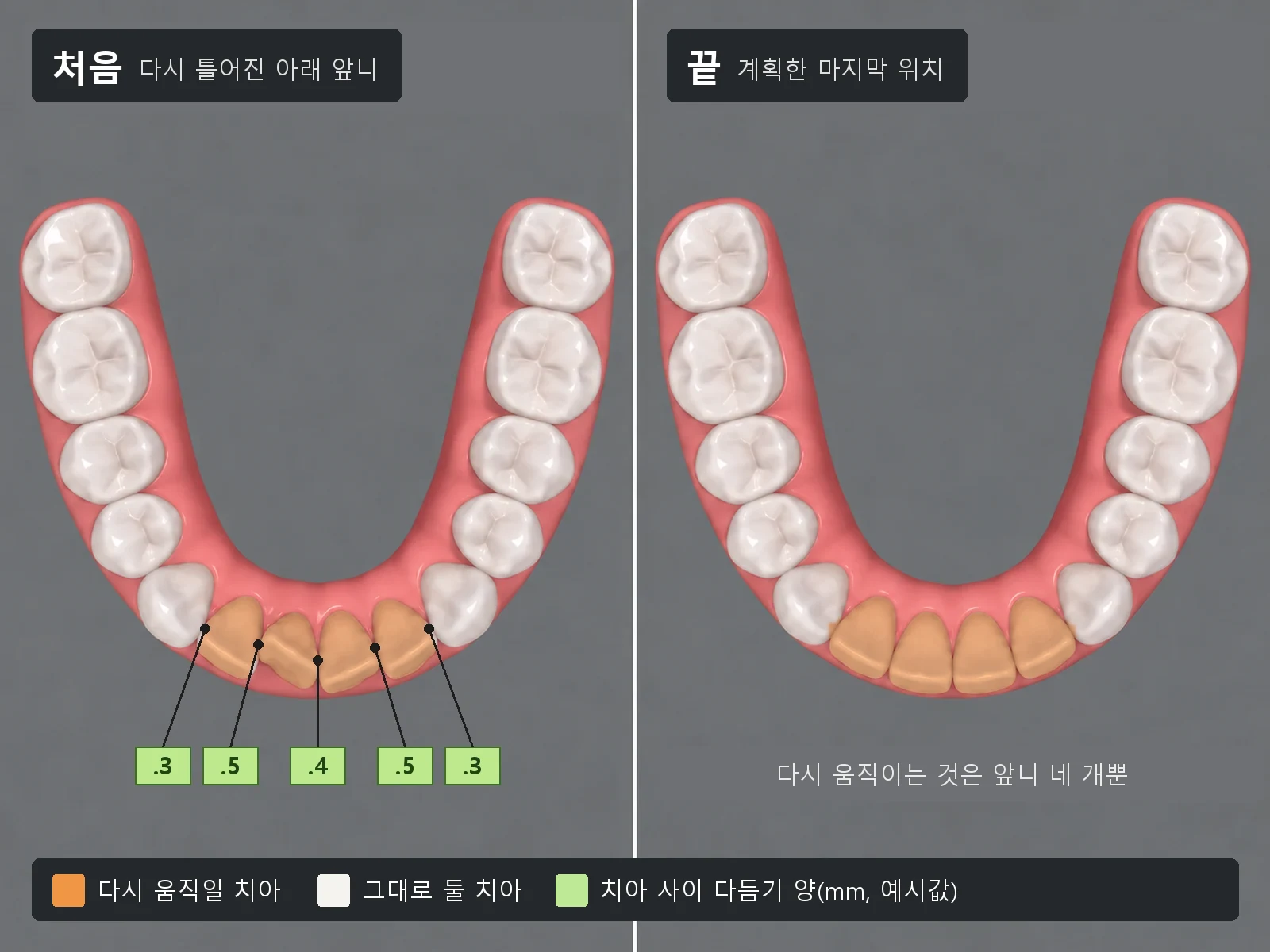
Setting the scope
Example re-treatment plan screen. We separate the teeth to be moved again from those left as they are, and plan to move only the teeth that truly need it.
STEP 03
We limit the scope to only the teeth that need it, only as much as needed
For small changes, we first see whether adjusting the retainer can reverse them; for a few front teeth, we plan partial re-treatment or clear aligners; and if the bite or lip position is the problem, full re-treatment. We show you the movement in advance on a digital model and explain the duration and limits.
Why we do thisThe more teeth that have already had braces are moved, the more strain builds up on the roots and gums. So we set the scope and amount of movement more conservatively than in the first treatment, and tell you in advance if any part cannot be resolved.
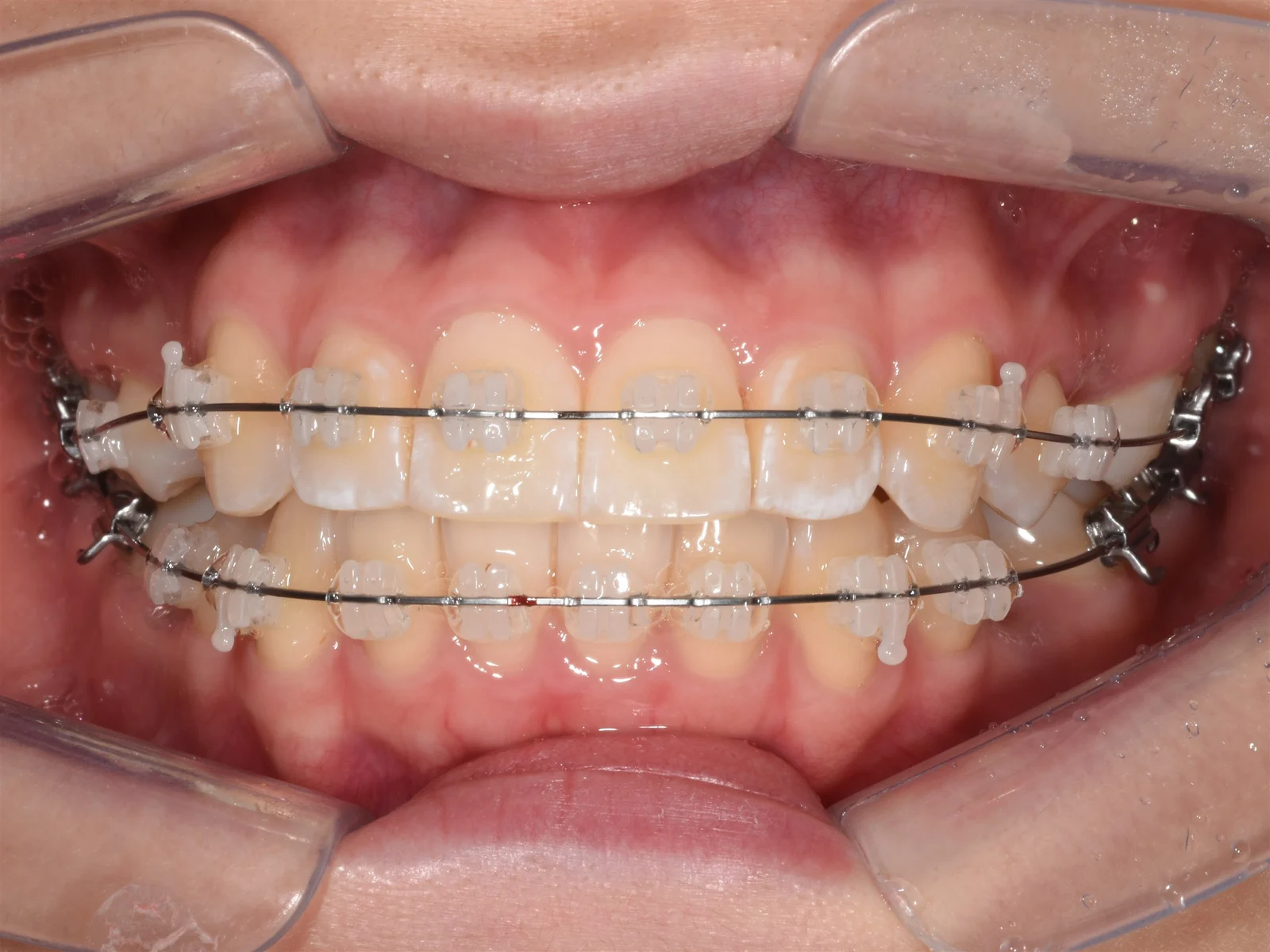
Start · Sep 2020
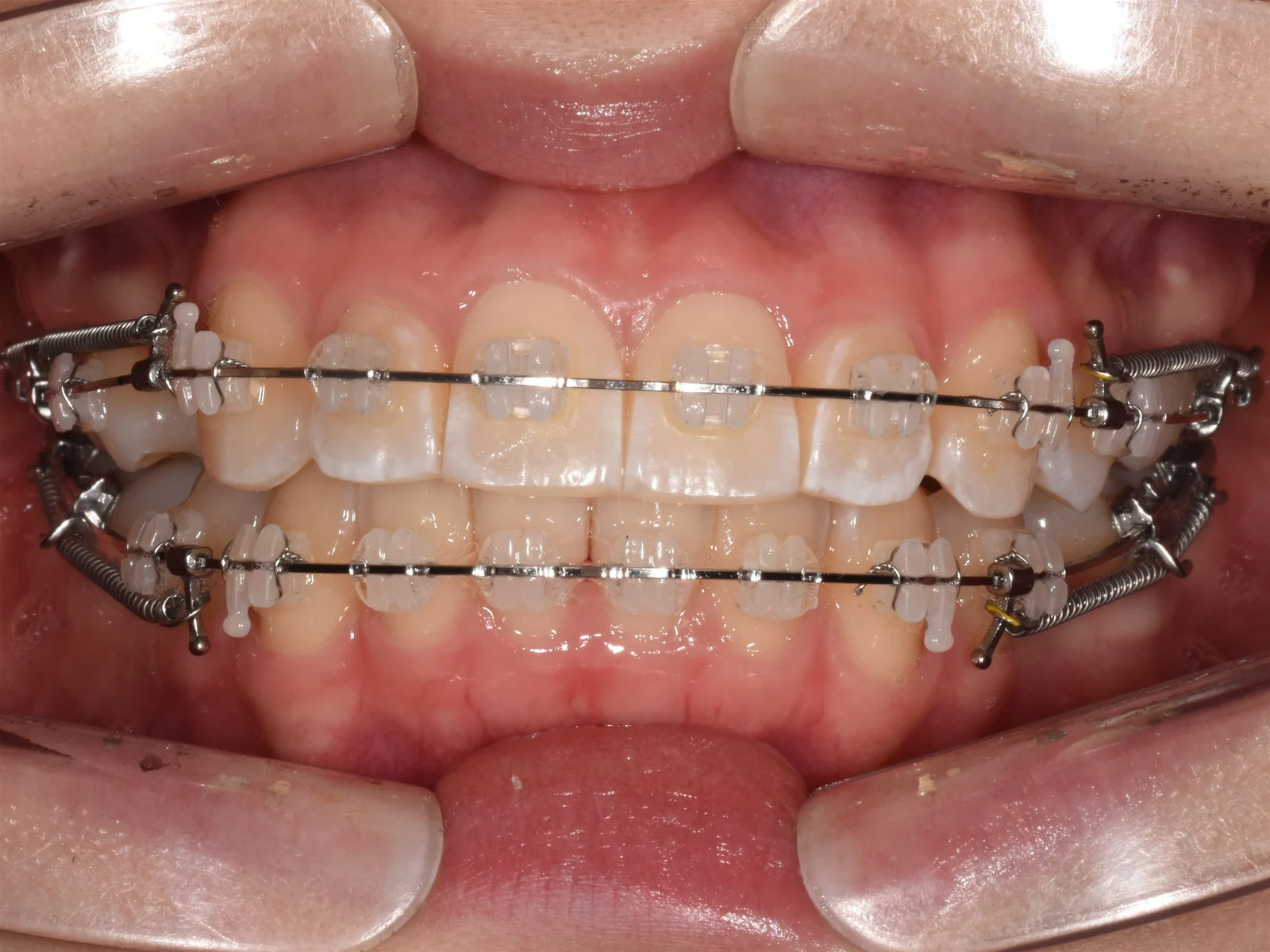
Midway · Nov 2020
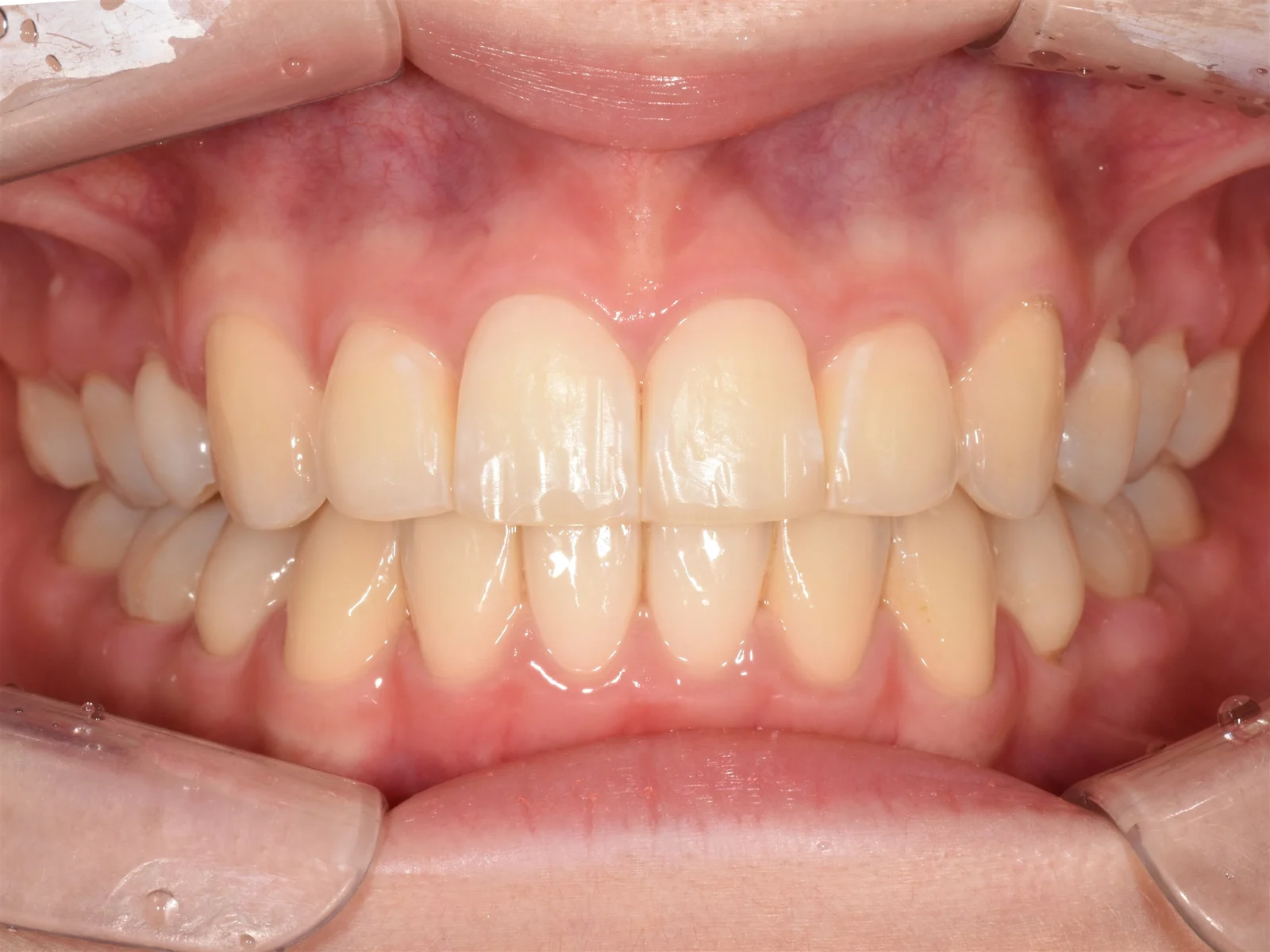
Done · Sep 2021
The same patient's re-treatment. The teeth are moved with light forces, and root condition is checked again midway.
STEP 04
We move the teeth with light forces and check the roots again midway
We start with a thinner wire and lighter forces than in the first treatment, and check root length again with X-rays midway through treatment. If there are signs of root shortening, we pause the movement for a while.
Why we do thisHow much roots shorten is related to how strong the force on the teeth is and how long it is applied. I have done research directly measuring the force and turning force on teeth, so in re-treatment I pay even more attention to choosing light forces that are just enough.
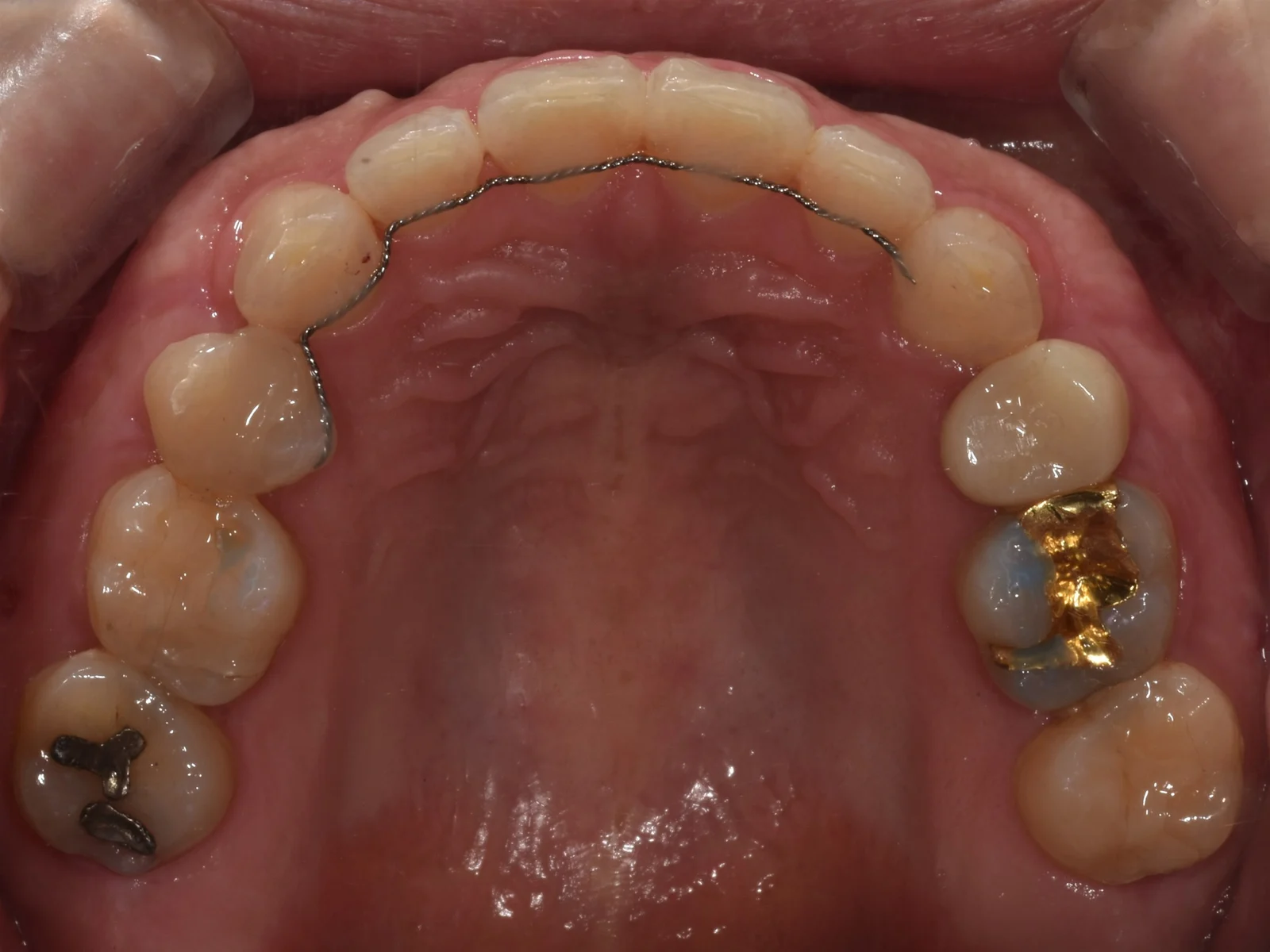
Fixed
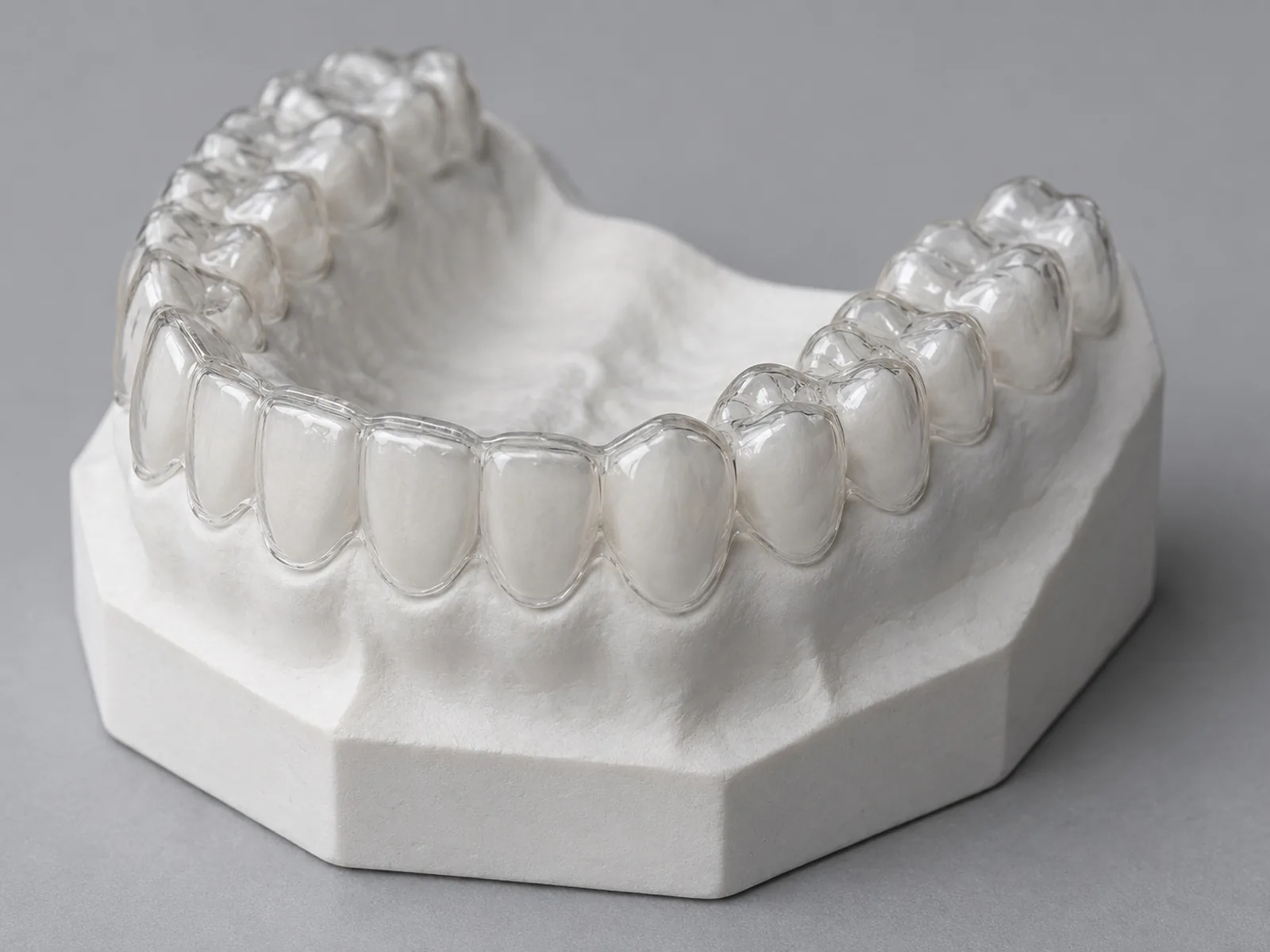
Clear retainer
Retainers after re-treatment. Depending on why the teeth shifted, fixed and clear retainers are used together.
STEP 05
We plan retention around the reason the teeth shifted
If the retainer was the cause, we use fixed and clear retainers together; if a tongue habit was the cause, we also work on correcting the habit. When you finish braces at Ceramic Dental Clinic, retainer check-ups and adjustments for 2 years are included in the orthodontic fee.
Why we do thisIf the second treatment is retained only the same way as the first, the teeth can shift again for the same reason. We change the retention method to suit the cause and protect the second result for a long time.
* Clinical photos are published with the patient's consent. Some people may have side effects such as temporary pain or discomfort.
Please bring your previous treatment records to the re-treatment consultation if you have them. Even without them, we can judge from the current examination alone.
04°
Do I need to start over, or just redo part of it?
In many cases, only part of the treatment needs to be redone rather than starting over. Looking at the points below, we recommend only as much as is needed: adjusting the retainer, partial re-treatment, or full re-treatment.
Scope of the shift · If only a few front teeth shifted and the back-teeth bite is unchanged, partial re-treatment is often enough.
Bite and lip position · If the upper and lower bite does not fit or the lip position is a concern, we plan the whole treatment again.
Root length · If the roots are already short, the range of movement is smaller, so we set a more modest goal.
Gum condition · If the gums have receded or are inflamed, gum treatment comes first.
Growth · If your treatment ended in your teens, we start after confirming that growth has finished.
Very small changes can sometimes be reversed just by refitting or adjusting the retainer.
05°
Comparing re-treatment options
Adjusting the retainer
Partial re-treatment
Re-treatment with clear aligners
Full re-treatment
Who it suits
Very small changes that happened recently
A few front teeth shifted because of a retainer problem
Shifts mainly in the front teeth, when visible braces are a concern
Mouth moved back too far, bite problems, or interrupted treatment
Scope
Refitting the existing retainer or making a new one
A few front teeth
Mainly the front teeth, wider in some cases
Replanning the whole upper and lower arches
Duration
Usually a few weeks to a few months
Usually 3–6 months
Usually 3–6 months (longer if the scope is wider)
Usually 1 year or more, depending on the scope
Limits
Only for small changes
Does not change the bite or lip position
Must be worn 20 hours or more a day; does not change the bite or lip position
Goals may need to be lowered depending on root and gum condition
If the roots are already short, the range of movement is limited whichever method is used.
06°
For these people, another treatment comes first, or treatment is not needed
This suits you if you have
The reason the teeth shifted again is clear, and your root and gum condition allow it
A few front teeth shifted because you could not wear your retainer
Your first treatment was never finished
Another treatment comes first
Receded or inflamed gums: a periodontist's check and treatment come first
Jaw joint pain: we treat the pain first
Teens who are still growing: we check whether growth has finished
Not needed for now
Changes so small that adjusting the retainer or watching is better
Roots so short that keeping the current state is better than moving the teeth
07°
Self-check
If you send current photos of the inside of your mouth and tell us when you had your previous braces, we can give you a rough direction before the consultation.
08°
Side effects and limits
Please read
· If the roots are already short, the range of movement is limited, and roots can become even shorter during re-treatment. We check with X-rays during treatment.
· Receded gums do not grow back with braces.
· If the mouth was moved back too far, uprighting the front teeth can slightly increase lip support, but there is a limit to returning to the lip position before the first treatment.
· When teeth are straightened, dark triangles (black triangles) may appear in the gums between the teeth.
· Even after re-treatment, teeth can shift again if the retainer is not worn consistently.
FAQ
FAQ
I had braces at another clinic. Can I have a re-treatment consultation?
Yes, patients who had braces at another clinic can have a re-treatment consultation. If you have previous treatment records (photos, X-rays, diagnosis documents), we overlay them with the current examination to compare; if not, we judge from the current examination alone.
Does re-treatment have to start over from the beginning?
If only a few front teeth shifted because the retainer could not be worn, partial re-treatment is often enough without starting over. If the bite does not fit or the lip position is a concern, we plan the whole treatment again.
Is re-treatment shorter than the first treatment?
Partial re-treatment of only the front teeth usually takes 3–6 months, shorter than the first treatment. Full re-treatment can take 1 year or more depending on the scope, and longer if the roots require slow movement.
Do I need my previous orthodontic records for re-treatment?
Re-treatment consultation and diagnosis are possible without previous records. If you have them, we can overlay the state right after your first treatment with now and see exactly which teeth moved and by how much, which helps us find the cause.
I was told my roots have become shorter. Can I still have re-treatment?
Teeth with shortened roots can sometimes be re-treated, but the range they can move is smaller, so we plan more conservatively than the first time. We first check root length with a panoramic X-ray and, if needed, 3D CT, and check again during treatment.
My mouth was moved back too far by braces. Can it be brought forward again?
Re-treatment that uprights front teeth tilted inward and slightly increases lip support is possible. However, it does not bring back the space of teeth that were removed, so returning to your lip position before the first treatment is difficult, and we first explain the range of change you can expect. How much the teeth can be uprighted is limited by the position of the front-teeth roots and the thickness of the gum bone, so it is usually only a slight forward change.
Can re-treatment be done with clear aligners?
Re-treatment where mainly the front teeth have shifted is often done with clear aligners. If the bite needs to be reset or the front-teeth root angles must change a lot, fixed braces may be more precise, so we decide together after the examination.
Does re-treatment cost the same as the first treatment?
Re-treatment costs depend on the scope. Adjusting a retainer or partial re-treatment of the front teeth costs less than full braces, and detailed fees are gathered on our treatment cost page.
Evidence and references
Kim S, et al. Influence of different ligation methods on force and moment generation in a simulated condition of the maxillary crowded anterior dentition with linguo-version and rotation. Bio-Medical Materials and Engineering, 2022. doi:10.3233/BME-211288 (Measured orthodontic force and turning force on teeth)
Retainers and the 2-year check-ups after braces: Retainers page
Questions from patients who travel to Seoul for treatment.
How much does orthodontic treatment cost?
The fee depends on the appliance. For example, metal braces are KRW 4,800,000, ceramic braces KRW 6,000,000, Invisalign KRW 8,500,000 and lingual braces KRW 8,600,000. The orthodontic fee includes the orthodontic diagnosis, extraction (except wisdom teeth), mini-screws, basic retainers and retention care for 2 years. If you have only the diagnosis and do not start treatment, it is KRW 50,000 (KRW 100,000 if a CT scan is needed). If a retainer breaks or is lost later, remaking it costs extra. International and Korean patients pay the same fees. We explain the total before treatment starts. See our fee schedule.
Can I continue treatment after I go home?
Yes, but it needs a plan. Fixed braces need regular adjustment visits: the first two visits are 2 weeks apart, then usually once a month. Clear aligners are easier from abroad: after you receive your aligners, you visit once every 2–3 months, and between visits we check by photo only if something comes up. Your doctor tells you at diagnosis which method fits your case.
Can I have my consultation in English?
Yes. The doctor in charge of each field consults with you directly in English. For orthodontics, this is Dr. Sunmin Kim, a board-certified orthodontist. Before you travel, you can send photos of your teeth on WhatsApp or by email. An accurate diagnosis is made after we examine you in person.
What happens after treatment, and what if something comes off?
You need retainers after treatment, because teeth tend to move back. Retention care for 2 years is included in the orthodontic fee. If a bracket comes off or a wire hurts after you go home, send us a photo on WhatsApp. We check it and tell you what to do. Some repairs need a visit.
I started orthodontic treatment at another clinic. Can you take over?
Yes. We also see patients who started orthodontic treatment at another clinic. We examine you first and then explain the plan. Records from your previous clinic, if you have them, help us plan.
Results, the number of visits and schedules vary from person to person. More questions: Visiting from abroad.


 Before · Feb 2026
 After · Aug 2026
 Before · Oct 2021
 After · Nov 2024
 Before · Mar 2022
 After · Nov 2025
 Before · Mar 2022
 After · Nov 2025
 Before vs. now
 Retainer came off
 Facial photos · AI illustration
 Intraoral photos
 Checking roots and bone
 Setting the scope
 Start · Sep 2020
 Midway · Nov 2020
 Done · Sep 2021
 Fixed
 Clear retainer