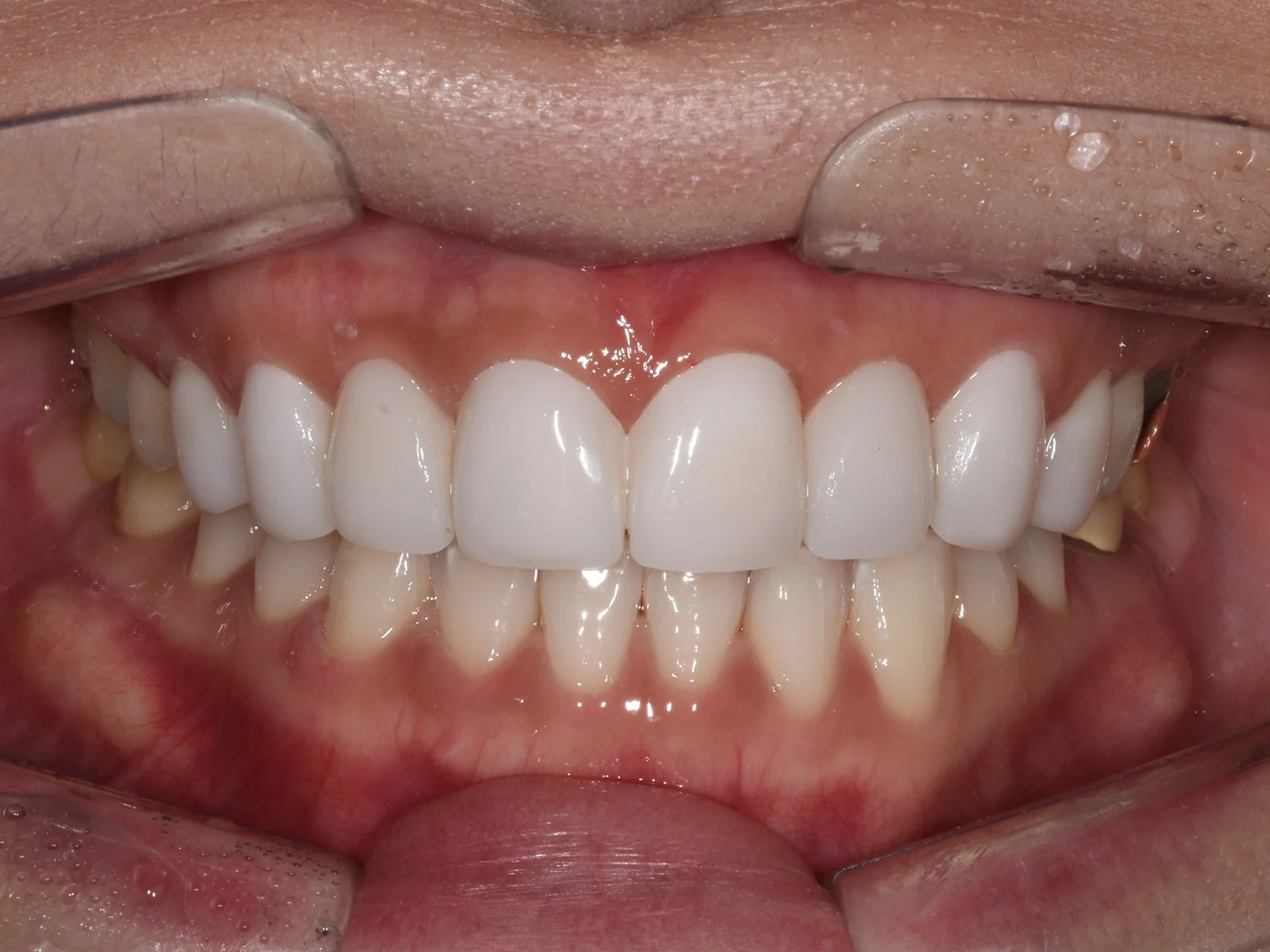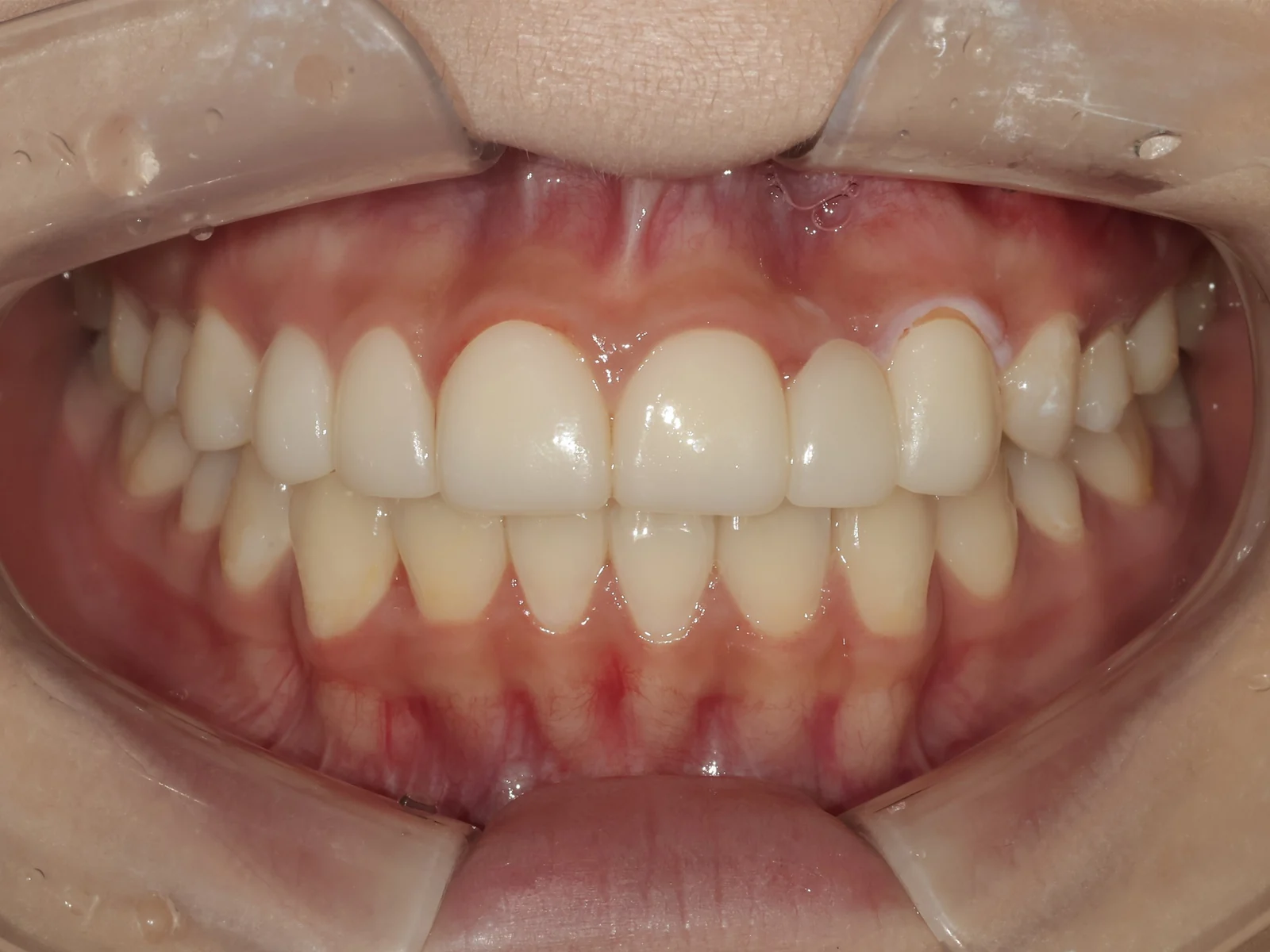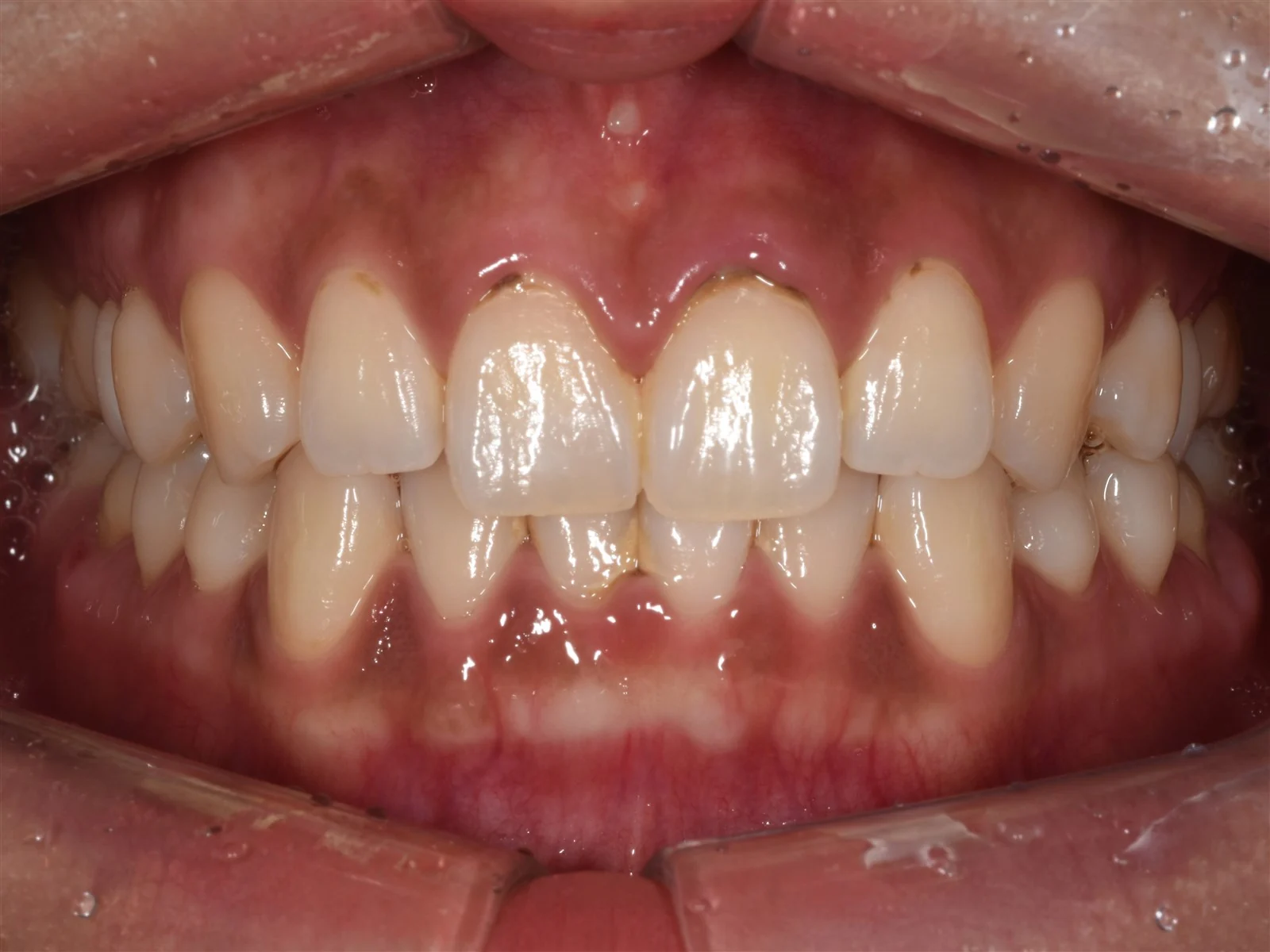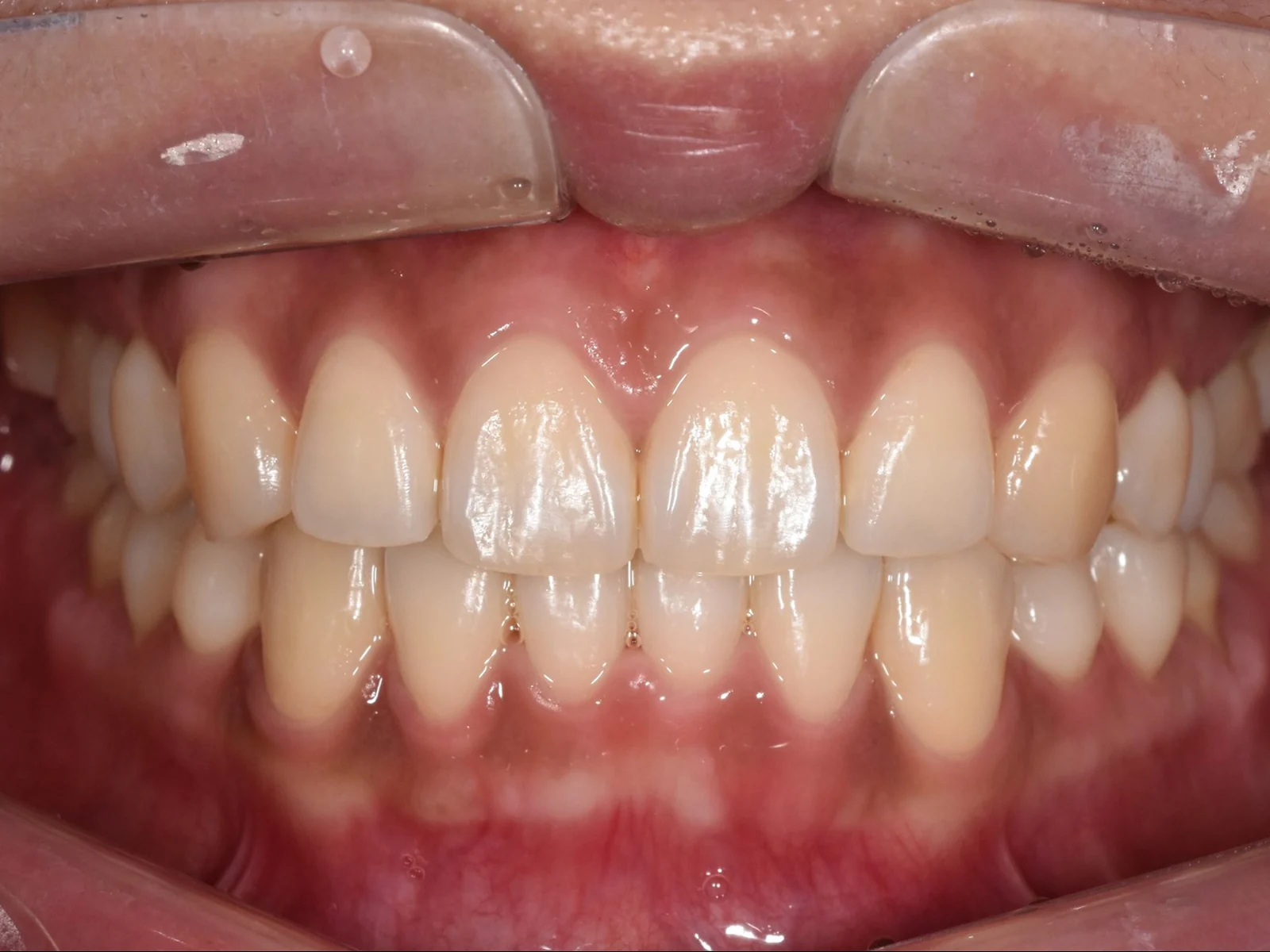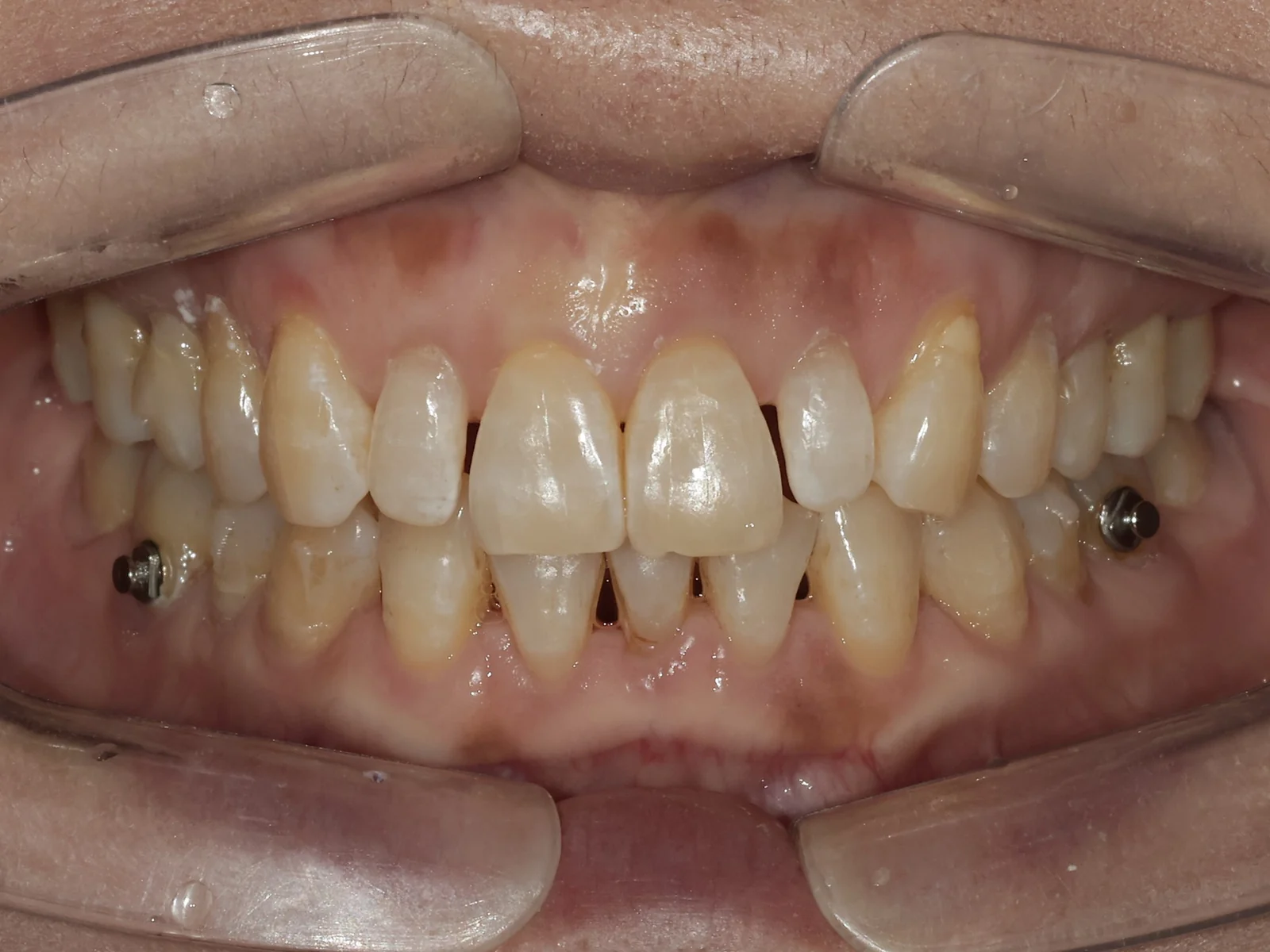
ORTHO OR VENEER

Veneers or Braces: Which Should Come First?

Dr. Sunmin Kim, Head DentistTreated by Dr. Sunmin Kim (board-certified orthodontist, makes the decision) · Dr. Ilseop Ahn (board-certified periodontist and specialist in integrated dentistry) · Reviewed by Dr. Sunmin KimAbout the doctor →

Last reviewed October 29, 2026 · Dr. Sunmin Kim (board-certified orthodontist, Certified Orthodontist of the Korean Association of Orthodontists)

At a glance

Good for
You are not sure whether your front-teeth concern is about color and shape or about position
Treatment flow
Talk about your concern → Measure front-teeth angle and crookedness → Compare veneers only with veneers after partial orthodontics
Duration and limits
If you have both problems, one option is partial orthodontics for the front teeth (usually 4–6 months) followed by veneers with less shaving
Details

If your concern is the color or shape of your teeth, veneers usually come first. If your teeth stick out or are crooked, which is a position problem, orthodontics often comes first. Hiding a position problem with veneers means shaving the tooth as much as it sticks out. This can bring the preparation close to the nerve, and shaved tooth structure cannot be restored. If you have both problems, one option is to move only the front teeth, usually over 4–6 months, and then place veneers with less shaving or none. At Ceramic Dental Clinic, a board-certified orthodontist measures the angle of your front teeth and how crooked they are in mm. In one consultation, we compare side by side the time and the amount of shaving for veneers only and for veneers after partial orthodontics.

01°

Veneers, orthodontics first, or orthodontics alone

The same front-teeth concern can lead to three different answers. These cases show how we actually decided.

CASE01

Crooked front teeth corrected with veneers

8 CERANATE veneers (#14–24) and gum contouring · Minimal shaving except on parts that stuck out · Crooked lower front teeth left as they were
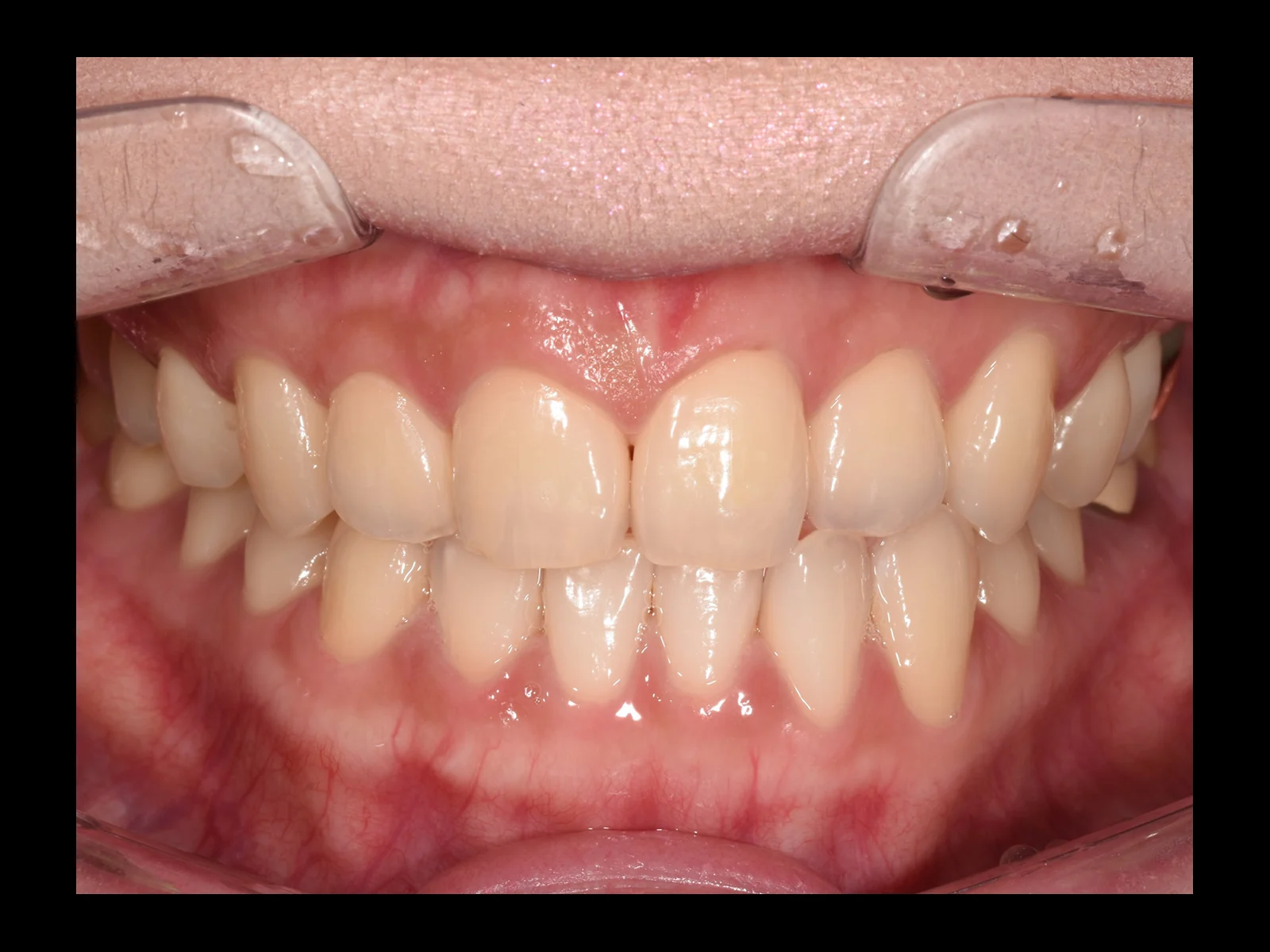
Front view inside the mouth showing the upper and lower front teeth before veneersBefore · Aug 2025
Before. The 4 upper front teeth are rotated and out of line with each other, the dental arch is a narrow V shape so the proportions of the 6 front teeth do not match, and the gum line differs between left and right.
Front view inside the mouth on the day CERANATE veneers were placed on the upper front teethAfter · Oct 2025
After. We first evened out the gum line, then redesigned the proportions of the 8 upper teeth (#14–24) and placed the veneers. Only the parts that stuck out forward were trimmed further.
Condition
4 upper front teeth rotated and crooked, narrow V-shaped arch, gum line different on left and right, chipped and worn front-tooth edges, tight front-teeth bite (woman in her early 30s)
Chosen
8 upper CERANATE veneers (#14–24), gum contouring, minimal shaving except on parts that stuck out
Not done
Orthodontics, treatment of the lower front teeth (the crooked lower front teeth were left as they were, with whitening planned later)
Duration
10 days from preparation to placement, 2 visits
Basis for the decision
The crookedness was within a range that could be corrected by redesigning the proportions, and after comparing it with the time orthodontics would take, the patient chose veneers
CASE02

Small side teeth and a missing tooth: making space with orthodontics first

Space for ceramics made with orthodontics, then gum contouring, a design trial with temporary teeth, and ceramics on 6 front-tooth positions

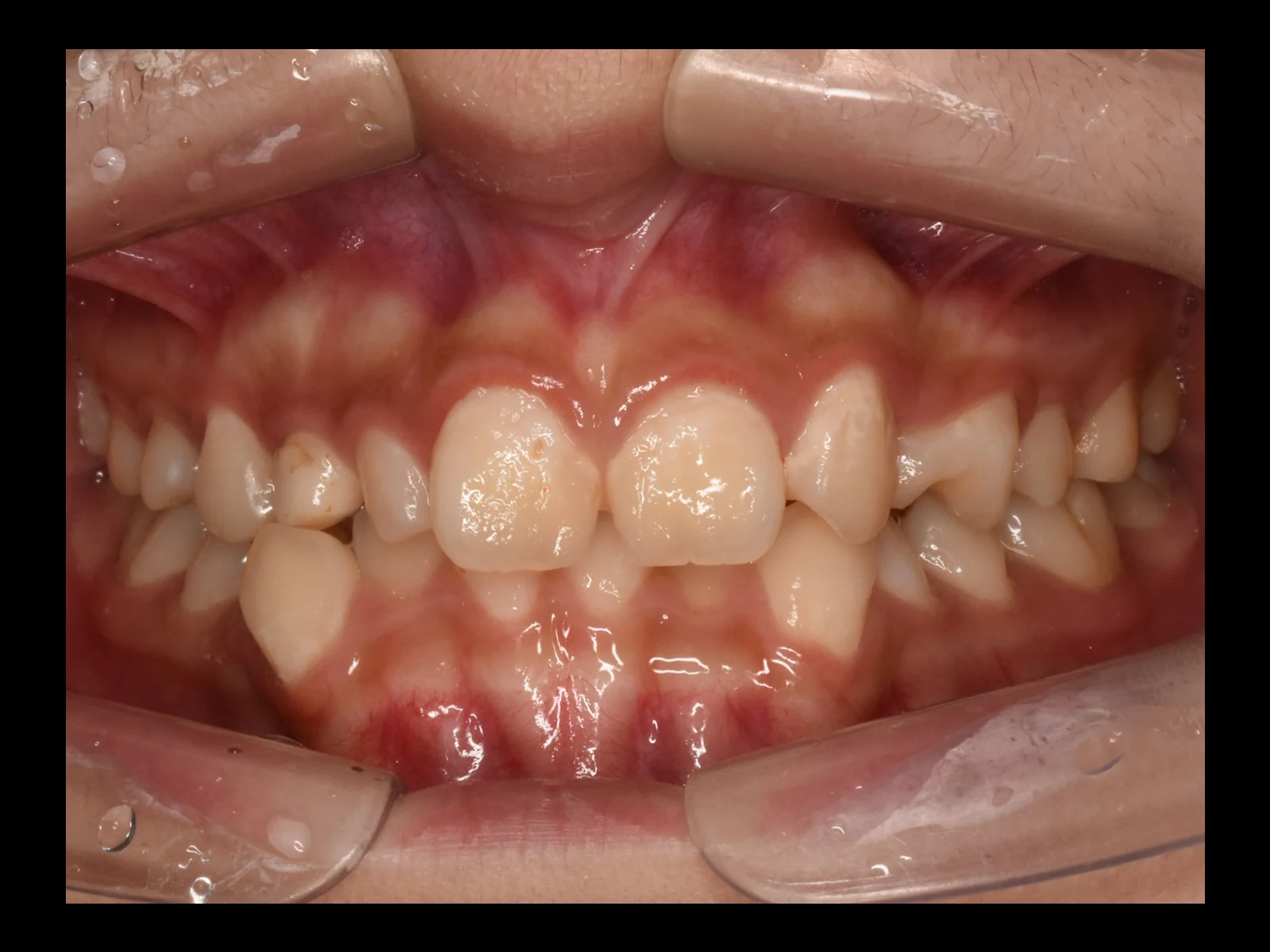
Front view inside the mouth before treatment, with an uneven front-teeth line due to a small side tooth, a remaining baby tooth, and a gapBefore · Dec 2022
Before. The right side tooth is small and pointed, a baby tooth remains, and the left side tooth is congenitally missing, so the size and line of the front teeth are uneven.
Front view inside the mouth after orthodontics and front-teeth ceramicsAfter · Sep 2026
After. Orthodontics made the right space for each tooth, then the 6 front-tooth positions were matched with ceramics and the missing tooth was replaced with a bridge.
Condition
Small right side tooth (peg lateral), remaining baby tooth, impacted right canine, congenitally missing left side tooth, central front teeth larger than the neighboring teeth (woman in her late teens)
Chosen
Making space with orthodontics → Gum contouring → Design trial with temporary teeth → Ceramics on 6 front-tooth positions (bridge for the missing tooth)
Not done
Root canal treatment (the nerves of all teeth were kept)
Duration
Orthodontics about 3 years 2 months, ceramic stage about 7 weeks with 4 or more visits

CASE03

Came for veneers, but orthodontics alone was enough

Partial orthodontics for the front teeth · No veneers

Front view inside the mouth with crooked front teeth before partial orthodonticsBefore · Dec 2021
Before. The shape and color of the teeth were fine, and the concern was caused by the crooked position of the front teeth.
Front view inside the mouth after the front-teeth line was straightened with partial orthodontics, without veneersAfter · Jun 2022
After. Moving only the front teeth to line them up solved the concern without veneers.
Condition
Crooked front teeth, tooth shape and color fine
Chosen
Partial orthodontics for the front teeth (ceramic braces)
Not done
Porcelain veneers
Duration
About 5 months

* Photos were taken under the same conditions and published with the patients' consent. Treatment results and side effects may vary from person to person.

02°

Front-teeth concerns fall into four types

Most people have two or three mixed together. Looking at them one by one shows what should come first.

01Position problem

Front teeth stick out, are crooked or twisted, there is a snaggletooth, or the center of the front teeth does not line up with the center of the face. The cause is where the teeth stand, so orthodontics often comes first.

02Shape and size problem

Front teeth are small, short or worn, or differ in size between left and right. The cause is the shape of the teeth themselves, so veneers can change it.

03Color problem

Teeth are yellow or stained. We try whitening first, and if it does not reach the shade you want, or you also want to change the shape, we consider veneers.

04Gum problem

A lot of gum shows, the gum height differs between left and right, or there are dark gaps between the teeth. Gum diagnosis comes first, because the gum line decides the length of the veneers.

03°

Orthodontics or veneers: how we decide

Five steps in one consultation: we look at position, gums and bite, and compare the time and amount of shaving for each option.

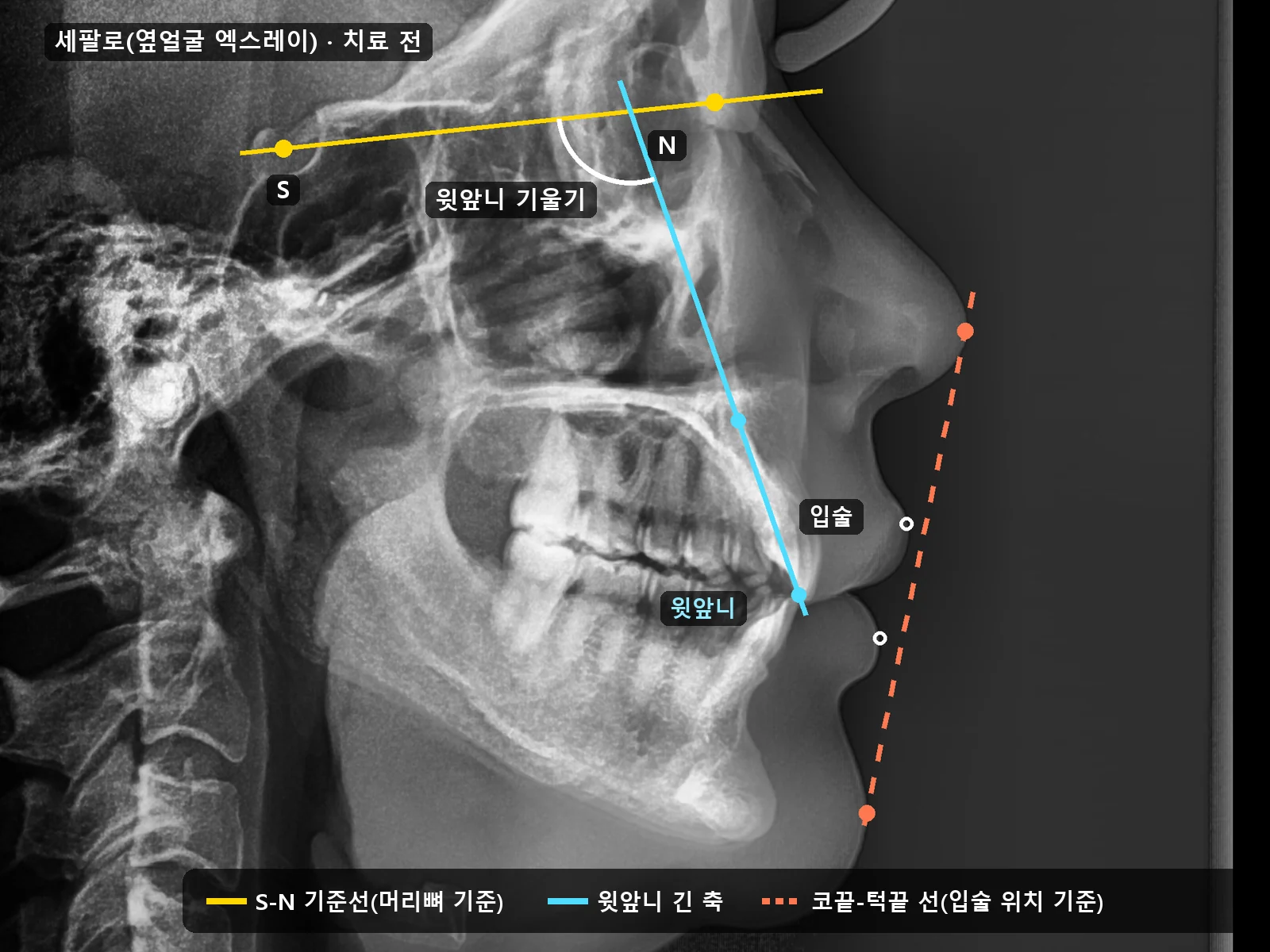
Cephalogram screen with a skull reference line, the long axis of the upper front tooth, and a line from the nose tip to the chin tipFront-teeth angle
On a side-view X-ray of the face (cephalogram), we drew a skull reference line, the long axis of the upper front tooth, and a line from the nose tip to the chin tip. We check how far the upper front teeth tilt forward and how far the lips sit in front of this line.

STEP 01

We measure the tilt of the front teeth on an X-ray

I first look at the angle of the upper front teeth and the position of the lips on a side-view X-ray of the face (cephalogram). If the front teeth tilt far forward, making them look set back with veneers means shaving that much off the front surface.

Why we do thisVeneers are bonded to the front surface of the teeth, so they cannot change the angle at which a tooth stands. If the angle is large and you try to correct it with veneers alone, the shaving can go beyond the enamel and close to the nerve.
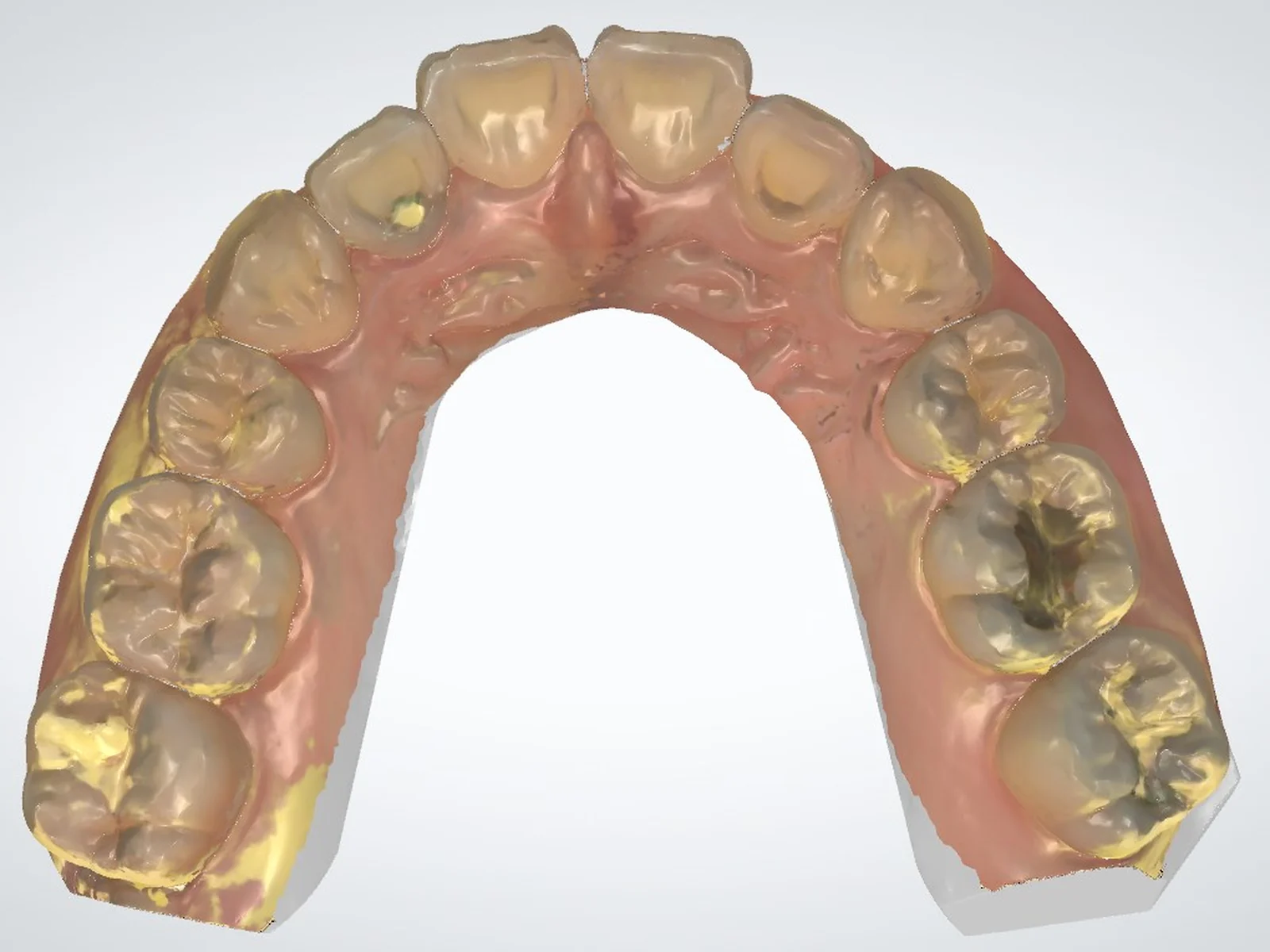
Digital model of the upper jaw made with an intraoral scan, seen from the biting surfaceSpace calculation
Digital model of the upper jaw made with an intraoral scan. On this model, we measure the total of all gaps between the teeth and how crooked the teeth are, in mm.

STEP 02

We calculate gaps and crookedness in mm

On a digital model made with an iTero intraoral scanner, we measure the total gaps between the teeth, how crooked they are, and the difference between the center of the front teeth and the center of the face. The more crooked the teeth, the more the crooked teeth must be shaved to line them up with veneers.

Why we do thisTo line up crooked teeth with veneers, material must be added to teeth set back and shaved off teeth that stick out. Knowing how many mm are involved lets us compare in numbers whether moving the teeth with orthodontics or shaving them does less harm to the teeth.
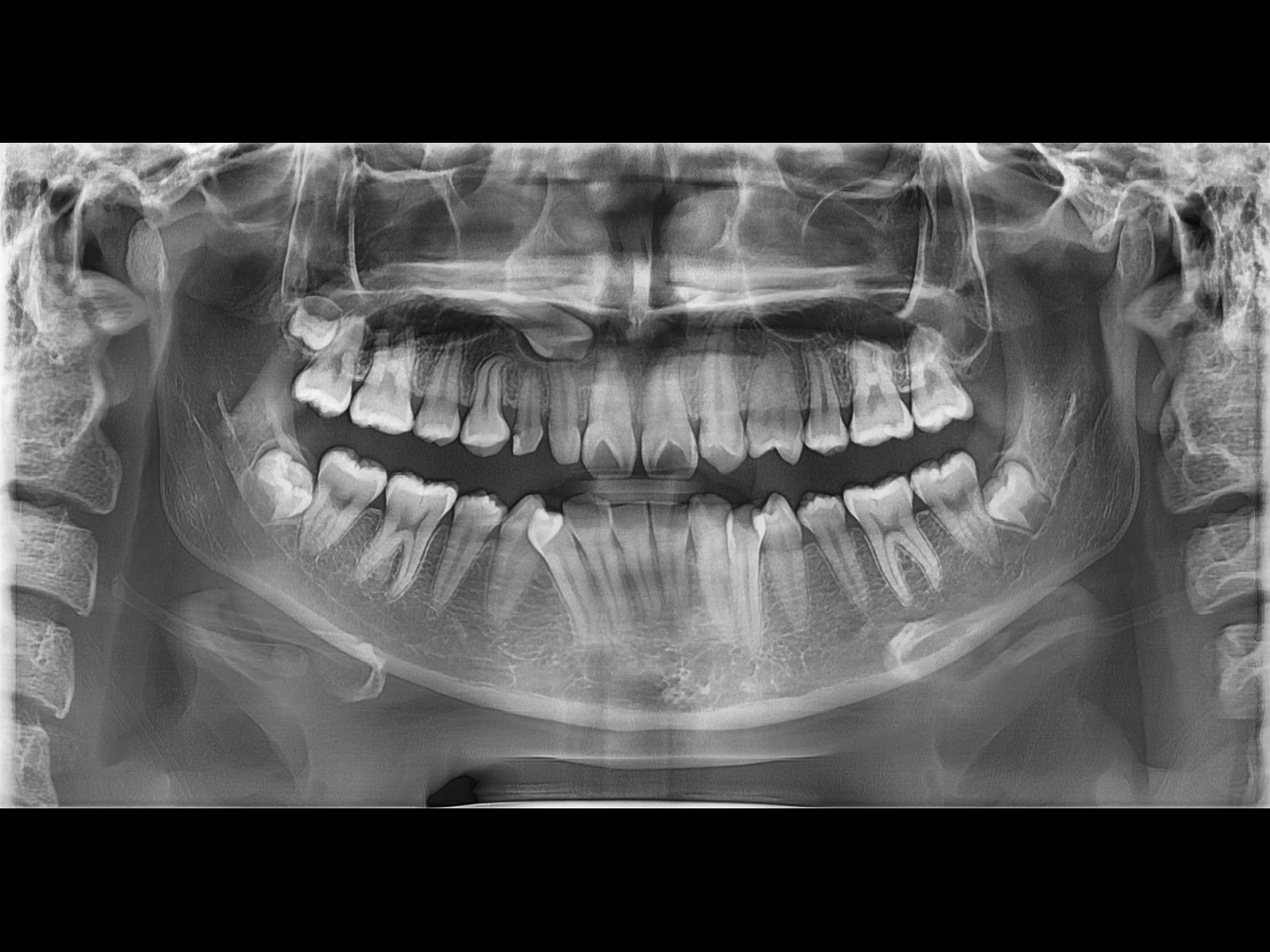
Panoramic X-ray showing the roots of the front teeth and the surrounding boneRoots and bone
Checking roots and bone. How far the front teeth can move is decided by the bone around the roots.

STEP 03

We look at the roots, bone and gums to decide how far the teeth can move

We check the roots of the front teeth and the surrounding bone with a panoramic X-ray and, if needed, a 3D CT. For adults, Dr. Ilseop Ahn, a board-certified periodontist and specialist in integrated dentistry, also checks gum height, thickness and inflammation.

Why we do thisMoving front teeth a long way toward thin bone can cause the gums to recede. We tell you whether partial orthodontics is enough or full orthodontics is needed only after this check.
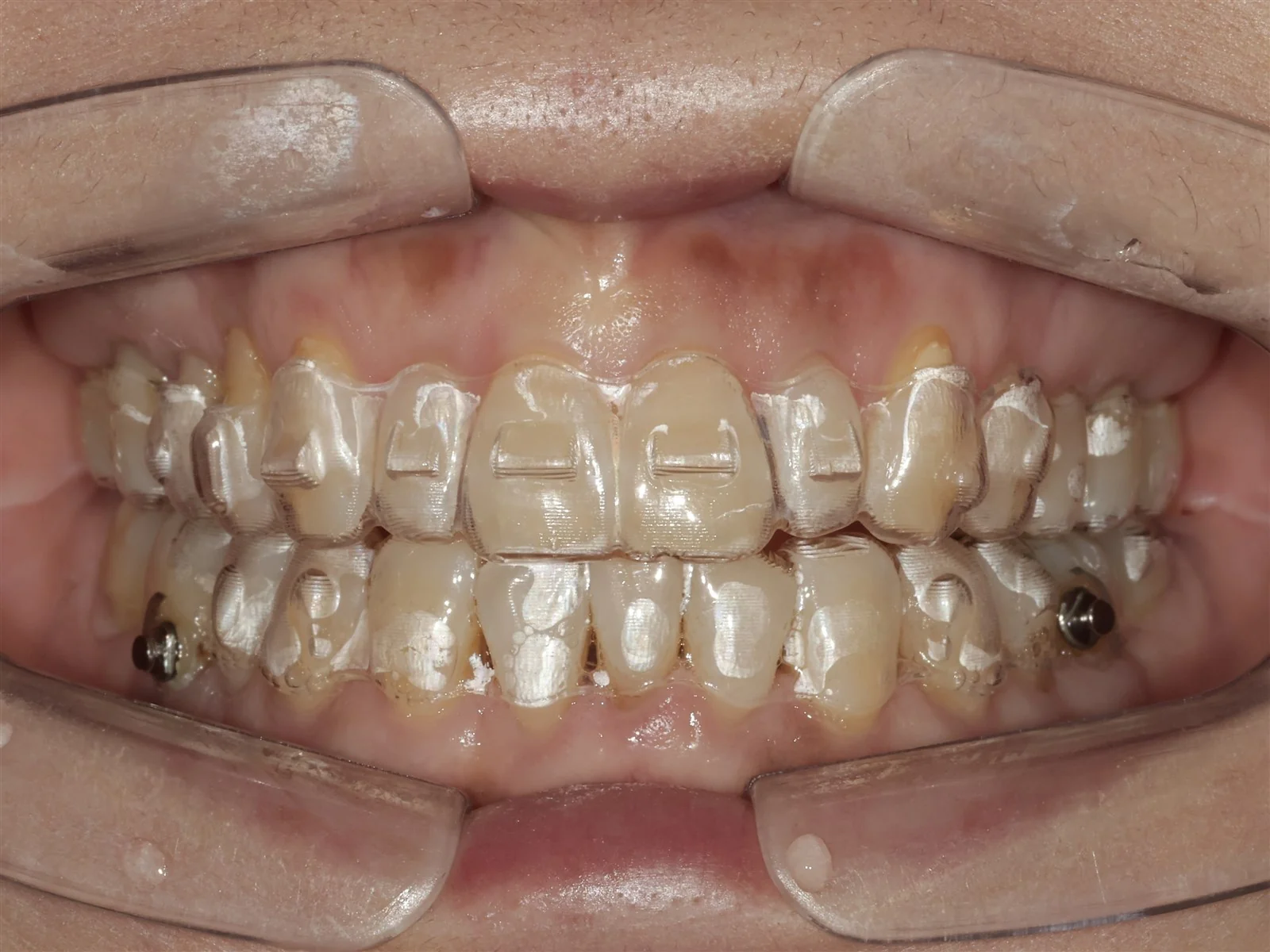
Front view inside the mouth during partial orthodontics for the front teeth with clear alignersDuring partial orthodontics
Front view inside the mouth after partial orthodontics prepared the space for veneersAfter orthodontics
Partial orthodontics for the front teeth. Moving only the front teeth creates room for veneers with less or no reduction of the teeth.

STEP 04

If needed, we move only the front teeth for a few months

Partial orthodontics for the front teeth usually takes 4–6 months. If you are worried about how you look during treatment, clear aligners such as Invisalign or SERAFIN can be used. If veneers are planned, we leave space for the veneer thickness during the orthodontic stage.

Why we do thisIf the space for veneers is calculated during the orthodontic stage, less shaving is needed when they are placed. If veneers are planned separately after orthodontics ends, this chance is lost.
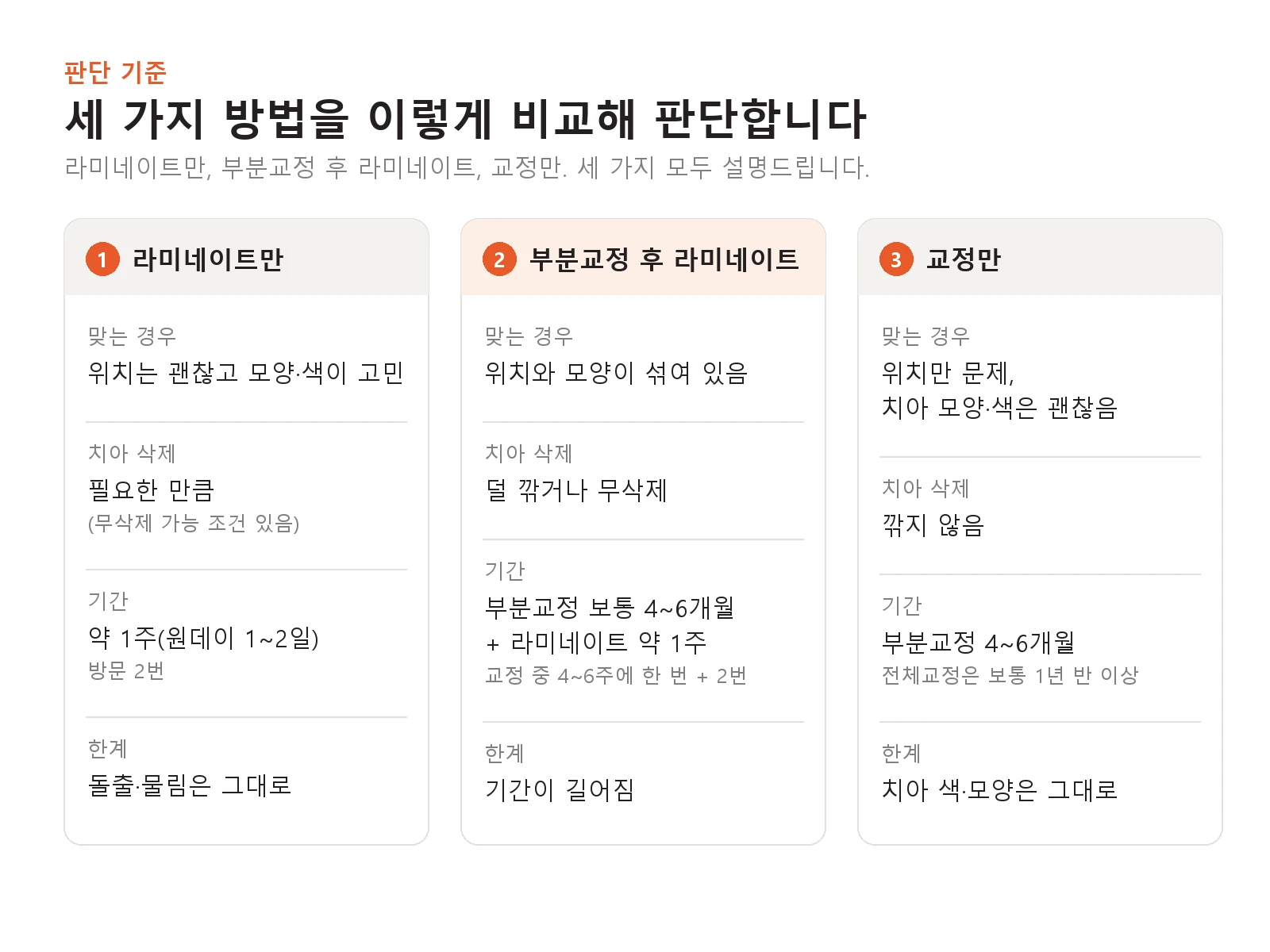
Decision criteria chart comparing three options, veneers only, veneers after partial orthodontics, and orthodontics only, by suitable cases, tooth shaving, duration and limitsDecision criteria
Criteria for comparing the three options. We do not show you this table separately at the consultation. We use these criteria to decide and explain all three options: veneers only, veneers after partial orthodontics, and orthodontics only.

STEP 05

We explain all three options and let you choose

Before starting, we explain the three options, veneers only, veneers after partial orthodontics, and orthodontics only, with the duration, amount of shaving and limits of each, and what you do not need. If you do not need orthodontics, we tell you so and go straight on to the veneer consultation. We explain our decision verbally on the day of your first consultation.

Why we do thisOrthodontics takes time, and veneers involve shaving the teeth. Which matters more differs from patient to patient, so I show you the numbers and let you make the choice.

* Clinical photos were published with the patients' consent. Side effects such as temporary pain or discomfort may occur depending on the person.

04°

Why does the order matter?

To make protruding front teeth look set back with veneers, the teeth must be shaved as much as they stick out. Shaving a lot can bring the preparation close to the nerve, and shaved tooth structure cannot be restored.

On the other hand, if the teeth are first moved into place, veneers can sometimes be made thinner or placed without shaving. For some people, orthodontics alone solves the concern and veneers are no longer needed. If veneers are placed first and orthodontics is done later, the veneer shape may no longer fit after the teeth move, and the veneers may need to be remade.

05°

Comparing treatment options

Veneers onlyVeneers after partial orthodonticsOrthodontics onlyWhitening or resin only
Good forPosition is fine; shape or color is the concernPosition and shape problems mixedOnly position is a problem; tooth shape and color are fineOnly color is a concern, or a very small gap
Tooth shavingAs much as needed (no-prep or minimal-prep possible in some cases, under certain conditions)Less shaving or no-prepNo shavingNo shaving (minimal for resin)
DurationAbout 1 week (one-day option: 1–2 days)Partial orthodontics usually 4–6 months + about 1 weekPartial orthodontics 4–6 months; full orthodontics usually 1.5 years or more1–2 weeks
Number of visits2 visitsOnce a month during orthodontics + 2 visitsOnce a month during orthodonticsAbout 2 visits
What changesColor, shape, small gapsBoth position and shapePosition, bite, mouth profileColor, small gaps
LimitsProtrusion and bite stay as they areTakes longerTooth color and shape stay as they areLittle change in shape
CostSee the fee schedule →See the fee schedule →See the fee schedule →See the fee schedule →

06°

Self-check

If you answered "yes" to 2 or more, we recommend an orthodontic consultation before veneers.

07°

Side effects and limits

Please read

· Doing orthodontics first makes the overall treatment period longer.

· There are limits to how far teeth can be moved with partial orthodontics, and if we judge that full orthodontics is needed, we will tell you so.

· Retainers are needed after orthodontics. For 2 years after orthodontics ends, retainer checks and adjustments are included in the orthodontic fee.

· While teeth are being moved, the roots may become shorter or the gums may recede.

· If you choose veneers only, the protrusion and bite stay as they are.

FAQ

FAQ

Can I just get veneers without orthodontics?
If your teeth are in a good position, veneers alone are enough. If your front teeth stick out or are crooked, more shaving is needed to hide this with veneers. We show you that difference in numbers from your test results, and then you decide.
How long does partial orthodontics for the front teeth take before veneers?
Partial orthodontics for the front teeth before veneers usually takes 4–6 months. If the teeth need to move a long way, or you want the angle and height matched very precisely, extra appliance adjustments may make it take longer than 6 months.
Doesn't doing orthodontics first and then veneers end up costing more?
Adding orthodontics adds to the cost, but sometimes you need fewer veneers or no veneers at all. We show you the cost and time of each option side by side.
Can I use clear aligners for the orthodontics before veneers?
Depending on how much and in which direction the front teeth need to move, clear aligners may work. Clear aligners such as Invisalign or SERAFIN are less noticeable during treatment, so we often use them for partial orthodontics before veneers.
Can I get veneers early, during orthodontic treatment?
Tooth positions keep changing during orthodontic treatment, so we usually design veneers after orthodontics is finished. If the shape bothers you during treatment, we consider adding resin temporarily.
Another clinic told me a lot of shaving is needed for veneers.
Being told a lot of shaving is needed usually happens when veneers are meant to hide a tooth position problem. If you send us photos of your front teeth first, our orthodontist will check whether it is a position problem and tell you whether partial orthodontics could mean less shaving.
What happens if I don't need orthodontics?
If you don't need orthodontics, we tell you so and go straight on to the veneer consultation. A gum check and design consultation can be done on the same day.
If I live abroad, can you judge the order of orthodontics and veneers from photos?
We can see the general direction from photos, and we make the exact decision after X-rays and an intraoral scan. If your stay is short, we also explain the option of getting the diagnosis and veneers on this visit and doing orthodontics locally after you return home.

Evidence and references

  • Kim S, et al. Influence of different ligation methods on force and moment generation in a simulated condition of the maxillary crowded anterior dentition with linguo-version and rotation. Bio-Medical Materials and Engineering, 2022. doi:10.3233/BME-211288 (Measurement of orthodontic force and rotational moment on crooked front teeth)
  • Orthodontic examination and diagnosis at Ceramic Dental Clinic: Orthodontics main page
COSTAll costs are gathered on one page, the treatment cost guideSee costs for veneers and front teeth →

ABROAD

Visiting from abroad

Questions from patients who travel to Seoul for treatment.

How much does CERANATE cost?
CERANATE is KRW 550,000–770,000 per tooth including VAT, depending on the material and fabrication method. International and Korean patients pay the same fees. During promotional events, the same discounted price applies to everyone; ask us on WhatsApp about current events. The tax refund for foreign medical tourists has ended in Korea, so no refund applies. The number of teeth is decided at diagnosis, so we tell you the total after the examination. See our fee schedule.
How many visits do I need, and how long should I stay in Korea?
CERANATE One-Day takes 2 visits over 1–2 days. The Art and The Petit take 2 visits over about 1 week. If orthodontics, whitening or gum treatment comes first, that time is added. We suggest leaving 1–2 spare days after the final bonding before your flight. The check-up about 2 weeks after bonding can be done by photo on WhatsApp, and we see you in person on your next visit to Korea.
Can I have my consultation in English?
Yes. The doctor in charge of your treatment consults with you directly in English. Before you travel, you can send photos of your teeth on WhatsApp or by email. An accurate diagnosis is made after we examine you in person.
What if a veneer chips or comes off after I go home?
Send us a photo on WhatsApp first. If a veneer comes off, keep it. We check it and tell you what to do. Repairing or remaking a veneer needs a visit. How breakage is handled, and what it costs, depends on the CERANATE option, and we explain this before treatment.
If I need orthodontics before veneers, how often do I visit?
Fixed braces need a visit usually once a month after the first two visits, which are 2 weeks apart. With clear aligners, you visit once every 2–3 months after you receive your aligners. Veneers are placed after the teeth have moved, so plan for this when you think about your trips to Korea.

Results, the number of visits and schedules vary from person to person. More questions: Visiting from abroad.

MORE

Related pages

Treatment results and side effects may vary from person to person.

You can ask us first with front and side photos of your front teeth

TOP
Request a ConsultationView